
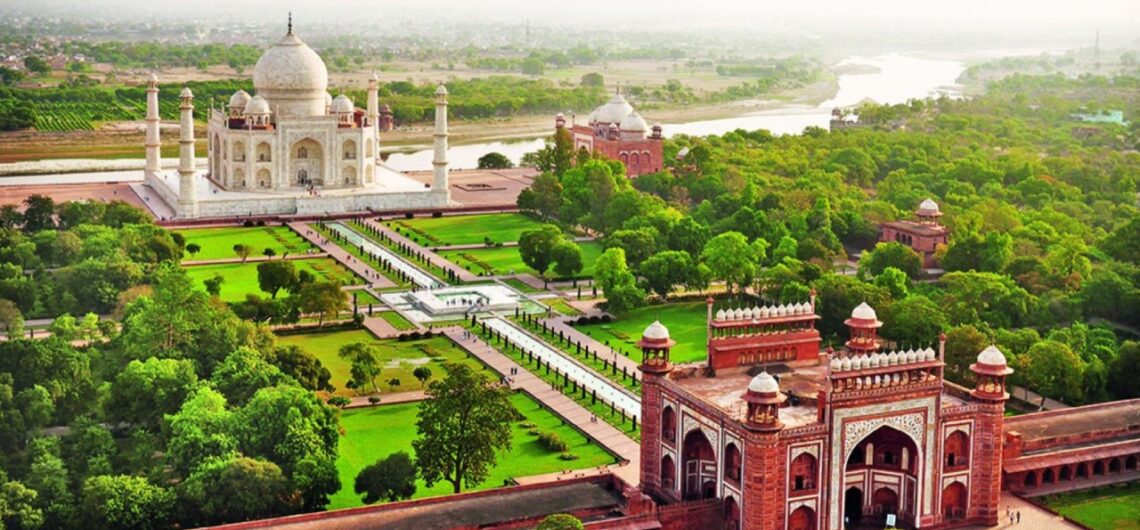
For most first-time visitors, early morning — roughly 30 to 90 minutes after the gates open — offers the best overall experience at the Taj Mahal. The light is soft and directional, temperatures are more comfortable in warmer months, and you have the rest of the day ahead for Agra Fort and other sightseeing. That said, early morning is not automatically the right choice for everyone. Photographers chasing warm tones, families who need a relaxed start, winter travelers dealing with fog, and visitors arriving from Delhi later in the day may all find that a different time works better. This guide compares the Taj Mahal experience hour by hour so you can pick the time that fits your priorities.
Quick Answer: What Is the Best Time of Day to Visit the Taj Mahal?
Early morning — after the initial opening rush but while the light is still soft — is the best time of day for most visitors. You get favorable light for photos, more comfortable temperatures (especially in summer), and enough time to explore without feeling rushed. However, the “best” hour depends on what matters most to you: photography, convenience, weather comfort or avoiding an early alarm.
| Time of Day | Light | Visitor Experience | Weather Comfort | Best For | Main Drawback |
|---|---|---|---|---|---|
| Opening / Sunrise | Soft, golden, low-angle | Atmospheric, quieter initially | Cool (cold in winter) | Photographers, early risers | Very early wake-up; winter fog possible |
| Early Morning | Warm, directional | Good balance of calm and comfort | Pleasant in most seasons | First-time visitors, couples | Still requires an early start |
| Mid-Morning | Bright, even | Relaxed; strong architectural detail | Warm in summer, comfortable otherwise | Relaxed travelers, families | Less dramatic light for photos |
| Late Morning | Overhead, strong | Busy, fully active | Getting warm in hot months | Flexible schedules | Midday heat approaching |
| Midday | Harsh, directly overhead | Peak daytime activity | Hot in summer, fine in winter | Winter visitors, schedule-driven travelers | Flat light, heat in warm months |
| Afternoon | Gradually softening | Moderate activity | Warm, beginning to ease | Day-trippers arriving from Delhi | Limited remaining time before closing |
| Late Afternoon | Warm, lower-angle | Can feel rushed near closing | Cooling down | Experienced visitors, warm-light photographers | Closing time limits your visit |
What Changes at the Taj Mahal Throughout the Day?
The Taj Mahal’s white Makrana marble responds visibly to changing light. In early morning, it can appear soft cream, pale gold or faintly pink depending on sky conditions. Under strong midday sun, the marble looks its whitest and most uniform. In late afternoon, warmer tones return as the sun drops lower.
Beyond light, several practical factors shift throughout the day:
- Temperature. Mornings are cooler. In summer (April–June), midday temperatures in Agra regularly exceed 40°C (104°F), making an early visit far more comfortable.
- Visitor activity. The complex tends to be calmer right after opening. Activity builds through mid-morning and typically stays steady through the afternoon.
- Photography conditions. Low-angle light in early morning and late afternoon creates depth, shadows and contrast. Midday light can flatten details and cause harsh reflections on the marble.
- Time remaining for sightseeing. An early visit leaves you free to explore Agra Fort, Itimad-ud-Daulah or the local markets afterward. A late-afternoon visit limits your remaining daylight.
What Is the Taj Mahal Like at Opening Time?
The Taj Mahal opens 30 minutes before sunrise — not at a fixed clock time. In summer this can be as early as around 5:00 AM; in winter, closer to 6:30–7:00 AM. The monument is closed to general visitors on Fridays.
Arriving at opening means experiencing the complex in its quietest state. The light is low and changing rapidly, which creates memorable conditions for photography. The marble can take on subtle color shifts as the sun rises behind you (if entering from the East Gate or West Gate).
This time slot suits dedicated photographers and travelers who enjoy seeing major landmarks before they fill up. If a sunrise visit is your main goal, read more about what to expect from a sunrise Taj Mahal visit.
Keep in mind: In winter (December–January), early-morning fog and haze in Agra can reduce visibility. Some mornings the Taj Mahal may not be fully visible until the fog lifts, which can take an hour or more.
Is Early Morning the Best Time to Visit the Taj Mahal?
For most travelers, yes. The period roughly 30 to 90 minutes after opening hits a practical sweet spot: the initial rush at the gates has settled, the light is still soft and directional, and temperatures haven’t climbed yet.
This is the time most first-time visitors will enjoy the most. You can take your time at the main gateway, walk through the gardens, photograph the Taj Mahal with good front-light, and explore the main mausoleum without feeling hurried.
Early morning also leaves the rest of your day open. After two to three hours at the Taj Mahal, you can visit Agra Fort (about 2.5 km away), have a relaxed lunch, or continue to other sites.
What Is the Taj Mahal Like in Mid-Morning?
By mid-morning, the sunlight is stronger and more overhead. This is not necessarily a disadvantage — the even lighting reveals crisp architectural detail in the marble inlay work, the geometric patterns on the minarets, and the calligraphy panels. If you are more interested in studying the monument’s craftsmanship up close than in capturing dramatic golden-hour photographs, mid-morning gives you excellent conditions.
The complex will be more active at this hour. For families, couples who prefer a relaxed pace, or travelers who simply don’t want to set an early alarm, mid-morning is a perfectly reasonable choice — especially from October through February, when daytime temperatures in Agra remain comfortable.
Should You Visit the Taj Mahal Around Midday?
Midday is the most commonly discouraged time, but it is not always a poor choice. The overhead sun can make photography challenging — the marble reflects strongly, shadows disappear, and contrast is flat. From March through June, midday heat in Agra makes extended outdoor walking uncomfortable.
However, during the cooler months (November–February), midday conditions at the Taj Mahal are manageable and sometimes pleasant. A midday visit also fits certain travel schedules — for instance, if your train from Delhi arrives late in the morning, heading straight to the Taj Mahal around noon may be your most practical option.
Is Afternoon a Good Time to Visit the Taj Mahal?
The afternoon period — roughly 1:00 PM to 3:00 PM — is a transition phase. Temperatures are still elevated in warmer months, but the light begins to shift from overhead to slightly angled. This gradual change can improve photography conditions compared to midday.
Afternoon works well for day-trippers arriving in Agra from Delhi who missed the morning window. It also suits travelers who spent the morning at Agra Fort or other sites and are saving the Taj Mahal for later in the day. You will still have enough time for a thorough visit before the complex closes.
What Is Visiting the Taj Mahal in Late Afternoon Like?
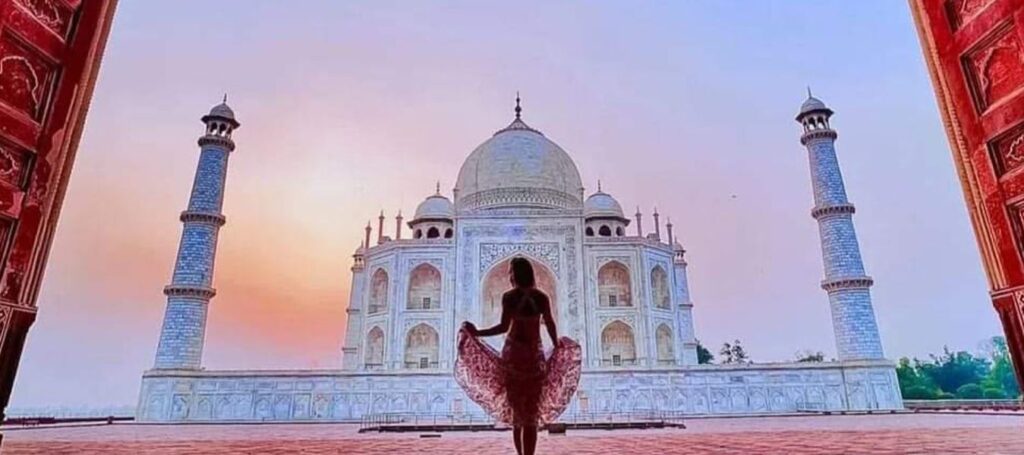
In late afternoon, the light drops lower and warmer, casting longer shadows across the gardens and giving the marble a subtle golden quality. For photographers who prefer warm-toned images, this can be a rewarding time.
Important: The Taj Mahal closes 30 minutes before sunset, not at sunset. You cannot remain inside to watch the sun go down. The exact closing time shifts with the season, so always check the current schedule on the Taj Mahal opening hours and seasonal timing page before planning a late visit.
Because of the closing-time constraint, a late-afternoon visit requires you to manage your time carefully. Enter with enough margin to see the main mausoleum, the gardens, and the mosque without rushing.
Taj Mahal at Sunrise vs Late Afternoon: What’s the Difference?
| Factor | Sunrise / Early Morning | Late Afternoon |
|---|---|---|
| Light | Soft, cool-toned, rapidly changing | Warm, golden, gradually fading |
| Temperature | Cooler (cold in winter) | Warmer, easing toward evening |
| Photography | Classic front-lit Taj Mahal shots from the gardens | Warm side-lit and back-lit possibilities |
| Convenience | Requires very early start | Fits later travel schedules |
| Visitor activity | Typically calmer at first entry | Steady, can feel time-pressured near closing |
| Winter conditions | Fog/haze risk | Fog usually cleared by afternoon |
| Time afterward | Full day of Agra sightseeing ahead | Limited daylight remaining |
| Best for | Photographers, early risers, travelers staying overnight | Day-trippers, warm-light seekers, late arrivals |
Neither time is universally better. Choose based on your priorities: morning for flexibility and cooler conditions, late afternoon for warm light and schedule convenience.
Best Time of Day for Taj Mahal Photography
- Early morning offers soft, directional light that brings out the marble’s subtle tones. The reflection pool in the Charbagh gardens can produce mirror-like images when conditions are calm.
- Midday gives the most illumination but creates flat, high-contrast images that most photographers find less appealing.
- Late afternoon provides warmer light and longer shadows that add depth. The marble may appear golden depending on sky conditions.
No specific time guarantees perfect conditions — weather, haze and cloud cover all play a role. For the widest range of photographic opportunities, arriving early and spending two to three hours allows you to capture changing light.
Which Time Should You Choose? Traveler-by-Traveler Guide
| Traveler Type | Recommended Time | Why |
|---|---|---|
| First-time visitor | Early morning | Best balance of light, comfort and time |
| Photographer | Opening time or late afternoon | Low-angle light for dramatic images |
| Couple | Early morning | Calmer atmosphere, good photo opportunities |
| Family with children | Mid-morning | No extreme early start, comfortable pace |
| Senior traveler | Mid-morning (winter) or early morning (summer) | Avoids heat; allows a relaxed visit |
| Summer visitor | Opening time or early morning | Before the worst of the heat |
| Winter visitor | Mid-morning to early afternoon | Fog often clears by mid-morning; warmer temperatures |
| Same-day visitor from Delhi | Depends on arrival time | If arriving by mid-morning, enter promptly; if arriving after noon, go in the afternoon |
| Traveler staying overnight in Agra | Early morning | Maximize your time at the Taj Mahal and add Agra Fort afterward |
| Traveler who dislikes waking early | Mid-morning or afternoon | Still a good visit, just different light |
Best Time of Day by Season
Season affects which part of the day is most comfortable — not whether the Taj Mahal is worth visiting.
- Summer (April–June): The earlier, the better. Temperatures climb quickly after 9:00 AM.
- Winter (November–February): Early morning fog can delay clear views. Mid-morning to early afternoon often offers the best visibility and pleasant warmth.
- Monsoon (July–September): Cloud cover and rain are unpredictable. Overcast skies can produce soft, even light throughout the day.
- Pleasant-weather months (October, March): Most flexible. Any time of day works well.
For detailed seasonal and opening-time planning, see our complete Taj Mahal timing guide.
How Early Should You Arrive?
- Check the current opening time. It changes seasonally — the Taj Mahal opens 30 minutes before sunrise. Check an Agra sunrise calendar for your travel date.
- Allow time for security. All visitors pass through security screening. Keep your bag light — large bags, tripods and food items are typically not allowed inside.
- Have your ticket ready. Purchase tickets online in advance to save time. For ticketing details, see the Taj Mahal ticket and booking guide.
- Factor in transportation. If your hotel is not within walking distance of the East Gate or West Gate, allow time for your driver or auto-rickshaw to reach the drop-off area and for the walk to the entry point.
3 Sample Taj Mahal Timing Plans
Plan 1: Early-Morning Photographer
- Reach the entry gate area before the official opening time.
- Enter as soon as gates open and head directly toward the main viewpoint along the central water channel.
- Spend the first 60–90 minutes at key photo positions while the light is still low and changing.
- Explore the main mausoleum and mosque.
- Exit and continue to Agra Fort by mid-morning.
Plan 2: Relaxed First-Time Visitor
- Arrive approximately 60–90 minutes after opening.
- Enter through the main gateway and take time at each viewpoint.
- Spend 2–3 hours exploring the gardens, the mausoleum interior, and the mosque.
- Exit and break for lunch, then visit Agra Fort or Itimad-ud-Daulah in the afternoon.
Plan 3: Late-Afternoon Visitor
- Plan to enter at least 2.5–3 hours before the closing time to allow a thorough visit.
- Walk the gardens, photograph the Taj Mahal in warm afternoon light, and visit the mausoleum interior.
- Exit before closing.
- If time and interest allow, visit Mehtab Bagh separately — it is located across the Yamuna River and offers views of the Taj Mahal’s rear facade. (Mehtab Bagh is a separate site, not inside the Taj Mahal complex.)
Quick Decision: What Time Should I Visit the Taj Mahal?
- Choose opening time if you want the quietest atmosphere and are willing to wake up very early.
- Choose early morning if you want the best overall balance of light, comfort and available time.
- Choose mid-morning if you prefer a relaxed start and don’t mind brighter sunlight.
- Choose midday if you are visiting in winter and want the warmest, clearest conditions.
- Choose afternoon if you are arriving in Agra later in the day and want to see the Taj Mahal on the same day.
- Choose late afternoon if you want warm-toned light for photography and can manage your time around the closing schedule.
Frequently Asked Questions
What is the best time of day to visit the Taj Mahal?
Early morning — about 30 to 90 minutes after opening — works best for most visitors. The light is favorable, temperatures are more comfortable, and you have the rest of the day for other Agra sightseeing. Photographers may prefer opening time or late afternoon for more dramatic light.
Is the Taj Mahal better at sunrise or sunset?
Both times offer warm, low-angle light. Sunrise typically provides calmer conditions and leaves your day free. Late afternoon provides warmer golden tones but your time inside is limited by the closing schedule. In winter, morning fog may favor an afternoon visit.
What time should I reach the Taj Mahal in the morning?
That depends on the season. The Taj Mahal opens 30 minutes before sunrise, which can range from around 5:00 AM in summer to around 6:30–7:00 AM in winter. Check the sunrise time for your travel date and plan to reach the gate area shortly before opening.
Is early morning less crowded at the Taj Mahal?
Generally, visitor activity tends to be lower in the first hour after opening and builds through the morning. However, conditions vary by day and season, and the opening rush itself can be busy with sunrise visitors.
Is midday a good time to visit the Taj Mahal?
It can work, especially in winter when temperatures are pleasant. In summer, midday heat makes extended outdoor sightseeing uncomfortable. Photography is more challenging under overhead sun, but midday suits travelers with fixed schedules.
Can you visit the Taj Mahal around sunset?
You can visit in late afternoon, but the Taj Mahal closes 30 minutes before sunset. You cannot stay inside to watch the sun set. Always check the current closing time before planning a late visit.
What is the best time for Taj Mahal photography?
Early morning and late afternoon both offer low-angle light with depth and warmth. Early morning is preferred by most photographers for front-lit shots of the Taj Mahal from the gardens. Late afternoon provides warmer tones and different shadow angles.
What is the best time for families to visit?
Mid-morning is often ideal for families with children. It avoids a very early wake-up, temperatures are moderate (outside peak summer), and the pace can be relaxed. In summer, aim for early morning to beat the heat.
Is the Taj Mahal open on Friday?
No. The Taj Mahal is closed to general visitors every Friday. Plan your visit for any other day of the week.
Conclusion
For most travelers, early morning — within the first couple of hours after opening — delivers the best overall Taj Mahal experience. It balances favorable light, comfortable temperatures and practical scheduling.
Photographers will get the most from opening time (for sunrise light) or late afternoon (for warm golden tones). Travelers who prefer not to wake before dawn can visit mid-morning or afternoon and still have an excellent experience — just plan around the seasonal heat if visiting in summer.
Whatever time you choose, the Taj Mahal rewards visitors who plan around their own priorities rather than following a one-size-fits-all rule.
Need help choosing the right time for your trip? Browse Taj Mahal tour packages from Taj Mahal Splendor Tours. As a local Agra-based team, we can help you pick a schedule that matches your arrival time, group size and photography goals — whether that is a Sunrise Taj Mahal and Agra Tour by Car or a privately timed afternoon visit.

Comments