<!-- wp:paragraph -->
<p>Planning a visit to the Taj Mahal in Agra starts with understanding the ticket options. The <strong>Taj Mahal entry ticket price</strong> varies depending on whether you are an Indian visitor, a citizen of a SAARC/BIMSTEC country, or an international tourist. Visitors who want to enter the main mausoleum also need to purchase an additional ticket.</p>
<!-- /wp:paragraph -->
<!-- wp:paragraph -->
<p>This guide explains the latest Taj Mahal ticket prices, how to book tickets online, ticket options for children, entry gates, opening hours, night viewing, ID requirements, and important rules to know before you arrive.</p>
<!-- /wp:paragraph -->
<!-- wp:paragraph -->
<p>If you are visiting the Taj Mahal for the first time, understanding these details in advance can make your visit much easier and help you avoid common booking mistakes.</p>
<!-- /wp:paragraph -->
<!-- wp:quote -->
<blockquote class="wp-block-quote"><!-- wp:paragraph -->
<p><strong>Important:</strong> Taj Mahal ticket prices, booking systems, entry rules, and timings can change. Always check the latest information on the official Taj Mahal or Archaeological Survey of India booking platform before your visit.</p>
<!-- /wp:paragraph --></blockquote>
<!-- /wp:quote -->
<!-- wp:heading {"anchor":"h-taj-mahal-entry-ticket-price-2026"} -->
<h2 id="h-taj-mahal-entry-ticket-price-2026" class="wp-block-heading">Taj Mahal Entry Ticket Price 2026</h2>
<!-- /wp:heading -->
<!-- wp:paragraph -->
<p>The standard Taj Mahal ticket currently starts at <strong>₹50 for Indian visitors</strong>, <strong>₹540 for citizens of SAARC and BIMSTEC countries</strong>, and <strong>₹1,100 for other foreign visitors</strong>.</p>
<!-- /wp:paragraph -->
<!-- wp:paragraph -->
<p>Entering the main mausoleum costs an additional <strong>₹200 per person</strong>.</p>
<!-- /wp:paragraph -->
<!-- wp:table -->
<figure class="wp-block-table"><table class="has-fixed-layout"><tbody><tr><th>Visitor Category</th><th class="has-text-align-right" data-align="right">Standard Entry</th><th class="has-text-align-right" data-align="right">Main Mausoleum Add-On</th><th class="has-text-align-right" data-align="right">Total With Mausoleum</th></tr><tr><td>Indian / Domestic / OCI Visitor</td><td class="has-text-align-right" data-align="right">₹50</td><td class="has-text-align-right" data-align="right">₹200</td><td class="has-text-align-right" data-align="right">₹250</td></tr><tr><td>SAARC / BIMSTEC Visitor</td><td class="has-text-align-right" data-align="right">₹540</td><td class="has-text-align-right" data-align="right">₹200</td><td class="has-text-align-right" data-align="right">₹740</td></tr><tr><td>Foreign Tourist</td><td class="has-text-align-right" data-align="right">₹1,100</td><td class="has-text-align-right" data-align="right">₹200</td><td class="has-text-align-right" data-align="right">₹1,300</td></tr><tr><td>Children Below 15</td><td class="has-text-align-right" data-align="right">Free general entry</td><td class="has-text-align-right" data-align="right">Check current booking rules</td><td class="has-text-align-right" data-align="right">Depends on access required</td></tr></tbody></table></figure>
<!-- /wp:table -->
<!-- wp:paragraph -->
<p>The main mausoleum supplement is optional. You only need to purchase it if you want to enter the mausoleum building itself.</p>
<!-- /wp:paragraph -->
<!-- wp:heading {"level":3,"anchor":"h-taj-mahal-ticket-price-for-indian-visitors"} -->
<h3 id="h-taj-mahal-ticket-price-for-indian-visitors" class="wp-block-heading">Taj Mahal Ticket Price for Indian Visitors</h3>
<!-- /wp:heading -->
<!-- wp:paragraph -->
<p>Indian visitors currently pay <strong>₹50 for standard admission</strong>.</p>
<!-- /wp:paragraph -->
<!-- wp:paragraph -->
<p>If you also want to enter the main mausoleum, the total becomes:</p>
<!-- /wp:paragraph -->
<!-- wp:paragraph -->
<p><strong>₹50 + ₹200 = ₹250 per person</strong></p>
<!-- /wp:paragraph -->
<!-- wp:heading {"level":3,"anchor":"h-taj-mahal-ticket-price-for-foreign-tourists"} -->
<h3 id="h-taj-mahal-ticket-price-for-foreign-tourists" class="wp-block-heading">Taj Mahal Ticket Price for Foreign Tourists</h3>
<!-- /wp:heading -->
<!-- wp:paragraph -->
<p>Foreign tourists currently pay <strong>₹1,100 for standard admission</strong>.</p>
<!-- /wp:paragraph -->
<!-- wp:paragraph -->
<p>Adding main mausoleum access brings the total to:</p>
<!-- /wp:paragraph -->
<!-- wp:paragraph -->
<p><strong>₹1,100 + ₹200 = ₹1,300 per person</strong></p>
<!-- /wp:paragraph -->
<!-- wp:heading {"level":3,"anchor":"h-taj-mahal-ticket-price-for-saarc-and-bimstec-visitors"} -->
<h3 id="h-taj-mahal-ticket-price-for-saarc-and-bimstec-visitors" class="wp-block-heading">Taj Mahal Ticket Price for SAARC and BIMSTEC Visitors</h3>
<!-- /wp:heading -->
<!-- wp:paragraph -->
<p>Visitors qualifying under the SAARC or BIMSTEC category currently pay <strong>₹540</strong>.</p>
<!-- /wp:paragraph -->
<!-- wp:paragraph -->
<p>With mausoleum access:</p>
<!-- /wp:paragraph -->
<!-- wp:paragraph -->
<p><strong>₹540 + ₹200 = ₹740 per person</strong></p>
<!-- /wp:paragraph -->
<!-- wp:paragraph -->
<p>Make sure you select the correct nationality category during booking and carry appropriate identification.</p>
<!-- /wp:paragraph -->
<!-- wp:heading {"anchor":"h-what-is-included-in-the-taj-mahal-entry-ticket"} -->
<h2 id="h-what-is-included-in-the-taj-mahal-entry-ticket" class="wp-block-heading">What Is Included in the Taj Mahal Entry Ticket?</h2>
<!-- /wp:heading -->
<!-- wp:paragraph -->
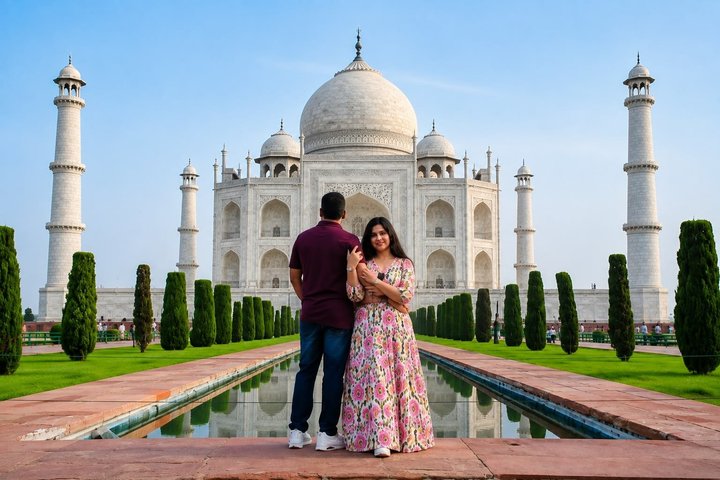
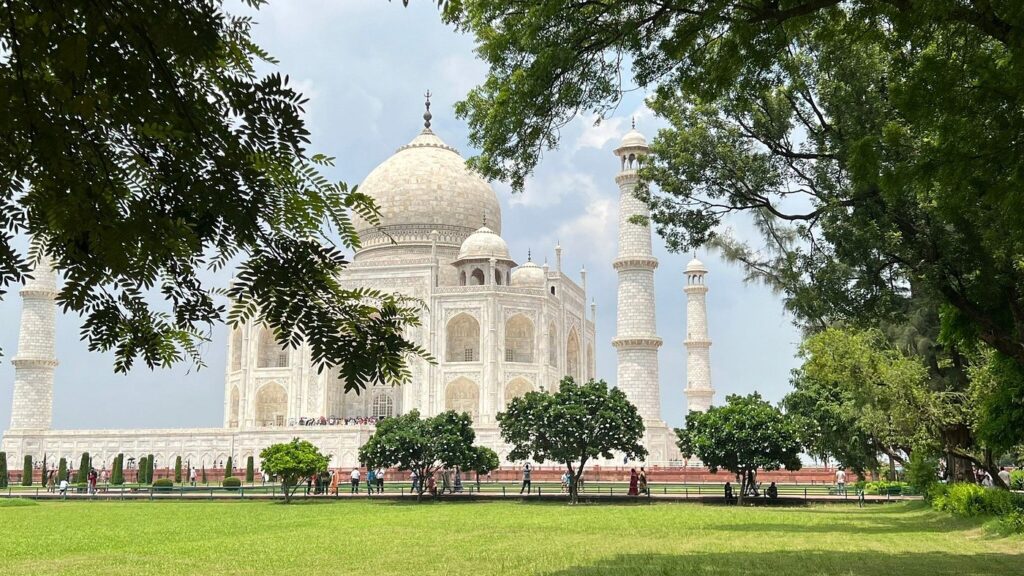
<p>A regular Taj Mahal entry ticket provides access to the monument complex and its main visitor areas, including the famous gardens and exterior viewing areas around the Taj Mahal.</p>
<!-- /wp:paragraph -->
<!-- wp:paragraph -->
<p>However, the standard ticket and the main mausoleum ticket are not the same thing.</p>
<!-- /wp:paragraph -->
<!-- wp:paragraph -->
<p>The regular ticket allows you to visit the Taj Mahal complex, while visitors wishing to enter the main mausoleum need to purchase the additional mausoleum ticket.</p>
<!-- /wp:paragraph -->
<!-- wp:paragraph -->
<p>This distinction is particularly important for first-time visitors because it is easy to assume that the standard Taj Mahal ticket automatically includes everything inside the complex.</p>
<!-- /wp:paragraph -->
<!-- wp:heading {"anchor":"h-does-the-regular-taj-mahal-ticket-include-the-main-mausoleum"} -->
<h2 id="h-does-the-regular-taj-mahal-ticket-include-the-main-mausoleum" class="wp-block-heading">Does the Regular Taj Mahal Ticket Include the Main Mausoleum?</h2>
<!-- /wp:heading -->
<!-- wp:paragraph -->
<p><strong>No. The regular Taj Mahal ticket does not include entry inside the main mausoleum.</strong></p>
<!-- /wp:paragraph -->
<!-- wp:paragraph -->
<p>Visitors who want to enter the main mausoleum need to purchase an additional <strong>₹200 ticket</strong> along with their regular admission ticket.</p>
<!-- /wp:paragraph -->
<!-- wp:paragraph -->
<p>The mausoleum ticket is optional.</p>
<!-- /wp:paragraph -->
<!-- wp:paragraph -->
<p>For example:</p>
<!-- /wp:paragraph -->
<!-- wp:list -->
<ul class="wp-block-list"><!-- wp:list-item -->
<li>Indian standard entry: ₹50</li>
<!-- /wp:list-item -->
<!-- wp:list-item -->
<li>Main mausoleum: ₹200</li>
<!-- /wp:list-item -->
<!-- wp:list-item -->
<li>Total: ₹250</li>
<!-- /wp:list-item --></ul>
<!-- /wp:list -->
<!-- wp:paragraph -->
<p>For a foreign visitor:</p>
<!-- /wp:paragraph -->
<!-- wp:list -->
<ul class="wp-block-list"><!-- wp:list-item -->
<li>Standard entry: ₹1,100</li>
<!-- /wp:list-item -->
<!-- wp:list-item -->
<li>Main mausoleum: ₹200</li>
<!-- /wp:list-item -->
<!-- wp:list-item -->
<li>Total: ₹1,300</li>
<!-- /wp:list-item --></ul>
<!-- /wp:list -->
<!-- wp:paragraph -->
<p>When booking your ticket online, check whether mausoleum access has been added before completing your payment.</p>
<!-- /wp:paragraph -->
<!-- wp:heading {"anchor":"h-is-the-taj-mahal-mausoleum-ticket-worth-buying"} -->
<h2 id="h-is-the-taj-mahal-mausoleum-ticket-worth-buying" class="wp-block-heading">Is the Taj Mahal Mausoleum Ticket Worth Buying?</h2>
<!-- /wp:heading -->
<!-- wp:paragraph -->
<p>For many first-time visitors, entering the main mausoleum is an important part of experiencing the Taj Mahal.</p>
<!-- /wp:paragraph -->
<!-- wp:paragraph -->
<p>The mausoleum contains the cenotaphs associated with Mughal emperor Shah Jahan and Mumtaz Mahal and allows visitors to experience the interior craftsmanship and architectural details of the monument.</p>
<!-- /wp:paragraph -->
<!-- wp:paragraph -->
<p>You may want the mausoleum ticket if:</p>
<!-- /wp:paragraph -->
<!-- wp:list -->
<ul class="wp-block-list"><!-- wp:list-item -->
<li>This is your first visit to the Taj Mahal</li>
<!-- /wp:list-item -->
<!-- wp:list-item -->
<li>You want to experience the monument beyond its exterior</li>
<!-- /wp:list-item -->
<!-- wp:list-item -->
<li>Mughal architecture and history interest you</li>
<!-- /wp:list-item -->
<!-- wp:list-item -->
<li>You have enough time for a more complete visit</li>
<!-- /wp:list-item --></ul>
<!-- /wp:list -->
<!-- wp:paragraph -->
<p>You may choose to skip it if:</p>
<!-- /wp:paragraph -->
<!-- wp:list -->
<ul class="wp-block-list"><!-- wp:list-item -->
<li>You have very limited sightseeing time</li>
<!-- /wp:list-item -->
<!-- wp:list-item -->
<li>Your main interest is photography from the gardens</li>
<!-- /wp:list-item -->
<!-- wp:list-item -->
<li>You have already visited the mausoleum previously</li>
<!-- /wp:list-item --></ul>
<!-- /wp:list -->
<!-- wp:paragraph -->
<p>The ₹200 supplement is optional, so the right choice depends on the experience you want.</p>
<!-- /wp:paragraph -->
<!-- wp:heading {"level":1,"anchor":"h-how-to-book-taj-mahal-tickets-online"} -->
<h1 id="h-how-to-book-taj-mahal-tickets-online" class="wp-block-heading">How to Book Taj Mahal Tickets Online</h1>
<!-- /wp:heading -->
<!-- wp:paragraph -->
<p>Booking Taj Mahal tickets online can save you from spending additional time purchasing tickets after reaching the monument.</p>
<!-- /wp:paragraph -->
<!-- wp:paragraph -->
<p>The exact booking interface can change, but the general process is straightforward.</p>
<!-- /wp:paragraph -->
<!-- wp:heading {"level":3,"anchor":"h-step-1-use-the-official-booking-source"} -->
<h3 id="h-step-1-use-the-official-booking-source" class="wp-block-heading">Step 1: Use the Official Booking Source</h3>
<!-- /wp:heading -->
<!-- wp:paragraph -->
<p>Start from the <a href="https://www.tajmahal.gov.in/ticketing.aspx">official Taj Mahal </a>or Archaeological Survey of India ticket information page.</p>
<!-- /wp:paragraph -->
<!-- wp:paragraph -->
<p>Avoid booking through unfamiliar websites simply because they appear in search results.</p>
<!-- /wp:paragraph -->
<!-- wp:paragraph -->
<p>Third-party tour companies may legitimately sell tours that include tickets, but if you only need an entry ticket, use the official booking channel.</p>
<!-- /wp:paragraph -->
<!-- wp:heading {"level":3,"anchor":"h-step-2-select-the-taj-mahal"} -->
<h3 id="h-step-2-select-the-taj-mahal" class="wp-block-heading">Step 2: Select the Taj Mahal</h3>
<!-- /wp:heading -->
<!-- wp:paragraph -->
<p>Choose the Taj Mahal from the list of available monuments.</p>
<!-- /wp:paragraph -->
<!-- wp:paragraph -->
<p>Double-check that you are booking the Taj Mahal in <strong>Agra, Uttar Pradesh</strong>.</p>
<!-- /wp:paragraph -->
<!-- wp:heading {"level":3,"anchor":"h-step-3-choose-your-visit-date"} -->
<h3 id="h-step-3-choose-your-visit-date" class="wp-block-heading">Step 3: Choose Your Visit Date</h3>
<!-- /wp:heading -->
<!-- wp:paragraph -->
<p>Select the date on which you plan to visit.</p>
<!-- /wp:paragraph -->
<!-- wp:paragraph -->
<p>Remember that the Taj Mahal is normally closed to general visitors on <strong>Fridays</strong>.</p>
<!-- /wp:paragraph -->
<!-- wp:heading {"level":3,"anchor":"h-step-4-select-the-correct-visitor-category"} -->
<h3 id="h-step-4-select-the-correct-visitor-category" class="wp-block-heading">Step 4: Select the Correct Visitor Category</h3>
<!-- /wp:heading -->
<!-- wp:paragraph -->
<p>Choose the correct category for each visitor.</p>
<!-- /wp:paragraph -->
<!-- wp:paragraph -->
<p>Typical options include:</p>
<!-- /wp:paragraph -->
<!-- wp:list -->
<ul class="wp-block-list"><!-- wp:list-item -->
<li>Indian / Domestic / OCI</li>
<!-- /wp:list-item -->
<!-- wp:list-item -->
<li>SAARC or BIMSTEC</li>
<!-- /wp:list-item -->
<!-- wp:list-item -->
<li>Foreign visitor</li>
<!-- /wp:list-item --></ul>
<!-- /wp:list -->
<!-- wp:paragraph -->
<p>Your ticket category should correspond with the identification you carry.</p>
<!-- /wp:paragraph -->
<!-- wp:heading {"level":3,"anchor":"h-step-5-add-main-mausoleum-entry-if-required"} -->
<h3 id="h-step-5-add-main-mausoleum-entry-if-required" class="wp-block-heading">Step 5: Add Main Mausoleum Entry if Required</h3>
<!-- /wp:heading -->
<!-- wp:paragraph -->
<p>If you want to enter the main mausoleum, select the additional mausoleum option.</p>
<!-- /wp:paragraph -->
<!-- wp:paragraph -->
<p>Do not assume it is automatically included in your standard ticket.</p>
<!-- /wp:paragraph -->
<!-- wp:heading {"level":3,"anchor":"h-step-6-enter-visitor-details"} -->
<h3 id="h-step-6-enter-visitor-details" class="wp-block-heading">Step 6: Enter Visitor Details</h3>
<!-- /wp:heading -->
<!-- wp:paragraph -->
<p>Enter all requested details accurately.</p>
<!-- /wp:paragraph -->
<!-- wp:paragraph -->
<p>Check:</p>
<!-- /wp:paragraph -->
<!-- wp:list -->
<ul class="wp-block-list"><!-- wp:list-item -->
<li>Name</li>
<!-- /wp:list-item -->
<!-- wp:list-item -->
<li>Nationality</li>
<!-- /wp:list-item -->
<!-- wp:list-item -->
<li>Visitor category</li>
<!-- /wp:list-item -->
<!-- wp:list-item -->
<li>Date</li>
<!-- /wp:list-item -->
<!-- wp:list-item -->
<li>Ticket type</li>
<!-- /wp:list-item --></ul>
<!-- /wp:list -->
<!-- wp:heading {"level":3,"anchor":"h-step-7-complete-payment"} -->
<h3 id="h-step-7-complete-payment" class="wp-block-heading">Step 7: Complete Payment</h3>
<!-- /wp:heading -->
<!-- wp:paragraph -->
<p>Proceed with the available online payment method.</p>
<!-- /wp:paragraph -->
<!-- wp:paragraph -->
<p>Review the booking details once more before paying.</p>
<!-- /wp:paragraph -->
<!-- wp:heading {"level":3,"anchor":"h-step-8-save-your-e-ticket"} -->
<h3 id="h-step-8-save-your-e-ticket" class="wp-block-heading">Step 8: Save Your E-Ticket</h3>
<!-- /wp:heading -->
<!-- wp:paragraph -->
<p>After payment, save your confirmation or e-ticket on your phone.</p>
<!-- /wp:paragraph -->
<!-- wp:paragraph -->
<p>It is a good idea to:</p>
<!-- /wp:paragraph -->
<!-- wp:list -->
<ul class="wp-block-list"><!-- wp:list-item -->
<li>Download the ticket</li>
<!-- /wp:list-item -->
<!-- wp:list-item -->
<li>Keep a screenshot as backup</li>
<!-- /wp:list-item -->
<!-- wp:list-item -->
<li>Carry valid government-issued identification</li>
<!-- /wp:list-item -->
<!-- wp:list-item -->
<li>Keep your phone charged</li>
<!-- /wp:list-item --></ul>
<!-- /wp:list -->
<!-- wp:paragraph -->
<p>Online booking does <strong>not</strong> mean you can bypass security screening. All visitors must follow the monument's entry and security procedures.</p>
<!-- /wp:paragraph -->
<!-- wp:image {"id":1829,"sizeSlug":"large","linkDestination":"none"} -->
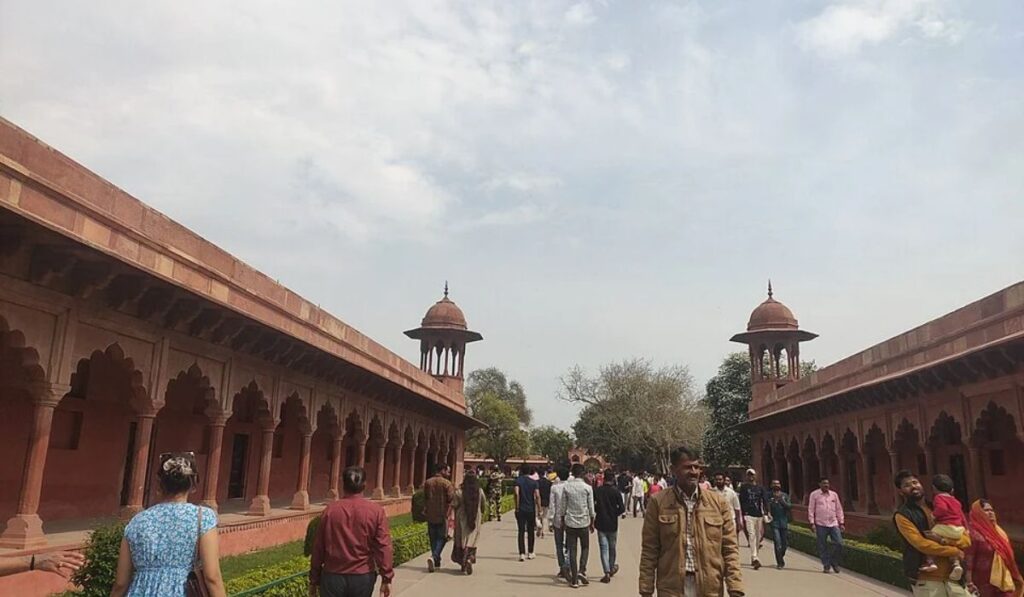
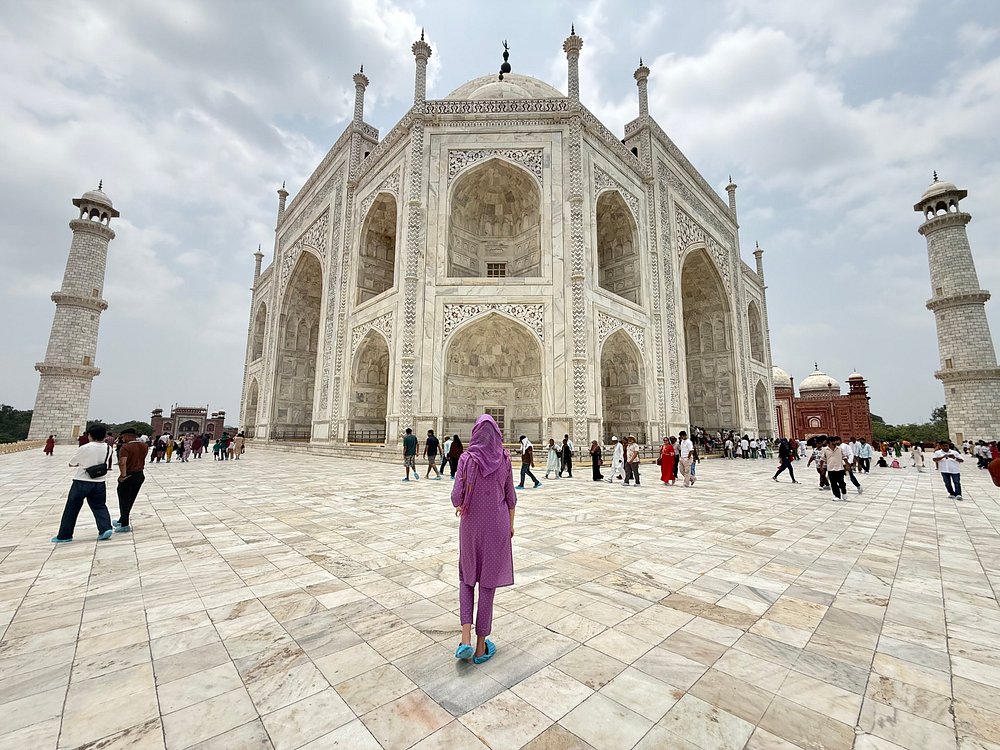
<figure class="wp-block-image size-large"><img src="https://www.tajmahalsplendortours.com/wp-content/uploads/2026/09/taj-mahal-complex-agra-1024x597.jpg" alt="Visitors walking inside the Taj Mahal complex in Agra" class="wp-image-1829"/></figure>
<!-- /wp:image -->
<!-- wp:heading {"anchor":"h-can-you-buy-taj-mahal-tickets-at-the-gate"} -->
<h2 id="h-can-you-buy-taj-mahal-tickets-at-the-gate" class="wp-block-heading">Can You Buy Taj Mahal Tickets at the Gate?</h2>
<!-- /wp:heading -->
<!-- wp:paragraph -->
<p>Ticket windows are currently listed at the principal entry areas, so visitors may also be able to purchase tickets offline.</p>
<!-- /wp:paragraph -->
<!-- wp:paragraph -->
<p>However, buying online is usually more convenient if you already know your travel date.</p>
<!-- /wp:paragraph -->
<!-- wp:paragraph -->
<p>Offline ticket purchasing may involve additional waiting, particularly during busy periods.</p>
<!-- /wp:paragraph -->
<!-- wp:paragraph -->
<p>Online booking can be especially useful for:</p>
<!-- /wp:paragraph -->
<!-- wp:list -->
<ul class="wp-block-list"><!-- wp:list-item -->
<li>Sunrise visitors</li>
<!-- /wp:list-item -->
<!-- wp:list-item -->
<li>Weekend visits</li>
<!-- /wp:list-item -->
<!-- wp:list-item -->
<li>Peak-season trips</li>
<!-- /wp:list-item -->
<!-- wp:list-item -->
<li>Families and groups</li>
<!-- /wp:list-item -->
<!-- wp:list-item -->
<li>Travelers following a fixed itinerary</li>
<!-- /wp:list-item --></ul>
<!-- /wp:list -->
<!-- wp:paragraph -->
<p>Regardless of how your ticket is purchased, you still need to go through security before entering the monument.</p>
<!-- /wp:paragraph -->
<!-- wp:heading {"anchor":"h-taj-mahal-entry-gates-and-ticket-counters"} -->
<h2 id="h-taj-mahal-entry-gates-and-ticket-counters" class="wp-block-heading">Taj Mahal Entry Gates and Ticket Counters</h2>
<!-- /wp:heading -->
<!-- wp:paragraph -->
<p>Understanding the gates can save time when you arrive.</p>
<!-- /wp:paragraph -->
<!-- wp:heading {"level":3,"anchor":"h-eastern-gate"} -->
<h3 id="h-eastern-gate" class="wp-block-heading">Eastern Gate</h3>
<!-- /wp:heading -->
<!-- wp:paragraph -->
<p>The Eastern Gate is one of the main entrances to the Taj Mahal.</p>
<!-- /wp:paragraph -->
<!-- wp:paragraph -->
<p>Visitors staying around the eastern side of the Taj Mahal or arriving through the Shilpgram area commonly use this side.</p>
<!-- /wp:paragraph -->
<!-- wp:paragraph -->
<p>Ticketing and visitor facilities are available in the area.</p>
<!-- /wp:paragraph -->
<!-- wp:heading {"level":3,"anchor":"h-western-gate"} -->
<h3 id="h-western-gate" class="wp-block-heading">Western Gate</h3>
<!-- /wp:heading -->
<!-- wp:paragraph -->
<p>The Western Gate is another main entrance used by Taj Mahal visitors.</p>
<!-- /wp:paragraph -->
<!-- wp:paragraph -->
<p>It can be convenient depending on where you are arriving from in Agra.</p>
<!-- /wp:paragraph -->
<!-- wp:paragraph -->
<p>Ticket facilities are also available on the western side.</p>
<!-- /wp:paragraph -->
<!-- wp:heading {"level":3,"anchor":"h-southern-gate"} -->
<h3 id="h-southern-gate" class="wp-block-heading">Southern Gate</h3>
<!-- /wp:heading -->
<!-- wp:paragraph -->
<p>The Southern Gate is <strong>currently not used for tourist entry</strong>.</p>
<!-- /wp:paragraph -->
<!-- wp:paragraph -->
<p>It is presently used for exit.</p>
<!-- /wp:paragraph -->
<!-- wp:paragraph -->
<p>Visitors should therefore plan to enter through the Eastern or Western Gate rather than arriving at the Southern Gate expecting admission.</p>
<!-- /wp:paragraph -->
<!-- wp:paragraph -->
<p>Because entry arrangements can occasionally change, verify current gate information before visiting.</p>
<!-- /wp:paragraph -->
<!-- wp:heading {"level":1,"anchor":"h-taj-mahal-opening-and-closing-time"} -->
<h1 id="h-taj-mahal-opening-and-closing-time" class="wp-block-heading">Taj Mahal Opening and Closing Time</h1>
<!-- /wp:heading -->
<!-- wp:paragraph -->
<p>The Taj Mahal generally opens <strong>30 minutes before sunrise</strong> and closes <strong>30 minutes before sunset</strong> on normal visiting days.</p>
<!-- /wp:paragraph -->
<!-- wp:paragraph -->
<p>Because sunrise and sunset change through the year, there is no single fixed opening time that applies every day.</p>
<!-- /wp:paragraph -->
<!-- wp:paragraph -->
<p>Ticket windows may operate on a slightly different schedule from monument visiting hours.</p>
<!-- /wp:paragraph -->
<!-- wp:paragraph -->
<p>For this reason, visitors planning a sunrise or late-afternoon visit should check the current day's timing in advance.</p>
<!-- /wp:paragraph -->
<!-- wp:heading {"level":3,"anchor":"h-is-the-taj-mahal-open-on-friday"} -->
<h3 id="h-is-the-taj-mahal-open-on-friday" class="wp-block-heading">Is the Taj Mahal Open on Friday?</h3>
<!-- /wp:heading -->
<!-- wp:paragraph -->
<p><strong>No. The Taj Mahal is closed to general tourists on Fridays.</strong></p>
<!-- /wp:paragraph -->
<!-- wp:paragraph -->
<p>If your Agra trip includes a Taj Mahal visit, avoid planning your primary sightseeing visit for Friday.</p>
<!-- /wp:paragraph -->
<!-- wp:paragraph -->
<p>Many other Agra attractions may still operate on Friday, so travelers staying in the city can plan alternative sightseeing and visit the Taj Mahal on another day.</p>
<!-- /wp:paragraph -->
<!-- wp:heading {"level":1,"anchor":"h-best-time-to-visit-the-taj-mahal"} -->
<h1 id="h-best-time-to-visit-the-taj-mahal" class="wp-block-heading">Best Time to Visit the Taj Mahal</h1>
<!-- /wp:heading -->
<!-- wp:paragraph -->
<p>The best time depends on the kind of experience you want.</p>
<!-- /wp:paragraph -->
<!-- wp:heading {"anchor":"h-sunrise"} -->
<h2 id="h-sunrise" class="wp-block-heading">Sunrise</h2>
<!-- /wp:heading -->
<!-- wp:paragraph -->
<p>Sunrise is one of the most popular times to visit.</p>
<!-- /wp:paragraph -->
<!-- wp:paragraph -->
<p>Advantages can include:</p>
<!-- /wp:paragraph -->
<!-- wp:list -->
<ul class="wp-block-list"><!-- wp:list-item -->
<li>Softer morning light</li>
<!-- /wp:list-item -->
<!-- wp:list-item -->
<li>Comfortable temperatures in many seasons</li>
<!-- /wp:list-item -->
<!-- wp:list-item -->
<li>Excellent photography conditions</li>
<!-- /wp:list-item -->
<!-- wp:list-item -->
<li>More time for sightseeing later in the day</li>
<!-- /wp:list-item --></ul>
<!-- /wp:list -->
<!-- wp:paragraph -->
<p>Arrive early enough to complete security procedures.</p>
<!-- /wp:paragraph -->
<!-- wp:heading {"anchor":"h-morning"} -->
<h2 id="h-morning" class="wp-block-heading">Morning</h2>
<!-- /wp:heading -->
<!-- wp:paragraph -->
<p>A regular morning visit works well if you do not want to wake up before sunrise but still prefer to avoid the hottest part of the day.</p>
<!-- /wp:paragraph -->
<!-- wp:heading {"anchor":"h-afternoon"} -->
<h2 id="h-afternoon" class="wp-block-heading">Afternoon</h2>
<!-- /wp:heading -->
<!-- wp:paragraph -->
<p>Afternoon can be convenient for travelers arriving in Agra around midday.</p>
<!-- /wp:paragraph -->
<!-- wp:paragraph -->
<p>During hotter months, however, temperatures can be uncomfortable.</p>
<!-- /wp:paragraph -->
<!-- wp:heading {"anchor":"h-sunset"} -->
<h2 id="h-sunset" class="wp-block-heading">Sunset</h2>
<!-- /wp:heading -->
<!-- wp:paragraph -->
<p>Late afternoon and sunset offer warmer light and attractive views of the monument, though popular viewing areas may become busy.</p>
<!-- /wp:paragraph -->
<!-- wp:paragraph -->
<p>For a detailed seasonal breakdown, readers can also consult a dedicated <strong>Taj Mahal opening hours and best time to visit guide</strong>.</p>
<!-- /wp:paragraph -->
<!-- wp:heading {"anchor":"h-taj-mahal-online-ticket-vs-offline-ticket"} -->
<h2 id="h-taj-mahal-online-ticket-vs-offline-ticket" class="wp-block-heading">Taj Mahal Online Ticket vs Offline Ticket</h2>
<!-- /wp:heading -->
<!-- wp:table -->
<figure class="wp-block-table"><table class="has-fixed-layout"><tbody><tr><th>Factor</th><th>Online Ticket</th><th>Offline Ticket</th></tr><tr><td>Convenience</td><td>High</td><td>Depends on queues</td></tr><tr><td>Advance Planning</td><td>Easy</td><td>Not required</td></tr><tr><td>Ticket Purchase Queue</td><td>Can be avoided</td><td>Possible</td></tr><tr><td>Security Check</td><td>Required</td><td>Required</td></tr><tr><td>Best For</td><td>Planned visits</td><td>Flexible or last-minute visits</td></tr><tr><td>Payment</td><td>Online</td><td>Depends on available counter facilities</td></tr></tbody></table></figure>
<!-- /wp:table -->
<!-- wp:paragraph -->
<p>Online tickets mainly simplify the ticket-purchasing stage.</p>
<!-- /wp:paragraph -->
<!-- wp:paragraph -->
<p>They do not allow visitors to avoid security checks or other monument entry procedures.</p>
<!-- /wp:paragraph -->
<!-- wp:heading {"level":1,"anchor":"h-what-documents-are-required-for-taj-mahal-entry"} -->
<h1 id="h-what-documents-are-required-for-taj-mahal-entry" class="wp-block-heading">What Documents Are Required for Taj Mahal Entry?</h1>
<!-- /wp:heading -->
<!-- wp:paragraph -->
<p>Visitors should carry a valid government-issued identity document.</p>
<!-- /wp:paragraph -->
<!-- wp:paragraph -->
<p>International visitors should normally keep their passport or appropriate travel identification available.</p>
<!-- /wp:paragraph -->
<!-- wp:paragraph -->
<p>Your identification should support the visitor category selected during booking.</p>
<!-- /wp:paragraph -->
<!-- wp:paragraph -->
<p>For example, if you purchase a ticket under a particular nationality category, officials may need to confirm that you qualify for that ticket type.</p>
<!-- /wp:paragraph -->
<!-- wp:paragraph -->
<p>Keep both your ticket and identification easily accessible when approaching the entry area.</p>
<!-- /wp:paragraph -->
<!-- wp:heading {"level":1,"anchor":"h-taj-mahal-ticket-price-for-children"} -->
<h1 id="h-taj-mahal-ticket-price-for-children" class="wp-block-heading">Taj Mahal Ticket Price for Children</h1>
<!-- /wp:heading -->
<!-- wp:paragraph -->
<p>Children <strong>below 15 years of age currently receive free general entry</strong> to the Taj Mahal.</p>
<!-- /wp:paragraph -->
<!-- wp:paragraph -->
<p>The rule applies to both Indian and foreign children for standard entry.</p>
<!-- /wp:paragraph -->
<!-- wp:paragraph -->
<p>However, special experiences such as night viewing have separate ticket structures and age rules.</p>
<!-- /wp:paragraph -->
<!-- wp:paragraph -->
<p>Families should therefore check the applicable ticket requirement when booking anything beyond normal daytime admission.</p>
<!-- /wp:paragraph -->
<!-- wp:heading {"level":1,"anchor":"h-taj-mahal-night-viewing-ticket-price-and-booking"} -->
<h1 id="h-taj-mahal-night-viewing-ticket-price-and-booking" class="wp-block-heading">Taj Mahal Night Viewing Ticket Price and Booking</h1>
<!-- /wp:heading -->
<!-- wp:paragraph -->
<p>Night viewing is different from a normal daytime Taj Mahal visit and requires a separate ticket.</p>
<!-- /wp:paragraph -->
<!-- wp:paragraph -->
<p>The experience is offered around selected full-moon dates rather than every night.</p>
<!-- /wp:paragraph -->
<!-- wp:paragraph -->
<p>Current listed night-viewing prices are:</p>
<!-- /wp:paragraph -->
<!-- wp:table -->
<figure class="wp-block-table"><table class="has-fixed-layout"><tbody><tr><th>Visitor</th><th class="has-text-align-right" data-align="right">Night Viewing Ticket</th></tr><tr><td>Indian Adult</td><td class="has-text-align-right" data-align="right">₹510</td></tr><tr><td>Foreign Adult</td><td class="has-text-align-right" data-align="right">₹750</td></tr><tr><td>Child aged 3–15</td><td class="has-text-align-right" data-align="right">₹500</td></tr></tbody></table></figure>
<!-- /wp:table -->
<!-- wp:paragraph -->
<p>Night viewing is generally available on the <strong>full moon night and two nights before and two nights after</strong>, subject to the official schedule.</p>
<!-- /wp:paragraph -->
<!-- wp:paragraph -->
<p>Night viewing is closed on:</p>
<!-- /wp:paragraph -->
<!-- wp:list -->
<ul class="wp-block-list"><!-- wp:list-item -->
<li>Fridays</li>
<!-- /wp:list-item -->
<!-- wp:list-item -->
<li>During the month of Ramzan</li>
<!-- /wp:list-item --></ul>
<!-- /wp:list -->
<!-- wp:paragraph -->
<p>The current visitor system operates in scheduled batches, and visitors are required to report in advance for security procedures.</p>
<!-- /wp:paragraph -->
<!-- wp:paragraph -->
<p>Because full-moon dates, booking windows, reporting instructions and availability can change, always check the official Taj Mahal/ASI night-viewing information before planning your trip.</p>
<!-- /wp:paragraph -->
<!-- wp:heading {"level":1,"anchor":"h-how-far-in-advance-should-you-book-taj-mahal-tickets"} -->
<h1 id="h-how-far-in-advance-should-you-book-taj-mahal-tickets" class="wp-block-heading">How Far in Advance Should You Book Taj Mahal Tickets?</h1>
<!-- /wp:heading -->
<!-- wp:paragraph -->
<p>For normal daytime entry, there is no need to create unnecessary pressure around booking months in advance.</p>
<!-- /wp:paragraph -->
<!-- wp:paragraph -->
<p>However, booking earlier can make planning easier when traveling during busy periods.</p>
<!-- /wp:paragraph -->
<!-- wp:paragraph -->
<p>Consider booking ahead for:</p>
<!-- /wp:paragraph -->
<!-- wp:heading {"level":3,"anchor":"h-regular-weekdays"} -->
<h3 id="h-regular-weekdays" class="wp-block-heading">Regular Weekdays</h3>
<!-- /wp:heading -->
<!-- wp:paragraph -->
<p>A short advance booking is usually helpful if your itinerary is already fixed.</p>
<!-- /wp:paragraph -->
<!-- wp:heading {"level":3,"anchor":"h-weekends"} -->
<h3 id="h-weekends" class="wp-block-heading">Weekends</h3>
<!-- /wp:heading -->
<!-- wp:paragraph -->
<p>Weekends can attract more domestic visitors, so booking online before reaching the monument may be convenient.</p>
<!-- /wp:paragraph -->
<!-- wp:heading {"level":3,"anchor":"h-peak-tourist-season"} -->
<h3 id="h-peak-tourist-season" class="wp-block-heading">Peak Tourist Season</h3>
<!-- /wp:heading -->
<!-- wp:paragraph -->
<p>The October-to-March period is popular because of generally more comfortable weather.</p>
<!-- /wp:paragraph -->
<!-- wp:paragraph -->
<p>Advance planning is useful during this period.</p>
<!-- /wp:paragraph -->
<!-- wp:heading {"level":3,"anchor":"h-christmas-and-new-year"} -->
<h3 id="h-christmas-and-new-year" class="wp-block-heading">Christmas and New Year</h3>
<!-- /wp:heading -->
<!-- wp:paragraph -->
<p>Agra receives a significant number of domestic and international travelers around year-end holidays.</p>
<!-- /wp:paragraph -->
<!-- wp:paragraph -->
<p>Book early once your itinerary is confirmed.</p>
<!-- /wp:paragraph -->
<!-- wp:heading {"level":3,"anchor":"h-sunrise-visits"} -->
<h3 id="h-sunrise-visits" class="wp-block-heading">Sunrise Visits</h3>
<!-- /wp:heading -->
<!-- wp:paragraph -->
<p>Booking before the morning of your visit removes one task from an already early start.</p>
<!-- /wp:paragraph -->
<!-- wp:heading {"level":3,"anchor":"h-night-viewing"} -->
<h3 id="h-night-viewing" class="wp-block-heading">Night Viewing</h3>
<!-- /wp:heading -->
<!-- wp:paragraph -->
<p>Treat night viewing separately because access is limited to specific dates and scheduled batches.</p>
<!-- /wp:paragraph -->
<!-- wp:paragraph -->
<p>Check availability as soon as your travel date is confirmed.</p>
<!-- /wp:paragraph -->
<!-- wp:heading {"level":1,"anchor":"h-things-to-know-before-entering-the-taj-mahal"} -->
<h1 id="h-things-to-know-before-entering-the-taj-mahal" class="wp-block-heading">Things to Know Before Entering the Taj Mahal</h1>
<!-- /wp:heading -->
<!-- wp:paragraph -->
<p>Security regulations at the Taj Mahal are stricter than at an ordinary tourist attraction.</p>
<!-- /wp:paragraph -->
<!-- wp:paragraph -->
<p>Keep these points in mind:</p>
<!-- /wp:paragraph -->
<!-- wp:list -->
<ul class="wp-block-list"><!-- wp:list-item -->
<li>All visitors must pass through security screening.</li>
<!-- /wp:list-item -->
<!-- wp:list-item -->
<li>Carry valid government-issued identification.</li>
<!-- /wp:list-item -->
<!-- wp:list-item -->
<li>Drone cameras are strictly prohibited.</li>
<!-- /wp:list-item -->
<!-- wp:list-item -->
<li>Carry only essential belongings where possible.</li>
<!-- /wp:list-item -->
<!-- wp:list-item -->
<li>Check the current prohibited-items list before leaving your hotel.</li>
<!-- /wp:list-item -->
<!-- wp:list-item -->
<li>A water bottle is currently permitted according to official visitor information.</li>
<!-- /wp:list-item -->
<!-- wp:list-item -->
<li>Free shoe racks are available near the main mausoleum.</li>
<!-- /wp:list-item -->
<!-- wp:list-item -->
<li>Cloakroom facilities are available around the main entry areas.</li>
<!-- /wp:list-item -->
<!-- wp:list-item -->
<li>Follow instructions provided by ASI and security staff.</li>
<!-- /wp:list-item -->
<!-- wp:list-item -->
<li>Photography and equipment rules may differ depending on the area of the monument.</li>
<!-- /wp:list-item --></ul>
<!-- /wp:list -->
<!-- wp:paragraph -->
<p>Avoid carrying unnecessary items, as they can slow down the security process.</p>
<!-- /wp:paragraph -->
<!-- wp:heading {"level":1,"anchor":"h-common-taj-mahal-ticket-booking-mistakes"} -->
<h1 id="h-common-taj-mahal-ticket-booking-mistakes" class="wp-block-heading">Common Taj Mahal Ticket Booking Mistakes</h1>
<!-- /wp:heading -->
<!-- wp:paragraph -->
<p>A few simple mistakes can complicate an otherwise straightforward visit.</p>
<!-- /wp:paragraph -->
<!-- wp:heading {"anchor":"h-1-booking-through-an-unfamiliar-website"} -->
<h2 id="h-1-booking-through-an-unfamiliar-website" class="wp-block-heading">1. Booking Through an Unfamiliar Website</h2>
<!-- /wp:heading -->
<!-- wp:paragraph -->
<p>Search results may contain advertisements and third-party services.</p>
<!-- /wp:paragraph -->
<!-- wp:paragraph -->
<p>Use the official Taj Mahal/ASI ticketing route when purchasing standalone entry tickets.</p>
<!-- /wp:paragraph -->
<!-- wp:heading {"anchor":"h-2-selecting-the-wrong-visitor-category"} -->
<h2 id="h-2-selecting-the-wrong-visitor-category" class="wp-block-heading">2. Selecting the Wrong Visitor Category</h2>
<!-- /wp:heading -->
<!-- wp:paragraph -->
<p>Do not select a cheaper visitor category unless you genuinely qualify for it.</p>
<!-- /wp:paragraph -->
<!-- wp:paragraph -->
<p>Your ID may be checked.</p>
<!-- /wp:paragraph -->
<!-- wp:heading {"anchor":"h-3-forgetting-the-mausoleum-ticket"} -->
<h2 id="h-3-forgetting-the-mausoleum-ticket" class="wp-block-heading">3. Forgetting the Mausoleum Ticket</h2>
<!-- /wp:heading -->
<!-- wp:paragraph -->
<p>If entering the main mausoleum is important to you, add the supplementary ticket while booking.</p>
<!-- /wp:paragraph -->
<!-- wp:heading {"anchor":"h-4-planning-your-visit-on-friday"} -->
<h2 id="h-4-planning-your-visit-on-friday" class="wp-block-heading">4. Planning Your Visit on Friday</h2>
<!-- /wp:heading -->
<!-- wp:paragraph -->
<p>The Taj Mahal is closed to general visitors on Fridays.</p>
<!-- /wp:paragraph -->
<!-- wp:paragraph -->
<p>Build your Agra itinerary around this closure.</p>
<!-- /wp:paragraph -->
<!-- wp:heading {"anchor":"h-5-arriving-without-id"} -->
<h2 id="h-5-arriving-without-id" class="wp-block-heading">5. Arriving Without ID</h2>
<!-- /wp:heading -->
<!-- wp:paragraph -->
<p>Carry identification even if you have already booked your ticket online.</p>
<!-- /wp:paragraph -->
<!-- wp:heading {"anchor":"h-6-confusing-night-viewing-with-daytime-entry"} -->
<h2 id="h-6-confusing-night-viewing-with-daytime-entry" class="wp-block-heading">6. Confusing Night Viewing With Daytime Entry</h2>
<!-- /wp:heading -->
<!-- wp:paragraph -->
<p>A normal daytime ticket does not function as a night-viewing ticket.</p>
<!-- /wp:paragraph -->
<!-- wp:paragraph -->
<p>They are separate experiences.</p>
<!-- /wp:paragraph -->
<!-- wp:heading {"anchor":"h-7-arriving-too-close-to-closing-time"} -->
<h2 id="h-7-arriving-too-close-to-closing-time" class="wp-block-heading">7. Arriving Too Close to Closing Time</h2>
<!-- /wp:heading -->
<!-- wp:paragraph -->
<p>The monument follows sunrise- and sunset-related timings.</p>
<!-- /wp:paragraph -->
<!-- wp:paragraph -->
<p>Arriving very late may leave insufficient time for entry and sightseeing.</p>
<!-- /wp:paragraph -->
<!-- wp:heading {"anchor":"h-8-going-to-the-southern-gate-for-entry"} -->
<h2 id="h-8-going-to-the-southern-gate-for-entry" class="wp-block-heading">8. Going to the Southern Gate for Entry</h2>
<!-- /wp:heading -->
<!-- wp:paragraph -->
<p>The Southern Gate is currently not being used for entry.</p>
<!-- /wp:paragraph -->
<!-- wp:paragraph -->
<p>Use the Eastern or Western Gate.</p>
<!-- /wp:paragraph -->
<!-- wp:heading {"anchor":"h-9-not-checking-latest-rules"} -->
<h2 id="h-9-not-checking-latest-rules" class="wp-block-heading">9. Not Checking Latest Rules</h2>
<!-- /wp:heading -->
<!-- wp:paragraph -->
<p>Ticket portals, timings and visitor rules can change.</p>
<!-- /wp:paragraph -->
<!-- wp:paragraph -->
<p>Do a final official check before traveling.</p>
<!-- /wp:paragraph -->
<!-- wp:heading {"level":1,"anchor":"h-which-taj-mahal-ticket-should-you-buy"} -->
<h1 id="h-which-taj-mahal-ticket-should-you-buy" class="wp-block-heading">Which Taj Mahal Ticket Should You Buy?</h1>
<!-- /wp:heading -->
<!-- wp:heading {"anchor":"h-indian-visitor"} -->
<h2 id="h-indian-visitor" class="wp-block-heading">Indian Visitor</h2>
<!-- /wp:heading -->
<!-- wp:paragraph -->
<p>If you only want to explore the Taj Mahal complex, the standard ₹50 ticket is sufficient.</p>
<!-- /wp:paragraph -->
<!-- wp:paragraph -->
<p>If you also want to enter the main mausoleum, add ₹200.</p>
<!-- /wp:paragraph -->
<!-- wp:paragraph -->
<p><strong>Total with mausoleum: ₹250</strong></p>
<!-- /wp:paragraph -->
<!-- wp:heading {"anchor":"h-international-tourist"} -->
<h2 id="h-international-tourist" class="wp-block-heading">International Tourist</h2>
<!-- /wp:heading -->
<!-- wp:paragraph -->
<p>Foreign visitors currently pay ₹1,100 for standard entry.</p>
<!-- /wp:paragraph -->
<!-- wp:paragraph -->
<p>Add ₹200 if you want to enter the main mausoleum.</p>
<!-- /wp:paragraph -->
<!-- wp:paragraph -->
<p><strong>Total with mausoleum: ₹1,300</strong></p>
<!-- /wp:paragraph -->
<!-- wp:heading {"anchor":"h-family-with-children"} -->
<h2 id="h-family-with-children" class="wp-block-heading">Family With Children</h2>
<!-- /wp:heading -->
<!-- wp:paragraph -->
<p>Children below 15 currently receive free general admission.</p>
<!-- /wp:paragraph -->
<!-- wp:paragraph -->
<p>Adults still need their appropriate tickets.</p>
<!-- /wp:paragraph -->
<!-- wp:paragraph -->
<p>Check separate rules if you are booking night viewing or another special experience.</p>
<!-- /wp:paragraph -->
<!-- wp:heading {"anchor":"h-first-time-visitor"} -->
<h2 id="h-first-time-visitor" class="wp-block-heading">First-Time Visitor</h2>
<!-- /wp:heading -->
<!-- wp:paragraph -->
<p>If this is your first and possibly only visit to the Taj Mahal, consider adding the mausoleum ticket so you can experience both the exterior complex and the interior mausoleum.</p>
<!-- /wp:paragraph -->
<!-- wp:heading {"anchor":"h-traveler-with-limited-time"} -->
<h2 id="h-traveler-with-limited-time" class="wp-block-heading">Traveler With Limited Time</h2>
<!-- /wp:heading -->
<!-- wp:paragraph -->
<p>Book your ticket online beforehand, carry minimal belongings and decide about mausoleum access before arriving.</p>
<!-- /wp:paragraph -->
<!-- wp:paragraph -->
<p>This reduces unnecessary decisions at the monument.</p>
<!-- /wp:paragraph -->
<!-- wp:heading {"level":1,"anchor":"h-sample-taj-mahal-ticket-costs"} -->
<h1 id="h-sample-taj-mahal-ticket-costs" class="wp-block-heading">Sample Taj Mahal Ticket Costs</h1>
<!-- /wp:heading -->
<!-- wp:paragraph -->
<p>These examples make it easier to estimate the basic entry cost.</p>
<!-- /wp:paragraph -->
<!-- wp:heading {"anchor":"h-indian-couple"} -->
<h2 id="h-indian-couple" class="wp-block-heading">Indian Couple</h2>
<!-- /wp:heading -->
<!-- wp:heading {"level":3,"anchor":"h-standard-entry"} -->
<h3 id="h-standard-entry" class="wp-block-heading">Standard Entry</h3>
<!-- /wp:heading -->
<!-- wp:paragraph -->
<p>₹50 × 2 = <strong>₹100</strong></p>
<!-- /wp:paragraph -->
<!-- wp:heading {"level":3,"anchor":"h-with-main-mausoleum"} -->
<h3 id="h-with-main-mausoleum" class="wp-block-heading">With Main Mausoleum</h3>
<!-- /wp:heading -->
<!-- wp:paragraph -->
<p>₹250 × 2 = <strong>₹500</strong></p>
<!-- /wp:paragraph -->
<!-- wp:heading {"anchor":"h-two-international-visitors"} -->
<h2 id="h-two-international-visitors" class="wp-block-heading">Two International Visitors</h2>
<!-- /wp:heading -->
<!-- wp:heading {"level":3,"anchor":"h-standard-entry-0"} -->
<h3 id="h-standard-entry-0" class="wp-block-heading">Standard Entry</h3>
<!-- /wp:heading -->
<!-- wp:paragraph -->
<p>₹1,100 × 2 = <strong>₹2,200</strong></p>
<!-- /wp:paragraph -->
<!-- wp:heading {"level":3,"anchor":"h-with-main-mausoleum-0"} -->
<h3 id="h-with-main-mausoleum-0" class="wp-block-heading">With Main Mausoleum</h3>
<!-- /wp:heading -->
<!-- wp:paragraph -->
<p>₹1,300 × 2 = <strong>₹2,600</strong></p>
<!-- /wp:paragraph -->
<!-- wp:heading {"anchor":"h-indian-family-with-two-adults-and-two-children-below-15"} -->
<h2 id="h-indian-family-with-two-adults-and-two-children-below-15" class="wp-block-heading">Indian Family With Two Adults and Two Children Below 15</h2>
<!-- /wp:heading -->
<!-- wp:heading {"level":3,"anchor":"h-standard-entry-1"} -->
<h3 id="h-standard-entry-1" class="wp-block-heading">Standard Entry</h3>
<!-- /wp:heading -->
<!-- wp:paragraph -->
<p>Adults: ₹50 × 2 = ₹100</p>
<!-- /wp:paragraph -->
<!-- wp:paragraph -->
<p>Children below 15: Free general entry</p>
<!-- /wp:paragraph -->
<!-- wp:paragraph -->
<p><strong>Total standard admission: ₹100</strong></p>
<!-- /wp:paragraph -->
<!-- wp:paragraph -->
<p>If the adults add mausoleum access, additional charges apply accordingly.</p>
<!-- /wp:paragraph -->
<!-- wp:paragraph -->
<p>These examples cover <strong>Taj Mahal admission only</strong>.</p>
<!-- /wp:paragraph -->
<!-- wp:paragraph -->
<p>They do not include:</p>
<!-- /wp:paragraph -->
<!-- wp:list -->
<ul class="wp-block-list"><!-- wp:list-item -->
<li>Transport</li>
<!-- /wp:list-item -->
<!-- wp:list-item -->
<li>Parking</li>
<!-- /wp:list-item -->
<!-- wp:list-item -->
<li>Guide services</li>
<!-- /wp:list-item -->
<!-- wp:list-item -->
<li>Food</li>
<!-- /wp:list-item -->
<!-- wp:list-item -->
<li>Hotel costs</li>
<!-- /wp:list-item -->
<!-- wp:list-item -->
<li>Other Agra attractions</li>
<!-- /wp:list-item -->
<!-- wp:list-item -->
<li>Tour packages</li>
<!-- /wp:list-item --></ul>
<!-- /wp:list -->
<!-- wp:paragraph -->
<p>If you're looking for a hassle-free experience that includes entry tickets, transportation, and an expert guide, explore our <a href="https://www.tajmahalsplendortours.com/taj-mahal-tour-packages/">Taj Mahal tour packages</a> which cover everything from Delhi to Agra and back.</p>
<!-- /wp:paragraph -->
<!-- wp:image {"id":1828,"sizeSlug":"large","linkDestination":"none"} -->
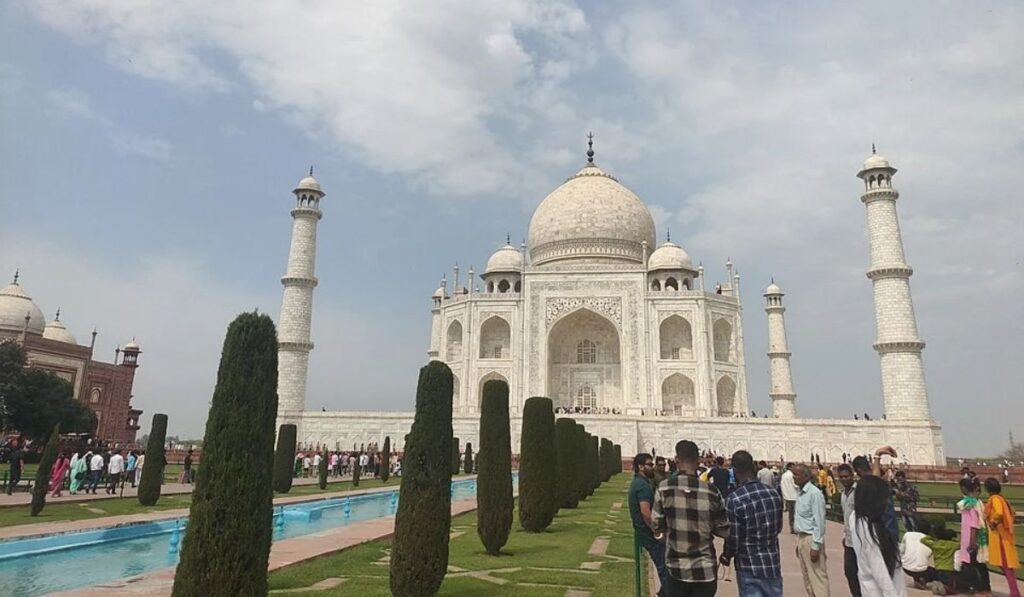
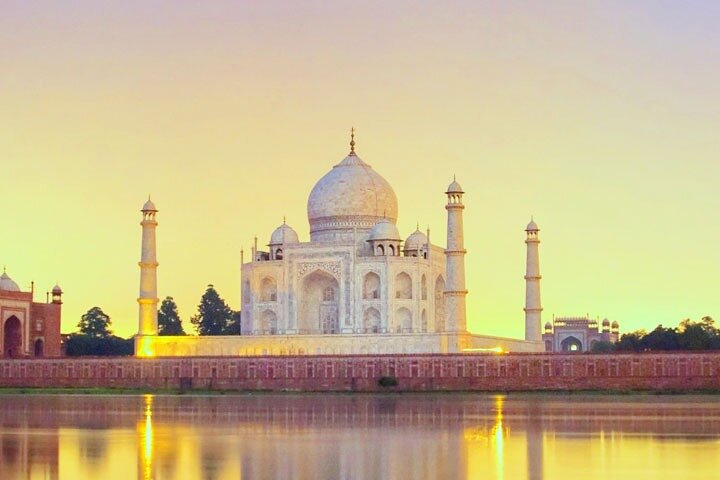
<figure class="wp-block-image size-large"><img src="https://www.tajmahalsplendortours.com/wp-content/uploads/2026/09/taj-mahal-front-view-agra-1024x597.jpg" alt="Front view of the Taj Mahal in Agra with gardens and visitors" class="wp-image-1828"/></figure>
<!-- /wp:image -->
<!-- wp:heading {"level":1,"anchor":"h-taj-mahal-ticket-booking-quick-summary"} -->
<h1 id="h-taj-mahal-ticket-booking-quick-summary" class="wp-block-heading">Taj Mahal Ticket Booking Quick Summary</h1>
<!-- /wp:heading -->
<!-- wp:table -->
<figure class="wp-block-table"><table class="has-fixed-layout"><tbody><tr><th>Information</th><th>Current Details</th></tr><tr><td>Indian Entry Ticket</td><td>₹50</td></tr><tr><td>Foreign Tourist Ticket</td><td>₹1,100</td></tr><tr><td>SAARC/BIMSTEC Ticket</td><td>₹540</td></tr><tr><td>Main Mausoleum Add-On</td><td>₹200</td></tr><tr><td>Children Below 15</td><td>Free general entry</td></tr><tr><td>Opening</td><td>30 minutes before sunrise</td></tr><tr><td>Closing</td><td>30 minutes before sunset</td></tr><tr><td>Friday</td><td>Closed for general viewing</td></tr><tr><td>Main Entry Gates</td><td>Eastern and Western</td></tr><tr><td>Southern Gate</td><td>Exit only at present</td></tr><tr><td>Online Booking</td><td>Available</td></tr><tr><td>Offline Ticket Counters</td><td>Currently listed</td></tr><tr><td>ID</td><td>Carry valid government-issued ID</td></tr></tbody></table></figure>
<!-- /wp:table -->
<!-- wp:paragraph -->
<p>Ticket prices and visitor regulations may change, so verify current information before your visit.</p>
<!-- /wp:paragraph -->
<!-- wp:heading {"level":1,"anchor":"h-frequently-asked-questions-about-taj-mahal-tickets"} -->
<h1 id="h-frequently-asked-questions-about-taj-mahal-tickets" class="wp-block-heading">Frequently Asked Questions About Taj Mahal Tickets</h1>
<!-- /wp:heading -->
<!-- wp:heading {"anchor":"h-1-how-much-is-the-taj-mahal-entry-ticket"} -->
<h2 id="h-1-how-much-is-the-taj-mahal-entry-ticket" class="wp-block-heading">1. How much is the Taj Mahal entry ticket?</h2>
<!-- /wp:heading -->
<!-- wp:paragraph -->
<p>The current standard Taj Mahal entry ticket is ₹50 for Indian/domestic visitors, ₹540 for eligible SAARC/BIMSTEC visitors and ₹1,100 for foreign tourists. Visitors who want to enter the main mausoleum need to pay an additional ₹200 per person.</p>
<!-- /wp:paragraph -->
<!-- wp:heading {"anchor":"h-2-what-is-the-taj-mahal-ticket-price-for-indians"} -->
<h2 id="h-2-what-is-the-taj-mahal-ticket-price-for-indians" class="wp-block-heading">2. What is the Taj Mahal ticket price for Indians?</h2>
<!-- /wp:heading -->
<!-- wp:paragraph -->
<p>The standard Taj Mahal ticket price for Indian visitors is currently ₹50. If you also want to visit the main mausoleum, add ₹200, making the total ₹250 per person.</p>
<!-- /wp:paragraph -->
<!-- wp:heading {"anchor":"h-3-what-is-the-taj-mahal-ticket-price-for-foreigners"} -->
<h2 id="h-3-what-is-the-taj-mahal-ticket-price-for-foreigners" class="wp-block-heading">3. What is the Taj Mahal ticket price for foreigners?</h2>
<!-- /wp:heading -->
<!-- wp:paragraph -->
<p>The standard foreign tourist ticket currently costs ₹1,100. Main mausoleum access costs an additional ₹200, making the combined ticket cost ₹1,300.</p>
<!-- /wp:paragraph -->
<!-- wp:heading {"anchor":"h-4-is-taj-mahal-entry-free-for-children"} -->
<h2 id="h-4-is-taj-mahal-entry-free-for-children" class="wp-block-heading">4. Is Taj Mahal entry free for children?</h2>
<!-- /wp:heading -->
<!-- wp:paragraph -->
<p>Yes. General admission is currently free for children below 15 years of age, including both Indian and foreign children. Special experiences such as night viewing follow separate child-ticket rules.</p>
<!-- /wp:paragraph -->
<!-- wp:heading {"anchor":"h-5-does-the-regular-ticket-include-the-main-mausoleum"} -->
<h2 id="h-5-does-the-regular-ticket-include-the-main-mausoleum" class="wp-block-heading">5. Does the regular ticket include the main mausoleum?</h2>
<!-- /wp:heading -->
<!-- wp:paragraph -->
<p>No. Standard Taj Mahal admission does not include entry into the main mausoleum. Visitors who want to enter the mausoleum must purchase an additional ₹200 ticket.</p>
<!-- /wp:paragraph -->
<!-- wp:heading {"anchor":"h-6-is-the-200-mausoleum-ticket-compulsory"} -->
<h2 id="h-6-is-the-200-mausoleum-ticket-compulsory" class="wp-block-heading">6. Is the ₹200 mausoleum ticket compulsory?</h2>
<!-- /wp:heading -->
<!-- wp:paragraph -->
<p>No. The mausoleum ticket is optional. You can still visit the Taj Mahal complex with a standard admission ticket without paying for interior mausoleum access.</p>
<!-- /wp:paragraph -->
<!-- wp:heading {"anchor":"h-7-can-i-buy-taj-mahal-tickets-online"} -->
<h2 id="h-7-can-i-buy-taj-mahal-tickets-online" class="wp-block-heading">7. Can I buy Taj Mahal tickets online?</h2>
<!-- /wp:heading -->
<!-- wp:paragraph -->
<p>Yes. Taj Mahal tickets can be purchased online. Use the current official Taj Mahal or Archaeological Survey of India booking route rather than an unfamiliar third-party ticket website.</p>
<!-- /wp:paragraph -->
<!-- wp:heading {"anchor":"h-8-where-can-i-book-official-taj-mahal-tickets"} -->
<h2 id="h-8-where-can-i-book-official-taj-mahal-tickets" class="wp-block-heading">8. Where can I book official Taj Mahal tickets?</h2>
<!-- /wp:heading -->
<!-- wp:paragraph -->
<p>Start with the official Taj Mahal government website or current ASI ticketing information. Booking platforms can change, so following the latest official link is safer than relying on an old bookmarked booking URL.</p>
<!-- /wp:paragraph -->
<!-- wp:heading {"anchor":"h-9-can-i-buy-taj-mahal-tickets-at-the-gate"} -->
<h2 id="h-9-can-i-buy-taj-mahal-tickets-at-the-gate" class="wp-block-heading">9. Can I buy Taj Mahal tickets at the gate?</h2>
<!-- /wp:heading -->
<!-- wp:paragraph -->
<p>Ticket counters are currently listed at the main visitor entry areas. However, online booking can be more convenient, particularly during weekends, peak travel periods and early-morning visits.</p>
<!-- /wp:paragraph -->
<!-- wp:heading {"anchor":"h-10-is-the-taj-mahal-closed-on-friday"} -->
<h2 id="h-10-is-the-taj-mahal-closed-on-friday" class="wp-block-heading">10. Is the Taj Mahal closed on Friday?</h2>
<!-- /wp:heading -->
<!-- wp:paragraph -->
<p>Yes. The Taj Mahal is closed to general tourist viewing every Friday. Plan your main Taj Mahal visit between Saturday and Thursday.</p>
<!-- /wp:paragraph -->
<!-- wp:heading {"anchor":"h-11-what-time-does-the-taj-mahal-open"} -->
<h2 id="h-11-what-time-does-the-taj-mahal-open" class="wp-block-heading">11. What time does the Taj Mahal open?</h2>
<!-- /wp:heading -->
<!-- wp:paragraph -->
<p>The Taj Mahal generally opens 30 minutes before sunrise and closes 30 minutes before sunset. Exact clock times therefore vary depending on the season and date.</p>
<!-- /wp:paragraph -->
<!-- wp:heading {"anchor":"h-12-which-gate-should-i-use-to-enter-the-taj-mahal"} -->
<h2 id="h-12-which-gate-should-i-use-to-enter-the-taj-mahal" class="wp-block-heading">12. Which gate should I use to enter the Taj Mahal?</h2>
<!-- /wp:heading -->
<!-- wp:paragraph -->
<p>Visitors currently enter through the Eastern or Western Gate. The Southern Gate is presently closed for tourist entry and is being used for exit.</p>
<!-- /wp:paragraph -->
<!-- wp:heading {"anchor":"h-13-is-id-required-for-taj-mahal-entry"} -->
<h2 id="h-13-is-id-required-for-taj-mahal-entry" class="wp-block-heading">13. Is ID required for Taj Mahal entry?</h2>
<!-- /wp:heading -->
<!-- wp:paragraph -->
<p>Visitors are advised to carry government-issued identification. International tourists should keep appropriate passport or travel identification available, particularly when using nationality-based ticket categories.</p>
<!-- /wp:paragraph -->
<!-- wp:heading {"anchor":"h-14-can-taj-mahal-tickets-be-booked-in-advance"} -->
<h2 id="h-14-can-taj-mahal-tickets-be-booked-in-advance" class="wp-block-heading">14. Can Taj Mahal tickets be booked in advance?</h2>
<!-- /wp:heading -->
<!-- wp:paragraph -->
<p>Yes. Advance online booking is available and can be useful if you already know your travel date, especially for weekends, peak season or sunrise visits.</p>
<!-- /wp:paragraph -->
<!-- wp:heading {"anchor":"h-15-are-taj-mahal-night-viewing-tickets-different-from-normal-tickets"} -->
<h2 id="h-15-are-taj-mahal-night-viewing-tickets-different-from-normal-tickets" class="wp-block-heading">15. Are Taj Mahal night-viewing tickets different from normal tickets?</h2>
<!-- /wp:heading -->
<!-- wp:paragraph -->
<p>Yes. Night viewing is a separate experience with separate prices, limited dates and scheduled entry batches. A normal daytime Taj Mahal ticket does not provide night-viewing access.</p>
<!-- /wp:paragraph -->
<!-- wp:heading {"level":1,"anchor":"h-final-tips-for-booking-your-taj-mahal-visit"} -->
<h1 id="h-final-tips-for-booking-your-taj-mahal-visit" class="wp-block-heading">Final Tips for Booking Your Taj Mahal Visit</h1>
<!-- /wp:heading -->
<!-- wp:paragraph -->
<p>The Taj Mahal ticketing system is relatively straightforward once you understand the different ticket categories.</p>
<!-- /wp:paragraph -->
<!-- wp:paragraph -->
<p>Before your visit:</p>
<!-- /wp:paragraph -->
<!-- wp:list -->
<ul class="wp-block-list"><!-- wp:list-item -->
<li>Use an official booking source</li>
<!-- /wp:list-item -->
<!-- wp:list-item -->
<li>Select the correct visitor category</li>
<!-- /wp:list-item -->
<!-- wp:list-item -->
<li>Decide whether you want main mausoleum access</li>
<!-- /wp:list-item -->
<!-- wp:list-item -->
<li>Carry valid ID</li>
<!-- /wp:list-item -->
<!-- wp:list-item -->
<li>Avoid planning your visit on Friday</li>
<!-- /wp:list-item -->
<!-- wp:list-item -->
<li>Check the latest opening and closing information</li>
<!-- /wp:list-item -->
<!-- wp:list-item -->
<li>Review prohibited items</li>
<!-- /wp:list-item -->
<!-- wp:list-item -->
<li>Arrive early enough for security checks</li>
<!-- /wp:list-item -->
<!-- wp:list-item -->
<li>Reconfirm current ticket prices before traveling</li>
<!-- /wp:list-item --></ul>
<!-- /wp:list -->
<!-- wp:paragraph -->
<p>Travelers who prefer a fully arranged experience can explore our <a href="https://www.tajmahalsplendortours.com/taj-mahal-tour-packages/">private Taj Mahal tour packages</a> that combine transportation from Delhi, guided sightseeing, and entry to Agra's top attractions. We also offer <a href="https://www.tajmahalsplendortours.com/same-day-tours/">same day tours</a> for visitors with limited time, and <a href="https://www.tajmahalsplendortours.com/golden-triangle-tour-packages/">Golden Triangle tour packages</a> that include Delhi, Agra, and Jaipur in one itinerary.</p>
<!-- /wp:paragraph -->
<!-- wp:paragraph -->
<p></p>
<!-- /wp:paragraph -->
Planning a visit to the Taj Mahal in Agra starts with understanding the ticket options. The Taj Mahal entry ticket price varies depending on whether you are an Indian visitor, a citizen of a SAARC/BIMSTEC country, or an international tourist. Visitors who want to enter the main mausoleum also need to purchase an additional ticket.
This guide explains the latest Taj Mahal ticket prices, how to book tickets online, ticket options for children, entry gates, opening hours, night viewing, ID requirements, and important rules to know before you arrive.
If you are visiting the Taj Mahal for the first time, understanding these details in advance can make your visit much easier and help you avoid common booking mistakes.
Important: Taj Mahal ticket prices, booking systems, entry rules, and timings can change. Always check the latest information on the official Taj Mahal or Archaeological Survey of India booking platform before your visit.
Taj Mahal Entry Ticket Price 2026
The standard Taj Mahal ticket currently starts at ₹50 for Indian visitors, ₹540 for citizens of SAARC and BIMSTEC countries, and ₹1,100 for other foreign visitors.
Entering the main mausoleum costs an additional ₹200 per person.
Visitor Category
Standard Entry
Main Mausoleum Add-On
Total With Mausoleum
Indian / Domestic / OCI Visitor
₹50
₹200
₹250
SAARC / BIMSTEC Visitor
₹540
₹200
₹740
Foreign Tourist
₹1,100
₹200
₹1,300
Children Below 15
Free general entry
Check current booking rules
Depends on access required
The main mausoleum supplement is optional. You only need to purchase it if you want to enter the mausoleum building itself.
Taj Mahal Ticket Price for Indian Visitors
Indian visitors currently pay ₹50 for standard admission.
If you also want to enter the main mausoleum, the total becomes:
₹50 + ₹200 = ₹250 per person
Taj Mahal Ticket Price for Foreign Tourists
Foreign tourists currently pay ₹1,100 for standard admission.
Adding main mausoleum access brings the total to:
₹1,100 + ₹200 = ₹1,300 per person
Taj Mahal Ticket Price for SAARC and BIMSTEC Visitors
Visitors qualifying under the SAARC or BIMSTEC category currently pay ₹540.
With mausoleum access:
₹540 + ₹200 = ₹740 per person
Make sure you select the correct nationality category during booking and carry appropriate identification.
What Is Included in the Taj Mahal Entry Ticket?
A regular Taj Mahal entry ticket provides access to the monument complex and its main visitor areas, including the famous gardens and exterior viewing areas around the Taj Mahal.
However, the standard ticket and the main mausoleum ticket are not the same thing.
The regular ticket allows you to visit the Taj Mahal complex, while visitors wishing to enter the main mausoleum need to purchase the additional mausoleum ticket.
This distinction is particularly important for first-time visitors because it is easy to assume that the standard Taj Mahal ticket automatically includes everything inside the complex.
Does the Regular Taj Mahal Ticket Include the Main Mausoleum?
No. The regular Taj Mahal ticket does not include entry inside the main mausoleum.
Visitors who want to enter the main mausoleum need to purchase an additional ₹200 ticket along with their regular admission ticket.
The mausoleum ticket is optional.
For example:
Indian standard entry: ₹50
Main mausoleum: ₹200
Total: ₹250
For a foreign visitor:
Standard entry: ₹1,100
Main mausoleum: ₹200
Total: ₹1,300
When booking your ticket online, check whether mausoleum access has been added before completing your payment.
Is the Taj Mahal Mausoleum Ticket Worth Buying?
For many first-time visitors, entering the main mausoleum is an important part of experiencing the Taj Mahal.
The mausoleum contains the cenotaphs associated with Mughal emperor Shah Jahan and Mumtaz Mahal and allows visitors to experience the interior craftsmanship and architectural details of the monument.
You may want the mausoleum ticket if:
This is your first visit to the Taj Mahal
You want to experience the monument beyond its exterior
Mughal architecture and history interest you
You have enough time for a more complete visit
You may choose to skip it if:
You have very limited sightseeing time
Your main interest is photography from the gardens
You have already visited the mausoleum previously
The ₹200 supplement is optional, so the right choice depends on the experience you want.
How to Book Taj Mahal Tickets Online
Booking Taj Mahal tickets online can save you from spending additional time purchasing tickets after reaching the monument.
The exact booking interface can change, but the general process is straightforward.
Step 1: Use the Official Booking Source
Start from the official Taj Mahal or Archaeological Survey of India ticket information page.
Avoid booking through unfamiliar websites simply because they appear in search results.
Third-party tour companies may legitimately sell tours that include tickets, but if you only need an entry ticket, use the official booking channel.
Step 2: Select the Taj Mahal
Choose the Taj Mahal from the list of available monuments.
Double-check that you are booking the Taj Mahal in Agra, Uttar Pradesh.
Step 3: Choose Your Visit Date
Select the date on which you plan to visit.
Remember that the Taj Mahal is normally closed to general visitors on Fridays.
Step 4: Select the Correct Visitor Category
Choose the correct category for each visitor.
Typical options include:
Indian / Domestic / OCI
SAARC or BIMSTEC
Foreign visitor
Your ticket category should correspond with the identification you carry.
Step 5: Add Main Mausoleum Entry if Required
If you want to enter the main mausoleum, select the additional mausoleum option.
Do not assume it is automatically included in your standard ticket.
Step 6: Enter Visitor Details
Enter all requested details accurately.
Check:
Name
Nationality
Visitor category
Date
Ticket type
Step 7: Complete Payment
Proceed with the available online payment method.
Review the booking details once more before paying.
Step 8: Save Your E-Ticket
After payment, save your confirmation or e-ticket on your phone.
It is a good idea to:
Download the ticket
Keep a screenshot as backup
Carry valid government-issued identification
Keep your phone charged
Online booking does not mean you can bypass security screening. All visitors must follow the monument’s entry and security procedures.
Can You Buy Taj Mahal Tickets at the Gate?
Ticket windows are currently listed at the principal entry areas, so visitors may also be able to purchase tickets offline.
However, buying online is usually more convenient if you already know your travel date.
Offline ticket purchasing may involve additional waiting, particularly during busy periods.
Online booking can be especially useful for:
Sunrise visitors
Weekend visits
Peak-season trips
Families and groups
Travelers following a fixed itinerary
Regardless of how your ticket is purchased, you still need to go through security before entering the monument.
Taj Mahal Entry Gates and Ticket Counters
Understanding the gates can save time when you arrive.
Eastern Gate
The Eastern Gate is one of the main entrances to the Taj Mahal.
Visitors staying around the eastern side of the Taj Mahal or arriving through the Shilpgram area commonly use this side.
Ticketing and visitor facilities are available in the area.
Western Gate
The Western Gate is another main entrance used by Taj Mahal visitors.
It can be convenient depending on where you are arriving from in Agra.
Ticket facilities are also available on the western side.
Southern Gate
The Southern Gate is currently not used for tourist entry.
It is presently used for exit.
Visitors should therefore plan to enter through the Eastern or Western Gate rather than arriving at the Southern Gate expecting admission.
Because entry arrangements can occasionally change, verify current gate information before visiting.
Taj Mahal Opening and Closing Time
The Taj Mahal generally opens 30 minutes before sunrise and closes 30 minutes before sunset on normal visiting days.
Because sunrise and sunset change through the year, there is no single fixed opening time that applies every day.
Ticket windows may operate on a slightly different schedule from monument visiting hours.
For this reason, visitors planning a sunrise or late-afternoon visit should check the current day’s timing in advance.
Is the Taj Mahal Open on Friday?
No. The Taj Mahal is closed to general tourists on Fridays.
If your Agra trip includes a Taj Mahal visit, avoid planning your primary sightseeing visit for Friday.
Many other Agra attractions may still operate on Friday, so travelers staying in the city can plan alternative sightseeing and visit the Taj Mahal on another day.
Best Time to Visit the Taj Mahal
The best time depends on the kind of experience you want.
Sunrise
Sunrise is one of the most popular times to visit.
Advantages can include:
Softer morning light
Comfortable temperatures in many seasons
Excellent photography conditions
More time for sightseeing later in the day
Arrive early enough to complete security procedures.
Morning
A regular morning visit works well if you do not want to wake up before sunrise but still prefer to avoid the hottest part of the day.
Afternoon
Afternoon can be convenient for travelers arriving in Agra around midday.
During hotter months, however, temperatures can be uncomfortable.
Sunset
Late afternoon and sunset offer warmer light and attractive views of the monument, though popular viewing areas may become busy.
For a detailed seasonal breakdown, readers can also consult a dedicated Taj Mahal opening hours and best time to visit guide.
Taj Mahal Online Ticket vs Offline Ticket
Factor
Online Ticket
Offline Ticket
Convenience
High
Depends on queues
Advance Planning
Easy
Not required
Ticket Purchase Queue
Can be avoided
Possible
Security Check
Required
Required
Best For
Planned visits
Flexible or last-minute visits
Payment
Online
Depends on available counter facilities
Online tickets mainly simplify the ticket-purchasing stage.
They do not allow visitors to avoid security checks or other monument entry procedures.
What Documents Are Required for Taj Mahal Entry?
Visitors should carry a valid government-issued identity document.
International visitors should normally keep their passport or appropriate travel identification available.
Your identification should support the visitor category selected during booking.
For example, if you purchase a ticket under a particular nationality category, officials may need to confirm that you qualify for that ticket type.
Keep both your ticket and identification easily accessible when approaching the entry area.
Taj Mahal Ticket Price for Children
Children below 15 years of age currently receive free general entry to the Taj Mahal.
The rule applies to both Indian and foreign children for standard entry.
However, special experiences such as night viewing have separate ticket structures and age rules.
Families should therefore check the applicable ticket requirement when booking anything beyond normal daytime admission.
Taj Mahal Night Viewing Ticket Price and Booking
Night viewing is different from a normal daytime Taj Mahal visit and requires a separate ticket.
The experience is offered around selected full-moon dates rather than every night.
Current listed night-viewing prices are:
Visitor
Night Viewing Ticket
Indian Adult
₹510
Foreign Adult
₹750
Child aged 3–15
₹500
Night viewing is generally available on the full moon night and two nights before and two nights after, subject to the official schedule.
Night viewing is closed on:
Fridays
During the month of Ramzan
The current visitor system operates in scheduled batches, and visitors are required to report in advance for security procedures.
Because full-moon dates, booking windows, reporting instructions and availability can change, always check the official Taj Mahal/ASI night-viewing information before planning your trip.
How Far in Advance Should You Book Taj Mahal Tickets?
For normal daytime entry, there is no need to create unnecessary pressure around booking months in advance.
However, booking earlier can make planning easier when traveling during busy periods.
Consider booking ahead for:
Regular Weekdays
A short advance booking is usually helpful if your itinerary is already fixed.
Weekends
Weekends can attract more domestic visitors, so booking online before reaching the monument may be convenient.
Peak Tourist Season
The October-to-March period is popular because of generally more comfortable weather.
Advance planning is useful during this period.
Christmas and New Year
Agra receives a significant number of domestic and international travelers around year-end holidays.
Book early once your itinerary is confirmed.
Sunrise Visits
Booking before the morning of your visit removes one task from an already early start.
Night Viewing
Treat night viewing separately because access is limited to specific dates and scheduled batches.
Check availability as soon as your travel date is confirmed.
Things to Know Before Entering the Taj Mahal
Security regulations at the Taj Mahal are stricter than at an ordinary tourist attraction.
Keep these points in mind:
All visitors must pass through security screening.
Carry valid government-issued identification.
Drone cameras are strictly prohibited.
Carry only essential belongings where possible.
Check the current prohibited-items list before leaving your hotel.
A water bottle is currently permitted according to official visitor information.
Free shoe racks are available near the main mausoleum.
Cloakroom facilities are available around the main entry areas.
Follow instructions provided by ASI and security staff.
Photography and equipment rules may differ depending on the area of the monument.
Avoid carrying unnecessary items, as they can slow down the security process.
Common Taj Mahal Ticket Booking Mistakes
A few simple mistakes can complicate an otherwise straightforward visit.
1. Booking Through an Unfamiliar Website
Search results may contain advertisements and third-party services.
Use the official Taj Mahal/ASI ticketing route when purchasing standalone entry tickets.
2. Selecting the Wrong Visitor Category
Do not select a cheaper visitor category unless you genuinely qualify for it.
Your ID may be checked.
3. Forgetting the Mausoleum Ticket
If entering the main mausoleum is important to you, add the supplementary ticket while booking.
4. Planning Your Visit on Friday
The Taj Mahal is closed to general visitors on Fridays.
Build your Agra itinerary around this closure.
5. Arriving Without ID
Carry identification even if you have already booked your ticket online.
6. Confusing Night Viewing With Daytime Entry
A normal daytime ticket does not function as a night-viewing ticket.
They are separate experiences.
7. Arriving Too Close to Closing Time
The monument follows sunrise- and sunset-related timings.
Arriving very late may leave insufficient time for entry and sightseeing.
8. Going to the Southern Gate for Entry
The Southern Gate is currently not being used for entry.
Use the Eastern or Western Gate.
9. Not Checking Latest Rules
Ticket portals, timings and visitor rules can change.
Do a final official check before traveling.
Which Taj Mahal Ticket Should You Buy?
Indian Visitor
If you only want to explore the Taj Mahal complex, the standard ₹50 ticket is sufficient.
If you also want to enter the main mausoleum, add ₹200.
Total with mausoleum: ₹250
International Tourist
Foreign visitors currently pay ₹1,100 for standard entry.
Add ₹200 if you want to enter the main mausoleum.
Total with mausoleum: ₹1,300
Family With Children
Children below 15 currently receive free general admission.
Adults still need their appropriate tickets.
Check separate rules if you are booking night viewing or another special experience.
First-Time Visitor
If this is your first and possibly only visit to the Taj Mahal, consider adding the mausoleum ticket so you can experience both the exterior complex and the interior mausoleum.
Traveler With Limited Time
Book your ticket online beforehand, carry minimal belongings and decide about mausoleum access before arriving.
This reduces unnecessary decisions at the monument.
Sample Taj Mahal Ticket Costs
These examples make it easier to estimate the basic entry cost.
Indian Couple
Standard Entry
₹50 × 2 = ₹100
With Main Mausoleum
₹250 × 2 = ₹500
Two International Visitors
Standard Entry
₹1,100 × 2 = ₹2,200
With Main Mausoleum
₹1,300 × 2 = ₹2,600
Indian Family With Two Adults and Two Children Below 15
Standard Entry
Adults: ₹50 × 2 = ₹100
Children below 15: Free general entry
Total standard admission: ₹100
If the adults add mausoleum access, additional charges apply accordingly.
These examples cover Taj Mahal admission only.
They do not include:
Transport
Parking
Guide services
Food
Hotel costs
Other Agra attractions
Tour packages
If you’re looking for a hassle-free experience that includes entry tickets, transportation, and an expert guide, explore our Taj Mahal tour packages which cover everything from Delhi to Agra and back.
Taj Mahal Ticket Booking Quick Summary
Information
Current Details
Indian Entry Ticket
₹50
Foreign Tourist Ticket
₹1,100
SAARC/BIMSTEC Ticket
₹540
Main Mausoleum Add-On
₹200
Children Below 15
Free general entry
Opening
30 minutes before sunrise
Closing
30 minutes before sunset
Friday
Closed for general viewing
Main Entry Gates
Eastern and Western
Southern Gate
Exit only at present
Online Booking
Available
Offline Ticket Counters
Currently listed
ID
Carry valid government-issued ID
Ticket prices and visitor regulations may change, so verify current information before your visit.
Frequently Asked Questions About Taj Mahal Tickets
1. How much is the Taj Mahal entry ticket?
The current standard Taj Mahal entry ticket is ₹50 for Indian/domestic visitors, ₹540 for eligible SAARC/BIMSTEC visitors and ₹1,100 for foreign tourists. Visitors who want to enter the main mausoleum need to pay an additional ₹200 per person.
2. What is the Taj Mahal ticket price for Indians?
The standard Taj Mahal ticket price for Indian visitors is currently ₹50. If you also want to visit the main mausoleum, add ₹200, making the total ₹250 per person.
3. What is the Taj Mahal ticket price for foreigners?
The standard foreign tourist ticket currently costs ₹1,100. Main mausoleum access costs an additional ₹200, making the combined ticket cost ₹1,300.
4. Is Taj Mahal entry free for children?
Yes. General admission is currently free for children below 15 years of age, including both Indian and foreign children. Special experiences such as night viewing follow separate child-ticket rules.
5. Does the regular ticket include the main mausoleum?
No. Standard Taj Mahal admission does not include entry into the main mausoleum. Visitors who want to enter the mausoleum must purchase an additional ₹200 ticket.
6. Is the ₹200 mausoleum ticket compulsory?
No. The mausoleum ticket is optional. You can still visit the Taj Mahal complex with a standard admission ticket without paying for interior mausoleum access.
7. Can I buy Taj Mahal tickets online?
Yes. Taj Mahal tickets can be purchased online. Use the current official Taj Mahal or Archaeological Survey of India booking route rather than an unfamiliar third-party ticket website.
8. Where can I book official Taj Mahal tickets?
Start with the official Taj Mahal government website or current ASI ticketing information. Booking platforms can change, so following the latest official link is safer than relying on an old bookmarked booking URL.
9. Can I buy Taj Mahal tickets at the gate?
Ticket counters are currently listed at the main visitor entry areas. However, online booking can be more convenient, particularly during weekends, peak travel periods and early-morning visits.
10. Is the Taj Mahal closed on Friday?
Yes. The Taj Mahal is closed to general tourist viewing every Friday. Plan your main Taj Mahal visit between Saturday and Thursday.
11. What time does the Taj Mahal open?
The Taj Mahal generally opens 30 minutes before sunrise and closes 30 minutes before sunset. Exact clock times therefore vary depending on the season and date.
12. Which gate should I use to enter the Taj Mahal?
Visitors currently enter through the Eastern or Western Gate. The Southern Gate is presently closed for tourist entry and is being used for exit.
13. Is ID required for Taj Mahal entry?
Visitors are advised to carry government-issued identification. International tourists should keep appropriate passport or travel identification available, particularly when using nationality-based ticket categories.
14. Can Taj Mahal tickets be booked in advance?
Yes. Advance online booking is available and can be useful if you already know your travel date, especially for weekends, peak season or sunrise visits.
15. Are Taj Mahal night-viewing tickets different from normal tickets?
Yes. Night viewing is a separate experience with separate prices, limited dates and scheduled entry batches. A normal daytime Taj Mahal ticket does not provide night-viewing access.
Final Tips for Booking Your Taj Mahal Visit
The Taj Mahal ticketing system is relatively straightforward once you understand the different ticket categories.
Before your visit:
Use an official booking source
Select the correct visitor category
Decide whether you want main mausoleum access
Carry valid ID
Avoid planning your visit on Friday
Check the latest opening and closing information
Review prohibited items
Arrive early enough for security checks
Reconfirm current ticket prices before traveling
Travelers who prefer a fully arranged experience can explore our private Taj Mahal tour packages that combine transportation from Delhi, guided sightseeing, and entry to Agra’s top attractions. We also offer same day tours for visitors with limited time, and Golden Triangle tour packages that include Delhi, Agra, and Jaipur in one itinerary.
<!-- wp:paragraph -->
<p>The Taj Mahal is open for daytime visitors from <strong>30 minutes before sunrise until 30 minutes before sunset</strong>, from Saturday to Thursday. It is <strong>closed every Friday for general tourist viewing</strong>. Because the official schedule follows sunrise and sunset rather than fixed clock times, the exact opening and closing time changes during the year.</p>
<!-- /wp:paragraph -->
<!-- wp:paragraph -->
<p>For most travellers, the best time to visit the Taj Mahal is <strong>early morning</strong>, especially during the cooler months from October to March. However, weather, winter fog, crowds and your travel schedule can all affect the ideal time. This guide explains the Taj Mahal opening hours, the best months and time of day to visit, Friday closure, sunrise vs sunset, how early to arrive and practical tips for planning your visit.</p>
<!-- /wp:paragraph -->
<!-- wp:heading {"anchor":"h-taj-mahal-opening-hours-at-a-glance"} -->
<h2 id="h-taj-mahal-opening-hours-at-a-glance" class="wp-block-heading">Taj Mahal Opening Hours at a Glance</h2>
<!-- /wp:heading -->
<!-- wp:paragraph -->
<p>The most important thing to know is that the Taj Mahal does not officially operate on one fixed opening and closing time throughout the year.</p>
<!-- /wp:paragraph -->
<!-- wp:table -->
<figure class="wp-block-table"><table class="has-fixed-layout"><tbody><tr><th>Information</th><th>Details</th></tr><tr><td>Open Days</td><td>Saturday to Thursday</td></tr><tr><td>Opening Time</td><td>30 minutes before sunrise</td></tr><tr><td>Closing Time</td><td>30 minutes before sunset</td></tr><tr><td>Friday</td><td>Closed for general tourist viewing</td></tr><tr><td>Main Entry Gates</td><td>East Gate and West Gate</td></tr><tr><td>South Gate</td><td>Currently used for exit only</td></tr><tr><td>Best Time to Visit</td><td>Early morning for most travellers</td></tr><tr><td>Recommended Visit Duration</td><td>Around 2–3 hours</td></tr></tbody></table></figure>
<!-- /wp:table -->
<!-- wp:paragraph -->
<p>You may see websites mentioning fixed hours such as 6:00 AM to 6:30 PM. These can be useful as rough estimates during certain seasons, but travellers should remember that the official Taj Mahal timings depend on sunrise and sunset.</p>
<!-- /wp:paragraph -->
<!-- wp:paragraph -->
<p>For the most accurate timing on your travel date, check the latest official information before visiting.</p>
<!-- /wp:paragraph -->
<!-- wp:image {"id":1822,"sizeSlug":"large","linkDestination":"none"} -->
<figure class="wp-block-image size-large"><img src="https://www.tajmahalsplendortours.com/wp-content/uploads/2026/09/taj-mahal-opening-hours-1024x597.jpg" alt="Taj Mahal Opening Hours & Best Time to Visit" class="wp-image-1822"/></figure>
<!-- /wp:image -->
<!-- wp:heading {"anchor":"h-what-time-does-the-taj-mahal-actually-open"} -->
<h2 id="h-what-time-does-the-taj-mahal-actually-open" class="wp-block-heading">What Time Does the Taj Mahal Actually Open?</h2>
<!-- /wp:heading -->
<!-- wp:paragraph -->
<p>The Taj Mahal opens <strong>30 minutes before sunrise</strong>, so the actual opening time varies by season.</p>
<!-- /wp:paragraph -->
<!-- wp:paragraph -->
<p>In summer, sunrise is earlier, while winter mornings begin later. This is why planning your visit around an exact fixed time can sometimes cause confusion.</p>
<!-- /wp:paragraph -->
<!-- wp:paragraph -->
<p>If you want to see the Taj Mahal near sunrise, do not plan to reach the area exactly when the monument opens. You may still need time for parking, transport to the gate, security checks and walking.</p>
<!-- /wp:paragraph -->
<!-- wp:paragraph -->
<p>Travellers planning an early visit can also read our guide on <a href="https://www.tajmahalsplendortours.com/blog/sunrise-taj-mahal-tours-worth-waking-up-early/">whether a sunrise Taj Mahal tour is worth waking up early for</a> before deciding between sunrise and a later visit.</p>
<!-- /wp:paragraph -->
<!-- wp:heading {"level":3,"anchor":"h-how-early-should-you-arrive"} -->
<h3 id="h-how-early-should-you-arrive" class="wp-block-heading">How Early Should You Arrive?</h3>
<!-- /wp:heading -->
<!-- wp:paragraph -->
<p>For a smooth early-morning visit, try to reach the Taj Mahal entry area with enough buffer before your preferred entry time.</p>
<!-- /wp:paragraph -->
<!-- wp:paragraph -->
<p>Keep your ticket ready, carry minimal belongings and allow time for security screening. If photography is one of your main priorities, arriving early gives you a better chance of reaching the main complex while the light is still soft.</p>
<!-- /wp:paragraph -->
<!-- wp:heading {"anchor":"h-is-the-taj-mahal-open-on-friday"} -->
<h2 id="h-is-the-taj-mahal-open-on-friday" class="wp-block-heading">Is the Taj Mahal Open on Friday?</h2>
<!-- /wp:heading -->
<!-- wp:paragraph -->
<p>No. The Taj Mahal is <strong>closed to general visitors every Friday</strong>.</p>
<!-- /wp:paragraph -->
<!-- wp:paragraph -->
<p>This is one of the most common planning mistakes made by travellers visiting Agra for only one day. If your itinerary falls on a Friday, move your Taj Mahal visit to Thursday or Saturday whenever possible.</p>
<!-- /wp:paragraph -->
<!-- wp:heading {"level":3,"anchor":"h-what-can-you-visit-in-agra-on-friday"} -->
<h3 id="h-what-can-you-visit-in-agra-on-friday" class="wp-block-heading">What Can You Visit in Agra on Friday?</h3>
<!-- /wp:heading -->
<!-- wp:paragraph -->
<p>A Friday does not have to become a wasted sightseeing day. You can plan other Agra attractions such as:</p>
<!-- /wp:paragraph -->
<!-- wp:list -->
<ul class="wp-block-list"><!-- wp:list-item -->
<li>Agra Fort</li>
<!-- /wp:list-item -->
<!-- wp:list-item -->
<li>Itimad-ud-Daulah, often called the Baby Taj</li>
<!-- /wp:list-item -->
<!-- wp:list-item -->
<li>Mehtab Bagh, particularly around sunset</li>
<!-- /wp:list-item --></ul>
<!-- /wp:list -->
<!-- wp:paragraph -->
<p>You can then visit the Taj Mahal the following morning or on the previous day.</p>
<!-- /wp:paragraph -->
<!-- wp:heading {"anchor":"h-best-time-to-visit-the-taj-mahal"} -->
<h2 id="h-best-time-to-visit-the-taj-mahal" class="wp-block-heading">Best Time to Visit the Taj Mahal</h2>
<!-- /wp:heading -->
<!-- wp:paragraph -->
<p>For most first-time visitors, <strong>early morning close to opening time</strong> is the best time to visit the Taj Mahal.</p>
<!-- /wp:paragraph -->
<!-- wp:paragraph -->
<p>Morning generally offers cooler temperatures, softer natural light and a more comfortable sightseeing experience than the middle of the day. It is particularly useful in warmer months, when afternoon heat can make walking tiring.</p>
<!-- /wp:paragraph -->
<!-- wp:paragraph -->
<p>However, sunrise should not automatically be treated as the best option for everyone. During parts of December and January, fog or haze can reduce visibility in the early morning. Travellers visiting during winter should check the weather forecast before planning their entire visit around sunrise.</p>
<!-- /wp:paragraph -->
<!-- wp:heading {"level":3,"anchor":"h-best-time-for-first-time-visitors"} -->
<h3 id="h-best-time-for-first-time-visitors" class="wp-block-heading">Best Time for First-Time Visitors</h3>
<!-- /wp:heading -->
<!-- wp:paragraph -->
<p>Choose early morning if you want a balanced experience with good light, comfortable temperatures and enough time to explore the complex without rushing.</p>
<!-- /wp:paragraph -->
<!-- wp:paragraph -->
<p>If this is your first visit and you also want more context about the monument itself, you can read our detailed guide to <a href="https://www.tajmahalsplendortours.com/blog/taj-mahal-history/">Taj Mahal history</a> before your trip.</p>
<!-- /wp:paragraph -->
<!-- wp:heading {"level":3,"anchor":"h-best-time-to-avoid-crowds"} -->
<h3 id="h-best-time-to-avoid-crowds" class="wp-block-heading">Best Time to Avoid Crowds</h3>
<!-- /wp:heading -->
<!-- wp:paragraph -->
<p>A non-Friday weekday near opening time is generally preferable when possible, especially if you want a quieter and more comfortable visit.</p>
<!-- /wp:paragraph -->
<!-- wp:paragraph -->
<p>Crowd levels can never be guaranteed, particularly during peak tourism periods, weekends and major holidays, but arriving early usually gives you a better chance of avoiding the busiest part of the day.</p>
<!-- /wp:paragraph -->
<!-- wp:heading {"level":3,"anchor":"h-best-time-for-photography"} -->
<h3 id="h-best-time-for-photography" class="wp-block-heading">Best Time for Photography</h3>
<!-- /wp:heading -->
<!-- wp:paragraph -->
<p>Sunrise and early morning are excellent for photography because the changing light creates softer tones on the white marble.</p>
<!-- /wp:paragraph -->
<!-- wp:paragraph -->
<p>Late afternoon can also be beautiful, especially when the light becomes warmer closer to sunset.</p>
<!-- /wp:paragraph -->
<!-- wp:image {"id":1821,"sizeSlug":"large","linkDestination":"none"} -->
<figure class="wp-block-image size-large"><img src="https://www.tajmahalsplendortours.com/wp-content/uploads/2026/09/taj-mahal-marble-bench-walkway-agra-1024x597.jpg" alt="Marble bench and walkway at Taj Mahal in Agra" class="wp-image-1821"/></figure>
<!-- /wp:image -->
<!-- wp:heading {"anchor":"h-sunrise-vs-sunset-at-the-taj-mahal"} -->
<h2 id="h-sunrise-vs-sunset-at-the-taj-mahal" class="wp-block-heading">Sunrise vs Sunset at the Taj Mahal</h2>
<!-- /wp:heading -->
<!-- wp:paragraph -->
<p>Both sunrise and late afternoon can be rewarding, but the better option depends on your schedule and travel style.</p>
<!-- /wp:paragraph -->
<!-- wp:table -->
<figure class="wp-block-table"><table class="has-fixed-layout"><tbody><tr><th>Factor</th><th>Sunrise / Early Morning</th><th>Late Afternoon</th></tr><tr><td>Temperature</td><td>Usually cooler</td><td>Can stay warm, especially in summer</td></tr><tr><td>Light</td><td>Soft morning light</td><td>Warm evening light</td></tr><tr><td>Crowds</td><td>Often easier early</td><td>Can become busier</td></tr><tr><td>Photography</td><td>Excellent</td><td>Excellent</td></tr><tr><td>Convenience</td><td>Requires an early start</td><td>Easier for many itineraries</td></tr><tr><td>Winter Fog</td><td>Can affect visibility</td><td>Less dependent on dawn conditions</td></tr><tr><td>Summer Visit</td><td>Highly recommended</td><td>More tiring before sunset</td></tr></tbody></table></figure>
<!-- /wp:table -->
<!-- wp:paragraph -->
<p>Choose <strong>sunrise</strong> if photography, cooler weather and an early start are your priorities.</p>
<!-- /wp:paragraph -->
<!-- wp:paragraph -->
<p>Choose <strong>late afternoon</strong> if you prefer a slower schedule, are travelling with family members who do not want to wake up very early, or if winter fog is affecting morning visibility.</p>
<!-- /wp:paragraph -->
<!-- wp:heading {"anchor":"h-best-months-to-visit-the-taj-mahal"} -->
<h2 id="h-best-months-to-visit-the-taj-mahal" class="wp-block-heading">Best Months to Visit the Taj Mahal</h2>
<!-- /wp:heading -->
<!-- wp:paragraph -->
<p>The broad best season to visit the Taj Mahal is <strong>October to March</strong>, when Agra generally experiences more comfortable temperatures.</p>
<!-- /wp:paragraph -->
<!-- wp:heading {"level":3,"anchor":"h-october-to-march"} -->
<h3 id="h-october-to-march" class="wp-block-heading">October to March</h3>
<!-- /wp:heading -->
<!-- wp:paragraph -->
<p>These months are popular because the weather is usually better for sightseeing than during peak summer.</p>
<!-- /wp:paragraph -->
<!-- wp:paragraph -->
<p>October, November, February and March can be particularly practical for travellers looking for a balance between temperature and visibility.</p>
<!-- /wp:paragraph -->
<!-- wp:heading {"level":3,"anchor":"h-december-and-january"} -->
<h3 id="h-december-and-january" class="wp-block-heading">December and January</h3>
<!-- /wp:heading -->
<!-- wp:paragraph -->
<p>Winter can feel pleasant during the day, but early morning fog and haze may occasionally reduce visibility.</p>
<!-- /wp:paragraph -->
<!-- wp:paragraph -->
<p>If seeing a clear sunrise view is extremely important to you, keep some flexibility in your schedule rather than depending entirely on one early-morning slot.</p>
<!-- /wp:paragraph -->
<!-- wp:heading {"level":3,"anchor":"h-april-to-june"} -->
<h3 id="h-april-to-june" class="wp-block-heading">April to June</h3>
<!-- /wp:heading -->
<!-- wp:paragraph -->
<p>Agra can become very hot during late spring and early summer. Visit as early as possible and avoid spending unnecessary time outside during the hottest part of the day.</p>
<!-- /wp:paragraph -->
<!-- wp:paragraph -->
<p>Dress for the weather, keep your sightseeing schedule realistic and check the latest prohibited-items rules before carrying food or drinks into the monument complex.</p>
<!-- /wp:paragraph -->
<!-- wp:heading {"level":3,"anchor":"h-july-to-september"} -->
<h3 id="h-july-to-september" class="wp-block-heading">July to September</h3>
<!-- /wp:heading -->
<!-- wp:paragraph -->
<p>The monsoon season brings humidity and possible rain. Conditions can be less predictable, but some travellers may prefer the atmosphere and seasonal scenery.</p>
<!-- /wp:paragraph -->
<!-- wp:paragraph -->
<p>Always check the forecast before planning photography-heavy visits.</p>
<!-- /wp:paragraph -->
<!-- wp:heading {"anchor":"h-best-day-of-the-week-to-visit"} -->
<h2 id="h-best-day-of-the-week-to-visit" class="wp-block-heading">Best Day of the Week to Visit</h2>
<!-- /wp:heading -->
<!-- wp:paragraph -->
<p>If your itinerary is flexible, <strong>non-Friday weekdays are generally preferable when possible</strong>.</p>
<!-- /wp:paragraph -->
<!-- wp:paragraph -->
<p>Friday is not available for regular tourist visits, while weekends, public holidays and peak travel periods can attract heavier crowds.</p>
<!-- /wp:paragraph -->
<!-- wp:paragraph -->
<p>A weekday visit does not guarantee an empty monument, but combining a non-Friday weekday with an early arrival can make your sightseeing experience more comfortable.</p>
<!-- /wp:paragraph -->
<!-- wp:heading {"anchor":"h-which-taj-mahal-gate-should-you-use"} -->
<h2 id="h-which-taj-mahal-gate-should-you-use" class="wp-block-heading">Which Taj Mahal Gate Should You Use?</h2>
<!-- /wp:heading -->
<!-- wp:paragraph -->
<p>Visitors currently enter through the <strong>East Gate or West Gate</strong>. The South Gate is used for exit rather than normal tourist entry.</p>
<!-- /wp:paragraph -->
<!-- wp:paragraph -->
<p>The best gate for you usually depends on where you are staying, your transport arrangements and how you are reaching the monument.</p>
<!-- /wp:paragraph -->
<!-- wp:paragraph -->
<p>Avoid assuming that one gate will always be faster. Crowd conditions can change by day and season.</p>
<!-- /wp:paragraph -->
<!-- wp:paragraph -->
<p>Motor vehicles are restricted close to the monument, so visitors may need to use designated local transport such as battery-operated vehicles or walk from the permitted access area.</p>
<!-- /wp:paragraph -->
<!-- wp:image {"id":1820,"sizeSlug":"large","linkDestination":"none"} -->
<figure class="wp-block-image size-large"><img src="https://www.tajmahalsplendortours.com/wp-content/uploads/2026/09/taj-mahal-front-view-agra-india-1024x597.jpg" alt="Front view of the Taj Mahal in Agra, India" class="wp-image-1820"/></figure>
<!-- /wp:image -->
<!-- wp:heading {"anchor":"h-how-much-time-should-you-spend-at-the-taj-mahal"} -->
<h2 id="h-how-much-time-should-you-spend-at-the-taj-mahal" class="wp-block-heading">How Much Time Should You Spend at the Taj Mahal?</h2>
<!-- /wp:heading -->
<!-- wp:paragraph -->
<p>Most first-time visitors should keep around <strong>2–3 hours</strong> for the Taj Mahal.</p>
<!-- /wp:paragraph -->
<!-- wp:paragraph -->
<p>This gives enough time for security, walking through the gardens, viewing the monument from different angles, taking photographs and exploring without rushing.</p>
<!-- /wp:paragraph -->
<!-- wp:paragraph -->
<p>If you are only interested in the main views, you may finish more quickly. Photographers, architecture enthusiasts and travellers who prefer a slower pace may want more time.</p>
<!-- /wp:paragraph -->
<!-- wp:paragraph -->
<p>Avoid scheduling your train, cab or next sightseeing stop immediately after your expected exit time. Keeping some buffer makes the day much easier.</p>
<!-- /wp:paragraph -->
<!-- wp:paragraph -->
<p>If you are still deciding how to structure your Agra visit, this guide on <a href="https://www.tajmahalsplendortours.com/blog/which-taj-mahal-tour-is-right-for-you/">which Taj Mahal tour is right for you</a> can help you compare different trip styles.</p>
<!-- /wp:paragraph -->
<!-- wp:heading {"anchor":"h-taj-mahal-night-viewing"} -->
<h2 id="h-taj-mahal-night-viewing" class="wp-block-heading">Taj Mahal Night Viewing</h2>
<!-- /wp:heading -->
<!-- wp:paragraph -->
<p>The Taj Mahal also offers special night viewing around the full moon on selected nights.</p>
<!-- /wp:paragraph -->
<!-- wp:paragraph -->
<p>Night viewing is separate from normal daytime entry and follows different ticketing, timing and visitor rules. Availability is limited, so it should not be treated as a casual evening alternative to a normal daytime visit.</p>
<!-- /wp:paragraph -->
<!-- wp:paragraph -->
<p>If you are specifically planning a full-moon Taj Mahal experience, verify the applicable dates, timings, ticket availability and current rules from the official Taj Mahal or <a href="https://asi.nic.in/pages/WorldHeritageAgra">ASI source</a> before finalising your itinerary, as these details can change.</p>
<!-- /wp:paragraph -->
<!-- wp:heading {"anchor":"h-common-timing-mistakes-to-avoid"} -->
<h2 id="h-common-timing-mistakes-to-avoid" class="wp-block-heading">Common Timing Mistakes to Avoid</h2>
<!-- /wp:heading -->
<!-- wp:paragraph -->
<p>A little planning can make a major difference to your Taj Mahal experience.</p>
<!-- /wp:paragraph -->
<!-- wp:paragraph -->
<p>Avoid these common mistakes:</p>
<!-- /wp:paragraph -->
<!-- wp:list -->
<ul class="wp-block-list"><!-- wp:list-item -->
<li>Assuming the Taj Mahal always opens at exactly 6:00 AM</li>
<!-- /wp:list-item -->
<!-- wp:list-item -->
<li>Planning your only visit for Friday</li>
<!-- /wp:list-item -->
<!-- wp:list-item -->
<li>Reaching the entrance without allowing time for security</li>
<!-- /wp:list-item -->
<!-- wp:list-item -->
<li>Visiting around midday during the hottest summer months</li>
<!-- /wp:list-item -->
<!-- wp:list-item -->
<li>Assuming every winter sunrise will have clear visibility</li>
<!-- /wp:list-item -->
<!-- wp:list-item -->
<li>Carrying unnecessary or restricted items</li>
<!-- /wp:list-item -->
<!-- wp:list-item -->
<li>Scheduling onward transport too close to your planned exit time</li>
<!-- /wp:list-item -->
<!-- wp:list-item -->
<li>Assuming night viewing is available every night</li>
<!-- /wp:list-item --></ul>
<!-- /wp:list -->
<!-- wp:paragraph -->
<p>Travellers who want to simplify the early-morning logistics can consider a <a href="https://www.tajmahalsplendortours.com/tours/sunrise-taj-mahal-and-agra-tour-by-car/">Sunrise Taj Mahal and Agra Tour by Car</a> to combine early access with a structured Agra sightseeing plan.</p>
<!-- /wp:paragraph -->
<!-- wp:heading {"anchor":"h-frequently-asked-questions"} -->
<h2 id="h-frequently-asked-questions" class="wp-block-heading">Frequently Asked Questions</h2>
<!-- /wp:heading -->
<!-- wp:heading {"level":3,"anchor":"h-what-time-does-the-taj-mahal-open"} -->
<h3 id="h-what-time-does-the-taj-mahal-open" class="wp-block-heading">What time does the Taj Mahal open?</h3>
<!-- /wp:heading -->
<!-- wp:paragraph -->
<p>The Taj Mahal officially opens <strong>30 minutes before sunrise</strong>. Because sunrise changes throughout the year, there is no single fixed opening time for every season. Check the sunrise time for your travel date and confirm the latest visitor information before arriving.</p>
<!-- /wp:paragraph -->
<!-- wp:heading {"level":3,"anchor":"h-what-time-does-the-taj-mahal-close"} -->
<h3 id="h-what-time-does-the-taj-mahal-close" class="wp-block-heading">What time does the Taj Mahal close?</h3>
<!-- /wp:heading -->
<!-- wp:paragraph -->
<p>The Taj Mahal closes <strong>30 minutes before sunset</strong>. Closing time therefore changes according to the season. Travellers planning a late-afternoon visit should arrive with enough time to complete security checks and explore before the entry period ends.</p>
<!-- /wp:paragraph -->
<!-- wp:heading {"level":3,"anchor":"h-is-the-taj-mahal-open-on-friday-0"} -->
<h3 id="h-is-the-taj-mahal-open-on-friday-0" class="wp-block-heading">Is the Taj Mahal open on Friday?</h3>
<!-- /wp:heading -->
<!-- wp:paragraph -->
<p>No. The Taj Mahal is closed to general tourist viewing every Friday. If you are in Agra on a Friday, visit attractions such as Agra Fort, Itimad-ud-Daulah or Mehtab Bagh and schedule the Taj Mahal for another day.</p>
<!-- /wp:paragraph -->
<!-- wp:heading {"level":3,"anchor":"h-which-month-is-best-to-visit-the-taj-mahal"} -->
<h3 id="h-which-month-is-best-to-visit-the-taj-mahal" class="wp-block-heading">Which month is best to visit the Taj Mahal?</h3>
<!-- /wp:heading -->
<!-- wp:paragraph -->
<p>October to March is generally considered the best season because temperatures are more comfortable. However, December and January can sometimes bring morning fog, so February, March, October and November may offer a useful balance for many travellers.</p>
<!-- /wp:paragraph -->
<!-- wp:heading {"level":3,"anchor":"h-is-sunrise-or-sunset-better-at-the-taj-mahal"} -->
<h3 id="h-is-sunrise-or-sunset-better-at-the-taj-mahal" class="wp-block-heading">Is sunrise or sunset better at the Taj Mahal?</h3>
<!-- /wp:heading -->
<!-- wp:paragraph -->
<p>Sunrise is usually better for travellers who want cooler temperatures, softer morning light and an early start. Late afternoon is a good alternative for those who prefer a more relaxed schedule or want to avoid possible winter morning fog.</p>
<!-- /wp:paragraph -->
<!-- wp:heading {"level":3,"anchor":"h-how-long-should-i-spend-at-the-taj-mahal"} -->
<h3 id="h-how-long-should-i-spend-at-the-taj-mahal" class="wp-block-heading">How long should I spend at the Taj Mahal?</h3>
<!-- /wp:heading -->
<!-- wp:paragraph -->
<p>Around <strong>2–3 hours</strong> is suitable for most first-time visitors. This allows time for security, gardens, viewpoints, photography and the main monument without making the visit feel rushed.</p>
<!-- /wp:paragraph -->
<!-- wp:heading {"anchor":"h-plan-your-taj-mahal-visit"} -->
<h2 id="h-plan-your-taj-mahal-visit" class="wp-block-heading">Plan Your Taj Mahal Visit</h2>
<!-- /wp:heading -->
<!-- wp:paragraph -->
<p>The best way to plan your visit is to remember three things: the <strong>Taj Mahal opening hours follow sunrise and sunset, Friday is closed, and early morning is usually the most comfortable time for sightseeing</strong>.</p>
<!-- /wp:paragraph -->
<!-- wp:paragraph -->
<p>Choose your timing according to the season rather than following a fixed clock time from an outdated guide. If you are visiting during winter, keep fog in mind; during summer, arrive as early as practical.</p>
<!-- /wp:paragraph -->
<!-- wp:paragraph -->
<p>With a little flexibility and enough time for entry and security, you can enjoy the Taj Mahal without making your Agra itinerary unnecessarily stressful.</p>
<!-- /wp:paragraph -->
The Taj Mahal is open for daytime visitors from 30 minutes before sunrise until 30 minutes before sunset, from Saturday to Thursday. It is closed every Friday for general tourist viewing. Because the official schedule follows sunrise and sunset rather than fixed clock times, the exact opening and closing time changes during the year.
For most travellers, the best time to visit the Taj Mahal is early morning, especially during the cooler months from October to March. However, weather, winter fog, crowds and your travel schedule can all affect the ideal time. This guide explains the Taj Mahal opening hours, the best months and time of day to visit, Friday closure, sunrise vs sunset, how early to arrive and practical tips for planning your visit.
Taj Mahal Opening Hours at a Glance
The most important thing to know is that the Taj Mahal does not officially operate on one fixed opening and closing time throughout the year.
Information
Details
Open Days
Saturday to Thursday
Opening Time
30 minutes before sunrise
Closing Time
30 minutes before sunset
Friday
Closed for general tourist viewing
Main Entry Gates
East Gate and West Gate
South Gate
Currently used for exit only
Best Time to Visit
Early morning for most travellers
Recommended Visit Duration
Around 2–3 hours
You may see websites mentioning fixed hours such as 6:00 AM to 6:30 PM. These can be useful as rough estimates during certain seasons, but travellers should remember that the official Taj Mahal timings depend on sunrise and sunset.
For the most accurate timing on your travel date, check the latest official information before visiting.
What Time Does the Taj Mahal Actually Open?
The Taj Mahal opens 30 minutes before sunrise, so the actual opening time varies by season.
In summer, sunrise is earlier, while winter mornings begin later. This is why planning your visit around an exact fixed time can sometimes cause confusion.
If you want to see the Taj Mahal near sunrise, do not plan to reach the area exactly when the monument opens. You may still need time for parking, transport to the gate, security checks and walking.
For a smooth early-morning visit, try to reach the Taj Mahal entry area with enough buffer before your preferred entry time.
Keep your ticket ready, carry minimal belongings and allow time for security screening. If photography is one of your main priorities, arriving early gives you a better chance of reaching the main complex while the light is still soft.
Is the Taj Mahal Open on Friday?
No. The Taj Mahal is closed to general visitors every Friday.
This is one of the most common planning mistakes made by travellers visiting Agra for only one day. If your itinerary falls on a Friday, move your Taj Mahal visit to Thursday or Saturday whenever possible.
What Can You Visit in Agra on Friday?
A Friday does not have to become a wasted sightseeing day. You can plan other Agra attractions such as:
Agra Fort
Itimad-ud-Daulah, often called the Baby Taj
Mehtab Bagh, particularly around sunset
You can then visit the Taj Mahal the following morning or on the previous day.
Best Time to Visit the Taj Mahal
For most first-time visitors, early morning close to opening time is the best time to visit the Taj Mahal.
Morning generally offers cooler temperatures, softer natural light and a more comfortable sightseeing experience than the middle of the day. It is particularly useful in warmer months, when afternoon heat can make walking tiring.
However, sunrise should not automatically be treated as the best option for everyone. During parts of December and January, fog or haze can reduce visibility in the early morning. Travellers visiting during winter should check the weather forecast before planning their entire visit around sunrise.
Best Time for First-Time Visitors
Choose early morning if you want a balanced experience with good light, comfortable temperatures and enough time to explore the complex without rushing.
If this is your first visit and you also want more context about the monument itself, you can read our detailed guide to Taj Mahal history before your trip.
Best Time to Avoid Crowds
A non-Friday weekday near opening time is generally preferable when possible, especially if you want a quieter and more comfortable visit.
Crowd levels can never be guaranteed, particularly during peak tourism periods, weekends and major holidays, but arriving early usually gives you a better chance of avoiding the busiest part of the day.
Best Time for Photography
Sunrise and early morning are excellent for photography because the changing light creates softer tones on the white marble.
Late afternoon can also be beautiful, especially when the light becomes warmer closer to sunset.
Sunrise vs Sunset at the Taj Mahal
Both sunrise and late afternoon can be rewarding, but the better option depends on your schedule and travel style.
Factor
Sunrise / Early Morning
Late Afternoon
Temperature
Usually cooler
Can stay warm, especially in summer
Light
Soft morning light
Warm evening light
Crowds
Often easier early
Can become busier
Photography
Excellent
Excellent
Convenience
Requires an early start
Easier for many itineraries
Winter Fog
Can affect visibility
Less dependent on dawn conditions
Summer Visit
Highly recommended
More tiring before sunset
Choose sunrise if photography, cooler weather and an early start are your priorities.
Choose late afternoon if you prefer a slower schedule, are travelling with family members who do not want to wake up very early, or if winter fog is affecting morning visibility.
Best Months to Visit the Taj Mahal
The broad best season to visit the Taj Mahal is October to March, when Agra generally experiences more comfortable temperatures.
October to March
These months are popular because the weather is usually better for sightseeing than during peak summer.
October, November, February and March can be particularly practical for travellers looking for a balance between temperature and visibility.
December and January
Winter can feel pleasant during the day, but early morning fog and haze may occasionally reduce visibility.
If seeing a clear sunrise view is extremely important to you, keep some flexibility in your schedule rather than depending entirely on one early-morning slot.
April to June
Agra can become very hot during late spring and early summer. Visit as early as possible and avoid spending unnecessary time outside during the hottest part of the day.
Dress for the weather, keep your sightseeing schedule realistic and check the latest prohibited-items rules before carrying food or drinks into the monument complex.
July to September
The monsoon season brings humidity and possible rain. Conditions can be less predictable, but some travellers may prefer the atmosphere and seasonal scenery.
Always check the forecast before planning photography-heavy visits.
Best Day of the Week to Visit
If your itinerary is flexible, non-Friday weekdays are generally preferable when possible.
Friday is not available for regular tourist visits, while weekends, public holidays and peak travel periods can attract heavier crowds.
A weekday visit does not guarantee an empty monument, but combining a non-Friday weekday with an early arrival can make your sightseeing experience more comfortable.
Which Taj Mahal Gate Should You Use?
Visitors currently enter through the East Gate or West Gate. The South Gate is used for exit rather than normal tourist entry.
The best gate for you usually depends on where you are staying, your transport arrangements and how you are reaching the monument.
Avoid assuming that one gate will always be faster. Crowd conditions can change by day and season.
Motor vehicles are restricted close to the monument, so visitors may need to use designated local transport such as battery-operated vehicles or walk from the permitted access area.
How Much Time Should You Spend at the Taj Mahal?
Most first-time visitors should keep around 2–3 hours for the Taj Mahal.
This gives enough time for security, walking through the gardens, viewing the monument from different angles, taking photographs and exploring without rushing.
If you are only interested in the main views, you may finish more quickly. Photographers, architecture enthusiasts and travellers who prefer a slower pace may want more time.
Avoid scheduling your train, cab or next sightseeing stop immediately after your expected exit time. Keeping some buffer makes the day much easier.
If you are still deciding how to structure your Agra visit, this guide on which Taj Mahal tour is right for you can help you compare different trip styles.
Taj Mahal Night Viewing
The Taj Mahal also offers special night viewing around the full moon on selected nights.
Night viewing is separate from normal daytime entry and follows different ticketing, timing and visitor rules. Availability is limited, so it should not be treated as a casual evening alternative to a normal daytime visit.
If you are specifically planning a full-moon Taj Mahal experience, verify the applicable dates, timings, ticket availability and current rules from the official Taj Mahal or ASI source before finalising your itinerary, as these details can change.
Common Timing Mistakes to Avoid
A little planning can make a major difference to your Taj Mahal experience.
Avoid these common mistakes:
Assuming the Taj Mahal always opens at exactly 6:00 AM
Planning your only visit for Friday
Reaching the entrance without allowing time for security
Visiting around midday during the hottest summer months
Assuming every winter sunrise will have clear visibility
Carrying unnecessary or restricted items
Scheduling onward transport too close to your planned exit time
Assuming night viewing is available every night
Travellers who want to simplify the early-morning logistics can consider a Sunrise Taj Mahal and Agra Tour by Car to combine early access with a structured Agra sightseeing plan.
Frequently Asked Questions
What time does the Taj Mahal open?
The Taj Mahal officially opens 30 minutes before sunrise. Because sunrise changes throughout the year, there is no single fixed opening time for every season. Check the sunrise time for your travel date and confirm the latest visitor information before arriving.
What time does the Taj Mahal close?
The Taj Mahal closes 30 minutes before sunset. Closing time therefore changes according to the season. Travellers planning a late-afternoon visit should arrive with enough time to complete security checks and explore before the entry period ends.
Is the Taj Mahal open on Friday?
No. The Taj Mahal is closed to general tourist viewing every Friday. If you are in Agra on a Friday, visit attractions such as Agra Fort, Itimad-ud-Daulah or Mehtab Bagh and schedule the Taj Mahal for another day.
Which month is best to visit the Taj Mahal?
October to March is generally considered the best season because temperatures are more comfortable. However, December and January can sometimes bring morning fog, so February, March, October and November may offer a useful balance for many travellers.
Is sunrise or sunset better at the Taj Mahal?
Sunrise is usually better for travellers who want cooler temperatures, softer morning light and an early start. Late afternoon is a good alternative for those who prefer a more relaxed schedule or want to avoid possible winter morning fog.
How long should I spend at the Taj Mahal?
Around 2–3 hours is suitable for most first-time visitors. This allows time for security, gardens, viewpoints, photography and the main monument without making the visit feel rushed.
Plan Your Taj Mahal Visit
The best way to plan your visit is to remember three things: the Taj Mahal opening hours follow sunrise and sunset, Friday is closed, and early morning is usually the most comfortable time for sightseeing.
Choose your timing according to the season rather than following a fixed clock time from an outdated guide. If you are visiting during winter, keep fog in mind; during summer, arrive as early as practical.
With a little flexibility and enough time for entry and security, you can enjoy the Taj Mahal without making your Agra itinerary unnecessarily stressful.
<!-- wp:heading {"anchor":"h-1-introduction"} -->
<h2 id="h-1-introduction" class="wp-block-heading"><strong>1. Introduction</strong></h2>
<!-- /wp:heading -->
<!-- wp:paragraph -->
<p>Standing on the southern bank of the Yamuna River in Agra, Uttar Pradesh, the Taj Mahal is recognized worldwide as the crowning achievement of Mughal art and architecture. Commissioned during the golden age of the Mughal Empire under the fifth emperor, Shah Jahan, the monumental funerary complex honors Empress Arjumand Banu Begum, known to history by her imperial title Mumtaz Mahal ("Chosen One of the Palace").</p>
<!-- /wp:paragraph -->
<!-- wp:paragraph -->
<p>Inscribed as a <a href="https://whc.unesco.org/en/list/252/">UNESCO World Heritage Centre</a> site in 1983, the monument represents an artistic fusion of Islamic, Persian, Central Asian Timurid, and indigenous Indian traditions. Beyond its romantic image in global popular culture, the Taj Mahal is an intricate imperial statement. It embodies theological allegories of Paradise, rigorous mathematical planning, unmatched craftsmanship, and a sophisticated urban riverfront landscape. Managed today by the <a href="https://asi.nic.in/pages/WorldHeritageAgra">Archaeological Survey of India</a>, the complex continues to serve as an enduring symbol of India's historical heritage and artistic legacy.</p>
<!-- /wp:paragraph -->
<!-- wp:table -->
<figure class="wp-block-table"><table class="has-fixed-layout"><thead><tr><th colspan="3"><strong>Yamuna River (Northern Perimeter)</strong> </th></tr></thead><tbody><tr><td><strong>Mosque (Masjid)</strong>West • Red Sandstone</td><td><strong>Main Mausoleum</strong>Center • White Makrana Marble</td><td><strong>Jawab (Assembly Hall)</strong>East • Red Sandstone</td></tr><tr><td colspan="3"><strong>Charbagh Garden</strong>Four Quadrants • Water Channels • Central Reflecting Pool (Al-Hawd al-Kawthar)</td></tr><tr><td colspan="3"><strong>Darwaza-i Rauza (Great Gateway)</strong>Monumental Red Sandstone Entrance Arch</td></tr><tr><td colspan="3"><strong>Jilaukhana (Outer Forecourt)</strong>Bazaars • Attendant Quarters • Subsidiary Tombs (South Entrance)</td></tr></tbody></table></figure>
<!-- /wp:table -->
<!-- wp:heading {"anchor":"h-2-the-story-behind-the-taj-mahal-grief-love-and-imperial-legacy"} -->
<h2 id="h-2-the-story-behind-the-taj-mahal-grief-love-and-imperial-legacy" class="wp-block-heading"><strong>2. The Story Behind the Taj Mahal: Grief, Love, and Imperial Legacy</strong></h2>
<!-- /wp:heading -->
<!-- wp:separator -->
<hr class="wp-block-separator has-alpha-channel-opacity"/>
<!-- /wp:separator -->
<!-- wp:paragraph -->
<p>The historical origin of the Taj Mahal is rooted in the close political and emotional partnership between Prince Khurram (later Emperor Shah Jahan, r. 1628–1658) and Arjumand Banu Begum (1593–1631). She was the daughter of Mirza Abu'l-Hasan Asaf Khan, a powerful noble at court and brother to Empress Nur Jahan. Betrothed in 1607 and married in 1612, Mumtaz Mahal was Shah Jahan's constant companion, advising him on domestic affairs, accompanying him on perilous military expeditions, and bearing the imperial seal (<em>Muhr-i Uzk</em>).</p>
<!-- /wp:paragraph -->
<!-- wp:paragraph -->
<p>In 1631, during an imperial military expedition in the Deccan to quell the rebellion of Khan Jahan Lodi, Mumtaz Mahal accompanied the Emperor to Burhanpur in present-day Madhya Pradesh. On June 17, 1631, at the age of 38, she suffered fatal postpartum hemorrhaging after giving birth to their fourteenth child, a daughter named Gauhar Ara Begum.</p>
<!-- /wp:paragraph -->
<!-- wp:paragraph -->
<p>Contemporary court chroniclers, such as Abdul Hamid Lahori in the official chronicle <em>Padshahnama</em> and Muhammad Salih Kambo in <em>Amal-i-Salih</em>, documented that the Emperor entered prolonged mourning, abstaining from public celebrations, imperial music, and opulent dress for two years. Mumtaz Mahal was interred temporarily in the Zainabad garden in Burhanpur. Six months later, her remains were transported in a gold casket to Agra, where Shah Jahan acquired a scenic plot on the Yamuna from Raja Jai Singh of Amber (Jaipur) in exchange for four mansions in Agra.</p>
<!-- /wp:paragraph -->
<!-- wp:paragraph -->
<p>While popular literature often reduces the monument to a romantic gesture, historical scholarship underscores that the Taj Mahal was conceived as a grand ideological project. It was planned as the earthly representation of the celestial gardens of Paradise (<em>Jannat</em>), a sacred mausoleum (<em>Rauza</em>), and a monumental demonstration of Mughal dynastic permanence and cosmological legitimacy.</p>
<!-- /wp:paragraph -->
<!-- wp:heading {"anchor":"h-3-when-was-the-taj-mahal-built-a-construction-timeline"} -->
<h2 id="h-3-when-was-the-taj-mahal-built-a-construction-timeline" class="wp-block-heading"><strong>3. When Was the Taj Mahal Built? A Construction Timeline</strong></h2>
<!-- /wp:heading -->
<!-- wp:separator -->
<hr class="wp-block-separator has-alpha-channel-opacity"/>
<!-- /wp:separator -->
<!-- wp:paragraph -->
<p>Construction of the Taj Mahal complex began in late 1631 or early 1632 (Mughal year 1041 AH). Rather than a single build, the project unfolded in synchronized phases over two decades, utilizing tens of thousands of masons, stone cutters, inlayers, and laborers.</p>
<!-- /wp:paragraph -->
<!-- wp:list -->
<ul class="wp-block-list"><!-- wp:list-item -->
<li><strong>1631–1632:</strong> Site acquisition, foundation work, and deep masonry well-digging to anchor the structure along the shifting riverbank.</li>
<!-- /wp:list-item -->
<!-- wp:list-item -->
<li><strong>1632–1638:</strong> Erection of the massive red sandstone terrace (<em>kursi</em>), the white marble plinth, the primary brick core, and the exterior marble encasing of the central tomb.</li>
<!-- /wp:list-item -->
<!-- wp:list-item -->
<li><strong>1638–1643:</strong> Completion of the main dome, cenotaph chamber, four detached minarets, and interior decoration. In 1643, Shah Jahan commemorated Mumtaz Mahal's twelfth <em>Urs</em> (death anniversary) inside the finished mausoleum.</li>
<!-- /wp:list-item -->
<!-- wp:list-item -->
<li><strong>1643–1648:</strong> Completion of the flanking sandstone structures—the Mosque (<em>Masjid</em>) to the west and the Assembly Hall (<em>Jawab</em> or <em>Mihman Khana</em>) to the east—along with the Great Gateway (<em>Darwaza-i Rauza</em>). Inscriptions on the main gate bear the completion date of 1057 AH (1648 CE).</li>
<!-- /wp:list-item -->
<!-- wp:list-item -->
<li><strong>1648–1653:</strong> Landscaping of the Charbagh garden, completion of the forecourt (<em>Jilaukhana</em>), bazaar complexes, subsidiary tombs (<em>Saheli Burj</em>), and caravanserai for traveling merchants.</li>
<!-- /wp:list-item --></ul>
<!-- /wp:list -->
<!-- wp:paragraph -->
<p>According to <em>Padshahnama</em> records, the core tomb cost approximately 5 million rupees at the time, with overall expenditures across the broader complex estimated between 32 and 41 million rupees.</p>
<!-- /wp:paragraph -->
<!-- wp:heading {"anchor":"h-4-who-built-the-taj-mahal-design-leadership-and-master-artisans"} -->
<h2 id="h-4-who-built-the-taj-mahal-design-leadership-and-master-artisans" class="wp-block-heading"><strong>4. Who Built the Taj Mahal? Design Leadership and Master Artisans</strong></h2>
<!-- /wp:heading -->
<!-- wp:separator -->
<hr class="wp-block-separator has-alpha-channel-opacity"/>
<!-- /wp:separator -->
<!-- wp:paragraph -->
<p>Mughal imperial construction was never the work of a single solitary figure; it was organized under an imperial council of designers, overseen directly by Shah Jahan, who was an educated connoisseur of architecture.</p>
<!-- /wp:paragraph -->
<!-- wp:table -->
<figure class="wp-block-table"><table class="has-fixed-layout"><tbody><tr><td><strong>Imperial Patronage</strong></td><td>Emperor Shah Jahan (Overall Concept & Approvals)</td></tr><tr><td><strong>Project Directors</strong></td><td>Mir Abd-ul-Karim & Makramat Khan (Logistics, Administration & Finance)</td></tr><tr><td><strong>Chief Architect</strong></td><td>Ustad Ahmad Lahori (Master Planner & Mathematician)</td></tr><tr><td><strong>Master Calligrapher</strong></td><td>Amanat Khan Shirazi (Quranic Inscriptions & Optical Scaling)</td></tr><tr><td><strong>Dome Specialist</strong></td><td>Ismail Afandi / Ismail Khan (Ottoman Double-Dome Engineering)</td></tr><tr><td><strong>Inlay & Lapidary Masters</strong></td><td>Chiranji Lal (Delhi) alongside master stone-cutters from Multan & Bukhara</td></tr></tbody></table></figure>
<!-- /wp:table -->
<!-- wp:paragraph -->
<p>Historical sources provide clear evidence regarding the principal builders:</p>
<!-- /wp:paragraph -->
<!-- wp:list {"ordered":true} -->
<ol class="wp-block-list"><!-- wp:list-item -->
<li><strong>Ustad Ahmad Lahori (Ahmad al-Mi'mar Lahori):</strong> In the contemporary text <em>Diwan-i-Muhandis</em>, written by his son Lutfullah Muhandis, Ustad Ahmad Lahori is explicitly praised as the chief architect of both the Taj Mahal and the Red Fort at Delhi. A master of geometry and Persianate architecture, Lahori is credited by leading historians, such as <a href="https://books.google.com/books/about/The_Complete_Taj_Mahal.html?id=XdRwQgAACAAJ">Ebba Koch in The Complete Taj Mahal</a>, as the leading design mind behind the project.</li>
<!-- /wp:list-item -->
<!-- wp:list-item -->
<li><strong>Imperial Administrators:</strong> Senior imperial officers Mir Abd-ul-Karim and Makramat Khan directed the project's logistical chain, procurement, finances, and labor force.</li>
<!-- /wp:list-item -->
<!-- wp:list-item -->
<li><strong>Amanat Khan (Abd ul-Haq Shirazi):</strong> The master calligrapher who designed and scaled the Quranic inscriptions throughout the complex. His signature appears on the Great Gate and within the tomb.</li>
<!-- /wp:list-item -->
<!-- wp:list-item -->
<li><strong>Ismail Afandi (Ismail Khan):</strong> A dome builder from the Ottoman Empire credited with engineering the double-dome assembly.</li>
<!-- /wp:list-item -->
<!-- wp:list-item -->
<li><strong>Chiranji Lal and Master Lapidaries:</strong> Inlay artists from Delhi, Multan, and Kanauj worked alongside Persian and Central Asian stone carvers to execute the pietra dura floral panels.</li>
<!-- /wp:list-item --></ol>
<!-- /wp:list -->
<!-- wp:paragraph -->
<p>European traveler Father Sebastien Manrique claimed decades later that a Venetian jeweler named Geronimo Veroneo designed the monument. However, modern architectural historians dismiss this assertion: the structural layout, proportions, and decorative vocabulary stem directly from Persianate-Timurid lineages with no stylistic traces of European Baroque or Renaissance architecture.</p>
<!-- /wp:paragraph -->
<!-- wp:heading {"anchor":"h-5-taj-mahal-architecture-geometric-mastery-and-spatial-balance"} -->
<h2 id="h-5-taj-mahal-architecture-geometric-mastery-and-spatial-balance" class="wp-block-heading"><strong>5. Taj Mahal Architecture: Geometric Mastery and Spatial Balance</strong></h2>
<!-- /wp:heading -->
<!-- wp:separator -->
<hr class="wp-block-separator has-alpha-channel-opacity"/>
<!-- /wp:separator -->
<!-- wp:paragraph -->
<p>The architectural genius of the Taj Mahal lies in its strict bilateral symmetry, modular proportioning, and harmonic scale. The entire complex is organized along a north-south axis of symmetry, where every building, water channel, and archway has a precise visual counterweight.</p>
<!-- /wp:paragraph -->
<!-- wp:heading {"level":3,"anchor":"h-1-the-riverfront-garden-variant"} -->
<h3 id="h-1-the-riverfront-garden-variant" class="wp-block-heading"><strong>1. The Riverfront Garden Variant</strong></h3>
<!-- /wp:heading -->
<!-- wp:paragraph -->
<p>Earlier Mughal imperial tombs, such as Humayun's Tomb in Delhi, set the mausoleum in the geometric center of a walled garden. At the Taj Mahal, Shah Jahan adopted Agra's established riverfront garden tradition. Placing the tomb on an elevated terrace overlooking the Yamuna maximized natural river breezes, provided dramatic vantage points from boats and the opposite shore, and created a monumental skyline reflected in the river below.</p>
<!-- /wp:paragraph -->
<!-- wp:heading {"level":3,"anchor":"h-2-the-nine-fold-floor-plan-hasht-bihisht"} -->
<h3 id="h-2-the-nine-fold-floor-plan-hasht-bihisht" class="wp-block-heading"><strong>2. The Nine-Fold Floor Plan (</strong><strong><em>Hasht Bihisht</em></strong><strong>)</strong></h3>
<!-- /wp:heading -->
<!-- wp:paragraph -->
<p>The interior layout of the mausoleum follows the <em>Hasht Bihisht</em> ("Eight Paradises") floor plan, inherited from Timurid architecture. A central octagonal burial chamber housing the cenotaphs is enveloped by eight surrounding interconnected rooms across two storeys. This layout facilitates circumambulation (<em>tawaf</em>) and creates acoustic resonance, allowing recitations of prayers to drift through the vaulted chambers.</p>
<!-- /wp:paragraph -->
<!-- wp:heading {"level":3,"anchor":"h-3-facade-composition-the-central-iwan"} -->
<h3 id="h-3-facade-composition-the-central-iwan" class="wp-block-heading"><strong>3. Facade Composition: The Central</strong> <strong><em>Iwan</em></strong></h3>
<!-- /wp:heading -->
<!-- wp:paragraph -->
<p>The building features a chamfered octagonal plan, creating an exterior with four wide sides and four smaller corner facets. Each of the four cardinal facades is dominated by a colossal <em>iwan</em> (a semi-domed arched portal) framed by two tiers of smaller arched niches. This design balances solid white marble surfaces with deeply recessed voids, casting shifting shadows throughout the day.</p>
<!-- /wp:paragraph -->
<!-- wp:image {"id":1798,"width":"1999px","height":"auto","aspectRatio":"1.5966453674121406","sizeSlug":"large","linkDestination":"none"} -->
<figure class="wp-block-image size-large is-resized"><img src="https://www.tajmahalsplendortours.com/wp-content/uploads/2026/09/image-1024x641.jpeg" alt="The white marble dome of the Taj Mahal framed through the pointed archway of the Great Gate." class="wp-image-1798" style="aspect-ratio:1.5966453674121406;width:1999px;height:auto"/></figure>
<!-- /wp:image -->
<!-- wp:paragraph -->
<p><em>Figure 2: The optical framing effect: the Taj Mahal viewed through the pointed arch of the Darwaza-i Rauza.</em></p>
<!-- /wp:paragraph -->
<!-- wp:heading {"anchor":"h-6-materials-used-in-the-taj-mahal"} -->
<h2 id="h-6-materials-used-in-the-taj-mahal" class="wp-block-heading"><strong>6. Materials Used in the Taj Mahal</strong></h2>
<!-- /wp:heading -->
<!-- wp:separator -->
<hr class="wp-block-separator has-alpha-channel-opacity"/>
<!-- /wp:separator -->
<!-- wp:paragraph -->
<p>The materials of the Taj Mahal were sourced across Asia via imperial trade networks and dedicated royal transport lines:</p>
<!-- /wp:paragraph -->
<!-- wp:table -->
<figure class="wp-block-table"><table class="has-fixed-layout"><thead><tr><th><strong>Material</strong></th><th><strong>Sourcing Location</strong></th><th><strong>Architectural Function</strong> </th></tr></thead><tbody><tr><td><strong>White Marble</strong></td><td>Makrana (Rajasthan)</td><td>Main mausoleum facade, minarets, central dome, cenotaphs</td></tr><tr><td><strong>Red Sandstone</strong></td><td>Tantpur and Fatehpur Sikri</td><td>Terrace plinth, Mosque, Jawab, Great Gate, enclosing walls</td></tr><tr><td><strong>Lapis Lazuli</strong></td><td>Badakhshan (Northeast Afghanistan)</td><td>Deep blue floral petals in marble inlay</td></tr><tr><td><strong>Turquoise</strong></td><td>Tibet / Central Asia</td><td>Sky-blue floral stems and details</td></tr><tr><td><strong>Jade & Nephrite</strong></td><td>Kashgar / Khotan (Western China)</td><td>Green leaf motifs and ceremonial vessels</td></tr><tr><td><strong>Carnelian & Agate</strong></td><td>Yemen and Khambhat (Gujarat)</td><td>Warm orange-red floral blooms</td></tr><tr><td><strong>Jasper & Chalcedony</strong></td><td>Punjab and Rajasthan</td><td>Earth-toned botanical stems and geometric framing</td></tr><tr><td><strong>Black Marble / Slate</strong></td><td>Chanderi / Rajasthan</td><td>Quranic calligraphy and bordering lines</td></tr></tbody></table></figure>
<!-- /wp:table -->
<!-- wp:paragraph -->
<p>Blocks of Makrana marble, renowned for its low porosity and translucent crystalline structure, were transported more than 300 kilometers to Agra using reinforced carts pulled by teams of oxen and water buffalo, as well as cargo barges navigating regional river channels.</p>
<!-- /wp:paragraph -->
<!-- wp:heading {"anchor":"h-7-pietra-dura-and-decorative-art-parchin-kari"} -->
<h2 id="h-7-pietra-dura-and-decorative-art-parchin-kari" class="wp-block-heading"><strong>7. Pietra Dura and Decorative Art (</strong><strong><em>Parchin Kari</em></strong><strong>)</strong></h2>
<!-- /wp:heading -->
<!-- wp:separator -->
<hr class="wp-block-separator has-alpha-channel-opacity"/>
<!-- /wp:separator -->
<!-- wp:paragraph -->
<p>The decorative program of the Taj Mahal is an apex achievement of Mughal lapidary craft, known historically in the subcontinent as <em>Parchin Kari</em> (often referred to by the Italian term <em>pietra dura</em>).</p>
<!-- /wp:paragraph -->
<!-- wp:paragraph -->
<p><strong>Parchin Kari (Pietra Dura) Workflow:</strong></p>
<!-- /wp:paragraph -->
<!-- wp:list {"ordered":true} -->
<ol class="wp-block-list"><!-- wp:list-item -->
<li><strong>Channel Carving:</strong> Precise beds carved into polished white Makrana marble.</li>
<!-- /wp:list-item -->
<!-- wp:list-item -->
<li><strong>Gem Shaping:</strong> Semi-precious stones (carnelian, lapis, jade) shaped using hand-bow drills and emery paste.</li>
<!-- /wp:list-item -->
<!-- wp:list-item -->
<li><strong>Setting:</strong> Stones fitted with specialized mineral cements.</li>
<!-- /wp:list-item -->
<!-- wp:list-item -->
<li><strong>Polishing:</strong> Surface buffed until stones and marble form a seamless, flush plane.</li>
<!-- /wp:list-item --></ol>
<!-- /wp:list -->
<!-- wp:list -->
<ul class="wp-block-list"><!-- wp:list-item -->
<li><strong>The Inlay Process:</strong> Craftsmen carved shallow, precise beds into polished white marble slabs. They shaped semi-precious stone wafers using hand-bow drills and abrasive emery pastes, setting them into place with specialized mineral cements. Once polished, the seam between stone and marble is imperceptible to the touch.</li>
<!-- /wp:list-item -->
<!-- wp:list-item -->
<li><strong>Botanical Naturalism:</strong> Unlike earlier geometric patterns, the Taj Mahal's ornamentation is dominated by realistic botanical imagery: lilies, narcissi, tulips, and scrolling vines that reflect European herbalist influences filtered through courtly Mughal aesthetics.</li>
<!-- /wp:list-item -->
<!-- wp:list-item -->
<li><strong>Marble Carving (</strong><strong><em>Jali</em></strong><strong>):</strong> Around the upper cenotaphs stands an octagonal marble screen (<em>jali</em>). Carved from solid marble panels, its intricate openwork lattice filters sunlight into the central chamber. The frames around the screens are bordered with fine, raised-relief marble floral carvings (<em>munabbat kari</em>).</li>
<!-- /wp:list-item --></ul>
<!-- /wp:list -->
<!-- wp:image {"id":1801,"width":"1999px","height":"auto","aspectRatio":"1.0219836400817996","sizeSlug":"large","linkDestination":"none"} -->
<figure class="wp-block-image size-large is-resized"><img src="https://www.tajmahalsplendortours.com/wp-content/uploads/2026/09/image-3-1024x1002.jpeg" alt="Carved white marble jali lattice screen enclosing the cenotaphs inside the Taj Mahal." class="wp-image-1801" style="aspect-ratio:1.0219836400817996;width:1999px;height:auto"/></figure>
<!-- /wp:image -->
<!-- wp:paragraph -->
<p><em>Figure 3: Elaborate perforated marble jali screen enclosing the imperial cenotaphs inside the tomb chamber.</em></p>
<!-- /wp:paragraph -->
<!-- wp:heading {"anchor":"h-8-the-dome-and-the-four-minarets"} -->
<h2 id="h-8-the-dome-and-the-four-minarets" class="wp-block-heading"><strong>8. The Dome and the Four Minarets</strong></h2>
<!-- /wp:heading -->
<!-- wp:heading {"level":3,"anchor":"h-the-double-dome-engineering"} -->
<h3 id="h-the-double-dome-engineering" class="wp-block-heading"><strong>The Double-Dome Engineering</strong></h3>
<!-- /wp:heading -->
<!-- wp:paragraph -->
<p>The primary dome crowning the Taj Mahal is a bulbous, onion-shaped dome (<em>amrud</em>) that rises approximately 35 meters above the tomb chamber, topped by a gilded finial. Structurally, it employs a sophisticated double-dome design:</p>
<!-- /wp:paragraph -->
<!-- wp:list {"ordered":true} -->
<ol class="wp-block-list"><!-- wp:list-item -->
<li><strong>Inner Hemispherical Dome:</strong> Forms the ceiling visible from inside the tomb chamber, maintaining human-scale proportions and balanced interior acoustics.</li>
<!-- /wp:list-item -->
<!-- wp:list-item -->
<li><strong>Outer Bulbous Dome:</strong> Provides the exterior height and silhouette seen across the city skyline.</li>
<!-- /wp:list-item -->
<!-- wp:list-item -->
<li><strong>Internal Void:</strong> An empty space of roughly 25 meters separates the two shells, supported by hidden radiating stone struts that distribute structural loads downward into massive masonry corner piers.</li>
<!-- /wp:list-item --></ol>
<!-- /wp:list -->
<!-- wp:paragraph -->
<p>Four octagonal <em>chhatris</em> (domed kiosks) flank the central dome, echoing indigenous Indian architectural traditions and softening the transition from the square base to the circular dome.</p>
<!-- /wp:paragraph -->
<!-- wp:heading {"level":3,"anchor":"h-the-four-minarets-and-their-outward-tilt"} -->
<h3 id="h-the-four-minarets-and-their-outward-tilt" class="wp-block-heading"><strong>The Four Minarets and Their Outward Tilt</strong></h3>
<!-- /wp:heading -->
<!-- wp:paragraph -->
<p>At the corners of the white marble plinth stand four three-storeyed minarets, each rising over 40 meters tall. Unlike minarets on traditional mosques that serve primarily for the call to prayer (<em>adhan</em>), these minarets function as three-dimensional framing devices, anchoring the tomb visually against the open sky.</p>
<!-- /wp:paragraph -->
<!-- wp:paragraph -->
<p><strong>The Structural Tilt:</strong> Each minaret is deliberately constructed with a slight outward inclination (deviating fractions of a degree from true vertical). This deliberate engineering choice served two purposes:</p>
<!-- /wp:paragraph -->
<!-- wp:list -->
<ul class="wp-block-list"><!-- wp:list-item -->
<li><strong>Optical Correction:</strong> It counteracts the visual distortion that makes perfectly vertical parallel columns appear to bow inward toward the dome when viewed from below.</li>
<!-- /wp:list-item -->
<!-- wp:list-item -->
<li><strong>Seismic Protection:</strong> In the event of a catastrophic earthquake, the minarets are designed to collapse outward away from the central mausoleum and its sacred cenotaphs.</li>
<!-- /wp:list-item --></ul>
<!-- /wp:list -->
<!-- wp:heading {"anchor":"h-9-quranic-calligraphy-architecture-of-the-word"} -->
<h2 id="h-9-quranic-calligraphy-architecture-of-the-word" class="wp-block-heading"><strong>9. Quranic Calligraphy: Architecture of the Word</strong></h2>
<!-- /wp:heading -->
<!-- wp:separator -->
<hr class="wp-block-separator has-alpha-channel-opacity"/>
<!-- /wp:separator -->
<!-- wp:paragraph -->
<p>The epigraphic program of the Taj Mahal was curated and penned by Amanat Khan Shirazi. Inscribed in the formal <em>Thuluth</em> script, the text uses black marble inlays set into white marble bands framing the great arched gateways and the tomb's outer portals.</p>
<!-- /wp:paragraph -->
<!-- wp:paragraph -->
<p><strong>Optical Perspective Scaling:</strong></p>
<!-- /wp:paragraph -->
<!-- wp:list -->
<ul class="wp-block-list"><!-- wp:list-item -->
<li><strong>Upper Portal (25m height):</strong> Lettering is carved proportionally larger to counter perspective foreshortening.</li>
<!-- /wp:list-item -->
<!-- wp:list-item -->
<li><strong>Base of Portal (Eye level):</strong> Lettering is carved at standard size.</li>
<!-- /wp:list-item -->
<!-- wp:list-item -->
<li><strong>Visual Result:</strong> From ground level, the entire inscription appears uniform from bottom to top.</li>
<!-- /wp:list-item --></ul>
<!-- /wp:list -->
<!-- wp:paragraph -->
<p>The selected Quranic passages focus on themes of divine judgment, the resurrection of the dead, and the eternal gardens reserved for the righteous:</p>
<!-- /wp:paragraph -->
<!-- wp:list -->
<ul class="wp-block-list"><!-- wp:list-item -->
<li><strong>The Great Gate (</strong><strong><em>Darwaza-i Rauza</em></strong><strong>):</strong> Features Surah 89 (<em>Al-Fajr</em>), concluding with the welcoming invitation:<em>"O soul at rest, return to your Lord, well-pleased and pleasing to Him. Enter among My servants, and enter My Paradise."</em></li>
<!-- /wp:list-item -->
<!-- wp:list-item -->
<li><strong>Main Mausoleum Portals:</strong> Include Surah 36 (<em>Ya-Sin</em>), Surah 67 (<em>Al-Mulk</em>), Surah 48 (<em>Al-Fath</em>), Surah 77 (<em>Al-Mursalat</em>), and Surah 98 (<em>Al-Bayyina</em>).</li>
<!-- /wp:list-item -->
<!-- wp:list-item -->
<li><strong>Inner Cenotaphs:</strong> Inscribed with the Ninety-Nine Names of God, along with Quranic verses of mercy and forgiveness.</li>
<!-- /wp:list-item --></ul>
<!-- /wp:list -->
<!-- wp:image {"id":1799,"width":"1999px","height":"auto","aspectRatio":"1.3326666666666667","sizeSlug":"large","linkDestination":"none"} -->
<figure class="wp-block-image size-large is-resized"><img src="https://www.tajmahalsplendortours.com/wp-content/uploads/2026/09/image-1-1024x768.jpeg" alt="Black marble Arabic calligraphy in Thuluth script inlaid on white marble around the Taj Mahal portal arch." class="wp-image-1799" style="aspect-ratio:1.3326666666666667;width:1999px;height:auto"/></figure>
<!-- /wp:image -->
<!-- wp:paragraph -->
<p><em>Figure 4: Thuluth script in black marble inlay created by Amanat Khan Shirazi with graduated optical scaling.</em></p>
<!-- /wp:paragraph -->
<!-- wp:heading {"anchor":"h-10-the-charbagh-garden-earthly-reflection-of-paradise"} -->
<h2 id="h-10-the-charbagh-garden-earthly-reflection-of-paradise" class="wp-block-heading"><strong>10. The Charbagh Garden: Earthly Reflection of Paradise</strong></h2>
<!-- /wp:heading -->
<!-- wp:separator -->
<hr class="wp-block-separator has-alpha-channel-opacity"/>
<!-- /wp:separator -->
<!-- wp:paragraph -->
<p>The 300-meter-square garden follows the classical Persian <em>Charbagh</em> (four-fold garden) model, symbolizing the four gardens of Paradise mentioned in the Quran.</p>
<!-- /wp:paragraph -->
<!-- wp:list -->
<ul class="wp-block-list"><!-- wp:list-item -->
<li><strong>Water Channels and the Central Pool:</strong> Two wide stone-paved canal walkways divide the garden into four primary quadrants, each subdivided into smaller flowerbeds. The canals represent the four heavenly rivers of water, milk, honey, and wine. At their central intersection lies the elevated marble reflecting pool (<em>Al-Hawd al-Kawthar</em> / Pool of Abundance), positioned to mirror the marble dome in its calm surface.</li>
<!-- /wp:list-item -->
<!-- wp:list-item -->
<li><strong>Flora and Environmental Function:</strong> In Mughal times, the garden was heavily planted with fruit-bearing trees (pomegranates, oranges, lemons) and fragrant flowering shrubs (roses, jasmine), providing dappled shade, sweet fragrances, and local micro-climate cooling for visiting pilgrims and imperial courtiers.</li>
<!-- /wp:list-item --></ul>
<!-- /wp:list -->
<!-- wp:heading {"anchor":"h-11-the-taj-mahal-complex-a-unified-master-plan"} -->
<h2 id="h-11-the-taj-mahal-complex-a-unified-master-plan" class="wp-block-heading"><strong>11. The Taj Mahal Complex: A Unified Master Plan</strong></h2>
<!-- /wp:heading -->
<!-- wp:separator -->
<hr class="wp-block-separator has-alpha-channel-opacity"/>
<!-- /wp:separator -->
<!-- wp:paragraph -->
<p>Visitors frequently focus only on the central white dome, but the site was planned as an integrated urban and religious complex:</p>
<!-- /wp:paragraph -->
<!-- wp:list {"ordered":true} -->
<ol class="wp-block-list"><!-- wp:list-item -->
<li><strong>The Great Gateway (</strong><strong><em>Darwaza-i Rauza</em></strong><strong>):</strong> Built of red sandstone with white marble accents and topped by 22 small <em>chhatris</em>, this portal creates a deliberate framing transition, isolating the visitor from the outer mundane forecourt before framing the white tomb across the garden axis.</li>
<!-- /wp:list-item -->
<!-- wp:list-item -->
<li><strong>The Mosque (</strong><strong><em>Masjid</em></strong><strong>):</strong> Situated to the west of the mausoleum facing Mecca, this three-domed red sandstone mosque features a pristine sanctuary for daily and congregational Islamic prayers.</li>
<!-- /wp:list-item -->
<!-- wp:list-item -->
<li><strong>The Assembly Hall (</strong><strong><em>Jawab</em></strong> <strong>/</strong> <strong><em>Mihman Khana</em></strong><strong>):</strong> Positioned opposite the mosque to the east, the <em>Jawab</em> ("Answer") mirrors the mosque's exterior facade identically to preserve bilateral balance, functioning historically as a guesthouse or assembly hall.</li>
<!-- /wp:list-item -->
<!-- wp:list-item -->
<li><strong>The Forecourt (</strong><strong><em>Jilaukhana</em></strong><strong>):</strong> Provided a transition area where horse-riders dismounted, housing subsidiary tombs (<em>Saheli Burj</em>) of other imperial family members, residential quarters for tomb attendants (<em>khadims</em>), and bazaar streets that funded the site's endowment (<em>waqf</em>).</li>
<!-- /wp:list-item --></ol>
<!-- /wp:list -->
<!-- wp:image {"id":1800,"width":"1999px","height":"auto","aspectRatio":"1.4391648668106551","sizeSlug":"large","linkDestination":"none"} -->
<figure class="wp-block-image size-large is-resized"><img src="https://www.tajmahalsplendortours.com/wp-content/uploads/2026/09/image-2-1024x712.jpeg" alt="The monumental red sandstone Great Gate (Darwaza-i Rauza) of the Taj Mahal complex." class="wp-image-1800" style="aspect-ratio:1.4391648668106551;width:1999px;height:auto"/></figure>
<!-- /wp:image -->
<!-- wp:paragraph -->
<p><em>Figure 5: The Great Gateway (Darwaza-i Rauza), the monumental red sandstone entrance leading into the gardens.</em></p>
<!-- /wp:paragraph -->
<!-- wp:heading {"anchor":"h-12-evolution-of-mughal-architecture-from-babur-to-shah-jahan"} -->
<h2 id="h-12-evolution-of-mughal-architecture-from-babur-to-shah-jahan" class="wp-block-heading"><strong>12. Evolution of Mughal Architecture: From Babur to Shah Jahan</strong></h2>
<!-- /wp:heading -->
<!-- wp:separator -->
<hr class="wp-block-separator has-alpha-channel-opacity"/>
<!-- /wp:separator -->
<!-- wp:paragraph -->
<p>The Taj Mahal represents the culmination of a century-long architectural lineage across the Mughal dynasty:</p>
<!-- /wp:paragraph -->
<!-- wp:table -->
<figure class="wp-block-table"><table class="has-fixed-layout"><thead><tr><th><strong>Mughal Ruler / Era</strong></th><th><strong>Key Monument</strong></th><th><strong>Architectural Innovation</strong> </th></tr></thead><tbody><tr><td><strong>Babur & Humayun</strong></td><td>Humayun's Tomb, Delhi (1570)</td><td>Double dome, colossal iwan, hasht bihisht plan, charbagh layout</td></tr><tr><td><strong>Akbar</strong></td><td>Fatehpur Sikri (1571–1585)</td><td>Synthesis of Islamic trabeate engineering and indigenous stone carving</td></tr><tr><td><strong>Jahangir & Nur Jahan</strong></td><td>Tomb of Itimad-ud-Daulah (1628)</td><td>Shift from red sandstone to white marble; introduction of parchin kari</td></tr><tr><td><strong>Shah Jahan</strong></td><td>Taj Mahal (1631–1653)</td><td>Peak symmetry, Makrana marble perfection, riverfront terrace layout</td></tr></tbody></table></figure>
<!-- /wp:table -->
<!-- wp:list {"ordered":true} -->
<ol class="wp-block-list"><!-- wp:list-item -->
<li><strong>Humayun's Tomb, Delhi (1570):</strong> Introduced the bulbous double dome, the colossal <em>iwan</em>, the <em>hasht bihisht</em> plan, and the walled <em>charbagh</em> to India.</li>
<!-- /wp:list-item -->
<!-- wp:list-item -->
<li><strong>Fatehpur Sikri, Agra (1571–1585):</strong> Developed under Akbar, combining Islamic trabeate engineering with indigenous Rajasthani and Gujarati decorative pillars, brackets, and <em>chhatris</em>.</li>
<!-- /wp:list-item -->
<!-- wp:list-item -->
<li><strong>Tomb of Itimad-ud-Daulah, Agra (1628):</strong> Commissioned by Empress Nur Jahan for her father, this jewel-like riverside monument marked the transition from red sandstone to white marble and introduced comprehensive stone inlay (<em>parchin kari</em>).</li>
<!-- /wp:list-item -->
<!-- wp:list-item -->
<li><strong>The Taj Mahal (1631–1653):</strong> Synthesized these earlier developments into a refined classical model, replacing irregular architectural experiments with disciplined geometric proportion, monumental scale, and pure Makrana white marble.</li>
<!-- /wp:list-item --></ol>
<!-- /wp:list -->
<!-- wp:heading {"anchor":"h-13-historical-changes-decline-and-british-era-interventions"} -->
<h2 id="h-13-historical-changes-decline-and-british-era-interventions" class="wp-block-heading"><strong>13. Historical Changes, Decline, and British-Era Interventions</strong></h2>
<!-- /wp:heading -->
<!-- wp:separator -->
<hr class="wp-block-separator has-alpha-channel-opacity"/>
<!-- /wp:separator -->
<!-- wp:paragraph -->
<p>Following Shah Jahan's death in 1666—having spent his final eight years confined by his son Aurangzeb to the Muasamman Burj of Agra Fort, gazing downriver toward his creation—the Mughal Empire's political center moved, and funding for the monument dwindled.</p>
<!-- /wp:paragraph -->
<!-- wp:list -->
<ul class="wp-block-list"><!-- wp:list-item -->
<li><strong>18th-Century Turmoil:</strong> During the regional conflicts of the 18th century, the complex suffered raids. In 1761, Jat forces of Bharatpur sacked the complex, carting away the solid silver inner doors, embroidered tapestries, and jewel-encrusted chandeliers.</li>
<!-- /wp:list-item -->
<!-- wp:list-item -->
<li><strong>Colonial Period:</strong> In the early 19th century under British East India Company control, the lawns were frequently used for colonial garrison leisure and dances. The subsidiary buildings were converted into administrative offices and barracks.</li>
<!-- /wp:list-item -->
<!-- wp:list-item -->
<li><strong>Lord Curzon's Restorations (1899–1905):</strong> Viceroy Lord Curzon instituted sweeping conservation policies, clearing encroaching military installations, stabilizing crumbling masonry, and ordering the replacement of the overgrown Mughal fruit orchards with formal European-style open lawns that survive today. Curzon also commissioned the large brass hanging lamp inside the cenotaph chamber, designed by artists in Cairo.</li>
<!-- /wp:list-item --></ul>
<!-- /wp:list -->
<!-- wp:heading {"anchor":"h-14-myths-vs-historical-facts"} -->
<h2 id="h-14-myths-vs-historical-facts" class="wp-block-heading"><strong>14. Myths vs. Historical Facts</strong></h2>
<!-- /wp:heading -->
<!-- wp:separator -->
<hr class="wp-block-separator has-alpha-channel-opacity"/>
<!-- /wp:separator -->
<!-- wp:table -->
<figure class="wp-block-table"><table class="has-fixed-layout"><thead><tr><th><strong>Popular Legend</strong></th><th><strong>Historical Reality</strong></th><th><strong>Verdict</strong> </th></tr></thead><tbody><tr><td><strong>Workers' hands cut off</strong></td><td>No contemporary record exists; masons moved on to build the Red Fort and Jama Masjid in Delhi.</td><td>Debunked Myth</td></tr><tr><td><strong>Black Taj Mahal across river</strong></td><td>ASI excavations at Mehtab Bagh found only red sandstone garden elements and a moonlit viewing pool.</td><td>Unfounded Legend</td></tr><tr><td><strong>European architect designed it</strong></td><td>Designed by Ustad Ahmad Lahori and imperial council firmly within Timurid-Mughal traditions.</td><td>Disproven Claim</td></tr><tr><td><strong>British planned demolition to sell marble</strong></td><td>Considered auctioning scrap stone from Agra Fort bathhouses, never targeted the Taj Mahal.</td><td>Distorted Fact</td></tr></tbody></table></figure>
<!-- /wp:table -->
<!-- wp:heading {"level":3,"anchor":"h-1-the-myth-of-the-mutilated-craftsmen"} -->
<h3 id="h-1-the-myth-of-the-mutilated-craftsmen" class="wp-block-heading"><strong>1. The Myth of the Mutilated Craftsmen</strong></h3>
<!-- /wp:heading -->
<!-- wp:paragraph -->
<p><strong>The Legend:</strong> It is commonly claimed that Shah Jahan ordered the hands of master craftsmen chopped off, or their eyes put out, so they could never duplicate the monument's beauty.</p>
<!-- /wp:paragraph -->
<!-- wp:paragraph -->
<p><strong>Historical Evidence:</strong> No contemporary Mughal chronicle (<em>Padshahnama</em>, <em>Amal-i-Salih</em>), European traveler journal (Bernier, Tavernier), or imperial decree mentions this cruelty. On the contrary, records show that leading builders, including chief architect Ustad Ahmad Lahori, were handsomely compensated and subsequently reassigned to lay out the new imperial capital of Shahjahanabad (Old Delhi), where Lahori oversaw the construction of the Red Fort (<em>Lal Qila</em>) and the Jama Masjid. The myth likely originated as a folk metaphor regarding binding employment contracts that prohibited working for rival rulers.</p>
<!-- /wp:paragraph -->
<!-- wp:heading {"level":3,"anchor":"h-2-the-black-taj-mahal"} -->
<h3 id="h-2-the-black-taj-mahal" class="wp-block-heading"><strong>2. The "Black Taj Mahal"</strong></h3>
<!-- /wp:heading -->
<!-- wp:paragraph -->
<p><strong>The Legend:</strong> French merchant Jean-Baptiste Tavernier, who visited Agra in 1665, wrote that Shah Jahan planned to construct an identical mausoleum in black marble directly across the Yamuna River in the Mehtab Bagh ("Moonlight Garden"), connected by a bridge.</p>
<!-- /wp:paragraph -->
<!-- wp:paragraph -->
<p><strong>Historical Evidence:</strong> Comprehensive archaeological excavations conducted by the <a href="https://asi.nic.in/pages/WorldHeritageAgra">Archaeological Survey of India</a> in the 1990s uncovered an octagonal pool, water channels, and garden pavilions made exclusively of red sandstone and brick. No black marble blocks, dark stone footings, or foundations for an opposite tomb were ever found. The Mehtab Bagh was planned from the outset as a riverside pleasure garden designed to view the white Taj Mahal under the moonlight.</p>
<!-- /wp:paragraph -->
<!-- wp:heading {"level":3,"anchor":"h-3-the-demolition-and-marble-sale-rumor"} -->
<h3 id="h-3-the-demolition-and-marble-sale-rumor" class="wp-block-heading"><strong>3. The Demolition and Marble Sale Rumor</strong></h3>
<!-- /wp:heading -->
<!-- wp:paragraph -->
<p><strong>The Legend:</strong> British Governor-General Lord William Bentinck planned to dynamite the Taj Mahal in the 1830s to ship its marble to London for sale.</p>
<!-- /wp:paragraph -->
<!-- wp:paragraph -->
<p><strong>Historical Evidence:</strong> Archival research by historians John Pemble and Percival Spear showed that while Bentinck did approve auctioning discarded building materials from broken bathhouse structures inside the Agra Fort to generate revenue for repairs, no proposal was ever drafted or considered to dismantle the Taj Mahal.</p>
<!-- /wp:paragraph -->
<!-- wp:heading {"anchor":"h-15-modern-conservation-and-environmental-challenges"} -->
<h2 id="h-15-modern-conservation-and-environmental-challenges" class="wp-block-heading"><strong>15. Modern Conservation and Environmental Challenges</strong></h2>
<!-- /wp:heading -->
<!-- wp:separator -->
<hr class="wp-block-separator has-alpha-channel-opacity"/>
<!-- /wp:separator -->
<!-- wp:paragraph -->
<p>In the late 20th century, rapid industrialization, automotive traffic, and open foundries in the Agra region threatened the monument's white marble, producing air pollutants (primarily sulfur dioxide and nitrogen oxides) that combined with moisture to form weak acids—a process known as "marble cancer" that discolors the surface.</p>
<!-- /wp:paragraph -->
<!-- wp:paragraph -->
<p><strong>Environmental Degradation & Conservation Cycle:</strong></p>
<!-- /wp:paragraph -->
<!-- wp:list -->
<ul class="wp-block-list"><!-- wp:list-item -->
<li><strong>Threat:</strong> Airborne pollutants (SO₂ and NOₓ) reacting with moisture to cause surface yellowing ("marble cancer").</li>
<!-- /wp:list-item -->
<!-- wp:list-item -->
<li><strong>Legal Protection:</strong> Taj Trapezium Zone (TTZ) established in 1996 across 10,400 sq km to restrict dirty fuels.</li>
<!-- /wp:list-item -->
<!-- wp:list-item -->
<li><strong>Treatment:</strong> Periodic non-invasive Fuller's Earth (<em>Multani Mitti</em>) clay packs applied by ASI to draw out impurities.</li>
<!-- /wp:list-item -->
<!-- wp:list-item -->
<li><strong>Hydrology Safeguard:</strong> Maintaining Yamuna water levels to prevent wooden well foundation caissons from drying out.</li>
<!-- /wp:list-item --></ul>
<!-- /wp:list -->
<!-- wp:list -->
<ul class="wp-block-list"><!-- wp:list-item -->
<li><strong>Taj Trapezium Zone (TTZ):</strong> In response to public interest litigation led by environmental attorney M.C. Mehta, the Supreme Court of India established the Taj Trapezium Zone in 1996. This 10,400-square-kilometer zone strictly regulates industrial emissions, mandates clean fuels (CNG/LPG) for local factories, and bans vehicular traffic powered by fossil fuels within 500 meters of the complex gates.</li>
<!-- /wp:list-item -->
<!-- wp:list-item -->
<li><strong>Mud-Pack Restoration (</strong><strong><em>Multani Mitti</em></strong><strong>):</strong> To gently remove grime and atmospheric staining without damaging the delicate marble polish, the ASI regularly applies non-abrasive clay packs made of Fuller's earth (<em>Multani Mitti</em>). The moist clay paste is smoothed over the marble, allowed to dry as it draws out trapped hydrocarbons and mineral impurities, and rinsed clean with deionized water.</li>
<!-- /wp:list-item -->
<!-- wp:list-item -->
<li><strong>Yamuna Hydrology Concerns:</strong> The seasonal drying and heavy pollution of the Yamuna River have raised concerns among structural engineers. The monument rests on a series of deep masonry wells and wooden timber caissons (<em>sal</em> wood) embedded in the riverbank. This foundation system relies on sustained groundwater saturation to keep the timber structural cores from desiccating and contracting. Ongoing conservation initiatives focus on maintaining river flow and stabilizing groundwater tables.</li>
<!-- /wp:list-item --></ul>
<!-- /wp:list -->
<!-- wp:heading {"anchor":"h-16-visiting-the-taj-mahal-today"} -->
<h2 id="h-16-visiting-the-taj-mahal-today" class="wp-block-heading"><strong>16. Visiting the Taj Mahal Today</strong></h2>
<!-- /wp:heading -->
<!-- wp:separator -->
<hr class="wp-block-separator has-alpha-channel-opacity"/>
<!-- /wp:separator -->
<!-- wp:paragraph -->
<p>Welcoming millions of international and domestic visitors annually, the Taj Mahal stands as an active heritage monument:</p>
<!-- /wp:paragraph -->
<!-- wp:list -->
<ul class="wp-block-list"><!-- wp:list-item -->
<li><strong>Operating Hours:</strong> Open daily from sunrise to sunset, except on <strong>Fridays</strong>, when the monument is closed to general visitors and accessible exclusively to local worshipers for congregational prayers at the mosque.</li>
<!-- /wp:list-item -->
<!-- wp:list-item -->
<li><strong>Night Viewing:</strong> Open for night viewing on the night of the full moon, as well as two nights before and two nights after (five nights total each month, excluding Fridays and the holy month of Ramadan).</li>
<!-- /wp:list-item -->
<!-- wp:list-item -->
<li><strong>Location & Transport:</strong> Located in the Tajganj area of Agra, accessible via high-speed expressways and rail corridors from Delhi, with electric shuttle carts transporting visitors from perimeter parking areas to the entrance gates.</li>
<!-- /wp:list-item --></ul>
<!-- /wp:list -->
<!-- wp:heading {"anchor":"h-frequently-asked-questions-faqs"} -->
<h2 id="h-frequently-asked-questions-faqs" class="wp-block-heading"><strong>Frequently Asked Questions (FAQs)</strong></h2>
<!-- /wp:heading -->
<!-- wp:heading {"level":4,"anchor":"h-who-built-the-taj-mahal"} -->
<h4 id="h-who-built-the-taj-mahal" class="wp-block-heading"><strong>Who built the Taj Mahal?</strong></h4>
<!-- /wp:heading -->
<!-- wp:paragraph -->
<p>Mughal Emperor Shah Jahan commissioned the Taj Mahal between 1631 and 1648 as a grand mausoleum for his favorite wife, Mumtaz Mahal. The design was directed by a royal board of architects led by master architect Ustad Ahmad Lahori.</p>
<!-- /wp:paragraph -->
<!-- wp:heading {"level":4,"anchor":"h-why-was-the-taj-mahal-built"} -->
<h4 id="h-why-was-the-taj-mahal-built" class="wp-block-heading"><strong>Why was the Taj Mahal built?</strong></h4>
<!-- /wp:heading -->
<!-- wp:paragraph -->
<p>It was built as the final resting place for Empress Mumtaz Mahal, who died in 1631 from postpartum complications. Beyond its memorial function, the monument was designed as an earthly representation of the celestial gardens of Paradise (<em>Jannat</em>) and an enduring statement of Mughal imperial authority.</p>
<!-- /wp:paragraph -->
<!-- wp:heading {"level":4,"anchor":"h-when-was-construction-of-the-taj-mahal-started-and-completed"} -->
<h4 id="h-when-was-construction-of-the-taj-mahal-started-and-completed" class="wp-block-heading"><strong>When was construction of the Taj Mahal started and completed?</strong></h4>
<!-- /wp:heading -->
<!-- wp:paragraph -->
<p>Construction began in late 1631 or early 1632. The main white marble mausoleum was completed around 1643 and inaugurated for the <em>Urs</em> ceremony, while decorative inscriptions on the Great Gateway were finished in 1648. Auxiliary structures, including the forecourt and bazaars, were completed around 1653.</p>
<!-- /wp:paragraph -->
<!-- wp:heading {"level":4,"anchor":"h-what-materials-were-used-to-build-the-taj-mahal"} -->
<h4 id="h-what-materials-were-used-to-build-the-taj-mahal" class="wp-block-heading"><strong>What materials were used to build the Taj Mahal?</strong></h4>
<!-- /wp:heading -->
<!-- wp:paragraph -->
<p>The exterior is constructed from translucent white Makrana marble quarried in Rajasthan, set over a brick and red sandstone structural core. The complex features extensive red sandstone from Tantpur and Fatehpur Sikri, along with over 40 types of semi-precious gemstones used for floral inlays, including lapis lazuli, carnelian, jade, turquoise, and jasper.</p>
<!-- /wp:paragraph -->
<!-- wp:heading {"level":4,"anchor":"h-did-shah-jahan-really-cut-off-the-hands-of-the-workers"} -->
<h4 id="h-did-shah-jahan-really-cut-off-the-hands-of-the-workers" class="wp-block-heading"><strong>Did Shah Jahan really cut off the hands of the workers?</strong></h4>
<!-- /wp:heading -->
<!-- wp:paragraph -->
<p>No. There is no historical evidence supporting this claim in Mughal imperial annals, European travel accounts, or modern scholarship. Chief architect Ustad Ahmad Lahori and his team went on to build other imperial landmarks, including Old Delhi's Red Fort.</p>
<!-- /wp:paragraph -->
<!-- wp:heading {"level":4,"anchor":"h-is-there-any-truth-to-the-black-taj-mahal-across-the-river"} -->
<h4 id="h-is-there-any-truth-to-the-black-taj-mahal-across-the-river" class="wp-block-heading"><strong>Is there any truth to the "Black Taj Mahal" across the river?</strong></h4>
<!-- /wp:heading -->
<!-- wp:paragraph -->
<p>No. While French traveler Jean-Baptiste Tavernier recorded this rumor in 1665, modern archaeological excavations by the Archaeological Survey of India at Mehtab Bagh revealed only a red sandstone garden pool and pavilions designed to view the Taj Mahal under the moonlight.</p>
<!-- /wp:paragraph -->
<!-- wp:heading {"level":4,"anchor":"h-why-do-the-four-minarets-tilt-slightly-outward"} -->
<h4 id="h-why-do-the-four-minarets-tilt-slightly-outward" class="wp-block-heading"><strong>Why do the four minarets tilt slightly outward?</strong></h4>
<!-- /wp:heading -->
<!-- wp:paragraph -->
<p>The minarets lean outward by a fraction of a degree to create an optical illusion of uprightness when viewed from below, and to ensure that in the event of an earthquake, they would fall outward onto the grounds rather than crushing the central mausoleum dome.</p>
<!-- /wp:paragraph -->
<!-- wp:heading {"level":4,"anchor":"h-when-was-the-taj-mahal-designated-a-unesco-world-heritage-site"} -->
<h4 id="h-when-was-the-taj-mahal-designated-a-unesco-world-heritage-site" class="wp-block-heading"><strong>When was the Taj Mahal designated a UNESCO World Heritage Site?</strong></h4>
<!-- /wp:heading -->
<!-- wp:paragraph -->
<p>The monument was inscribed on the UNESCO World Heritage list in 1983 as a masterpiece of human creative genius, representing the highest peak of Indo-Islamic architectural heritage.</p>
<!-- /wp:paragraph -->
1. Introduction
Standing on the southern bank of the Yamuna River in Agra, Uttar Pradesh, the Taj Mahal is recognized worldwide as the crowning achievement of Mughal art and architecture. Commissioned during the golden age of the Mughal Empire under the fifth emperor, Shah Jahan, the monumental funerary complex honors Empress Arjumand Banu Begum, known to history by her imperial title Mumtaz Mahal (“Chosen One of the Palace”).
Inscribed as a UNESCO World Heritage Centre site in 1983, the monument represents an artistic fusion of Islamic, Persian, Central Asian Timurid, and indigenous Indian traditions. Beyond its romantic image in global popular culture, the Taj Mahal is an intricate imperial statement. It embodies theological allegories of Paradise, rigorous mathematical planning, unmatched craftsmanship, and a sophisticated urban riverfront landscape. Managed today by the Archaeological Survey of India, the complex continues to serve as an enduring symbol of India’s historical heritage and artistic legacy.
Yamuna River (Northern Perimeter)
Mosque (Masjid)West • Red Sandstone
Main MausoleumCenter • White Makrana Marble
Jawab (Assembly Hall)East • Red Sandstone
Charbagh GardenFour Quadrants • Water Channels • Central Reflecting Pool (Al-Hawd al-Kawthar)
Darwaza-i Rauza (Great Gateway)Monumental Red Sandstone Entrance Arch
2. The Story Behind the Taj Mahal: Grief, Love, and Imperial Legacy
The historical origin of the Taj Mahal is rooted in the close political and emotional partnership between Prince Khurram (later Emperor Shah Jahan, r. 1628–1658) and Arjumand Banu Begum (1593–1631). She was the daughter of Mirza Abu’l-Hasan Asaf Khan, a powerful noble at court and brother to Empress Nur Jahan. Betrothed in 1607 and married in 1612, Mumtaz Mahal was Shah Jahan’s constant companion, advising him on domestic affairs, accompanying him on perilous military expeditions, and bearing the imperial seal (Muhr-i Uzk).
In 1631, during an imperial military expedition in the Deccan to quell the rebellion of Khan Jahan Lodi, Mumtaz Mahal accompanied the Emperor to Burhanpur in present-day Madhya Pradesh. On June 17, 1631, at the age of 38, she suffered fatal postpartum hemorrhaging after giving birth to their fourteenth child, a daughter named Gauhar Ara Begum.
Contemporary court chroniclers, such as Abdul Hamid Lahori in the official chronicle Padshahnama and Muhammad Salih Kambo in Amal-i-Salih, documented that the Emperor entered prolonged mourning, abstaining from public celebrations, imperial music, and opulent dress for two years. Mumtaz Mahal was interred temporarily in the Zainabad garden in Burhanpur. Six months later, her remains were transported in a gold casket to Agra, where Shah Jahan acquired a scenic plot on the Yamuna from Raja Jai Singh of Amber (Jaipur) in exchange for four mansions in Agra.
While popular literature often reduces the monument to a romantic gesture, historical scholarship underscores that the Taj Mahal was conceived as a grand ideological project. It was planned as the earthly representation of the celestial gardens of Paradise (Jannat), a sacred mausoleum (Rauza), and a monumental demonstration of Mughal dynastic permanence and cosmological legitimacy.
3. When Was the Taj Mahal Built? A Construction Timeline
Construction of the Taj Mahal complex began in late 1631 or early 1632 (Mughal year 1041 AH). Rather than a single build, the project unfolded in synchronized phases over two decades, utilizing tens of thousands of masons, stone cutters, inlayers, and laborers.
1631–1632: Site acquisition, foundation work, and deep masonry well-digging to anchor the structure along the shifting riverbank.
1632–1638: Erection of the massive red sandstone terrace (kursi), the white marble plinth, the primary brick core, and the exterior marble encasing of the central tomb.
1638–1643: Completion of the main dome, cenotaph chamber, four detached minarets, and interior decoration. In 1643, Shah Jahan commemorated Mumtaz Mahal’s twelfth Urs (death anniversary) inside the finished mausoleum.
1643–1648: Completion of the flanking sandstone structures—the Mosque (Masjid) to the west and the Assembly Hall (Jawab or Mihman Khana) to the east—along with the Great Gateway (Darwaza-i Rauza). Inscriptions on the main gate bear the completion date of 1057 AH (1648 CE).
1648–1653: Landscaping of the Charbagh garden, completion of the forecourt (Jilaukhana), bazaar complexes, subsidiary tombs (Saheli Burj), and caravanserai for traveling merchants.
According to Padshahnama records, the core tomb cost approximately 5 million rupees at the time, with overall expenditures across the broader complex estimated between 32 and 41 million rupees.
4. Who Built the Taj Mahal? Design Leadership and Master Artisans
Mughal imperial construction was never the work of a single solitary figure; it was organized under an imperial council of designers, overseen directly by Shah Jahan, who was an educated connoisseur of architecture.
Imperial Patronage
Emperor Shah Jahan (Overall Concept & Approvals)
Project Directors
Mir Abd-ul-Karim & Makramat Khan (Logistics, Administration & Finance)
Chief Architect
Ustad Ahmad Lahori (Master Planner & Mathematician)
Chiranji Lal (Delhi) alongside master stone-cutters from Multan & Bukhara
Historical sources provide clear evidence regarding the principal builders:
Ustad Ahmad Lahori (Ahmad al-Mi’mar Lahori): In the contemporary text Diwan-i-Muhandis, written by his son Lutfullah Muhandis, Ustad Ahmad Lahori is explicitly praised as the chief architect of both the Taj Mahal and the Red Fort at Delhi. A master of geometry and Persianate architecture, Lahori is credited by leading historians, such as Ebba Koch in The Complete Taj Mahal, as the leading design mind behind the project.
Imperial Administrators: Senior imperial officers Mir Abd-ul-Karim and Makramat Khan directed the project’s logistical chain, procurement, finances, and labor force.
Amanat Khan (Abd ul-Haq Shirazi): The master calligrapher who designed and scaled the Quranic inscriptions throughout the complex. His signature appears on the Great Gate and within the tomb.
Ismail Afandi (Ismail Khan): A dome builder from the Ottoman Empire credited with engineering the double-dome assembly.
Chiranji Lal and Master Lapidaries: Inlay artists from Delhi, Multan, and Kanauj worked alongside Persian and Central Asian stone carvers to execute the pietra dura floral panels.
European traveler Father Sebastien Manrique claimed decades later that a Venetian jeweler named Geronimo Veroneo designed the monument. However, modern architectural historians dismiss this assertion: the structural layout, proportions, and decorative vocabulary stem directly from Persianate-Timurid lineages with no stylistic traces of European Baroque or Renaissance architecture.
5. Taj Mahal Architecture: Geometric Mastery and Spatial Balance
The architectural genius of the Taj Mahal lies in its strict bilateral symmetry, modular proportioning, and harmonic scale. The entire complex is organized along a north-south axis of symmetry, where every building, water channel, and archway has a precise visual counterweight.
1. The Riverfront Garden Variant
Earlier Mughal imperial tombs, such as Humayun’s Tomb in Delhi, set the mausoleum in the geometric center of a walled garden. At the Taj Mahal, Shah Jahan adopted Agra’s established riverfront garden tradition. Placing the tomb on an elevated terrace overlooking the Yamuna maximized natural river breezes, provided dramatic vantage points from boats and the opposite shore, and created a monumental skyline reflected in the river below.
2. The Nine-Fold Floor Plan (Hasht Bihisht)
The interior layout of the mausoleum follows the Hasht Bihisht (“Eight Paradises”) floor plan, inherited from Timurid architecture. A central octagonal burial chamber housing the cenotaphs is enveloped by eight surrounding interconnected rooms across two storeys. This layout facilitates circumambulation (tawaf) and creates acoustic resonance, allowing recitations of prayers to drift through the vaulted chambers.
3. Facade Composition: The CentralIwan
The building features a chamfered octagonal plan, creating an exterior with four wide sides and four smaller corner facets. Each of the four cardinal facades is dominated by a colossal iwan (a semi-domed arched portal) framed by two tiers of smaller arched niches. This design balances solid white marble surfaces with deeply recessed voids, casting shifting shadows throughout the day.
Figure 2: The optical framing effect: the Taj Mahal viewed through the pointed arch of the Darwaza-i Rauza.
6. Materials Used in the Taj Mahal
The materials of the Taj Mahal were sourced across Asia via imperial trade networks and dedicated royal transport lines:
Material
Sourcing Location
Architectural Function
White Marble
Makrana (Rajasthan)
Main mausoleum facade, minarets, central dome, cenotaphs
Red Sandstone
Tantpur and Fatehpur Sikri
Terrace plinth, Mosque, Jawab, Great Gate, enclosing walls
Lapis Lazuli
Badakhshan (Northeast Afghanistan)
Deep blue floral petals in marble inlay
Turquoise
Tibet / Central Asia
Sky-blue floral stems and details
Jade & Nephrite
Kashgar / Khotan (Western China)
Green leaf motifs and ceremonial vessels
Carnelian & Agate
Yemen and Khambhat (Gujarat)
Warm orange-red floral blooms
Jasper & Chalcedony
Punjab and Rajasthan
Earth-toned botanical stems and geometric framing
Black Marble / Slate
Chanderi / Rajasthan
Quranic calligraphy and bordering lines
Blocks of Makrana marble, renowned for its low porosity and translucent crystalline structure, were transported more than 300 kilometers to Agra using reinforced carts pulled by teams of oxen and water buffalo, as well as cargo barges navigating regional river channels.
7. Pietra Dura and Decorative Art (Parchin Kari)
The decorative program of the Taj Mahal is an apex achievement of Mughal lapidary craft, known historically in the subcontinent as Parchin Kari (often referred to by the Italian term pietra dura).
Parchin Kari (Pietra Dura) Workflow:
Channel Carving: Precise beds carved into polished white Makrana marble.
Gem Shaping: Semi-precious stones (carnelian, lapis, jade) shaped using hand-bow drills and emery paste.
Setting: Stones fitted with specialized mineral cements.
Polishing: Surface buffed until stones and marble form a seamless, flush plane.
The Inlay Process: Craftsmen carved shallow, precise beds into polished white marble slabs. They shaped semi-precious stone wafers using hand-bow drills and abrasive emery pastes, setting them into place with specialized mineral cements. Once polished, the seam between stone and marble is imperceptible to the touch.
Botanical Naturalism: Unlike earlier geometric patterns, the Taj Mahal’s ornamentation is dominated by realistic botanical imagery: lilies, narcissi, tulips, and scrolling vines that reflect European herbalist influences filtered through courtly Mughal aesthetics.
Marble Carving (Jali): Around the upper cenotaphs stands an octagonal marble screen (jali). Carved from solid marble panels, its intricate openwork lattice filters sunlight into the central chamber. The frames around the screens are bordered with fine, raised-relief marble floral carvings (munabbat kari).
Figure 3: Elaborate perforated marble jali screen enclosing the imperial cenotaphs inside the tomb chamber.
8. The Dome and the Four Minarets
The Double-Dome Engineering
The primary dome crowning the Taj Mahal is a bulbous, onion-shaped dome (amrud) that rises approximately 35 meters above the tomb chamber, topped by a gilded finial. Structurally, it employs a sophisticated double-dome design:
Inner Hemispherical Dome: Forms the ceiling visible from inside the tomb chamber, maintaining human-scale proportions and balanced interior acoustics.
Outer Bulbous Dome: Provides the exterior height and silhouette seen across the city skyline.
Internal Void: An empty space of roughly 25 meters separates the two shells, supported by hidden radiating stone struts that distribute structural loads downward into massive masonry corner piers.
Four octagonal chhatris (domed kiosks) flank the central dome, echoing indigenous Indian architectural traditions and softening the transition from the square base to the circular dome.
The Four Minarets and Their Outward Tilt
At the corners of the white marble plinth stand four three-storeyed minarets, each rising over 40 meters tall. Unlike minarets on traditional mosques that serve primarily for the call to prayer (adhan), these minarets function as three-dimensional framing devices, anchoring the tomb visually against the open sky.
The Structural Tilt: Each minaret is deliberately constructed with a slight outward inclination (deviating fractions of a degree from true vertical). This deliberate engineering choice served two purposes:
Optical Correction: It counteracts the visual distortion that makes perfectly vertical parallel columns appear to bow inward toward the dome when viewed from below.
Seismic Protection: In the event of a catastrophic earthquake, the minarets are designed to collapse outward away from the central mausoleum and its sacred cenotaphs.
9. Quranic Calligraphy: Architecture of the Word
The epigraphic program of the Taj Mahal was curated and penned by Amanat Khan Shirazi. Inscribed in the formal Thuluth script, the text uses black marble inlays set into white marble bands framing the great arched gateways and the tomb’s outer portals.
Optical Perspective Scaling:
Upper Portal (25m height): Lettering is carved proportionally larger to counter perspective foreshortening.
Base of Portal (Eye level): Lettering is carved at standard size.
Visual Result: From ground level, the entire inscription appears uniform from bottom to top.
The selected Quranic passages focus on themes of divine judgment, the resurrection of the dead, and the eternal gardens reserved for the righteous:
The Great Gate (Darwaza-i Rauza): Features Surah 89 (Al-Fajr), concluding with the welcoming invitation:“O soul at rest, return to your Lord, well-pleased and pleasing to Him. Enter among My servants, and enter My Paradise.”
Main Mausoleum Portals: Include Surah 36 (Ya-Sin), Surah 67 (Al-Mulk), Surah 48 (Al-Fath), Surah 77 (Al-Mursalat), and Surah 98 (Al-Bayyina).
Inner Cenotaphs: Inscribed with the Ninety-Nine Names of God, along with Quranic verses of mercy and forgiveness.
Figure 4: Thuluth script in black marble inlay created by Amanat Khan Shirazi with graduated optical scaling.
10. The Charbagh Garden: Earthly Reflection of Paradise
The 300-meter-square garden follows the classical Persian Charbagh (four-fold garden) model, symbolizing the four gardens of Paradise mentioned in the Quran.
Water Channels and the Central Pool: Two wide stone-paved canal walkways divide the garden into four primary quadrants, each subdivided into smaller flowerbeds. The canals represent the four heavenly rivers of water, milk, honey, and wine. At their central intersection lies the elevated marble reflecting pool (Al-Hawd al-Kawthar / Pool of Abundance), positioned to mirror the marble dome in its calm surface.
Flora and Environmental Function: In Mughal times, the garden was heavily planted with fruit-bearing trees (pomegranates, oranges, lemons) and fragrant flowering shrubs (roses, jasmine), providing dappled shade, sweet fragrances, and local micro-climate cooling for visiting pilgrims and imperial courtiers.
11. The Taj Mahal Complex: A Unified Master Plan
Visitors frequently focus only on the central white dome, but the site was planned as an integrated urban and religious complex:
The Great Gateway (Darwaza-i Rauza): Built of red sandstone with white marble accents and topped by 22 small chhatris, this portal creates a deliberate framing transition, isolating the visitor from the outer mundane forecourt before framing the white tomb across the garden axis.
The Mosque (Masjid): Situated to the west of the mausoleum facing Mecca, this three-domed red sandstone mosque features a pristine sanctuary for daily and congregational Islamic prayers.
The Assembly Hall (Jawab/Mihman Khana): Positioned opposite the mosque to the east, the Jawab (“Answer”) mirrors the mosque’s exterior facade identically to preserve bilateral balance, functioning historically as a guesthouse or assembly hall.
The Forecourt (Jilaukhana): Provided a transition area where horse-riders dismounted, housing subsidiary tombs (Saheli Burj) of other imperial family members, residential quarters for tomb attendants (khadims), and bazaar streets that funded the site’s endowment (waqf).
Figure 5: The Great Gateway (Darwaza-i Rauza), the monumental red sandstone entrance leading into the gardens.
12. Evolution of Mughal Architecture: From Babur to Shah Jahan
The Taj Mahal represents the culmination of a century-long architectural lineage across the Mughal dynasty:
Humayun’s Tomb, Delhi (1570): Introduced the bulbous double dome, the colossal iwan, the hasht bihisht plan, and the walled charbagh to India.
Fatehpur Sikri, Agra (1571–1585): Developed under Akbar, combining Islamic trabeate engineering with indigenous Rajasthani and Gujarati decorative pillars, brackets, and chhatris.
Tomb of Itimad-ud-Daulah, Agra (1628): Commissioned by Empress Nur Jahan for her father, this jewel-like riverside monument marked the transition from red sandstone to white marble and introduced comprehensive stone inlay (parchin kari).
The Taj Mahal (1631–1653): Synthesized these earlier developments into a refined classical model, replacing irregular architectural experiments with disciplined geometric proportion, monumental scale, and pure Makrana white marble.
13. Historical Changes, Decline, and British-Era Interventions
Following Shah Jahan’s death in 1666—having spent his final eight years confined by his son Aurangzeb to the Muasamman Burj of Agra Fort, gazing downriver toward his creation—the Mughal Empire’s political center moved, and funding for the monument dwindled.
18th-Century Turmoil: During the regional conflicts of the 18th century, the complex suffered raids. In 1761, Jat forces of Bharatpur sacked the complex, carting away the solid silver inner doors, embroidered tapestries, and jewel-encrusted chandeliers.
Colonial Period: In the early 19th century under British East India Company control, the lawns were frequently used for colonial garrison leisure and dances. The subsidiary buildings were converted into administrative offices and barracks.
Lord Curzon’s Restorations (1899–1905): Viceroy Lord Curzon instituted sweeping conservation policies, clearing encroaching military installations, stabilizing crumbling masonry, and ordering the replacement of the overgrown Mughal fruit orchards with formal European-style open lawns that survive today. Curzon also commissioned the large brass hanging lamp inside the cenotaph chamber, designed by artists in Cairo.
14. Myths vs. Historical Facts
Popular Legend
Historical Reality
Verdict
Workers’ hands cut off
No contemporary record exists; masons moved on to build the Red Fort and Jama Masjid in Delhi.
Debunked Myth
Black Taj Mahal across river
ASI excavations at Mehtab Bagh found only red sandstone garden elements and a moonlit viewing pool.
Unfounded Legend
European architect designed it
Designed by Ustad Ahmad Lahori and imperial council firmly within Timurid-Mughal traditions.
Disproven Claim
British planned demolition to sell marble
Considered auctioning scrap stone from Agra Fort bathhouses, never targeted the Taj Mahal.
Distorted Fact
1. The Myth of the Mutilated Craftsmen
The Legend: It is commonly claimed that Shah Jahan ordered the hands of master craftsmen chopped off, or their eyes put out, so they could never duplicate the monument’s beauty.
Historical Evidence: No contemporary Mughal chronicle (Padshahnama, Amal-i-Salih), European traveler journal (Bernier, Tavernier), or imperial decree mentions this cruelty. On the contrary, records show that leading builders, including chief architect Ustad Ahmad Lahori, were handsomely compensated and subsequently reassigned to lay out the new imperial capital of Shahjahanabad (Old Delhi), where Lahori oversaw the construction of the Red Fort (Lal Qila) and the Jama Masjid. The myth likely originated as a folk metaphor regarding binding employment contracts that prohibited working for rival rulers.
2. The “Black Taj Mahal”
The Legend: French merchant Jean-Baptiste Tavernier, who visited Agra in 1665, wrote that Shah Jahan planned to construct an identical mausoleum in black marble directly across the Yamuna River in the Mehtab Bagh (“Moonlight Garden”), connected by a bridge.
Historical Evidence: Comprehensive archaeological excavations conducted by the Archaeological Survey of India in the 1990s uncovered an octagonal pool, water channels, and garden pavilions made exclusively of red sandstone and brick. No black marble blocks, dark stone footings, or foundations for an opposite tomb were ever found. The Mehtab Bagh was planned from the outset as a riverside pleasure garden designed to view the white Taj Mahal under the moonlight.
3. The Demolition and Marble Sale Rumor
The Legend: British Governor-General Lord William Bentinck planned to dynamite the Taj Mahal in the 1830s to ship its marble to London for sale.
Historical Evidence: Archival research by historians John Pemble and Percival Spear showed that while Bentinck did approve auctioning discarded building materials from broken bathhouse structures inside the Agra Fort to generate revenue for repairs, no proposal was ever drafted or considered to dismantle the Taj Mahal.
15. Modern Conservation and Environmental Challenges
In the late 20th century, rapid industrialization, automotive traffic, and open foundries in the Agra region threatened the monument’s white marble, producing air pollutants (primarily sulfur dioxide and nitrogen oxides) that combined with moisture to form weak acids—a process known as “marble cancer” that discolors the surface.
Environmental Degradation & Conservation Cycle:
Threat: Airborne pollutants (SO₂ and NOₓ) reacting with moisture to cause surface yellowing (“marble cancer”).
Legal Protection: Taj Trapezium Zone (TTZ) established in 1996 across 10,400 sq km to restrict dirty fuels.
Treatment: Periodic non-invasive Fuller’s Earth (Multani Mitti) clay packs applied by ASI to draw out impurities.
Hydrology Safeguard: Maintaining Yamuna water levels to prevent wooden well foundation caissons from drying out.
Taj Trapezium Zone (TTZ): In response to public interest litigation led by environmental attorney M.C. Mehta, the Supreme Court of India established the Taj Trapezium Zone in 1996. This 10,400-square-kilometer zone strictly regulates industrial emissions, mandates clean fuels (CNG/LPG) for local factories, and bans vehicular traffic powered by fossil fuels within 500 meters of the complex gates.
Mud-Pack Restoration (Multani Mitti): To gently remove grime and atmospheric staining without damaging the delicate marble polish, the ASI regularly applies non-abrasive clay packs made of Fuller’s earth (Multani Mitti). The moist clay paste is smoothed over the marble, allowed to dry as it draws out trapped hydrocarbons and mineral impurities, and rinsed clean with deionized water.
Yamuna Hydrology Concerns: The seasonal drying and heavy pollution of the Yamuna River have raised concerns among structural engineers. The monument rests on a series of deep masonry wells and wooden timber caissons (sal wood) embedded in the riverbank. This foundation system relies on sustained groundwater saturation to keep the timber structural cores from desiccating and contracting. Ongoing conservation initiatives focus on maintaining river flow and stabilizing groundwater tables.
16. Visiting the Taj Mahal Today
Welcoming millions of international and domestic visitors annually, the Taj Mahal stands as an active heritage monument:
Operating Hours: Open daily from sunrise to sunset, except on Fridays, when the monument is closed to general visitors and accessible exclusively to local worshipers for congregational prayers at the mosque.
Night Viewing: Open for night viewing on the night of the full moon, as well as two nights before and two nights after (five nights total each month, excluding Fridays and the holy month of Ramadan).
Location & Transport: Located in the Tajganj area of Agra, accessible via high-speed expressways and rail corridors from Delhi, with electric shuttle carts transporting visitors from perimeter parking areas to the entrance gates.
Frequently Asked Questions (FAQs)
Who built the Taj Mahal?
Mughal Emperor Shah Jahan commissioned the Taj Mahal between 1631 and 1648 as a grand mausoleum for his favorite wife, Mumtaz Mahal. The design was directed by a royal board of architects led by master architect Ustad Ahmad Lahori.
Why was the Taj Mahal built?
It was built as the final resting place for Empress Mumtaz Mahal, who died in 1631 from postpartum complications. Beyond its memorial function, the monument was designed as an earthly representation of the celestial gardens of Paradise (Jannat) and an enduring statement of Mughal imperial authority.
When was construction of the Taj Mahal started and completed?
Construction began in late 1631 or early 1632. The main white marble mausoleum was completed around 1643 and inaugurated for the Urs ceremony, while decorative inscriptions on the Great Gateway were finished in 1648. Auxiliary structures, including the forecourt and bazaars, were completed around 1653.
What materials were used to build the Taj Mahal?
The exterior is constructed from translucent white Makrana marble quarried in Rajasthan, set over a brick and red sandstone structural core. The complex features extensive red sandstone from Tantpur and Fatehpur Sikri, along with over 40 types of semi-precious gemstones used for floral inlays, including lapis lazuli, carnelian, jade, turquoise, and jasper.
Did Shah Jahan really cut off the hands of the workers?
No. There is no historical evidence supporting this claim in Mughal imperial annals, European travel accounts, or modern scholarship. Chief architect Ustad Ahmad Lahori and his team went on to build other imperial landmarks, including Old Delhi’s Red Fort.
Is there any truth to the “Black Taj Mahal” across the river?
No. While French traveler Jean-Baptiste Tavernier recorded this rumor in 1665, modern archaeological excavations by the Archaeological Survey of India at Mehtab Bagh revealed only a red sandstone garden pool and pavilions designed to view the Taj Mahal under the moonlight.
Why do the four minarets tilt slightly outward?
The minarets lean outward by a fraction of a degree to create an optical illusion of uprightness when viewed from below, and to ensure that in the event of an earthquake, they would fall outward onto the grounds rather than crushing the central mausoleum dome.
When was the Taj Mahal designated a UNESCO World Heritage Site?
The monument was inscribed on the UNESCO World Heritage list in 1983 as a masterpiece of human creative genius, representing the highest peak of Indo-Islamic architectural heritage.
<!-- wp:paragraph {"className":""} -->
<p>Yes, visiting the Taj Mahal from Delhi in one day is practical and popular. Modern transport options—specifically the Yamuna Expressway and superfast trains—make the 210-kilometer journey between Delhi and Agra smooth and manageable within a single day.</p>
<!-- /wp:paragraph -->
<!-- wp:paragraph {"className":""} -->
<p>Travelers generally choose between three main modes of transport: private car, luxury chauffeur-driven vehicle, or high-speed train. A private car offers maximum schedule flexibility and door-to-door convenience. A luxury car elevates comfort with premium seating and executive vehicle amenities for long road transit. A superfast train like the Gatimaan Express delivers the shortest travel time, bypassing city and highway traffic altogether.</p>
<!-- /wp:paragraph -->
<!-- wp:paragraph {"className":""} -->
<p>Depending on your schedule, budget, and travel preferences, each option provides a reliable way to experience Agra's heritage sights and return to Delhi by evening.</p>
<!-- /wp:paragraph -->
<!-- wp:heading {"anchor":"h-why-choose-a-one-day-taj-mahal-tour-from-delhi"} -->
<h2 id="h-why-choose-a-one-day-taj-mahal-tour-from-delhi" class="wp-block-heading">Why Choose a One-Day Taj Mahal Tour from Delhi?</h2>
<!-- /wp:heading -->
<!-- wp:paragraph {"className":""} -->
<p>Delhi and Agra sit approximately 210 kilometers apart in northern India. Modern transport infrastructure has turned what was once a multi-day trip into a convenient single-day excursion.</p>
<!-- /wp:paragraph -->
<!-- wp:paragraph {"className":""} -->
<p>By car along the Yamuna Expressway, driving time averages 3 to 3.5 hours each way under normal conditions. By superfast rail, such as the Gatimaan Express from Hazrat Nizamuddin Railway Station, travel time is reduced to 1 hour and 40 minutes to reach Agra Cantt Railway Station.</p>
<!-- /wp:paragraph -->
<!-- wp:paragraph {"className":""} -->
<p>A same-day trip is ideal for international travelers on tight schedules, business visitors with limited free time, or families who prefer returning to their Delhi hotel at night. In a single day, you can comfortably visit the two primary UNESCO World Heritage sites in Agra: the Taj Mahal in Agra and Agra Fort in Agra. Together, these two landmarks form the core sightseeing combination for a complete day trip experience.</p>
<!-- /wp:paragraph -->
<!-- wp:heading {"anchor":"h-one-day-taj-mahal-tour-by-car"} -->
<h2 id="h-one-day-taj-mahal-tour-by-car" class="wp-block-heading">One-Day Taj Mahal Tour by Car</h2>
<!-- /wp:heading -->
<!-- wp:paragraph {"className":""} -->
<p>Traveling by private car is the most popular choice for visitors seeking flexibility and door-to-door ease. When booking a <a href="https://www.tajmahalsplendortours.com/same-day-taj-mahal-tour-by-car/">one-day Taj Mahal tour by car</a>, your driver picks you up directly from your hotel, residence, or Delhi Airport and drops you back at your door in the evening.</p>
<!-- /wp:paragraph -->
<!-- wp:paragraph {"className":""} -->
<p>The route follows the six-lane Yamuna Expressway, featuring modern toll plazas, clean rest stops, and dining facilities where you can pause for refreshments.</p>
<!-- /wp:paragraph -->
<!-- wp:heading {"level":3,"anchor":"h-advantages-of-traveling-by-car"} -->
<h3 id="h-advantages-of-traveling-by-car" class="wp-block-heading">Advantages of Traveling by Car</h3>
<!-- /wp:heading -->
<!-- wp:list -->
<ul class="wp-block-list"><!-- wp:list-item -->
<li><strong>Flexible Timing:</strong> You set your own departure time, whether departing at 3:00 AM for sunrise at the Taj Mahal in Agra or at 6:00 AM for a standard day trip.</li>
<!-- /wp:list-item -->
<!-- wp:list-item -->
<li><strong>Door-to-Door Pickup:</strong> Avoids commuting to train stations or transferring between vehicles in Delhi.</li>
<!-- /wp:list-item -->
<!-- wp:list-item -->
<li><strong>Personalized Pace:</strong> Pause for rest breaks or meals whenever convenient and store luggage securely in your private trunk.</li>
<!-- /wp:list-item --></ul>
<!-- /wp:list -->
<!-- wp:heading {"level":3,"anchor":"h-who-should-choose-a-car-tour"} -->
<h3 id="h-who-should-choose-a-car-tour" class="wp-block-heading">Who Should Choose a Car Tour?</h3>
<!-- /wp:heading -->
<!-- wp:paragraph {"className":""} -->
<p>A private car suits families with children, senior travelers, small groups, and anyone who values privacy and personal control over their daily schedule.</p>
<!-- /wp:paragraph -->
<!-- wp:heading {"level":3,"anchor":"h-considerations"} -->
<h3 id="h-considerations" class="wp-block-heading">Considerations</h3>
<!-- /wp:heading -->
<!-- wp:paragraph {"className":""} -->
<p>City traffic can delay departure or return times during peak weekday hours. Also, dense morning fog during peak winter (late December to January) can slow expressway speeds.</p>
<!-- /wp:paragraph -->
<!-- wp:html -->
<div style="
background: #f7f7f7;
border: 1px solid #e6e6e6;
border-radius: 16px;
padding: 42px 25px;
margin: 40px 0;
text-align: center;
">
<h2 style="
font-size: 26px;
line-height: 1.3;
font-weight: 700;
color: #111111;
margin: 0 0 12px;
">
Planning a One-Day Taj Mahal Tour from Delhi?
</h2>
<p style="
font-size: 17px;
line-height: 1.6;
color: #555555;
max-width: 680px;
margin: 0 auto 25px;
">
Choose the travel option that suits your day, from a private car and
luxury vehicle to a fast train journey. Enjoy the Taj Mahal and Agra
Fort with comfortable transport and a local guide.
</p>
<div style="
display: flex;
justify-content: center;
align-items: center;
flex-wrap: wrap;
gap: 10px;
">
<!-- WhatsApp Enquiry -->
<a href="https://wa.me/918218060722?text=Hi%2C%20I%20am%20planning%20a%20one-day%20Taj%20Mahal%20tour%20from%20Delhi.%20Please%20share%20the%20tour%20options%20and%20details."
target="_blank"
rel="noopener noreferrer"
style="
display: inline-block;
background: #344f68;
color: #ffffff;
font-size: 17px;
font-weight: 700;
padding: 16px 30px;
border-radius: 8px;
text-decoration: none;
">
WhatsApp Enquiry
</a>
<!-- Tour Page -->
<a href="https://www.tajmahalsplendortours.com/same-day-agra-tour-by-car/"
style="
display: inline-block;
background: #ffffff;
color: #344f68;
border: 2px solid #344f68;
font-size: 17px;
font-weight: 700;
padding: 14px 30px;
border-radius: 8px;
text-decoration: none;
">
Explore One-Day Tour
</a>
</div>
</div>
<!-- /wp:html -->
<!-- wp:heading {"anchor":"h-one-day-taj-mahal-tour-by-luxury-car"} -->
<h2 id="h-one-day-taj-mahal-tour-by-luxury-car" class="wp-block-heading">One-Day Taj Mahal Tour by Luxury Car</h2>
<!-- /wp:heading -->
<!-- wp:image {"id":1788,"width":"840px","height":"auto","sizeSlug":"large","linkDestination":"none"} -->
<figure class="wp-block-image size-large is-resized"><img src="https://www.tajmahalsplendortours.com/wp-content/uploads/2026/08/this-is-my-clients-and-768x1024.jpg" alt="One-Day Taj Mahal Tours" class="wp-image-1788" style="width:840px;height:auto"/></figure>
<!-- /wp:image -->
<!-- wp:paragraph {"className":""} -->
<p>For visitors desiring superior comfort on the 400-kilometer round trip, a <a href="https://www.tajmahalsplendortours.com/luxury-taj-mahal-tour-by-car/">luxury Taj Mahal tour from Delhi</a> upgrades standard highway travel into a relaxed executive experience.</p>
<!-- /wp:paragraph -->
<!-- wp:paragraph {"className":""} -->
<p>Luxury tours feature premium vehicles such as the Mercedes-Benz E-Class, BMW 5 Series, Audi A6, Toyota Fortuner, or luxury minivans like the Toyota Vellfire. These vehicles provide advanced air suspension, plush leather seating, quiet cabins, extended legroom, and dual-zone climate control.</p>
<!-- /wp:paragraph -->
<!-- wp:heading {"level":3,"anchor":"h-what-makes-luxury-car-travel-different"} -->
<h3 id="h-what-makes-luxury-car-travel-different" class="wp-block-heading">What Makes Luxury Car Travel Different?</h3>
<!-- /wp:heading -->
<!-- wp:paragraph {"className":""} -->
<p>Luxury car services include professional, uniform chauffeurs trained in highway safety, along with onboard amenities such as bottled mineral water, Wi-Fi, mobile charging ports, and refreshments.</p>
<!-- /wp:paragraph -->
<!-- wp:heading {"level":3,"anchor":"h-who-should-choose-a-luxury-car-tour"} -->
<h3 id="h-who-should-choose-a-luxury-car-tour" class="wp-block-heading">Who Should Choose a Luxury Car Tour?</h3>
<!-- /wp:heading -->
<!-- wp:list -->
<ul class="wp-block-list"><!-- wp:list-item -->
<li><strong>Couples & Special Occasions:</strong> Excellent for anniversaries or romantic trips where privacy and comfort are priorities.</li>
<!-- /wp:list-item -->
<!-- wp:list-item -->
<li><strong>Business Travelers & Seniors:</strong> Reduces travel fatigue over long highway drives, ensuring you arrive in Agra refreshed.</li>
<!-- /wp:list-item --></ul>
<!-- /wp:list -->
<!-- wp:heading {"level":3,"anchor":"h-cost-vs-value"} -->
<h3 id="h-cost-vs-value" class="wp-block-heading">Cost vs. Value</h3>
<!-- /wp:heading -->
<!-- wp:paragraph {"className":""} -->
<p>If long drives cause physical discomfort, upgraded suspension and cabin quietness make a noticeable difference. However, standard air-conditioned sedans (like a Toyota Etios or Dzire) provide safe, reliable transit at a lower price point for budget-conscious travelers.</p>
<!-- /wp:paragraph -->
<!-- wp:heading {"anchor":"h-one-day-taj-mahal-tour-by-train"} -->
<h2 id="h-one-day-taj-mahal-tour-by-train" class="wp-block-heading">One-Day Taj Mahal Tour by Train</h2>
<!-- /wp:heading -->
<!-- wp:paragraph {"className":""} -->
<p>For travelers prioritizing speed, booking a <a href="https://www.tajmahalsplendortours.com/same-day-taj-mahal-tour-by-train/">Taj Mahal tour by train from Delhi</a> offers a fast and scenic alternative to road travel.</p>
<!-- /wp:paragraph -->
<!-- wp:paragraph {"className":""} -->
<p>The <strong><a href="https://en.wikipedia.org/wiki/Gatiman_Express">Gatimaan Express (Train No. 12050)</a></strong> is India's premier superfast train, departing Hazrat Nizamuddin Railway Station at 8:10 AM and arriving at Agra Cantt Railway Station at 9:50 AM (1 hour 40 minutes). The return train (Train No. 12049) leaves Agra Cantt at 5:50 PM, arriving in Delhi at 7:30 PM.</p>
<!-- /wp:paragraph -->
<!-- wp:heading {"level":3,"anchor":"h-the-train-experience"} -->
<h3 id="h-the-train-experience" class="wp-block-heading">The Train Experience</h3>
<!-- /wp:heading -->
<!-- wp:paragraph {"className":""} -->
<p>The Gatimaan Express offers air-conditioned Executive and Chair Car coaches with onboard meals included. Another reliable option is the <strong>New Delhi Shatabdi Express (Train No. 12002)</strong>, departing New Delhi Railway Station at 6:00 AM and reaching Agra in about 2 hours.</p>
<!-- /wp:paragraph -->
<!-- wp:heading {"level":3,"anchor":"h-station-transfers-in-agra"} -->
<h3 id="h-station-transfers-in-agra" class="wp-block-heading">Station Transfers in Agra</h3>
<!-- /wp:heading -->
<!-- wp:paragraph {"className":""} -->
<p>Upon arrival at Agra Cantt Railway Station, your private driver and local guide meet you at the platform exit. You then step into an air-conditioned car for local sightseeing before returning to the station for your evening train.</p>
<!-- /wp:paragraph -->
<!-- wp:heading {"level":3,"anchor":"h-advantages-amp-limitations"} -->
<h3 id="h-advantages-amp-limitations" class="wp-block-heading">Advantages & Limitations</h3>
<!-- /wp:heading -->
<!-- wp:list -->
<ul class="wp-block-list"><!-- wp:list-item -->
<li><strong>Advantages:</strong> Bypasses road traffic, guarantees fixed arrival times, and offers a comfortable rail ride.</li>
<!-- /wp:list-item -->
<!-- wp:list-item -->
<li><strong>Limitations:</strong> Fixed schedules require strict punctuality, and popular train tickets sell out weeks in advance.</li>
<!-- /wp:list-item --></ul>
<!-- /wp:list -->
<!-- wp:paragraph {"className":""} -->
<p><em>Note: Train schedules and seat availability can change. Always verify active timetables when planning.</em></p>
<!-- /wp:paragraph -->
<!-- wp:heading {"anchor":"h-private-one-day-taj-mahal-tour"} -->
<h2 id="h-private-one-day-taj-mahal-tour" class="wp-block-heading">Private One-Day Taj Mahal Tour</h2>
<!-- /wp:heading -->
<!-- wp:paragraph {"className":""} -->
<p>A <a href="https://www.tajmahalsplendortours.com/same-day-agra-tour-by-car/">private Taj Mahal tour</a> combines dedicated transportation with a personal local guide, giving you total control over your day.</p>
<!-- /wp:paragraph -->
<!-- wp:paragraph {"className":""} -->
<p>Unlike group bus tours that follow rigid itineraries and include forced commercial stops, a private tour operates exclusively for your party.</p>
<!-- /wp:paragraph -->
<!-- wp:heading {"level":3,"anchor":"h-key-components-of-a-private-tour"} -->
<h3 id="h-key-components-of-a-private-tour" class="wp-block-heading">Key Components of a Private Tour</h3>
<!-- /wp:heading -->
<!-- wp:list {"ordered":true} -->
<ol class="wp-block-list"><!-- wp:list-item -->
<li><strong>Hotel Pickup & Drop-Off:</strong> Direct transit from your location in Delhi, Noida, or Gurugram.</li>
<!-- /wp:list-item -->
<!-- wp:list-item -->
<li><strong>Dedicated Local Guide:</strong> A licensed guide joins you in Agra to share architectural insights and history at the Taj Mahal in Agra and Agra Fort in Agra.</li>
<!-- /wp:list-item -->
<!-- wp:list-item -->
<li><strong>Flexible Pacing:</strong> Choose your own lunch timing and adjust sightseeing depth based on your interest.</li>
<!-- /wp:list-item -->
<!-- wp:list-item -->
<li><strong>Hassle-Free Logistics:</strong> Your driver handles tolls, parking, and transfers so you can focus on your visit.</li>
<!-- /wp:list-item --></ol>
<!-- /wp:list -->
<!-- wp:paragraph {"className":""} -->
<p>Private tours are ideal for travelers seeking a structured, stress-free day with local expertise and zero group delays.</p>
<!-- /wp:paragraph -->
<!-- wp:heading {"anchor":"h-car-vs-luxury-car-vs-train-which-is-better"} -->
<h2 id="h-car-vs-luxury-car-vs-train-which-is-better" class="wp-block-heading">Car vs Luxury Car vs Train: Which Is Better?</h2>
<!-- /wp:heading -->
<!-- wp:image {"id":1787,"sizeSlug":"large","linkDestination":"none"} -->
<figure class="wp-block-image size-large"><img src="https://www.tajmahalsplendortours.com/wp-content/uploads/2026/08/One-Day-Taj-Mahal-Tours--1024x597.jpg" alt="One-Day Taj Mahal Tours" class="wp-image-1787"/></figure>
<!-- /wp:image -->
<!-- wp:table -->
<figure class="wp-block-table"><table class="has-fixed-layout"><thead><tr><th class="has-text-align-left" data-align="left">Feature</th><th class="has-text-align-left" data-align="left">Private Car (Standard)</th><th class="has-text-align-left" data-align="left">Private Luxury Car</th><th class="has-text-align-left" data-align="left">Superfast Train (Gatimaan)</th></tr></thead><tbody><tr><td class="has-text-align-left" data-align="left"><strong>Travel Time (One-Way)</strong></td><td class="has-text-align-left" data-align="left">3.0 – 3.5 hours</td><td class="has-text-align-left" data-align="left">3.0 – 3.5 hours</td><td class="has-text-align-left" data-align="left">1 hour 40 minutes</td></tr><tr><td class="has-text-align-left" data-align="left"><strong>Departure Flexibility</strong></td><td class="has-text-align-left" data-align="left">Complete (Any time)</td><td class="has-text-align-left" data-align="left">Complete (Any time)</td><td class="has-text-align-left" data-align="left">Fixed schedule (8:10 AM)</td></tr><tr><td class="has-text-align-left" data-align="left"><strong>Door-to-Door Pickup</strong></td><td class="has-text-align-left" data-align="left">Direct from Delhi Hotel/Airport</td><td class="has-text-align-left" data-align="left">Direct from Delhi Hotel/Airport</td><td class="has-text-align-left" data-align="left">Transit to Delhi station needed</td></tr><tr><td class="has-text-align-left" data-align="left"><strong>Comfort Level</strong></td><td class="has-text-align-left" data-align="left">High (Clean AC Sedan/SUV)</td><td class="has-text-align-left" data-align="left">Premium (Plush leather, quiet)</td><td class="has-text-align-left" data-align="left">High (Spacious AC Train Seat)</td></tr><tr><td class="has-text-align-left" data-align="left"><strong>Privacy</strong></td><td class="has-text-align-left" data-align="left">100% Private</td><td class="has-text-align-left" data-align="left">100% Private</td><td class="has-text-align-left" data-align="left">Shared train, private Agra vehicle</td></tr><tr><td class="has-text-align-left" data-align="left"><strong>Traffic Impact</strong></td><td class="has-text-align-left" data-align="left">Subject to city/highway traffic</td><td class="has-text-align-left" data-align="left">Subject to city/highway traffic</td><td class="has-text-align-left" data-align="left">Unaffected by road traffic</td></tr><tr><td class="has-text-align-left" data-align="left"><strong>Best For</strong></td><td class="has-text-align-left" data-align="left">Families, flexible schedules</td><td class="has-text-align-left" data-align="left">Special occasions, luxury seekers</td><td class="has-text-align-left" data-align="left">Solo travelers, speed seekers</td></tr><tr><td class="has-text-align-left" data-align="left"><strong>Main Limitation</strong></td><td class="has-text-align-left" data-align="left">Longer transit than train</td><td class="has-text-align-left" data-align="left">Higher cost</td><td class="has-text-align-left" data-align="left">Fixed times & advance booking</td></tr></tbody></table></figure>
<!-- /wp:table -->
<!-- wp:heading {"anchor":"h-sample-one-day-taj-mahal-itinerary-from-delhi"} -->
<h2 id="h-sample-one-day-taj-mahal-itinerary-from-delhi" class="wp-block-heading">Sample One-Day Taj Mahal Itinerary from Delhi</h2>
<!-- /wp:heading -->
<!-- wp:paragraph {"className":""} -->
<p>Below is a practical timeline for a standard day trip by car. Timings adapt easily based on travel mode, road traffic, train schedules, and your personal pace.</p>
<!-- /wp:paragraph -->
<!-- wp:list -->
<ul class="wp-block-list"><!-- wp:list-item -->
<li><strong>06:00 AM – Departure from Delhi:</strong> Hotel pickup in Delhi NCR. Drive via the Yamuna Expressway.</li>
<!-- /wp:list-item -->
<!-- wp:list-item -->
<li><strong>09:30 AM – Arrival in Agra:</strong> Meet your licensed local guide upon arrival.</li>
<!-- /wp:list-item -->
<!-- wp:list-item -->
<li><strong>10:00 AM – 12:30 PM – Taj Mahal Visit:</strong> Explore the Taj Mahal in Agra, walk through the gardens, and view the marble inlay inside the mausoleum.</li>
<!-- /wp:list-item -->
<!-- wp:list-item -->
<li><strong>12:30 PM – 01:30 PM – Lunch Break:</strong> Enjoy lunch at a local Mughlai or international restaurant.</li>
<!-- /wp:list-item -->
<!-- wp:list-item -->
<li><strong>01:45 PM – 03:30 PM – Agra Fort Tour:</strong> Explore Agra Fort in Agra, including the Diwan-i-Aam, Diwan-i-Khas, and Shah Jahan's marble quarters.</li>
<!-- /wp:list-item -->
<!-- wp:list-item -->
<li><strong>03:30 PM – 04:30 PM – Optional Stop:</strong> Visit Mehtab Bagh for a rear view of the Taj Mahal or browse local marble inlay craft workshops.</li>
<!-- /wp:list-item -->
<!-- wp:list-item -->
<li><strong>05:00 PM – Return Drive:</strong> Depart Agra for Delhi via the Yamuna Expressway.</li>
<!-- /wp:list-item -->
<!-- wp:list-item -->
<li><strong>08:30 PM – Delhi Arrival:</strong> Drop-off at your hotel or airport.</li>
<!-- /wp:list-item --></ul>
<!-- /wp:list -->
<!-- wp:html -->
<div style="
background: #f7f7f7;
border: 1px solid #e6e6e6;
border-radius: 16px;
padding: 42px 25px;
margin: 40px 0;
text-align: center;
">
<h2 style="
font-size: 26px;
line-height: 1.3;
font-weight: 700;
color: #111111;
margin: 0 0 12px;
">
Planning a One-Day Taj Mahal Tour from Delhi?
</h2>
<p style="
font-size: 17px;
line-height: 1.6;
color: #555555;
max-width: 680px;
margin: 0 auto 25px;
">
Choose the travel option that suits your day, from a private car and
luxury vehicle to a fast train journey. Enjoy the Taj Mahal and Agra
Fort with comfortable transport and a local guide.
</p>
<div style="
display: flex;
justify-content: center;
align-items: center;
flex-wrap: wrap;
gap: 10px;
">
<!-- WhatsApp Enquiry -->
<a href="https://wa.me/918218060722?text=Hi%2C%20I%20am%20planning%20a%20one-day%20Taj%20Mahal%20tour%20from%20Delhi.%20Please%20share%20the%20tour%20options%20and%20details."
target="_blank"
rel="noopener noreferrer"
style="
display: inline-block;
background: #344f68;
color: #ffffff;
font-size: 17px;
font-weight: 700;
padding: 16px 30px;
border-radius: 8px;
text-decoration: none;
">
WhatsApp Enquiry
</a>
<!-- Tour Page -->
<a href="https://www.tajmahalsplendortours.com/same-day-agra-tour-by-car/"
style="
display: inline-block;
background: #ffffff;
color: #344f68;
border: 2px solid #344f68;
font-size: 17px;
font-weight: 700;
padding: 14px 30px;
border-radius: 8px;
text-decoration: none;
">
Explore One-Day Tour
</a>
</div>
</div>
<!-- /wp:html -->
<!-- wp:heading {"anchor":"h-what-can-you-see-in-agra-in-one-day"} -->
<h2 id="h-what-can-you-see-in-agra-in-one-day" class="wp-block-heading">What Can You See in Agra in One Day?</h2>
<!-- /wp:heading -->
<!-- wp:paragraph {"className":""} -->
<p>To avoid fatigue, focus on Agra's two primary world heritage sites and consider one short optional stop.</p>
<!-- /wp:paragraph -->
<!-- wp:heading {"level":3,"anchor":"h-1-taj-mahal-in-agra"} -->
<h3 id="h-1-taj-mahal-in-agra" class="wp-block-heading">1. Taj Mahal in Agra</h3>
<!-- /wp:heading -->
<!-- wp:paragraph {"className":""} -->
<p>Built by Emperor Shah Jahan between 1631 and 1648 in memory of Mumtaz Mahal, this white marble monument is renowned for its symmetry, central reflective pool, and inlaid gemstone artwork. Allow 2 to 2.5 hours.</p>
<!-- /wp:paragraph -->
<!-- wp:heading {"level":3,"anchor":"h-2-agra-fort-in-agra"} -->
<h3 id="h-2-agra-fort-in-agra" class="wp-block-heading">2. Agra Fort in Agra</h3>
<!-- /wp:heading -->
<!-- wp:paragraph {"className":""} -->
<p>A massive 16th-century red sandstone fortress located 3 kilometers from the Taj Mahal. Serving as the Mughal imperial residence, it contains grand halls, courtyard palaces, and views of the Yamuna River. Allow 1.5 hours.</p>
<!-- /wp:paragraph -->
<!-- wp:heading {"level":3,"anchor":"h-3-optional-secondary-stops"} -->
<h3 id="h-3-optional-secondary-stops" class="wp-block-heading">3. Optional Secondary Stops</h3>
<!-- /wp:heading -->
<!-- wp:list -->
<ul class="wp-block-list"><!-- wp:list-item -->
<li><strong>Mehtab Bagh:</strong> A garden complex offering serene views of the Taj Mahal across the Yamuna River.</li>
<!-- /wp:list-item -->
<!-- wp:list-item -->
<li><strong>Marble Inlay Craft Workshops:</strong> Demonstrations of traditional gemstone inlay work passed down from Mughal artisans.</li>
<!-- /wp:list-item --></ul>
<!-- /wp:list -->
<!-- wp:heading {"anchor":"h-how-to-choose-the-right-one-day-taj-mahal-tour"} -->
<h2 id="h-how-to-choose-the-right-one-day-taj-mahal-tour" class="wp-block-heading">How to Choose the Right One-Day Taj Mahal Tour</h2>
<!-- /wp:heading -->
<!-- wp:list -->
<ul class="wp-block-list"><!-- wp:list-item -->
<li><strong>Choose a car if:</strong> You value door-to-door pickup, schedule flexibility, and easy rest stops for families.</li>
<!-- /wp:list-item -->
<!-- wp:list-item -->
<li><strong>Choose a luxury car if:</strong> Premium comfort, low cabin noise, extra legroom, and luxury suspension matter most over a 400-kilometer drive.</li>
<!-- /wp:list-item -->
<!-- wp:list-item -->
<li><strong>Choose a train if:</strong> Reaching Agra quickly without road traffic is your main priority.</li>
<!-- /wp:list-item -->
<!-- wp:list-item -->
<li><strong>Choose a private tour if:</strong> You want a private vehicle, dedicated local guide, and personalized pacing without group bus constraints.</li>
<!-- /wp:list-item --></ul>
<!-- /wp:list -->
<!-- wp:heading {"anchor":"h-tips-for-planning-a-hassle-free-taj-mahal-day-trip"} -->
<h2 id="h-tips-for-planning-a-hassle-free-taj-mahal-day-trip" class="wp-block-heading">Tips for Planning a Hassle-Free Taj Mahal Day Trip</h2>
<!-- /wp:heading -->
<!-- wp:list {"ordered":true} -->
<ol class="wp-block-list"><!-- wp:list-item -->
<li><strong>Start Early:</strong> Departing by 6:00 AM avoids Delhi morning rush hour and gets you to Agra before peak heat and crowds.</li>
<!-- /wp:list-item -->
<!-- wp:list-item -->
<li><strong>Remember Friday Closures:</strong> The Taj Mahal in Agra is <strong>closed every Friday</strong> for prayers. Agra Fort remains open.</li>
<!-- /wp:list-item -->
<!-- wp:list-item -->
<li><strong>Check Seasonal Weather:</strong> When choosing your travel date, understanding weather patterns and seasonal temperatures helps you pick the <a href="https://www.tajmahalsplendortours.com/blog/best-time-to-visit-taj-mahal/">best time to visit the Taj Mahal</a> for comfortable morning or sunset viewing.</li>
<!-- /wp:list-item -->
<!-- wp:list-item -->
<li><strong>Review Entry Rules & ID:</strong> First-time visitors should review practical <a href="https://www.tajmahalsplendortours.com/blog/taj-mahal-travel-tips/">Taj Mahal travel tips</a> regarding ticket booking, security rules, and monument dress codes before their journey. International travelers must carry their physical passport.</li>
<!-- /wp:list-item -->
<!-- wp:list-item -->
<li><strong>Book Trains Early:</strong> Gatimaan Express seats fill up weeks ahead during high season (October to March).</li>
<!-- /wp:list-item -->
<!-- wp:list-item -->
<li><strong>Wear Comfortable Shoes:</strong> Expect to walk several kilometers. Shoe covers or shoe removal is required at the main mausoleum.</li>
<!-- /wp:list-item -->
<!-- wp:list-item -->
<li><strong>Account for Winter Fog:</strong> Morning fog between late December and January can slow expressway travel. Build evening buffer time.</li>
<!-- /wp:list-item -->
<!-- wp:list-item -->
<li><strong>Keep It Balanced:</strong> Limit your tour to two main sites plus an optional stop to ensure an unhurried day.</li>
<!-- /wp:list-item --></ol>
<!-- /wp:list -->
<!-- wp:heading {"anchor":"h-frequently-asked-questions"} -->
<h2 id="h-frequently-asked-questions" class="wp-block-heading">Frequently Asked Questions</h2>
<!-- /wp:heading -->
<!-- wp:heading {"level":3,"anchor":"h-can-i-visit-the-taj-mahal-from-delhi-in-one-day"} -->
<h3 id="h-can-i-visit-the-taj-mahal-from-delhi-in-one-day" class="wp-block-heading">Can I visit the Taj Mahal from Delhi in one day?</h3>
<!-- /wp:heading -->
<!-- wp:paragraph {"className":""} -->
<p>Yes. A one-day trip from Delhi to Agra is entirely practical. Using the Yamuna Expressway by car or high-speed trains like the Gatimaan Express, travel time takes 1.5 to 3.5 hours each way, leaving 5 to 6 hours for sightseeing at the Taj Mahal in Agra and Agra Fort in Agra before returning to Delhi.</p>
<!-- /wp:paragraph -->
<!-- wp:heading {"level":3,"anchor":"h-what-is-the-best-way-to-travel-from-delhi-to-agra-for-a-taj-mahal-day-trip"} -->
<h3 id="h-what-is-the-best-way-to-travel-from-delhi-to-agra-for-a-taj-mahal-day-trip" class="wp-block-heading">What is the best way to travel from Delhi to Agra for a Taj Mahal day trip?</h3>
<!-- /wp:heading -->
<!-- wp:paragraph {"className":""} -->
<p>The best travel method depends on your priorities. Private cars offer complete departure flexibility and direct hotel pickup. High-speed trains like the Gatimaan Express offer the fastest journey by bypassing highway traffic. Luxury cars provide executive comfort for highway travel with quiet cabins and upgraded suspension.</p>
<!-- /wp:paragraph -->
<!-- wp:heading {"level":3,"anchor":"h-is-a-taj-mahal-tour-by-car-better-than-train"} -->
<h3 id="h-is-a-taj-mahal-tour-by-car-better-than-train" class="wp-block-heading">Is a Taj Mahal tour by car better than train?</h3>
<!-- /wp:heading -->
<!-- wp:paragraph {"className":""} -->
<p>A car tour is better if you value departure flexibility, door-to-door hotel pickup, and traveling with family without station transfers. A train tour is better if you want the shortest transit time and prefer avoiding highway travel. Both options allow a full day of sightseeing in Agra.</p>
<!-- /wp:paragraph -->
<!-- wp:heading {"level":3,"anchor":"h-how-long-does-a-delhi-to-agra-day-trip-take"} -->
<h3 id="h-how-long-does-a-delhi-to-agra-day-trip-take" class="wp-block-heading">How long does a Delhi to Agra day trip take?</h3>
<!-- /wp:heading -->
<!-- wp:paragraph {"className":""} -->
<p>A standard day trip takes 10 to 12 hours total from pickup to drop-off. Travel takes 3 to 3.5 hours each way by car or 1 hour 40 minutes by superfast train. Monument sightseeing, lunch, and rest stops typically account for 5 to 6 hours in Agra.</p>
<!-- /wp:paragraph -->
<!-- wp:heading {"level":3,"anchor":"h-can-i-visit-the-taj-mahal-and-agra-fort-in-one-day"} -->
<h3 id="h-can-i-visit-the-taj-mahal-and-agra-fort-in-one-day" class="wp-block-heading">Can I visit the Taj Mahal and Agra Fort in one day?</h3>
<!-- /wp:heading -->
<!-- wp:paragraph {"className":""} -->
<p>Yes. Visiting the Taj Mahal in Agra and Agra Fort in Agra is the standard day trip pair. Located just 15 minutes apart, both world heritage sites can easily be toured in 4 to 5 hours total, leaving time for lunch and return travel to Delhi.</p>
<!-- /wp:paragraph -->
<!-- wp:heading {"level":3,"anchor":"h-is-a-private-taj-mahal-tour-worth-it"} -->
<h3 id="h-is-a-private-taj-mahal-tour-worth-it" class="wp-block-heading">Is a private Taj Mahal tour worth it?</h3>
<!-- /wp:heading -->
<!-- wp:paragraph {"className":""} -->
<p>Yes. A private tour provides a dedicated air-conditioned vehicle, licensed local guide, and complete control over your schedule. You can explore monuments at your preferred pace, ask questions freely, avoid crowded group buses, and select your own lunch stops without rigid group tour constraints.</p>
<!-- /wp:paragraph -->
<!-- wp:heading {"level":3,"anchor":"h-what-is-the-best-option-for-families-visiting-the-taj-mahal-from-delhi"} -->
<h3 id="h-what-is-the-best-option-for-families-visiting-the-taj-mahal-from-delhi" class="wp-block-heading">What is the best option for families visiting the Taj Mahal from Delhi?</h3>
<!-- /wp:heading -->
<!-- wp:paragraph {"className":""} -->
<p>A private car or luxury SUV is usually the best option for families. It provides direct pickup from your Delhi hotel door, permits customized rest stops along the Yamuna Expressway, offers secure luggage storage, and eliminates the stress of navigating busy railway stations with children.</p>
<!-- /wp:paragraph -->
<!-- wp:heading {"level":3,"anchor":"h-is-a-luxury-car-worth-choosing-for-a-taj-mahal-day-trip"} -->
<h3 id="h-is-a-luxury-car-worth-choosing-for-a-taj-mahal-day-trip" class="wp-block-heading">Is a luxury car worth choosing for a Taj Mahal day trip?</h3>
<!-- /wp:heading -->
<!-- wp:paragraph {"className":""} -->
<p>A luxury car is worth choosing if you prioritize high ride comfort, low noise levels, extra legroom, and premium suspension over a 400-kilometer round trip. It is ideal for couples celebrating special occasions, business travelers, or anyone who minds long highway drives.</p>
<!-- /wp:paragraph -->
<!-- wp:heading {"level":3,"anchor":"h-do-i-need-to-book-a-train-to-agra-in-advance"} -->
<h3 id="h-do-i-need-to-book-a-train-to-agra-in-advance" class="wp-block-heading">Do I need to book a train to Agra in advance?</h3>
<!-- /wp:heading -->
<!-- wp:paragraph {"className":""} -->
<p>Yes. Popular express trains such as the Gatimaan Express and Shatabdi Express require advance seat reservations. Tickets frequently sell out weeks ahead during peak tourist months from October through March. Booking your train tickets as early as possible is strongly recommended.</p>
<!-- /wp:paragraph -->
<!-- wp:heading {"level":3,"anchor":"h-what-should-i-know-before-planning-a-one-day-taj-mahal-tour"} -->
<h3 id="h-what-should-i-know-before-planning-a-one-day-taj-mahal-tour" class="wp-block-heading">What should I know before planning a one-day Taj Mahal tour?</h3>
<!-- /wp:heading -->
<!-- wp:paragraph {"className":""} -->
<p>Remember that the Taj Mahal is closed every Friday. Always carry your original physical passport for monument entry, wear comfortable walking shoes, depart early from Delhi to avoid city traffic, and avoid overpacking your itinerary with too many secondary attractions.</p>
<!-- /wp:paragraph -->
<!-- wp:heading {"anchor":"h-summary-amp-recommendation"} -->
<h2 id="h-summary-amp-recommendation" class="wp-block-heading">Summary & Recommendation</h2>
<!-- /wp:heading -->
<!-- wp:paragraph {"className":""} -->
<p>Planning a one-day Taj Mahal trip from Delhi comes down to matching your transport style with your travel priorities. For complete schedule freedom and door-to-door convenience, a private car tour via the Yamuna Expressway is the most practical choice. For executive comfort on the highway, upgrading to a luxury chauffeur-driven vehicle ensures a relaxed journey. If speed and avoiding traffic matter most, the Gatimaan Express train provides the fastest connection.</p>
<!-- /wp:paragraph -->
<!-- wp:paragraph {"className":""} -->
<p>Focusing your day on the Taj Mahal and Agra Fort guarantees a rewarding, well-paced day exploring India's premier Mughal monuments.</p>
<!-- /wp:paragraph -->
<!-- wp:heading {"level":3,"anchor":"h-meet-our-founder"} -->
<h3 id="h-meet-our-founder" class="wp-block-heading">Meet Our Founder</h3>
<!-- /wp:heading -->
<!-- wp:paragraph -->
<p><a href="https://www.tajmahalsplendortours.com/blog/author/admin/"><strong>Manish Mudgal</strong>, </a>founder of Taj Mahal Splendor Tours, is an experienced local tour guide from Agra with firsthand knowledge of the Taj Mahal, Agra Fort, Mughal history, and local travel experiences. Having personally guided travelers from different countries, he brings practical local expertise and a personalized approach to every journey.</p>
<!-- /wp:paragraph -->
Yes, visiting the Taj Mahal from Delhi in one day is practical and popular. Modern transport options—specifically the Yamuna Expressway and superfast trains—make the 210-kilometer journey between Delhi and Agra smooth and manageable within a single day.
Travelers generally choose between three main modes of transport: private car, luxury chauffeur-driven vehicle, or high-speed train. A private car offers maximum schedule flexibility and door-to-door convenience. A luxury car elevates comfort with premium seating and executive vehicle amenities for long road transit. A superfast train like the Gatimaan Express delivers the shortest travel time, bypassing city and highway traffic altogether.
Depending on your schedule, budget, and travel preferences, each option provides a reliable way to experience Agra’s heritage sights and return to Delhi by evening.
Why Choose a One-Day Taj Mahal Tour from Delhi?
Delhi and Agra sit approximately 210 kilometers apart in northern India. Modern transport infrastructure has turned what was once a multi-day trip into a convenient single-day excursion.
By car along the Yamuna Expressway, driving time averages 3 to 3.5 hours each way under normal conditions. By superfast rail, such as the Gatimaan Express from Hazrat Nizamuddin Railway Station, travel time is reduced to 1 hour and 40 minutes to reach Agra Cantt Railway Station.
A same-day trip is ideal for international travelers on tight schedules, business visitors with limited free time, or families who prefer returning to their Delhi hotel at night. In a single day, you can comfortably visit the two primary UNESCO World Heritage sites in Agra: the Taj Mahal in Agra and Agra Fort in Agra. Together, these two landmarks form the core sightseeing combination for a complete day trip experience.
One-Day Taj Mahal Tour by Car
Traveling by private car is the most popular choice for visitors seeking flexibility and door-to-door ease. When booking a one-day Taj Mahal tour by car, your driver picks you up directly from your hotel, residence, or Delhi Airport and drops you back at your door in the evening.
The route follows the six-lane Yamuna Expressway, featuring modern toll plazas, clean rest stops, and dining facilities where you can pause for refreshments.
Advantages of Traveling by Car
Flexible Timing: You set your own departure time, whether departing at 3:00 AM for sunrise at the Taj Mahal in Agra or at 6:00 AM for a standard day trip.
Door-to-Door Pickup: Avoids commuting to train stations or transferring between vehicles in Delhi.
Personalized Pace: Pause for rest breaks or meals whenever convenient and store luggage securely in your private trunk.
Who Should Choose a Car Tour?
A private car suits families with children, senior travelers, small groups, and anyone who values privacy and personal control over their daily schedule.
Considerations
City traffic can delay departure or return times during peak weekday hours. Also, dense morning fog during peak winter (late December to January) can slow expressway speeds.
Planning a One-Day Taj Mahal Tour from Delhi?
Choose the travel option that suits your day, from a private car and
luxury vehicle to a fast train journey. Enjoy the Taj Mahal and Agra
Fort with comfortable transport and a local guide.
For visitors desiring superior comfort on the 400-kilometer round trip, a luxury Taj Mahal tour from Delhi upgrades standard highway travel into a relaxed executive experience.
Luxury tours feature premium vehicles such as the Mercedes-Benz E-Class, BMW 5 Series, Audi A6, Toyota Fortuner, or luxury minivans like the Toyota Vellfire. These vehicles provide advanced air suspension, plush leather seating, quiet cabins, extended legroom, and dual-zone climate control.
What Makes Luxury Car Travel Different?
Luxury car services include professional, uniform chauffeurs trained in highway safety, along with onboard amenities such as bottled mineral water, Wi-Fi, mobile charging ports, and refreshments.
Who Should Choose a Luxury Car Tour?
Couples & Special Occasions: Excellent for anniversaries or romantic trips where privacy and comfort are priorities.
Business Travelers & Seniors: Reduces travel fatigue over long highway drives, ensuring you arrive in Agra refreshed.
Cost vs. Value
If long drives cause physical discomfort, upgraded suspension and cabin quietness make a noticeable difference. However, standard air-conditioned sedans (like a Toyota Etios or Dzire) provide safe, reliable transit at a lower price point for budget-conscious travelers.
The Gatimaan Express (Train No. 12050) is India’s premier superfast train, departing Hazrat Nizamuddin Railway Station at 8:10 AM and arriving at Agra Cantt Railway Station at 9:50 AM (1 hour 40 minutes). The return train (Train No. 12049) leaves Agra Cantt at 5:50 PM, arriving in Delhi at 7:30 PM.
The Train Experience
The Gatimaan Express offers air-conditioned Executive and Chair Car coaches with onboard meals included. Another reliable option is the New Delhi Shatabdi Express (Train No. 12002), departing New Delhi Railway Station at 6:00 AM and reaching Agra in about 2 hours.
Station Transfers in Agra
Upon arrival at Agra Cantt Railway Station, your private driver and local guide meet you at the platform exit. You then step into an air-conditioned car for local sightseeing before returning to the station for your evening train.
Advantages & Limitations
Advantages: Bypasses road traffic, guarantees fixed arrival times, and offers a comfortable rail ride.
Limitations: Fixed schedules require strict punctuality, and popular train tickets sell out weeks in advance.
Note: Train schedules and seat availability can change. Always verify active timetables when planning.
Private One-Day Taj Mahal Tour
A private Taj Mahal tour combines dedicated transportation with a personal local guide, giving you total control over your day.
Unlike group bus tours that follow rigid itineraries and include forced commercial stops, a private tour operates exclusively for your party.
Key Components of a Private Tour
Hotel Pickup & Drop-Off: Direct transit from your location in Delhi, Noida, or Gurugram.
Dedicated Local Guide: A licensed guide joins you in Agra to share architectural insights and history at the Taj Mahal in Agra and Agra Fort in Agra.
Flexible Pacing: Choose your own lunch timing and adjust sightseeing depth based on your interest.
Hassle-Free Logistics: Your driver handles tolls, parking, and transfers so you can focus on your visit.
Private tours are ideal for travelers seeking a structured, stress-free day with local expertise and zero group delays.
Car vs Luxury Car vs Train: Which Is Better?
Feature
Private Car (Standard)
Private Luxury Car
Superfast Train (Gatimaan)
Travel Time (One-Way)
3.0 – 3.5 hours
3.0 – 3.5 hours
1 hour 40 minutes
Departure Flexibility
Complete (Any time)
Complete (Any time)
Fixed schedule (8:10 AM)
Door-to-Door Pickup
Direct from Delhi Hotel/Airport
Direct from Delhi Hotel/Airport
Transit to Delhi station needed
Comfort Level
High (Clean AC Sedan/SUV)
Premium (Plush leather, quiet)
High (Spacious AC Train Seat)
Privacy
100% Private
100% Private
Shared train, private Agra vehicle
Traffic Impact
Subject to city/highway traffic
Subject to city/highway traffic
Unaffected by road traffic
Best For
Families, flexible schedules
Special occasions, luxury seekers
Solo travelers, speed seekers
Main Limitation
Longer transit than train
Higher cost
Fixed times & advance booking
Sample One-Day Taj Mahal Itinerary from Delhi
Below is a practical timeline for a standard day trip by car. Timings adapt easily based on travel mode, road traffic, train schedules, and your personal pace.
06:00 AM – Departure from Delhi: Hotel pickup in Delhi NCR. Drive via the Yamuna Expressway.
09:30 AM – Arrival in Agra: Meet your licensed local guide upon arrival.
10:00 AM – 12:30 PM – Taj Mahal Visit: Explore the Taj Mahal in Agra, walk through the gardens, and view the marble inlay inside the mausoleum.
12:30 PM – 01:30 PM – Lunch Break: Enjoy lunch at a local Mughlai or international restaurant.
01:45 PM – 03:30 PM – Agra Fort Tour: Explore Agra Fort in Agra, including the Diwan-i-Aam, Diwan-i-Khas, and Shah Jahan’s marble quarters.
03:30 PM – 04:30 PM – Optional Stop: Visit Mehtab Bagh for a rear view of the Taj Mahal or browse local marble inlay craft workshops.
05:00 PM – Return Drive: Depart Agra for Delhi via the Yamuna Expressway.
08:30 PM – Delhi Arrival: Drop-off at your hotel or airport.
Planning a One-Day Taj Mahal Tour from Delhi?
Choose the travel option that suits your day, from a private car and
luxury vehicle to a fast train journey. Enjoy the Taj Mahal and Agra
Fort with comfortable transport and a local guide.
To avoid fatigue, focus on Agra’s two primary world heritage sites and consider one short optional stop.
1. Taj Mahal in Agra
Built by Emperor Shah Jahan between 1631 and 1648 in memory of Mumtaz Mahal, this white marble monument is renowned for its symmetry, central reflective pool, and inlaid gemstone artwork. Allow 2 to 2.5 hours.
2. Agra Fort in Agra
A massive 16th-century red sandstone fortress located 3 kilometers from the Taj Mahal. Serving as the Mughal imperial residence, it contains grand halls, courtyard palaces, and views of the Yamuna River. Allow 1.5 hours.
3. Optional Secondary Stops
Mehtab Bagh: A garden complex offering serene views of the Taj Mahal across the Yamuna River.
Marble Inlay Craft Workshops: Demonstrations of traditional gemstone inlay work passed down from Mughal artisans.
How to Choose the Right One-Day Taj Mahal Tour
Choose a car if: You value door-to-door pickup, schedule flexibility, and easy rest stops for families.
Choose a luxury car if: Premium comfort, low cabin noise, extra legroom, and luxury suspension matter most over a 400-kilometer drive.
Choose a train if: Reaching Agra quickly without road traffic is your main priority.
Choose a private tour if: You want a private vehicle, dedicated local guide, and personalized pacing without group bus constraints.
Tips for Planning a Hassle-Free Taj Mahal Day Trip
Start Early: Departing by 6:00 AM avoids Delhi morning rush hour and gets you to Agra before peak heat and crowds.
Remember Friday Closures: The Taj Mahal in Agra is closed every Friday for prayers. Agra Fort remains open.
Check Seasonal Weather: When choosing your travel date, understanding weather patterns and seasonal temperatures helps you pick the best time to visit the Taj Mahal for comfortable morning or sunset viewing.
Review Entry Rules & ID: First-time visitors should review practical Taj Mahal travel tips regarding ticket booking, security rules, and monument dress codes before their journey. International travelers must carry their physical passport.
Book Trains Early: Gatimaan Express seats fill up weeks ahead during high season (October to March).
Wear Comfortable Shoes: Expect to walk several kilometers. Shoe covers or shoe removal is required at the main mausoleum.
Account for Winter Fog: Morning fog between late December and January can slow expressway travel. Build evening buffer time.
Keep It Balanced: Limit your tour to two main sites plus an optional stop to ensure an unhurried day.
Frequently Asked Questions
Can I visit the Taj Mahal from Delhi in one day?
Yes. A one-day trip from Delhi to Agra is entirely practical. Using the Yamuna Expressway by car or high-speed trains like the Gatimaan Express, travel time takes 1.5 to 3.5 hours each way, leaving 5 to 6 hours for sightseeing at the Taj Mahal in Agra and Agra Fort in Agra before returning to Delhi.
What is the best way to travel from Delhi to Agra for a Taj Mahal day trip?
The best travel method depends on your priorities. Private cars offer complete departure flexibility and direct hotel pickup. High-speed trains like the Gatimaan Express offer the fastest journey by bypassing highway traffic. Luxury cars provide executive comfort for highway travel with quiet cabins and upgraded suspension.
Is a Taj Mahal tour by car better than train?
A car tour is better if you value departure flexibility, door-to-door hotel pickup, and traveling with family without station transfers. A train tour is better if you want the shortest transit time and prefer avoiding highway travel. Both options allow a full day of sightseeing in Agra.
How long does a Delhi to Agra day trip take?
A standard day trip takes 10 to 12 hours total from pickup to drop-off. Travel takes 3 to 3.5 hours each way by car or 1 hour 40 minutes by superfast train. Monument sightseeing, lunch, and rest stops typically account for 5 to 6 hours in Agra.
Can I visit the Taj Mahal and Agra Fort in one day?
Yes. Visiting the Taj Mahal in Agra and Agra Fort in Agra is the standard day trip pair. Located just 15 minutes apart, both world heritage sites can easily be toured in 4 to 5 hours total, leaving time for lunch and return travel to Delhi.
Is a private Taj Mahal tour worth it?
Yes. A private tour provides a dedicated air-conditioned vehicle, licensed local guide, and complete control over your schedule. You can explore monuments at your preferred pace, ask questions freely, avoid crowded group buses, and select your own lunch stops without rigid group tour constraints.
What is the best option for families visiting the Taj Mahal from Delhi?
A private car or luxury SUV is usually the best option for families. It provides direct pickup from your Delhi hotel door, permits customized rest stops along the Yamuna Expressway, offers secure luggage storage, and eliminates the stress of navigating busy railway stations with children.
Is a luxury car worth choosing for a Taj Mahal day trip?
A luxury car is worth choosing if you prioritize high ride comfort, low noise levels, extra legroom, and premium suspension over a 400-kilometer round trip. It is ideal for couples celebrating special occasions, business travelers, or anyone who minds long highway drives.
Do I need to book a train to Agra in advance?
Yes. Popular express trains such as the Gatimaan Express and Shatabdi Express require advance seat reservations. Tickets frequently sell out weeks ahead during peak tourist months from October through March. Booking your train tickets as early as possible is strongly recommended.
What should I know before planning a one-day Taj Mahal tour?
Remember that the Taj Mahal is closed every Friday. Always carry your original physical passport for monument entry, wear comfortable walking shoes, depart early from Delhi to avoid city traffic, and avoid overpacking your itinerary with too many secondary attractions.
Summary & Recommendation
Planning a one-day Taj Mahal trip from Delhi comes down to matching your transport style with your travel priorities. For complete schedule freedom and door-to-door convenience, a private car tour via the Yamuna Expressway is the most practical choice. For executive comfort on the highway, upgrading to a luxury chauffeur-driven vehicle ensures a relaxed journey. If speed and avoiding traffic matter most, the Gatimaan Express train provides the fastest connection.
Focusing your day on the Taj Mahal and Agra Fort guarantees a rewarding, well-paced day exploring India’s premier Mughal monuments.
Meet Our Founder
Manish Mudgal, founder of Taj Mahal Splendor Tours, is an experienced local tour guide from Agra with firsthand knowledge of the Taj Mahal, Agra Fort, Mughal history, and local travel experiences. Having personally guided travelers from different countries, he brings practical local expertise and a personalized approach to every journey.
<!-- wp:paragraph {"className":""} -->
<p>Standing before the white marble of the Taj Mahal is a highlight for millions of travelers visiting India each year. Situated on the banks of the Yamuna River in Agra, this UNESCO World Heritage Site represents a celebrated pinnacle of Mughal architecture and design. However, while the monument itself remains constant, how you experience it can vary significantly based on how you plan your journey.</p>
<!-- /wp:paragraph -->
<!-- wp:paragraph {"className":""} -->
<p>Travelers departing from Delhi generally have three main options: joining a group coach tour, booking a standard private car service, or reserving a luxury day tour. While group and standard tours focus primarily on basic transit between cities, premium private experiences prioritize traveler comfort, quiet personal space, and convenience throughout the trip.</p>
<!-- /wp:paragraph -->
<!-- wp:paragraph {"className":""} -->
<p>What truly distinguishes a luxury excursion from a conventional trip? The difference lies in a combination of private transportation, flexible scheduling, personalized commentary from an experienced local guide, and direct door-to-door transfers. If you are deciding whether upgrading your Agra itinerary suits your travel style, understanding these core distinctions will help you make an informed choice.</p>
<!-- /wp:paragraph -->
<!-- wp:heading {"anchor":"h-what-is-a-luxury-taj-mahal-tour"} -->
<h2 id="h-what-is-a-luxury-taj-mahal-tour" class="wp-block-heading">What Is a Luxury Taj Mahal Tour?</h2>
<!-- /wp:heading -->
<!-- wp:paragraph {"className":""} -->
<p>A luxury Taj Mahal tour is a private travel experience structured around comfort and convenience. Rather than following a rigid group itinerary, you travel in executive-class transportation with a dedicated chauffeur and a professional local guide assigned exclusively to your party.</p>
<!-- /wp:paragraph -->
<!-- wp:paragraph {"className":""} -->
<p>The difference between a standard sightseeing trip and an elevated private experience encompasses several practical elements:</p>
<!-- /wp:paragraph -->
<!-- wp:list -->
<ul class="wp-block-list"><!-- wp:list-item -->
<li><strong>Door-to-Door Private Chauffeur Service:</strong> Pickups and drop-offs occur directly at your hotel, residence, or airport terminal in Delhi NCR, eliminating public transit transfers or early-morning group meeting points.</li>
<!-- /wp:list-item -->
<!-- wp:list-item -->
<li><strong>Chauffeur-Driven Travel via Modern Expressways:</strong> Journeys take place via the Yamuna Expressway in clean, climate-controlled vehicles with complimentary bottled water, toll fees covered, and a professional driver focused on road safety.</li>
<!-- /wp:list-item -->
<!-- wp:list-item -->
<li><strong>Dedicated Local Tour Guide:</strong> An experienced, licensed local guide accompanies your party during monument visits, offering historical context at your preferred pace.</li>
<!-- /wp:list-item -->
<!-- wp:list-item -->
<li><strong>Flexible Schedule Control:</strong> You determine when your day begins, how long you spend at specific architectural features, and when you pause for meals or rest.</li>
<!-- /wp:list-item -->
<!-- wp:list-item -->
<li><strong>Personalized Assistance:</strong> From helping with group photography to accommodating specific mobility preferences, your guide and driver tailor their service to your group.</li>
<!-- /wp:list-item --></ul>
<!-- /wp:list -->
<!-- wp:html -->
<div style="
background: #f7f7f7;
border: 1px solid #e6e6e6;
border-radius: 16px;
padding: 42px 25px;
margin: 40px 0;
text-align: center;
">
<h2 style="
font-size: 32px;
line-height: 1.3;
font-weight: 700;
color: #111111;
margin: 0 0 12px;
">
Planning a Luxury Taj Mahal Tour?
</h2>
<p style="
font-size: 17px;
line-height: 1.6;
color: #555555;
max-width: 680px;
margin: 0 auto 25px;
">
Experience the Taj Mahal and Agra Fort in comfort with a private luxury car,
professional guide, and personalized sightseeing from Delhi.
</p>
<div style="
display: flex;
justify-content: center;
align-items: center;
flex-wrap: wrap;
gap: 10px;
">
<!-- WhatsApp Enquiry -->
<a href="https://wa.me/918218060722?text=Hi%2C%20I%20am%20interested%20in%20a%20Luxury%20Taj%20Mahal%20and%20Agra%20Fort%20Tour%20from%20Delhi.%20Can%20you%20help%20me%20with%20the%20details%3F"
target="_blank"
rel="noopener noreferrer"
style="
display: inline-block;
background: #344f68;
color: #ffffff;
font-size: 17px;
font-weight: 700;
padding: 16px 30px;
border-radius: 8px;
text-decoration: none;
">
WhatsApp Enquiry
</a>
<!-- Tour Page -->
<a href="https://www.tajmahalsplendortours.com/tours/luxury-taj-mahal-and-agra-fort-tour-from-delhi/"
style="
display: inline-block;
background: #ffffff;
color: #344f68;
border: 2px solid #344f68;
font-size: 17px;
font-weight: 700;
padding: 14px 30px;
border-radius: 8px;
text-decoration: none;
">
View Luxury Tour
</a>
</div>
</div>
<!-- /wp:html -->
<!-- wp:heading {"anchor":"h-luxury-vs-regular-taj-mahal-tour-what-is-the-difference"} -->
<h2 id="h-luxury-vs-regular-taj-mahal-tour-what-is-the-difference" class="wp-block-heading">Luxury vs Regular Taj Mahal Tour: What Is the Difference?</h2>
<!-- /wp:heading -->
<!-- wp:paragraph {"className":""} -->
<p>Both standard and luxury private tours provide direct transit to Agra, but the vehicle comfort, service detail, and operational structure vary. Here is an objective breakdown comparing how these options function in practice:</p>
<!-- /wp:paragraph -->
<!-- wp:table -->
<figure class="wp-block-table"><table class="has-fixed-layout"><thead><tr><th class="has-text-align-left" data-align="left">Feature</th><th class="has-text-align-left" data-align="left">Standard Private Tour</th><th class="has-text-align-left" data-align="left">Luxury Taj Mahal Tour</th></tr></thead><tbody><tr><td class="has-text-align-left" data-align="left"><strong>Transportation</strong></td><td class="has-text-align-left" data-align="left">Standard sedan or compact MPV</td><td class="has-text-align-left" data-align="left">Executive sedan or premium SUV (depending on package and group size)</td></tr><tr><td class="has-text-align-left" data-align="left"><strong>Chauffeur & Ride</strong></td><td class="has-text-align-left" data-align="left">Standard driver; basic suspension and interior space</td><td class="has-text-align-left" data-align="left">Professional chauffeur; improved legroom, seating comfort, and quieter ride</td></tr><tr><td class="has-text-align-left" data-align="left"><strong>Tour Guide</strong></td><td class="has-text-align-left" data-align="left">Local guide assigned at the monument or shared</td><td class="has-text-align-left" data-align="left">Dedicated private local guide offering personalized historical context</td></tr><tr><td class="has-text-align-left" data-align="left"><strong>Privacy</strong></td><td class="has-text-align-left" data-align="left">Moderate private travel</td><td class="has-text-align-left" data-align="left">High privacy with an exclusive vehicle reserved entirely for your group</td></tr><tr><td class="has-text-align-left" data-align="left"><strong>Schedule Flexibility</strong></td><td class="has-text-align-left" data-align="left">Pre-set itinerary with fixed time limits</td><td class="has-text-align-left" data-align="left">Fully adaptable schedule matching your group's interests and stamina</td></tr><tr><td class="has-text-align-left" data-align="left"><strong>Comfort</strong></td><td class="has-text-align-left" data-align="left">Standard air conditioning and basic vehicle amenities</td><td class="has-text-align-left" data-align="left">Enhanced climate control, comfortable seating, and mineral water provided</td></tr><tr><td class="has-text-align-left" data-align="left"><strong>Dining</strong></td><td class="has-text-align-left" data-align="left">Local casual restaurants or standard buffets</td><td class="has-text-align-left" data-align="left">Option for a multi-course lunch at a premium 5-star hotel in Agra</td></tr><tr><td class="has-text-align-left" data-align="left"><strong>Overall Experience</strong></td><td class="has-text-align-left" data-align="left">Direct and budget-conscious sightseeing</td><td class="has-text-align-left" data-align="left">Relaxed, comfortable, and tailored day trip experience</td></tr></tbody></table></figure>
<!-- /wp:table -->
<!-- wp:paragraph {"className":""} -->
<p>A standard tour is a practical choice for budget-conscious or solo travelers looking for direct transportation. A luxury tour is better suited to those who prioritize personal space, quiet travel, and schedule flexibility.</p>
<!-- /wp:paragraph -->
<!-- wp:image {"id":1777,"width":"840px","height":"auto","sizeSlug":"full","linkDestination":"none"} -->
<figure class="wp-block-image size-full is-resized"><img src="https://www.tajmahalsplendortours.com/wp-content/uploads/2026/08/couple-taj-mahal-private-tour-agra.jpg" alt="" class="wp-image-1777" style="width:840px;height:auto"/></figure>
<!-- /wp:image -->
<!-- wp:heading {"anchor":"h-which-cars-are-available-for-a-luxury-taj-mahal-tour"} -->
<h2 id="h-which-cars-are-available-for-a-luxury-taj-mahal-tour" class="wp-block-heading">Which Cars Are Available for a Luxury Taj Mahal Tour?</h2>
<!-- /wp:heading -->
<!-- wp:paragraph {"className":""} -->
<p>Transportation plays a major role during a day trip from Delhi to Agra, as highway driving takes several hours each way via the Yamuna Expressway. Tour operators in Delhi NCR offer various vehicle categories depending on group size, availability, and comfort preferences.</p>
<!-- /wp:paragraph -->
<!-- wp:paragraph {"className":""} -->
<p>Depending on your party size and selected package, vehicle options typically include:</p>
<!-- /wp:paragraph -->
<!-- wp:heading {"level":3,"anchor":"h-executive-luxury-sedans"} -->
<h3 id="h-executive-luxury-sedans" class="wp-block-heading">Executive Luxury Sedans</h3>
<!-- /wp:heading -->
<!-- wp:list -->
<ul class="wp-block-list"><!-- wp:list-item -->
<li><strong>Best For:</strong> Couples, solo luxury travelers, and corporate guests.</li>
<!-- /wp:list-item -->
<!-- wp:list-item -->
<li><strong>Comfort Level:</strong> Smooth ride quality, quiet cabin environment, comfortable leather seating, and effective air conditioning.</li>
<!-- /wp:list-item -->
<!-- wp:list-item -->
<li><strong>Passenger Capacity:</strong> Ideal for up to 2 or 3 passengers with light hand luggage.</li>
<!-- /wp:list-item -->
<!-- wp:list-item -->
<li><strong>Why Choose It:</strong> Provides a comfortable, refined sedan environment for long highway drives between Delhi and Agra.</li>
<!-- /wp:list-item --></ul>
<!-- /wp:list -->
<!-- wp:heading {"level":3,"anchor":"h-premium-mpvs-amp-suvs"} -->
<h3 id="h-premium-mpvs-amp-suvs" class="wp-block-heading">Premium MPVs & SUVs</h3>
<!-- /wp:heading -->
<!-- wp:list -->
<ul class="wp-block-list"><!-- wp:list-item -->
<li><strong>Best For:</strong> Families, small groups of friends, or travelers carrying extra luggage.</li>
<!-- /wp:list-item -->
<!-- wp:list-item -->
<li><strong>Comfort Level:</strong> Ample legroom, elevated road visibility, adjustable seating, and strong rear climate control.</li>
<!-- /wp:list-item -->
<!-- wp:list-item -->
<li><strong>Passenger Capacity:</strong> Comfortably seats 3 to 5 passengers depending on luggage requirements.</li>
<!-- /wp:list-item -->
<!-- wp:list-item -->
<li><strong>Why Choose It:</strong> A popular choice for families and small groups traveling by road in India, offering generous cabin space and smooth suspension over highway distances.</li>
<!-- /wp:list-item --></ul>
<!-- /wp:list -->
<!-- wp:heading {"level":3,"anchor":"h-luxury-tempo-travellers-amp-vans"} -->
<h3 id="h-luxury-tempo-travellers-amp-vans" class="wp-block-heading">Luxury Tempo Travellers & Vans</h3>
<!-- /wp:heading -->
<!-- wp:list -->
<ul class="wp-block-list"><!-- wp:list-item -->
<li><strong>Best For:</strong> Extended families, larger private groups, or corporate teams.</li>
<!-- /wp:list-item -->
<!-- wp:list-item -->
<li><strong>Comfort Level:</strong> High-roof cabin, individual reclining seats, central aisle space, and dual climate control.</li>
<!-- /wp:list-item -->
<!-- wp:list-item -->
<li><strong>Passenger Capacity:</strong> Suitable for groups of 6 to 12 passengers.</li>
<!-- /wp:list-item -->
<!-- wp:list-item -->
<li><strong>Why Choose It:</strong> Allows larger groups to travel together comfortably in a single vehicle without feeling crowded.</li>
<!-- /wp:list-item --></ul>
<!-- /wp:list -->
<!-- wp:paragraph {"className":""} -->
<p><em>Note: Exact car models depend on package selection and vehicle availability at the time of booking.</em></p>
<!-- /wp:paragraph -->
<!-- wp:paragraph {"className":""} -->
<p>If you are comparing travel modes between highway and rail travel, reading a detailed breakdown on a <a href="https://www.tajmahalsplendortours.com/blog/taj-mahal-tour-by-car-vs-train/">Taj Mahal tour by car vs train</a> can help clarify which transit option fits your schedule best.</p>
<!-- /wp:paragraph -->
<!-- wp:heading {"anchor":"h-what-can-you-expect-on-a-luxury-taj-mahal-tour-from-delhi"} -->
<h2 id="h-what-can-you-expect-on-a-luxury-taj-mahal-tour-from-delhi" class="wp-block-heading">What Can You Expect on a Luxury Taj Mahal Tour from Delhi?</h2>
<!-- /wp:heading -->
<!-- wp:paragraph {"className":""} -->
<p>Understanding how a private day trip unfolds helps set realistic expectations for your journey from Delhi NCR to Agra. Most day tours start early in the morning and span several hours depending on departure time, traffic, and sightseeing duration.</p>
<!-- /wp:paragraph -->
<!-- wp:heading {"level":3,"anchor":"h-private-chauffeur-driven-transportation"} -->
<h3 id="h-private-chauffeur-driven-transportation" class="wp-block-heading">Private Chauffeur-Driven Transportation</h3>
<!-- /wp:heading -->
<!-- wp:paragraph {"className":""} -->
<p>Your day begins with a pickup directly from your Delhi hotel lobby, private residence, or Delhi International Airport (DEL). Your chauffeur manages navigation, toll payments, and parking. You can relax or rest in a climate-controlled private vehicle during the drive along the Yamuna Expressway.</p>
<!-- /wp:paragraph -->
<!-- wp:heading {"level":3,"anchor":"h-private-professional-tour-guide"} -->
<h3 id="h-private-professional-tour-guide" class="wp-block-heading">Private Professional Tour Guide</h3>
<!-- /wp:heading -->
<!-- wp:paragraph {"className":""} -->
<p>Upon arriving in Agra, an experienced local tour guide joins your vehicle. Having a private guide allows you to receive historical background on Mughal architecture, imperial traditions, and local craftsmanship without the distractions of a large tour group. Your guide also handles monument entry logistics and assists with group photos at key vantage points.</p>
<!-- /wp:paragraph -->
<!-- wp:heading {"level":3,"anchor":"h-flexible-sightseeing-experience"} -->
<h3 id="h-flexible-sightseeing-experience" class="wp-block-heading">Flexible Sightseeing Experience</h3>
<!-- /wp:heading -->
<!-- wp:paragraph {"className":""} -->
<p>Private tours eliminate rigid group schedules. If you wish to spend more time studying the marble inlay work inside the Taj Mahal or taking photos from Agra Fort's stone pavilions, your guide adjusts the itinerary to match your pace.</p>
<!-- /wp:paragraph -->
<!-- wp:heading {"level":3,"anchor":"h-premium-dining-experience"} -->
<h3 id="h-premium-dining-experience" class="wp-block-heading">Premium Dining Experience</h3>
<!-- /wp:heading -->
<!-- wp:paragraph {"className":""} -->
<p>A full day of sightseeing requires a comfortable meal break. Depending on the tour option selected, guests can enjoy a multi-cuisine buffet or lunch menu at a reputable 5-star hotel in Agra, offering a clean, air-conditioned environment and a wide choice of local and international dishes.</p>
<!-- /wp:paragraph -->
<!-- wp:html -->
<div style="
background: #f7f7f7;
border: 1px solid #e6e6e6;
border-radius: 16px;
padding: 42px 25px;
margin: 40px 0;
text-align: center;
">
<h2 style="
font-size: 32px;
line-height: 1.3;
font-weight: 700;
color: #111111;
margin: 0 0 12px;
">
Planning a Luxury Taj Mahal Tour?
</h2>
<p style="
font-size: 17px;
line-height: 1.6;
color: #555555;
max-width: 680px;
margin: 0 auto 25px;
">
Experience the Taj Mahal and Agra Fort in comfort with a private luxury car,
professional guide, and personalized sightseeing from Delhi.
</p>
<div style="
display: flex;
justify-content: center;
align-items: center;
flex-wrap: wrap;
gap: 10px;
">
<!-- WhatsApp Enquiry -->
<a href="https://wa.me/918218060722?text=Hi%2C%20I%20am%20interested%20in%20a%20Luxury%20Taj%20Mahal%20and%20Agra%20Fort%20Tour%20from%20Delhi.%20Can%20you%20help%20me%20with%20the%20details%3F"
target="_blank"
rel="noopener noreferrer"
style="
display: inline-block;
background: #344f68;
color: #ffffff;
font-size: 17px;
font-weight: 700;
padding: 16px 30px;
border-radius: 8px;
text-decoration: none;
">
WhatsApp Enquiry
</a>
<!-- Tour Page -->
<a href="https://www.tajmahalsplendortours.com/tours/luxury-taj-mahal-and-agra-fort-tour-from-delhi/"
style="
display: inline-block;
background: #ffffff;
color: #344f68;
border: 2px solid #344f68;
font-size: 17px;
font-weight: 700;
padding: 14px 30px;
border-radius: 8px;
text-decoration: none;
">
View Luxury Tour
</a>
</div>
</div>
<!-- /wp:html -->
<!-- wp:heading {"anchor":"h-why-visit-the-taj-mahal-and-agra-fort-together"} -->
<h2 id="h-why-visit-the-taj-mahal-and-agra-fort-together" class="wp-block-heading">Why Visit the Taj Mahal and Agra Fort Together?</h2>
<!-- /wp:heading -->
<!-- wp:paragraph {"className":""} -->
<p>Agra served as the capital of the <a href="https://en.wikipedia.org/wiki/Mughal_Empire">Mughal Empire</a> for generations, and visiting both the Taj Mahal and Agra Fort offers a comprehensive view of that era's history. Located close to one another along the Yamuna River, these two UNESCO World Heritage Sites showcase complementary aspects of Mughal architecture and imperial life.</p>
<!-- /wp:paragraph -->
<!-- wp:heading {"level":3,"anchor":"h-explore-the-taj-mahal"} -->
<h3 id="h-explore-the-taj-mahal" class="wp-block-heading">Explore the Taj Mahal</h3>
<!-- /wp:heading -->
<!-- wp:paragraph {"className":""} -->
<p>Construction of the Taj Mahal began in the early 1630s under Mughal Emperor Shah Jahan as a memorial for his wife, Mumtaz Mahal. Built primarily from white Makrana marble, the complex is famous for its architectural symmetry, formal gardens, and intricate <em>pietra dura</em> inlay work utilizing semiprecious stones. Beyond its grand scale, the monument stands as an enduring cultural emblem of artistry and history.</p>
<!-- /wp:paragraph -->
<!-- wp:paragraph {"className":""} -->
<p>For travelers who enjoy early morning starts and softer daylight, booking a <a href="https://www.tajmahalsplendortours.com/blog/sunrise-taj-mahal-tours-worth-waking-up-early/">sunrise Taj Mahal tour</a> provides a quieter atmosphere before peak afternoon crowds arrive.</p>
<!-- /wp:paragraph -->
<!-- wp:heading {"level":3,"anchor":"h-discover-agra-fort"} -->
<h3 id="h-discover-agra-fort" class="wp-block-heading">Discover Agra Fort</h3>
<!-- /wp:heading -->
<!-- wp:paragraph {"className":""} -->
<p>While the Taj Mahal reflects imperial mausoleum architecture, Agra Fort highlights the political and military stature of the Mughal Empire. Constructed under Emperor Akbar starting in 1565 and expanded by subsequent rulers, this massive red sandstone citadel served as the primary royal residence. Inside its expansive walls are grand audience halls, royal courtyards, and palace structures such as the <em>Musamman Burj</em>, where Shah Jahan spent his final years overlooking the Taj Mahal across the river.</p>
<!-- /wp:paragraph -->
<!-- wp:paragraph {"className":""} -->
<p>Combining both historical landmarks into a single trip, such as a private luxury tour from Delhi, ensures a well-rounded exploration of Agra's heritage in a single day.</p>
<!-- /wp:paragraph -->
<!-- wp:heading {"anchor":"h-why-choose-a-private-luxury-taj-mahal-tour-from-delhi"} -->
<h2 id="h-why-choose-a-private-luxury-taj-mahal-tour-from-delhi" class="wp-block-heading">Why Choose a Private Luxury Taj Mahal Tour from Delhi?</h2>
<!-- /wp:heading -->
<!-- wp:paragraph {"className":""} -->
<p>For international visitors and travelers with limited schedules, a private luxury tour balances comprehensive sightseeing with personal comfort. Driving between Delhi and Agra involves several hours of road travel. Traveling in a well-maintained, private vehicle allows you to use transit time for rest and relaxation.</p>
<!-- /wp:paragraph -->
<!-- wp:paragraph {"className":""} -->
<p>Key benefits of choosing a private luxury car package include:</p>
<!-- /wp:paragraph -->
<!-- wp:list -->
<ul class="wp-block-list"><!-- wp:list-item -->
<li><strong>Convenient Transit:</strong> Private car travel gives travelers greater control over departure times and provides door-to-door transportation compared with scheduled rail travel.</li>
<!-- /wp:list-item -->
<!-- wp:list-item -->
<li><strong>Tailored Timing:</strong> Start your day early to catch morning light or choose a later morning departure depending on your personal preference.</li>
<!-- /wp:list-item -->
<!-- wp:list-item -->
<li><strong>Private Luggage Space:</strong> Keep your extra bags, jackets, cameras, and travel essentials stored safely in your private car while you explore the monuments.</li>
<!-- /wp:list-item -->
<!-- wp:list-item -->
<li><strong>Door-to-Door Service:</strong> Enjoy smooth pickups and drop-offs directly between your hotel, airport, and sightseeing stops without extra local taxi arrangements.</li>
<!-- /wp:list-item --></ul>
<!-- /wp:list -->
<!-- wp:heading {"anchor":"h-is-a-luxury-taj-mahal-tour-worth-the-extra-cost"} -->
<h2 id="h-is-a-luxury-taj-mahal-tour-worth-the-extra-cost" class="wp-block-heading">Is a Luxury Taj Mahal Tour Worth the Extra Cost?</h2>
<!-- /wp:heading -->
<!-- wp:paragraph {"className":""} -->
<p>Deciding whether a luxury tour is worth the additional investment depends on your personal travel preferences and budget. A luxury package costs more than standard group or self-arranged trips, but it provides tangible upgrades in physical comfort, service attention, and time efficiency.</p>
<!-- /wp:paragraph -->
<!-- wp:paragraph {"className":""} -->
<p>A luxury tour is worth the extra cost if you value quiet travel conditions, flexible scheduling, direct door-to-door service, and personalized guide commentary. It is especially beneficial for travelers who tire easily during long transit days or who prefer to avoid navigating public transit nodes independently.</p>
<!-- /wp:paragraph -->
<!-- wp:paragraph {"className":""} -->
<p>However, if you are traveling on a strict budget, feel comfortable arranging local transport yourself, or simply require basic point-to-point transit, a standard private car or train tour may be a more economical alternative.</p>
<!-- /wp:paragraph -->
<!-- wp:image {"id":1778,"sizeSlug":"full","linkDestination":"none"} -->
<figure class="wp-block-image size-full"><img src="https://www.tajmahalsplendortours.com/wp-content/uploads/2026/08/taj-mahal-luxury-tour-agra-india.jpg" alt="" class="wp-image-1778"/></figure>
<!-- /wp:image -->
<!-- wp:heading {"anchor":"h-who-should-choose-a-luxury-taj-mahal-tour"} -->
<h2 id="h-who-should-choose-a-luxury-taj-mahal-tour" class="wp-block-heading">Who Should Choose a Luxury Taj Mahal Tour?</h2>
<!-- /wp:heading -->
<!-- wp:paragraph {"className":""} -->
<p>A private luxury tour appeals to several distinct traveler profiles:</p>
<!-- /wp:paragraph -->
<!-- wp:list -->
<ul class="wp-block-list"><!-- wp:list-item -->
<li><strong>Couples & Honeymooners:</strong> Enjoy private vehicle travel, an unhurried pace, and romantic monument views without group interruptions.</li>
<!-- /wp:list-item -->
<!-- wp:list-item -->
<li><strong>Families with Children:</strong> Parents benefit from private car travel where children can rest between stops, store snacks, and take breaks without affecting other travelers.</li>
<!-- /wp:list-item -->
<!-- wp:list-item -->
<li><strong>Senior Travelers:</strong> Seniors appreciate door-to-door transfers, shorter walking routes from parking zones, patient guide assistance, and comfortable seating.</li>
<!-- /wp:list-item -->
<!-- wp:list-item -->
<li><strong>International Visitors:</strong> First-time travelers to India benefit from having local logistics, highway transit, and monument entry handled by an experienced team.</li>
<!-- /wp:list-item -->
<!-- wp:list-item -->
<li><strong>Corporate & VIP Travelers:</strong> Guests on tight business schedules receive reliable, high-quality day trip arrangements matching executive standards.</li>
<!-- /wp:list-item --></ul>
<!-- /wp:list -->
<!-- wp:heading {"anchor":"h-how-to-choose-the-right-luxury-taj-mahal-tour"} -->
<h2 id="h-how-to-choose-the-right-luxury-taj-mahal-tour" class="wp-block-heading">How to Choose the Right Luxury Taj Mahal Tour</h2>
<!-- /wp:heading -->
<!-- wp:paragraph {"className":""} -->
<p>Selecting the right tour package requires checking the specific details before booking. Use this practical checklist to evaluate your options:</p>
<!-- /wp:paragraph -->
<!-- wp:list -->
<ul class="wp-block-list"><!-- wp:list-item -->
<li><strong>Vehicle Suitability:</strong> Confirm that the vehicle category matches your group size and luggage needs comfortably.</li>
<!-- /wp:list-item -->
<!-- wp:list-item -->
<li><strong>Professional Tour Guide:</strong> Verify that a dedicated, licensed local guide is included for monument visits.</li>
<!-- /wp:list-item -->
<!-- wp:list-item -->
<li><strong>Pickup and Drop-Off Areas:</strong> Ensure hotel or airport pickup from your location in Delhi, Noida, or Gurugram is included.</li>
<!-- /wp:list-item -->
<!-- wp:list-item -->
<li><strong>Monument Inclusions:</strong> Check whether entry tickets are included upfront or available as an optional package add-on.</li>
<!-- /wp:list-item -->
<!-- wp:list-item -->
<li><strong>Dining Arrangements:</strong> Confirm if lunch is included and specified at a quality 5-star hotel dining venue.</li>
<!-- /wp:list-item -->
<!-- wp:list-item -->
<li><strong>Transparent Pricing:</strong> Verify that toll charges, fuel, parking fees, and driver allowances are included in the price.</li>
<!-- /wp:list-item -->
<!-- wp:list-item -->
<li><strong>Schedule Flexibility:</strong> Confirm whether minor itinerary modifications (such as stopping at Baby Taj or Mehtab Bagh) are supported.</li>
<!-- /wp:list-item -->
<!-- wp:list-item -->
<li><strong>Cancellation Policy:</strong> Check the cancellation terms in case your travel plans or flight timings change.</li>
<!-- /wp:list-item --></ul>
<!-- /wp:list -->
<!-- wp:paragraph {"className":""} -->
<p>Because traveler priorities differ based on budget and available time, reviewing general advice on <a href="https://www.tajmahalsplendortours.com/blog/which-taj-mahal-tour-is-right-for-you/">choosing the right Taj Mahal tour</a> will help you select the most appropriate package. Exploring broader <a href="https://www.tajmahalsplendortours.com/taj-mahal-tour-packages/">Taj Mahal tour packages</a> can also help you compare standard and premium options across different itineraries.</p>
<!-- /wp:paragraph -->
<!-- wp:heading {"anchor":"h-luxury-taj-mahal-and-agra-fort-tour-from-delhi"} -->
<h2 id="h-luxury-taj-mahal-and-agra-fort-tour-from-delhi" class="wp-block-heading">Luxury Taj Mahal and Agra Fort Tour from Delhi</h2>
<!-- /wp:heading -->
<!-- wp:paragraph {"className":""} -->
<p>For travelers seeking a well-organized day trip from Delhi NCR, <strong>Taj Mahal Splendor Tours</strong> provides private day tour options focused on traveler comfort and local expertise.</p>
<!-- /wp:paragraph -->
<!-- wp:paragraph {"className":""} -->
<p>Their featured day trip, the <a href="https://www.tajmahalsplendortours.com/tours/luxury-taj-mahal-and-agra-fort-tour-from-delhi/">Luxury Taj Mahal and Agra Fort Tour from Delhi</a>, handles travel logistics so guests can concentrate on enjoying Agra's historic monuments.</p>
<!-- /wp:paragraph -->
<!-- wp:paragraph {"className":""} -->
<p>The package includes private pickup from Delhi NCR, travel via the Yamuna Expressway in an executive vehicle, an experienced local tour guide in Agra, visits to the Taj Mahal and Agra Fort, and an optional 5-star hotel lunch break before returning to Delhi.</p>
<!-- /wp:paragraph -->
<!-- wp:paragraph {"className":""} -->
<p>If you are planning an Agra itinerary, you can review detailed itineraries and package options to find the day trip that best fits your travel schedule.</p>
<!-- /wp:paragraph -->
<!-- wp:heading {"anchor":"h-why-choose-taj-mahal-splendor-tours"} -->
<h2 id="h-why-choose-taj-mahal-splendor-tours" class="wp-block-heading">Why Choose Taj Mahal Splendor Tours?</h2>
<!-- /wp:heading -->
<!-- wp:paragraph {"className":""} -->
<p>When booking a tour operator for a day trip to Agra, local historical knowledge and reliable transportation are essential. <strong>Taj Mahal Splendor Tours</strong> focuses on delivering structured private tours tailored to international and leisure travelers:</p>
<!-- /wp:paragraph -->
<!-- wp:list -->
<ul class="wp-block-list"><!-- wp:list-item -->
<li><strong>Focus on Private Tours:</strong> Trips are arranged exclusively for individual parties rather than large shared groups.</li>
<!-- /wp:list-item -->
<!-- wp:list-item -->
<li><strong>Maintained Vehicles:</strong> Transportation fleets feature clean, air-conditioned executive cars operated by professional chauffeurs.</li>
<!-- /wp:list-item -->
<!-- wp:list-item -->
<li><strong>Experienced Local Guides:</strong> Guides are knowledgeable professionals who provide clear historical background at your preferred pace.</li>
<!-- /wp:list-item -->
<!-- wp:list-item -->
<li><strong>Clear Pricing Structure:</strong> Tour costs clearly specify inclusions such as tolls, parking, fuel, and guide fees without surprise charges.</li>
<!-- /wp:list-item -->
<!-- wp:list-item -->
<li><strong>Dedicated Customer Support:</strong> Team members assist with custom pickup times, airport transfers, and individual itinerary requests.</li>
<!-- /wp:list-item --></ul>
<!-- /wp:list -->
<!-- wp:heading {"anchor":"h-frequently-asked-questions"} -->
<h2 id="h-frequently-asked-questions" class="wp-block-heading">Frequently Asked Questions</h2>
<!-- /wp:heading -->
<!-- wp:heading {"level":3,"anchor":"h-1-what-is-included-in-a-luxury-taj-mahal-tour-from-delhi"} -->
<h3 id="h-1-what-is-included-in-a-luxury-taj-mahal-tour-from-delhi" class="wp-block-heading">1. What is included in a luxury Taj Mahal tour from Delhi?</h3>
<!-- /wp:heading -->
<!-- wp:paragraph {"className":""} -->
<p>Inclusions depend on the selected package. Typically, a luxury tour includes private air-conditioned transportation from Delhi NCR, toll fees, parking charges, fuel, mineral water, and a dedicated local guide in Agra. Monument entry tickets and a 5-star hotel lunch can also be included depending on your booking selection.</p>
<!-- /wp:paragraph -->
<!-- wp:heading {"level":3,"anchor":"h-2-which-cars-are-available-for-a-luxury-taj-mahal-tour"} -->
<h3 id="h-2-which-cars-are-available-for-a-luxury-taj-mahal-tour" class="wp-block-heading">2. Which cars are available for a luxury Taj Mahal tour?</h3>
<!-- /wp:heading -->
<!-- wp:paragraph {"className":""} -->
<p>Available vehicle options generally range from executive sedans to premium SUVs/MPVs (such as the Toyota Innova Crysta) and luxury Tempo Travellers for larger parties. Specific vehicle models depend on group size and package selection.</p>
<!-- /wp:paragraph -->
<!-- wp:heading {"level":3,"anchor":"h-3-can-i-visit-the-taj-mahal-and-agra-fort-in-one-day"} -->
<h3 id="h-3-can-i-visit-the-taj-mahal-and-agra-fort-in-one-day" class="wp-block-heading">3. Can I visit the Taj Mahal and Agra Fort in one day?</h3>
<!-- /wp:heading -->
<!-- wp:paragraph {"className":""} -->
<p>Yes. Travelling via the Yamuna Expressway makes a same-day visit from Delhi practical, leaving sufficient time in Agra to visit both the Taj Mahal and Agra Fort comfortably.</p>
<!-- /wp:paragraph -->
<!-- wp:heading {"level":3,"anchor":"h-4-how-long-does-a-luxury-taj-mahal-tour-from-delhi-take"} -->
<h3 id="h-4-how-long-does-a-luxury-taj-mahal-tour-from-delhi-take" class="wp-block-heading">4. How long does a luxury Taj Mahal tour from Delhi take?</h3>
<!-- /wp:heading -->
<!-- wp:paragraph {"className":""} -->
<p>Total tour duration varies depending on your chosen departure time, traffic conditions, and time spent at each monument, usually taking a full day round-trip.</p>
<!-- /wp:paragraph -->
<!-- wp:heading {"level":3,"anchor":"h-5-is-a-private-guide-included"} -->
<h3 id="h-5-is-a-private-guide-included" class="wp-block-heading">5. Is a private guide included?</h3>
<!-- /wp:heading -->
<!-- wp:paragraph {"className":""} -->
<p>Yes. Private luxury tour packages include a dedicated local tour guide who accompanies your group during monument visits in Agra.</p>
<!-- /wp:paragraph -->
<!-- wp:heading {"level":3,"anchor":"h-6-can-i-request-a-specific-vehicle-type"} -->
<h3 id="h-6-can-i-request-a-specific-vehicle-type" class="wp-block-heading">6. Can I request a specific vehicle type?</h3>
<!-- /wp:heading -->
<!-- wp:paragraph {"className":""} -->
<p>Yes, you can request a specific vehicle category—such as an executive sedan or a spacious SUV—at the time of booking, depending on group size and fleet availability.</p>
<!-- /wp:paragraph -->
<!-- wp:heading {"level":3,"anchor":"h-7-is-hotel-pickup-available-from-delhi"} -->
<h3 id="h-7-is-hotel-pickup-available-from-delhi" class="wp-block-heading">7. Is hotel pickup available from Delhi?</h3>
<!-- /wp:heading -->
<!-- wp:paragraph {"className":""} -->
<p>Pickup and drop-off are available from hotels, private residences, and airports across Delhi, New Delhi, Noida, Gurugram, Ghaziabad, and Faridabad.</p>
<!-- /wp:paragraph -->
<!-- wp:heading {"level":3,"anchor":"h-8-is-lunch-included-in-a-luxury-taj-mahal-tour"} -->
<h3 id="h-8-is-lunch-included-in-a-luxury-taj-mahal-tour" class="wp-block-heading">8. Is lunch included in a luxury Taj Mahal tour?</h3>
<!-- /wp:heading -->
<!-- wp:paragraph {"className":""} -->
<p>Lunch is included if you select an all-inclusive package option. Meals are typically arranged at a luxury 5-star hotel featuring a multi-cuisine buffet or menu.</p>
<!-- /wp:paragraph -->
<!-- wp:heading {"level":3,"anchor":"h-9-is-a-luxury-taj-mahal-tour-suitable-for-families"} -->
<h3 id="h-9-is-a-luxury-taj-mahal-tour-suitable-for-families" class="wp-block-heading">9. Is a luxury Taj Mahal tour suitable for families?</h3>
<!-- /wp:heading -->
<!-- wp:paragraph {"className":""} -->
<p>Yes. Private tours are well suited to families with children or seniors because they offer door-to-door transit, flexible resting breaks, and comfortable seating.</p>
<!-- /wp:paragraph -->
<!-- wp:heading {"level":3,"anchor":"h-10-how-much-does-a-luxury-taj-mahal-tour-from-delhi-cost"} -->
<h3 id="h-10-how-much-does-a-luxury-taj-mahal-tour-from-delhi-cost" class="wp-block-heading">10. How much does a luxury Taj Mahal tour from Delhi cost?</h3>
<!-- /wp:heading -->
<!-- wp:paragraph {"className":""} -->
<p>Pricing varies depending on your group size, selected vehicle category, and whether monument tickets or lunch options are included. Check the target tour page for current pricing based on your travel dates.</p>
<!-- /wp:paragraph -->
<!-- wp:heading {"anchor":"h-about-the-author"} -->
<h2 id="h-about-the-author" class="wp-block-heading">About the Author</h2>
<!-- /wp:heading -->
<!-- wp:paragraph -->
<p><strong><a href="https://www.tajmahalsplendortours.com/about-us/">Manish Mudgal — Agra Local Tour Expert</a></strong></p>
<!-- /wp:paragraph -->
<!-- wp:paragraph -->
<p>Manish Mudgal is the founder of Taj Mahal Splendor Tours and an experienced local tour guide from Agra. With practical knowledge of the Taj Mahal, Agra Fort, Mughal history, and private tours, he helps travelers choose comfortable and personalized ways to explore Agra.</p>
<!-- /wp:paragraph -->
<!-- wp:paragraph -->
<p><em>This article is based on local travel experience and practical knowledge of visiting the Taj Mahal and Agra.</em></p>
<!-- /wp:paragraph -->
<!-- wp:heading {"anchor":"h-final-thoughts"} -->
<h2 id="h-final-thoughts" class="wp-block-heading">Final Thoughts</h2>
<!-- /wp:heading -->
<!-- wp:paragraph {"className":""} -->
<p>A luxury Taj Mahal tour is about more than simply riding in a nicer car. The real difference comes down to peace of mind, physical comfort, schedule control, and attentive local guidance throughout your travel day.</p>
<!-- /wp:paragraph -->
<!-- wp:paragraph {"className":""} -->
<p>Combining the architectural elegance of the Taj Mahal with the historical depth of Agra Fort provides a complete narrative of India's Mughal heritage. For travelers who value comfort, time efficiency, and personal space, a private chauffeur-driven tour transforms a long travel day into a smooth and memorable journey.</p>
<!-- /wp:paragraph -->
<!-- wp:paragraph {"className":""} -->
<p>If you are planning your trip to Agra, exploring luxury Taj Mahal private tour packages offered by Taj Mahal Splendor Tours allows you to select the arrangement that best fits your travel style.</p>
<!-- /wp:paragraph -->
<!-- wp:paragraph -->
<p></p>
<!-- /wp:paragraph -->
Standing before the white marble of the Taj Mahal is a highlight for millions of travelers visiting India each year. Situated on the banks of the Yamuna River in Agra, this UNESCO World Heritage Site represents a celebrated pinnacle of Mughal architecture and design. However, while the monument itself remains constant, how you experience it can vary significantly based on how you plan your journey.
Travelers departing from Delhi generally have three main options: joining a group coach tour, booking a standard private car service, or reserving a luxury day tour. While group and standard tours focus primarily on basic transit between cities, premium private experiences prioritize traveler comfort, quiet personal space, and convenience throughout the trip.
What truly distinguishes a luxury excursion from a conventional trip? The difference lies in a combination of private transportation, flexible scheduling, personalized commentary from an experienced local guide, and direct door-to-door transfers. If you are deciding whether upgrading your Agra itinerary suits your travel style, understanding these core distinctions will help you make an informed choice.
What Is a Luxury Taj Mahal Tour?
A luxury Taj Mahal tour is a private travel experience structured around comfort and convenience. Rather than following a rigid group itinerary, you travel in executive-class transportation with a dedicated chauffeur and a professional local guide assigned exclusively to your party.
The difference between a standard sightseeing trip and an elevated private experience encompasses several practical elements:
Door-to-Door Private Chauffeur Service: Pickups and drop-offs occur directly at your hotel, residence, or airport terminal in Delhi NCR, eliminating public transit transfers or early-morning group meeting points.
Chauffeur-Driven Travel via Modern Expressways: Journeys take place via the Yamuna Expressway in clean, climate-controlled vehicles with complimentary bottled water, toll fees covered, and a professional driver focused on road safety.
Dedicated Local Tour Guide: An experienced, licensed local guide accompanies your party during monument visits, offering historical context at your preferred pace.
Flexible Schedule Control: You determine when your day begins, how long you spend at specific architectural features, and when you pause for meals or rest.
Personalized Assistance: From helping with group photography to accommodating specific mobility preferences, your guide and driver tailor their service to your group.
Planning a Luxury Taj Mahal Tour?
Experience the Taj Mahal and Agra Fort in comfort with a private luxury car,
professional guide, and personalized sightseeing from Delhi.
Luxury vs Regular Taj Mahal Tour: What Is the Difference?
Both standard and luxury private tours provide direct transit to Agra, but the vehicle comfort, service detail, and operational structure vary. Here is an objective breakdown comparing how these options function in practice:
Feature
Standard Private Tour
Luxury Taj Mahal Tour
Transportation
Standard sedan or compact MPV
Executive sedan or premium SUV (depending on package and group size)
Chauffeur & Ride
Standard driver; basic suspension and interior space
Professional chauffeur; improved legroom, seating comfort, and quieter ride
Tour Guide
Local guide assigned at the monument or shared
Dedicated private local guide offering personalized historical context
Privacy
Moderate private travel
High privacy with an exclusive vehicle reserved entirely for your group
Schedule Flexibility
Pre-set itinerary with fixed time limits
Fully adaptable schedule matching your group’s interests and stamina
Comfort
Standard air conditioning and basic vehicle amenities
Enhanced climate control, comfortable seating, and mineral water provided
Dining
Local casual restaurants or standard buffets
Option for a multi-course lunch at a premium 5-star hotel in Agra
Overall Experience
Direct and budget-conscious sightseeing
Relaxed, comfortable, and tailored day trip experience
A standard tour is a practical choice for budget-conscious or solo travelers looking for direct transportation. A luxury tour is better suited to those who prioritize personal space, quiet travel, and schedule flexibility.
Which Cars Are Available for a Luxury Taj Mahal Tour?
Transportation plays a major role during a day trip from Delhi to Agra, as highway driving takes several hours each way via the Yamuna Expressway. Tour operators in Delhi NCR offer various vehicle categories depending on group size, availability, and comfort preferences.
Depending on your party size and selected package, vehicle options typically include:
Executive Luxury Sedans
Best For: Couples, solo luxury travelers, and corporate guests.
Comfort Level: Smooth ride quality, quiet cabin environment, comfortable leather seating, and effective air conditioning.
Passenger Capacity: Ideal for up to 2 or 3 passengers with light hand luggage.
Why Choose It: Provides a comfortable, refined sedan environment for long highway drives between Delhi and Agra.
Premium MPVs & SUVs
Best For: Families, small groups of friends, or travelers carrying extra luggage.
Passenger Capacity: Comfortably seats 3 to 5 passengers depending on luggage requirements.
Why Choose It: A popular choice for families and small groups traveling by road in India, offering generous cabin space and smooth suspension over highway distances.
Luxury Tempo Travellers & Vans
Best For: Extended families, larger private groups, or corporate teams.
Comfort Level: High-roof cabin, individual reclining seats, central aisle space, and dual climate control.
Passenger Capacity: Suitable for groups of 6 to 12 passengers.
Why Choose It: Allows larger groups to travel together comfortably in a single vehicle without feeling crowded.
Note: Exact car models depend on package selection and vehicle availability at the time of booking.
If you are comparing travel modes between highway and rail travel, reading a detailed breakdown on a Taj Mahal tour by car vs train can help clarify which transit option fits your schedule best.
What Can You Expect on a Luxury Taj Mahal Tour from Delhi?
Understanding how a private day trip unfolds helps set realistic expectations for your journey from Delhi NCR to Agra. Most day tours start early in the morning and span several hours depending on departure time, traffic, and sightseeing duration.
Private Chauffeur-Driven Transportation
Your day begins with a pickup directly from your Delhi hotel lobby, private residence, or Delhi International Airport (DEL). Your chauffeur manages navigation, toll payments, and parking. You can relax or rest in a climate-controlled private vehicle during the drive along the Yamuna Expressway.
Private Professional Tour Guide
Upon arriving in Agra, an experienced local tour guide joins your vehicle. Having a private guide allows you to receive historical background on Mughal architecture, imperial traditions, and local craftsmanship without the distractions of a large tour group. Your guide also handles monument entry logistics and assists with group photos at key vantage points.
Flexible Sightseeing Experience
Private tours eliminate rigid group schedules. If you wish to spend more time studying the marble inlay work inside the Taj Mahal or taking photos from Agra Fort’s stone pavilions, your guide adjusts the itinerary to match your pace.
Premium Dining Experience
A full day of sightseeing requires a comfortable meal break. Depending on the tour option selected, guests can enjoy a multi-cuisine buffet or lunch menu at a reputable 5-star hotel in Agra, offering a clean, air-conditioned environment and a wide choice of local and international dishes.
Planning a Luxury Taj Mahal Tour?
Experience the Taj Mahal and Agra Fort in comfort with a private luxury car,
professional guide, and personalized sightseeing from Delhi.
Agra served as the capital of the Mughal Empire for generations, and visiting both the Taj Mahal and Agra Fort offers a comprehensive view of that era’s history. Located close to one another along the Yamuna River, these two UNESCO World Heritage Sites showcase complementary aspects of Mughal architecture and imperial life.
Explore the Taj Mahal
Construction of the Taj Mahal began in the early 1630s under Mughal Emperor Shah Jahan as a memorial for his wife, Mumtaz Mahal. Built primarily from white Makrana marble, the complex is famous for its architectural symmetry, formal gardens, and intricate pietra dura inlay work utilizing semiprecious stones. Beyond its grand scale, the monument stands as an enduring cultural emblem of artistry and history.
For travelers who enjoy early morning starts and softer daylight, booking a sunrise Taj Mahal tour provides a quieter atmosphere before peak afternoon crowds arrive.
Discover Agra Fort
While the Taj Mahal reflects imperial mausoleum architecture, Agra Fort highlights the political and military stature of the Mughal Empire. Constructed under Emperor Akbar starting in 1565 and expanded by subsequent rulers, this massive red sandstone citadel served as the primary royal residence. Inside its expansive walls are grand audience halls, royal courtyards, and palace structures such as the Musamman Burj, where Shah Jahan spent his final years overlooking the Taj Mahal across the river.
Combining both historical landmarks into a single trip, such as a private luxury tour from Delhi, ensures a well-rounded exploration of Agra’s heritage in a single day.
Why Choose a Private Luxury Taj Mahal Tour from Delhi?
For international visitors and travelers with limited schedules, a private luxury tour balances comprehensive sightseeing with personal comfort. Driving between Delhi and Agra involves several hours of road travel. Traveling in a well-maintained, private vehicle allows you to use transit time for rest and relaxation.
Key benefits of choosing a private luxury car package include:
Convenient Transit: Private car travel gives travelers greater control over departure times and provides door-to-door transportation compared with scheduled rail travel.
Tailored Timing: Start your day early to catch morning light or choose a later morning departure depending on your personal preference.
Private Luggage Space: Keep your extra bags, jackets, cameras, and travel essentials stored safely in your private car while you explore the monuments.
Door-to-Door Service: Enjoy smooth pickups and drop-offs directly between your hotel, airport, and sightseeing stops without extra local taxi arrangements.
Is a Luxury Taj Mahal Tour Worth the Extra Cost?
Deciding whether a luxury tour is worth the additional investment depends on your personal travel preferences and budget. A luxury package costs more than standard group or self-arranged trips, but it provides tangible upgrades in physical comfort, service attention, and time efficiency.
A luxury tour is worth the extra cost if you value quiet travel conditions, flexible scheduling, direct door-to-door service, and personalized guide commentary. It is especially beneficial for travelers who tire easily during long transit days or who prefer to avoid navigating public transit nodes independently.
However, if you are traveling on a strict budget, feel comfortable arranging local transport yourself, or simply require basic point-to-point transit, a standard private car or train tour may be a more economical alternative.
Who Should Choose a Luxury Taj Mahal Tour?
A private luxury tour appeals to several distinct traveler profiles:
Couples & Honeymooners: Enjoy private vehicle travel, an unhurried pace, and romantic monument views without group interruptions.
Families with Children: Parents benefit from private car travel where children can rest between stops, store snacks, and take breaks without affecting other travelers.
Senior Travelers: Seniors appreciate door-to-door transfers, shorter walking routes from parking zones, patient guide assistance, and comfortable seating.
International Visitors: First-time travelers to India benefit from having local logistics, highway transit, and monument entry handled by an experienced team.
Corporate & VIP Travelers: Guests on tight business schedules receive reliable, high-quality day trip arrangements matching executive standards.
How to Choose the Right Luxury Taj Mahal Tour
Selecting the right tour package requires checking the specific details before booking. Use this practical checklist to evaluate your options:
Vehicle Suitability: Confirm that the vehicle category matches your group size and luggage needs comfortably.
Professional Tour Guide: Verify that a dedicated, licensed local guide is included for monument visits.
Pickup and Drop-Off Areas: Ensure hotel or airport pickup from your location in Delhi, Noida, or Gurugram is included.
Monument Inclusions: Check whether entry tickets are included upfront or available as an optional package add-on.
Dining Arrangements: Confirm if lunch is included and specified at a quality 5-star hotel dining venue.
Transparent Pricing: Verify that toll charges, fuel, parking fees, and driver allowances are included in the price.
Schedule Flexibility: Confirm whether minor itinerary modifications (such as stopping at Baby Taj or Mehtab Bagh) are supported.
Cancellation Policy: Check the cancellation terms in case your travel plans or flight timings change.
Because traveler priorities differ based on budget and available time, reviewing general advice on choosing the right Taj Mahal tour will help you select the most appropriate package. Exploring broader Taj Mahal tour packages can also help you compare standard and premium options across different itineraries.
Luxury Taj Mahal and Agra Fort Tour from Delhi
For travelers seeking a well-organized day trip from Delhi NCR, Taj Mahal Splendor Tours provides private day tour options focused on traveler comfort and local expertise.
The package includes private pickup from Delhi NCR, travel via the Yamuna Expressway in an executive vehicle, an experienced local tour guide in Agra, visits to the Taj Mahal and Agra Fort, and an optional 5-star hotel lunch break before returning to Delhi.
If you are planning an Agra itinerary, you can review detailed itineraries and package options to find the day trip that best fits your travel schedule.
Why Choose Taj Mahal Splendor Tours?
When booking a tour operator for a day trip to Agra, local historical knowledge and reliable transportation are essential. Taj Mahal Splendor Tours focuses on delivering structured private tours tailored to international and leisure travelers:
Focus on Private Tours: Trips are arranged exclusively for individual parties rather than large shared groups.
Maintained Vehicles: Transportation fleets feature clean, air-conditioned executive cars operated by professional chauffeurs.
Experienced Local Guides: Guides are knowledgeable professionals who provide clear historical background at your preferred pace.
Clear Pricing Structure: Tour costs clearly specify inclusions such as tolls, parking, fuel, and guide fees without surprise charges.
Dedicated Customer Support: Team members assist with custom pickup times, airport transfers, and individual itinerary requests.
Frequently Asked Questions
1. What is included in a luxury Taj Mahal tour from Delhi?
Inclusions depend on the selected package. Typically, a luxury tour includes private air-conditioned transportation from Delhi NCR, toll fees, parking charges, fuel, mineral water, and a dedicated local guide in Agra. Monument entry tickets and a 5-star hotel lunch can also be included depending on your booking selection.
2. Which cars are available for a luxury Taj Mahal tour?
Available vehicle options generally range from executive sedans to premium SUVs/MPVs (such as the Toyota Innova Crysta) and luxury Tempo Travellers for larger parties. Specific vehicle models depend on group size and package selection.
3. Can I visit the Taj Mahal and Agra Fort in one day?
Yes. Travelling via the Yamuna Expressway makes a same-day visit from Delhi practical, leaving sufficient time in Agra to visit both the Taj Mahal and Agra Fort comfortably.
4. How long does a luxury Taj Mahal tour from Delhi take?
Total tour duration varies depending on your chosen departure time, traffic conditions, and time spent at each monument, usually taking a full day round-trip.
5. Is a private guide included?
Yes. Private luxury tour packages include a dedicated local tour guide who accompanies your group during monument visits in Agra.
6. Can I request a specific vehicle type?
Yes, you can request a specific vehicle category—such as an executive sedan or a spacious SUV—at the time of booking, depending on group size and fleet availability.
7. Is hotel pickup available from Delhi?
Pickup and drop-off are available from hotels, private residences, and airports across Delhi, New Delhi, Noida, Gurugram, Ghaziabad, and Faridabad.
8. Is lunch included in a luxury Taj Mahal tour?
Lunch is included if you select an all-inclusive package option. Meals are typically arranged at a luxury 5-star hotel featuring a multi-cuisine buffet or menu.
9. Is a luxury Taj Mahal tour suitable for families?
Yes. Private tours are well suited to families with children or seniors because they offer door-to-door transit, flexible resting breaks, and comfortable seating.
10. How much does a luxury Taj Mahal tour from Delhi cost?
Pricing varies depending on your group size, selected vehicle category, and whether monument tickets or lunch options are included. Check the target tour page for current pricing based on your travel dates.
Manish Mudgal is the founder of Taj Mahal Splendor Tours and an experienced local tour guide from Agra. With practical knowledge of the Taj Mahal, Agra Fort, Mughal history, and private tours, he helps travelers choose comfortable and personalized ways to explore Agra.
This article is based on local travel experience and practical knowledge of visiting the Taj Mahal and Agra.
Final Thoughts
A luxury Taj Mahal tour is about more than simply riding in a nicer car. The real difference comes down to peace of mind, physical comfort, schedule control, and attentive local guidance throughout your travel day.
Combining the architectural elegance of the Taj Mahal with the historical depth of Agra Fort provides a complete narrative of India’s Mughal heritage. For travelers who value comfort, time efficiency, and personal space, a private chauffeur-driven tour transforms a long travel day into a smooth and memorable journey.
If you are planning your trip to Agra, exploring luxury Taj Mahal private tour packages offered by Taj Mahal Splendor Tours allows you to select the arrangement that best fits your travel style.
<!-- wp:paragraph -->
<p>The alarm sounds at a time most people would rather ignore. If you're starting from Delhi, the car will arrive while the streets are still quiet and the sky is dark. You'll spend a good stretch of the early morning on the road, fighting the urge to close your eyes again.</p>
<!-- /wp:paragraph -->
<!-- wp:paragraph -->
<p>So is a sunrise Taj Mahal tour actually worth the effort — or is it one of those travel recommendations that sounds better in theory than it feels in practice?</p>
<!-- /wp:paragraph -->
<!-- wp:paragraph -->
<p>For many travelers, the answer is yes. But the reasons go beyond a single photograph. An early-morning visit to the Taj Mahal can offer softer natural light, more comfortable temperatures during warmer months, a calmer start to the day, and — perhaps most practically — enough time afterward to explore the rest of Agra without rushing. Whether those advantages matter to you depends on how you like to travel.</p>
<!-- /wp:paragraph -->
<!-- wp:paragraph -->
<p>Here's what to realistically expect if you decide to set that alarm.</p>
<!-- /wp:paragraph -->
<!-- wp:heading {"anchor":"h-is-a-sunrise-taj-mahal-tour-worth-it"} -->
<h2 id="h-is-a-sunrise-taj-mahal-tour-worth-it" class="wp-block-heading">Is a Sunrise Taj Mahal Tour Worth It?</h2>
<!-- /wp:heading -->
<!-- wp:paragraph -->
<p>For many travelers, yes. Visiting the Taj Mahal early can offer softer natural light, more comfortable temperatures during warmer periods, a calmer atmosphere, and more time to explore Agra afterward. However, sunrise visibility and crowd levels vary with weather, season, and the day of your visit — so realistic expectations matter.</p>
<!-- /wp:paragraph -->
<!-- wp:heading {"anchor":"h-1-the-taj-mahal-looks-different-in-early-morning-light"} -->
<h2 id="h-1-the-taj-mahal-looks-different-in-early-morning-light" class="wp-block-heading">1. The Taj Mahal Looks Different in Early Morning Light</h2>
<!-- /wp:heading -->
<!-- wp:paragraph -->
<p>Early morning light changes the way the Taj Mahal looks. The Taj Mahal was built with white Makrana marble, and one of the qualities of this stone is how it responds to changing natural light. Throughout the day, the monument's appearance shifts as the angle and intensity of sunlight change.</p>
<!-- /wp:paragraph -->
<!-- wp:paragraph -->
<p>In the early morning, when the sun is still low, the light tends to be softer and warmer. Shadows fall differently across the carved marble panels and the inlaid semi-precious stones. Architectural details — the calligraphy around the main arch, the geometric patterns on the minarets, the delicate pietra dura work — can stand out more clearly in angled light than under the flat brightness of midday.</p>
<!-- /wp:paragraph -->
<!-- wp:paragraph -->
<p>On a clear morning, the changing light can subtly alter the way the white marble appears as the minutes pass. Some mornings bring faint warm tones. Others are cooler and bluer. And sometimes, fog or haze softens the entire scene into something almost abstract.</p>
<!-- /wp:paragraph -->
<!-- wp:paragraph -->
<p>This unpredictability is actually part of what makes a Taj Mahal sunrise experience interesting. You never quite know what the light will do, which means every early-morning visit feels slightly different.</p>
<!-- /wp:paragraph -->
<!-- wp:html -->
<div style="
background: #f7f7f7;
border: 1px solid #e6e6e6;
border-radius: 16px;
padding: 42px 25px;
margin: 40px 0;
text-align: center;
">
<h2 style="
font-size: 32px;
line-height: 1.3;
font-weight: 700;
color: #111111;
margin: 0 0 12px;
">
Planning a Sunrise Taj Mahal Tour?
</h2>
<p style="
font-size: 17px;
line-height: 1.6;
color: #555555;
max-width: 680px;
margin: 0 auto 25px;
">
Explore the Taj Mahal at sunrise with Manish Mudgal, one of our best tourist guides in Agra, and make your early-morning visit more memorable.
</p>
<a href="https://wa.me/918218060722?text=Hi%2C%20I%20am%20interested%20in%20a%20Sunrise%20Taj%20Mahal%20Tour%20with%20Manish%20Mudgal.%20Can%20you%20help%20me%20plan%20and%20book%20the%20tour%3F"
target="_blank"
rel="noopener noreferrer"
style="
display: inline-block;
background: #344f68;
color: #ffffff;
font-size: 17px;
font-weight: 700;
padding: 16px 30px;
border-radius: 8px;
text-decoration: none;
">
Chat with Manish Mudgal
</a>
</div>
<!-- /wp:html -->
<!-- wp:heading {"anchor":"h-2-early-morning-can-feel-calmer-than-the-middle-of-the-day"} -->
<h2 id="h-2-early-morning-can-feel-calmer-than-the-middle-of-the-day" class="wp-block-heading">2. Early Morning Can Feel Calmer Than the Middle of the Day</h2>
<!-- /wp:heading -->
<!-- wp:paragraph -->
<p>An early start can offer a noticeably different atmosphere. The Taj Mahal attracts large numbers of domestic and international visitors and can become busy during popular visiting periods.</p>
<!-- /wp:paragraph -->
<!-- wp:paragraph -->
<p>Arriving near the opening time can sometimes provide a calmer experience compared with visiting during peak daytime hours. The gardens may feel less congested. You may find it easier to pause and look at the details of the main mausoleum, the mosque, or the jawab without navigating around large groups.</p>
<!-- /wp:paragraph -->
<!-- wp:paragraph -->
<p>That said, sunrise does not mean you will have the Taj Mahal to yourself. Other visitors — including tour groups and photographers — also know that early entry can be worthwhile. The degree of calm you experience depends on the season, the day of the week, and sometimes pure chance.</p>
<!-- /wp:paragraph -->
<!-- wp:paragraph -->
<p>Still, starting the day inside the complex before the full daytime energy builds can make it easier to absorb the scale and craftsmanship of the place at your own pace.</p>
<!-- /wp:paragraph -->
<!-- wp:heading {"anchor":"h-3-sunrise-is-one-of-the-best-times-for-taj-mahal-photography"} -->
<h2 id="h-3-sunrise-is-one-of-the-best-times-for-taj-mahal-photography" class="wp-block-heading">3. Sunrise Is One of the Best Times for Taj Mahal Photography</h2>
<!-- /wp:heading -->
<!-- wp:paragraph -->
<p>Soft, directional morning light makes the Taj Mahal easier to photograph well, even with a phone. You don't need a professional camera or years of experience to take good photographs at the Taj Mahal in the morning.</p>
<!-- /wp:paragraph -->
<!-- wp:paragraph -->
<p>Here's why early morning tends to be a strong time for photography at the Taj:</p>
<!-- /wp:paragraph -->
<!-- wp:list -->
<ul class="wp-block-list"><!-- wp:list-item -->
<li><strong>Reduced harsh shadows.</strong> When the sun is high, the white marble can create strong contrasts that are difficult to expose correctly. Lower morning light produces gentler shadows and more even tones across the building.</li>
<!-- /wp:list-item -->
<!-- wp:list-item -->
<li><strong>Warm natural tones.</strong> Early light often carries a warmth that can add depth to photographs, particularly when shooting the south-facing main gateway or the reflecting pool.</li>
<!-- /wp:list-item -->
<!-- wp:list-item -->
<li><strong>Reflections.</strong> Where water conditions permit, the long reflecting channel in the gardens can mirror the Taj Mahal. Calmer morning conditions sometimes improve these reflections.</li>
<!-- /wp:list-item -->
<!-- wp:list-item -->
<li><strong>Symmetry and framing.</strong> The Taj Mahal complex was designed with symmetry in mind. Morning light emphasises this geometry, particularly when you photograph through the main gate or along the central garden axis.</li>
<!-- /wp:list-item -->
<!-- wp:list-item -->
<li><strong>Changing conditions.</strong> Because the light shifts quickly during the early-morning period, you can capture noticeably different images within a short span of time simply by waiting.</li>
<!-- /wp:list-item --></ul>
<!-- /wp:list -->
<!-- wp:paragraph -->
<p>A few practical photography tips: use your phone's exposure lock to prevent the white marble from blowing out highlights; try shooting from ground level along the garden paths for a different perspective; and be mindful of current photography and security regulations, which may restrict certain equipment. Check the latest rules before your visit.</p>
<!-- /wp:paragraph -->
<!-- wp:heading {"anchor":"h-4-morning-temperatures-can-be-more-comfortable"} -->
<h2 id="h-4-morning-temperatures-can-be-more-comfortable" class="wp-block-heading">4. Morning Temperatures Can Be More Comfortable</h2>
<!-- /wp:heading -->
<!-- wp:paragraph -->
<p>An early Taj Mahal visit can be more comfortable during warmer periods because temperatures are often lower earlier in the day. Agra sits in the Indo-Gangetic plain, and during the hotter months daytime temperatures can climb considerably. Walking around an open marble complex under strong afternoon sun is not always comfortable, particularly for travelers who aren't accustomed to North Indian heat.</p>
<!-- /wp:paragraph -->
<!-- wp:paragraph -->
<p>An early morning Taj Mahal tour lets you explore the monument during the cooler part of the day. By the time temperatures start to rise, you can be sitting down for breakfast or moving on to a shaded attraction like Agra Fort.</p>
<!-- /wp:paragraph -->
<!-- wp:paragraph -->
<p>This can be especially useful for families with children and older travelers who may find extended time in direct midday heat tiring.</p>
<!-- /wp:paragraph -->
<!-- wp:paragraph -->
<p>However, it's worth noting the other side: winter mornings in Agra can be cold and foggy. Temperatures may drop quite low before dawn, and dense fog can reduce visibility significantly. If you're visiting during the colder winter months, bring warm layers and be prepared for the possibility that fog may delay or obscure the sunrise entirely.</p>
<!-- /wp:paragraph -->
<!-- wp:paragraph -->
<p>Both seasons have trade-offs. The key is knowing what to expect for your specific travel dates.</p>
<!-- /wp:paragraph -->
<!-- wp:image {"id":1765,"width":"840px","height":"auto","sizeSlug":"full","linkDestination":"none"} -->
<figure class="wp-block-image size-full is-resized"><img src="https://www.tajmahalsplendortours.com/wp-content/uploads/2026/08/taj-mahal-early-morning-photography.jpg" alt="Taj Mahal silhouette during sunrise in Agra" class="wp-image-1765" style="width:840px;height:auto"/></figure>
<!-- /wp:image -->
<!-- wp:heading {"anchor":"h-5-you-get-to-experience-agra-as-the-city-wakes-up"} -->
<h2 id="h-5-you-get-to-experience-agra-as-the-city-wakes-up" class="wp-block-heading">5. You Get to Experience Agra as the City Wakes Up</h2>
<!-- /wp:heading -->
<!-- wp:paragraph -->
<p>An early Taj Mahal visit lets you see Agra outside its daytime tourist mode. The drive from the hotel to the Taj Mahal gate passes through streets that are just beginning their day. Chai stalls are setting up, shopkeepers are opening their shutters, and the city has a quieter rhythm that disappears within a couple of hours.</p>
<!-- /wp:paragraph -->
<!-- wp:paragraph -->
<p>After your Taj Mahal visit, you can sit down for a proper breakfast at a local restaurant or hotel while the rest of the tourist crowds are still arriving. This small window — a morning meal in Agra with the Taj Mahal already behind you — is a genuinely pleasant part of the day that many travelers don't anticipate.</p>
<!-- /wp:paragraph -->
<!-- wp:paragraph -->
<p>It also means you've ticked off the main event early enough that the rest of your Agra time feels unhurried rather than squeezed.</p>
<!-- /wp:paragraph -->
<!-- wp:heading {"anchor":"h-6-sunrise-leaves-more-of-your-day-free-for-agra"} -->
<h2 id="h-6-sunrise-leaves-more-of-your-day-free-for-agra" class="wp-block-heading">6. Sunrise Leaves More of Your Day Free for Agra</h2>
<!-- /wp:heading -->
<!-- wp:paragraph -->
<p>Completing the Taj Mahal visit early is one of the most practical advantages of a sunrise Agra tour, especially if you're visiting from Delhi and only have one day.</p>
<!-- /wp:paragraph -->
<!-- wp:paragraph -->
<p>By finishing at the Taj Mahal in the morning, you open up the rest of the day for Agra's other attractions and experiences:</p>
<!-- /wp:paragraph -->
<!-- wp:list -->
<ul class="wp-block-list"><!-- wp:list-item -->
<li><strong>Agra Fort</strong> — a massive red sandstone Mughal fortress overlooking the Yamuna River, with its own impressive architecture and views toward the Taj.</li>
<!-- /wp:list-item -->
<!-- wp:list-item -->
<li><strong>Mehtab Bagh</strong> — the garden across the river that offers a different perspective of the Taj Mahal.</li>
<!-- /wp:list-item -->
<!-- wp:list-item -->
<li><strong>Local markets</strong> — the areas around Sadar Bazaar and Kinari Bazaar for handicrafts, leather goods, and marble inlay work.</li>
<!-- /wp:list-item -->
<!-- wp:list-item -->
<li><strong>Marble craftsmanship</strong> — Agra has a long tradition of pietra dura, the marble inlay technique used in the Taj Mahal itself. Several workshops welcome visitors.</li>
<!-- /wp:list-item -->
<!-- wp:list-item -->
<li><strong>Agra's food</strong> — petha (a local sweet), chaat, and Mughlai cuisine are all worth trying.</li>
<!-- /wp:list-item --></ul>
<!-- /wp:list -->
<!-- wp:paragraph -->
<p>Travelers on a sunrise Taj Mahal and Agra tour from Delhi often find that completing the Taj early gives their day a much better shape. Instead of arriving mid-morning and rushing through everything, you can pace your sightseeing and still be back in Delhi by evening.</p>
<!-- /wp:paragraph -->
<!-- wp:heading {"anchor":"h-7-sunrise-can-be-especially-rewarding-for-first-time-visitors"} -->
<h2 id="h-7-sunrise-can-be-especially-rewarding-for-first-time-visitors" class="wp-block-heading">7. Sunrise Can Be Especially Rewarding for First-Time Visitors</h2>
<!-- /wp:heading -->
<!-- wp:paragraph -->
<p>First-time visitors often find that an early-morning arrival helps them take in the Taj Mahal with fewer distractions. For many international travelers, the Taj Mahal is one of the primary reasons for visiting India. It often sits alongside Jaipur and Delhi on a Golden Triangle itinerary, and it carries years of anticipation.</p>
<!-- /wp:paragraph -->
<!-- wp:paragraph -->
<p>Approaching the Taj Mahal early in the morning — before your senses are overwhelmed by a full day of sightseeing — can make that first view through the main gateway feel more focused and deliberate. You're alert, the light is interesting, and the complex hasn't yet reached its busiest point.</p>
<!-- /wp:paragraph -->
<!-- wp:paragraph -->
<p>Not everyone reacts the same way. Some visitors find the Taj Mahal smaller than expected; others are moved by the precision of its proportions. But arriving when conditions are relatively calm gives you the best chance to form your own impression without feeling hurried.</p>
<!-- /wp:paragraph -->
<!-- wp:heading {"anchor":"h-8-sunrise-vs-daytime-which-taj-mahal-experience-is-better"} -->
<h2 id="h-8-sunrise-vs-daytime-which-taj-mahal-experience-is-better" class="wp-block-heading">8. Sunrise vs Daytime: Which Taj Mahal Experience Is Better?</h2>
<!-- /wp:heading -->
<!-- wp:paragraph -->
<p>Neither option is objectively superior — it depends on what you prioritise. Here's a straightforward comparison:</p>
<!-- /wp:paragraph -->
<!-- wp:table -->
<figure class="wp-block-table"><table class="has-fixed-layout"><thead><tr><th class="has-text-align-left" data-align="left">Factor</th><th class="has-text-align-left" data-align="left">Sunrise / Early Morning</th><th class="has-text-align-left" data-align="left">Later in the Day</th></tr></thead><tbody><tr><td><strong>Light</strong></td><td>Softer, changing light</td><td>Stronger, brighter daylight</td></tr><tr><td><strong>Temperature</strong></td><td>Often more comfortable</td><td>Can be warmer, especially in summer</td></tr><tr><td><strong>Atmosphere</strong></td><td>Early-morning calm</td><td>Busier daytime energy</td></tr><tr><td><strong>Photography</strong></td><td>Soft-light opportunities</td><td>Bright architectural detail</td></tr><tr><td><strong>Convenience</strong></td><td>Requires an early start</td><td>Easier wake-up time</td></tr><tr><td><strong>Rest of Day</strong></td><td>More time for Agra afterward</td><td>Less sightseeing time remaining</td></tr></tbody></table></figure>
<!-- /wp:table -->
<!-- wp:paragraph -->
<p>A sunrise Taj Mahal tour is especially suitable for travelers who value atmosphere, photography, cooler conditions, and making the most of a limited day. A later visit may suit travelers who prefer a relaxed morning or whose schedule doesn't allow for a pre-dawn departure.</p>
<!-- /wp:paragraph -->
<!-- wp:paragraph -->
<p>If you're still deciding between different travel styles, comparing the <a href="https://www.tajmahalsplendortours.com/blog/best-taj-mahal-tours-car-train-sunrise-luxury/">best Taj Mahal tour options</a> — including car, train, and luxury experiences — can help you choose what fits your schedule and preferences.</p>
<!-- /wp:paragraph -->
<!-- wp:html -->
<div style="
background: #f7f7f7;
border: 1px solid #e6e6e6;
border-radius: 16px;
padding: 42px 25px;
margin: 40px 0;
text-align: center;
">
<h2 style="
font-size: 32px;
line-height: 1.3;
font-weight: 700;
color: #111111;
margin: 0 0 12px;
">
Planning a Sunrise Taj Mahal Tour?
</h2>
<p style="
font-size: 17px;
line-height: 1.6;
color: #555555;
max-width: 680px;
margin: 0 auto 25px;
">
Explore the Taj Mahal at sunrise with Manish Mudgal, one of our best tourist guides in Agra, and make your early-morning visit more memorable.
</p>
<a href="https://wa.me/918218060722?text=Hi%2C%20I%20am%20interested%20in%20a%20Sunrise%20Taj%20Mahal%20Tour%20with%20Manish%20Mudgal.%20Can%20you%20help%20me%20plan%20and%20book%20the%20tour%3F"
target="_blank"
rel="noopener noreferrer"
style="
display: inline-block;
background: #344f68;
color: #ffffff;
font-size: 17px;
font-weight: 700;
padding: 16px 30px;
border-radius: 8px;
text-decoration: none;
">
Chat with Manish Mudgal
</a>
</div>
<!-- /wp:html -->
<!-- wp:heading {"anchor":"h-9-what-to-expect-on-a-sunrise-taj-mahal-tour-from-delhi"} -->
<h2 id="h-9-what-to-expect-on-a-sunrise-taj-mahal-tour-from-delhi" class="wp-block-heading">9. What to Expect on a Sunrise Taj Mahal Tour From Delhi</h2>
<!-- /wp:heading -->
<!-- wp:paragraph -->
<p>A sunrise Taj Mahal tour from Delhi typically involves an early pickup, a drive to Agra, a morning visit to the Taj Mahal, and time for further sightseeing before returning to Delhi. Exact details will vary depending on the tour you choose, the season, and current conditions.</p>
<!-- /wp:paragraph -->
<!-- wp:paragraph -->
<p>A typical privately arranged experience may look something like this:</p>
<!-- /wp:paragraph -->
<!-- wp:list {"ordered":true} -->
<ol class="wp-block-list"><!-- wp:list-item -->
<li><strong>Early pickup from your Delhi hotel</strong> — while the city is still quiet.</li>
<!-- /wp:list-item -->
<!-- wp:list-item -->
<li><strong>Drive from Delhi toward Agra</strong> — with journey time depending on your pickup location, route, traffic, and road conditions.</li>
<!-- /wp:list-item -->
<!-- wp:list-item -->
<li><strong>Arrival near the Taj Mahal</strong> — timed to reach the gates around the early-morning opening period.</li>
<!-- /wp:list-item -->
<!-- wp:list-item -->
<li><strong>Guided visit to the Taj Mahal</strong> — where a local guide has been arranged.</li>
<!-- /wp:list-item -->
<!-- wp:list-item -->
<li><strong>Breakfast in Agra</strong> — after your Taj visit.</li>
<!-- /wp:list-item -->
<!-- wp:list-item -->
<li><strong>Further Agra sightseeing</strong> — depending on the selected itinerary, this may include Agra Fort, Mehtab Bagh, or other stops.</li>
<!-- /wp:list-item -->
<!-- wp:list-item -->
<li><strong>Return drive to Delhi</strong> — arriving back in the evening.</li>
<!-- /wp:list-item --></ol>
<!-- /wp:list -->
<!-- wp:paragraph -->
<p>Exact pickup times, included meals, guide availability, entry tickets, and itinerary details depend on the specific tour you book. Travelers who prefer private transportation can consider a <a href="https://www.tajmahalsplendortours.com/tours/sunrise-taj-mahal-and-agra-tour-by-car/">Sunrise Taj Mahal and Agra Tour by Car</a>, which simplifies the logistics of planning an early visit from Delhi.</p>
<!-- /wp:paragraph -->
<!-- wp:paragraph -->
<p>Always confirm current Taj Mahal opening times and any seasonal schedule changes before your travel date.</p>
<!-- /wp:paragraph -->
<!-- wp:image {"id":1764,"width":"840px","height":"auto","sizeSlug":"full","linkDestination":"none"} -->
<figure class="wp-block-image size-full is-resized"><img src="https://www.tajmahalsplendortours.com/wp-content/uploads/2026/08/sunrise-taj-mahal-early-morning-view.jpg" alt="Taj Mahal in soft early morning light with reflection" class="wp-image-1764" style="width:840px;height:auto"/></figure>
<!-- /wp:image -->
<!-- wp:heading {"anchor":"h-10-is-the-early-drive-from-delhi-worth-it"} -->
<h2 id="h-10-is-the-early-drive-from-delhi-worth-it" class="wp-block-heading">10. Is the Early Drive From Delhi Worth It?</h2>
<!-- /wp:heading -->
<!-- wp:paragraph -->
<p>For travelers who specifically want to see the Taj Mahal early and explore Agra in one day, the early drive from Delhi can be worthwhile. It gives you more usable sightseeing time after the Taj Mahal visit.</p>
<!-- /wp:paragraph -->
<!-- wp:paragraph -->
<p>Depending on the season and current sunrise time, your pickup could be very early — well before most people would normally wake up. Here's why many travelers still choose it:</p>
<!-- /wp:paragraph -->
<!-- wp:list -->
<ul class="wp-block-list"><!-- wp:list-item -->
<li>You experience the Taj during one of the best lighting periods.</li>
<!-- /wp:list-item -->
<!-- wp:list-item -->
<li>You avoid spending the main monument visit during the hottest part of the day.</li>
<!-- /wp:list-item -->
<!-- wp:list-item -->
<li>You gain several extra hours in Agra for other sightseeing.</li>
<!-- /wp:list-item -->
<!-- wp:list-item -->
<li>Private car travel means you can rest during the drive in both directions.</li>
<!-- /wp:list-item -->
<!-- wp:list-item -->
<li>The logistics — navigation, parking, gate timings — are handled for you.</li>
<!-- /wp:list-item --></ul>
<!-- /wp:list -->
<!-- wp:paragraph -->
<p>That said, the pre-dawn alarm isn't for everyone. If you strongly dislike early starts, consider a daytime visit or an overnight stay in Agra that lets you walk to the Taj at your own pace.</p>
<!-- /wp:paragraph -->
<!-- wp:paragraph -->
<p>If you're not sure whether road travel is the best option for your schedule, a comparison of <a href="https://www.tajmahalsplendortours.com/blog/taj-mahal-tour-by-car-vs-train/">Taj Mahal tour by car vs train</a> explains the practical differences between the two approaches.</p>
<!-- /wp:paragraph -->
<!-- wp:heading {"anchor":"h-11-who-should-choose-a-sunrise-taj-mahal-tour"} -->
<h2 id="h-11-who-should-choose-a-sunrise-taj-mahal-tour" class="wp-block-heading">11. Who Should Choose a Sunrise Taj Mahal Tour?</h2>
<!-- /wp:heading -->
<!-- wp:paragraph -->
<p>A sunrise morning tour works particularly well for:</p>
<!-- /wp:paragraph -->
<!-- wp:list -->
<ul class="wp-block-list"><!-- wp:list-item -->
<li><strong>First-time Taj Mahal visitors</strong> who want a focused, atmospheric introduction.</li>
<!-- /wp:list-item -->
<!-- wp:list-item -->
<li><strong>Couples</strong> looking for a calmer, more personal experience.</li>
<!-- /wp:list-item -->
<!-- wp:list-item -->
<li><strong>Photography-minded travelers</strong> who want soft natural light.</li>
<!-- /wp:list-item -->
<!-- wp:list-item -->
<li><strong>Families</strong> comfortable with an early wake-up and the Delhi–Agra journey.</li>
<!-- /wp:list-item -->
<!-- wp:list-item -->
<li><strong>Golden Triangle travelers</strong> fitting Agra into a multi-city India itinerary.</li>
<!-- /wp:list-item -->
<!-- wp:list-item -->
<li><strong>Visitors during warmer periods</strong> who want to avoid midday heat.</li>
<!-- /wp:list-item -->
<!-- wp:list-item -->
<li><strong>Travelers with limited time</strong> who need to see the Taj and return to Delhi the same day.</li>
<!-- /wp:list-item --></ul>
<!-- /wp:list -->
<!-- wp:paragraph -->
<p>It may not be the best fit for:</p>
<!-- /wp:paragraph -->
<!-- wp:list -->
<ul class="wp-block-list"><!-- wp:list-item -->
<li>Travelers who genuinely struggle with very early mornings and won't enjoy the experience if tired.</li>
<!-- /wp:list-item -->
<!-- wp:list-item -->
<li>Visitors who prefer an overnight stay in Agra with a slower pace.</li>
<!-- /wp:list-item -->
<!-- wp:list-item -->
<li>Anyone whose onward travel schedule makes an early departure impractical.</li>
<!-- /wp:list-item --></ul>
<!-- /wp:list -->
<!-- wp:paragraph -->
<p>A sunrise visit works brilliantly for many travelers, but it isn't the only worthwhile way to see the Taj Mahal. If you're comparing different travel styles, this guide to <a href="https://www.tajmahalsplendortours.com/blog/which-taj-mahal-tour-is-right-for-you/">choosing the right Taj Mahal tour</a> covers the main options.</p>
<!-- /wp:paragraph -->
<!-- wp:heading {"anchor":"h-12-practical-tips-for-your-sunrise-taj-mahal-visit"} -->
<h2 id="h-12-practical-tips-for-your-sunrise-taj-mahal-visit" class="wp-block-heading">12. Practical Tips for Your Sunrise Taj Mahal Visit</h2>
<!-- /wp:heading -->
<!-- wp:paragraph -->
<p>A few things that can make the experience smoother:</p>
<!-- /wp:paragraph -->
<!-- wp:list -->
<ul class="wp-block-list"><!-- wp:list-item -->
<li><strong>Sleep early the night before.</strong> This sounds obvious, but it makes a real difference. Avoid late dinners or sightseeing the evening before.</li>
<!-- /wp:list-item -->
<!-- wp:list-item -->
<li><strong>Wear comfortable walking shoes.</strong> You'll cover a fair distance on foot inside the complex, including marble surfaces where shoes must be removed or covered.</li>
<!-- /wp:list-item -->
<!-- wp:list-item -->
<li><strong>Bring an extra layer during cooler months.</strong> Agra mornings can be cold during winter.</li>
<!-- /wp:list-item -->
<!-- wp:list-item -->
<li><strong>Carry drinking water</strong> where permitted inside the complex.</li>
<!-- /wp:list-item -->
<!-- wp:list-item -->
<li><strong>Keep your passport or ID accessible.</strong> International visitors may need identification for entry.</li>
<!-- /wp:list-item -->
<!-- wp:list-item -->
<li><strong>Check current Taj Mahal rules before visiting.</strong> Entry requirements, permitted items, and security procedures can change.</li>
<!-- /wp:list-item -->
<!-- wp:list-item -->
<li><strong>Travel light.</strong> Large bags may not be allowed inside. Security screening applies at the gates.</li>
<!-- /wp:list-item -->
<!-- wp:list-item -->
<li><strong>Confirm seasonal sunrise and opening details.</strong> Sunrise times and Taj Mahal opening hours vary by season.</li>
<!-- /wp:list-item -->
<!-- wp:list-item -->
<li><strong>Allow flexibility for weather.</strong> Fog, haze, or cloud cover may affect visibility, particularly on winter mornings.</li>
<!-- /wp:list-item -->
<!-- wp:list-item -->
<li><strong>Follow your guide's instructions</strong> where applicable — they know the current procedures and can help you use your time well.</li>
<!-- /wp:list-item --></ul>
<!-- /wp:list -->
<!-- wp:heading {"anchor":"h-important-reality-check-sunrise-is-never-guaranteed"} -->
<h2 id="h-important-reality-check-sunrise-is-never-guaranteed" class="wp-block-heading">Important Reality Check — Sunrise Is Never Guaranteed</h2>
<!-- /wp:heading -->
<!-- wp:paragraph -->
<p>Booking a sunrise experience does not guarantee a dramatic, photogenic sunrise. Several factors can affect what you actually see:</p>
<!-- /wp:paragraph -->
<!-- wp:list -->
<ul class="wp-block-list"><!-- wp:list-item -->
<li><strong>Fog</strong> — common in Agra during the colder months, sometimes thick enough to obscure the Taj Mahal entirely in the early minutes.</li>
<!-- /wp:list-item -->
<!-- wp:list-item -->
<li><strong>Haze</strong> — can occur year-round and may soften or mute the light.</li>
<!-- /wp:list-item -->
<!-- wp:list-item -->
<li><strong>Cloud cover</strong> — overcast skies can prevent a visible sunrise altogether.</li>
<!-- /wp:list-item -->
<!-- wp:list-item -->
<li><strong>Air quality</strong> — varies by season and conditions.</li>
<!-- /wp:list-item --></ul>
<!-- /wp:list -->
<!-- wp:paragraph -->
<p>However, the value of an early-morning Taj Mahal visit doesn't depend entirely on seeing the sun break over the horizon. The softer light, earlier entry, comfortable temperatures, and extra time for Agra sightseeing can all make the experience worthwhile regardless of whether the sunrise itself is visible.</p>
<!-- /wp:paragraph -->
<!-- wp:paragraph -->
<p>Going in with realistic expectations means you're far less likely to feel disappointed.</p>
<!-- /wp:paragraph -->
<!-- wp:heading {"anchor":"h-faq-sunrise-taj-mahal-tours"} -->
<h2 id="h-faq-sunrise-taj-mahal-tours" class="wp-block-heading">FAQ — Sunrise Taj Mahal Tours</h2>
<!-- /wp:heading -->
<!-- wp:heading {"level":3,"anchor":"h-is-a-sunrise-taj-mahal-tour-worth-it-0"} -->
<h3 id="h-is-a-sunrise-taj-mahal-tour-worth-it-0" class="wp-block-heading">Is a sunrise Taj Mahal tour worth it?</h3>
<!-- /wp:heading -->
<!-- wp:paragraph -->
<p>For most travelers, yes. The combination of softer light, a calmer atmosphere, more comfortable temperatures (especially during warmer periods), and the practical benefit of freeing up the rest of your day makes the early start worthwhile. It does require discipline the night before and a willingness to sacrifice sleep, but many visitors consider it one of the highlights of their India trip.</p>
<!-- /wp:paragraph -->
<!-- wp:heading {"level":3,"anchor":"h-what-is-special-about-seeing-the-taj-mahal-at-sunrise"} -->
<h3 id="h-what-is-special-about-seeing-the-taj-mahal-at-sunrise" class="wp-block-heading">What is special about seeing the Taj Mahal at sunrise?</h3>
<!-- /wp:heading -->
<!-- wp:paragraph -->
<p>The low-angle morning light interacts with the white marble in ways that change as the minutes pass. Architectural details can appear more defined, the gardens feel quieter, and there's a sense of watching the monument gradually reveal itself as the light builds. It's a different visual and atmospheric experience compared with a midday visit under bright, overhead sun.</p>
<!-- /wp:paragraph -->
<!-- wp:heading {"level":3,"anchor":"h-is-the-taj-mahal-less-crowded-at-sunrise"} -->
<h3 id="h-is-the-taj-mahal-less-crowded-at-sunrise" class="wp-block-heading">Is the Taj Mahal less crowded at sunrise?</h3>
<!-- /wp:heading -->
<!-- wp:paragraph -->
<p>Not necessarily. Other visitors also arrive early, so the Taj Mahal is never empty. However, entering near the opening time can feel noticeably calmer than visiting during peak midday hours. Visitor levels depend on the season, the day of the week, holidays, and other factors. Don't expect solitude, but do expect a less congested start.</p>
<!-- /wp:paragraph -->
<!-- wp:heading {"level":3,"anchor":"h-what-time-should-i-leave-delhi-for-a-taj-mahal-sunrise-tour"} -->
<h3 id="h-what-time-should-i-leave-delhi-for-a-taj-mahal-sunrise-tour" class="wp-block-heading">What time should I leave Delhi for a Taj Mahal sunrise tour?</h3>
<!-- /wp:heading -->
<!-- wp:paragraph -->
<p>There's no single universal answer. Your departure time depends on the season (sunrise times shift considerably between summer and winter), current Taj Mahal opening hours, your pickup location in Delhi, and road conditions. Your tour operator or driver will confirm the specific pickup time for your travel date. Expect it to be early.</p>
<!-- /wp:paragraph -->
<!-- wp:heading {"level":3,"anchor":"h-is-sunrise-or-sunset-better-for-the-taj-mahal"} -->
<h3 id="h-is-sunrise-or-sunset-better-for-the-taj-mahal" class="wp-block-heading">Is sunrise or sunset better for the Taj Mahal?</h3>
<!-- /wp:heading -->
<!-- wp:paragraph -->
<p>Both offer different experiences, and neither is objectively better. Sunrise lets you enter the Taj Mahal complex in soft early morning light, often in a calmer atmosphere, with the rest of the day ahead for further sightseeing. Sunset provides a different evening perspective—<a href="https://en.wikipedia.org/wiki/Mehtab_Bagh">Mehtab Bagh</a>, across the Yamuna River, is a popular location for viewing the Taj Mahal around that time. Sunrise may suit early risers, photographers, and travelers wanting more time in Agra afterward. Sunset may appeal to travelers who dislike early starts or want an evening perspective. Access and monument timings should always be checked for your travel date.</p>
<!-- /wp:paragraph -->
<!-- wp:heading {"level":3,"anchor":"h-can-i-visit-agra-fort-after-a-sunrise-taj-mahal-visit"} -->
<h3 id="h-can-i-visit-agra-fort-after-a-sunrise-taj-mahal-visit" class="wp-block-heading">Can I visit Agra Fort after a sunrise Taj Mahal visit?</h3>
<!-- /wp:heading -->
<!-- wp:paragraph -->
<p>Yes. Many Agra itineraries combine an early Taj Mahal visit with Agra Fort later in the morning. The two monuments are relatively close, making them practical to combine in the same day. Check current opening information and your tour schedule when planning the visit.</p>
<!-- /wp:paragraph -->
<!-- wp:heading {"level":3,"anchor":"h-is-a-sunrise-taj-mahal-tour-suitable-for-families"} -->
<h3 id="h-is-a-sunrise-taj-mahal-tour-suitable-for-families" class="wp-block-heading">Is a sunrise Taj Mahal tour suitable for families?</h3>
<!-- /wp:heading -->
<!-- wp:paragraph -->
<p>It can work well for families who are comfortable with an early wake-up. The cooler morning temperatures during warmer periods are a practical advantage when traveling with children, and finishing the main visit early can help avoid midday fatigue. Families should consider whether an early wake-up and the Delhi–Agra journey will suit their usual routine, particularly with younger children.</p>
<!-- /wp:paragraph -->
<!-- wp:heading {"level":3,"anchor":"h-what-should-i-wear-for-an-early-morning-taj-mahal-visit"} -->
<h3 id="h-what-should-i-wear-for-an-early-morning-taj-mahal-visit" class="wp-block-heading">What should I wear for an early morning Taj Mahal visit?</h3>
<!-- /wp:heading -->
<!-- wp:paragraph -->
<p>Dress in comfortable layers. During Agra's warmer months, light, breathable clothing is usually fine, though the earliest part of the morning can still feel cool. During the colder winter months, bring a warm jacket, scarf, and possibly gloves — Agra mornings can be genuinely cold. Comfortable walking shoes are essential. You'll need to remove or cover your shoes on certain marble surfaces inside the complex.</p>
<!-- /wp:paragraph -->
<!-- wp:heading {"anchor":"h-ready-to-see-the-taj-mahal-in-the-early-morning"} -->
<h2 id="h-ready-to-see-the-taj-mahal-in-the-early-morning" class="wp-block-heading">Ready to See the Taj Mahal in the Early Morning?</h2>
<!-- /wp:heading -->
<!-- wp:paragraph -->
<p>If a sunrise visit sounds right for your trip, arranging private transportation from Delhi can take most of the logistical stress out of the early start. A pre-arranged car tour handles the pickup, the drive, the timing, and the return — so you can focus on the experience rather than the planning. Travelers looking for this kind of convenience can explore the option below.</p>
<!-- /wp:paragraph -->
<!-- wp:paragraph -->
<p><strong><a href="https://www.tajmahalsplendortours.com/tours/sunrise-taj-mahal-and-agra-tour-by-car/">Book Sunrise Taj Mahal and Agra Tour by Car</a></strong></p>
<!-- /wp:paragraph -->
<!-- wp:heading {"anchor":"h-is-waking-up-early-for-the-taj-mahal-worth-it"} -->
<h2 id="h-is-waking-up-early-for-the-taj-mahal-worth-it" class="wp-block-heading">Is Waking Up Early for the Taj Mahal Worth It?</h2>
<!-- /wp:heading -->
<!-- wp:paragraph -->
<p>For travelers who value soft morning light, a calmer atmosphere, more comfortable sightseeing conditions, stronger photography opportunities, and the practical benefit of an open afternoon in Agra, the early alarm is usually worthwhile.</p>
<!-- /wp:paragraph -->
<!-- wp:paragraph -->
<p>But sunrise is not the only way to appreciate the Taj Mahal. Travelers who prefer a relaxed start, an overnight Agra stay, or a midday visit can still have a meaningful experience. The monument is impressive at any hour — the marble, the proportions, the craftsmanship, the setting along the Yamuna River. These things don't depend on the time of day.</p>
<!-- /wp:paragraph -->
<!-- wp:paragraph -->
<p>What sunrise Taj Mahal tours offer is a particular version of the experience: quieter, cooler, visually richer in the early light, and structured in a way that gives you more of Agra afterward. If that appeals to you, the early wake-up is a small price to pay.</p>
<!-- /wp:paragraph -->
<!-- wp:heading {"anchor":"h-about-the-author-manish-mudgal"} -->
<h2 id="h-about-the-author-manish-mudgal" class="wp-block-heading">About the Author – Manish Mudgal</h2>
<!-- /wp:heading -->
<!-- wp:image {"id":1752,"sizeSlug":"full","linkDestination":"none"} -->
<figure class="wp-block-image size-full"><img src="https://www.tajmahalsplendortours.com/wp-content/uploads/2026/07/tourists-at-taj-mahal-main-gateway.jpg" alt="Taj Mahal Tour by Car vs Train: Which One Should You Choose?" class="wp-image-1752"/></figure>
<!-- /wp:image -->
<!-- wp:quote -->
<blockquote class="wp-block-quote"><!-- wp:paragraph -->
<p><strong><a href="https://www.tajmahalsplendortours.com/blog/author/admin/">Manish Mudgal</a></strong> is an experienced local tour guide from Agra and the founder of Taj Mahal Splendor Tours. Growing up in the city of the Taj Mahal, he has developed practical knowledge of Agra's Mughal heritage, local culture, and the travel needs of international visitors. Over the years, he has guided travelers from different parts of the world, helping them explore the Taj Mahal, Agra Fort, and other destinations across India.</p>
<!-- /wp:paragraph -->
<!-- wp:paragraph -->
<p>His travel guides and articles share practical insights to help visitors plan their trips to Agra and experience the Taj Mahal with better preparation and realistic expectations.</p>
<!-- /wp:paragraph --></blockquote>
<!-- /wp:quote -->
<!-- wp:paragraph -->
<p></p>
<!-- /wp:paragraph -->
The alarm sounds at a time most people would rather ignore. If you’re starting from Delhi, the car will arrive while the streets are still quiet and the sky is dark. You’ll spend a good stretch of the early morning on the road, fighting the urge to close your eyes again.
So is a sunrise Taj Mahal tour actually worth the effort — or is it one of those travel recommendations that sounds better in theory than it feels in practice?
For many travelers, the answer is yes. But the reasons go beyond a single photograph. An early-morning visit to the Taj Mahal can offer softer natural light, more comfortable temperatures during warmer months, a calmer start to the day, and — perhaps most practically — enough time afterward to explore the rest of Agra without rushing. Whether those advantages matter to you depends on how you like to travel.
Here’s what to realistically expect if you decide to set that alarm.
Is a Sunrise Taj Mahal Tour Worth It?
For many travelers, yes. Visiting the Taj Mahal early can offer softer natural light, more comfortable temperatures during warmer periods, a calmer atmosphere, and more time to explore Agra afterward. However, sunrise visibility and crowd levels vary with weather, season, and the day of your visit — so realistic expectations matter.
1. The Taj Mahal Looks Different in Early Morning Light
Early morning light changes the way the Taj Mahal looks. The Taj Mahal was built with white Makrana marble, and one of the qualities of this stone is how it responds to changing natural light. Throughout the day, the monument’s appearance shifts as the angle and intensity of sunlight change.
In the early morning, when the sun is still low, the light tends to be softer and warmer. Shadows fall differently across the carved marble panels and the inlaid semi-precious stones. Architectural details — the calligraphy around the main arch, the geometric patterns on the minarets, the delicate pietra dura work — can stand out more clearly in angled light than under the flat brightness of midday.
On a clear morning, the changing light can subtly alter the way the white marble appears as the minutes pass. Some mornings bring faint warm tones. Others are cooler and bluer. And sometimes, fog or haze softens the entire scene into something almost abstract.
This unpredictability is actually part of what makes a Taj Mahal sunrise experience interesting. You never quite know what the light will do, which means every early-morning visit feels slightly different.
Planning a Sunrise Taj Mahal Tour?
Explore the Taj Mahal at sunrise with Manish Mudgal, one of our best tourist guides in Agra, and make your early-morning visit more memorable.
2. Early Morning Can Feel Calmer Than the Middle of the Day
An early start can offer a noticeably different atmosphere. The Taj Mahal attracts large numbers of domestic and international visitors and can become busy during popular visiting periods.
Arriving near the opening time can sometimes provide a calmer experience compared with visiting during peak daytime hours. The gardens may feel less congested. You may find it easier to pause and look at the details of the main mausoleum, the mosque, or the jawab without navigating around large groups.
That said, sunrise does not mean you will have the Taj Mahal to yourself. Other visitors — including tour groups and photographers — also know that early entry can be worthwhile. The degree of calm you experience depends on the season, the day of the week, and sometimes pure chance.
Still, starting the day inside the complex before the full daytime energy builds can make it easier to absorb the scale and craftsmanship of the place at your own pace.
3. Sunrise Is One of the Best Times for Taj Mahal Photography
Soft, directional morning light makes the Taj Mahal easier to photograph well, even with a phone. You don’t need a professional camera or years of experience to take good photographs at the Taj Mahal in the morning.
Here’s why early morning tends to be a strong time for photography at the Taj:
Reduced harsh shadows. When the sun is high, the white marble can create strong contrasts that are difficult to expose correctly. Lower morning light produces gentler shadows and more even tones across the building.
Warm natural tones. Early light often carries a warmth that can add depth to photographs, particularly when shooting the south-facing main gateway or the reflecting pool.
Reflections. Where water conditions permit, the long reflecting channel in the gardens can mirror the Taj Mahal. Calmer morning conditions sometimes improve these reflections.
Symmetry and framing. The Taj Mahal complex was designed with symmetry in mind. Morning light emphasises this geometry, particularly when you photograph through the main gate or along the central garden axis.
Changing conditions. Because the light shifts quickly during the early-morning period, you can capture noticeably different images within a short span of time simply by waiting.
A few practical photography tips: use your phone’s exposure lock to prevent the white marble from blowing out highlights; try shooting from ground level along the garden paths for a different perspective; and be mindful of current photography and security regulations, which may restrict certain equipment. Check the latest rules before your visit.
4. Morning Temperatures Can Be More Comfortable
An early Taj Mahal visit can be more comfortable during warmer periods because temperatures are often lower earlier in the day. Agra sits in the Indo-Gangetic plain, and during the hotter months daytime temperatures can climb considerably. Walking around an open marble complex under strong afternoon sun is not always comfortable, particularly for travelers who aren’t accustomed to North Indian heat.
An early morning Taj Mahal tour lets you explore the monument during the cooler part of the day. By the time temperatures start to rise, you can be sitting down for breakfast or moving on to a shaded attraction like Agra Fort.
This can be especially useful for families with children and older travelers who may find extended time in direct midday heat tiring.
However, it’s worth noting the other side: winter mornings in Agra can be cold and foggy. Temperatures may drop quite low before dawn, and dense fog can reduce visibility significantly. If you’re visiting during the colder winter months, bring warm layers and be prepared for the possibility that fog may delay or obscure the sunrise entirely.
Both seasons have trade-offs. The key is knowing what to expect for your specific travel dates.
5. You Get to Experience Agra as the City Wakes Up
An early Taj Mahal visit lets you see Agra outside its daytime tourist mode. The drive from the hotel to the Taj Mahal gate passes through streets that are just beginning their day. Chai stalls are setting up, shopkeepers are opening their shutters, and the city has a quieter rhythm that disappears within a couple of hours.
After your Taj Mahal visit, you can sit down for a proper breakfast at a local restaurant or hotel while the rest of the tourist crowds are still arriving. This small window — a morning meal in Agra with the Taj Mahal already behind you — is a genuinely pleasant part of the day that many travelers don’t anticipate.
It also means you’ve ticked off the main event early enough that the rest of your Agra time feels unhurried rather than squeezed.
6. Sunrise Leaves More of Your Day Free for Agra
Completing the Taj Mahal visit early is one of the most practical advantages of a sunrise Agra tour, especially if you’re visiting from Delhi and only have one day.
By finishing at the Taj Mahal in the morning, you open up the rest of the day for Agra’s other attractions and experiences:
Agra Fort — a massive red sandstone Mughal fortress overlooking the Yamuna River, with its own impressive architecture and views toward the Taj.
Mehtab Bagh — the garden across the river that offers a different perspective of the Taj Mahal.
Local markets — the areas around Sadar Bazaar and Kinari Bazaar for handicrafts, leather goods, and marble inlay work.
Marble craftsmanship — Agra has a long tradition of pietra dura, the marble inlay technique used in the Taj Mahal itself. Several workshops welcome visitors.
Agra’s food — petha (a local sweet), chaat, and Mughlai cuisine are all worth trying.
Travelers on a sunrise Taj Mahal and Agra tour from Delhi often find that completing the Taj early gives their day a much better shape. Instead of arriving mid-morning and rushing through everything, you can pace your sightseeing and still be back in Delhi by evening.
7. Sunrise Can Be Especially Rewarding for First-Time Visitors
First-time visitors often find that an early-morning arrival helps them take in the Taj Mahal with fewer distractions. For many international travelers, the Taj Mahal is one of the primary reasons for visiting India. It often sits alongside Jaipur and Delhi on a Golden Triangle itinerary, and it carries years of anticipation.
Approaching the Taj Mahal early in the morning — before your senses are overwhelmed by a full day of sightseeing — can make that first view through the main gateway feel more focused and deliberate. You’re alert, the light is interesting, and the complex hasn’t yet reached its busiest point.
Not everyone reacts the same way. Some visitors find the Taj Mahal smaller than expected; others are moved by the precision of its proportions. But arriving when conditions are relatively calm gives you the best chance to form your own impression without feeling hurried.
8. Sunrise vs Daytime: Which Taj Mahal Experience Is Better?
Neither option is objectively superior — it depends on what you prioritise. Here’s a straightforward comparison:
Factor
Sunrise / Early Morning
Later in the Day
Light
Softer, changing light
Stronger, brighter daylight
Temperature
Often more comfortable
Can be warmer, especially in summer
Atmosphere
Early-morning calm
Busier daytime energy
Photography
Soft-light opportunities
Bright architectural detail
Convenience
Requires an early start
Easier wake-up time
Rest of Day
More time for Agra afterward
Less sightseeing time remaining
A sunrise Taj Mahal tour is especially suitable for travelers who value atmosphere, photography, cooler conditions, and making the most of a limited day. A later visit may suit travelers who prefer a relaxed morning or whose schedule doesn’t allow for a pre-dawn departure.
If you’re still deciding between different travel styles, comparing the best Taj Mahal tour options — including car, train, and luxury experiences — can help you choose what fits your schedule and preferences.
Planning a Sunrise Taj Mahal Tour?
Explore the Taj Mahal at sunrise with Manish Mudgal, one of our best tourist guides in Agra, and make your early-morning visit more memorable.
9. What to Expect on a Sunrise Taj Mahal Tour From Delhi
A sunrise Taj Mahal tour from Delhi typically involves an early pickup, a drive to Agra, a morning visit to the Taj Mahal, and time for further sightseeing before returning to Delhi. Exact details will vary depending on the tour you choose, the season, and current conditions.
A typical privately arranged experience may look something like this:
Early pickup from your Delhi hotel — while the city is still quiet.
Drive from Delhi toward Agra — with journey time depending on your pickup location, route, traffic, and road conditions.
Arrival near the Taj Mahal — timed to reach the gates around the early-morning opening period.
Guided visit to the Taj Mahal — where a local guide has been arranged.
Breakfast in Agra — after your Taj visit.
Further Agra sightseeing — depending on the selected itinerary, this may include Agra Fort, Mehtab Bagh, or other stops.
Return drive to Delhi — arriving back in the evening.
Exact pickup times, included meals, guide availability, entry tickets, and itinerary details depend on the specific tour you book. Travelers who prefer private transportation can consider a Sunrise Taj Mahal and Agra Tour by Car, which simplifies the logistics of planning an early visit from Delhi.
Always confirm current Taj Mahal opening times and any seasonal schedule changes before your travel date.
10. Is the Early Drive From Delhi Worth It?
For travelers who specifically want to see the Taj Mahal early and explore Agra in one day, the early drive from Delhi can be worthwhile. It gives you more usable sightseeing time after the Taj Mahal visit.
Depending on the season and current sunrise time, your pickup could be very early — well before most people would normally wake up. Here’s why many travelers still choose it:
You experience the Taj during one of the best lighting periods.
You avoid spending the main monument visit during the hottest part of the day.
You gain several extra hours in Agra for other sightseeing.
Private car travel means you can rest during the drive in both directions.
The logistics — navigation, parking, gate timings — are handled for you.
That said, the pre-dawn alarm isn’t for everyone. If you strongly dislike early starts, consider a daytime visit or an overnight stay in Agra that lets you walk to the Taj at your own pace.
If you’re not sure whether road travel is the best option for your schedule, a comparison of Taj Mahal tour by car vs train explains the practical differences between the two approaches.
11. Who Should Choose a Sunrise Taj Mahal Tour?
A sunrise morning tour works particularly well for:
First-time Taj Mahal visitors who want a focused, atmospheric introduction.
Couples looking for a calmer, more personal experience.
Photography-minded travelers who want soft natural light.
Families comfortable with an early wake-up and the Delhi–Agra journey.
Golden Triangle travelers fitting Agra into a multi-city India itinerary.
Visitors during warmer periods who want to avoid midday heat.
Travelers with limited time who need to see the Taj and return to Delhi the same day.
It may not be the best fit for:
Travelers who genuinely struggle with very early mornings and won’t enjoy the experience if tired.
Visitors who prefer an overnight stay in Agra with a slower pace.
Anyone whose onward travel schedule makes an early departure impractical.
A sunrise visit works brilliantly for many travelers, but it isn’t the only worthwhile way to see the Taj Mahal. If you’re comparing different travel styles, this guide to choosing the right Taj Mahal tour covers the main options.
12. Practical Tips for Your Sunrise Taj Mahal Visit
A few things that can make the experience smoother:
Sleep early the night before. This sounds obvious, but it makes a real difference. Avoid late dinners or sightseeing the evening before.
Wear comfortable walking shoes. You’ll cover a fair distance on foot inside the complex, including marble surfaces where shoes must be removed or covered.
Bring an extra layer during cooler months. Agra mornings can be cold during winter.
Carry drinking water where permitted inside the complex.
Keep your passport or ID accessible. International visitors may need identification for entry.
Check current Taj Mahal rules before visiting. Entry requirements, permitted items, and security procedures can change.
Travel light. Large bags may not be allowed inside. Security screening applies at the gates.
Confirm seasonal sunrise and opening details. Sunrise times and Taj Mahal opening hours vary by season.
Allow flexibility for weather. Fog, haze, or cloud cover may affect visibility, particularly on winter mornings.
Follow your guide’s instructions where applicable — they know the current procedures and can help you use your time well.
Important Reality Check — Sunrise Is Never Guaranteed
Booking a sunrise experience does not guarantee a dramatic, photogenic sunrise. Several factors can affect what you actually see:
Fog — common in Agra during the colder months, sometimes thick enough to obscure the Taj Mahal entirely in the early minutes.
Haze — can occur year-round and may soften or mute the light.
Cloud cover — overcast skies can prevent a visible sunrise altogether.
Air quality — varies by season and conditions.
However, the value of an early-morning Taj Mahal visit doesn’t depend entirely on seeing the sun break over the horizon. The softer light, earlier entry, comfortable temperatures, and extra time for Agra sightseeing can all make the experience worthwhile regardless of whether the sunrise itself is visible.
Going in with realistic expectations means you’re far less likely to feel disappointed.
FAQ — Sunrise Taj Mahal Tours
Is a sunrise Taj Mahal tour worth it?
For most travelers, yes. The combination of softer light, a calmer atmosphere, more comfortable temperatures (especially during warmer periods), and the practical benefit of freeing up the rest of your day makes the early start worthwhile. It does require discipline the night before and a willingness to sacrifice sleep, but many visitors consider it one of the highlights of their India trip.
What is special about seeing the Taj Mahal at sunrise?
The low-angle morning light interacts with the white marble in ways that change as the minutes pass. Architectural details can appear more defined, the gardens feel quieter, and there’s a sense of watching the monument gradually reveal itself as the light builds. It’s a different visual and atmospheric experience compared with a midday visit under bright, overhead sun.
Is the Taj Mahal less crowded at sunrise?
Not necessarily. Other visitors also arrive early, so the Taj Mahal is never empty. However, entering near the opening time can feel noticeably calmer than visiting during peak midday hours. Visitor levels depend on the season, the day of the week, holidays, and other factors. Don’t expect solitude, but do expect a less congested start.
What time should I leave Delhi for a Taj Mahal sunrise tour?
There’s no single universal answer. Your departure time depends on the season (sunrise times shift considerably between summer and winter), current Taj Mahal opening hours, your pickup location in Delhi, and road conditions. Your tour operator or driver will confirm the specific pickup time for your travel date. Expect it to be early.
Is sunrise or sunset better for the Taj Mahal?
Both offer different experiences, and neither is objectively better. Sunrise lets you enter the Taj Mahal complex in soft early morning light, often in a calmer atmosphere, with the rest of the day ahead for further sightseeing. Sunset provides a different evening perspective—Mehtab Bagh, across the Yamuna River, is a popular location for viewing the Taj Mahal around that time. Sunrise may suit early risers, photographers, and travelers wanting more time in Agra afterward. Sunset may appeal to travelers who dislike early starts or want an evening perspective. Access and monument timings should always be checked for your travel date.
Can I visit Agra Fort after a sunrise Taj Mahal visit?
Yes. Many Agra itineraries combine an early Taj Mahal visit with Agra Fort later in the morning. The two monuments are relatively close, making them practical to combine in the same day. Check current opening information and your tour schedule when planning the visit.
Is a sunrise Taj Mahal tour suitable for families?
It can work well for families who are comfortable with an early wake-up. The cooler morning temperatures during warmer periods are a practical advantage when traveling with children, and finishing the main visit early can help avoid midday fatigue. Families should consider whether an early wake-up and the Delhi–Agra journey will suit their usual routine, particularly with younger children.
What should I wear for an early morning Taj Mahal visit?
Dress in comfortable layers. During Agra’s warmer months, light, breathable clothing is usually fine, though the earliest part of the morning can still feel cool. During the colder winter months, bring a warm jacket, scarf, and possibly gloves — Agra mornings can be genuinely cold. Comfortable walking shoes are essential. You’ll need to remove or cover your shoes on certain marble surfaces inside the complex.
Ready to See the Taj Mahal in the Early Morning?
If a sunrise visit sounds right for your trip, arranging private transportation from Delhi can take most of the logistical stress out of the early start. A pre-arranged car tour handles the pickup, the drive, the timing, and the return — so you can focus on the experience rather than the planning. Travelers looking for this kind of convenience can explore the option below.
For travelers who value soft morning light, a calmer atmosphere, more comfortable sightseeing conditions, stronger photography opportunities, and the practical benefit of an open afternoon in Agra, the early alarm is usually worthwhile.
But sunrise is not the only way to appreciate the Taj Mahal. Travelers who prefer a relaxed start, an overnight Agra stay, or a midday visit can still have a meaningful experience. The monument is impressive at any hour — the marble, the proportions, the craftsmanship, the setting along the Yamuna River. These things don’t depend on the time of day.
What sunrise Taj Mahal tours offer is a particular version of the experience: quieter, cooler, visually richer in the early light, and structured in a way that gives you more of Agra afterward. If that appeals to you, the early wake-up is a small price to pay.
About the Author – Manish Mudgal
Manish Mudgal is an experienced local tour guide from Agra and the founder of Taj Mahal Splendor Tours. Growing up in the city of the Taj Mahal, he has developed practical knowledge of Agra’s Mughal heritage, local culture, and the travel needs of international visitors. Over the years, he has guided travelers from different parts of the world, helping them explore the Taj Mahal, Agra Fort, and other destinations across India.
His travel guides and articles share practical insights to help visitors plan their trips to Agra and experience the Taj Mahal with better preparation and realistic expectations.
<!-- wp:paragraph {"className":""} -->
<p><strong>Last Updated:</strong> July 2026 <strong>Reviewed by:</strong> Manish Mudgal, Founder — Taj Mahal Splendor Tours</p>
<!-- /wp:paragraph -->
<!-- wp:paragraph {"className":""} -->
<p>You've got one day in Delhi. You want to see the Taj Mahal. Now comes the question every traveler wrestles with: <strong>should you go by car or by train?</strong></p>
<!-- /wp:paragraph -->
<!-- wp:paragraph {"className":""} -->
<p>It sounds simple. It isn't.</p>
<!-- /wp:paragraph -->
<!-- wp:paragraph {"className":""} -->
<p>Your choice between a Taj Mahal tour by car vs train affects everything — how early you wake up, how much flexibility you have at the monument, whether your hotel pickup is included, and how exhausted you'll feel by evening. I've seen travelers pick the wrong option and spend half their day stuck in logistics instead of actually enjoying Agra.</p>
<!-- /wp:paragraph -->
<!-- wp:paragraph {"className":""} -->
<p>This guide gives you an honest, detailed breakdown so you can decide with confidence. No sales pitch. Just practical advice based on how these tours actually work on the ground.</p>
<!-- /wp:paragraph -->
<!-- wp:paragraph {"className":""} -->
<p>If you're still exploring all available options, start with our overview of the <a href="https://www.tajmahalsplendortours.com/blog/best-taj-mahal-tours-car-train-sunrise-luxury/">Best Taj Mahal Tours</a> covering car, train, sunrise, and luxury experiences.</p>
<!-- /wp:paragraph -->
<!-- wp:quote {"className":"is-style-plain"} -->
<blockquote class="wp-block-quote is-style-plain"><!-- wp:paragraph {"className":""} -->
<p>📌 <strong>Did You Know?</strong> The Taj Mahal — built by Mughal Emperor Shah Jahan in memory of Mumtaz Mahal — is a UNESCO World Heritage Site and one of the New Seven Wonders of the World. It attracts millions of visitors each year from every continent.</p>
<!-- /wp:paragraph --></blockquote>
<!-- /wp:quote -->
<!-- wp:heading {"anchor":"h-quick-answer"} -->
<h2 id="h-quick-answer" class="wp-block-heading">Quick Answer</h2>
<!-- /wp:heading -->
<!-- wp:quote -->
<blockquote class="wp-block-quote"><!-- wp:paragraph {"className":""} -->
<p><strong>A Taj Mahal tour by car is best for families, seniors, and anyone who values door-to-door convenience.</strong> You're picked up from your hotel, driven on the Yamuna Expressway, and returned the same way — no railway station hassle. <strong>A train tour via the Gatimaan Express is faster and works well for couples, solo travelers, and those comfortable navigating Indian railway stations.</strong> A luxury tour suits travelers who want a premium, fully curated experience with zero compromises.</p>
<!-- /wp:paragraph --></blockquote>
<!-- /wp:quote -->
<!-- wp:heading {"anchor":"h-quick-comparison-table"} -->
<h2 id="h-quick-comparison-table" class="wp-block-heading">Quick Comparison Table</h2>
<!-- /wp:heading -->
<!-- wp:paragraph {"className":""} -->
<p>This side-by-side snapshot shows the core differences between the three most popular Agra tour options from Delhi.</p>
<!-- /wp:paragraph -->
<!-- wp:table -->
<figure class="wp-block-table"><table class="has-fixed-layout"><thead><tr><th class="has-text-align-left" data-align="left">Feature</th><th class="has-text-align-left" data-align="left">Car Tour</th><th class="has-text-align-left" data-align="left">Train Tour</th><th class="has-text-align-left" data-align="left">Luxury Tour</th></tr></thead><tbody><tr><td><strong>Travel Time (one way)</strong></td><td>3–4 hours</td><td>~1 hr 40 min</td><td>3–4 hours (premium vehicle)</td></tr><tr><td><strong>Comfort</strong></td><td>High — private AC vehicle</td><td>Moderate — AC chair car</td><td>Very High — luxury sedan/SUV</td></tr><tr><td><strong>Flexibility</strong></td><td>Very flexible</td><td>Fixed schedule</td><td>Fully customizable</td></tr><tr><td><strong>Hotel Pickup</strong></td><td>Yes — door to door</td><td>No — station to station</td><td>Yes — premium pickup</td></tr><tr><td><strong>Budget</strong></td><td>Mid-range</td><td>Budget-friendly</td><td>Premium</td></tr><tr><td><strong>Best For</strong></td><td>Families, seniors, groups</td><td>Couples, solo travelers, budget travelers</td><td>Luxury travelers, couples, VIPs</td></tr></tbody></table></figure>
<!-- /wp:table -->
<!-- wp:html -->
<div style="
background: #f7f7f7;
border: 1px solid #e6e6e6;
border-radius: 16px;
padding: 42px 25px;
margin: 40px 0;
text-align: center;
">
<h2 style="
font-size: 32px;
line-height: 1.3;
font-weight: 700;
color: #111111;
margin: 0 0 12px;
">
Not Sure Whether to Choose a Car or Train Tour?
</h2>
<p style="
font-size: 17px;
line-height: 1.6;
color: #555555;
max-width: 680px;
margin: 0 auto 25px;
">
Talk to Manish Mudgal, one of our best tourist guides in Agra, and get help choosing the right Taj Mahal tour based on your time, comfort and travel plans.
</p>
<a href="https://wa.me/918218060722?text=Hi%2C%20I%20am%20planning%20a%20Taj%20Mahal%20tour%20from%20Delhi%20and%20need%20help%20choosing%20between%20a%20car%20and%20train%20tour.%20Can%20you%20help%20me%20plan%20my%20trip%3F"
target="_blank"
rel="noopener noreferrer"
style="
display: inline-block;
background: #344f68;
color: #ffffff;
font-size: 17px;
font-weight: 700;
padding: 16px 30px;
border-radius: 8px;
text-decoration: none;
">
Ask Manish Mudgal
</a>
</div>
<!-- /wp:html -->
<!-- wp:heading {"anchor":"h-taj-mahal-tour-by-car"} -->
<h2 id="h-taj-mahal-tour-by-car" class="wp-block-heading">Taj Mahal Tour by Car </h2>
<!-- /wp:heading -->
<!-- wp:paragraph {"className":""} -->
<p>A same day Taj Mahal tour by car is the most popular option for international visitors — and for good reason. It offers door-to-door hotel pickup, a flexible itinerary, and a comfortable air-conditioned vehicle for the entire day. It removes the biggest stress points of traveling in India.</p>
<!-- /wp:paragraph -->
<!-- wp:heading {"level":3,"anchor":"h-how-it-works"} -->
<h3 id="h-how-it-works" class="wp-block-heading">How It Works</h3>
<!-- /wp:heading -->
<!-- wp:paragraph {"className":""} -->
<p>Your driver picks you up directly from your Delhi hotel, usually between 5:30 AM and 6:30 AM. You travel south on the Yamuna Expressway, a modern six-lane highway that connects Delhi NCR to Agra. The Delhi Agra road trip takes roughly 3 to 4 hours depending on morning traffic around South Delhi and Noida.</p>
<!-- /wp:paragraph -->
<!-- wp:quote -->
<blockquote class="wp-block-quote"><!-- wp:paragraph {"className":""} -->
<p>🧭 <strong>Expert Tip:</strong> Leave Delhi before 6:00 AM whenever possible. Getting on the Yamuna Expressway before rush hour can save you 30–45 minutes on the outbound drive.</p>
<!-- /wp:paragraph --></blockquote>
<!-- /wp:quote -->
<!-- wp:paragraph {"className":""} -->
<p>Once in Agra, your driver drops you at the Taj Mahal's entry gate, where a government-approved local tour guide meets you. After the monument visit, you'll typically visit Agra Fort — another UNESCO World Heritage Site on the banks of the Yamuna River — and stop for lunch. By late afternoon, you're back on the expressway heading to Delhi.</p>
<!-- /wp:paragraph -->
<!-- wp:quote -->
<blockquote class="wp-block-quote"><!-- wp:paragraph {"className":""} -->
<p>📍 <strong>Local Insight:</strong> Morning traffic is usually heavier around Central and South Delhi. If your hotel is in Aerocity or Dwarka, your driver can reach the expressway faster via the Noida–Greater Noida route.</p>
<!-- /wp:paragraph --></blockquote>
<!-- /wp:quote -->
<!-- wp:heading {"level":3,"anchor":"h-advantages"} -->
<h3 id="h-advantages" class="wp-block-heading">Advantages</h3>
<!-- /wp:heading -->
<!-- wp:list -->
<ul class="wp-block-list"><!-- wp:list-item -->
<li><strong>Door-to-door service.</strong> No taxi to the station. No auto-rickshaw at the other end. Your driver handles everything.</li>
<!-- /wp:list-item -->
<!-- wp:list-item -->
<li><strong>Flexible timing.</strong> Want to stay an extra 30 minutes at the Taj Mahal? No train to catch. Your driver waits.</li>
<!-- /wp:list-item -->
<!-- wp:list-item -->
<li><strong>Photography stops.</strong> Many car tours include a stop at Mehtab Bagh or along the Yamuna River for that classic rear-view photo of the Taj Mahal.</li>
<!-- /wp:list-item -->
<!-- wp:list-item -->
<li><strong>Luggage friendly.</strong> Traveling with strollers, camera gear, or extra bags? Everything stays in the car.</li>
<!-- /wp:list-item -->
<!-- wp:list-item -->
<li><strong>Private space.</strong> The vehicle is yours. Rest on the drive back, play your own music, or let the kids nap.</li>
<!-- /wp:list-item --></ul>
<!-- /wp:list -->
<!-- wp:quote -->
<blockquote class="wp-block-quote"><!-- wp:paragraph {"className":""} -->
<p>📌 <strong>Did You Know?</strong> The Yamuna Expressway connecting Delhi and Agra is about 165 kilometers long and is one of India's longest six-lane expressways. It was built specifically to improve connectivity between the two cities.</p>
<!-- /wp:paragraph --></blockquote>
<!-- /wp:quote -->
<!-- wp:heading {"level":3,"anchor":"h-disadvantages"} -->
<h3 id="h-disadvantages" class="wp-block-heading">Disadvantages</h3>
<!-- /wp:heading -->
<!-- wp:list -->
<ul class="wp-block-list"><!-- wp:list-item -->
<li><strong>Longer travel time.</strong> The Delhi-to-Agra drive takes about an hour longer than the train, each way.</li>
<!-- /wp:list-item -->
<!-- wp:list-item -->
<li><strong>Delhi traffic.</strong> Getting out of Delhi in the morning can add 30–60 minutes if you're staying in central or North Delhi. Rush hour around Noida can be unpredictable.</li>
<!-- /wp:list-item -->
<!-- wp:list-item -->
<li><strong>Road fatigue.</strong> Some travelers find 6–7 total hours in a car tiring, especially on the return leg.</li>
<!-- /wp:list-item --></ul>
<!-- /wp:list -->
<!-- wp:heading {"level":3,"anchor":"h-who-should-choose-a-car-tour"} -->
<h3 id="h-who-should-choose-a-car-tour" class="wp-block-heading">Who Should Choose a Car Tour</h3>
<!-- /wp:heading -->
<!-- wp:paragraph {"className":""} -->
<p>This is the right pick if you're traveling with kids under 10, elderly family members, anyone with mobility concerns, or a group of 3–5 people. It's also ideal if your hotel is far from New Delhi Railway Station.</p>
<!-- /wp:paragraph -->
<!-- wp:paragraph {"className":""} -->
<p>First-time India visitors often prefer car tours because they eliminate the need to navigate unfamiliar railway stations, deal with platform changes, or manage luggage in crowded terminals.</p>
<!-- /wp:paragraph -->
<!-- wp:quote -->
<blockquote class="wp-block-quote"><!-- wp:paragraph {"className":""} -->
<p>🧭 <strong>Expert Tip:</strong> If you're traveling with kids, ask your driver to make a restroom and snack stop near the expressway midpoint. Most drivers know the cleanest rest areas along the route.</p>
<!-- /wp:paragraph --></blockquote>
<!-- /wp:quote -->
<!-- wp:paragraph {"className":""} -->
<p>For travelers who want flexibility and comfort without worrying about train schedules, a <a href="https://www.tajmahalsplendortours.com/tours/taj-mahal-and-agra-day-tour-by-car/">Taj Mahal and Agra Day Tour by Car</a> is the most reliable choice. Groups of 3–5 often find a <a href="https://www.tajmahalsplendortours.com/tours/taj-mahal-and-agra-day-tour-by-car/">Private Taj Mahal Car Tour</a> more economical per person than individual train tickets.</p>
<!-- /wp:paragraph -->
<!-- wp:image {"id":1755,"width":"840px","height":"auto","sizeSlug":"large","linkDestination":"none"} -->
<figure class="wp-block-image size-large is-resized"><img src="https://www.tajmahalsplendortours.com/wp-content/uploads/2026/07/family-visiting-taj-mahal-agra-770x1024.jpg" alt="Taj Mahal Tour by Car vs Train" class="wp-image-1755" style="width:840px;height:auto"/></figure>
<!-- /wp:image -->
<!-- wp:heading {"anchor":"h-taj-mahal-tour-by-superfast-train"} -->
<h2 id="h-taj-mahal-tour-by-superfast-train" class="wp-block-heading">Taj Mahal Tour by Superfast Train </h2>
<!-- /wp:heading -->
<!-- wp:paragraph {"className":""} -->
<p>If speed matters most, the Delhi to Agra train tour is hard to beat. The Gatimaan Express — India's fastest semi-high-speed train on the Indian Railways network — covers the distance in roughly 100 minutes, making it ideal for travelers who prioritize time and budget over door-to-door convenience.</p>
<!-- /wp:paragraph -->
<!-- wp:heading {"level":3,"anchor":"h-how-it-works-0"} -->
<h3 id="h-how-it-works-0" class="wp-block-heading">How It Works</h3>
<!-- /wp:heading -->
<!-- wp:paragraph {"className":""} -->
<p>You'll need to reach New Delhi Railway Station or Hazrat Nizamuddin Station (depending on the train) by about 7:30 AM. The Gatimaan Express departs early morning, and you're required to report at least 30 minutes before departure for security checks and boarding.</p>
<!-- /wp:paragraph -->
<!-- wp:quote -->
<blockquote class="wp-block-quote"><!-- wp:paragraph {"className":""} -->
<p>🧭 <strong>Expert Tip:</strong> Book Gatimaan Express tickets well in advance during peak tourist season (October–March). Seats fill up fast, and last-minute availability is rare on this route.</p>
<!-- /wp:paragraph --></blockquote>
<!-- /wp:quote -->
<!-- wp:paragraph {"className":""} -->
<p>On arrival at Agra Cantt Railway Station, a local driver and guide meet you. From there, the Agra sightseeing tour follows a similar route — Taj Mahal, Agra Fort, lunch, and sometimes a stop at a marble inlay workshop. The return train departs Agra in the late afternoon, getting you back to Delhi by early evening.</p>
<!-- /wp:paragraph -->
<!-- wp:quote -->
<blockquote class="wp-block-quote"><!-- wp:paragraph {"className":""} -->
<p>📍 <strong>Local Insight:</strong> Hazrat Nizamuddin Station is smaller and less crowded than New Delhi Railway Station. If your train departs from Nizamuddin, the boarding experience is often calmer and quicker.</p>
<!-- /wp:paragraph --></blockquote>
<!-- /wp:quote -->
<!-- wp:heading {"level":3,"anchor":"h-advantages-0"} -->
<h3 id="h-advantages-0" class="wp-block-heading">Advantages</h3>
<!-- /wp:heading -->
<!-- wp:list -->
<ul class="wp-block-list"><!-- wp:list-item -->
<li><strong>Faster travel.</strong> Roughly 1.5–2 hours each way. You spend less time traveling and more time sightseeing.</li>
<!-- /wp:list-item -->
<!-- wp:list-item -->
<li><strong>No road fatigue.</strong> Train travel is smoother, and you can walk around, use the restroom, or simply watch the countryside.</li>
<!-- /wp:list-item -->
<!-- wp:list-item -->
<li><strong>Lower cost.</strong> Train tours are generally the most budget-friendly option for a Delhi Agra tour.</li>
<!-- /wp:list-item -->
<!-- wp:list-item -->
<li><strong>Reliable timing.</strong> Unlike road travel, trains aren't affected by highway traffic or weather-related slowdowns on the expressway.</li>
<!-- /wp:list-item -->
<!-- wp:list-item -->
<li><strong>Comfortable journey.</strong> The Gatimaan Express offers AC chair car seating with meals served onboard.</li>
<!-- /wp:list-item --></ul>
<!-- /wp:list -->
<!-- wp:quote -->
<blockquote class="wp-block-quote"><!-- wp:paragraph {"className":""} -->
<p>📌 <strong>Did You Know?</strong> The Gatimaan Express can reach speeds of up to 160 km/h, making it one of the fastest trains currently operating on the Indian Railways network. It was launched specifically to serve the Delhi–Agra tourist corridor.</p>
<!-- /wp:paragraph --></blockquote>
<!-- /wp:quote -->
<!-- wp:heading {"level":3,"anchor":"h-disadvantages-0"} -->
<h3 id="h-disadvantages-0" class="wp-block-heading">Disadvantages</h3>
<!-- /wp:heading -->
<!-- wp:list -->
<ul class="wp-block-list"><!-- wp:list-item -->
<li><strong>No hotel pickup.</strong> You need to get yourself to the railway station. From hotels in Aerocity, Paharganj, or Connaught Place, this usually means an early morning taxi or metro ride.</li>
<!-- /wp:list-item -->
<!-- wp:list-item -->
<li><strong>Fixed schedule.</strong> Miss the train, and your day is done. There's no flexibility on departure or return times.</li>
<!-- /wp:list-item -->
<!-- wp:list-item -->
<li><strong>Station experience.</strong> Indian railway stations can feel overwhelming for first-time visitors — crowds, security lines, and platform navigation require some confidence.</li>
<!-- /wp:list-item -->
<!-- wp:list-item -->
<li><strong>Luggage limitations.</strong> You'll need to carry everything with you. There are no porters assigned to your group, and storage space in chair cars is limited.</li>
<!-- /wp:list-item -->
<!-- wp:list-item -->
<li><strong>Reporting time.</strong> You'll need to be at the station well before departure. For an 8:10 AM train, that means leaving your hotel by 6:30–7:00 AM at the latest.</li>
<!-- /wp:list-item --></ul>
<!-- /wp:list -->
<!-- wp:quote -->
<blockquote class="wp-block-quote"><!-- wp:paragraph {"className":""} -->
<p>📍 <strong>Local Insight:</strong> If you're arriving at the station by Delhi Metro, exit at the New Delhi Metro Station (Yellow Line). The walkway connects directly to the railway station, avoiding the congested main entrance.</p>
<!-- /wp:paragraph --></blockquote>
<!-- /wp:quote -->
<!-- wp:heading {"level":3,"anchor":"h-who-should-choose-a-train-tour"} -->
<h3 id="h-who-should-choose-a-train-tour" class="wp-block-heading">Who Should Choose a Train Tour</h3>
<!-- /wp:heading -->
<!-- wp:paragraph {"className":""} -->
<p>This is a smart choice for couples, solo travelers, and budget-conscious visitors who are comfortable with a bit of self-navigation. If you've traveled by train in Europe or Japan, you'll find the Gatimaan Express experience familiar enough — just with more security screening.</p>
<!-- /wp:paragraph -->
<!-- wp:paragraph {"className":""} -->
<p>It's also a good fit for travelers staying near New Delhi Railway Station or Nizamuddin, since the commute to the platform is short.</p>
<!-- /wp:paragraph -->
<!-- wp:quote -->
<blockquote class="wp-block-quote"><!-- wp:paragraph {"className":""} -->
<p>🧭 <strong>Expert Tip:</strong> Keep a printed copy of your train ticket and a photo ID ready. Security checks at Indian railway stations require you to show your ticket before entering the platform area.</p>
<!-- /wp:paragraph --></blockquote>
<!-- /wp:quote -->
<!-- wp:paragraph {"className":""} -->
<p>For a fully guided Delhi Agra train journey with station assistance, monument entry, and a local guide, check the <a href="https://www.tajmahalsplendortours.com/tours/taj-mahal-and-agra-tour-by-superfast-train/">Taj Mahal and Agra Tour by Superfast Train</a>. If you want someone to handle the logistics at both ends, this <a href="https://www.tajmahalsplendortours.com/tours/taj-mahal-and-agra-tour-by-superfast-train/">Taj Mahal Train Tour</a> covers everything from ticket coordination to monument entry.</p>
<!-- /wp:paragraph -->
<!-- wp:heading {"anchor":"h-luxury-taj-mahal-tour"} -->
<h2 id="h-luxury-taj-mahal-tour" class="wp-block-heading">Luxury Taj Mahal Tour</h2>
<!-- /wp:heading -->
<!-- wp:paragraph {"className":""} -->
<p>Not every traveler wants to simply "visit" the Taj Mahal. Some want the experience to match the grandeur of the monument itself. A luxury tour combines premium transportation, a senior private guide, and a fully customizable itinerary — the highest standard available for an Agra day trip.</p>
<!-- /wp:paragraph -->
<!-- wp:heading {"level":3,"anchor":"h-how-it-works-1"} -->
<h3 id="h-how-it-works-1" class="wp-block-heading">How It Works</h3>
<!-- /wp:heading -->
<!-- wp:paragraph {"className":""} -->
<p>A luxury Taj Mahal tour from Delhi is a fully curated, private experience. You're picked up from your hotel in a premium sedan or SUV — think Toyota Innova Crysta or similar — with a professional chauffeur. The vehicle is spotlessly maintained, the AC runs cold, and bottled water is waiting for you.</p>
<!-- /wp:paragraph -->
<!-- wp:paragraph {"className":""} -->
<p>In Agra, a private guide — often with years of experience working with international travelers — leads your visit. The itinerary is flexible and personalized. Want to skip the souvenir shops and spend more time exploring the Mughal architecture at the Taj Mahal gardens? Done. Prefer a sit-down lunch at a reputable restaurant instead of a buffet? Arranged.</p>
<!-- /wp:paragraph -->
<!-- wp:quote -->
<blockquote class="wp-block-quote"><!-- wp:paragraph {"className":""} -->
<p>📍 <strong>Local Insight:</strong> Agra has several excellent restaurants serving authentic Mughlai cuisine. A good luxury tour operator will book you a table at a quality restaurant rather than a tourist-group dining hall. Ask your guide for recommendations — they know which places serve fresh food.</p>
<!-- /wp:paragraph --></blockquote>
<!-- /wp:quote -->
<!-- wp:heading {"level":3,"anchor":"h-the-premium-difference"} -->
<h3 id="h-the-premium-difference" class="wp-block-heading">The Premium Difference</h3>
<!-- /wp:heading -->
<!-- wp:paragraph {"className":""} -->
<p>What separates a luxury tour from a standard car tour isn't just the vehicle. It's the level of attention:</p>
<!-- /wp:paragraph -->
<!-- wp:list -->
<ul class="wp-block-list"><!-- wp:list-item -->
<li><strong>Personalized sightseeing.</strong> Your guide adjusts the pace to your interests. Photographers get extra time. History lovers get deeper context about Shah Jahan's legacy. Couples get space.</li>
<!-- /wp:list-item -->
<!-- wp:list-item -->
<li><strong>Premium transportation.</strong> Clean, late-model vehicles with experienced drivers who know the expressway well.</li>
<!-- /wp:list-item -->
<!-- wp:list-item -->
<li><strong>Skip-the-line coordination.</strong> Your guide handles ticket purchases and entry logistics, minimizing wait times at the Taj Mahal.</li>
<!-- /wp:list-item -->
<!-- wp:list-item -->
<li><strong>Restaurant-quality meals.</strong> Lunch is arranged at a vetted restaurant, not a tourist-trap buffet.</li>
<!-- /wp:list-item -->
<!-- wp:list-item -->
<li><strong>No rushing.</strong> The day is built around you, not around a fixed return train.</li>
<!-- /wp:list-item --></ul>
<!-- /wp:list -->
<!-- wp:quote -->
<blockquote class="wp-block-quote"><!-- wp:paragraph {"className":""} -->
<p>📌 <strong>Did You Know?</strong> The Taj Mahal's white Makrana marble changes color throughout the day — pinkish in the morning, brilliant white at noon, and golden during sunset. A flexible luxury itinerary lets you time your visit for the best light.</p>
<!-- /wp:paragraph --></blockquote>
<!-- /wp:quote -->
<!-- wp:quote -->
<blockquote class="wp-block-quote"><!-- wp:paragraph {"className":""} -->
<p>🧭 <strong>Expert Tip:</strong> If you're visiting during winter (November–February), request an early arrival in Agra. Morning fog can limit visibility, but it usually clears by 10:00 AM, revealing the Taj Mahal in stunning winter light.</p>
<!-- /wp:paragraph --></blockquote>
<!-- /wp:quote -->
<!-- wp:heading {"level":3,"anchor":"h-who-should-book-a-luxury-tour"} -->
<h3 id="h-who-should-book-a-luxury-tour" class="wp-block-heading">Who Should Book a Luxury Tour</h3>
<!-- /wp:heading -->
<!-- wp:paragraph {"className":""} -->
<p>This option is designed for couples celebrating a special occasion, VIP and business travelers who can't afford a bad experience, luxury vacation visitors who expect five-star service throughout their trip, and anyone who simply wants the most comfortable and stress-free way to see the Taj Mahal.</p>
<!-- /wp:paragraph -->
<!-- wp:paragraph {"className":""} -->
<p>If you're spending a premium on flights and hotels, it makes sense to match that standard for your Agra day trip.</p>
<!-- /wp:paragraph -->
<!-- wp:quote -->
<blockquote class="wp-block-quote"><!-- wp:paragraph {"className":""} -->
<p>📍 <strong>Local Insight:</strong> The south garden of the Taj Mahal complex is the least crowded area during midday. A good private guide will know when to circle back to the main platform for photos after the initial rush thins out.</p>
<!-- /wp:paragraph --></blockquote>
<!-- /wp:quote -->
<!-- wp:paragraph {"className":""} -->
<p>Explore the full inclusions and itinerary for the <a href="https://www.tajmahalsplendortours.com/tours/luxury-taj-mahal-and-agra-fort-tour-from-delhi/">Luxury Taj Mahal and Agra Fort Tour from Delhi</a>. For couples and VIP travelers, this <a href="https://www.tajmahalsplendortours.com/tours/luxury-taj-mahal-and-agra-fort-tour-from-delhi/">premium Taj Mahal experience</a> delivers the highest standard of service available for a one day Agra tour.</p>
<!-- /wp:paragraph -->
<!-- wp:heading {"anchor":"h-detailed-comparison"} -->
<h2 id="h-detailed-comparison" class="wp-block-heading">Detailed Comparison </h2>
<!-- /wp:heading -->
<!-- wp:paragraph {"className":""} -->
<p>Each tour type has clear strengths and trade-offs across travel time, flexibility, comfort, and suitability for different traveler types. Here's a category-by-category breakdown to help you see exactly where each option stands.</p>
<!-- /wp:paragraph -->
<!-- wp:heading {"level":3,"anchor":"h-travel-time"} -->
<h3 id="h-travel-time" class="wp-block-heading">Travel Time</h3>
<!-- /wp:heading -->
<!-- wp:table -->
<figure class="wp-block-table"><table class="has-fixed-layout"><thead><tr><th class="has-text-align-left" data-align="left">Route</th><th class="has-text-align-left" data-align="left">Car</th><th class="has-text-align-left" data-align="left">Train</th><th class="has-text-align-left" data-align="left">Luxury Car</th></tr></thead><tbody><tr><td>Delhi to Agra</td><td>3–4 hours</td><td>~1.5–2 hours</td><td>3–4 hours</td></tr><tr><td>Agra to Delhi</td><td>3–4 hours</td><td>~1.5–2 hours</td><td>3–4 hours</td></tr><tr><td><strong>Total travel</strong></td><td><strong>6–8 hours</strong></td><td><strong>3–4 hours</strong></td><td><strong>6–8 hours</strong></td></tr></tbody></table></figure>
<!-- /wp:table -->
<!-- wp:paragraph {"className":""} -->
<p>The train wins on speed. But the car and luxury options win on convenience — no station commute, no reporting time.</p>
<!-- /wp:paragraph -->
<!-- wp:heading {"level":3,"anchor":"h-flexibility"} -->
<h3 id="h-flexibility" class="wp-block-heading">Flexibility</h3>
<!-- /wp:heading -->
<!-- wp:list -->
<ul class="wp-block-list"><!-- wp:list-item -->
<li><strong>Car:</strong> High. Stop for chai on the highway. Extend your time at Agra Fort. Leave when you're ready.</li>
<!-- /wp:list-item -->
<!-- wp:list-item -->
<li><strong>Train:</strong> Low. You're bound to the departure and return schedule. Miss it, and you'll need an alternative plan.</li>
<!-- /wp:list-item -->
<!-- wp:list-item -->
<li><strong>Luxury:</strong> Very high. The entire itinerary bends around your preferences.</li>
<!-- /wp:list-item --></ul>
<!-- /wp:list -->
<!-- wp:heading {"level":3,"anchor":"h-comfort"} -->
<h3 id="h-comfort" class="wp-block-heading">Comfort</h3>
<!-- /wp:heading -->
<!-- wp:paragraph {"className":""} -->
<p>All three options include air-conditioning. The train offers fixed seating with onboard meals. Car tours give you a private vehicle where you can recline, nap, or stretch out. Luxury tours take comfort further with premium vehicles and a higher standard of service.</p>
<!-- /wp:paragraph -->
<!-- wp:quote -->
<blockquote class="wp-block-quote"><!-- wp:paragraph {"className":""} -->
<p>📍 <strong>Local Insight:</strong> The Yamuna Expressway has well-maintained rest stops approximately every 50 kilometers. These stops have clean restrooms, small cafes, and fuel stations — useful for families on a car tour.</p>
<!-- /wp:paragraph --></blockquote>
<!-- /wp:quote -->
<!-- wp:heading {"level":3,"anchor":"h-families-and-kids"} -->
<h3 id="h-families-and-kids" class="wp-block-heading">Families and Kids</h3>
<!-- /wp:heading -->
<!-- wp:paragraph {"className":""} -->
<p>Car tours are the clear winner for families. Kids can sleep in the car, you can stop for restroom breaks on the highway, and there's no rush to catch a train. Strollers and diaper bags stay in the trunk. This makes the car the most family-friendly tour option by a wide margin.</p>
<!-- /wp:paragraph -->
<!-- wp:paragraph {"className":""} -->
<p>Train tours with small children can be stressful — maneuvering through the station, keeping kids seated during security checks, and managing luggage on platforms.</p>
<!-- /wp:paragraph -->
<!-- wp:quote -->
<blockquote class="wp-block-quote"><!-- wp:paragraph {"className":""} -->
<p>🧭 <strong>Expert Tip:</strong> Carry your passport or a government-issued photo ID for every member of your group. Foreign nationals need valid identification for monument entry at the Taj Mahal and Agra Fort. Children under a certain age may enter free, but an adult's ID is still required.</p>
<!-- /wp:paragraph --></blockquote>
<!-- /wp:quote -->
<!-- wp:heading {"level":3,"anchor":"h-senior-citizens"} -->
<h3 id="h-senior-citizens" class="wp-block-heading">Senior Citizens</h3>
<!-- /wp:heading -->
<!-- wp:paragraph {"className":""} -->
<p>For travelers over 60 or anyone with knee, hip, or mobility concerns, a car or luxury tour is strongly recommended. The door-to-door service means no stairs, no platforms, and no long walks through railway stations. The Taj Mahal itself involves considerable walking, so conserving energy on transit matters.</p>
<!-- /wp:paragraph -->
<!-- wp:quote -->
<blockquote class="wp-block-quote"><!-- wp:paragraph {"className":""} -->
<p>📌 <strong>Did You Know?</strong> Battery-operated golf carts are available inside the Taj Mahal complex to transport visitors from the entry gate to the main monument area. This is especially helpful for senior citizens and travelers with mobility challenges. Ask your guide to arrange this on arrival.</p>
<!-- /wp:paragraph --></blockquote>
<!-- /wp:quote -->
<!-- wp:heading {"level":3,"anchor":"h-couples"} -->
<h3 id="h-couples" class="wp-block-heading">Couples</h3>
<!-- /wp:heading -->
<!-- wp:paragraph {"className":""} -->
<p>Couples have the most options. A train tour offers a fun, efficient experience. A car tour gives privacy. A luxury tour delivers romance — some couples time their visit for sunset or golden hour, which a flexible itinerary makes possible.</p>
<!-- /wp:paragraph -->
<!-- wp:heading {"level":3,"anchor":"h-solo-travelers"} -->
<h3 id="h-solo-travelers" class="wp-block-heading">Solo Travelers</h3>
<!-- /wp:heading -->
<!-- wp:paragraph {"className":""} -->
<p>Solo travelers often prefer the train for its lower cost and the social aspect of travel. The <a href="https://en.wikipedia.org/wiki/Gatiman_Express">Gatimaan Express</a> is a comfortable, safe, and efficient way to reach Agra independently.</p>
<!-- /wp:paragraph -->
<!-- wp:heading {"level":3,"anchor":"h-photography"} -->
<h3 id="h-photography" class="wp-block-heading">Photography</h3>
<!-- /wp:heading -->
<!-- wp:paragraph {"className":""} -->
<p>If photography is a priority, choose a car or luxury tour. Your driver can drop you at Mehtab Bagh for the iconic Yamuna River reflection shot, wait while you photograph from multiple angles, and adjust the schedule so you're at the Taj Mahal during the best light.</p>
<!-- /wp:paragraph -->
<!-- wp:paragraph {"className":""} -->
<p>Train tours follow a tighter schedule, which can limit photography time — especially during peak tourist season when entry lines are longer.</p>
<!-- /wp:paragraph -->
<!-- wp:quote -->
<blockquote class="wp-block-quote"><!-- wp:paragraph {"className":""} -->
<p>📍 <strong>Local Insight:</strong> The Yamuna River side — particularly from Mehtab Bagh — offers some of the best photography spots for the Taj Mahal. You'll get the classic rear-view reflection shot that's hard to capture from inside the main complex. This stop is only possible on car and luxury tours.</p>
<!-- /wp:paragraph --></blockquote>
<!-- /wp:quote -->
<!-- wp:heading {"level":3,"anchor":"h-business-travelers"} -->
<h3 id="h-business-travelers" class="wp-block-heading">Business Travelers</h3>
<!-- /wp:heading -->
<!-- wp:paragraph {"className":""} -->
<p>Business travelers visiting Delhi often have just one free day. A luxury tour is the most efficient use of that time. Everything is pre-arranged, the vehicle doubles as a mobile office on the drive, and there's no risk of delays derailing your evening plans.</p>
<!-- /wp:paragraph -->
<!-- wp:quote -->
<blockquote class="wp-block-quote"><!-- wp:paragraph {"className":""} -->
<p>🧭 <strong>Expert Tip:</strong> Business travelers should consider a <a href="https://www.tajmahalsplendortours.com/tours/luxury-taj-mahal-and-agra-fort-tour-from-delhi/">Luxury Taj Mahal and Agra Fort Tour</a> that guarantees a return to Delhi by early evening — leaving time for a dinner meeting or flight.</p>
<!-- /wp:paragraph -->
<!-- wp:image {"id":1754,"width":"840px","height":"auto","sizeSlug":"full","linkDestination":"none"} -->
<figure class="wp-block-image size-full is-resized"><img src="https://www.tajmahalsplendortours.com/wp-content/uploads/2026/07/agra-fort-marble-pavilion.jpg" alt="Taj Mahal Tour by Car vs Train: Which One Should You Choose?" class="wp-image-1754" style="width:840px;height:auto"/></figure>
<!-- /wp:image --></blockquote>
<!-- /wp:quote -->
<!-- wp:heading {"anchor":"h-which-tour-is-best-for-you"} -->
<h2 id="h-which-tour-is-best-for-you" class="wp-block-heading">Which Tour Is Best for You? </h2>
<!-- /wp:heading -->
<!-- wp:paragraph {"className":""} -->
<p>The right Taj Mahal tour depends on your travel style, group composition, and priorities. This recommendation matrix covers the most common traveler profiles and matches each to the best Taj Mahal tour from Delhi.</p>
<!-- /wp:paragraph -->
<!-- wp:table -->
<figure class="wp-block-table"><table class="has-fixed-layout"><thead><tr><th class="has-text-align-left" data-align="left">Traveler Type</th><th class="has-text-align-left" data-align="left">Recommended Tour</th><th class="has-text-align-left" data-align="left">Why</th></tr></thead><tbody><tr><td><strong>Budget Travelers</strong></td><td>Train</td><td>Lowest overall cost, fast travel</td></tr><tr><td><strong>Families with Kids</strong></td><td>Car</td><td>Door-to-door, luggage space, flexible stops</td></tr><tr><td><strong>Senior Citizens</strong></td><td>Car or Luxury</td><td>No station navigation, comfortable vehicle</td></tr><tr><td><strong>Couples</strong></td><td>Luxury or Car</td><td>Privacy, flexible schedule, romantic pace</td></tr><tr><td><strong>Luxury Travelers</strong></td><td>Luxury</td><td>Premium vehicle, personalized service</td></tr><tr><td><strong>Photographers</strong></td><td>Car or Luxury</td><td>Extra stops, flexible timing, no train schedule</td></tr><tr><td><strong>Business Travelers</strong></td><td>Luxury</td><td>Seamless, no logistics to manage</td></tr><tr><td><strong>Weekend Visitors</strong></td><td>Train</td><td>Fastest option, maximizes sightseeing time</td></tr><tr><td><strong>First-Time India Visitors</strong></td><td>Car</td><td>Eliminates station stress, guided from hotel</td></tr><tr><td><strong>Solo Travelers</strong></td><td>Train</td><td>Cost-effective, straightforward, fast</td></tr></tbody></table></figure>
<!-- /wp:table -->
<!-- wp:quote -->
<blockquote class="wp-block-quote"><!-- wp:paragraph {"className":""} -->
<p><strong>Still unsure?</strong> Read our detailed guide on <a href="https://www.tajmahalsplendortours.com/blog/which-taj-mahal-tour-is-right-for-you/">Which Taj Mahal Tour Is Right for You</a> for more personalized recommendations.</p>
<!-- /wp:paragraph --></blockquote>
<!-- /wp:quote -->
<!-- wp:heading {"anchor":"h-decision-flow"} -->
<h2 id="h-decision-flow" class="wp-block-heading">Decision Flow </h2>
<!-- /wp:heading -->
<!-- wp:paragraph {"className":""} -->
<p>If you'd rather skip the detailed comparisons and just get a quick answer, use this decision path. Find the statement that best describes your situation.</p>
<!-- /wp:paragraph -->
<!-- wp:table -->
<figure class="wp-block-table"><table class="has-fixed-layout"><thead><tr><th class="has-text-align-left" data-align="left">If You Are...</th><th class="has-text-align-left" data-align="left">Choose →</th></tr></thead><tbody><tr><td>On a tight budget</td><td><strong>Train Tour</strong></td></tr><tr><td>Traveling with children under 10</td><td><strong>Car Tour</strong></td></tr><tr><td>A couple on a romantic trip</td><td><strong>Luxury Tour</strong></td></tr><tr><td>A senior citizen or have mobility concerns</td><td><strong>Car Tour</strong></td></tr><tr><td>A serious photographer</td><td><strong>Car or Luxury Tour</strong></td></tr><tr><td>A business traveler with one free day</td><td><strong>Luxury Tour</strong></td></tr><tr><td>A solo backpacker</td><td><strong>Train Tour</strong></td></tr><tr><td>Visiting India for the first time</td><td><strong>Car Tour</strong></td></tr><tr><td>Celebrating an anniversary or honeymoon</td><td><strong>Luxury Tour</strong></td></tr><tr><td>Traveling with elderly parents</td><td><strong>Car Tour</strong></td></tr><tr><td>A weekend visitor who values speed</td><td><strong>Train Tour</strong></td></tr><tr><td>A VIP, diplomat, or corporate guest</td><td><strong>Luxury Tour</strong></td></tr></tbody></table></figure>
<!-- /wp:table -->
<!-- wp:heading {"anchor":"h-cost-comparison"} -->
<h2 id="h-cost-comparison" class="wp-block-heading">Cost Comparison </h2>
<!-- /wp:heading -->
<!-- wp:paragraph {"className":""} -->
<p>Cost is one of the biggest factors when choosing between a car, train, or luxury Taj Mahal tour. Exact prices change with seasons, fuel costs, and availability — but the relative budget tiers remain consistent year-round.</p>
<!-- /wp:paragraph -->
<!-- wp:table -->
<figure class="wp-block-table"><table class="has-fixed-layout"><thead><tr><th class="has-text-align-left" data-align="left">Tour Type</th><th class="has-text-align-left" data-align="left">Budget Range</th><th class="has-text-align-left" data-align="left">What's Typically Included</th></tr></thead><tbody><tr><td><strong>Train Tour</strong></td><td>Most affordable</td><td>Train tickets, station transfers in Agra, guide, monument entry</td></tr><tr><td><strong>Car Tour</strong></td><td>Mid-range</td><td>Hotel pickup and drop-off, private AC vehicle, guide, monument entry</td></tr><tr><td><strong>Luxury Tour</strong></td><td>Premium</td><td>Premium vehicle, senior private guide, personalized itinerary, restaurant lunch, monument entry</td></tr></tbody></table></figure>
<!-- /wp:table -->
<!-- wp:paragraph {"className":""} -->
<p><strong>Key cost factors to consider:</strong></p>
<!-- /wp:paragraph -->
<!-- wp:list -->
<ul class="wp-block-list"><!-- wp:list-item -->
<li><strong>Train tours</strong> save on transportation but you'll spend separately on getting to and from the railway station in Delhi.</li>
<!-- /wp:list-item -->
<!-- wp:list-item -->
<li><strong>Car tours</strong> include hotel pickup, which saves you the cost and hassle of a separate taxi.</li>
<!-- /wp:list-item -->
<!-- wp:list-item -->
<li><strong>Luxury tours</strong> cost more upfront but typically include everything — leaving almost no out-of-pocket expenses during the day.</li>
<!-- /wp:list-item -->
<!-- wp:list-item -->
<li><strong>Group size matters.</strong> A car tour for 3–4 people often works out cheaper per person than individual train tickets plus station transfers.</li>
<!-- /wp:list-item --></ul>
<!-- /wp:list -->
<!-- wp:quote -->
<blockquote class="wp-block-quote"><!-- wp:paragraph {"className":""} -->
<p>🧭 <strong>Expert Tip:</strong> For groups of 3 or more, compare the per-person cost of an <a href="https://www.tajmahalsplendortours.com/tours/taj-mahal-and-agra-day-tour-by-car/">Agra Day Tour by Car</a> against individual train tickets plus station transfers. The car tour is often more economical — and far more convenient.</p>
<!-- /wp:paragraph --></blockquote>
<!-- /wp:quote -->
<!-- wp:html -->
<div style="
background: #f7f7f7;
border: 1px solid #e6e6e6;
border-radius: 16px;
padding: 42px 25px;
margin: 40px 0;
text-align: center;
">
<h2 style="
font-size: 32px;
line-height: 1.3;
font-weight: 700;
color: #111111;
margin: 0 0 12px;
">
Not Sure Whether to Choose a Car or Train Tour?
</h2>
<p style="
font-size: 17px;
line-height: 1.6;
color: #555555;
max-width: 680px;
margin: 0 auto 25px;
">
Talk to Manish Mudgal, one of our best tourist guides in Agra, and get help choosing the right Taj Mahal tour based on your time, comfort and travel plans.
</p>
<a href="https://wa.me/918218060722?text=Hi%2C%20I%20am%20planning%20a%20Taj%20Mahal%20tour%20from%20Delhi%20and%20need%20help%20choosing%20between%20a%20car%20and%20train%20tour.%20Can%20you%20help%20me%20plan%20my%20trip%3F"
target="_blank"
rel="noopener noreferrer"
style="
display: inline-block;
background: #344f68;
color: #ffffff;
font-size: 17px;
font-weight: 700;
padding: 16px 30px;
border-radius: 8px;
text-decoration: none;
">
Ask Manish Mudgal
</a>
</div>
<!-- /wp:html -->
<!-- wp:heading {"anchor":"h-travel-time-comparison"} -->
<h2 id="h-travel-time-comparison" class="wp-block-heading">Travel Time Comparison </h2>
<!-- /wp:heading -->
<!-- wp:paragraph {"className":""} -->
<p>Travel time varies significantly between the three tour types. The Gatimaan Express is fastest in pure transit, but car and luxury tours save time on station commutes and logistics. Here's a realistic hour-by-hour breakdown of each Agra tour from Delhi.</p>
<!-- /wp:paragraph -->
<!-- wp:image {"id":1753,"width":"840px","height":"auto","sizeSlug":"full","linkDestination":"none"} -->
<figure class="wp-block-image size-full is-resized"><img src="https://www.tajmahalsplendortours.com/wp-content/uploads/2026/07/taj-mahal-sunrise-view-from-garden.jpg" alt="Taj Mahal Tour by Car vs Train" class="wp-image-1753" style="width:840px;height:auto"/></figure>
<!-- /wp:image -->
<!-- wp:heading {"level":3,"anchor":"h-car-tour-day-timeline"} -->
<h3 id="h-car-tour-day-timeline" class="wp-block-heading">Car Tour Day Timeline</h3>
<!-- /wp:heading -->
<!-- wp:table -->
<figure class="wp-block-table"><table class="has-fixed-layout"><thead><tr><th class="has-text-align-left" data-align="left">Time</th><th class="has-text-align-left" data-align="left">Activity</th></tr></thead><tbody><tr><td>6:00 AM</td><td>Pickup from Delhi hotel</td></tr><tr><td>9:30–10:00 AM</td><td>Arrive in Agra</td></tr><tr><td>10:00 AM–12:30 PM</td><td>Taj Mahal visit</td></tr><tr><td>12:30–1:30 PM</td><td>Lunch</td></tr><tr><td>1:30–3:00 PM</td><td>Agra Fort visit</td></tr><tr><td>3:00–3:30 PM</td><td>Optional stops (Mehtab Bagh, local market)</td></tr><tr><td>3:30 PM</td><td>Depart for Delhi</td></tr><tr><td>7:00–7:30 PM</td><td>Arrive at Delhi hotel</td></tr></tbody></table></figure>
<!-- /wp:table -->
<!-- wp:heading {"level":3,"anchor":"h-train-tour-day-timeline"} -->
<h3 id="h-train-tour-day-timeline" class="wp-block-heading">Train Tour Day Timeline</h3>
<!-- /wp:heading -->
<!-- wp:table -->
<figure class="wp-block-table"><table class="has-fixed-layout"><thead><tr><th class="has-text-align-left" data-align="left">Time</th><th class="has-text-align-left" data-align="left">Activity</th></tr></thead><tbody><tr><td>7:00 AM</td><td>Arrive at New Delhi Railway Station</td></tr><tr><td>8:10 AM</td><td>Gatimaan Express departs</td></tr><tr><td>9:50 AM</td><td>Arrive Agra Cantt</td></tr><tr><td>10:15 AM–12:30 PM</td><td>Taj Mahal visit</td></tr><tr><td>12:30–1:30 PM</td><td>Lunch</td></tr><tr><td>1:30–3:00 PM</td><td>Agra Fort</td></tr><tr><td>5:50 PM</td><td>Return train departs Agra</td></tr><tr><td>7:30 PM</td><td>Arrive Delhi</td></tr></tbody></table></figure>
<!-- /wp:table -->
<!-- wp:heading {"level":3,"anchor":"h-luxury-tour-day-timeline"} -->
<h3 id="h-luxury-tour-day-timeline" class="wp-block-heading">Luxury Tour Day Timeline</h3>
<!-- /wp:heading -->
<!-- wp:table -->
<figure class="wp-block-table"><table class="has-fixed-layout"><thead><tr><th class="has-text-align-left" data-align="left">Time</th><th class="has-text-align-left" data-align="left">Activity</th></tr></thead><tbody><tr><td>6:00–6:30 AM</td><td>Premium pickup from hotel</td></tr><tr><td>9:30–10:00 AM</td><td>Arrive in Agra</td></tr><tr><td>10:00 AM–1:00 PM</td><td>Taj Mahal (extended visit, photography time)</td></tr><tr><td>1:00–2:00 PM</td><td>Restaurant lunch</td></tr><tr><td>2:00–3:30 PM</td><td>Agra Fort with detailed guide narrative</td></tr><tr><td>3:30–4:00 PM</td><td>Optional: Mehtab Bagh or Yamuna River viewpoint</td></tr><tr><td>4:00 PM</td><td>Depart for Delhi</td></tr><tr><td>7:30–8:00 PM</td><td>Arrive at Delhi hotel</td></tr></tbody></table></figure>
<!-- /wp:table -->
<!-- wp:paragraph {"className":""} -->
<p><strong>Note:</strong> The train tour gives you the most sightseeing time relative to total hours spent. The car and luxury tours give you the most comfort and flexibility.</p>
<!-- /wp:paragraph -->
<!-- wp:quote -->
<blockquote class="wp-block-quote"><!-- wp:paragraph {"className":""} -->
<p>📍 <strong>Local Insight:</strong> Return traffic on the Yamuna Expressway is generally lighter than the morning outbound drive. Most car and luxury tour travelers reach their Delhi hotel by 7:30 PM, sometimes earlier on weekdays.</p>
<!-- /wp:paragraph --></blockquote>
<!-- /wp:quote -->
<!-- wp:heading {"anchor":"h-best-time-to-choose-each-tour"} -->
<h2 id="h-best-time-to-choose-each-tour" class="wp-block-heading">Best Time to Choose Each Tour</h2>
<!-- /wp:heading -->
<!-- wp:paragraph {"className":""} -->
<p>The season you travel in affects more than the weather. It impacts train reliability, road conditions, crowd sizes, and how much you'll enjoy your time at the monument. Here's which transport works best in each season.</p>
<!-- /wp:paragraph -->
<!-- wp:heading {"level":3,"anchor":"h-winter-october-march-peak-tourist-season"} -->
<h3 id="h-winter-october-march-peak-tourist-season" class="wp-block-heading">Winter (October–March) — Peak Tourist Season</h3>
<!-- /wp:heading -->
<!-- wp:paragraph {"className":""} -->
<p><strong>Best for:</strong> All three tour types work well.</p>
<!-- /wp:paragraph -->
<!-- wp:paragraph {"className":""} -->
<p>This is the most popular season for a Taj Mahal day trip. Cool temperatures, clear skies, and comfortable sightseeing weather. However, December and January mornings can bring dense fog, which occasionally delays trains and reduces highway visibility.</p>
<!-- /wp:paragraph -->
<!-- wp:list -->
<ul class="wp-block-list"><!-- wp:list-item -->
<li><strong>Car Tour:</strong> Works well, but ask your driver to slow down if fog is heavy on the expressway. Departure may be delayed by 30–60 minutes on foggy mornings.</li>
<!-- /wp:list-item -->
<!-- wp:list-item -->
<li><strong>Train Tour:</strong> The Gatimaan Express can be delayed by 1–3 hours on foggy winter mornings. Check Indian Railways status before leaving your hotel. For a guided option that handles this uncertainty for you, consider a <a href="https://www.tajmahalsplendortours.com/tours/taj-mahal-and-agra-tour-by-superfast-train/">Taj Mahal and Agra Tour by Superfast Train</a>.</li>
<!-- /wp:list-item -->
<!-- wp:list-item -->
<li><strong>Luxury Tour:</strong> Best option in winter. Your driver adjusts the departure based on real-time fog conditions, and the guide rearranges sightseeing if needed.</li>
<!-- /wp:list-item --></ul>
<!-- /wp:list -->
<!-- wp:quote -->
<blockquote class="wp-block-quote"><!-- wp:paragraph {"className":""} -->
<p>📌 <strong>Did You Know?</strong> Dense fog in North India typically occurs between mid-December and late January. During this period, the Gatimaan Express experiences delays on roughly 15–20% of its scheduled runs — something most travel blogs don't mention.</p>
<!-- /wp:paragraph --></blockquote>
<!-- /wp:quote -->
<!-- wp:heading {"level":3,"anchor":"h-summer-april-june-hot-season"} -->
<h3 id="h-summer-april-june-hot-season" class="wp-block-heading">Summer (April–June) — Hot Season</h3>
<!-- /wp:heading -->
<!-- wp:paragraph {"className":""} -->
<p><strong>Best for:</strong> Car or Luxury tours.</p>
<!-- /wp:paragraph -->
<!-- wp:paragraph {"className":""} -->
<p>Temperatures in Agra regularly exceed 40°C (104°F). You'll want an air-conditioned vehicle waiting for you at every stop. Train tours mean more time walking at stations in the heat.</p>
<!-- /wp:paragraph -->
<!-- wp:list -->
<ul class="wp-block-list"><!-- wp:list-item -->
<li><strong>Car Tour:</strong> The best value option in summer. You step from an AC vehicle directly to the monument entrance.</li>
<!-- /wp:list-item -->
<!-- wp:list-item -->
<li><strong>Train Tour:</strong> Workable, but the walk from Agra Cantt station to the transfer vehicle can be uncomfortably hot.</li>
<!-- /wp:list-item -->
<!-- wp:list-item -->
<li><strong>Luxury Tour:</strong> Ideal. Premium vehicles, cold water, and a flexible schedule that lets you avoid peak midday heat at the monument.</li>
<!-- /wp:list-item --></ul>
<!-- /wp:list -->
<!-- wp:quote -->
<blockquote class="wp-block-quote"><!-- wp:paragraph {"className":""} -->
<p>🧭 <strong>Expert Tip:</strong> During summer, request an early departure (5:30 AM) to reach the Taj Mahal before the midday heat. The monument is most comfortable — and most photogenic — before 11:00 AM.</p>
<!-- /wp:paragraph --></blockquote>
<!-- /wp:quote -->
<!-- wp:heading {"level":3,"anchor":"h-monsoon-july-september-rainy-season"} -->
<h3 id="h-monsoon-july-september-rainy-season" class="wp-block-heading">Monsoon (July–September) — Rainy Season</h3>
<!-- /wp:heading -->
<!-- wp:paragraph {"className":""} -->
<p><strong>Best for:</strong> Car tour.</p>
<!-- /wp:paragraph -->
<!-- wp:paragraph {"className":""} -->
<p>Monsoon rains can cause train delays, and stations become slippery and more crowded. The expressway is generally well-drained, though rain can slow traffic. Humidity is high, but fewer tourists mean shorter lines at the Taj Mahal.</p>
<!-- /wp:paragraph -->
<!-- wp:list -->
<ul class="wp-block-list"><!-- wp:list-item -->
<li><strong>Car Tour:</strong> Most reliable option. Your driver adapts to weather, and you stay dry between stops. A <a href="https://www.tajmahalsplendortours.com/tours/taj-mahal-and-agra-day-tour-by-car/">Taj Mahal and Agra Day Tour by Car</a> is the safest bet during monsoon.</li>
<!-- /wp:list-item -->
<!-- wp:list-item -->
<li><strong>Train Tour:</strong> Riskier due to potential delays on Indian Railways during heavy rains.</li>
<!-- /wp:list-item -->
<!-- wp:list-item -->
<li><strong>Luxury Tour:</strong> Works well if you prefer comfort during humid conditions.</li>
<!-- /wp:list-item --></ul>
<!-- /wp:list -->
<!-- wp:heading {"level":3,"anchor":"h-festival-season-october-november-march"} -->
<h3 id="h-festival-season-october-november-march" class="wp-block-heading">Festival Season (October–November, March)</h3>
<!-- /wp:heading -->
<!-- wp:paragraph {"className":""} -->
<p><strong>Best for:</strong> Book any tour early.</p>
<!-- /wp:paragraph -->
<!-- wp:paragraph {"className":""} -->
<p>Diwali, Dussehra, Holi, and other festivals bring heavy domestic travel. Train tickets sell out weeks in advance, and road traffic increases around long weekends. Book your Agra tour early regardless of transport type.</p>
<!-- /wp:paragraph -->
<!-- wp:heading {"anchor":"h-pros-and-cons"} -->
<h2 id="h-pros-and-cons" class="wp-block-heading">Pros and Cons </h2>
<!-- /wp:heading -->
<!-- wp:paragraph {"className":""} -->
<p>A quick reference of advantages and disadvantages for each tour type, formatted for easy side-by-side comparison.</p>
<!-- /wp:paragraph -->
<!-- wp:heading {"level":3,"anchor":"h-car-tour"} -->
<h3 id="h-car-tour" class="wp-block-heading">Car Tour</h3>
<!-- /wp:heading -->
<!-- wp:table -->
<figure class="wp-block-table"><table class="has-fixed-layout"><thead><tr><th class="has-text-align-left" data-align="left">Pros</th><th class="has-text-align-left" data-align="left">Cons</th></tr></thead><tbody><tr><td>Hotel pickup and drop-off</td><td>Longer travel time (3–4 hours each way)</td></tr><tr><td>Private, air-conditioned vehicle</td><td>Delhi morning traffic can cause delays</td></tr><tr><td>Flexible schedule — no train to catch</td><td>More time spent on the road</td></tr><tr><td>Great for families, seniors, groups</td><td>Highway driving can feel monotonous</td></tr><tr><td>Room for luggage and equipment</td><td></td></tr><tr><td>Photography stop options</td><td></td></tr></tbody></table></figure>
<!-- /wp:table -->
<!-- wp:heading {"level":3,"anchor":"h-train-tour"} -->
<h3 id="h-train-tour" class="wp-block-heading">Train Tour</h3>
<!-- /wp:heading -->
<!-- wp:table -->
<figure class="wp-block-table"><table class="has-fixed-layout"><thead><tr><th class="has-text-align-left" data-align="left">Pros</th><th class="has-text-align-left" data-align="left">Cons</th></tr></thead><tbody><tr><td>Fastest travel option (~100 minutes)</td><td>No hotel pickup — self-transfer to station</td></tr><tr><td>Most budget-friendly</td><td>Fixed departure and return schedule</td></tr><tr><td>Smooth, comfortable ride</td><td>Railway station can overwhelm first-time visitors</td></tr><tr><td>Onboard meals on Gatimaan Express</td><td>Limited luggage flexibility</td></tr><tr><td>Reliable schedule — no road delays</td><td>Need to arrive 30+ minutes early</td></tr></tbody></table></figure>
<!-- /wp:table -->
<!-- wp:heading {"level":3,"anchor":"h-luxury-tour"} -->
<h3 id="h-luxury-tour" class="wp-block-heading">Luxury Tour</h3>
<!-- /wp:heading -->
<!-- wp:table -->
<figure class="wp-block-table"><table class="has-fixed-layout"><thead><tr><th class="has-text-align-left" data-align="left">Pros</th><th class="has-text-align-left" data-align="left">Cons</th></tr></thead><tbody><tr><td>Premium vehicle and service</td><td>Highest price point</td></tr><tr><td>Fully personalized itinerary</td><td>Same road travel time as standard car</td></tr><tr><td>Senior private guide</td><td></td></tr><tr><td>Skip-the-line coordination</td><td></td></tr><tr><td>Restaurant-quality lunch</td><td></td></tr><tr><td>Ideal for special occasions</td><td></td></tr></tbody></table></figure>
<!-- /wp:table -->
<!-- wp:separator -->
<hr class="wp-block-separator has-alpha-channel-opacity"/>
<!-- /wp:separator -->
<!-- wp:heading {"anchor":"h-common-mistakes-to-avoid"} -->
<h2 id="h-common-mistakes-to-avoid" class="wp-block-heading">Common Mistakes to Avoid </h2>
<!-- /wp:heading -->
<!-- wp:paragraph {"className":""} -->
<p>Most Agra day trip problems are entirely preventable. These are the six most common planning errors international travelers make — and how to avoid each one.</p>
<!-- /wp:paragraph -->
<!-- wp:paragraph {"className":""} -->
<p><strong>1. Booking a tour on Friday.</strong> The Taj Mahal is closed every Friday for prayers at the mosque within the complex. This is the single most common mistake international travelers make. Always double-check the day of the week before booking.</p>
<!-- /wp:paragraph -->
<!-- wp:paragraph {"className":""} -->
<p><strong>2. Arriving at the railway station too late.</strong> The Gatimaan Express doesn't wait. If you miss it, there's no backup plan. Aim to reach the station at least 30–40 minutes before departure. Account for Delhi traffic on the way to the station.</p>
<!-- /wp:paragraph -->
<!-- wp:paragraph {"className":""} -->
<p><strong>3. Ignoring Delhi traffic on a car tour.</strong> Departing at 7:00 AM instead of 6:00 AM can add an extra hour to your drive. Early morning departures make a significant difference, especially from Central and North Delhi hotels.</p>
<!-- /wp:paragraph -->
<!-- wp:paragraph {"className":""} -->
<p><strong>4. Not carrying valid photo ID.</strong> Foreign nationals need their passport for monument entry. Indian citizens need a government-issued ID. Forgetting your ID means you won't get in — and there's no workaround at the gate.</p>
<!-- /wp:paragraph -->
<!-- wp:paragraph {"className":""} -->
<p><strong>5. Visiting during peak afternoon heat (summer).</strong> Between April and June, Agra temperatures can hit 45°C. Walking on white marble in direct sunlight is physically challenging. Visit before 11:00 AM or after 3:00 PM.</p>
<!-- /wp:paragraph -->
<!-- wp:paragraph {"className":""} -->
<p><strong>6. Skipping advance train ticket booking.</strong> Gatimaan Express tickets during October–March sell out days or even weeks ahead. Last-minute booking often results in waitlisted tickets, which may not confirm. If you prefer a hassle-free option, a <a href="https://www.tajmahalsplendortours.com/tours/taj-mahal-and-agra-tour-by-superfast-train/">Delhi to Agra Train Tour</a> with pre-booked tickets eliminates this risk.</p>
<!-- /wp:paragraph -->
<!-- wp:quote -->
<blockquote class="wp-block-quote"><!-- wp:paragraph {"className":""} -->
<p>🧭 <strong>Expert Tip:</strong> Always confirm that the Taj Mahal is open on your planned visit day. Check the official <a href="https://asi.nic.in/pages/WorldHeritageAgra">Archaeological Survey of India (ASI)</a> website or confirm with your tour operator before finalizing dates.</p>
<!-- /wp:paragraph --></blockquote>
<!-- /wp:quote -->
<!-- wp:heading {"anchor":"h-packing-checklist"} -->
<h2 id="h-packing-checklist" class="wp-block-heading">Packing Checklist </h2>
<!-- /wp:heading -->
<!-- wp:paragraph {"className":""} -->
<p>A one day Agra tour doesn't require a suitcase, but carrying the right essentials makes the day significantly more comfortable — especially during extreme weather months. Here's what experienced Taj Mahal visitors carry.</p>
<!-- /wp:paragraph -->
<!-- wp:list -->
<ul class="wp-block-list"><!-- wp:list-item -->
<li>☑ <strong>Passport or government-issued photo ID</strong> — Required for monument entry</li>
<!-- /wp:list-item -->
<!-- wp:list-item -->
<li>☑ <strong>Comfortable walking shoes</strong> — You'll walk 3–5 km across the Taj Mahal and Agra Fort</li>
<!-- /wp:list-item -->
<!-- wp:list-item -->
<li>☑ <strong>Hat or cap</strong> — Essential from March through October</li>
<!-- /wp:list-item -->
<!-- wp:list-item -->
<li>☑ <strong>Sunglasses</strong> — The white marble is blindingly bright in sunlight</li>
<!-- /wp:list-item -->
<!-- wp:list-item -->
<li>☑ <strong>Water bottle</strong> — Stay hydrated, especially in summer</li>
<!-- /wp:list-item -->
<!-- wp:list-item -->
<li>☑ <strong>Power bank</strong> — Your phone doubles as camera, map, and ticket holder</li>
<!-- /wp:list-item -->
<!-- wp:list-item -->
<li>☑ <strong>Light jacket or shawl</strong> — Needed for winter mornings (November–February) and air-conditioned vehicles</li>
<!-- /wp:list-item -->
<!-- wp:list-item -->
<li>☑ <strong>Camera with extra memory card</strong> — You'll take more photos than you expect</li>
<!-- /wp:list-item -->
<!-- wp:list-item -->
<li>☑ <strong>Sunscreen</strong> — SPF 30+ recommended year-round</li>
<!-- /wp:list-item -->
<!-- wp:list-item -->
<li>☑ <strong>Small backpack or day bag</strong> — Hands-free is easier at crowded monuments</li>
<!-- /wp:list-item -->
<!-- wp:list-item -->
<li>☑ <strong>Cash (Indian Rupees)</strong> — For tips, small purchases, and vendors near monuments</li>
<!-- /wp:list-item --></ul>
<!-- /wp:list -->
<!-- wp:quote -->
<blockquote class="wp-block-quote"><!-- wp:paragraph {"className":""} -->
<p>📍 <strong>Local Insight:</strong> Large bags, tripods, and food items are not allowed inside the Taj Mahal complex. Lockers are available at the entrance, but they're basic. Travel light for the smoothest entry experience.</p>
<!-- /wp:paragraph --></blockquote>
<!-- /wp:quote -->
<!-- wp:heading {"anchor":"h-frequently-asked-questions"} -->
<h2 id="h-frequently-asked-questions" class="wp-block-heading">Frequently Asked Questions</h2>
<!-- /wp:heading -->
<!-- wp:heading {"level":3,"anchor":"h-is-it-better-to-visit-the-taj-mahal-by-car-or-train-from-delhi"} -->
<h3 id="h-is-it-better-to-visit-the-taj-mahal-by-car-or-train-from-delhi" class="wp-block-heading">Is it better to visit the Taj Mahal by car or train from Delhi?</h3>
<!-- /wp:heading -->
<!-- wp:paragraph {"className":""} -->
<p>It depends on your priorities. A car tour offers door-to-door convenience with hotel pickup and a flexible itinerary — ideal for families and first-time visitors. A train tour on the Gatimaan Express is faster and more budget-friendly but requires you to reach the railway station on your own. Neither is universally "better" — it comes down to your travel style.</p>
<!-- /wp:paragraph -->
<!-- wp:heading {"level":3,"anchor":"h-how-long-does-it-take-to-reach-agra-from-delhi-by-car"} -->
<h3 id="h-how-long-does-it-take-to-reach-agra-from-delhi-by-car" class="wp-block-heading">How long does it take to reach Agra from Delhi by car?</h3>
<!-- /wp:heading -->
<!-- wp:paragraph {"className":""} -->
<p>The drive from Delhi to Agra via the Yamuna Expressway takes approximately 3 to 4 hours. Morning departure times around 6:00 AM help you avoid the worst of Delhi traffic. Return drives in the late afternoon typically take a similar duration.</p>
<!-- /wp:paragraph -->
<!-- wp:heading {"level":3,"anchor":"h-which-train-goes-from-delhi-to-agra-for-a-taj-mahal-day-trip"} -->
<h3 id="h-which-train-goes-from-delhi-to-agra-for-a-taj-mahal-day-trip" class="wp-block-heading">Which train goes from Delhi to Agra for a Taj Mahal day trip?</h3>
<!-- /wp:heading -->
<!-- wp:paragraph {"className":""} -->
<p>The Gatimaan Express is the most popular choice for a same day Taj Mahal tour. It's India's fastest semi-high-speed train on the Indian Railways network, completing the Delhi Agra train journey in about 100 minutes. It departs from New Delhi or Hazrat Nizamuddin Station and arrives at Agra Cantt Railway Station.</p>
<!-- /wp:paragraph -->
<!-- wp:heading {"level":3,"anchor":"h-can-i-do-a-taj-mahal-tour-and-return-to-delhi-the-same-day"} -->
<h3 id="h-can-i-do-a-taj-mahal-tour-and-return-to-delhi-the-same-day" class="wp-block-heading">Can I do a Taj Mahal tour and return to Delhi the same day?</h3>
<!-- /wp:heading -->
<!-- wp:paragraph {"className":""} -->
<p>Yes. All three options — car, train, and luxury — are designed as one day Agra tours. You depart Delhi in the early morning, visit the Taj Mahal and Agra Fort, and return to Delhi by evening. This format is commonly called a same day Taj Mahal tour.</p>
<!-- /wp:paragraph -->
<!-- wp:heading {"level":3,"anchor":"h-is-a-car-tour-safe-on-the-delhi-agra-highway"} -->
<h3 id="h-is-a-car-tour-safe-on-the-delhi-agra-highway" class="wp-block-heading">Is a car tour safe on the Delhi-Agra highway?</h3>
<!-- /wp:heading -->
<!-- wp:paragraph {"className":""} -->
<p>The Yamuna Expressway is a well-maintained, modern six-lane highway with speed monitoring and regular police patrols. Reputable tour operators use experienced drivers and well-maintained, air-conditioned vehicles. The road itself is one of the best highways in India.</p>
<!-- /wp:paragraph -->
<!-- wp:heading {"level":3,"anchor":"h-what-is-the-best-time-of-year-to-visit-the-taj-mahal"} -->
<h3 id="h-what-is-the-best-time-of-year-to-visit-the-taj-mahal" class="wp-block-heading">What is the best time of year to visit the Taj Mahal?</h3>
<!-- /wp:heading -->
<!-- wp:paragraph {"className":""} -->
<p>October through March offers the most comfortable weather, with cooler temperatures and lower humidity. The monsoon season (July–September) can bring haze that reduces visibility. April through June is extremely hot, with temperatures regularly exceeding 40°C (104°F). Early morning visits during any season give you the best light and smaller crowds.</p>
<!-- /wp:paragraph -->
<!-- wp:heading {"level":3,"anchor":"h-are-taj-mahal-tours-suitable-for-elderly-travelers"} -->
<h3 id="h-are-taj-mahal-tours-suitable-for-elderly-travelers" class="wp-block-heading">Are Taj Mahal tours suitable for elderly travelers?</h3>
<!-- /wp:heading -->
<!-- wp:paragraph {"className":""} -->
<p>Absolutely — with the right choice. A car or luxury tour eliminates the need to navigate railway stations, carry luggage across platforms, or walk long distances before even reaching the monument. The Taj Mahal complex itself requires walking, but battery-operated golf carts are available for part of the route inside the complex. A private guide can adjust the pace for seniors.</p>
<!-- /wp:paragraph -->
<!-- wp:heading {"level":3,"anchor":"h-do-i-need-to-book-train-tickets-in-advance-for-the-gatimaan-express"} -->
<h3 id="h-do-i-need-to-book-train-tickets-in-advance-for-the-gatimaan-express" class="wp-block-heading">Do I need to book train tickets in advance for the Gatimaan Express?</h3>
<!-- /wp:heading -->
<!-- wp:paragraph {"className":""} -->
<p>Yes. Gatimaan Express tickets sell out quickly, especially during the tourist season (October–March). If you book a guided train tour, your tickets are typically arranged by the tour operator. Independent travelers should book through Indian Railways at least a few days ahead.</p>
<!-- /wp:paragraph -->
<!-- wp:heading {"level":3,"anchor":"h-can-i-customize-the-itinerary-on-a-car-tour"} -->
<h3 id="h-can-i-customize-the-itinerary-on-a-car-tour" class="wp-block-heading">Can I customize the itinerary on a car tour?</h3>
<!-- /wp:heading -->
<!-- wp:paragraph {"className":""} -->
<p>Most private Taj Mahal car tours allow some flexibility. You can request additional stops like Mehtab Bagh for photography, spend extra time at a particular monument, or adjust lunch plans. Luxury tours offer the highest level of customization — your entire day can be restructured around your preferences.</p>
<!-- /wp:paragraph -->
<!-- wp:heading {"level":3,"anchor":"h-is-the-taj-mahal-closed-on-any-day"} -->
<h3 id="h-is-the-taj-mahal-closed-on-any-day" class="wp-block-heading">Is the Taj Mahal closed on any day?</h3>
<!-- /wp:heading -->
<!-- wp:paragraph {"className":""} -->
<p>Yes. The Taj Mahal is closed every Friday for prayers at the mosque within the complex. Plan your Agra day trip for any other day of the week. The monument opens at sunrise and closes at sunset, with hours managed by the Archaeological Survey of India.</p>
<!-- /wp:paragraph -->
<!-- wp:heading {"level":3,"anchor":"h-which-taj-mahal-tour-option-is-the-cheapest"} -->
<h3 id="h-which-taj-mahal-tour-option-is-the-cheapest" class="wp-block-heading">Which Taj Mahal tour option is the cheapest?</h3>
<!-- /wp:heading -->
<!-- wp:paragraph {"className":""} -->
<p>The train tour is the most budget-friendly option. Gatimaan Express tickets combined with a guided Agra sightseeing package cost less than a private car tour. However, factor in the cost of getting to and from the railway station in Delhi — that's an extra expense that car tours eliminate with included hotel pickup.</p>
<!-- /wp:paragraph -->
<!-- wp:heading {"level":3,"anchor":"h-which-is-the-fastest-way-to-reach-agra-from-delhi"} -->
<h3 id="h-which-is-the-fastest-way-to-reach-agra-from-delhi" class="wp-block-heading">Which is the fastest way to reach Agra from Delhi?</h3>
<!-- /wp:heading -->
<!-- wp:paragraph {"className":""} -->
<p>The Gatimaan Express is the fastest option, covering the Delhi-to-Agra distance in roughly 100 minutes. By comparison, the drive via the Yamuna Expressway takes 3 to 4 hours. If minimizing travel time is your top priority, the superfast train to Agra is the clear winner.</p>
<!-- /wp:paragraph -->
<!-- wp:heading {"level":3,"anchor":"h-can-children-travel-on-a-taj-mahal-day-tour"} -->
<h3 id="h-can-children-travel-on-a-taj-mahal-day-tour" class="wp-block-heading">Can children travel on a Taj Mahal day tour?</h3>
<!-- /wp:heading -->
<!-- wp:paragraph {"className":""} -->
<p>Yes. Children of all ages can join any tour type. However, car and luxury tours are far more practical for families with young children. The private vehicle allows nap time, easy restroom stops, and space for strollers and supplies. Train tours with toddlers require extra planning and patience at crowded railway stations.</p>
<!-- /wp:paragraph -->
<!-- wp:heading {"level":3,"anchor":"h-which-tour-option-involves-less-walking"} -->
<h3 id="h-which-tour-option-involves-less-walking" class="wp-block-heading">Which tour option involves less walking?</h3>
<!-- /wp:heading -->
<!-- wp:paragraph {"className":""} -->
<p>All tours involve walking inside the Taj Mahal complex (roughly 2–3 km). The key difference is what happens outside the monument. Car and luxury tours drop you directly at the entry gate — your total walking stays within the complex. Train tours add walking at railway stations, platform navigation, and transfers — adding 1–2 km of extra walking before you even reach the Taj Mahal.</p>
<!-- /wp:paragraph -->
<!-- wp:heading {"level":3,"anchor":"h-what-happens-if-my-train-to-agra-is-delayed"} -->
<h3 id="h-what-happens-if-my-train-to-agra-is-delayed" class="wp-block-heading">What happens if my train to Agra is delayed?</h3>
<!-- /wp:heading -->
<!-- wp:paragraph {"className":""} -->
<p>Train delays — especially during winter fog season (December–January) — can shorten your sightseeing time in Agra. If the Gatimaan Express is delayed significantly, your guide in Agra will adjust the itinerary to prioritize the Taj Mahal. In worst cases, Agra Fort may be skipped. This uncertainty is one reason many travelers prefer a car tour during winter months — a private car tour from Delhi is never affected by train schedules.</p>
<!-- /wp:paragraph -->
<!-- wp:heading {"anchor":"h-final-verdict"} -->
<h2 id="h-final-verdict" class="wp-block-heading">Final Verdict </h2>
<!-- /wp:heading -->
<!-- wp:paragraph {"className":""} -->
<p>There's no single "best" way to visit the Taj Mahal from Delhi. The right choice for your Taj Mahal tour comparison depends entirely on who you are, who you're traveling with, and what matters most to you.</p>
<!-- /wp:paragraph -->
<!-- wp:heading {"level":3,"anchor":"h-quick-decision-table"} -->
<h3 id="h-quick-decision-table" class="wp-block-heading">Quick Decision Table</h3>
<!-- /wp:heading -->
<!-- wp:table -->
<figure class="wp-block-table"><table class="has-fixed-layout"><thead><tr><th class="has-text-align-left" data-align="left">Your Priority</th><th class="has-text-align-left" data-align="left">Choose This</th></tr></thead><tbody><tr><td>Speed and budget</td><td><strong>Train Tour</strong> — Gatimaan Express, fastest option</td></tr><tr><td>Convenience and flexibility</td><td><strong>Car Tour</strong> — hotel pickup, no station hassle</td></tr><tr><td>Premium experience</td><td><strong>Luxury Tour</strong> — personalized, comfortable, stress-free</td></tr><tr><td>Traveling with kids or seniors</td><td><strong>Car or Luxury Tour</strong> — door-to-door comfort</td></tr><tr><td>Romantic trip for two</td><td><strong>Luxury Tour</strong> — private, unhurried, special</td></tr><tr><td>Solo backpacking</td><td><strong>Train Tour</strong> — affordable, fast, independent</td></tr><tr><td>Serious photography</td><td><strong>Car or Luxury Tour</strong> — flexible timing, extra stops</td></tr></tbody></table></figure>
<!-- /wp:table -->
<!-- wp:heading {"level":3,"anchor":"h-key-takeaways"} -->
<h3 id="h-key-takeaways" class="wp-block-heading">Key Takeaways</h3>
<!-- /wp:heading -->
<!-- wp:list -->
<ul class="wp-block-list"><!-- wp:list-item -->
<li><strong>Car tours</strong> are the most versatile option. They work for almost every traveler type and remove the biggest logistical headaches of a Delhi to Agra day trip.</li>
<!-- /wp:list-item -->
<!-- wp:list-item -->
<li><strong>Train tours</strong> are the fastest and most budget-friendly. They're a smart choice if you're comfortable with Indian railway stations and prefer not to spend hours on the road.</li>
<!-- /wp:list-item -->
<!-- wp:list-item -->
<li><strong>Luxury tours</strong> deliver the highest quality experience. If your budget allows, this is the most relaxing way to see the Taj Mahal and Agra Fort in a single day.</li>
<!-- /wp:list-item --></ul>
<!-- /wp:list -->
<!-- wp:paragraph {"className":""} -->
<p>Whatever you choose, the Taj Mahal is one of those rare places that actually exceeds expectations. The white Makrana marble changes color with the light. The symmetry is almost surreal. And standing in front of it — whether you arrived by car, train, or luxury sedan — you'll understand why millions of people make this journey every year.</p>
<!-- /wp:paragraph -->
<!-- wp:heading {"level":3,"anchor":"h-quick-summary"} -->
<h3 id="h-quick-summary" class="wp-block-heading">Quick Summary</h3>
<!-- /wp:heading -->
<!-- wp:list -->
<ul class="wp-block-list"><!-- wp:list-item -->
<li><strong>Fastest:</strong> Train tour (Gatimaan Express, ~100 minutes each way)</li>
<!-- /wp:list-item -->
<!-- wp:list-item -->
<li><strong>Most convenient:</strong> Car tour (hotel pickup, flexible itinerary)</li>
<!-- /wp:list-item -->
<!-- wp:list-item -->
<li><strong>Most premium:</strong> Luxury tour (personalized service, premium vehicle, private guide)</li>
<!-- /wp:list-item -->
<!-- wp:list-item -->
<li><strong>Best for families:</strong> Car tour</li>
<!-- /wp:list-item -->
<!-- wp:list-item -->
<li><strong>Best for couples:</strong> Luxury tour</li>
<!-- /wp:list-item -->
<!-- wp:list-item -->
<li><strong>Best for budget:</strong> Train tour</li>
<!-- /wp:list-item -->
<!-- wp:list-item -->
<li><strong>Best for first-timers:</strong> Car tour</li>
<!-- /wp:list-item -->
<!-- wp:list-item -->
<li><strong>Best for photographers:</strong> Car or Luxury tour</li>
<!-- /wp:list-item --></ul>
<!-- /wp:list -->
<!-- wp:paragraph {"className":""} -->
<p>Not sure which tour matches your travel style? Read our guide on how to <a href="https://www.tajmahalsplendortours.com/blog/which-taj-mahal-tour-is-right-for-you/">choose the right Taj Mahal tour</a> for step-by-step help.</p>
<!-- /wp:paragraph -->
<!-- wp:heading {"level":3,"anchor":"h-compare-your-options"} -->
<h3 id="h-compare-your-options" class="wp-block-heading">Compare Your Options</h3>
<!-- /wp:heading -->
<!-- wp:paragraph {"className":""} -->
<p>Ready to plan your Agra day trip? Browse the <a href="https://www.tajmahalsplendortours.com/blog/best-taj-mahal-tours-car-train-sunrise-luxury/">different Taj Mahal tour options</a> to compare itineraries, inclusions, and pricing.</p>
<!-- /wp:paragraph -->
<!-- wp:list -->
<ul class="wp-block-list"><!-- wp:list-item -->
<li><strong>Flexibility and comfort →</strong> <a href="https://www.tajmahalsplendortours.com/tours/taj-mahal-and-agra-day-tour-by-car/">Taj Mahal and Agra Day Tour by Car</a></li>
<!-- /wp:list-item -->
<!-- wp:list-item -->
<li><strong>Speed and budget →</strong> <a href="https://www.tajmahalsplendortours.com/tours/taj-mahal-and-agra-tour-by-superfast-train/">Taj Mahal and Agra Tour by Superfast Train</a></li>
<!-- /wp:list-item -->
<!-- wp:list-item -->
<li><strong>Premium experience →</strong> <a href="https://www.tajmahalsplendortours.com/tours/luxury-taj-mahal-and-agra-fort-tour-from-delhi/">Luxury Taj Mahal and Agra Fort Tour from Delhi</a></li>
<!-- /wp:list-item --></ul>
<!-- /wp:list -->
<!-- wp:paragraph {"className":""} -->
<p>Pick the experience that fits your travel style — and let the Taj Mahal do the rest.</p>
<!-- /wp:paragraph -->
<!-- wp:html -->
<div style="
background: #f7f7f7;
border: 1px solid #e6e6e6;
border-radius: 16px;
padding: 42px 25px;
margin: 40px 0;
text-align: center;
">
<h2 style="
font-size: 32px;
line-height: 1.3;
font-weight: 700;
color: #111111;
margin: 0 0 12px;
">
Not Sure Whether to Choose a Car or Train Tour?
</h2>
<p style="
font-size: 17px;
line-height: 1.6;
color: #555555;
max-width: 680px;
margin: 0 auto 25px;
">
Talk to Manish Mudgal, one of our best tourist guides in Agra, and get help choosing the right Taj Mahal tour based on your time, comfort and travel plans.
</p>
<a href="https://wa.me/918218060722?text=Hi%2C%20I%20am%20planning%20a%20Taj%20Mahal%20tour%20from%20Delhi%20and%20need%20help%20choosing%20between%20a%20car%20and%20train%20tour.%20Can%20you%20help%20me%20plan%20my%20trip%3F"
target="_blank"
rel="noopener noreferrer"
style="
display: inline-block;
background: #344f68;
color: #ffffff;
font-size: 17px;
font-weight: 700;
padding: 16px 30px;
border-radius: 8px;
text-decoration: none;
">
Ask Manish Mudgal
</a>
</div>
<!-- /wp:html -->
<!-- wp:heading {"anchor":"h-why-trust-this-guide"} -->
<h2 id="h-why-trust-this-guide" class="wp-block-heading">Why Trust This Guide?</h2>
<!-- /wp:heading -->
<!-- wp:paragraph {"className":""} -->
<p>This article is written and reviewed by Manish Mudgal, an Agra-based travel expert and the founder of Taj Mahal Splendor Tours. The recommendations here come from years of organizing Taj Mahal day tours for international travelers from the USA, UK, Canada, Australia, and Europe.</p>
<!-- /wp:paragraph -->
<!-- wp:list -->
<ul class="wp-block-list"><!-- wp:list-item -->
<li><strong>Written by a local expert</strong> who lives and works in Agra — not a remote content team</li>
<!-- /wp:list-item -->
<!-- wp:list-item -->
<li><strong>Based on real travel experience</strong> across car, train, and luxury tour formats</li>
<!-- /wp:list-item -->
<!-- wp:list-item -->
<li><strong>Designed for international travelers</strong> who need practical, honest guidance for visiting India</li>
<!-- /wp:list-item -->
<!-- wp:list-item -->
<li><strong>Regularly updated</strong> to reflect current train schedules, road conditions, and seasonal changes</li>
<!-- /wp:list-item -->
<!-- wp:list-item -->
<li><strong>No fake reviews or invented statistics</strong> — every recommendation is grounded in operational experience</li>
<!-- /wp:list-item --></ul>
<!-- /wp:list -->
<!-- wp:paragraph {"className":""} -->
<p>We believe that the right information helps travelers make better decisions — and that trust is more valuable than a hard sell.</p>
<!-- /wp:paragraph -->
<!-- wp:heading {"anchor":"h-about-the-author"} -->
<h2 id="h-about-the-author" class="wp-block-heading">About the Author </h2>
<!-- /wp:heading -->
<!-- wp:paragraph {"className":""} -->
<p><strong>Manish Mudgal</strong> is the founder of Taj Mahal Splendor Tours and a lifelong resident of Agra. With over a decade of experience in India's travel industry, he specializes in Taj Mahal tours, Golden Triangle tours, luxury India tours, and fully customized itineraries for international visitors.</p>
<!-- /wp:paragraph -->
<!-- wp:paragraph {"className":""} -->
<p>Manish has personally guided thousands of travelers from the USA, UK, Canada, Australia, and across Europe through their first — and often most memorable — experience of the Taj Mahal. His approach combines deep local knowledge with an understanding of what foreign visitors actually need: honest advice, reliable logistics, and a genuine appreciation for the monument he grew up with.</p>
<!-- /wp:paragraph -->
<!-- wp:paragraph {"className":""} -->
<p>When he's not organizing tours, Manish works with his team to improve the traveler experience in Agra — from vetting restaurant partners to training local guides for international audiences.</p>
<!-- /wp:paragraph -->
<!-- wp:paragraph -->
<p></p>
<!-- /wp:paragraph -->
Last Updated: July 2026 Reviewed by: Manish Mudgal, Founder — Taj Mahal Splendor Tours
You’ve got one day in Delhi. You want to see the Taj Mahal. Now comes the question every traveler wrestles with: should you go by car or by train?
It sounds simple. It isn’t.
Your choice between a Taj Mahal tour by car vs train affects everything — how early you wake up, how much flexibility you have at the monument, whether your hotel pickup is included, and how exhausted you’ll feel by evening. I’ve seen travelers pick the wrong option and spend half their day stuck in logistics instead of actually enjoying Agra.
This guide gives you an honest, detailed breakdown so you can decide with confidence. No sales pitch. Just practical advice based on how these tours actually work on the ground.
If you’re still exploring all available options, start with our overview of the Best Taj Mahal Tours covering car, train, sunrise, and luxury experiences.
📌 Did You Know? The Taj Mahal — built by Mughal Emperor Shah Jahan in memory of Mumtaz Mahal — is a UNESCO World Heritage Site and one of the New Seven Wonders of the World. It attracts millions of visitors each year from every continent.
Quick Answer
A Taj Mahal tour by car is best for families, seniors, and anyone who values door-to-door convenience. You’re picked up from your hotel, driven on the Yamuna Expressway, and returned the same way — no railway station hassle. A train tour via the Gatimaan Express is faster and works well for couples, solo travelers, and those comfortable navigating Indian railway stations. A luxury tour suits travelers who want a premium, fully curated experience with zero compromises.
Quick Comparison Table
This side-by-side snapshot shows the core differences between the three most popular Agra tour options from Delhi.
Feature
Car Tour
Train Tour
Luxury Tour
Travel Time (one way)
3–4 hours
~1 hr 40 min
3–4 hours (premium vehicle)
Comfort
High — private AC vehicle
Moderate — AC chair car
Very High — luxury sedan/SUV
Flexibility
Very flexible
Fixed schedule
Fully customizable
Hotel Pickup
Yes — door to door
No — station to station
Yes — premium pickup
Budget
Mid-range
Budget-friendly
Premium
Best For
Families, seniors, groups
Couples, solo travelers, budget travelers
Luxury travelers, couples, VIPs
Not Sure Whether to Choose a Car or Train Tour?
Talk to Manish Mudgal, one of our best tourist guides in Agra, and get help choosing the right Taj Mahal tour based on your time, comfort and travel plans.
A same day Taj Mahal tour by car is the most popular option for international visitors — and for good reason. It offers door-to-door hotel pickup, a flexible itinerary, and a comfortable air-conditioned vehicle for the entire day. It removes the biggest stress points of traveling in India.
How It Works
Your driver picks you up directly from your Delhi hotel, usually between 5:30 AM and 6:30 AM. You travel south on the Yamuna Expressway, a modern six-lane highway that connects Delhi NCR to Agra. The Delhi Agra road trip takes roughly 3 to 4 hours depending on morning traffic around South Delhi and Noida.
🧭 Expert Tip: Leave Delhi before 6:00 AM whenever possible. Getting on the Yamuna Expressway before rush hour can save you 30–45 minutes on the outbound drive.
Once in Agra, your driver drops you at the Taj Mahal’s entry gate, where a government-approved local tour guide meets you. After the monument visit, you’ll typically visit Agra Fort — another UNESCO World Heritage Site on the banks of the Yamuna River — and stop for lunch. By late afternoon, you’re back on the expressway heading to Delhi.
📍 Local Insight: Morning traffic is usually heavier around Central and South Delhi. If your hotel is in Aerocity or Dwarka, your driver can reach the expressway faster via the Noida–Greater Noida route.
Advantages
Door-to-door service. No taxi to the station. No auto-rickshaw at the other end. Your driver handles everything.
Flexible timing. Want to stay an extra 30 minutes at the Taj Mahal? No train to catch. Your driver waits.
Photography stops. Many car tours include a stop at Mehtab Bagh or along the Yamuna River for that classic rear-view photo of the Taj Mahal.
Luggage friendly. Traveling with strollers, camera gear, or extra bags? Everything stays in the car.
Private space. The vehicle is yours. Rest on the drive back, play your own music, or let the kids nap.
📌 Did You Know? The Yamuna Expressway connecting Delhi and Agra is about 165 kilometers long and is one of India’s longest six-lane expressways. It was built specifically to improve connectivity between the two cities.
Disadvantages
Longer travel time. The Delhi-to-Agra drive takes about an hour longer than the train, each way.
Delhi traffic. Getting out of Delhi in the morning can add 30–60 minutes if you’re staying in central or North Delhi. Rush hour around Noida can be unpredictable.
Road fatigue. Some travelers find 6–7 total hours in a car tiring, especially on the return leg.
Who Should Choose a Car Tour
This is the right pick if you’re traveling with kids under 10, elderly family members, anyone with mobility concerns, or a group of 3–5 people. It’s also ideal if your hotel is far from New Delhi Railway Station.
First-time India visitors often prefer car tours because they eliminate the need to navigate unfamiliar railway stations, deal with platform changes, or manage luggage in crowded terminals.
🧭 Expert Tip: If you’re traveling with kids, ask your driver to make a restroom and snack stop near the expressway midpoint. Most drivers know the cleanest rest areas along the route.
For travelers who want flexibility and comfort without worrying about train schedules, a Taj Mahal and Agra Day Tour by Car is the most reliable choice. Groups of 3–5 often find a Private Taj Mahal Car Tour more economical per person than individual train tickets.
Taj Mahal Tour by Superfast Train
If speed matters most, the Delhi to Agra train tour is hard to beat. The Gatimaan Express — India’s fastest semi-high-speed train on the Indian Railways network — covers the distance in roughly 100 minutes, making it ideal for travelers who prioritize time and budget over door-to-door convenience.
How It Works
You’ll need to reach New Delhi Railway Station or Hazrat Nizamuddin Station (depending on the train) by about 7:30 AM. The Gatimaan Express departs early morning, and you’re required to report at least 30 minutes before departure for security checks and boarding.
🧭 Expert Tip: Book Gatimaan Express tickets well in advance during peak tourist season (October–March). Seats fill up fast, and last-minute availability is rare on this route.
On arrival at Agra Cantt Railway Station, a local driver and guide meet you. From there, the Agra sightseeing tour follows a similar route — Taj Mahal, Agra Fort, lunch, and sometimes a stop at a marble inlay workshop. The return train departs Agra in the late afternoon, getting you back to Delhi by early evening.
📍 Local Insight: Hazrat Nizamuddin Station is smaller and less crowded than New Delhi Railway Station. If your train departs from Nizamuddin, the boarding experience is often calmer and quicker.
Advantages
Faster travel. Roughly 1.5–2 hours each way. You spend less time traveling and more time sightseeing.
No road fatigue. Train travel is smoother, and you can walk around, use the restroom, or simply watch the countryside.
Lower cost. Train tours are generally the most budget-friendly option for a Delhi Agra tour.
Reliable timing. Unlike road travel, trains aren’t affected by highway traffic or weather-related slowdowns on the expressway.
Comfortable journey. The Gatimaan Express offers AC chair car seating with meals served onboard.
📌 Did You Know? The Gatimaan Express can reach speeds of up to 160 km/h, making it one of the fastest trains currently operating on the Indian Railways network. It was launched specifically to serve the Delhi–Agra tourist corridor.
Disadvantages
No hotel pickup. You need to get yourself to the railway station. From hotels in Aerocity, Paharganj, or Connaught Place, this usually means an early morning taxi or metro ride.
Fixed schedule. Miss the train, and your day is done. There’s no flexibility on departure or return times.
Station experience. Indian railway stations can feel overwhelming for first-time visitors — crowds, security lines, and platform navigation require some confidence.
Luggage limitations. You’ll need to carry everything with you. There are no porters assigned to your group, and storage space in chair cars is limited.
Reporting time. You’ll need to be at the station well before departure. For an 8:10 AM train, that means leaving your hotel by 6:30–7:00 AM at the latest.
📍 Local Insight: If you’re arriving at the station by Delhi Metro, exit at the New Delhi Metro Station (Yellow Line). The walkway connects directly to the railway station, avoiding the congested main entrance.
Who Should Choose a Train Tour
This is a smart choice for couples, solo travelers, and budget-conscious visitors who are comfortable with a bit of self-navigation. If you’ve traveled by train in Europe or Japan, you’ll find the Gatimaan Express experience familiar enough — just with more security screening.
It’s also a good fit for travelers staying near New Delhi Railway Station or Nizamuddin, since the commute to the platform is short.
🧭 Expert Tip: Keep a printed copy of your train ticket and a photo ID ready. Security checks at Indian railway stations require you to show your ticket before entering the platform area.
For a fully guided Delhi Agra train journey with station assistance, monument entry, and a local guide, check the Taj Mahal and Agra Tour by Superfast Train. If you want someone to handle the logistics at both ends, this Taj Mahal Train Tour covers everything from ticket coordination to monument entry.
Luxury Taj Mahal Tour
Not every traveler wants to simply “visit” the Taj Mahal. Some want the experience to match the grandeur of the monument itself. A luxury tour combines premium transportation, a senior private guide, and a fully customizable itinerary — the highest standard available for an Agra day trip.
How It Works
A luxury Taj Mahal tour from Delhi is a fully curated, private experience. You’re picked up from your hotel in a premium sedan or SUV — think Toyota Innova Crysta or similar — with a professional chauffeur. The vehicle is spotlessly maintained, the AC runs cold, and bottled water is waiting for you.
In Agra, a private guide — often with years of experience working with international travelers — leads your visit. The itinerary is flexible and personalized. Want to skip the souvenir shops and spend more time exploring the Mughal architecture at the Taj Mahal gardens? Done. Prefer a sit-down lunch at a reputable restaurant instead of a buffet? Arranged.
📍 Local Insight: Agra has several excellent restaurants serving authentic Mughlai cuisine. A good luxury tour operator will book you a table at a quality restaurant rather than a tourist-group dining hall. Ask your guide for recommendations — they know which places serve fresh food.
The Premium Difference
What separates a luxury tour from a standard car tour isn’t just the vehicle. It’s the level of attention:
Personalized sightseeing. Your guide adjusts the pace to your interests. Photographers get extra time. History lovers get deeper context about Shah Jahan’s legacy. Couples get space.
Premium transportation. Clean, late-model vehicles with experienced drivers who know the expressway well.
Skip-the-line coordination. Your guide handles ticket purchases and entry logistics, minimizing wait times at the Taj Mahal.
Restaurant-quality meals. Lunch is arranged at a vetted restaurant, not a tourist-trap buffet.
No rushing. The day is built around you, not around a fixed return train.
📌 Did You Know? The Taj Mahal’s white Makrana marble changes color throughout the day — pinkish in the morning, brilliant white at noon, and golden during sunset. A flexible luxury itinerary lets you time your visit for the best light.
🧭 Expert Tip: If you’re visiting during winter (November–February), request an early arrival in Agra. Morning fog can limit visibility, but it usually clears by 10:00 AM, revealing the Taj Mahal in stunning winter light.
Who Should Book a Luxury Tour
This option is designed for couples celebrating a special occasion, VIP and business travelers who can’t afford a bad experience, luxury vacation visitors who expect five-star service throughout their trip, and anyone who simply wants the most comfortable and stress-free way to see the Taj Mahal.
If you’re spending a premium on flights and hotels, it makes sense to match that standard for your Agra day trip.
📍 Local Insight: The south garden of the Taj Mahal complex is the least crowded area during midday. A good private guide will know when to circle back to the main platform for photos after the initial rush thins out.
Each tour type has clear strengths and trade-offs across travel time, flexibility, comfort, and suitability for different traveler types. Here’s a category-by-category breakdown to help you see exactly where each option stands.
Travel Time
Route
Car
Train
Luxury Car
Delhi to Agra
3–4 hours
~1.5–2 hours
3–4 hours
Agra to Delhi
3–4 hours
~1.5–2 hours
3–4 hours
Total travel
6–8 hours
3–4 hours
6–8 hours
The train wins on speed. But the car and luxury options win on convenience — no station commute, no reporting time.
Flexibility
Car: High. Stop for chai on the highway. Extend your time at Agra Fort. Leave when you’re ready.
Train: Low. You’re bound to the departure and return schedule. Miss it, and you’ll need an alternative plan.
Luxury: Very high. The entire itinerary bends around your preferences.
Comfort
All three options include air-conditioning. The train offers fixed seating with onboard meals. Car tours give you a private vehicle where you can recline, nap, or stretch out. Luxury tours take comfort further with premium vehicles and a higher standard of service.
📍 Local Insight: The Yamuna Expressway has well-maintained rest stops approximately every 50 kilometers. These stops have clean restrooms, small cafes, and fuel stations — useful for families on a car tour.
Families and Kids
Car tours are the clear winner for families. Kids can sleep in the car, you can stop for restroom breaks on the highway, and there’s no rush to catch a train. Strollers and diaper bags stay in the trunk. This makes the car the most family-friendly tour option by a wide margin.
Train tours with small children can be stressful — maneuvering through the station, keeping kids seated during security checks, and managing luggage on platforms.
🧭 Expert Tip: Carry your passport or a government-issued photo ID for every member of your group. Foreign nationals need valid identification for monument entry at the Taj Mahal and Agra Fort. Children under a certain age may enter free, but an adult’s ID is still required.
Senior Citizens
For travelers over 60 or anyone with knee, hip, or mobility concerns, a car or luxury tour is strongly recommended. The door-to-door service means no stairs, no platforms, and no long walks through railway stations. The Taj Mahal itself involves considerable walking, so conserving energy on transit matters.
📌 Did You Know? Battery-operated golf carts are available inside the Taj Mahal complex to transport visitors from the entry gate to the main monument area. This is especially helpful for senior citizens and travelers with mobility challenges. Ask your guide to arrange this on arrival.
Couples
Couples have the most options. A train tour offers a fun, efficient experience. A car tour gives privacy. A luxury tour delivers romance — some couples time their visit for sunset or golden hour, which a flexible itinerary makes possible.
Solo Travelers
Solo travelers often prefer the train for its lower cost and the social aspect of travel. The Gatimaan Express is a comfortable, safe, and efficient way to reach Agra independently.
Photography
If photography is a priority, choose a car or luxury tour. Your driver can drop you at Mehtab Bagh for the iconic Yamuna River reflection shot, wait while you photograph from multiple angles, and adjust the schedule so you’re at the Taj Mahal during the best light.
Train tours follow a tighter schedule, which can limit photography time — especially during peak tourist season when entry lines are longer.
📍 Local Insight: The Yamuna River side — particularly from Mehtab Bagh — offers some of the best photography spots for the Taj Mahal. You’ll get the classic rear-view reflection shot that’s hard to capture from inside the main complex. This stop is only possible on car and luxury tours.
Business Travelers
Business travelers visiting Delhi often have just one free day. A luxury tour is the most efficient use of that time. Everything is pre-arranged, the vehicle doubles as a mobile office on the drive, and there’s no risk of delays derailing your evening plans.
🧭 Expert Tip: Business travelers should consider a Luxury Taj Mahal and Agra Fort Tour that guarantees a return to Delhi by early evening — leaving time for a dinner meeting or flight.
Which Tour Is Best for You?
The right Taj Mahal tour depends on your travel style, group composition, and priorities. This recommendation matrix covers the most common traveler profiles and matches each to the best Taj Mahal tour from Delhi.
If you’d rather skip the detailed comparisons and just get a quick answer, use this decision path. Find the statement that best describes your situation.
If You Are…
Choose →
On a tight budget
Train Tour
Traveling with children under 10
Car Tour
A couple on a romantic trip
Luxury Tour
A senior citizen or have mobility concerns
Car Tour
A serious photographer
Car or Luxury Tour
A business traveler with one free day
Luxury Tour
A solo backpacker
Train Tour
Visiting India for the first time
Car Tour
Celebrating an anniversary or honeymoon
Luxury Tour
Traveling with elderly parents
Car Tour
A weekend visitor who values speed
Train Tour
A VIP, diplomat, or corporate guest
Luxury Tour
Cost Comparison
Cost is one of the biggest factors when choosing between a car, train, or luxury Taj Mahal tour. Exact prices change with seasons, fuel costs, and availability — but the relative budget tiers remain consistent year-round.
Tour Type
Budget Range
What’s Typically Included
Train Tour
Most affordable
Train tickets, station transfers in Agra, guide, monument entry
Car Tour
Mid-range
Hotel pickup and drop-off, private AC vehicle, guide, monument entry
Train tours save on transportation but you’ll spend separately on getting to and from the railway station in Delhi.
Car tours include hotel pickup, which saves you the cost and hassle of a separate taxi.
Luxury tours cost more upfront but typically include everything — leaving almost no out-of-pocket expenses during the day.
Group size matters. A car tour for 3–4 people often works out cheaper per person than individual train tickets plus station transfers.
🧭 Expert Tip: For groups of 3 or more, compare the per-person cost of an Agra Day Tour by Car against individual train tickets plus station transfers. The car tour is often more economical — and far more convenient.
Not Sure Whether to Choose a Car or Train Tour?
Talk to Manish Mudgal, one of our best tourist guides in Agra, and get help choosing the right Taj Mahal tour based on your time, comfort and travel plans.
Travel time varies significantly between the three tour types. The Gatimaan Express is fastest in pure transit, but car and luxury tours save time on station commutes and logistics. Here’s a realistic hour-by-hour breakdown of each Agra tour from Delhi.
Car Tour Day Timeline
Time
Activity
6:00 AM
Pickup from Delhi hotel
9:30–10:00 AM
Arrive in Agra
10:00 AM–12:30 PM
Taj Mahal visit
12:30–1:30 PM
Lunch
1:30–3:00 PM
Agra Fort visit
3:00–3:30 PM
Optional stops (Mehtab Bagh, local market)
3:30 PM
Depart for Delhi
7:00–7:30 PM
Arrive at Delhi hotel
Train Tour Day Timeline
Time
Activity
7:00 AM
Arrive at New Delhi Railway Station
8:10 AM
Gatimaan Express departs
9:50 AM
Arrive Agra Cantt
10:15 AM–12:30 PM
Taj Mahal visit
12:30–1:30 PM
Lunch
1:30–3:00 PM
Agra Fort
5:50 PM
Return train departs Agra
7:30 PM
Arrive Delhi
Luxury Tour Day Timeline
Time
Activity
6:00–6:30 AM
Premium pickup from hotel
9:30–10:00 AM
Arrive in Agra
10:00 AM–1:00 PM
Taj Mahal (extended visit, photography time)
1:00–2:00 PM
Restaurant lunch
2:00–3:30 PM
Agra Fort with detailed guide narrative
3:30–4:00 PM
Optional: Mehtab Bagh or Yamuna River viewpoint
4:00 PM
Depart for Delhi
7:30–8:00 PM
Arrive at Delhi hotel
Note: The train tour gives you the most sightseeing time relative to total hours spent. The car and luxury tours give you the most comfort and flexibility.
📍 Local Insight: Return traffic on the Yamuna Expressway is generally lighter than the morning outbound drive. Most car and luxury tour travelers reach their Delhi hotel by 7:30 PM, sometimes earlier on weekdays.
Best Time to Choose Each Tour
The season you travel in affects more than the weather. It impacts train reliability, road conditions, crowd sizes, and how much you’ll enjoy your time at the monument. Here’s which transport works best in each season.
Winter (October–March) — Peak Tourist Season
Best for: All three tour types work well.
This is the most popular season for a Taj Mahal day trip. Cool temperatures, clear skies, and comfortable sightseeing weather. However, December and January mornings can bring dense fog, which occasionally delays trains and reduces highway visibility.
Car Tour: Works well, but ask your driver to slow down if fog is heavy on the expressway. Departure may be delayed by 30–60 minutes on foggy mornings.
Train Tour: The Gatimaan Express can be delayed by 1–3 hours on foggy winter mornings. Check Indian Railways status before leaving your hotel. For a guided option that handles this uncertainty for you, consider a Taj Mahal and Agra Tour by Superfast Train.
Luxury Tour: Best option in winter. Your driver adjusts the departure based on real-time fog conditions, and the guide rearranges sightseeing if needed.
📌 Did You Know? Dense fog in North India typically occurs between mid-December and late January. During this period, the Gatimaan Express experiences delays on roughly 15–20% of its scheduled runs — something most travel blogs don’t mention.
Summer (April–June) — Hot Season
Best for: Car or Luxury tours.
Temperatures in Agra regularly exceed 40°C (104°F). You’ll want an air-conditioned vehicle waiting for you at every stop. Train tours mean more time walking at stations in the heat.
Car Tour: The best value option in summer. You step from an AC vehicle directly to the monument entrance.
Train Tour: Workable, but the walk from Agra Cantt station to the transfer vehicle can be uncomfortably hot.
Luxury Tour: Ideal. Premium vehicles, cold water, and a flexible schedule that lets you avoid peak midday heat at the monument.
🧭 Expert Tip: During summer, request an early departure (5:30 AM) to reach the Taj Mahal before the midday heat. The monument is most comfortable — and most photogenic — before 11:00 AM.
Monsoon (July–September) — Rainy Season
Best for: Car tour.
Monsoon rains can cause train delays, and stations become slippery and more crowded. The expressway is generally well-drained, though rain can slow traffic. Humidity is high, but fewer tourists mean shorter lines at the Taj Mahal.
Car Tour: Most reliable option. Your driver adapts to weather, and you stay dry between stops. A Taj Mahal and Agra Day Tour by Car is the safest bet during monsoon.
Train Tour: Riskier due to potential delays on Indian Railways during heavy rains.
Luxury Tour: Works well if you prefer comfort during humid conditions.
Festival Season (October–November, March)
Best for: Book any tour early.
Diwali, Dussehra, Holi, and other festivals bring heavy domestic travel. Train tickets sell out weeks in advance, and road traffic increases around long weekends. Book your Agra tour early regardless of transport type.
Pros and Cons
A quick reference of advantages and disadvantages for each tour type, formatted for easy side-by-side comparison.
Car Tour
Pros
Cons
Hotel pickup and drop-off
Longer travel time (3–4 hours each way)
Private, air-conditioned vehicle
Delhi morning traffic can cause delays
Flexible schedule — no train to catch
More time spent on the road
Great for families, seniors, groups
Highway driving can feel monotonous
Room for luggage and equipment
Photography stop options
Train Tour
Pros
Cons
Fastest travel option (~100 minutes)
No hotel pickup — self-transfer to station
Most budget-friendly
Fixed departure and return schedule
Smooth, comfortable ride
Railway station can overwhelm first-time visitors
Onboard meals on Gatimaan Express
Limited luggage flexibility
Reliable schedule — no road delays
Need to arrive 30+ minutes early
Luxury Tour
Pros
Cons
Premium vehicle and service
Highest price point
Fully personalized itinerary
Same road travel time as standard car
Senior private guide
Skip-the-line coordination
Restaurant-quality lunch
Ideal for special occasions
Common Mistakes to Avoid
Most Agra day trip problems are entirely preventable. These are the six most common planning errors international travelers make — and how to avoid each one.
1. Booking a tour on Friday. The Taj Mahal is closed every Friday for prayers at the mosque within the complex. This is the single most common mistake international travelers make. Always double-check the day of the week before booking.
2. Arriving at the railway station too late. The Gatimaan Express doesn’t wait. If you miss it, there’s no backup plan. Aim to reach the station at least 30–40 minutes before departure. Account for Delhi traffic on the way to the station.
3. Ignoring Delhi traffic on a car tour. Departing at 7:00 AM instead of 6:00 AM can add an extra hour to your drive. Early morning departures make a significant difference, especially from Central and North Delhi hotels.
4. Not carrying valid photo ID. Foreign nationals need their passport for monument entry. Indian citizens need a government-issued ID. Forgetting your ID means you won’t get in — and there’s no workaround at the gate.
5. Visiting during peak afternoon heat (summer). Between April and June, Agra temperatures can hit 45°C. Walking on white marble in direct sunlight is physically challenging. Visit before 11:00 AM or after 3:00 PM.
6. Skipping advance train ticket booking. Gatimaan Express tickets during October–March sell out days or even weeks ahead. Last-minute booking often results in waitlisted tickets, which may not confirm. If you prefer a hassle-free option, a Delhi to Agra Train Tour with pre-booked tickets eliminates this risk.
🧭 Expert Tip: Always confirm that the Taj Mahal is open on your planned visit day. Check the official Archaeological Survey of India (ASI) website or confirm with your tour operator before finalizing dates.
Packing Checklist
A one day Agra tour doesn’t require a suitcase, but carrying the right essentials makes the day significantly more comfortable — especially during extreme weather months. Here’s what experienced Taj Mahal visitors carry.
☑ Passport or government-issued photo ID — Required for monument entry
☑ Comfortable walking shoes — You’ll walk 3–5 km across the Taj Mahal and Agra Fort
☑ Hat or cap — Essential from March through October
☑ Sunglasses — The white marble is blindingly bright in sunlight
☑ Water bottle — Stay hydrated, especially in summer
☑ Power bank — Your phone doubles as camera, map, and ticket holder
☑ Light jacket or shawl — Needed for winter mornings (November–February) and air-conditioned vehicles
☑ Camera with extra memory card — You’ll take more photos than you expect
☑ Sunscreen — SPF 30+ recommended year-round
☑ Small backpack or day bag — Hands-free is easier at crowded monuments
☑ Cash (Indian Rupees) — For tips, small purchases, and vendors near monuments
📍 Local Insight: Large bags, tripods, and food items are not allowed inside the Taj Mahal complex. Lockers are available at the entrance, but they’re basic. Travel light for the smoothest entry experience.
Frequently Asked Questions
Is it better to visit the Taj Mahal by car or train from Delhi?
It depends on your priorities. A car tour offers door-to-door convenience with hotel pickup and a flexible itinerary — ideal for families and first-time visitors. A train tour on the Gatimaan Express is faster and more budget-friendly but requires you to reach the railway station on your own. Neither is universally “better” — it comes down to your travel style.
How long does it take to reach Agra from Delhi by car?
The drive from Delhi to Agra via the Yamuna Expressway takes approximately 3 to 4 hours. Morning departure times around 6:00 AM help you avoid the worst of Delhi traffic. Return drives in the late afternoon typically take a similar duration.
Which train goes from Delhi to Agra for a Taj Mahal day trip?
The Gatimaan Express is the most popular choice for a same day Taj Mahal tour. It’s India’s fastest semi-high-speed train on the Indian Railways network, completing the Delhi Agra train journey in about 100 minutes. It departs from New Delhi or Hazrat Nizamuddin Station and arrives at Agra Cantt Railway Station.
Can I do a Taj Mahal tour and return to Delhi the same day?
Yes. All three options — car, train, and luxury — are designed as one day Agra tours. You depart Delhi in the early morning, visit the Taj Mahal and Agra Fort, and return to Delhi by evening. This format is commonly called a same day Taj Mahal tour.
Is a car tour safe on the Delhi-Agra highway?
The Yamuna Expressway is a well-maintained, modern six-lane highway with speed monitoring and regular police patrols. Reputable tour operators use experienced drivers and well-maintained, air-conditioned vehicles. The road itself is one of the best highways in India.
What is the best time of year to visit the Taj Mahal?
October through March offers the most comfortable weather, with cooler temperatures and lower humidity. The monsoon season (July–September) can bring haze that reduces visibility. April through June is extremely hot, with temperatures regularly exceeding 40°C (104°F). Early morning visits during any season give you the best light and smaller crowds.
Are Taj Mahal tours suitable for elderly travelers?
Absolutely — with the right choice. A car or luxury tour eliminates the need to navigate railway stations, carry luggage across platforms, or walk long distances before even reaching the monument. The Taj Mahal complex itself requires walking, but battery-operated golf carts are available for part of the route inside the complex. A private guide can adjust the pace for seniors.
Do I need to book train tickets in advance for the Gatimaan Express?
Yes. Gatimaan Express tickets sell out quickly, especially during the tourist season (October–March). If you book a guided train tour, your tickets are typically arranged by the tour operator. Independent travelers should book through Indian Railways at least a few days ahead.
Can I customize the itinerary on a car tour?
Most private Taj Mahal car tours allow some flexibility. You can request additional stops like Mehtab Bagh for photography, spend extra time at a particular monument, or adjust lunch plans. Luxury tours offer the highest level of customization — your entire day can be restructured around your preferences.
Is the Taj Mahal closed on any day?
Yes. The Taj Mahal is closed every Friday for prayers at the mosque within the complex. Plan your Agra day trip for any other day of the week. The monument opens at sunrise and closes at sunset, with hours managed by the Archaeological Survey of India.
Which Taj Mahal tour option is the cheapest?
The train tour is the most budget-friendly option. Gatimaan Express tickets combined with a guided Agra sightseeing package cost less than a private car tour. However, factor in the cost of getting to and from the railway station in Delhi — that’s an extra expense that car tours eliminate with included hotel pickup.
Which is the fastest way to reach Agra from Delhi?
The Gatimaan Express is the fastest option, covering the Delhi-to-Agra distance in roughly 100 minutes. By comparison, the drive via the Yamuna Expressway takes 3 to 4 hours. If minimizing travel time is your top priority, the superfast train to Agra is the clear winner.
Can children travel on a Taj Mahal day tour?
Yes. Children of all ages can join any tour type. However, car and luxury tours are far more practical for families with young children. The private vehicle allows nap time, easy restroom stops, and space for strollers and supplies. Train tours with toddlers require extra planning and patience at crowded railway stations.
Which tour option involves less walking?
All tours involve walking inside the Taj Mahal complex (roughly 2–3 km). The key difference is what happens outside the monument. Car and luxury tours drop you directly at the entry gate — your total walking stays within the complex. Train tours add walking at railway stations, platform navigation, and transfers — adding 1–2 km of extra walking before you even reach the Taj Mahal.
What happens if my train to Agra is delayed?
Train delays — especially during winter fog season (December–January) — can shorten your sightseeing time in Agra. If the Gatimaan Express is delayed significantly, your guide in Agra will adjust the itinerary to prioritize the Taj Mahal. In worst cases, Agra Fort may be skipped. This uncertainty is one reason many travelers prefer a car tour during winter months — a private car tour from Delhi is never affected by train schedules.
Final Verdict
There’s no single “best” way to visit the Taj Mahal from Delhi. The right choice for your Taj Mahal tour comparison depends entirely on who you are, who you’re traveling with, and what matters most to you.
Quick Decision Table
Your Priority
Choose This
Speed and budget
Train Tour — Gatimaan Express, fastest option
Convenience and flexibility
Car Tour — hotel pickup, no station hassle
Premium experience
Luxury Tour — personalized, comfortable, stress-free
Traveling with kids or seniors
Car or Luxury Tour — door-to-door comfort
Romantic trip for two
Luxury Tour — private, unhurried, special
Solo backpacking
Train Tour — affordable, fast, independent
Serious photography
Car or Luxury Tour — flexible timing, extra stops
Key Takeaways
Car tours are the most versatile option. They work for almost every traveler type and remove the biggest logistical headaches of a Delhi to Agra day trip.
Train tours are the fastest and most budget-friendly. They’re a smart choice if you’re comfortable with Indian railway stations and prefer not to spend hours on the road.
Luxury tours deliver the highest quality experience. If your budget allows, this is the most relaxing way to see the Taj Mahal and Agra Fort in a single day.
Whatever you choose, the Taj Mahal is one of those rare places that actually exceeds expectations. The white Makrana marble changes color with the light. The symmetry is almost surreal. And standing in front of it — whether you arrived by car, train, or luxury sedan — you’ll understand why millions of people make this journey every year.
Quick Summary
Fastest: Train tour (Gatimaan Express, ~100 minutes each way)
Most convenient: Car tour (hotel pickup, flexible itinerary)
Most premium: Luxury tour (personalized service, premium vehicle, private guide)
Best for families: Car tour
Best for couples: Luxury tour
Best for budget: Train tour
Best for first-timers: Car tour
Best for photographers: Car or Luxury tour
Not sure which tour matches your travel style? Read our guide on how to choose the right Taj Mahal tour for step-by-step help.
Pick the experience that fits your travel style — and let the Taj Mahal do the rest.
Not Sure Whether to Choose a Car or Train Tour?
Talk to Manish Mudgal, one of our best tourist guides in Agra, and get help choosing the right Taj Mahal tour based on your time, comfort and travel plans.
This article is written and reviewed by Manish Mudgal, an Agra-based travel expert and the founder of Taj Mahal Splendor Tours. The recommendations here come from years of organizing Taj Mahal day tours for international travelers from the USA, UK, Canada, Australia, and Europe.
Written by a local expert who lives and works in Agra — not a remote content team
Based on real travel experience across car, train, and luxury tour formats
Designed for international travelers who need practical, honest guidance for visiting India
Regularly updated to reflect current train schedules, road conditions, and seasonal changes
No fake reviews or invented statistics — every recommendation is grounded in operational experience
We believe that the right information helps travelers make better decisions — and that trust is more valuable than a hard sell.
About the Author
Manish Mudgal is the founder of Taj Mahal Splendor Tours and a lifelong resident of Agra. With over a decade of experience in India’s travel industry, he specializes in Taj Mahal tours, Golden Triangle tours, luxury India tours, and fully customized itineraries for international visitors.
Manish has personally guided thousands of travelers from the USA, UK, Canada, Australia, and across Europe through their first — and often most memorable — experience of the Taj Mahal. His approach combines deep local knowledge with an understanding of what foreign visitors actually need: honest advice, reliable logistics, and a genuine appreciation for the monument he grew up with.
When he’s not organizing tours, Manish works with his team to improve the traveler experience in Agra — from vetting restaurant partners to training local guides for international audiences.
<!-- wp:paragraph -->
<p>Choosing a Taj Mahal tour looks straightforward until you actually start comparing options. Sunrise tour or day tour. Car or train. Private guide or group. A single day from Delhi or a longer Golden Triangle route through Agra and Jaipur. Within a few minutes of searching, most travelers end up with a dozen browser tabs open and no clearer sense of what to book.</p>
<!-- /wp:paragraph -->
<!-- wp:paragraph -->
<p>Here's the honest answer: there's no single "best" Taj Mahal tour. There's only the tour that best matches your budget, your travel dates, who you're traveling with, and how much time you actually have in Agra.</p>
<!-- /wp:paragraph -->
<!-- wp:paragraph -->
<p>The most common booking mistakes are predictable. Travelers pick the cheapest option without checking travel time, book a car tour when a train would have saved hours, or choose a group tour when what they really wanted was privacy and flexibility. Some skip the sunrise slot entirely, not realizing it's the difference between photographing an empty monument and photographing a crowd.</p>
<!-- /wp:paragraph -->
<!-- wp:paragraph -->
<p>This guide walks through how to match your travel style to the right tour format, compares private versus group and sunrise versus day tours side by side, and answers the questions first-time visitors search for most before they book. By the end, you'll know exactly which type of tour fits your trip — and why.</p>
<!-- /wp:paragraph -->
<!-- wp:heading {"anchor":"h-how-to-choose-the-right-taj-mahal-tour"} -->
<h2 id="h-how-to-choose-the-right-taj-mahal-tour" class="wp-block-heading">How to Choose the Right Taj Mahal Tour</h2>
<!-- /wp:heading -->
<!-- wp:paragraph -->
<p>The right Taj Mahal tour depends on five factors: your budget, the time you have available, whether you prefer private or group travel, your comfort needs, and what you want to prioritize — photography, flexibility, or pace.</p>
<!-- /wp:paragraph -->
<!-- wp:paragraph -->
<p><strong>Budget.</strong> Decide on a realistic range before comparing tours. Car tours, train tours, and multi-day Golden Triangle trips sit at different price points, and knowing your ceiling narrows the field quickly.</p>
<!-- /wp:paragraph -->
<!-- wp:paragraph -->
<p><strong>Travel style.</strong> Some travelers want a guide explaining every carving in the marble inlay work. Others prefer wandering at their own pace with information available on request. Private tours suit the first group; certain group tours suit the second.</p>
<!-- /wp:paragraph -->
<!-- wp:paragraph -->
<p><strong>Time available.</strong> A single free day in your India itinerary points toward a day tour by car or train. A week or more opens the door to a longer route covering Delhi, Agra, and Jaipur.</p>
<!-- /wp:paragraph -->
<!-- wp:paragraph -->
<p><strong>Private vs. group.</strong> Private tours cost more per person but give you control over pace, stops, and start time. Group tours cost less but run on a fixed schedule shared with other travelers.</p>
<!-- /wp:paragraph -->
<!-- wp:paragraph -->
<p><strong>Luxury vs. budget.</strong> Luxury tours add a private chauffeur-driven vehicle, higher-end hotel pairing, and more personalized service. Budget tours strip travel down to the essentials — transport, entry, and a guide — without cutting corners on reliability.</p>
<!-- /wp:paragraph -->
<!-- wp:paragraph -->
<p><strong>Photography priorities.</strong> Sunrise slots consistently deliver softer light and fewer people in the frame than a midday visit, which matters if photos are a priority rather than an afterthought.</p>
<!-- /wp:paragraph -->
<!-- wp:paragraph -->
<p><strong>Comfort and travel time.</strong> The Delhi–Agra road journey runs roughly 3 to 4 hours each way depending on traffic. Long stretches like this are noticeably easier in an air-conditioned private vehicle, and train travel is often smoother still.</p>
<!-- /wp:paragraph -->
<!-- wp:paragraph -->
<p><strong>Senior travelers.</strong> Look for tours with minimal walking between transport and monument entry, and a pace that doesn't rush through Agra Fort and the Taj Mahal back to back.</p>
<!-- /wp:paragraph -->
<!-- wp:paragraph -->
<p><strong>Families.</strong> Flexibility usually matters more than luxury. Tours that allow bathroom breaks, food stops, and a pace suited to children tend to work better than tightly scheduled group itineraries.</p>
<!-- /wp:paragraph -->
<!-- wp:paragraph -->
<p><strong>Quick Summary:</strong> Match your tour choice to your constraints, not to the lowest price alone. Time available and group size (private vs. group) are the two factors that shape almost every other decision.</p>
<!-- /wp:paragraph -->
<!-- wp:html -->
<div style="
background: #f7f7f7;
border: 1px solid #e6e6e6;
border-radius: 16px;
padding: 42px 25px;
margin: 40px 0;
text-align: center;
">
<h2 style="
font-size: 32px;
line-height: 1.3;
font-weight: 700;
color: #111111;
margin: 0 0 12px;
">
Still Not Sure Which Taj Mahal Tour Is Right for You?
</h2>
<p style="
font-size: 17px;
line-height: 1.6;
color: #555555;
max-width: 680px;
margin: 0 auto 25px;
">
Talk to Manish Mudgal, one of our best tourist guides in Agra.
Share your travel dates, budget and preferences, and get help choosing
the right Taj Mahal tour for your trip.
</p>
<a href="https://wa.me/918218060722?text=Hi%2C%20I%20am%20planning%20a%20Taj%20Mahal%20visit%20and%20need%20help%20choosing%20the%20right%20tour.%20Can%20Manish%20Mudgal%20help%20me%20plan%20my%20trip%3F"
target="_blank"
rel="noopener noreferrer"
style="
display: inline-block;
background: #344f68;
color: #ffffff;
font-size: 17px;
font-weight: 700;
padding: 16px 30px;
border-radius: 8px;
text-decoration: none;
">
Ask Manish Mudgal
</a>
</div>
<!-- /wp:html -->
<!-- wp:heading {"anchor":"h-quick-comparison-table"} -->
<h2 id="h-quick-comparison-table" class="wp-block-heading">Quick Comparison Table</h2>
<!-- /wp:heading -->
<!-- wp:table -->
<figure class="wp-block-table"><table class="has-fixed-layout"><thead><tr><th>Traveler Type</th><th>Recommended Tour Type</th><th>Time Required</th><th>Comfort Level</th><th>Ideal For</th><th>Budget Range</th></tr></thead><tbody><tr><td>Families</td><td>Private day tour by car</td><td>Full day</td><td>High</td><td>Flexibility, breaks, kid-friendly pace</td><td>Mid-range</td></tr><tr><td>Couples</td><td>Sunrise private tour</td><td>Half day to full day</td><td>High</td><td>Romantic photos, quiet monument time</td><td>Mid to high</td></tr><tr><td>Solo travelers</td><td>Train tour or small group</td><td>Full day</td><td>Moderate to high</td><td>Speed, safety, social flexibility</td><td>Budget to mid-range</td></tr><tr><td>Luxury travelers</td><td>Luxury private tour from Delhi</td><td>Full day</td><td>Very high</td><td>Premium comfort, private chauffeur</td><td>High</td></tr><tr><td>Budget travelers</td><td>Day tour by car or train</td><td>Full day</td><td>Moderate</td><td>Value without cutting corners</td><td>Budget</td></tr><tr><td>First-time India visitors</td><td>Golden Triangle (3 days)</td><td>Multi-day</td><td>High</td><td>Delhi, Agra, Jaipur in one trip</td><td>Mid to high</td></tr></tbody></table></figure>
<!-- /wp:table -->
<!-- wp:paragraph -->
<p><strong>Quick Answer:</strong> Families and first-timers usually do best with a private day tour by car for flexibility. Couples benefit most from sunrise timing. Solo travelers often prefer train travel for speed. Luxury travelers should look at a private chauffeured tour, and travelers with more time should consider a multi-day Golden Triangle route.</p>
<!-- /wp:paragraph -->
<!-- wp:image {"id":1732,"sizeSlug":"large","linkDestination":"none"} -->
<figure class="wp-block-image size-large"><img src="https://www.tajmahalsplendortours.com/wp-content/uploads/2026/07/best-taj-mahal-tours-agra-1024x576.jpg" alt="View of the Taj Mahal during a guided Taj Mahal tour in Agra" class="wp-image-1732"/></figure>
<!-- /wp:image -->
<!-- wp:heading {"anchor":"h-best-taj-mahal-tour-for-families"} -->
<h2 id="h-best-taj-mahal-tour-for-families" class="wp-block-heading">Best Taj Mahal Tour for Families</h2>
<!-- /wp:heading -->
<!-- wp:paragraph -->
<p>The best Taj Mahal tour for families is usually a private day tour by car, because it provides flexible timing, comfortable travel, and easier breaks for children and seniors.</p>
<!-- /wp:paragraph -->
<!-- wp:paragraph -->
<p><strong>Why it works:</strong> A private vehicle lets parents set the pace instead of following a fixed group schedule. If a child needs a 20-minute break, the itinerary bends around that rather than leaving the family behind.</p>
<!-- /wp:paragraph -->
<!-- wp:paragraph -->
<p><strong>Advantages:</strong></p>
<!-- /wp:paragraph -->
<!-- wp:list -->
<ul class="wp-block-list"><!-- wp:list-item -->
<li>Private vehicle means no waiting on other travelers</li>
<!-- /wp:list-item -->
<!-- wp:list-item -->
<li>Flexible stop times for meals, rest, or photos</li>
<!-- /wp:list-item -->
<!-- wp:list-item -->
<li>A dedicated guide can adjust the historical explanation for different ages</li>
<!-- /wp:list-item --></ul>
<!-- /wp:list -->
<!-- wp:paragraph -->
<p><strong>Things to consider:</strong> Agra's midday heat, especially between March and June, can be tough on young children. Families visiting during these months often benefit from starting earlier in the day and confirming their vehicle has working air conditioning for the road journey.</p>
<!-- /wp:paragraph -->
<!-- wp:paragraph -->
<p><strong>Ideal itinerary:</strong> Depart Delhi early, reach Agra by mid-morning, visit the Taj Mahal, take a relaxed lunch break, then continue to Agra Fort before heading back in the afternoon.</p>
<!-- /wp:paragraph -->
<!-- wp:paragraph -->
<p><strong>Decision Box</strong></p>
<!-- /wp:paragraph -->
<!-- wp:paragraph -->
<p>✔ <strong>Best For:</strong> Families with children, multi-generational groups, first-time visitors wanting flexibility</p>
<!-- /wp:paragraph -->
<!-- wp:paragraph -->
<p>✔ <strong>Choose This If:</strong> You value flexibility and comfortable pacing over speed</p>
<!-- /wp:paragraph -->
<!-- wp:paragraph -->
<p>✔ <strong>Skip This If:</strong> You're traveling solo on a tight budget and don't need the extra space of a private vehicle</p>
<!-- /wp:paragraph -->
<!-- wp:paragraph -->
<p>✔ <strong>Recommended Tour:</strong> The <a href="https://www.tajmahalsplendortours.com/tours/taj-mahal-and-agra-day-tour-by-car/">Taj Mahal and Agra Day Tour by Car</a> is built around this kind of flexibility. Because it's a private vehicle rather than a shared group schedule, families can adjust timing without disrupting anyone else's day.</p>
<!-- /wp:paragraph -->
<!-- wp:paragraph -->
<p><strong>Key Takeaway:</strong> Flexibility, not luxury, is what makes a family tour successful. A private car tour delivers that without a major price jump over group options.</p>
<!-- /wp:paragraph -->
<!-- wp:heading {"anchor":"h-best-taj-mahal-tour-for-couples"} -->
<h2 id="h-best-taj-mahal-tour-for-couples" class="wp-block-heading">Best Taj Mahal Tour for Couples</h2>
<!-- /wp:heading -->
<!-- wp:paragraph -->
<p>The best Taj Mahal tour for couples is typically a sunrise private tour, because early morning light, quieter surroundings, and one-on-one guide time create a more personal experience than a midday visit.</p>
<!-- /wp:paragraph -->
<!-- wp:paragraph -->
<p><strong>Romantic experience:</strong> Early morning light, a quieter monument, and fewer tour groups create a setting that feels intimate rather than crowded.</p>
<!-- /wp:paragraph -->
<!-- wp:paragraph -->
<p><strong>Sunrise advantage:</strong> The soft pink and gold light just after sunrise is widely considered the best time to photograph the Taj Mahal, and visitors arriving at this hour generally experience noticeably cooler temperatures and lighter crowds than a midday arrival.</p>
<!-- /wp:paragraph -->
<!-- wp:paragraph -->
<p><strong>Photography:</strong> A private guide can point out the best angles and quieter corners for photos, something that's harder to arrange within a larger group's fixed schedule.</p>
<!-- /wp:paragraph -->
<!-- wp:paragraph -->
<p><strong>Private guide:</strong> One-on-one time with a guide means questions can be asked freely, at a pace that suits just the two of you.</p>
<!-- /wp:paragraph -->
<!-- wp:paragraph -->
<p><strong>Luxury options:</strong> Couples celebrating an anniversary or honeymoon often prefer upgrading to a private luxury vehicle and more personalized service for the day.</p>
<!-- /wp:paragraph -->
<!-- wp:paragraph -->
<p><strong>Decision Box</strong></p>
<!-- /wp:paragraph -->
<!-- wp:paragraph -->
<p>✔ <strong>Best For:</strong> Couples, honeymooners, and photographers prioritizing atmosphere over convenience</p>
<!-- /wp:paragraph -->
<!-- wp:paragraph -->
<p>✔ <strong>Choose This If:</strong> You want quieter monument time and better photography light</p>
<!-- /wp:paragraph -->
<!-- wp:paragraph -->
<p>✔ <strong>Skip This If:</strong> An early morning (often a 4 a.m. or earlier pickup from Delhi) doesn't fit your schedule</p>
<!-- /wp:paragraph -->
<!-- wp:paragraph -->
<p>✔ <strong>Recommended Tour:</strong> The <a href="https://www.tajmahalsplendortours.com/tours/sunrise-taj-mahal-and-agra-tour-by-car/">Sunrise Taj Mahal and Agra Tour by Car</a> is designed specifically around this early morning window, giving couples the quieter, more intimate version of the Taj Mahal experience that midday tours can't match.</p>
<!-- /wp:paragraph -->
<!-- wp:paragraph -->
<p><strong>Key Takeaway:</strong> Sunrise timing is the single biggest factor in a couple's experience quality — more than vehicle type or guide choice.</p>
<!-- /wp:paragraph -->
<!-- wp:heading {"anchor":"h-best-taj-mahal-tour-for-solo-travelers"} -->
<h2 id="h-best-taj-mahal-tour-for-solo-travelers" class="wp-block-heading">Best Taj Mahal Tour for Solo Travelers</h2>
<!-- /wp:heading -->
<!-- wp:paragraph -->
<p>The best Taj Mahal tour for solo travelers is often a train tour, because it reduces road travel time, keeps costs reasonable, and offers a safe, pre-arranged way to see Agra without arranging local logistics alone.</p>
<!-- /wp:paragraph -->
<!-- wp:paragraph -->
<p><strong>Safety:</strong> A pre-booked, reputable tour with a known driver and guide removes the uncertainty of arranging local transport on the spot, which matters most when traveling alone in an unfamiliar city.</p>
<!-- /wp:paragraph -->
<!-- wp:paragraph -->
<p><strong>Convenience:</strong> Door-to-door pickup on the Delhi end and a set itinerary mean less time spent figuring out logistics and more time actually seeing Agra.</p>
<!-- /wp:paragraph -->
<!-- wp:paragraph -->
<p><strong>Flexibility:</strong> Solo travelers often prefer the speed of train travel over a long car journey, especially when time in Agra is limited to a single day.</p>
<!-- /wp:paragraph -->
<!-- wp:paragraph -->
<p><strong>Learning experience:</strong> Traveling alone often means more direct conversation with a guide, since there's no group dynamic to navigate.</p>
<!-- /wp:paragraph -->
<!-- wp:paragraph -->
<p><strong>Decision Box</strong></p>
<!-- /wp:paragraph -->
<!-- wp:paragraph -->
<p>✔ <strong>Best For:</strong> Solo travelers who want to maximize sightseeing time and minimize highway travel</p>
<!-- /wp:paragraph -->
<!-- wp:paragraph -->
<p>✔ <strong>Choose This If:</strong> You're comfortable with a fixed train schedule in exchange for a faster journey</p>
<!-- /wp:paragraph -->
<!-- wp:paragraph -->
<p>✔ <strong>Skip This If:</strong> You're traveling with a larger group where a private vehicle would be more cost-effective per person</p>
<!-- /wp:paragraph -->
<!-- wp:paragraph -->
<p>✔ <strong>Recommended Tour:</strong> The <a href="https://www.tajmahalsplendortours.com/tours/taj-mahal-and-agra-tour-by-superfast-train/">Taj Mahal and Agra Tour by Superfast Train</a> suits solo travelers well. Train travel is often preferred by visitors who want to maximize sightseeing time while minimizing highway travel, cutting road exposure significantly compared to a car journey.</p>
<!-- /wp:paragraph -->
<!-- wp:paragraph -->
<p><strong>Key Takeaway:</strong> For solo travelers with a single day to spend, time saved on the road is time gained at the monument.</p>
<!-- /wp:paragraph -->
<!-- wp:heading {"anchor":"h-best-taj-mahal-tour-for-luxury-travelers"} -->
<h2 id="h-best-taj-mahal-tour-for-luxury-travelers" class="wp-block-heading">Best Taj Mahal Tour for Luxury Travelers</h2>
<!-- /wp:heading -->
<!-- wp:paragraph -->
<p>The best Taj Mahal tour for luxury travelers is a private chauffeured tour from Delhi, because it removes the friction of a long highway drive and adds a level of personalized service that standard day tours don't include.</p>
<!-- /wp:paragraph -->
<!-- wp:paragraph -->
<p><strong>Luxury transport:</strong> A well-maintained, air-conditioned vehicle with a professional chauffeur makes the road journey itself part of a comfortable experience rather than something to endure.</p>
<!-- /wp:paragraph -->
<!-- wp:paragraph -->
<p><strong>Private chauffeur:</strong> Unlike shared transport, a private chauffeur means no fixed departure time tied to other travelers and no unplanned stops along the way.</p>
<!-- /wp:paragraph -->
<!-- wp:paragraph -->
<p><strong>Premium guides:</strong> Experienced, English-fluent guides with deep knowledge of Mughal architecture and the history of Shah Jahan's reign add real depth to the visit rather than a scripted summary.</p>
<!-- /wp:paragraph -->
<!-- wp:paragraph -->
<p><strong>Personalized service:</strong> From pickup timing to meal recommendations, luxury tours tend to adapt to what travelers actually want rather than following a fixed template.</p>
<!-- /wp:paragraph -->
<!-- wp:paragraph -->
<p><strong>Luxury hotels:</strong> Travelers extending their stay often pair the tour with a premium Agra hotel to round out the experience.</p>
<!-- /wp:paragraph -->
<!-- wp:paragraph -->
<p><strong>Decision Box</strong></p>
<!-- /wp:paragraph -->
<!-- wp:paragraph -->
<p>✔ <strong>Best For:</strong> Travelers who want a premium, low-friction day trip with personalized service</p>
<!-- /wp:paragraph -->
<!-- wp:paragraph -->
<p>✔ <strong>Choose This If:</strong> Comfort and pacing matter more to you than saving on cost</p>
<!-- /wp:paragraph -->
<!-- wp:paragraph -->
<p>✔ <strong>Skip This If:</strong> You're comfortable with a standard vehicle and want to keep costs closer to budget or mid-range</p>
<!-- /wp:paragraph -->
<!-- wp:paragraph -->
<p>✔ <strong>Recommended Tour:</strong> The <a href="https://www.tajmahalsplendortours.com/tours/luxury-taj-mahal-and-agra-fort-tour-from-delhi/">Luxury Taj Mahal and Agra Fort Tour from Delhi</a> is built for travelers who want a premium day trip without compromising on comfort, pacing, or service quality.</p>
<!-- /wp:paragraph -->
<!-- wp:paragraph -->
<p><strong>Key Takeaway:</strong> Luxury tours earn their price difference through fewer logistical decisions and a smoother overall day, not just a nicer vehicle.</p>
<!-- /wp:paragraph -->
<!-- wp:heading {"anchor":"h-best-taj-mahal-tour-for-budget-travelers"} -->
<h2 id="h-best-taj-mahal-tour-for-budget-travelers" class="wp-block-heading">Best Taj Mahal Tour for Budget Travelers</h2>
<!-- /wp:heading -->
<!-- wp:paragraph -->
<p>The best Taj Mahal tour for budget travelers is a standard day tour by car or train, since it covers the essentials — transport, entry, and a guide — without the added cost of private luxury upgrades.</p>
<!-- /wp:paragraph -->
<!-- wp:paragraph -->
<p><strong>Affordable options:</strong> A day tour by car or train, without luxury add-ons, still includes a knowledgeable guide, reliable transport, and entry to the Taj Mahal and Agra Fort.</p>
<!-- /wp:paragraph -->
<!-- wp:paragraph -->
<p><strong>Value for money:</strong> Compare what's actually included — entry fees, guide, transport, and any meals — rather than comparing headline prices alone. Two similarly priced tours can include very different things.</p>
<!-- /wp:paragraph -->
<!-- wp:paragraph -->
<p><strong>What not to compromise on:</strong> A licensed guide and a reliable transport provider are worth paying for. The safer place to save is on upgrades like private vehicles for solo travelers or premium hotel stays, not on core service quality or vehicle safety.</p>
<!-- /wp:paragraph -->
<!-- wp:paragraph -->
<p><strong>Decision Box</strong></p>
<!-- /wp:paragraph -->
<!-- wp:paragraph -->
<p>✔ <strong>Best For:</strong> Budget-conscious travelers who still want a reliable, well-guided experience</p>
<!-- /wp:paragraph -->
<!-- wp:paragraph -->
<p>✔ <strong>Choose This If:</strong> You're comfortable with a standard vehicle or shared schedule in exchange for a lower price</p>
<!-- /wp:paragraph -->
<!-- wp:paragraph -->
<p>✔ <strong>Skip This If:</strong> Flexibility and private pacing are more important to you than saving on cost</p>
<!-- /wp:paragraph -->
<!-- wp:paragraph -->
<p>✔ <strong>Recommended Tour:</strong> Both the <a href="https://www.tajmahalsplendortours.com/tours/taj-mahal-and-agra-day-tour-by-car/">Taj Mahal and Agra Day Tour by Car</a> and the <a href="https://www.tajmahalsplendortours.com/tours/taj-mahal-and-agra-tour-by-superfast-train/">Taj Mahal and Agra Tour by Superfast Train</a> offer solid value depending on whether door-to-door convenience or a faster, fixed-schedule train journey matters more to you.</p>
<!-- /wp:paragraph -->
<!-- wp:paragraph -->
<p><strong>Key Takeaway:</strong> Budget travel doesn't mean cutting quality — it means being deliberate about which upgrades you skip.</p>
<!-- /wp:paragraph -->
<!-- wp:html -->
<div style="
background: #f7f7f7;
border: 1px solid #e6e6e6;
border-radius: 16px;
padding: 42px 25px;
margin: 40px 0;
text-align: center;
">
<h2 style="
font-size: 32px;
line-height: 1.3;
font-weight: 700;
color: #111111;
margin: 0 0 12px;
">
Still Not Sure Which Taj Mahal Tour Is Right for You?
</h2>
<p style="
font-size: 17px;
line-height: 1.6;
color: #555555;
max-width: 680px;
margin: 0 auto 25px;
">
Talk to Manish Mudgal, one of our best tourist guides in Agra.
Share your travel dates, budget and preferences, and get help choosing
the right Taj Mahal tour for your trip.
</p>
<a href="https://wa.me/918218060722?text=Hi%2C%20I%20am%20planning%20a%20Taj%20Mahal%20visit%20and%20need%20help%20choosing%20the%20right%20tour.%20Can%20Manish%20Mudgal%20help%20me%20plan%20my%20trip%3F"
target="_blank"
rel="noopener noreferrer"
style="
display: inline-block;
background: #344f68;
color: #ffffff;
font-size: 17px;
font-weight: 700;
padding: 16px 30px;
border-radius: 8px;
text-decoration: none;
">
Ask Manish Mudgal
</a>
</div>
<!-- /wp:html -->
<!-- wp:heading {"anchor":"h-private-tour-vs-group-tour"} -->
<h2 id="h-private-tour-vs-group-tour" class="wp-block-heading">Private Tour vs Group Tour</h2>
<!-- /wp:heading -->
<!-- wp:paragraph -->
<p>Private tours generally offer more flexibility and comfort, while group tours offer a lower price point in exchange for a fixed schedule shared with other travelers.</p>
<!-- /wp:paragraph -->
<!-- wp:table -->
<figure class="wp-block-table"><table class="has-fixed-layout"><thead><tr><th>Factor</th><th>Private Tour</th><th>Group Tour</th></tr></thead><tbody><tr><td>Price</td><td>Higher per person</td><td>Lower per person</td></tr><tr><td>Flexibility</td><td>High — set your own pace and stops</td><td>Low — fixed schedule for everyone</td></tr><tr><td>Photography</td><td>More time at key spots</td><td>Limited by group schedule</td></tr><tr><td>Comfort</td><td>Dedicated vehicle and guide</td><td>Shared vehicle, shared attention</td></tr><tr><td>Personal attention</td><td>One-on-one with guide</td><td>Divided among group members</td></tr><tr><td>Waiting time</td><td>Minimal</td><td>Waiting for other travelers is common</td></tr><tr><td>Overall experience</td><td>Tailored, relaxed</td><td>Efficient, social, budget-friendly</td></tr></tbody></table></figure>
<!-- /wp:table -->
<!-- wp:paragraph -->
<p><strong>Who should choose private tours:</strong> Couples, families, luxury travelers, photographers, and anyone with a specific schedule to work around.</p>
<!-- /wp:paragraph -->
<!-- wp:paragraph -->
<p><strong>Who should choose group tours:</strong> Budget-conscious solo travelers who don't mind a fixed itinerary and enjoy meeting other travelers along the way.</p>
<!-- /wp:paragraph -->
<!-- wp:paragraph -->
<p><strong>Quick Answer:</strong> Choose a private tour if flexibility, comfort, and pacing matter most to you. Choose a group tour if you're working with a tighter budget and don't mind following a fixed schedule with other travelers.</p>
<!-- /wp:paragraph -->
<!-- wp:heading {"anchor":"h-sunrise-tour-vs-day-tour"} -->
<h2 id="h-sunrise-tour-vs-day-tour" class="wp-block-heading">Sunrise Tour vs Day Tour</h2>
<!-- /wp:heading -->
<!-- wp:paragraph -->
<p>Sunrise tours offer lighter crowds and better photography light, while standard day tours offer more scheduling flexibility for travelers who don't want an early start.</p>
<!-- /wp:paragraph -->
<!-- wp:table -->
<figure class="wp-block-table"><table class="has-fixed-layout"><thead><tr><th>Factor</th><th>Sunrise Tour</th><th>Day Tour</th></tr></thead><tbody><tr><td>Crowds</td><td>Minimal — arrive before most visitors</td><td>Heavier, especially by mid-morning</td></tr><tr><td>Photography</td><td>Soft, golden light</td><td>Harsher, brighter light</td></tr><tr><td>Temperature</td><td>Cooler, especially in summer</td><td>Warmer, can be uncomfortable midday</td></tr><tr><td>Atmosphere</td><td>Quiet, peaceful</td><td>Busier, more energetic</td></tr><tr><td>Lighting on the marble</td><td>Pink and gold tones at dawn</td><td>Bright white under full sun</td></tr><tr><td>Overall experience</td><td>Intimate, reflective</td><td>Practical, efficient</td></tr></tbody></table></figure>
<!-- /wp:table -->
<!-- wp:paragraph -->
<p><strong>Who should choose a sunrise tour:</strong> Couples, photographers, and anyone who wants to experience the Taj Mahal's white marble architecture without heavy crowds.</p>
<!-- /wp:paragraph -->
<!-- wp:paragraph -->
<p><strong>Who should choose a day tour:</strong> Travelers combining the Taj Mahal with Agra Fort and other sights in a single, straightforward day, where an early start isn't essential.</p>
<!-- /wp:paragraph -->
<!-- wp:paragraph -->
<p><strong>Quick Answer:</strong> Visitors arriving at sunrise generally experience cooler temperatures, softer light, and lighter crowds compared to a midday visit, making it the better choice for photography and a quieter atmosphere. A standard day tour suits travelers who prefer a later start and a more efficient, practical schedule.</p>
<!-- /wp:paragraph -->
<!-- wp:heading {"anchor":"h-car-tour-vs-train-tour"} -->
<h2 id="h-car-tour-vs-train-tour" class="wp-block-heading">Car Tour vs Train Tour</h2>
<!-- /wp:heading -->
<!-- wp:paragraph -->
<p>Car tours offer door-to-door convenience with flexible stops, while train tours are typically faster and more comfortable for the Delhi–Agra route itself.</p>
<!-- /wp:paragraph -->
<!-- wp:table -->
<figure class="wp-block-table"><table class="has-fixed-layout"><thead><tr><th>Factor</th><th>Car Tour</th><th>Train Tour</th></tr></thead><tbody><tr><td>Speed</td><td>Slower — subject to highway traffic</td><td>Faster — fixed travel time</td></tr><tr><td>Convenience</td><td>Door-to-door pickup and drop-off</td><td>Requires travel to and from the station</td></tr><tr><td>Comfort</td><td>Depends on vehicle and traffic conditions</td><td>Generally smoother, less fatiguing</td></tr><tr><td>Flexibility</td><td>Stops can be added along the way</td><td>Fixed departure and arrival times</td></tr><tr><td>Best for</td><td>Families, groups, flexible schedules</td><td>Solo travelers, time-conscious visitors</td></tr></tbody></table></figure>
<!-- /wp:table -->
<!-- wp:paragraph -->
<p><strong>Quick Answer:</strong> Car tours suit travelers who want flexible stops and door-to-door convenience, particularly families. Train tours suit solo or time-conscious travelers who want to maximize sightseeing time while minimizing highway travel exposure.</p>
<!-- /wp:paragraph -->
<!-- wp:heading {"anchor":"h-common-mistakes-travelers-make"} -->
<h2 id="h-common-mistakes-travelers-make" class="wp-block-heading">Common Mistakes Travelers Make</h2>
<!-- /wp:heading -->
<!-- wp:paragraph -->
<p><strong>Booking only by price.</strong> The cheapest tour isn't always the best value once you factor in what's actually included, like entry fees, guide quality, and vehicle condition.</p>
<!-- /wp:paragraph -->
<!-- wp:paragraph -->
<p><strong>Ignoring travel time.</strong> The Delhi–Agra road journey can take 3 to 4 hours each way depending on traffic. Travelers who don't account for this sometimes end up with far less time at the Taj Mahal than expected.</p>
<!-- /wp:paragraph -->
<!-- wp:paragraph -->
<p><strong>Choosing the wrong season.</strong> May and June bring intense heat to Agra. Travelers unprepared for this can find the visit physically draining, especially at midday.</p>
<!-- /wp:paragraph -->
<!-- wp:paragraph -->
<p><strong>Skipping Agra Fort.</strong> Many first-time visitors focus only on the Taj Mahal and skip Agra Fort, missing a UNESCO World Heritage Site that sits a short drive away and offers useful historical context on the Mughal Empire and Shah Jahan's reign.</p>
<!-- /wp:paragraph -->
<!-- wp:paragraph -->
<p><strong>Booking from unreliable operators.</strong> Always confirm that transport, guide licensing, and entry arrangements are handled by an established operator rather than an informal arrangement made last minute.</p>
<!-- /wp:paragraph -->
<!-- wp:paragraph -->
<p><strong>Key Takeaway:</strong> Most booking regrets come from underestimating travel time or overvaluing the lowest sticker price — not from choosing the "wrong" tour type.</p>
<!-- /wp:paragraph -->
<!-- wp:heading {"anchor":"h-expert-booking-tips"} -->
<h2 id="h-expert-booking-tips" class="wp-block-heading">Expert Booking Tips</h2>
<!-- /wp:heading -->
<!-- wp:list {"ordered":true} -->
<ol class="wp-block-list"><!-- wp:list-item -->
<li><strong>Check the exact pickup time.</strong> Sunrise tours often mean a 4 a.m. or earlier pickup from Delhi. Confirm this fits your schedule before booking.</li>
<!-- /wp:list-item -->
<!-- wp:list-item -->
<li><strong>Ask what's included in the entry fee.</strong> Some tours include Taj Mahal and Agra Fort entry; others charge these separately.</li>
<!-- /wp:list-item -->
<!-- wp:list-item -->
<li><strong>Confirm the vehicle type.</strong> "Private car" can mean different things. Ask specifically about air conditioning and vehicle size.</li>
<!-- /wp:list-item -->
<!-- wp:list-item -->
<li><strong>Plan around Friday closures.</strong> The Taj Mahal is closed to visitors on Fridays. Avoid scheduling your tour on this day.</li>
<!-- /wp:list-item -->
<!-- wp:list-item -->
<li><strong>Bring cash in small denominations.</strong> Not every vendor near the monument accepts cards.</li>
<!-- /wp:list-item -->
<!-- wp:list-item -->
<li><strong>Wear comfortable, easy-to-remove footwear.</strong> Shoes must be removed or covered before entering the main mausoleum.</li>
<!-- /wp:list-item -->
<!-- wp:list-item -->
<li><strong>Carry a valid photo ID.</strong> This is required for entry, especially for foreign nationals.</li>
<!-- /wp:list-item -->
<!-- wp:list-item -->
<li><strong>Avoid unofficial guides at the gate.</strong> Book your guide through your tour operator rather than accepting offers from unlicensed guides on-site.</li>
<!-- /wp:list-item -->
<!-- wp:list-item -->
<li><strong>Check the cancellation policy.</strong> Weather, flight delays, or illness can affect travel plans, so know your options before paying.</li>
<!-- /wp:list-item -->
<!-- wp:list-item -->
<li><strong>Pair your Taj Mahal visit with Agra Fort in the same trip.</strong> The two sites sit close together on the banks of the Yamuna River, and visiting both gives a fuller picture of Mughal history without adding a separate day.</li>
<!-- /wp:list-item --></ol>
<!-- /wp:list -->
<!-- wp:heading {"anchor":"h-frequently-asked-questions"} -->
<h2 id="h-frequently-asked-questions" class="wp-block-heading">Frequently Asked Questions</h2>
<!-- /wp:heading -->
<!-- wp:heading {"level":3,"anchor":"h-which-taj-mahal-tour-is-best"} -->
<h3 id="h-which-taj-mahal-tour-is-best" class="wp-block-heading"><strong>Which Taj Mahal tour is best?</strong></h3>
<!-- /wp:heading -->
<!-- wp:paragraph -->
<p> There's no single "best" tour — it depends on your priorities. Couples and photographers tend to prefer sunrise tours for the light and lower crowds, while families often prefer a flexible day tour by car that allows for breaks.</p>
<!-- /wp:paragraph -->
<!-- wp:heading {"level":3,"anchor":"h-is-a-sunrise-tour-worth-it"} -->
<h3 id="h-is-a-sunrise-tour-worth-it" class="wp-block-heading"><strong>Is a sunrise tour worth it?</strong></h3>
<!-- /wp:heading -->
<!-- wp:paragraph -->
<p> Yes, for most travelers. Sunrise tours offer noticeably fewer crowds, cooler temperatures, and better photography light compared to a midday visit.</p>
<!-- /wp:paragraph -->
<!-- wp:heading {"level":3,"anchor":"h-car-or-train-which-is-better"} -->
<h3 id="h-car-or-train-which-is-better" class="wp-block-heading"><strong>Car or train — which is better?</strong> </h3>
<!-- /wp:heading -->
<!-- wp:paragraph -->
<p>Car tours offer more flexibility with stops along the way, which suits families and groups. Train tours are generally faster and more comfortable for the Delhi–Agra route, which suits solo or time-conscious travelers.</p>
<!-- /wp:paragraph -->
<!-- wp:heading {"level":3,"anchor":"h-private-or-group-tour-which-should-i-choose"} -->
<h3 id="h-private-or-group-tour-which-should-i-choose" class="wp-block-heading"><strong>Private or group tour — which should I choose?</strong></h3>
<!-- /wp:heading -->
<!-- wp:paragraph -->
<p> Choose a private tour if flexibility, comfort, and pacing matter to you. Choose a group tour if you're traveling on a tighter budget and don't mind a fixed schedule.</p>
<!-- /wp:paragraph -->
<!-- wp:heading {"level":3,"anchor":"h-what-is-the-best-tour-for-families"} -->
<h3 id="h-what-is-the-best-tour-for-families" class="wp-block-heading"><strong>What is the best tour for families?</strong> </h3>
<!-- /wp:heading -->
<!-- wp:paragraph -->
<p>A private day tour by car generally works best for families, since it allows flexible timing for breaks, meals, and rest without following a fixed group schedule.</p>
<!-- /wp:paragraph -->
<!-- wp:heading {"level":3,"anchor":"h-what-is-the-best-tour-for-couples"} -->
<h3 id="h-what-is-the-best-tour-for-couples" class="wp-block-heading"><strong>What is the best tour for couples?</strong> </h3>
<!-- /wp:heading -->
<!-- wp:paragraph -->
<p>A sunrise private tour is usually the best fit for couples, offering quieter surroundings, better light for photography, and more one-on-one time with a guide.</p>
<!-- /wp:paragraph -->
<!-- wp:heading {"level":3,"anchor":"h-how-much-time-is-needed-to-visit-the-taj-mahal"} -->
<h3 id="h-how-much-time-is-needed-to-visit-the-taj-mahal" class="wp-block-heading"><strong>How much time is needed to visit the Taj Mahal?</strong></h3>
<!-- /wp:heading -->
<!-- wp:paragraph -->
<p> Most visitors spend 2 to 3 hours at the Taj Mahal itself. A full day trip from Delhi, including travel time, typically runs 10 to 12 hours round trip.</p>
<!-- /wp:paragraph -->
<!-- wp:paragraph -->
<p><strong>What is the least crowded time to visit?</strong> Sunrise, right at opening time, is consistently the least crowded period. Crowds build steadily through the late morning and stay heavier into the afternoon.</p>
<!-- /wp:paragraph -->
<!-- wp:heading {"level":3,"anchor":"h-what-are-the-best-months-to-visit-the-taj-mahal"} -->
<h3 id="h-what-are-the-best-months-to-visit-the-taj-mahal" class="wp-block-heading"><strong>What are the best months to visit the Taj Mahal?</strong></h3>
<!-- /wp:heading -->
<!-- wp:paragraph -->
<p> October through March generally offer cooler, more comfortable weather for sightseeing. May and June bring intense heat that can make a full day of travel and walking more physically demanding.</p>
<!-- /wp:paragraph -->
<!-- wp:heading {"level":3,"anchor":"h-what-should-i-wear-to-visit-the-taj-mahal"} -->
<h3 id="h-what-should-i-wear-to-visit-the-taj-mahal" class="wp-block-heading"><strong>What should I wear to visit the Taj Mahal?</strong></h3>
<!-- /wp:heading -->
<!-- wp:paragraph -->
<p> Modest, comfortable clothing is recommended, along with shoes that are easy to remove, since footwear must come off or be covered before entering the main mausoleum.</p>
<!-- /wp:paragraph -->
<!-- wp:heading {"level":3,"anchor":"h-can-children-comfortably-visit-the-taj-mahal"} -->
<h3 id="h-can-children-comfortably-visit-the-taj-mahal" class="wp-block-heading"><strong>Can children comfortably visit the Taj Mahal?</strong> </h3>
<!-- /wp:heading -->
<!-- wp:paragraph -->
<p>Yes, especially on a private tour that allows flexible breaks. Early morning or late afternoon visits are usually more comfortable for children than a midday visit during hot months.</p>
<!-- /wp:paragraph -->
<!-- wp:heading {"level":3,"anchor":"h-is-it-better-to-combine-the-taj-mahal-with-a-longer-india-itinerary"} -->
<h3 id="h-is-it-better-to-combine-the-taj-mahal-with-a-longer-india-itinerary" class="wp-block-heading"><strong>Is it better to combine the Taj Mahal with a longer India itinerary?</strong> </h3>
<!-- /wp:heading -->
<!-- wp:paragraph -->
<p>If you have more than a day or two, combining the Taj Mahal with Delhi and Jaipur through a Golden Triangle itinerary gives a fuller picture of northern India's history and culture.</p>
<!-- /wp:paragraph -->
<!-- wp:heading {"level":3,"anchor":"h-is-the-taj-mahal-a-unesco-world-heritage-site"} -->
<h3 id="h-is-the-taj-mahal-a-unesco-world-heritage-site" class="wp-block-heading"><strong>Is the Taj Mahal a UNESCO World Heritage Site?</strong> </h3>
<!-- /wp:heading -->
<!-- wp:paragraph -->
<p>Yes. According to the <a href="https://whc.unesco.org/">UNESCO World Heritage Centre</a>, the Taj Mahal is recognized for its architectural significance as one of the finest examples of Mughal architecture.</p>
<!-- /wp:paragraph -->
<!-- wp:heading {"anchor":"h-conclusion"} -->
<h2 id="h-conclusion" class="wp-block-heading">Conclusion</h2>
<!-- /wp:heading -->
<!-- wp:paragraph -->
<p>Choosing the right Taj Mahal tour comes down to a few honest questions: How much time do you have? Who are you traveling with? What matters more to you — flexibility, comfort, price, or the quality of light in your photos?</p>
<!-- /wp:paragraph -->
<!-- wp:paragraph -->
<p>Families tend to do best with the flexibility of a private car tour. Couples get the most out of sunrise timing. Solo travelers often prefer the speed and simplicity of a train tour. Luxury travelers want a premium, private experience from start to finish. And travelers with more time can turn a single Agra visit into a full Golden Triangle journey through Delhi, Agra, and Jaipur.</p>
<!-- /wp:paragraph -->
<!-- wp:paragraph -->
<p>If you're planning a longer India itinerary, the <a href="https://www.tajmahalsplendortours.com/tours/golden-triangle-tour-3-days/">Golden Triangle Tour 3 Days</a> is worth a look — it builds the Taj Mahal into a broader trip rather than a single rushed day.</p>
<!-- /wp:paragraph -->
<!-- wp:paragraph -->
<p>Whichever direction fits your trip, the goal is the same: arrive knowing what to expect, and leave with the Taj Mahal experience you actually wanted — not just the one that happened to be cheapest or most convenient to book.</p>
<!-- /wp:paragraph -->
Choosing a Taj Mahal tour looks straightforward until you actually start comparing options. Sunrise tour or day tour. Car or train. Private guide or group. A single day from Delhi or a longer Golden Triangle route through Agra and Jaipur. Within a few minutes of searching, most travelers end up with a dozen browser tabs open and no clearer sense of what to book.
Here’s the honest answer: there’s no single “best” Taj Mahal tour. There’s only the tour that best matches your budget, your travel dates, who you’re traveling with, and how much time you actually have in Agra.
The most common booking mistakes are predictable. Travelers pick the cheapest option without checking travel time, book a car tour when a train would have saved hours, or choose a group tour when what they really wanted was privacy and flexibility. Some skip the sunrise slot entirely, not realizing it’s the difference between photographing an empty monument and photographing a crowd.
This guide walks through how to match your travel style to the right tour format, compares private versus group and sunrise versus day tours side by side, and answers the questions first-time visitors search for most before they book. By the end, you’ll know exactly which type of tour fits your trip — and why.
How to Choose the Right Taj Mahal Tour
The right Taj Mahal tour depends on five factors: your budget, the time you have available, whether you prefer private or group travel, your comfort needs, and what you want to prioritize — photography, flexibility, or pace.
Budget. Decide on a realistic range before comparing tours. Car tours, train tours, and multi-day Golden Triangle trips sit at different price points, and knowing your ceiling narrows the field quickly.
Travel style. Some travelers want a guide explaining every carving in the marble inlay work. Others prefer wandering at their own pace with information available on request. Private tours suit the first group; certain group tours suit the second.
Time available. A single free day in your India itinerary points toward a day tour by car or train. A week or more opens the door to a longer route covering Delhi, Agra, and Jaipur.
Private vs. group. Private tours cost more per person but give you control over pace, stops, and start time. Group tours cost less but run on a fixed schedule shared with other travelers.
Luxury vs. budget. Luxury tours add a private chauffeur-driven vehicle, higher-end hotel pairing, and more personalized service. Budget tours strip travel down to the essentials — transport, entry, and a guide — without cutting corners on reliability.
Photography priorities. Sunrise slots consistently deliver softer light and fewer people in the frame than a midday visit, which matters if photos are a priority rather than an afterthought.
Comfort and travel time. The Delhi–Agra road journey runs roughly 3 to 4 hours each way depending on traffic. Long stretches like this are noticeably easier in an air-conditioned private vehicle, and train travel is often smoother still.
Senior travelers. Look for tours with minimal walking between transport and monument entry, and a pace that doesn’t rush through Agra Fort and the Taj Mahal back to back.
Families. Flexibility usually matters more than luxury. Tours that allow bathroom breaks, food stops, and a pace suited to children tend to work better than tightly scheduled group itineraries.
Quick Summary: Match your tour choice to your constraints, not to the lowest price alone. Time available and group size (private vs. group) are the two factors that shape almost every other decision.
Still Not Sure Which Taj Mahal Tour Is Right for You?
Talk to Manish Mudgal, one of our best tourist guides in Agra.
Share your travel dates, budget and preferences, and get help choosing
the right Taj Mahal tour for your trip.
Quick Answer: Families and first-timers usually do best with a private day tour by car for flexibility. Couples benefit most from sunrise timing. Solo travelers often prefer train travel for speed. Luxury travelers should look at a private chauffeured tour, and travelers with more time should consider a multi-day Golden Triangle route.
Best Taj Mahal Tour for Families
The best Taj Mahal tour for families is usually a private day tour by car, because it provides flexible timing, comfortable travel, and easier breaks for children and seniors.
Why it works: A private vehicle lets parents set the pace instead of following a fixed group schedule. If a child needs a 20-minute break, the itinerary bends around that rather than leaving the family behind.
Advantages:
Private vehicle means no waiting on other travelers
Flexible stop times for meals, rest, or photos
A dedicated guide can adjust the historical explanation for different ages
Things to consider: Agra’s midday heat, especially between March and June, can be tough on young children. Families visiting during these months often benefit from starting earlier in the day and confirming their vehicle has working air conditioning for the road journey.
Ideal itinerary: Depart Delhi early, reach Agra by mid-morning, visit the Taj Mahal, take a relaxed lunch break, then continue to Agra Fort before heading back in the afternoon.
Decision Box
✔ Best For: Families with children, multi-generational groups, first-time visitors wanting flexibility
✔ Choose This If: You value flexibility and comfortable pacing over speed
✔ Skip This If: You’re traveling solo on a tight budget and don’t need the extra space of a private vehicle
✔ Recommended Tour: The Taj Mahal and Agra Day Tour by Car is built around this kind of flexibility. Because it’s a private vehicle rather than a shared group schedule, families can adjust timing without disrupting anyone else’s day.
Key Takeaway: Flexibility, not luxury, is what makes a family tour successful. A private car tour delivers that without a major price jump over group options.
Best Taj Mahal Tour for Couples
The best Taj Mahal tour for couples is typically a sunrise private tour, because early morning light, quieter surroundings, and one-on-one guide time create a more personal experience than a midday visit.
Romantic experience: Early morning light, a quieter monument, and fewer tour groups create a setting that feels intimate rather than crowded.
Sunrise advantage: The soft pink and gold light just after sunrise is widely considered the best time to photograph the Taj Mahal, and visitors arriving at this hour generally experience noticeably cooler temperatures and lighter crowds than a midday arrival.
Photography: A private guide can point out the best angles and quieter corners for photos, something that’s harder to arrange within a larger group’s fixed schedule.
Private guide: One-on-one time with a guide means questions can be asked freely, at a pace that suits just the two of you.
Luxury options: Couples celebrating an anniversary or honeymoon often prefer upgrading to a private luxury vehicle and more personalized service for the day.
Decision Box
✔ Best For: Couples, honeymooners, and photographers prioritizing atmosphere over convenience
✔ Choose This If: You want quieter monument time and better photography light
✔ Skip This If: An early morning (often a 4 a.m. or earlier pickup from Delhi) doesn’t fit your schedule
✔ Recommended Tour: The Sunrise Taj Mahal and Agra Tour by Car is designed specifically around this early morning window, giving couples the quieter, more intimate version of the Taj Mahal experience that midday tours can’t match.
Key Takeaway: Sunrise timing is the single biggest factor in a couple’s experience quality — more than vehicle type or guide choice.
Best Taj Mahal Tour for Solo Travelers
The best Taj Mahal tour for solo travelers is often a train tour, because it reduces road travel time, keeps costs reasonable, and offers a safe, pre-arranged way to see Agra without arranging local logistics alone.
Safety: A pre-booked, reputable tour with a known driver and guide removes the uncertainty of arranging local transport on the spot, which matters most when traveling alone in an unfamiliar city.
Convenience: Door-to-door pickup on the Delhi end and a set itinerary mean less time spent figuring out logistics and more time actually seeing Agra.
Flexibility: Solo travelers often prefer the speed of train travel over a long car journey, especially when time in Agra is limited to a single day.
Learning experience: Traveling alone often means more direct conversation with a guide, since there’s no group dynamic to navigate.
Decision Box
✔ Best For: Solo travelers who want to maximize sightseeing time and minimize highway travel
✔ Choose This If: You’re comfortable with a fixed train schedule in exchange for a faster journey
✔ Skip This If: You’re traveling with a larger group where a private vehicle would be more cost-effective per person
✔ Recommended Tour: The Taj Mahal and Agra Tour by Superfast Train suits solo travelers well. Train travel is often preferred by visitors who want to maximize sightseeing time while minimizing highway travel, cutting road exposure significantly compared to a car journey.
Key Takeaway: For solo travelers with a single day to spend, time saved on the road is time gained at the monument.
Best Taj Mahal Tour for Luxury Travelers
The best Taj Mahal tour for luxury travelers is a private chauffeured tour from Delhi, because it removes the friction of a long highway drive and adds a level of personalized service that standard day tours don’t include.
Luxury transport: A well-maintained, air-conditioned vehicle with a professional chauffeur makes the road journey itself part of a comfortable experience rather than something to endure.
Private chauffeur: Unlike shared transport, a private chauffeur means no fixed departure time tied to other travelers and no unplanned stops along the way.
Premium guides: Experienced, English-fluent guides with deep knowledge of Mughal architecture and the history of Shah Jahan’s reign add real depth to the visit rather than a scripted summary.
Personalized service: From pickup timing to meal recommendations, luxury tours tend to adapt to what travelers actually want rather than following a fixed template.
Luxury hotels: Travelers extending their stay often pair the tour with a premium Agra hotel to round out the experience.
Decision Box
✔ Best For: Travelers who want a premium, low-friction day trip with personalized service
✔ Choose This If: Comfort and pacing matter more to you than saving on cost
✔ Skip This If: You’re comfortable with a standard vehicle and want to keep costs closer to budget or mid-range
Key Takeaway: Luxury tours earn their price difference through fewer logistical decisions and a smoother overall day, not just a nicer vehicle.
Best Taj Mahal Tour for Budget Travelers
The best Taj Mahal tour for budget travelers is a standard day tour by car or train, since it covers the essentials — transport, entry, and a guide — without the added cost of private luxury upgrades.
Affordable options: A day tour by car or train, without luxury add-ons, still includes a knowledgeable guide, reliable transport, and entry to the Taj Mahal and Agra Fort.
Value for money: Compare what’s actually included — entry fees, guide, transport, and any meals — rather than comparing headline prices alone. Two similarly priced tours can include very different things.
What not to compromise on: A licensed guide and a reliable transport provider are worth paying for. The safer place to save is on upgrades like private vehicles for solo travelers or premium hotel stays, not on core service quality or vehicle safety.
Decision Box
✔ Best For: Budget-conscious travelers who still want a reliable, well-guided experience
✔ Choose This If: You’re comfortable with a standard vehicle or shared schedule in exchange for a lower price
✔ Skip This If: Flexibility and private pacing are more important to you than saving on cost
Key Takeaway: Budget travel doesn’t mean cutting quality — it means being deliberate about which upgrades you skip.
Still Not Sure Which Taj Mahal Tour Is Right for You?
Talk to Manish Mudgal, one of our best tourist guides in Agra.
Share your travel dates, budget and preferences, and get help choosing
the right Taj Mahal tour for your trip.
Private tours generally offer more flexibility and comfort, while group tours offer a lower price point in exchange for a fixed schedule shared with other travelers.
Factor
Private Tour
Group Tour
Price
Higher per person
Lower per person
Flexibility
High — set your own pace and stops
Low — fixed schedule for everyone
Photography
More time at key spots
Limited by group schedule
Comfort
Dedicated vehicle and guide
Shared vehicle, shared attention
Personal attention
One-on-one with guide
Divided among group members
Waiting time
Minimal
Waiting for other travelers is common
Overall experience
Tailored, relaxed
Efficient, social, budget-friendly
Who should choose private tours: Couples, families, luxury travelers, photographers, and anyone with a specific schedule to work around.
Who should choose group tours: Budget-conscious solo travelers who don’t mind a fixed itinerary and enjoy meeting other travelers along the way.
Quick Answer: Choose a private tour if flexibility, comfort, and pacing matter most to you. Choose a group tour if you’re working with a tighter budget and don’t mind following a fixed schedule with other travelers.
Sunrise Tour vs Day Tour
Sunrise tours offer lighter crowds and better photography light, while standard day tours offer more scheduling flexibility for travelers who don’t want an early start.
Factor
Sunrise Tour
Day Tour
Crowds
Minimal — arrive before most visitors
Heavier, especially by mid-morning
Photography
Soft, golden light
Harsher, brighter light
Temperature
Cooler, especially in summer
Warmer, can be uncomfortable midday
Atmosphere
Quiet, peaceful
Busier, more energetic
Lighting on the marble
Pink and gold tones at dawn
Bright white under full sun
Overall experience
Intimate, reflective
Practical, efficient
Who should choose a sunrise tour: Couples, photographers, and anyone who wants to experience the Taj Mahal’s white marble architecture without heavy crowds.
Who should choose a day tour: Travelers combining the Taj Mahal with Agra Fort and other sights in a single, straightforward day, where an early start isn’t essential.
Quick Answer: Visitors arriving at sunrise generally experience cooler temperatures, softer light, and lighter crowds compared to a midday visit, making it the better choice for photography and a quieter atmosphere. A standard day tour suits travelers who prefer a later start and a more efficient, practical schedule.
Car Tour vs Train Tour
Car tours offer door-to-door convenience with flexible stops, while train tours are typically faster and more comfortable for the Delhi–Agra route itself.
Factor
Car Tour
Train Tour
Speed
Slower — subject to highway traffic
Faster — fixed travel time
Convenience
Door-to-door pickup and drop-off
Requires travel to and from the station
Comfort
Depends on vehicle and traffic conditions
Generally smoother, less fatiguing
Flexibility
Stops can be added along the way
Fixed departure and arrival times
Best for
Families, groups, flexible schedules
Solo travelers, time-conscious visitors
Quick Answer: Car tours suit travelers who want flexible stops and door-to-door convenience, particularly families. Train tours suit solo or time-conscious travelers who want to maximize sightseeing time while minimizing highway travel exposure.
Common Mistakes Travelers Make
Booking only by price. The cheapest tour isn’t always the best value once you factor in what’s actually included, like entry fees, guide quality, and vehicle condition.
Ignoring travel time. The Delhi–Agra road journey can take 3 to 4 hours each way depending on traffic. Travelers who don’t account for this sometimes end up with far less time at the Taj Mahal than expected.
Choosing the wrong season. May and June bring intense heat to Agra. Travelers unprepared for this can find the visit physically draining, especially at midday.
Skipping Agra Fort. Many first-time visitors focus only on the Taj Mahal and skip Agra Fort, missing a UNESCO World Heritage Site that sits a short drive away and offers useful historical context on the Mughal Empire and Shah Jahan’s reign.
Booking from unreliable operators. Always confirm that transport, guide licensing, and entry arrangements are handled by an established operator rather than an informal arrangement made last minute.
Key Takeaway: Most booking regrets come from underestimating travel time or overvaluing the lowest sticker price — not from choosing the “wrong” tour type.
Expert Booking Tips
Check the exact pickup time. Sunrise tours often mean a 4 a.m. or earlier pickup from Delhi. Confirm this fits your schedule before booking.
Ask what’s included in the entry fee. Some tours include Taj Mahal and Agra Fort entry; others charge these separately.
Confirm the vehicle type. “Private car” can mean different things. Ask specifically about air conditioning and vehicle size.
Plan around Friday closures. The Taj Mahal is closed to visitors on Fridays. Avoid scheduling your tour on this day.
Bring cash in small denominations. Not every vendor near the monument accepts cards.
Wear comfortable, easy-to-remove footwear. Shoes must be removed or covered before entering the main mausoleum.
Carry a valid photo ID. This is required for entry, especially for foreign nationals.
Avoid unofficial guides at the gate. Book your guide through your tour operator rather than accepting offers from unlicensed guides on-site.
Check the cancellation policy. Weather, flight delays, or illness can affect travel plans, so know your options before paying.
Pair your Taj Mahal visit with Agra Fort in the same trip. The two sites sit close together on the banks of the Yamuna River, and visiting both gives a fuller picture of Mughal history without adding a separate day.
Frequently Asked Questions
Which Taj Mahal tour is best?
There’s no single “best” tour — it depends on your priorities. Couples and photographers tend to prefer sunrise tours for the light and lower crowds, while families often prefer a flexible day tour by car that allows for breaks.
Is a sunrise tour worth it?
Yes, for most travelers. Sunrise tours offer noticeably fewer crowds, cooler temperatures, and better photography light compared to a midday visit.
Car or train — which is better?
Car tours offer more flexibility with stops along the way, which suits families and groups. Train tours are generally faster and more comfortable for the Delhi–Agra route, which suits solo or time-conscious travelers.
Private or group tour — which should I choose?
Choose a private tour if flexibility, comfort, and pacing matter to you. Choose a group tour if you’re traveling on a tighter budget and don’t mind a fixed schedule.
What is the best tour for families?
A private day tour by car generally works best for families, since it allows flexible timing for breaks, meals, and rest without following a fixed group schedule.
What is the best tour for couples?
A sunrise private tour is usually the best fit for couples, offering quieter surroundings, better light for photography, and more one-on-one time with a guide.
How much time is needed to visit the Taj Mahal?
Most visitors spend 2 to 3 hours at the Taj Mahal itself. A full day trip from Delhi, including travel time, typically runs 10 to 12 hours round trip.
What is the least crowded time to visit? Sunrise, right at opening time, is consistently the least crowded period. Crowds build steadily through the late morning and stay heavier into the afternoon.
What are the best months to visit the Taj Mahal?
October through March generally offer cooler, more comfortable weather for sightseeing. May and June bring intense heat that can make a full day of travel and walking more physically demanding.
What should I wear to visit the Taj Mahal?
Modest, comfortable clothing is recommended, along with shoes that are easy to remove, since footwear must come off or be covered before entering the main mausoleum.
Can children comfortably visit the Taj Mahal?
Yes, especially on a private tour that allows flexible breaks. Early morning or late afternoon visits are usually more comfortable for children than a midday visit during hot months.
Is it better to combine the Taj Mahal with a longer India itinerary?
If you have more than a day or two, combining the Taj Mahal with Delhi and Jaipur through a Golden Triangle itinerary gives a fuller picture of northern India’s history and culture.
Is the Taj Mahal a UNESCO World Heritage Site?
Yes. According to the UNESCO World Heritage Centre, the Taj Mahal is recognized for its architectural significance as one of the finest examples of Mughal architecture.
Conclusion
Choosing the right Taj Mahal tour comes down to a few honest questions: How much time do you have? Who are you traveling with? What matters more to you — flexibility, comfort, price, or the quality of light in your photos?
Families tend to do best with the flexibility of a private car tour. Couples get the most out of sunrise timing. Solo travelers often prefer the speed and simplicity of a train tour. Luxury travelers want a premium, private experience from start to finish. And travelers with more time can turn a single Agra visit into a full Golden Triangle journey through Delhi, Agra, and Jaipur.
If you’re planning a longer India itinerary, the Golden Triangle Tour 3 Days is worth a look — it builds the Taj Mahal into a broader trip rather than a single rushed day.
Whichever direction fits your trip, the goal is the same: arrive knowing what to expect, and leave with the Taj Mahal experience you actually wanted — not just the one that happened to be cheapest or most convenient to book.
<!-- wp:paragraph -->
<p>If you've typed "Taj Mahal Tours" into Google, you've probably noticed something: there are a lot of options, and most of them look the same on the surface. Car tours, train tours, sunrise tours, luxury tours — how do you actually pick one?</p>
<!-- /wp:paragraph -->
<!-- wp:paragraph -->
<p>I've been organizing Agra day trips for over a decade, and I can tell you this: the "best" Taj Mahal tour isn't the same for every traveler. A honeymooning couple wants something different from a photographer chasing sunrise light, and a family with grandparents needs a different pace than a solo backpacker.</p>
<!-- /wp:paragraph -->
<!-- wp:paragraph -->
<p><strong>Quick answer:</strong> For most first-time visitors from Delhi, a same-day Taj Mahal and Agra tour by car offers the best balance of comfort, flexibility, and value. Photographers and early risers should choose the sunrise tour. Budget-conscious solo travelers often prefer the superfast train option. And travelers who want a fully cushioned, no-stress experience should look at a luxury car tour.</p>
<!-- /wp:paragraph -->
<!-- wp:paragraph -->
<p>In this guide, I'll walk you through every major way to see the Taj Mahal in 2026 — what each one actually involves, what it costs in time and effort, and which type of traveler each one suits best. I'll also share the practical, on-the-ground details that only come from actually doing this drive and this monument, month after month, year after year.</p>
<!-- /wp:paragraph -->
<!-- wp:heading {"anchor":"h-why-book-a-taj-mahal-tour-instead-of-visiting-alone"} -->
<h2 id="h-why-book-a-taj-mahal-tour-instead-of-visiting-alone" class="wp-block-heading">Why Book a Taj Mahal Tour Instead of Visiting Alone?</h2>
<!-- /wp:heading -->
<!-- wp:paragraph -->
<p><strong>Quick answer:</strong> A planned tour saves you from ticket queues, transport headaches, and the common mistakes that eat into your time at the monument — while a good guide adds historical depth you simply won't get on your own.</p>
<!-- /wp:paragraph -->
<!-- wp:paragraph -->
<p>You can, technically, do this trip yourself. Book a train, grab an auto-rickshaw at Agra Cantt station, buy your ticket at the counter, and hope everything lines up. Some travelers do this successfully. Many don't.</p>
<!-- /wp:paragraph -->
<!-- wp:paragraph -->
<p>Here's what usually goes wrong on independent trips:</p>
<!-- /wp:paragraph -->
<!-- wp:list -->
<ul class="wp-block-list"><!-- wp:list-item -->
<li>Arriving at the wrong gate (there are three, and only one is convenient for most visitors)</li>
<!-- /wp:list-item -->
<!-- wp:list-item -->
<li>Underestimating security line times, especially on weekends</li>
<!-- /wp:list-item -->
<!-- wp:list-item -->
<li>Missing the fact that the Taj Mahal is closed every Friday for prayers</li>
<!-- /wp:list-item -->
<!-- wp:list-item -->
<li>Not knowing the "small ticket" line moves faster than the tourist counter in certain seasons</li>
<!-- /wp:list-item -->
<!-- wp:list-item -->
<li>Losing hours in Agra traffic without a driver who knows the shortcuts</li>
<!-- /wp:list-item --></ul>
<!-- /wp:list -->
<!-- wp:paragraph -->
<p>A tour handles the logistics so your energy goes toward actually experiencing the monument. A knowledgeable guide will also point out inlay work, symmetry details, and stories about Shah Jahan and Mumtaz Mahal that most guidebooks skip entirely.</p>
<!-- /wp:paragraph -->
<!-- wp:paragraph -->
<p>If you're comparing your options, our <a href="https://www.tajmahalsplendortours.com/taj-mahal-tour-packages/">Taj Mahal tour packages</a> page breaks down pricing and inclusions across every tour type mentioned in this guide.</p>
<!-- /wp:paragraph -->
<!-- wp:heading {"anchor":"h-different-types-of-taj-mahal-tours"} -->
<h2 id="h-different-types-of-taj-mahal-tours" class="wp-block-heading">Different Types of Taj Mahal Tours</h2>
<!-- /wp:heading -->
<!-- wp:paragraph -->
<p><strong>Quick answer:</strong> The four main ways to visit are by private car, by sunrise car tour, by superfast train, and by luxury private car — each with a different balance of cost, comfort, and time.</p>
<!-- /wp:paragraph -->
<!-- wp:paragraph -->
<p>Before booking anything, it helps to understand the landscape. Nearly every Taj Mahal tour falls into one of these categories:</p>
<!-- /wp:paragraph -->
<!-- wp:list {"ordered":true} -->
<ol class="wp-block-list"><!-- wp:list-item -->
<li><strong>Taj Mahal and Agra Day Tour by Car</strong> — the standard, most popular option</li>
<!-- /wp:list-item -->
<!-- wp:list-item -->
<li><strong>Sunrise Taj Mahal and Agra Tour by Car</strong> — for early light and thinner crowds</li>
<!-- /wp:list-item -->
<!-- wp:list-item -->
<li><strong>Taj Mahal and Agra Tour by Superfast Train</strong> — faster transit, train-station logistics</li>
<!-- /wp:list-item -->
<!-- wp:list-item -->
<li><strong>Luxury Taj Mahal Tour from Delhi</strong> — premium vehicles, private guiding, added comfort</li>
<!-- /wp:list-item --></ol>
<!-- /wp:list -->
<!-- wp:paragraph -->
<p>Let's go through each one in detail.</p>
<!-- /wp:paragraph -->
<!-- wp:html -->
<div style="
background: #f7f7f7;
border: 1px solid #e6e6e6;
border-radius: 16px;
padding: 42px 25px;
margin: 40px 0;
text-align: center;
">
<h2 style="
font-size: 32px;
line-height: 1.3;
font-weight: 700;
color: #111111;
margin: 0 0 12px;
">
Confused Between Car, Train, Sunrise or Luxury Taj Mahal Tours?
</h2>
<p style="
font-size: 17px;
line-height: 1.6;
color: #555555;
max-width: 680px;
margin: 0 auto 25px;
">
Talk to Manish Mudgal, one of our best tourist guides in Agra.
Share your travel plans and preferences, and get personal guidance
on choosing the right Taj Mahal tour for your visit.
</p>
<a href="https://wa.me/918218060722?text=Hi%2C%20I%20am%20planning%20a%20Taj%20Mahal%20tour%20and%20need%20help%20choosing%20between%20car%2C%20train%2C%20sunrise%20and%20luxury%20tour%20options.%20Can%20Manish%20Mudgal%20help%20me%20choose%20the%20right%20tour%3F"
target="_blank"
rel="noopener noreferrer"
style="
display: inline-block;
background: #344f68;
color: #ffffff;
font-size: 17px;
font-weight: 700;
padding: 16px 30px;
border-radius: 8px;
text-decoration: none;
">
Ask Manish Mudgal
</a>
</div>
<!-- /wp:html -->
<!-- wp:heading {"level":3,"anchor":"h-taj-mahal-and-agra-day-tour-by-car"} -->
<h3 id="h-taj-mahal-and-agra-day-tour-by-car" class="wp-block-heading">Taj Mahal and Agra Day Tour by Car</h3>
<!-- /wp:heading -->
<!-- wp:paragraph -->
<p><strong>Quick Overview</strong> This is a full-day, door-to-door trip by private car covering the Taj Mahal and Agra Fort, with a stop at a local marble workshop along the way. You leave your Delhi hotel early morning and return the same evening, with a private vehicle and guide handling everything in between.</p>
<!-- /wp:paragraph -->
<!-- wp:paragraph -->
<p><strong>Why Choose This Tour?</strong> This is the tour most travelers land on once they've compared a few options, mainly because it doesn't force any trade-offs. You're not locked into a train schedule, and you're not paying a premium for upgrades you may not need. A private car also means you can stop for photos, adjust your lunch time, or linger a little longer at Agra Fort without throwing off anyone else's plan. Practically speaking, it's the most balanced way to see both monuments in one day.</p>
<!-- /wp:paragraph -->
<!-- wp:paragraph -->
<p><strong>Best For</strong> ✔ First-time visitors — it's the simplest way to understand what an Agra day trip actually involves ✔ Families — flexible stops and rest breaks matter when traveling with kids ✔ Solo travelers — private transport removes the guesswork of local transit ✔ Groups of friends — easy to split a private car cost across several people ✔ Business travelers with a free day — no advance train booking required</p>
<!-- /wp:paragraph -->
<!-- wp:paragraph -->
<p><strong>Pickup Locations</strong> Pickup is typically arranged from Delhi hotels, Delhi Airport, Noida, Gurugram, and Ghaziabad. Hotel pickup in particular removes a lot of morning stress — no navigating to a station or meeting point before sunrise, just a driver waiting outside your lobby at the agreed time.</p>
<!-- /wp:paragraph -->
<!-- wp:paragraph -->
<p><strong>Major Attractions Covered</strong></p>
<!-- /wp:paragraph -->
<!-- wp:list -->
<ul class="wp-block-list"><!-- wp:list-item -->
<li>Taj Mahal</li>
<!-- /wp:list-item -->
<!-- wp:list-item -->
<li>Agra Fort</li>
<!-- /wp:list-item -->
<!-- wp:list-item -->
<li>Local Marble Inlay Workshop</li>
<!-- /wp:list-item -->
<!-- wp:list-item -->
<li>Mehtab Bagh (optional add-on)</li>
<!-- /wp:list-item --></ul>
<!-- /wp:list -->
<!-- wp:paragraph -->
<p><strong>What's Included</strong> ✔ Private AC Car ✔ Experienced Driver ✔ Government Approved Tour Guide ✔ Monument Entry Tickets (if selected) ✔ Hotel Pickup & Drop ✔ Lunch (if included) ✔ Mineral Water</p>
<!-- /wp:paragraph -->
<!-- wp:paragraph -->
<p><strong>Best Season to Book</strong> October to March is ideal — cooler daytime temperatures make the walking and outdoor time far more comfortable. If you're traveling April through June, it's still doable, but pair it with an earlier departure to avoid the worst of the midday heat.</p>
<!-- /wp:paragraph -->
<!-- wp:paragraph -->
<p><strong>Local Expert Recommendation (EEAT)</strong> From our experience hosting thousands of travelers on this exact route, the day tour by car works best when guests don't over-schedule it. We usually recommend treating the Taj Mahal and Agra Fort as the two anchors of the day, and keeping everything else — the workshop stop, lunch, extra photo breaks — flexible around them.</p>
<!-- /wp:paragraph -->
<!-- wp:paragraph -->
<p>One mistake many travelers make is scheduling their return drive right after lunch. That window (roughly 2 to 4 PM) tends to have the heaviest traffic back toward Delhi on the expressway. We generally suggest pushing the return departure to after 4 PM whenever the day's pace allows it.</p>
<!-- /wp:paragraph -->
<!-- wp:paragraph -->
<p>The ideal arrival time at the Taj Mahal gate is before 9 AM. It's not sunrise-early, but it's early enough to beat the bulk of the day's crowds while still keeping a normal wake-up time.</p>
<!-- /wp:paragraph -->
<!-- wp:paragraph -->
<p><strong>Why This Tour May NOT Be Right For You</strong> This isn't the tour to pick if photography is your main priority — the light and crowd levels by mid-morning are noticeably less ideal than sunrise. It's also not the best fit if you strongly prefer rail travel over highway driving, since the road journey runs 3 to 3.5 hours each way.</p>
<!-- /wp:paragraph -->
<!-- wp:paragraph -->
<p><strong>Booking Recommendation</strong> If you're visiting the Taj Mahal for the first time and want the easiest, most flexible experience without paying for extras you don't need, this is the tour we usually recommend. You can review the complete itinerary, inclusions, and availability on our <a href="https://www.tajmahalsplendortours.com/tours/taj-mahal-and-agra-day-tour-by-car/">Taj Mahal and Agra Day Tour by Car</a> page.</p>
<!-- /wp:paragraph -->
<!-- wp:image {"id":1730,"sizeSlug":"full","linkDestination":"none"} -->
<figure class="wp-block-image size-full"><img src="https://www.tajmahalsplendortours.com/wp-content/uploads/2026/07/sunrise-taj-mahal-tour.jpg" alt="Traveler enjoying the Taj Mahal during a sunrise tour in Agra" class="wp-image-1730"/></figure>
<!-- /wp:image -->
<!-- wp:heading {"level":3,"anchor":"h-sunrise-taj-mahal-and-agra-tour-by-car"} -->
<h3 id="h-sunrise-taj-mahal-and-agra-tour-by-car" class="wp-block-heading">Sunrise Taj Mahal and Agra Tour by Car</h3>
<!-- /wp:heading -->
<!-- wp:paragraph -->
<p><strong>Quick Overview</strong> This tour gets you to the Taj Mahal gate right at opening — around 6 AM depending on the season — for soft early light, cooler temperatures, and a noticeably thinner crowd. Agra Fort and other sightseeing follow later in the same day.</p>
<!-- /wp:paragraph -->
<!-- wp:paragraph -->
<p><strong>Why Choose This Tour?</strong> The Taj Mahal genuinely looks different at sunrise. The marble takes on soft pink and gold tones that midday light simply doesn't produce, and the first hour after opening is the closest you'll get to having the monument to yourself. Beyond the visuals, the cooler morning air also makes the walking and standing far more comfortable, especially if you're visiting outside the winter months.</p>
<!-- /wp:paragraph -->
<!-- wp:paragraph -->
<p><strong>Best For</strong> ✔ Photography lovers — the early light is the single biggest reason to choose this tour ✔ Early risers — if you're already used to waking before dawn, this tour rewards it directly ✔ Couples wanting a quieter, more intimate visit ✔ Repeat visitors to India who've already done a standard sightseeing day and want something different ✔ Travelers visiting April through September, when midday heat is a real factor</p>
<!-- /wp:paragraph -->
<!-- wp:paragraph -->
<p><strong>Pickup Locations</strong> Pickup is available from Delhi hotels, Delhi Airport, Noida, Gurugram, and Ghaziabad, similar to the standard car tour. Hotel pickup is especially useful here, since you're leaving quite early and want zero extra travel stress before the drive even starts.</p>
<!-- /wp:paragraph -->
<!-- wp:paragraph -->
<p><strong>Major Attractions Covered</strong></p>
<!-- /wp:paragraph -->
<!-- wp:list -->
<ul class="wp-block-list"><!-- wp:list-item -->
<li>Taj Mahal (sunrise entry)</li>
<!-- /wp:list-item -->
<!-- wp:list-item -->
<li>Agra Fort</li>
<!-- /wp:list-item -->
<!-- wp:list-item -->
<li>Local Marble Inlay Workshop</li>
<!-- /wp:list-item -->
<!-- wp:list-item -->
<li>Mehtab Bagh (optional add-on, for sunset-facing Taj views)</li>
<!-- /wp:list-item --></ul>
<!-- /wp:list -->
<!-- wp:paragraph -->
<p><strong>What's Included</strong> ✔ Private AC Car ✔ Experienced Driver ✔ Government Approved Tour Guide ✔ Monument Entry Tickets (if selected) ✔ Hotel Pickup & Drop ✔ Lunch (if included) ✔ Mineral Water</p>
<!-- /wp:paragraph -->
<!-- wp:paragraph -->
<p><strong>Best Season to Book</strong> This tour works year-round, but it's particularly worth it April through June, when it lets you avoid the harshest midday heat entirely. October through March is also excellent, since you get cool morning air plus comfortable temperatures for the rest of the day.</p>
<!-- /wp:paragraph -->
<!-- wp:paragraph -->
<p><strong>Local Expert Recommendation (EEAT)</strong> We usually recommend this tour specifically to travelers who've mentioned photography, even casually, when booking. Most international visitors don't realize how much of a difference the sunrise light makes until they see the photos side by side with a midday visit.</p>
<!-- /wp:paragraph -->
<!-- wp:paragraph -->
<p>One mistake many travelers make is choosing the east gate for the "faster line," not realizing the west gate gives noticeably better light on the main dome in the first hour. If photos matter to you, it's worth mentioning this to your guide before you arrive.</p>
<!-- /wp:paragraph -->
<!-- wp:paragraph -->
<p>The ideal arrival time is right at the published opening time for your visit date — arriving even 15 minutes early to be near the front of the queue makes a real difference to how much of that golden light window you actually get inside.</p>
<!-- /wp:paragraph -->
<!-- wp:paragraph -->
<p><strong>Why This Tour May NOT Be Right For You</strong> This isn't a good fit if you're not a morning person — departure from Delhi is typically 3:30 to 4 AM, and there's no way around that given the drive time. It's also not necessary if photography isn't a priority for you and a normal wake-up time matters more than the lighting.</p>
<!-- /wp:paragraph -->
<!-- wp:paragraph -->
<p><strong>Booking Recommendation</strong> If catching the Taj Mahal in its best light and avoiding the bulk of the crowds matters more to you than a normal wake-up time, this is the tour we point photographers and early risers toward. Full details are on our <a href="https://www.tajmahalsplendortours.com/tours/sunrise-taj-mahal-and-agra-tour-by-car/">Sunrise Taj Mahal and Agra Tour by Car</a> page.</p>
<!-- /wp:paragraph -->
<!-- wp:heading {"level":3,"anchor":"h-taj-mahal-and-agra-tour-by-superfast-train"} -->
<h3 id="h-taj-mahal-and-agra-tour-by-superfast-train" class="wp-block-heading">Taj Mahal and Agra Tour by Superfast Train</h3>
<!-- /wp:heading -->
<!-- wp:paragraph -->
<p><strong>Quick Overview</strong> This tour swaps the highway drive for a ride on a superfast train, such as the Gatimaan Express, cutting Delhi-to-Agra transit to around 100 minutes each way. A private car and guide meet you at Agra Cantt station for the rest of the day.</p>
<!-- /wp:paragraph -->
<!-- wp:paragraph -->
<p><strong>Why Choose This Tour?</strong> The biggest advantage here is time. A round trip by road takes 6 to 7 hours just in transit; the train covers the same distance in a little over 3 hours round trip. That difference gives you more actual time in Agra, or gets you back to Delhi earlier in the evening. It's also simply a more comfortable ride for anyone who finds long highway drives tiring or prone to motion sickness.</p>
<!-- /wp:paragraph -->
<!-- wp:paragraph -->
<p><strong>Best For</strong> ✔ Solo travelers — one less logistics decision to manage ✔ Travelers short on time who still want a full Agra day ✔ Anyone prone to motion sickness on long car rides ✔ First-time visitors to India curious about the rail experience ✔ Travelers combining this trip with other same-day plans in Delhi</p>
<!-- /wp:paragraph -->
<!-- wp:paragraph -->
<p><strong>Pickup Locations</strong> Since this tour starts with a train journey, pickup for the Delhi side is typically arranged to the departure railway station from Delhi hotels, Delhi Airport, Noida, Gurugram, or Ghaziabad. On arrival in Agra, a private car picks you up directly at Agra Cantt station.</p>
<!-- /wp:paragraph -->
<!-- wp:paragraph -->
<p><strong>Major Attractions Covered</strong></p>
<!-- /wp:paragraph -->
<!-- wp:list -->
<ul class="wp-block-list"><!-- wp:list-item -->
<li>Taj Mahal</li>
<!-- /wp:list-item -->
<!-- wp:list-item -->
<li>Agra Fort</li>
<!-- /wp:list-item -->
<!-- wp:list-item -->
<li>Local Marble Inlay Workshop</li>
<!-- /wp:list-item --></ul>
<!-- /wp:list -->
<!-- wp:paragraph -->
<p><strong>What's Included</strong> ✔ Round-Trip Train Tickets ✔ Station Pickup in Agra ✔ Private AC Car for Local Sightseeing ✔ Government Approved Tour Guide ✔ Monument Entry Tickets (if selected) ✔ Lunch (if included) ✔ Mineral Water</p>
<!-- /wp:paragraph -->
<!-- wp:paragraph -->
<p><strong>Best Season to Book</strong> October through March remains the most comfortable window overall. That said, this tour holds up well in the monsoon months too, since you're spending less total time exposed to road travel and weather compared to the car tours.</p>
<!-- /wp:paragraph -->
<!-- wp:paragraph -->
<p><strong>Local Expert Recommendation (EEAT)</strong> From our experience, this tour works best for travelers who value their time more than flexibility. We usually recommend booking the earliest available train departure, since it maximizes your daylight hours in Agra and gives you a buffer if the return train runs a little late.</p>
<!-- /wp:paragraph -->
<!-- wp:paragraph -->
<p>One mistake many travelers make is planning a tight same-day connection right after the return train — Indian rail schedules can shift by 20 to 30 minutes, and it's worth building that buffer into whatever comes next on your itinerary.</p>
<!-- /wp:paragraph -->
<!-- wp:paragraph -->
<p>Most international visitors are pleasantly surprised by how smooth the Gatimaan Express experience is — comfortable seating, decent legroom, and a genuinely interesting way to see the countryside between Delhi and Agra.</p>
<!-- /wp:paragraph -->
<!-- wp:paragraph -->
<p><strong>Why This Tour May NOT Be Right For You</strong> This isn't ideal if you want full flexibility on timing, since train departures and returns are fixed rather than adjustable. It's also less practical if you're traveling with a lot of luggage that day, since train travel has more limited space than a private car.</p>
<!-- /wp:paragraph -->
<!-- wp:paragraph -->
<p><strong>Booking Recommendation</strong> If you'd rather spend less time in transit and more time actually at the monuments — and don't mind working around a fixed train schedule — this is the tour we recommend. See timings and inclusions on our <a href="https://www.tajmahalsplendortours.com/tours/taj-mahal-and-agra-tour-by-superfast-train/">Taj Mahal and Agra Tour by Superfast Train</a> page.</p>
<!-- /wp:paragraph -->
<!-- wp:heading {"level":3,"anchor":"h-from-delhi-taj-mahal-and-agra-fort-tour-by-luxury-car"} -->
<h3 id="h-from-delhi-taj-mahal-and-agra-fort-tour-by-luxury-car" class="wp-block-heading">From Delhi: Taj Mahal and Agra Fort Tour by Luxury Car</h3>
<!-- /wp:heading -->
<!-- wp:paragraph -->
<p><strong>Quick Overview</strong> This is the premium version of the standard car tour, built around a higher-class vehicle, a dedicated expert guide, and a noticeably slower, more personalized pace throughout the day — designed to feel effortless rather than efficient.</p>
<!-- /wp:paragraph -->
<!-- wp:paragraph -->
<p><strong>Why Choose This Tour?</strong> Every part of the standard itinerary gets upgraded here: a more comfortable premium vehicle, priority entry assistance so you spend less time in queues, and a guide experience that goes deeper into Mughal history rather than moving quickly through the highlights. The practical benefit isn't just comfort — it's that the day feels unhurried, which matters a lot on what's often a once-in-a-lifetime visit.</p>
<!-- /wp:paragraph -->
<!-- wp:paragraph -->
<p><strong>Best For</strong> ✔ Couples celebrating anniversaries or honeymoons ✔ Senior citizens who benefit from a slower pace and less walking pressure ✔ Luxury travelers who want the day to feel curated, not just completed ✔ Business travelers with limited time who still want a premium, low-stress experience ✔ Travelers with mobility considerations who benefit from priority entry assistance</p>
<!-- /wp:paragraph -->
<!-- wp:paragraph -->
<p><strong>Pickup Locations</strong> Pickup is arranged from Delhi hotels, Delhi Airport, Noida, Gurugram, and Ghaziabad, with extra attention to matching pickup timing to your specific hotel's location and morning routine — part of the more personalized approach this tour is built around.</p>
<!-- /wp:paragraph -->
<!-- wp:paragraph -->
<p><strong>Major Attractions Covered</strong></p>
<!-- /wp:paragraph -->
<!-- wp:list -->
<ul class="wp-block-list"><!-- wp:list-item -->
<li>Taj Mahal</li>
<!-- /wp:list-item -->
<!-- wp:list-item -->
<li>Agra Fort</li>
<!-- /wp:list-item -->
<!-- wp:list-item -->
<li>Local Marble Inlay Workshop</li>
<!-- /wp:list-item -->
<!-- wp:list-item -->
<li>Mehtab Bagh (optional add-on)</li>
<!-- /wp:list-item --></ul>
<!-- /wp:list -->
<!-- wp:paragraph -->
<p><strong>What's Included</strong> ✔ Premium Private Vehicle ✔ Experienced, English-Speaking Driver ✔ Dedicated Expert Guide ✔ Priority Entry Assistance ✔ Monument Entry Tickets (if selected) ✔ Curated Lunch Experience ✔ Mineral Water</p>
<!-- /wp:paragraph -->
<!-- wp:paragraph -->
<p><strong>Best Season to Book</strong> October through March is the most comfortable window for a slower-paced day outdoors. For travelers celebrating a specific date that falls outside that window, the tour still works well year-round — the priority entry and unhurried pacing help offset warmer weather.</p>
<!-- /wp:paragraph -->
<!-- wp:paragraph -->
<p><strong>Local Expert Recommendation (EEAT)</strong> From our experience hosting couples and milestone travelers on this exact tour, the biggest difference isn't the vehicle — it's the pacing. We usually recommend guests resist the urge to pack the day full, since the value here comes from lingering at the Taj Mahal a little longer, not from covering more ground.</p>
<!-- /wp:paragraph -->
<!-- wp:paragraph -->
<p>One mistake we sometimes see is guests booking this tour purely for the car upgrade without using the dedicated guide time. Most travelers who make full use of the guide walk away with a noticeably richer understanding of the history than they expected.</p>
<!-- /wp:paragraph -->
<!-- wp:paragraph -->
<p>The ideal arrival time is mid-morning, once the earliest crowds have thinned slightly but before the midday heat sets in — the priority entry assistance also means this timing works smoothly without long queue waits.</p>
<!-- /wp:paragraph -->
<!-- wp:paragraph -->
<p><strong>Why This Tour May NOT Be Right For You</strong> This isn't necessary if budget is your main priority — the standard car tour covers the same core itinerary at a lower cost. It's also not the right choice if you specifically want the sunrise lighting experience, since this tour runs on a more relaxed, later morning schedule.</p>
<!-- /wp:paragraph -->
<!-- wp:paragraph -->
<p><strong>Booking Recommendation</strong> If you're marking a special occasion or simply want the most comfortable, least rushed version of this trip, this is the tour we recommend without hesitation. Full details are available on our <a href="https://www.tajmahalsplendortours.com/tours/luxury-taj-mahal-and-agra-fort-tour-from-delhi/">Luxury Taj Mahal and Agra Fort Tour from Delhi</a> page.</p>
<!-- /wp:paragraph -->
<!-- wp:image {"id":1732,"sizeSlug":"large","linkDestination":"none"} -->
<figure class="wp-block-image size-large"><img src="https://www.tajmahalsplendortours.com/wp-content/uploads/2026/07/best-taj-mahal-tours-agra-1024x576.jpg" alt="View of the Taj Mahal during a guided Taj Mahal tour in Agra" class="wp-image-1732"/></figure>
<!-- /wp:image -->
<!-- wp:heading {"anchor":"h-comparison-table-taj-mahal-tours-at-a-glance"} -->
<h2 id="h-comparison-table-taj-mahal-tours-at-a-glance" class="wp-block-heading">Comparison Table: Taj Mahal Tours at a Glance</h2>
<!-- /wp:heading -->
<!-- wp:table -->
<figure class="wp-block-table"><table class="has-fixed-layout"><thead><tr><th>Tour Type</th><th>Best For</th><th>Travel Time (Each Way)</th><th>Comfort Level</th><th>Flexibility</th><th>Approx. Duration</th></tr></thead><tbody><tr><td>Day Tour by Car</td><td>First-time visitors, families</td><td>~3–3.5 hrs</td><td>Good</td><td>High</td><td>Full day</td></tr><tr><td>Sunrise Tour by Car</td><td>Photographers, early risers</td><td>~3–3.5 hrs</td><td>Good</td><td>Moderate</td><td>Full day</td></tr><tr><td>Superfast Train</td><td>Solo travelers, rail enthusiasts</td><td>~1.5–2 hrs</td><td>Very Good</td><td>Lower (fixed schedule)</td><td>Full day</td></tr><tr><td>Luxury Car Tour</td><td>Couples, seniors, milestone trips</td><td>~3–3.5 hrs</td><td>Excellent</td><td>High</td><td>Full day</td></tr></tbody></table></figure>
<!-- /wp:table -->
<!-- wp:heading {"anchor":"h-which-tour-is-right-for-you"} -->
<h2 id="h-which-tour-is-right-for-you" class="wp-block-heading">Which Tour Is Right for You?</h2>
<!-- /wp:heading -->
<!-- wp:paragraph -->
<p><strong>Quick answer:</strong> Choose the day tour by car for flexibility, the sunrise tour for photography and cooler weather, the train for the fastest transit, and the luxury car tour for the most comfortable, personalized experience.</p>
<!-- /wp:paragraph -->
<!-- wp:paragraph -->
<p>A quick way to decide:</p>
<!-- /wp:paragraph -->
<!-- wp:list -->
<ul class="wp-block-list"><!-- wp:list-item -->
<li><strong>Traveling with kids or elderly parents?</strong> The standard car tour or luxury car tour gives you the most control over pacing and rest stops.</li>
<!-- /wp:list-item -->
<!-- wp:list-item -->
<li><strong>Chasing the perfect photo?</strong> Go with the sunrise tour — the light difference is genuinely dramatic.</li>
<!-- /wp:list-item -->
<!-- wp:list-item -->
<li><strong>Short on time or prone to motion sickness on long drives?</strong> The superfast train cuts your transit time in half.</li>
<!-- /wp:list-item -->
<!-- wp:list-item -->
<li><strong>Celebrating something special?</strong> The luxury car tour is built for exactly this.</li>
<!-- /wp:list-item -->
<!-- wp:list-item -->
<li><strong>Traveling solo on a moderate budget?</strong> The train tour or standard car tour both work well.</li>
<!-- /wp:list-item --></ul>
<!-- /wp:list -->
<!-- wp:paragraph -->
<p>Still unsure? It's worth comparing two options side by side rather than booking the first one you see — the right fit depends more on your travel style than on price alone.</p>
<!-- /wp:paragraph -->
<!-- wp:html -->
<div style="
background: #f7f7f7;
border: 1px solid #e6e6e6;
border-radius: 16px;
padding: 42px 25px;
margin: 40px 0;
text-align: center;
">
<h2 style="
font-size: 32px;
line-height: 1.3;
font-weight: 700;
color: #111111;
margin: 0 0 12px;
">
Confused Between Car, Train, Sunrise or Luxury Taj Mahal Tours?
</h2>
<p style="
font-size: 17px;
line-height: 1.6;
color: #555555;
max-width: 680px;
margin: 0 auto 25px;
">
Talk to Manish Mudgal, one of our best tourist guides in Agra.
Share your travel plans and preferences, and get personal guidance
on choosing the right Taj Mahal tour for your visit.
</p>
<a href="https://wa.me/918218060722?text=Hi%2C%20I%20am%20planning%20a%20Taj%20Mahal%20tour%20and%20need%20help%20choosing%20between%20car%2C%20train%2C%20sunrise%20and%20luxury%20tour%20options.%20Can%20Manish%20Mudgal%20help%20me%20choose%20the%20right%20tour%3F"
target="_blank"
rel="noopener noreferrer"
style="
display: inline-block;
background: #344f68;
color: #ffffff;
font-size: 17px;
font-weight: 700;
padding: 16px 30px;
border-radius: 8px;
text-decoration: none;
">
Ask Manish Mudgal
</a>
</div>
<!-- /wp:html -->
<!-- wp:heading {"anchor":"h-best-time-to-take-a-taj-mahal-tour"} -->
<h2 id="h-best-time-to-take-a-taj-mahal-tour" class="wp-block-heading">Best Time to Take a Taj Mahal Tour</h2>
<!-- /wp:heading -->
<!-- wp:paragraph -->
<p><strong>Quick answer:</strong> October through March offers the most comfortable weather, while sunrise visits are worthwhile year-round — especially in summer, when midday heat becomes intense.</p>
<!-- /wp:paragraph -->
<!-- wp:paragraph -->
<p><strong>By season:</strong></p>
<!-- /wp:paragraph -->
<!-- wp:list -->
<ul class="wp-block-list"><!-- wp:list-item -->
<li><strong>October–March:</strong> Cool, pleasant weather. Peak tourist season, so book ahead.</li>
<!-- /wp:list-item -->
<!-- wp:list-item -->
<li><strong>April–June:</strong> Very hot midday. Sunrise tours are strongly recommended during these months.</li>
<!-- /wp:list-item -->
<!-- wp:list-item -->
<li><strong>July–September:</strong> Monsoon season. Mornings are often clearer than afternoons.</li>
<!-- /wp:list-item --></ul>
<!-- /wp:list -->
<!-- wp:paragraph -->
<p><strong>By day of week:</strong> The Taj Mahal is closed every Friday for prayers — plan around this. Mondays and midweek days tend to have lighter crowds than weekends.</p>
<!-- /wp:paragraph -->
<!-- wp:paragraph -->
<p><strong>By time of day:</strong> Early morning (sunrise to around 9 AM) consistently offers the best light, coolest temperatures, and smallest crowds of the day.</p>
<!-- /wp:paragraph -->
<!-- wp:paragraph -->
<p>According to the <a href="https://whc.unesco.org/en/list/252/">UNESCO World Heritage Centre</a>, the Taj Mahal has held World Heritage status since 1983, and visitor numbers have grown steadily since — one more reason to plan your visit timing carefully rather than showing up without a strategy.</p>
<!-- /wp:paragraph -->
<!-- wp:heading {"anchor":"h-expert-travel-tips"} -->
<h2 id="h-expert-travel-tips" class="wp-block-heading">Expert Travel Tips</h2>
<!-- /wp:heading -->
<!-- wp:paragraph -->
<p>A few things I tell every traveler before their Agra day trip:</p>
<!-- /wp:paragraph -->
<!-- wp:list -->
<ul class="wp-block-list"><!-- wp:list-item -->
<li><strong>Dress modestly.</strong> Shoulders and knees covered is respectful and comfortable in the heat.</li>
<!-- /wp:list-item -->
<!-- wp:list-item -->
<li><strong>Wear comfortable shoes</strong> you can slip off easily — you'll need to remove footwear (or wear provided shoe covers) near the main mausoleum.</li>
<!-- /wp:list-item -->
<!-- wp:list-item -->
<li><strong>Carry cash in small denominations</strong> for tips and minor purchases; not everything near the monument accepts cards.</li>
<!-- /wp:list-item -->
<!-- wp:list-item -->
<li><strong>Bring a hat and water</strong>, especially April through June.</li>
<!-- /wp:list-item -->
<!-- wp:list-item -->
<li><strong>Hire a licensed guide.</strong> According to the <a href="https://asi.nic.in/">Archaeological Survey of India</a>, the Taj Mahal is a protected monument, and authorized guides carry proper identification — always check for this before engaging one independently.</li>
<!-- /wp:list-item -->
<!-- wp:list-item -->
<li><strong>Don't touch the marble inlay work.</strong> It's more fragile than it looks, and centuries of oils from hands have already caused visible wear in high-traffic areas.</li>
<!-- /wp:list-item -->
<!-- wp:list-item -->
<li><strong>Photography etiquette matters.</strong> Avoid blocking pathways for extended photo sessions during busy hours — be considerate of other visitors.</li>
<!-- /wp:list-item --></ul>
<!-- /wp:list -->
<!-- wp:heading {"anchor":"h-common-mistakes-tourists-make"} -->
<h2 id="h-common-mistakes-tourists-make" class="wp-block-heading">Common Mistakes Tourists Make</h2>
<!-- /wp:heading -->
<!-- wp:paragraph -->
<p>Even well-prepared travelers slip up on a few predictable things:</p>
<!-- /wp:paragraph -->
<!-- wp:list {"ordered":true} -->
<ol class="wp-block-list"><!-- wp:list-item -->
<li><strong>Booking a Friday visit</strong> — the monument is closed that day</li>
<!-- /wp:list-item -->
<!-- wp:list-item -->
<li><strong>Underestimating the security line</strong> on weekends and holidays</li>
<!-- /wp:list-item -->
<!-- wp:list-item -->
<li><strong>Wearing sandals with buckles or shoes that are hard to remove</strong> near the mausoleum entrance</li>
<!-- /wp:list-item -->
<!-- wp:list-item -->
<li><strong>Skipping the guide</strong> and missing most of the historical context</li>
<!-- /wp:list-item -->
<!-- wp:list-item -->
<li><strong>Not checking the <a href="https://uptourism.gov.in/">Uttar Pradesh Tourism</a> site for updated entry rules</strong> before travel</li>
<!-- /wp:list-item -->
<!-- wp:list-item -->
<li><strong>Scheduling too little time at Agra Fort</strong>, which genuinely deserves 60–90 minutes on its own</li>
<!-- /wp:list-item -->
<!-- wp:list-item -->
<li><strong>Ignoring seasonal heat</strong> and visiting midday in summer without sun protection</li>
<!-- /wp:list-item --></ol>
<!-- /wp:list -->
<!-- wp:heading {"anchor":"h-frequently-asked-questions"} -->
<h2 id="h-frequently-asked-questions" class="wp-block-heading">Frequently Asked Questions</h2>
<!-- /wp:heading -->
<!-- wp:heading {"level":3,"anchor":"h-1-what-is-the-best-taj-mahal-tour-for-first-time-visitors"} -->
<h3 id="h-1-what-is-the-best-taj-mahal-tour-for-first-time-visitors" class="wp-block-heading"><strong>1. What is the best Taj Mahal tour for first-time visitors?</strong></h3>
<!-- /wp:heading -->
<!-- wp:paragraph -->
<p> The Taj Mahal and Agra Day Tour by Car is generally the best starting point. It's flexible, well-paced, and covers both the Taj Mahal and Agra Fort in one day without requiring a pre-dawn start.</p>
<!-- /wp:paragraph -->
<!-- wp:heading {"level":3,"anchor":"h-2-how-much-time-do-i-need-at-the-taj-mahal"} -->
<h3 id="h-2-how-much-time-do-i-need-at-the-taj-mahal" class="wp-block-heading"><strong>2. How much time do I need at the Taj Mahal?</strong> </h3>
<!-- /wp:heading -->
<!-- wp:paragraph -->
<p>Plan for at least 2 to 2.5 hours at the monument itself, plus travel time. Rushing through in under an hour means missing most of the detail work and history.</p>
<!-- /wp:paragraph -->
<!-- wp:heading {"level":3,"anchor":"h-3-is-the-sunrise-taj-mahal-tour-worth-it"} -->
<h3 id="h-3-is-the-sunrise-taj-mahal-tour-worth-it" class="wp-block-heading"><strong>3. Is the sunrise Taj Mahal tour worth it?</strong></h3>
<!-- /wp:heading -->
<!-- wp:paragraph -->
<p> Yes, especially for photographers. The early morning light is softer, temperatures are cooler, and crowds are noticeably thinner in the first hour after opening.</p>
<!-- /wp:paragraph -->
<!-- wp:heading {"level":3,"anchor":"h-4-which-is-faster-car-or-train-to-agra"} -->
<h3 id="h-4-which-is-faster-car-or-train-to-agra" class="wp-block-heading"><strong>4. Which is faster — car or train to Agra?</strong> </h3>
<!-- /wp:heading -->
<!-- wp:paragraph -->
<p>The superfast train, such as the Gatimaan Express, takes roughly 100 minutes each way, compared to about 3 to 3.5 hours by car via the Yamuna Expressway.</p>
<!-- /wp:paragraph -->
<!-- wp:heading {"level":3,"anchor":"h-5-is-the-taj-mahal-closed-on-any-day"} -->
<h3 id="h-5-is-the-taj-mahal-closed-on-any-day" class="wp-block-heading"><strong>5. Is the Taj Mahal closed on any day?</strong> </h3>
<!-- /wp:heading -->
<!-- wp:paragraph -->
<p>Yes. The Taj Mahal is closed every Friday for prayers. Plan your visit for any other day of the week.</p>
<!-- /wp:paragraph -->
<!-- wp:heading {"level":3,"anchor":"h-6-do-i-need-a-guide-to-visit-the-taj-mahal"} -->
<h3 id="h-6-do-i-need-a-guide-to-visit-the-taj-mahal" class="wp-block-heading"><strong>6. Do I need a guide to visit the Taj Mahal?</strong></h3>
<!-- /wp:heading -->
<!-- wp:paragraph -->
<p> It's not mandatory, but strongly recommended. A licensed local guide adds historical depth and can help you navigate ticket lines and gate logistics more efficiently.</p>
<!-- /wp:paragraph -->
<!-- wp:heading {"level":3,"anchor":"h-7-what-should-i-wear-to-visit-the-taj-mahal"} -->
<h3 id="h-7-what-should-i-wear-to-visit-the-taj-mahal" class="wp-block-heading"><strong>7. What should I wear to visit the Taj Mahal?</strong> </h3>
<!-- /wp:heading -->
<!-- wp:paragraph -->
<p>Modest clothing covering shoulders and knees is recommended, along with comfortable, easy-to-remove footwear for areas near the mausoleum.</p>
<!-- /wp:paragraph -->
<!-- wp:heading {"level":3,"anchor":"h-8-can-i-combine-a-taj-mahal-tour-with-agra-fort"} -->
<h3 id="h-8-can-i-combine-a-taj-mahal-tour-with-agra-fort" class="wp-block-heading"><strong>8. Can I combine a Taj Mahal tour with Agra Fort?</strong> </h3>
<!-- /wp:heading -->
<!-- wp:paragraph -->
<p>Yes, and most tours include it. Agra Fort is a short drive from the Taj Mahal and adds valuable historical context to your day.</p>
<!-- /wp:paragraph -->
<!-- wp:heading {"level":3,"anchor":"h-9-what-is-included-in-a-luxury-taj-mahal-tour"} -->
<h3 id="h-9-what-is-included-in-a-luxury-taj-mahal-tour" class="wp-block-heading"><strong>9. What is included in a luxury Taj Mahal tour?</strong></h3>
<!-- /wp:heading -->
<!-- wp:paragraph -->
<p> Typically a premium vehicle, a dedicated expert guide, priority entry assistance, a curated lunch, and a more relaxed, personalized pace throughout the day.</p>
<!-- /wp:paragraph -->
<!-- wp:heading {"level":3,"anchor":"h-10-how-far-in-advance-should-i-book-a-taj-mahal-tour"} -->
<h3 id="h-10-how-far-in-advance-should-i-book-a-taj-mahal-tour" class="wp-block-heading"><strong>10. How far in advance should I book a Taj Mahal tour?</strong> </h3>
<!-- /wp:heading -->
<!-- wp:paragraph -->
<p>During peak season (October to March), booking at least one to two weeks ahead is wise. Off-season, a few days' notice is usually sufficient.</p>
<!-- /wp:paragraph -->
<!-- wp:heading {"level":3,"anchor":"h-11-is-it-safe-to-visit-the-taj-mahal-in-the-best-month"} -->
<h3 id="h-11-is-it-safe-to-visit-the-taj-mahal-in-the-best-month" class="wp-block-heading"><strong>11. Is it safe to visit the Taj Mahal in the best month?</strong> </h3>
<!-- /wp:heading -->
<!-- wp:paragraph -->
<p>October through March offers the most comfortable weather for sightseeing, though sunrise tours work well year-round, including summer months.</p>
<!-- /wp:paragraph -->
<!-- wp:heading {"level":3,"anchor":"h-13-can-senior-travelers-manage-a-taj-mahal-day-trip"} -->
<h3 id="h-13-can-senior-travelers-manage-a-taj-mahal-day-trip" class="wp-block-heading"><strong>13. Can senior travelers manage a Taj Mahal day trip?</strong> </h3>
<!-- /wp:heading -->
<!-- wp:paragraph -->
<p>Yes, particularly with a luxury car tour, which offers a more comfortable vehicle, unhurried pacing, and priority entry assistance to reduce walking and waiting.</p>
<!-- /wp:paragraph -->
<!-- wp:heading {"level":3,"anchor":"h-14-how-much-walking-is-involved-in-a-taj-mahal-tour"} -->
<h3 id="h-14-how-much-walking-is-involved-in-a-taj-mahal-tour" class="wp-block-heading"><strong>14. How much walking is involved in a Taj Mahal tour?</strong></h3>
<!-- /wp:heading -->
<!-- wp:paragraph -->
<p> Expect moderate walking, including some distance from the parking or drop-off point to the main gate, plus walking within the complex itself.</p>
<!-- /wp:paragraph -->
<!-- wp:heading {"level":3,"anchor":"h-15-are-taj-mahal-tour-prices-different-for-the-train-versus-car-options"} -->
<h3 id="h-15-are-taj-mahal-tour-prices-different-for-the-train-versus-car-options" class="wp-block-heading"><strong>15. Are Taj Mahal tour prices different for the train versus car options?</strong> </h3>
<!-- /wp:heading -->
<!-- wp:paragraph -->
<p>Yes, pricing varies based on transport mode, vehicle class, and inclusions like guiding and meals. Comparing packages directly is the best way to see what fits your budget.</p>
<!-- /wp:paragraph -->
<!-- wp:heading {"anchor":"h-conclusion"} -->
<h2 id="h-conclusion" class="wp-block-heading">Conclusion</h2>
<!-- /wp:heading -->
<!-- wp:paragraph -->
<p>Choosing the right Taj Mahal tour comes down to matching the experience to your travel style — not just picking the cheapest or most popular option. Families and first-timers tend to do well with the standard day tour by car. Photographers and early risers get the most out of the sunrise tour. Solo travelers and those short on time often prefer the superfast train. And couples or travelers marking a special occasion consistently choose the luxury car experience.</p>
<!-- /wp:paragraph -->
<!-- wp:paragraph -->
<p>Whichever you choose, a little planning around timing, dress, and guide selection makes a real difference to how the day feels.</p>
<!-- /wp:paragraph -->
<!-- wp:heading {"anchor":"h-ready-to-book-your-taj-mahal-tour"} -->
<h2 id="h-ready-to-book-your-taj-mahal-tour" class="wp-block-heading">Ready to Book Your Taj Mahal Tour?</h2>
<!-- /wp:heading -->
<!-- wp:paragraph -->
<p>Compare all available options and inclusions on our <a href="https://www.tajmahalsplendortours.com/taj-mahal-tour-packages/">Taj Mahal tour packages</a> page, and reach out if you'd like personalized advice on which tour fits your trip best.</p>
<!-- /wp:paragraph -->
If you’ve typed “Taj Mahal Tours” into Google, you’ve probably noticed something: there are a lot of options, and most of them look the same on the surface. Car tours, train tours, sunrise tours, luxury tours — how do you actually pick one?
I’ve been organizing Agra day trips for over a decade, and I can tell you this: the “best” Taj Mahal tour isn’t the same for every traveler. A honeymooning couple wants something different from a photographer chasing sunrise light, and a family with grandparents needs a different pace than a solo backpacker.
Quick answer: For most first-time visitors from Delhi, a same-day Taj Mahal and Agra tour by car offers the best balance of comfort, flexibility, and value. Photographers and early risers should choose the sunrise tour. Budget-conscious solo travelers often prefer the superfast train option. And travelers who want a fully cushioned, no-stress experience should look at a luxury car tour.
In this guide, I’ll walk you through every major way to see the Taj Mahal in 2026 — what each one actually involves, what it costs in time and effort, and which type of traveler each one suits best. I’ll also share the practical, on-the-ground details that only come from actually doing this drive and this monument, month after month, year after year.
Why Book a Taj Mahal Tour Instead of Visiting Alone?
Quick answer: A planned tour saves you from ticket queues, transport headaches, and the common mistakes that eat into your time at the monument — while a good guide adds historical depth you simply won’t get on your own.
You can, technically, do this trip yourself. Book a train, grab an auto-rickshaw at Agra Cantt station, buy your ticket at the counter, and hope everything lines up. Some travelers do this successfully. Many don’t.
Here’s what usually goes wrong on independent trips:
Arriving at the wrong gate (there are three, and only one is convenient for most visitors)
Underestimating security line times, especially on weekends
Missing the fact that the Taj Mahal is closed every Friday for prayers
Not knowing the “small ticket” line moves faster than the tourist counter in certain seasons
Losing hours in Agra traffic without a driver who knows the shortcuts
A tour handles the logistics so your energy goes toward actually experiencing the monument. A knowledgeable guide will also point out inlay work, symmetry details, and stories about Shah Jahan and Mumtaz Mahal that most guidebooks skip entirely.
If you’re comparing your options, our Taj Mahal tour packages page breaks down pricing and inclusions across every tour type mentioned in this guide.
Different Types of Taj Mahal Tours
Quick answer: The four main ways to visit are by private car, by sunrise car tour, by superfast train, and by luxury private car — each with a different balance of cost, comfort, and time.
Before booking anything, it helps to understand the landscape. Nearly every Taj Mahal tour falls into one of these categories:
Taj Mahal and Agra Day Tour by Car — the standard, most popular option
Sunrise Taj Mahal and Agra Tour by Car — for early light and thinner crowds
Taj Mahal and Agra Tour by Superfast Train — faster transit, train-station logistics
Luxury Taj Mahal Tour from Delhi — premium vehicles, private guiding, added comfort
Let’s go through each one in detail.
Confused Between Car, Train, Sunrise or Luxury Taj Mahal Tours?
Talk to Manish Mudgal, one of our best tourist guides in Agra.
Share your travel plans and preferences, and get personal guidance
on choosing the right Taj Mahal tour for your visit.
Quick Overview This is a full-day, door-to-door trip by private car covering the Taj Mahal and Agra Fort, with a stop at a local marble workshop along the way. You leave your Delhi hotel early morning and return the same evening, with a private vehicle and guide handling everything in between.
Why Choose This Tour? This is the tour most travelers land on once they’ve compared a few options, mainly because it doesn’t force any trade-offs. You’re not locked into a train schedule, and you’re not paying a premium for upgrades you may not need. A private car also means you can stop for photos, adjust your lunch time, or linger a little longer at Agra Fort without throwing off anyone else’s plan. Practically speaking, it’s the most balanced way to see both monuments in one day.
Best For ✔ First-time visitors — it’s the simplest way to understand what an Agra day trip actually involves ✔ Families — flexible stops and rest breaks matter when traveling with kids ✔ Solo travelers — private transport removes the guesswork of local transit ✔ Groups of friends — easy to split a private car cost across several people ✔ Business travelers with a free day — no advance train booking required
Pickup Locations Pickup is typically arranged from Delhi hotels, Delhi Airport, Noida, Gurugram, and Ghaziabad. Hotel pickup in particular removes a lot of morning stress — no navigating to a station or meeting point before sunrise, just a driver waiting outside your lobby at the agreed time.
Major Attractions Covered
Taj Mahal
Agra Fort
Local Marble Inlay Workshop
Mehtab Bagh (optional add-on)
What’s Included ✔ Private AC Car ✔ Experienced Driver ✔ Government Approved Tour Guide ✔ Monument Entry Tickets (if selected) ✔ Hotel Pickup & Drop ✔ Lunch (if included) ✔ Mineral Water
Best Season to Book October to March is ideal — cooler daytime temperatures make the walking and outdoor time far more comfortable. If you’re traveling April through June, it’s still doable, but pair it with an earlier departure to avoid the worst of the midday heat.
Local Expert Recommendation (EEAT) From our experience hosting thousands of travelers on this exact route, the day tour by car works best when guests don’t over-schedule it. We usually recommend treating the Taj Mahal and Agra Fort as the two anchors of the day, and keeping everything else — the workshop stop, lunch, extra photo breaks — flexible around them.
One mistake many travelers make is scheduling their return drive right after lunch. That window (roughly 2 to 4 PM) tends to have the heaviest traffic back toward Delhi on the expressway. We generally suggest pushing the return departure to after 4 PM whenever the day’s pace allows it.
The ideal arrival time at the Taj Mahal gate is before 9 AM. It’s not sunrise-early, but it’s early enough to beat the bulk of the day’s crowds while still keeping a normal wake-up time.
Why This Tour May NOT Be Right For You This isn’t the tour to pick if photography is your main priority — the light and crowd levels by mid-morning are noticeably less ideal than sunrise. It’s also not the best fit if you strongly prefer rail travel over highway driving, since the road journey runs 3 to 3.5 hours each way.
Booking Recommendation If you’re visiting the Taj Mahal for the first time and want the easiest, most flexible experience without paying for extras you don’t need, this is the tour we usually recommend. You can review the complete itinerary, inclusions, and availability on our Taj Mahal and Agra Day Tour by Car page.
Sunrise Taj Mahal and Agra Tour by Car
Quick Overview This tour gets you to the Taj Mahal gate right at opening — around 6 AM depending on the season — for soft early light, cooler temperatures, and a noticeably thinner crowd. Agra Fort and other sightseeing follow later in the same day.
Why Choose This Tour? The Taj Mahal genuinely looks different at sunrise. The marble takes on soft pink and gold tones that midday light simply doesn’t produce, and the first hour after opening is the closest you’ll get to having the monument to yourself. Beyond the visuals, the cooler morning air also makes the walking and standing far more comfortable, especially if you’re visiting outside the winter months.
Best For ✔ Photography lovers — the early light is the single biggest reason to choose this tour ✔ Early risers — if you’re already used to waking before dawn, this tour rewards it directly ✔ Couples wanting a quieter, more intimate visit ✔ Repeat visitors to India who’ve already done a standard sightseeing day and want something different ✔ Travelers visiting April through September, when midday heat is a real factor
Pickup Locations Pickup is available from Delhi hotels, Delhi Airport, Noida, Gurugram, and Ghaziabad, similar to the standard car tour. Hotel pickup is especially useful here, since you’re leaving quite early and want zero extra travel stress before the drive even starts.
Major Attractions Covered
Taj Mahal (sunrise entry)
Agra Fort
Local Marble Inlay Workshop
Mehtab Bagh (optional add-on, for sunset-facing Taj views)
What’s Included ✔ Private AC Car ✔ Experienced Driver ✔ Government Approved Tour Guide ✔ Monument Entry Tickets (if selected) ✔ Hotel Pickup & Drop ✔ Lunch (if included) ✔ Mineral Water
Best Season to Book This tour works year-round, but it’s particularly worth it April through June, when it lets you avoid the harshest midday heat entirely. October through March is also excellent, since you get cool morning air plus comfortable temperatures for the rest of the day.
Local Expert Recommendation (EEAT) We usually recommend this tour specifically to travelers who’ve mentioned photography, even casually, when booking. Most international visitors don’t realize how much of a difference the sunrise light makes until they see the photos side by side with a midday visit.
One mistake many travelers make is choosing the east gate for the “faster line,” not realizing the west gate gives noticeably better light on the main dome in the first hour. If photos matter to you, it’s worth mentioning this to your guide before you arrive.
The ideal arrival time is right at the published opening time for your visit date — arriving even 15 minutes early to be near the front of the queue makes a real difference to how much of that golden light window you actually get inside.
Why This Tour May NOT Be Right For You This isn’t a good fit if you’re not a morning person — departure from Delhi is typically 3:30 to 4 AM, and there’s no way around that given the drive time. It’s also not necessary if photography isn’t a priority for you and a normal wake-up time matters more than the lighting.
Booking Recommendation If catching the Taj Mahal in its best light and avoiding the bulk of the crowds matters more to you than a normal wake-up time, this is the tour we point photographers and early risers toward. Full details are on our Sunrise Taj Mahal and Agra Tour by Car page.
Taj Mahal and Agra Tour by Superfast Train
Quick Overview This tour swaps the highway drive for a ride on a superfast train, such as the Gatimaan Express, cutting Delhi-to-Agra transit to around 100 minutes each way. A private car and guide meet you at Agra Cantt station for the rest of the day.
Why Choose This Tour? The biggest advantage here is time. A round trip by road takes 6 to 7 hours just in transit; the train covers the same distance in a little over 3 hours round trip. That difference gives you more actual time in Agra, or gets you back to Delhi earlier in the evening. It’s also simply a more comfortable ride for anyone who finds long highway drives tiring or prone to motion sickness.
Best For ✔ Solo travelers — one less logistics decision to manage ✔ Travelers short on time who still want a full Agra day ✔ Anyone prone to motion sickness on long car rides ✔ First-time visitors to India curious about the rail experience ✔ Travelers combining this trip with other same-day plans in Delhi
Pickup Locations Since this tour starts with a train journey, pickup for the Delhi side is typically arranged to the departure railway station from Delhi hotels, Delhi Airport, Noida, Gurugram, or Ghaziabad. On arrival in Agra, a private car picks you up directly at Agra Cantt station.
Major Attractions Covered
Taj Mahal
Agra Fort
Local Marble Inlay Workshop
What’s Included ✔ Round-Trip Train Tickets ✔ Station Pickup in Agra ✔ Private AC Car for Local Sightseeing ✔ Government Approved Tour Guide ✔ Monument Entry Tickets (if selected) ✔ Lunch (if included) ✔ Mineral Water
Best Season to Book October through March remains the most comfortable window overall. That said, this tour holds up well in the monsoon months too, since you’re spending less total time exposed to road travel and weather compared to the car tours.
Local Expert Recommendation (EEAT) From our experience, this tour works best for travelers who value their time more than flexibility. We usually recommend booking the earliest available train departure, since it maximizes your daylight hours in Agra and gives you a buffer if the return train runs a little late.
One mistake many travelers make is planning a tight same-day connection right after the return train — Indian rail schedules can shift by 20 to 30 minutes, and it’s worth building that buffer into whatever comes next on your itinerary.
Most international visitors are pleasantly surprised by how smooth the Gatimaan Express experience is — comfortable seating, decent legroom, and a genuinely interesting way to see the countryside between Delhi and Agra.
Why This Tour May NOT Be Right For You This isn’t ideal if you want full flexibility on timing, since train departures and returns are fixed rather than adjustable. It’s also less practical if you’re traveling with a lot of luggage that day, since train travel has more limited space than a private car.
Booking Recommendation If you’d rather spend less time in transit and more time actually at the monuments — and don’t mind working around a fixed train schedule — this is the tour we recommend. See timings and inclusions on our Taj Mahal and Agra Tour by Superfast Train page.
From Delhi: Taj Mahal and Agra Fort Tour by Luxury Car
Quick Overview This is the premium version of the standard car tour, built around a higher-class vehicle, a dedicated expert guide, and a noticeably slower, more personalized pace throughout the day — designed to feel effortless rather than efficient.
Why Choose This Tour? Every part of the standard itinerary gets upgraded here: a more comfortable premium vehicle, priority entry assistance so you spend less time in queues, and a guide experience that goes deeper into Mughal history rather than moving quickly through the highlights. The practical benefit isn’t just comfort — it’s that the day feels unhurried, which matters a lot on what’s often a once-in-a-lifetime visit.
Best For ✔ Couples celebrating anniversaries or honeymoons ✔ Senior citizens who benefit from a slower pace and less walking pressure ✔ Luxury travelers who want the day to feel curated, not just completed ✔ Business travelers with limited time who still want a premium, low-stress experience ✔ Travelers with mobility considerations who benefit from priority entry assistance
Pickup Locations Pickup is arranged from Delhi hotels, Delhi Airport, Noida, Gurugram, and Ghaziabad, with extra attention to matching pickup timing to your specific hotel’s location and morning routine — part of the more personalized approach this tour is built around.
Best Season to Book October through March is the most comfortable window for a slower-paced day outdoors. For travelers celebrating a specific date that falls outside that window, the tour still works well year-round — the priority entry and unhurried pacing help offset warmer weather.
Local Expert Recommendation (EEAT) From our experience hosting couples and milestone travelers on this exact tour, the biggest difference isn’t the vehicle — it’s the pacing. We usually recommend guests resist the urge to pack the day full, since the value here comes from lingering at the Taj Mahal a little longer, not from covering more ground.
One mistake we sometimes see is guests booking this tour purely for the car upgrade without using the dedicated guide time. Most travelers who make full use of the guide walk away with a noticeably richer understanding of the history than they expected.
The ideal arrival time is mid-morning, once the earliest crowds have thinned slightly but before the midday heat sets in — the priority entry assistance also means this timing works smoothly without long queue waits.
Why This Tour May NOT Be Right For You This isn’t necessary if budget is your main priority — the standard car tour covers the same core itinerary at a lower cost. It’s also not the right choice if you specifically want the sunrise lighting experience, since this tour runs on a more relaxed, later morning schedule.
Booking Recommendation If you’re marking a special occasion or simply want the most comfortable, least rushed version of this trip, this is the tour we recommend without hesitation. Full details are available on our Luxury Taj Mahal and Agra Fort Tour from Delhi page.
Comparison Table: Taj Mahal Tours at a Glance
Tour Type
Best For
Travel Time (Each Way)
Comfort Level
Flexibility
Approx. Duration
Day Tour by Car
First-time visitors, families
~3–3.5 hrs
Good
High
Full day
Sunrise Tour by Car
Photographers, early risers
~3–3.5 hrs
Good
Moderate
Full day
Superfast Train
Solo travelers, rail enthusiasts
~1.5–2 hrs
Very Good
Lower (fixed schedule)
Full day
Luxury Car Tour
Couples, seniors, milestone trips
~3–3.5 hrs
Excellent
High
Full day
Which Tour Is Right for You?
Quick answer: Choose the day tour by car for flexibility, the sunrise tour for photography and cooler weather, the train for the fastest transit, and the luxury car tour for the most comfortable, personalized experience.
A quick way to decide:
Traveling with kids or elderly parents? The standard car tour or luxury car tour gives you the most control over pacing and rest stops.
Chasing the perfect photo? Go with the sunrise tour — the light difference is genuinely dramatic.
Short on time or prone to motion sickness on long drives? The superfast train cuts your transit time in half.
Celebrating something special? The luxury car tour is built for exactly this.
Traveling solo on a moderate budget? The train tour or standard car tour both work well.
Still unsure? It’s worth comparing two options side by side rather than booking the first one you see — the right fit depends more on your travel style than on price alone.
Confused Between Car, Train, Sunrise or Luxury Taj Mahal Tours?
Talk to Manish Mudgal, one of our best tourist guides in Agra.
Share your travel plans and preferences, and get personal guidance
on choosing the right Taj Mahal tour for your visit.
Quick answer: October through March offers the most comfortable weather, while sunrise visits are worthwhile year-round — especially in summer, when midday heat becomes intense.
By season:
October–March: Cool, pleasant weather. Peak tourist season, so book ahead.
April–June: Very hot midday. Sunrise tours are strongly recommended during these months.
July–September: Monsoon season. Mornings are often clearer than afternoons.
By day of week: The Taj Mahal is closed every Friday for prayers — plan around this. Mondays and midweek days tend to have lighter crowds than weekends.
By time of day: Early morning (sunrise to around 9 AM) consistently offers the best light, coolest temperatures, and smallest crowds of the day.
According to the UNESCO World Heritage Centre, the Taj Mahal has held World Heritage status since 1983, and visitor numbers have grown steadily since — one more reason to plan your visit timing carefully rather than showing up without a strategy.
Expert Travel Tips
A few things I tell every traveler before their Agra day trip:
Dress modestly. Shoulders and knees covered is respectful and comfortable in the heat.
Wear comfortable shoes you can slip off easily — you’ll need to remove footwear (or wear provided shoe covers) near the main mausoleum.
Carry cash in small denominations for tips and minor purchases; not everything near the monument accepts cards.
Bring a hat and water, especially April through June.
Hire a licensed guide. According to the Archaeological Survey of India, the Taj Mahal is a protected monument, and authorized guides carry proper identification — always check for this before engaging one independently.
Don’t touch the marble inlay work. It’s more fragile than it looks, and centuries of oils from hands have already caused visible wear in high-traffic areas.
Photography etiquette matters. Avoid blocking pathways for extended photo sessions during busy hours — be considerate of other visitors.
Common Mistakes Tourists Make
Even well-prepared travelers slip up on a few predictable things:
Booking a Friday visit — the monument is closed that day
Underestimating the security line on weekends and holidays
Wearing sandals with buckles or shoes that are hard to remove near the mausoleum entrance
Skipping the guide and missing most of the historical context
Scheduling too little time at Agra Fort, which genuinely deserves 60–90 minutes on its own
Ignoring seasonal heat and visiting midday in summer without sun protection
Frequently Asked Questions
1. What is the best Taj Mahal tour for first-time visitors?
The Taj Mahal and Agra Day Tour by Car is generally the best starting point. It’s flexible, well-paced, and covers both the Taj Mahal and Agra Fort in one day without requiring a pre-dawn start.
2. How much time do I need at the Taj Mahal?
Plan for at least 2 to 2.5 hours at the monument itself, plus travel time. Rushing through in under an hour means missing most of the detail work and history.
3. Is the sunrise Taj Mahal tour worth it?
Yes, especially for photographers. The early morning light is softer, temperatures are cooler, and crowds are noticeably thinner in the first hour after opening.
4. Which is faster — car or train to Agra?
The superfast train, such as the Gatimaan Express, takes roughly 100 minutes each way, compared to about 3 to 3.5 hours by car via the Yamuna Expressway.
5. Is the Taj Mahal closed on any day?
Yes. The Taj Mahal is closed every Friday for prayers. Plan your visit for any other day of the week.
6. Do I need a guide to visit the Taj Mahal?
It’s not mandatory, but strongly recommended. A licensed local guide adds historical depth and can help you navigate ticket lines and gate logistics more efficiently.
7. What should I wear to visit the Taj Mahal?
Modest clothing covering shoulders and knees is recommended, along with comfortable, easy-to-remove footwear for areas near the mausoleum.
8. Can I combine a Taj Mahal tour with Agra Fort?
Yes, and most tours include it. Agra Fort is a short drive from the Taj Mahal and adds valuable historical context to your day.
9. What is included in a luxury Taj Mahal tour?
Typically a premium vehicle, a dedicated expert guide, priority entry assistance, a curated lunch, and a more relaxed, personalized pace throughout the day.
10. How far in advance should I book a Taj Mahal tour?
During peak season (October to March), booking at least one to two weeks ahead is wise. Off-season, a few days’ notice is usually sufficient.
11. Is it safe to visit the Taj Mahal in the best month?
October through March offers the most comfortable weather for sightseeing, though sunrise tours work well year-round, including summer months.
13. Can senior travelers manage a Taj Mahal day trip?
Yes, particularly with a luxury car tour, which offers a more comfortable vehicle, unhurried pacing, and priority entry assistance to reduce walking and waiting.
14. How much walking is involved in a Taj Mahal tour?
Expect moderate walking, including some distance from the parking or drop-off point to the main gate, plus walking within the complex itself.
15. Are Taj Mahal tour prices different for the train versus car options?
Yes, pricing varies based on transport mode, vehicle class, and inclusions like guiding and meals. Comparing packages directly is the best way to see what fits your budget.
Conclusion
Choosing the right Taj Mahal tour comes down to matching the experience to your travel style — not just picking the cheapest or most popular option. Families and first-timers tend to do well with the standard day tour by car. Photographers and early risers get the most out of the sunrise tour. Solo travelers and those short on time often prefer the superfast train. And couples or travelers marking a special occasion consistently choose the luxury car experience.
Whichever you choose, a little planning around timing, dress, and guide selection makes a real difference to how the day feels.
Ready to Book Your Taj Mahal Tour?
Compare all available options and inclusions on our Taj Mahal tour packages page, and reach out if you’d like personalized advice on which tour fits your trip best.