
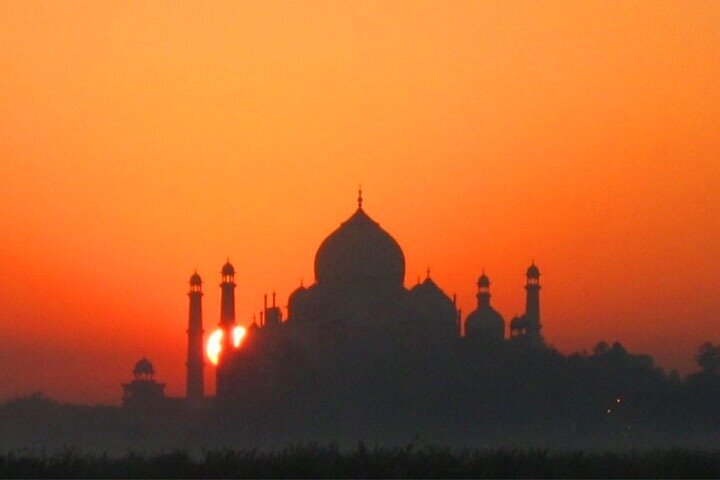
The alarm sounds at a time most people would rather ignore. If you’re starting from Delhi, the car will arrive while the streets are still quiet and the sky is dark. You’ll spend a good stretch of the early morning on the road, fighting the urge to close your eyes again.
So is a sunrise Taj Mahal tour actually worth the effort — or is it one of those travel recommendations that sounds better in theory than it feels in practice?
For many travelers, the answer is yes. But the reasons go beyond a single photograph. An early-morning visit to the Taj Mahal can offer softer natural light, more comfortable temperatures during warmer months, a calmer start to the day, and — perhaps most practically — enough time afterward to explore the rest of Agra without rushing. Whether those advantages matter to you depends on how you like to travel.
Here’s what to realistically expect if you decide to set that alarm.
Is a Sunrise Taj Mahal Tour Worth It?
For many travelers, yes. Visiting the Taj Mahal early can offer softer natural light, more comfortable temperatures during warmer periods, a calmer atmosphere, and more time to explore Agra afterward. However, sunrise visibility and crowd levels vary with weather, season, and the day of your visit — so realistic expectations matter.
1. The Taj Mahal Looks Different in Early Morning Light
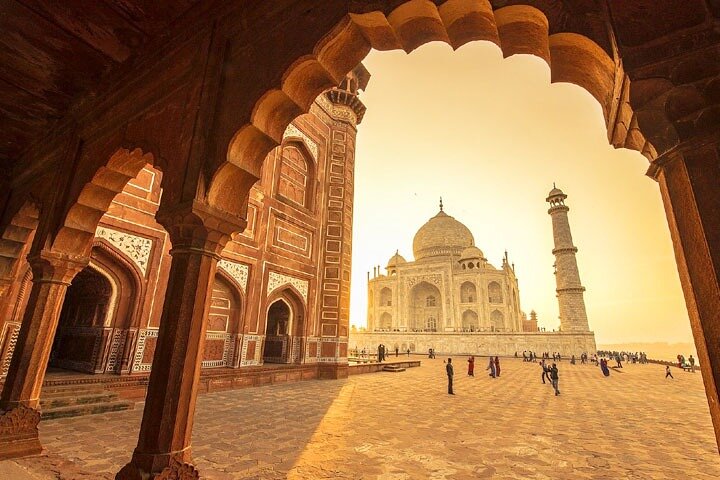
Early morning light changes the way the Taj Mahal looks. The Taj Mahal was built with white Makrana marble, and one of the qualities of this stone is how it responds to changing natural light. Throughout the day, the monument’s appearance shifts as the angle and intensity of sunlight change.
In the early morning, when the sun is still low, the light tends to be softer and warmer. Shadows fall differently across the carved marble panels and the inlaid semi-precious stones. Architectural details — the calligraphy around the main arch, the geometric patterns on the minarets, the delicate pietra dura work — can stand out more clearly in angled light than under the flat brightness of midday.
On a clear morning, the changing light can subtly alter the way the white marble appears as the minutes pass. Some mornings bring faint warm tones. Others are cooler and bluer. And sometimes, fog or haze softens the entire scene into something almost abstract.
This unpredictability is actually part of what makes a Taj Mahal sunrise experience interesting. You never quite know what the light will do, which means every early-morning visit feels slightly different.
Planning a Sunrise Taj Mahal Tour?
Explore the Taj Mahal at sunrise with Manish Mudgal, one of our best tourist guides in Agra, and make your early-morning visit more memorable.
Chat with Manish Mudgal2. Early Morning Can Feel Calmer Than the Middle of the Day
An early start can offer a noticeably different atmosphere. The Taj Mahal attracts large numbers of domestic and international visitors and can become busy during popular visiting periods.
Arriving near the opening time can sometimes provide a calmer experience compared with visiting during peak daytime hours. The gardens may feel less congested. You may find it easier to pause and look at the details of the main mausoleum, the mosque, or the jawab without navigating around large groups.
That said, sunrise does not mean you will have the Taj Mahal to yourself. Other visitors — including tour groups and photographers — also know that early entry can be worthwhile. The degree of calm you experience depends on the season, the day of the week, and sometimes pure chance.
Still, starting the day inside the complex before the full daytime energy builds can make it easier to absorb the scale and craftsmanship of the place at your own pace.
3. Sunrise Is One of the Best Times for Taj Mahal Photography
Soft, directional morning light makes the Taj Mahal easier to photograph well, even with a phone. You don’t need a professional camera or years of experience to take good photographs at the Taj Mahal in the morning.
Here’s why early morning tends to be a strong time for photography at the Taj:
- Reduced harsh shadows. When the sun is high, the white marble can create strong contrasts that are difficult to expose correctly. Lower morning light produces gentler shadows and more even tones across the building.
- Warm natural tones. Early light often carries a warmth that can add depth to photographs, particularly when shooting the south-facing main gateway or the reflecting pool.
- Reflections. Where water conditions permit, the long reflecting channel in the gardens can mirror the Taj Mahal. Calmer morning conditions sometimes improve these reflections.
- Symmetry and framing. The Taj Mahal complex was designed with symmetry in mind. Morning light emphasises this geometry, particularly when you photograph through the main gate or along the central garden axis.
- Changing conditions. Because the light shifts quickly during the early-morning period, you can capture noticeably different images within a short span of time simply by waiting.
A few practical photography tips: use your phone’s exposure lock to prevent the white marble from blowing out highlights; try shooting from ground level along the garden paths for a different perspective; and be mindful of current photography and security regulations, which may restrict certain equipment. Check the latest rules before your visit.
4. Morning Temperatures Can Be More Comfortable
An early Taj Mahal visit can be more comfortable during warmer periods because temperatures are often lower earlier in the day. Agra sits in the Indo-Gangetic plain, and during the hotter months daytime temperatures can climb considerably. Walking around an open marble complex under strong afternoon sun is not always comfortable, particularly for travelers who aren’t accustomed to North Indian heat.
An early morning Taj Mahal tour lets you explore the monument during the cooler part of the day. By the time temperatures start to rise, you can be sitting down for breakfast or moving on to a shaded attraction like Agra Fort.
This can be especially useful for families with children and older travelers who may find extended time in direct midday heat tiring.
However, it’s worth noting the other side: winter mornings in Agra can be cold and foggy. Temperatures may drop quite low before dawn, and dense fog can reduce visibility significantly. If you’re visiting during the colder winter months, bring warm layers and be prepared for the possibility that fog may delay or obscure the sunrise entirely.
Both seasons have trade-offs. The key is knowing what to expect for your specific travel dates.
5. You Get to Experience Agra as the City Wakes Up
An early Taj Mahal visit lets you see Agra outside its daytime tourist mode. The drive from the hotel to the Taj Mahal gate passes through streets that are just beginning their day. Chai stalls are setting up, shopkeepers are opening their shutters, and the city has a quieter rhythm that disappears within a couple of hours.
After your Taj Mahal visit, you can sit down for a proper breakfast at a local restaurant or hotel while the rest of the tourist crowds are still arriving. This small window — a morning meal in Agra with the Taj Mahal already behind you — is a genuinely pleasant part of the day that many travelers don’t anticipate.
It also means you’ve ticked off the main event early enough that the rest of your Agra time feels unhurried rather than squeezed.
6. Sunrise Leaves More of Your Day Free for Agra
Completing the Taj Mahal visit early is one of the most practical advantages of a sunrise Agra tour, especially if you’re visiting from Delhi and only have one day.
By finishing at the Taj Mahal in the morning, you open up the rest of the day for Agra’s other attractions and experiences:
- Agra Fort — a massive red sandstone Mughal fortress overlooking the Yamuna River, with its own impressive architecture and views toward the Taj.
- Mehtab Bagh — the garden across the river that offers a different perspective of the Taj Mahal.
- Local markets — the areas around Sadar Bazaar and Kinari Bazaar for handicrafts, leather goods, and marble inlay work.
- Marble craftsmanship — Agra has a long tradition of pietra dura, the marble inlay technique used in the Taj Mahal itself. Several workshops welcome visitors.
- Agra’s food — petha (a local sweet), chaat, and Mughlai cuisine are all worth trying.
Travelers on a sunrise Taj Mahal and Agra tour from Delhi often find that completing the Taj early gives their day a much better shape. Instead of arriving mid-morning and rushing through everything, you can pace your sightseeing and still be back in Delhi by evening.
7. Sunrise Can Be Especially Rewarding for First-Time Visitors
First-time visitors often find that an early-morning arrival helps them take in the Taj Mahal with fewer distractions. For many international travelers, the Taj Mahal is one of the primary reasons for visiting India. It often sits alongside Jaipur and Delhi on a Golden Triangle itinerary, and it carries years of anticipation.
Approaching the Taj Mahal early in the morning — before your senses are overwhelmed by a full day of sightseeing — can make that first view through the main gateway feel more focused and deliberate. You’re alert, the light is interesting, and the complex hasn’t yet reached its busiest point.
Not everyone reacts the same way. Some visitors find the Taj Mahal smaller than expected; others are moved by the precision of its proportions. But arriving when conditions are relatively calm gives you the best chance to form your own impression without feeling hurried.
8. Sunrise vs Daytime: Which Taj Mahal Experience Is Better?
Neither option is objectively superior — it depends on what you prioritise. Here’s a straightforward comparison:
| Factor | Sunrise / Early Morning | Later in the Day |
|---|---|---|
| Light | Softer, changing light | Stronger, brighter daylight |
| Temperature | Often more comfortable | Can be warmer, especially in summer |
| Atmosphere | Early-morning calm | Busier daytime energy |
| Photography | Soft-light opportunities | Bright architectural detail |
| Convenience | Requires an early start | Easier wake-up time |
| Rest of Day | More time for Agra afterward | Less sightseeing time remaining |
A sunrise Taj Mahal tour is especially suitable for travelers who value atmosphere, photography, cooler conditions, and making the most of a limited day. A later visit may suit travelers who prefer a relaxed morning or whose schedule doesn’t allow for a pre-dawn departure.
If you’re still deciding between different travel styles, comparing the best Taj Mahal tour options — including car, train, and luxury experiences — can help you choose what fits your schedule and preferences.
Planning a Sunrise Taj Mahal Tour?
Explore the Taj Mahal at sunrise with Manish Mudgal, one of our best tourist guides in Agra, and make your early-morning visit more memorable.
Chat with Manish Mudgal9. What to Expect on a Sunrise Taj Mahal Tour From Delhi
A sunrise Taj Mahal tour from Delhi typically involves an early pickup, a drive to Agra, a morning visit to the Taj Mahal, and time for further sightseeing before returning to Delhi. Exact details will vary depending on the tour you choose, the season, and current conditions.
A typical privately arranged experience may look something like this:
- Early pickup from your Delhi hotel — while the city is still quiet.
- Drive from Delhi toward Agra — with journey time depending on your pickup location, route, traffic, and road conditions.
- Arrival near the Taj Mahal — timed to reach the gates around the early-morning opening period.
- Guided visit to the Taj Mahal — where a local guide has been arranged.
- Breakfast in Agra — after your Taj visit.
- Further Agra sightseeing — depending on the selected itinerary, this may include Agra Fort, Mehtab Bagh, or other stops.
- Return drive to Delhi — arriving back in the evening.
Exact pickup times, included meals, guide availability, entry tickets, and itinerary details depend on the specific tour you book. Travelers who prefer private transportation can consider a Sunrise Taj Mahal and Agra Tour by Car, which simplifies the logistics of planning an early visit from Delhi.
Always confirm current Taj Mahal opening times and any seasonal schedule changes before your travel date.

10. Is the Early Drive From Delhi Worth It?
For travelers who specifically want to see the Taj Mahal early and explore Agra in one day, the early drive from Delhi can be worthwhile. It gives you more usable sightseeing time after the Taj Mahal visit.
Depending on the season and current sunrise time, your pickup could be very early — well before most people would normally wake up. Here’s why many travelers still choose it:
- You experience the Taj during one of the best lighting periods.
- You avoid spending the main monument visit during the hottest part of the day.
- You gain several extra hours in Agra for other sightseeing.
- Private car travel means you can rest during the drive in both directions.
- The logistics — navigation, parking, gate timings — are handled for you.
That said, the pre-dawn alarm isn’t for everyone. If you strongly dislike early starts, consider a daytime visit or an overnight stay in Agra that lets you walk to the Taj at your own pace.
If you’re not sure whether road travel is the best option for your schedule, a comparison of Taj Mahal tour by car vs train explains the practical differences between the two approaches.
11. Who Should Choose a Sunrise Taj Mahal Tour?
A sunrise morning tour works particularly well for:
- First-time Taj Mahal visitors who want a focused, atmospheric introduction.
- Couples looking for a calmer, more personal experience.
- Photography-minded travelers who want soft natural light.
- Families comfortable with an early wake-up and the Delhi–Agra journey.
- Golden Triangle travelers fitting Agra into a multi-city India itinerary.
- Visitors during warmer periods who want to avoid midday heat.
- Travelers with limited time who need to see the Taj and return to Delhi the same day.
It may not be the best fit for:
- Travelers who genuinely struggle with very early mornings and won’t enjoy the experience if tired.
- Visitors who prefer an overnight stay in Agra with a slower pace.
- Anyone whose onward travel schedule makes an early departure impractical.
A sunrise visit works brilliantly for many travelers, but it isn’t the only worthwhile way to see the Taj Mahal. If you’re comparing different travel styles, this guide to choosing the right Taj Mahal tour covers the main options.
12. Practical Tips for Your Sunrise Taj Mahal Visit
A few things that can make the experience smoother:
- Sleep early the night before. This sounds obvious, but it makes a real difference. Avoid late dinners or sightseeing the evening before.
- Wear comfortable walking shoes. You’ll cover a fair distance on foot inside the complex, including marble surfaces where shoes must be removed or covered.
- Bring an extra layer during cooler months. Agra mornings can be cold during winter.
- Carry drinking water where permitted inside the complex.
- Keep your passport or ID accessible. International visitors may need identification for entry.
- Check current Taj Mahal rules before visiting. Entry requirements, permitted items, and security procedures can change.
- Travel light. Large bags may not be allowed inside. Security screening applies at the gates.
- Confirm seasonal sunrise and opening details. Sunrise times and Taj Mahal opening hours vary by season.
- Allow flexibility for weather. Fog, haze, or cloud cover may affect visibility, particularly on winter mornings.
- Follow your guide’s instructions where applicable — they know the current procedures and can help you use your time well.
Important Reality Check — Sunrise Is Never Guaranteed
Booking a sunrise experience does not guarantee a dramatic, photogenic sunrise. Several factors can affect what you actually see:
- Fog — common in Agra during the colder months, sometimes thick enough to obscure the Taj Mahal entirely in the early minutes.
- Haze — can occur year-round and may soften or mute the light.
- Cloud cover — overcast skies can prevent a visible sunrise altogether.
- Air quality — varies by season and conditions.
However, the value of an early-morning Taj Mahal visit doesn’t depend entirely on seeing the sun break over the horizon. The softer light, earlier entry, comfortable temperatures, and extra time for Agra sightseeing can all make the experience worthwhile regardless of whether the sunrise itself is visible.
Going in with realistic expectations means you’re far less likely to feel disappointed.
FAQ — Sunrise Taj Mahal Tours
Is a sunrise Taj Mahal tour worth it?
For most travelers, yes. The combination of softer light, a calmer atmosphere, more comfortable temperatures (especially during warmer periods), and the practical benefit of freeing up the rest of your day makes the early start worthwhile. It does require discipline the night before and a willingness to sacrifice sleep, but many visitors consider it one of the highlights of their India trip.
What is special about seeing the Taj Mahal at sunrise?
The low-angle morning light interacts with the white marble in ways that change as the minutes pass. Architectural details can appear more defined, the gardens feel quieter, and there’s a sense of watching the monument gradually reveal itself as the light builds. It’s a different visual and atmospheric experience compared with a midday visit under bright, overhead sun.
Is the Taj Mahal less crowded at sunrise?
Not necessarily. Other visitors also arrive early, so the Taj Mahal is never empty. However, entering near the opening time can feel noticeably calmer than visiting during peak midday hours. Visitor levels depend on the season, the day of the week, holidays, and other factors. Don’t expect solitude, but do expect a less congested start.
What time should I leave Delhi for a Taj Mahal sunrise tour?
There’s no single universal answer. Your departure time depends on the season (sunrise times shift considerably between summer and winter), current Taj Mahal opening hours, your pickup location in Delhi, and road conditions. Your tour operator or driver will confirm the specific pickup time for your travel date. Expect it to be early.
Is sunrise or sunset better for the Taj Mahal?
Both offer different experiences, and neither is objectively better. Sunrise lets you enter the Taj Mahal complex in soft early morning light, often in a calmer atmosphere, with the rest of the day ahead for further sightseeing. Sunset provides a different evening perspective—Mehtab Bagh, across the Yamuna River, is a popular location for viewing the Taj Mahal around that time. Sunrise may suit early risers, photographers, and travelers wanting more time in Agra afterward. Sunset may appeal to travelers who dislike early starts or want an evening perspective. Access and monument timings should always be checked for your travel date.
Can I visit Agra Fort after a sunrise Taj Mahal visit?
Yes. Many Agra itineraries combine an early Taj Mahal visit with Agra Fort later in the morning. The two monuments are relatively close, making them practical to combine in the same day. Check current opening information and your tour schedule when planning the visit.
Is a sunrise Taj Mahal tour suitable for families?
It can work well for families who are comfortable with an early wake-up. The cooler morning temperatures during warmer periods are a practical advantage when traveling with children, and finishing the main visit early can help avoid midday fatigue. Families should consider whether an early wake-up and the Delhi–Agra journey will suit their usual routine, particularly with younger children.
What should I wear for an early morning Taj Mahal visit?
Dress in comfortable layers. During Agra’s warmer months, light, breathable clothing is usually fine, though the earliest part of the morning can still feel cool. During the colder winter months, bring a warm jacket, scarf, and possibly gloves — Agra mornings can be genuinely cold. Comfortable walking shoes are essential. You’ll need to remove or cover your shoes on certain marble surfaces inside the complex.
Ready to See the Taj Mahal in the Early Morning?
If a sunrise visit sounds right for your trip, arranging private transportation from Delhi can take most of the logistical stress out of the early start. A pre-arranged car tour handles the pickup, the drive, the timing, and the return — so you can focus on the experience rather than the planning. Travelers looking for this kind of convenience can explore the option below.
Book Sunrise Taj Mahal and Agra Tour by Car
Is Waking Up Early for the Taj Mahal Worth It?
For travelers who value soft morning light, a calmer atmosphere, more comfortable sightseeing conditions, stronger photography opportunities, and the practical benefit of an open afternoon in Agra, the early alarm is usually worthwhile.
But sunrise is not the only way to appreciate the Taj Mahal. Travelers who prefer a relaxed start, an overnight Agra stay, or a midday visit can still have a meaningful experience. The monument is impressive at any hour — the marble, the proportions, the craftsmanship, the setting along the Yamuna River. These things don’t depend on the time of day.
What sunrise Taj Mahal tours offer is a particular version of the experience: quieter, cooler, visually richer in the early light, and structured in a way that gives you more of Agra afterward. If that appeals to you, the early wake-up is a small price to pay.
About the Author – Manish Mudgal

Manish Mudgal is an experienced local tour guide from Agra and the founder of Taj Mahal Splendor Tours. Growing up in the city of the Taj Mahal, he has developed practical knowledge of Agra’s Mughal heritage, local culture, and the travel needs of international visitors. Over the years, he has guided travelers from different parts of the world, helping them explore the Taj Mahal, Agra Fort, and other destinations across India.
His travel guides and articles share practical insights to help visitors plan their trips to Agra and experience the Taj Mahal with better preparation and realistic expectations.

Comments