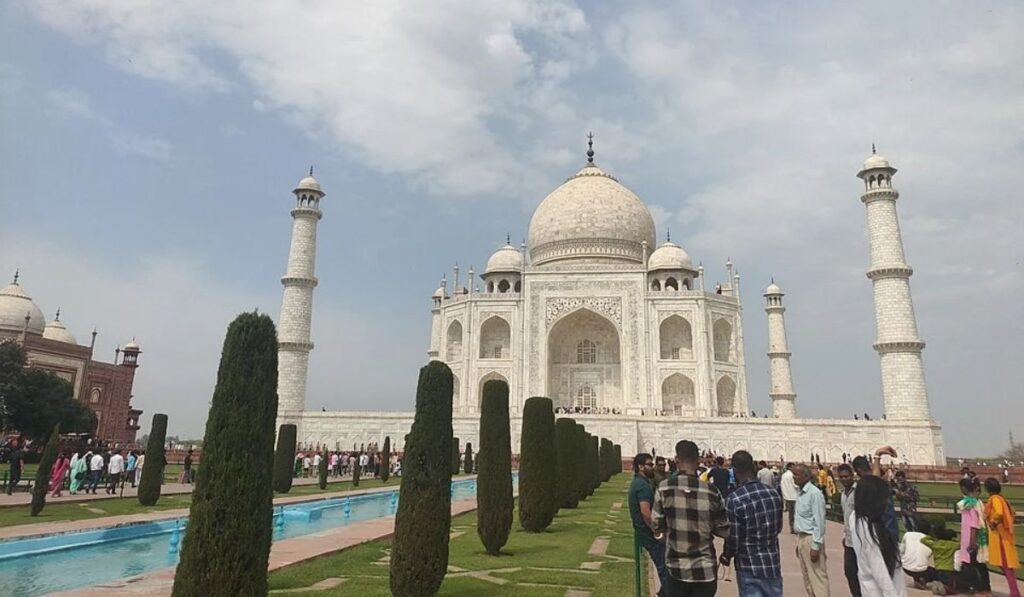
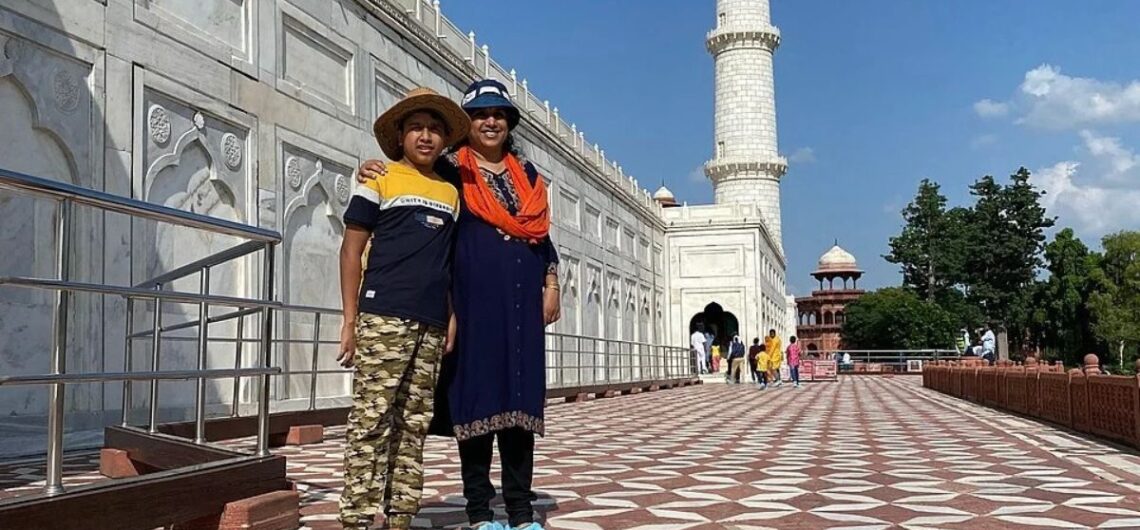
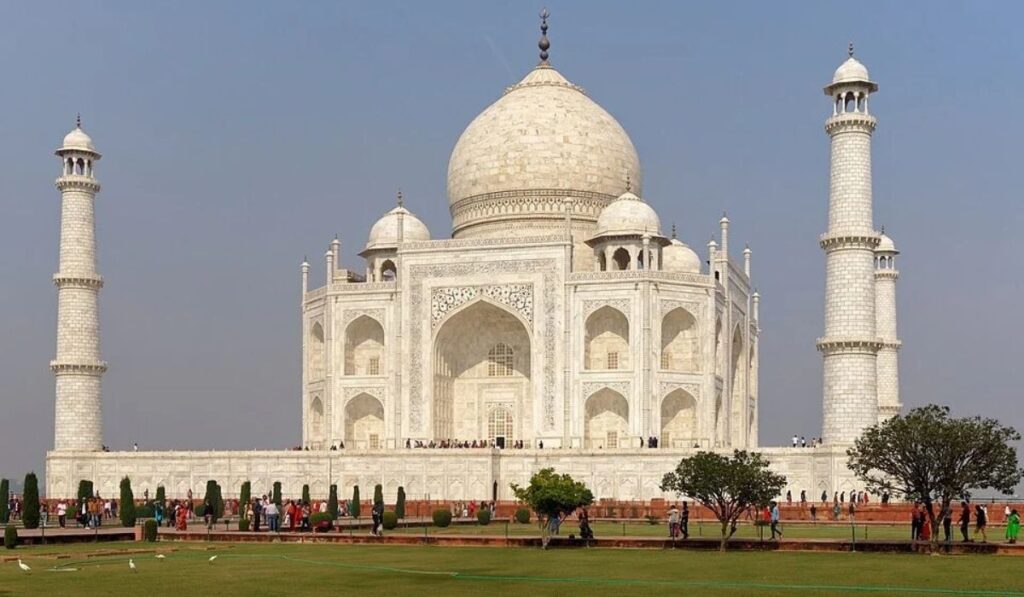
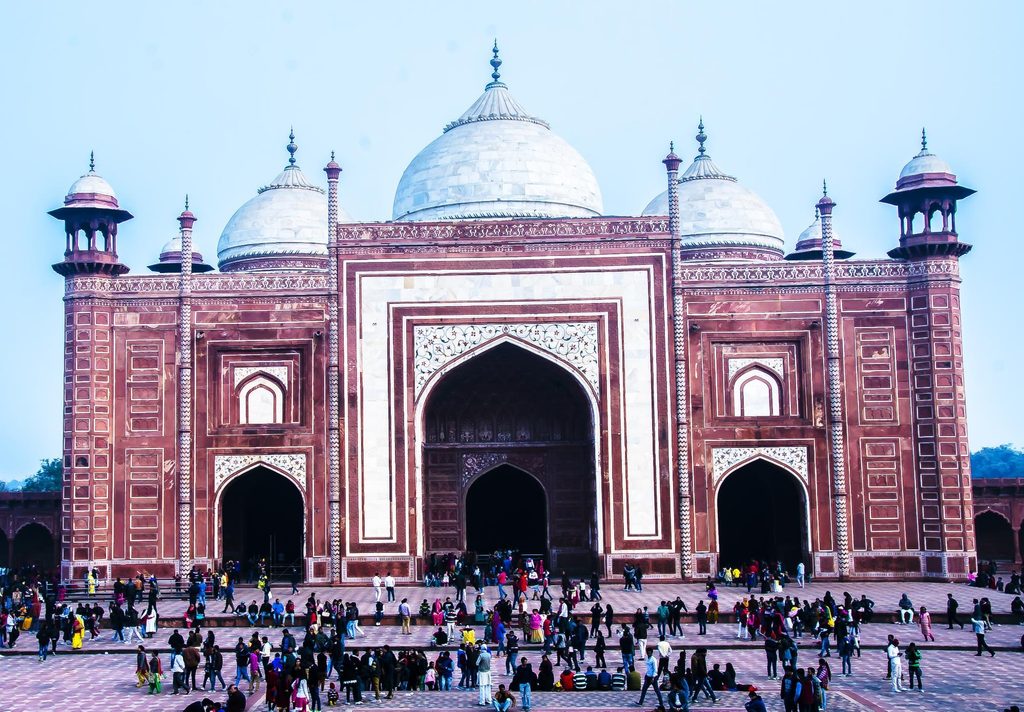
<!-- wp:paragraph {"className":""} -->
<p>The Taj Mahal is closed every Friday. No tourist entry is permitted — not in the morning, not in the afternoon, and not in the evening. This applies equally to Indian and international visitors.</p>
<!-- /wp:paragraph -->
<!-- wp:paragraph {"className":""} -->
<p>If your Agra visit falls on a Friday, do not panic. You can still see the Taj Mahal from Mehtab Bagh across the Yamuna River, explore several other world-class Mughal monuments in Agra, and plan your Taj Mahal entry for the very next morning. This guide covers everything you need to know about the Taj Mahal closed day, including what to do instead and how to adjust your itinerary.</p>
<!-- /wp:paragraph -->
<!-- wp:heading {"anchor":"h-which-day-is-the-taj-mahal-closed"} -->
<h2 id="h-which-day-is-the-taj-mahal-closed" class="wp-block-heading">Which Day Is the Taj Mahal Closed?</h2>
<!-- /wp:heading -->
<!-- wp:paragraph {"className":""} -->
<p>The Taj Mahal is closed to all general visitors every <strong>Friday</strong>. This is the only regular weekly closure. On the remaining six days — Saturday through Thursday — the monument is open for sightseeing.</p>
<!-- /wp:paragraph -->
<!-- wp:paragraph {"className":""} -->
<p>This weekly closure is enforced by the <strong>Archaeological Survey of India (ASI)</strong>, which manages the Taj Mahal complex. Tickets are not sold for Fridays, and the online booking portal does not allow Friday date selections for daytime visits.</p>
<!-- /wp:paragraph -->
<!-- wp:heading {"level":3,"anchor":"h-weekly-schedule-at-a-glance"} -->
<h3 id="h-weekly-schedule-at-a-glance" class="wp-block-heading">Weekly Schedule at a Glance</h3>
<!-- /wp:heading -->
<!-- wp:table -->
<figure class="wp-block-table"><table class="has-fixed-layout"><thead><tr><th class="has-text-align-left" data-align="left">Day</th><th class="has-text-align-left" data-align="left">Status</th></tr></thead><tbody><tr><td>Monday</td><td>✅ Open</td></tr><tr><td>Tuesday</td><td>✅ Open</td></tr><tr><td>Wednesday</td><td>✅ Open</td></tr><tr><td>Thursday</td><td>✅ Open</td></tr><tr><td>Friday</td><td>❌ Closed</td></tr><tr><td>Saturday</td><td>✅ Open</td></tr><tr><td>Sunday</td><td>✅ Open</td></tr></tbody></table></figure>
<!-- /wp:table -->
<!-- wp:paragraph {"className":""} -->
<p>The Taj Mahal opens <strong>30 minutes before sunrise</strong> and closes <strong>30 minutes before sunset</strong> on all open days.</p>
<!-- /wp:paragraph -->
<!-- wp:heading {"anchor":"h-why-is-the-taj-mahal-closed-on-fridays"} -->
<h2 id="h-why-is-the-taj-mahal-closed-on-fridays" class="wp-block-heading">Why Is the Taj Mahal Closed on Fridays?</h2>
<!-- /wp:heading -->
<!-- wp:paragraph {"className":""} -->
<p>The Taj Mahal complex includes an active mosque on its western side. Friday is the day of <strong>Jumu'ah</strong> (congregational prayer) in Islam, and the mosque inside the Taj Mahal grounds has been used for Friday prayers for centuries.</p>
<!-- /wp:paragraph -->
<!-- wp:paragraph {"className":""} -->
<p>To preserve the sanctity of the prayer service and ensure safety, the ASI closes the entire complex to general tourists for the full day. Access during Friday is restricted to local worshippers from Agra who present valid identification to enter the mosque area, typically between 12:00 PM and 2:00 PM.</p>
<!-- /wp:paragraph -->
<!-- wp:paragraph {"className":""} -->
<p>This is not a recent policy change — it has been the standard rule for decades, and it applies year-round without exception.</p>
<!-- /wp:paragraph -->
<!-- wp:heading {"anchor":"h-can-tourists-visit-the-taj-mahal-on-friday"} -->
<h2 id="h-can-tourists-visit-the-taj-mahal-on-friday" class="wp-block-heading">Can Tourists Visit the Taj Mahal on Friday?</h2>
<!-- /wp:heading -->
<!-- wp:paragraph {"className":""} -->
<p><strong>No.</strong> The Taj Mahal is closed to all tourists for the entire day on Friday. This restriction covers:</p>
<!-- /wp:paragraph -->
<!-- wp:list -->
<ul class="wp-block-list"><!-- wp:list-item -->
<li><strong>Morning:</strong> No sunrise entry. Gates do not open for tourists.</li>
<!-- /wp:list-item -->
<!-- wp:list-item -->
<li><strong>Afternoon:</strong> No entry before, during, or after Friday prayers.</li>
<!-- /wp:list-item -->
<!-- wp:list-item -->
<li><strong>Evening:</strong> No sunset entry. The complex remains fully closed.</li>
<!-- /wp:list-item --></ul>
<!-- /wp:list -->
<!-- wp:paragraph {"className":""} -->
<p><strong>There are no exceptions for foreign passport holders, diplomats, or any tourist category.</strong> Some travel blogs suggest that tourists can enter after prayers end in the afternoon. This is incorrect — the official ASI policy closes the monument to all sightseeing visitors for the full day.</p>
<!-- /wp:paragraph -->
<!-- wp:paragraph {"className":""} -->
<p>The only people permitted inside the complex on Fridays are local residents of Agra attending prayers at the mosque, and they must show valid identity proof at the gate.</p>
<!-- /wp:paragraph -->
<!-- wp:quote -->
<blockquote class="wp-block-quote"><!-- wp:paragraph {"className":""} -->
<p><strong>Traveler Tip:</strong> If you hold tickets booked online for a date that happens to be a Friday, check the ASI ticketing portal's cancellation and rescheduling policy before you travel.</p>
<!-- /wp:paragraph --></blockquote>
<!-- /wp:quote -->
<!-- wp:heading {"anchor":"h-is-taj-mahal-night-viewing-available-on-friday"} -->
<h2 id="h-is-taj-mahal-night-viewing-available-on-friday" class="wp-block-heading">Is Taj Mahal Night Viewing Available on Friday?</h2>
<!-- /wp:heading -->
<!-- wp:paragraph {"className":""} -->
<p><strong>No.</strong> Night viewing is not available on Fridays.</p>
<!-- /wp:paragraph -->
<!-- wp:paragraph {"className":""} -->
<p>The Taj Mahal offers night viewing for <strong>five nights per lunar month</strong> — the night of the full moon plus two nights before and two nights after. However, even if one of these five nights falls on a Friday, night viewing is cancelled for that night.</p>
<!-- /wp:paragraph -->
<!-- wp:paragraph {"className":""} -->
<p>Additionally, night viewing is <strong>suspended for the entire month of Ramadan</strong> (Ramzan), regardless of the day of the week.</p>
<!-- /wp:paragraph -->
<!-- wp:heading {"level":3,"anchor":"h-night-viewing-quick-facts"} -->
<h3 id="h-night-viewing-quick-facts" class="wp-block-heading">Night Viewing Quick Facts</h3>
<!-- /wp:heading -->
<!-- wp:table -->
<figure class="wp-block-table"><table class="has-fixed-layout"><thead><tr><th class="has-text-align-left" data-align="left">Detail</th><th class="has-text-align-left" data-align="left">Information</th></tr></thead><tbody><tr><td>Available nights</td><td>Full moon night + 2 nights before and after (5 nights/month)</td></tr><tr><td>Friday exception</td><td>Night viewing is never held on a Friday</td></tr><tr><td>Ramadan exception</td><td>Night viewing is suspended for the entire month</td></tr><tr><td>Viewing hours</td><td>8:30 PM to 12:30 AM</td></tr><tr><td>Capacity</td><td>400 visitors per night (8 batches of 50, 30 minutes each)</td></tr><tr><td>Booking requirement</td><td>Tickets must be purchased at least 24 hours in advance from the ASI office</td></tr><tr><td>Viewing location</td><td>From the designated platform near the main gate — not from inside the complex</td></tr></tbody></table></figure>
<!-- /wp:table -->
<!-- wp:heading {"anchor":"h-taj-mahal-opening-hours-on-other-days"} -->
<h2 id="h-taj-mahal-opening-hours-on-other-days" class="wp-block-heading">Taj Mahal Opening Hours on Other Days</h2>
<!-- /wp:heading -->
<!-- wp:paragraph {"className":""} -->
<p>The Taj Mahal does not follow fixed clock timings. According to the official Taj Mahal website (tajmahal.gov.in), the monument opens <strong>30 minutes before sunrise</strong> and closes <strong>30 minutes before sunset</strong>.</p>
<!-- /wp:paragraph -->
<!-- wp:paragraph {"className":""} -->
<p>Because sunrise and sunset times shift throughout the year, the actual opening and closing times change with the season:</p>
<!-- /wp:paragraph -->
<!-- wp:list -->
<ul class="wp-block-list"><!-- wp:list-item -->
<li><strong>Summer months (April–September):</strong> The monument may open as early as approximately 5:30 AM and close around 6:30 PM.</li>
<!-- /wp:list-item -->
<!-- wp:list-item -->
<li><strong>Winter months (October–March):</strong> Opening may shift to approximately 6:00–6:30 AM, with closing around 5:00–5:30 PM.</li>
<!-- /wp:list-item --></ul>
<!-- /wp:list -->
<!-- wp:paragraph {"className":""} -->
<p>These are approximate ranges based on seasonal sunrise/sunset patterns. Always check the current official timings on the <a href="https://asi.payumoney.com/">ASI e-ticketing portal</a> or <a href="https://www.tajmahal.gov.in/">tajmahal.gov.in</a> before your visit.</p>
<!-- /wp:paragraph -->
<!-- wp:heading {"level":3,"anchor":"h-ticket-counter-vs-monument-timing"} -->
<h3 id="h-ticket-counter-vs-monument-timing" class="wp-block-heading">Ticket Counter vs. Monument Timing</h3>
<!-- /wp:heading -->
<!-- wp:paragraph {"className":""} -->
<p>The ticket counters at the East and West gates open approximately <strong>one hour before sunrise</strong> — earlier than the monument itself. They close <strong>45 minutes before sunset</strong>, which is 15 minutes before the monument's last entry. If you are buying tickets at the gate, arrive well before closing time.</p>
<!-- /wp:paragraph -->
<!-- wp:quote -->
<blockquote class="wp-block-quote"><!-- wp:paragraph {"className":""} -->
<p><strong>Traveler Tip:</strong> Book tickets online in advance through the ASI portal. This saves time at the gate and ensures availability, especially during peak tourist season (October–March).</p>
<!-- /wp:paragraph -->
<!-- wp:image {"id":1841,"sizeSlug":"large","linkDestination":"none"} -->
<figure class="wp-block-image size-large"><img src="https://www.tajmahalsplendortours.com/wp-content/uploads/2026/09/taj-1024x577.jpg" alt="Taj Mahal during morning visiting hours in Agra" class="wp-image-1841"/></figure>
<!-- /wp:image --></blockquote>
<!-- /wp:quote -->
<!-- wp:heading {"anchor":"h-is-the-taj-mahal-closed-on-public-holidays"} -->
<h2 id="h-is-the-taj-mahal-closed-on-public-holidays" class="wp-block-heading">Is the Taj Mahal Closed on Public Holidays?</h2>
<!-- /wp:heading -->
<!-- wp:paragraph {"className":""} -->
<p>The Taj Mahal remains <strong>open on all national and public holidays</strong> — including Republic Day (26 January), Independence Day (15 August), and Gandhi Jayanti (2 October) — as long as the holiday does not fall on a Friday.</p>
<!-- /wp:paragraph -->
<!-- wp:paragraph {"className":""} -->
<p><strong>The Friday closure overrides all holidays.</strong> If a public holiday falls on a Friday, the Taj Mahal stays closed as usual.</p>
<!-- /wp:paragraph -->
<!-- wp:paragraph {"className":""} -->
<p>Rare closures for security reasons or state events can occur but are uncommon and typically announced in advance by the ASI or district administration.</p>
<!-- /wp:paragraph -->
<!-- wp:quote -->
<blockquote class="wp-block-quote"><!-- wp:paragraph {"className":""} -->
<p><strong>Key distinction:</strong> The Taj Mahal's only regular closed day is Friday. There is no separate "public holiday closure" list.</p>
<!-- /wp:paragraph --></blockquote>
<!-- /wp:quote -->
<!-- wp:heading {"anchor":"h-what-to-do-in-agra-if-you-arrive-on-friday"} -->
<h2 id="h-what-to-do-in-agra-if-you-arrive-on-friday" class="wp-block-heading">What to Do in Agra If You Arrive on Friday</h2>
<!-- /wp:heading -->
<!-- wp:paragraph {"className":""} -->
<p>The official Taj Mahal website confirms: <em>"All other monuments & tourist attractions in the city are open throughout the week from Sunrise to Sunset."</em> This means Friday is an excellent day to explore the rest of Agra without the Taj Mahal crowds.</p>
<!-- /wp:paragraph -->
<!-- wp:heading {"level":3,"anchor":"h-agra-fort"} -->
<h3 id="h-agra-fort" class="wp-block-heading">Agra Fort</h3>
<!-- /wp:heading -->
<!-- wp:paragraph {"className":""} -->
<p>A UNESCO World Heritage Site located about 2.5 km from the Taj Mahal. This massive red sandstone fortress served as the main residence of Mughal emperors. Its halls, palaces, and ramparts are worth at least 2–3 hours of exploration. You can also catch a distant but striking view of the Taj Mahal from the fort's marble pavilions overlooking the Yamuna River.</p>
<!-- /wp:paragraph -->
<!-- wp:paragraph {"className":""} -->
<p><strong>Open on Friday:</strong> Yes, sunrise to sunset.</p>
<!-- /wp:paragraph -->
<!-- wp:heading {"level":3,"anchor":"h-mehtab-bagh"} -->
<h3 id="h-mehtab-bagh" class="wp-block-heading">Mehtab Bagh</h3>
<!-- /wp:heading -->
<!-- wp:paragraph {"className":""} -->
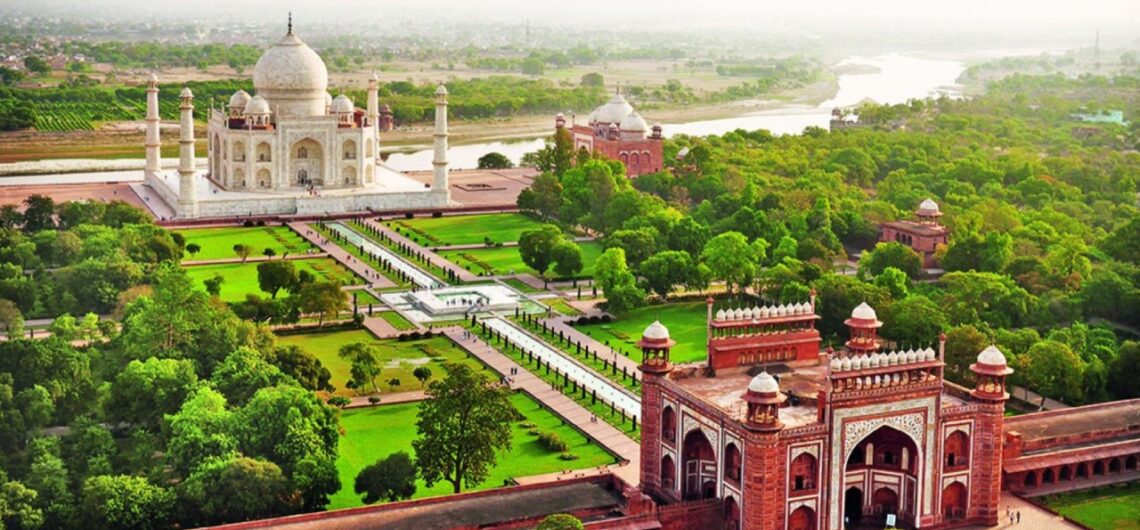
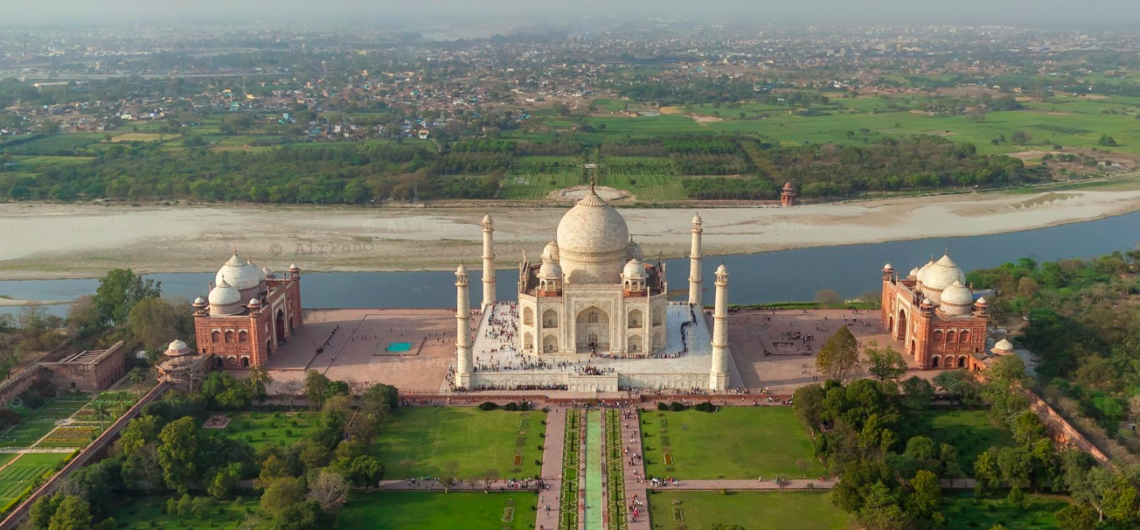
<p>Located directly across the Yamuna River from the Taj Mahal, Mehtab Bagh offers the most iconic external view of the monument. This Mughal-era garden complex is especially popular at sunset when the Taj Mahal glows in warm light.</p>
<!-- /wp:paragraph -->
<!-- wp:paragraph {"className":""} -->
<p><strong>Open on Friday:</strong> Yes, sunrise to sunset.</p>
<!-- /wp:paragraph -->
<!-- wp:heading {"level":3,"anchor":"h-itimad-ud-daulah-baby-taj"} -->
<h3 id="h-itimad-ud-daulah-baby-taj" class="wp-block-heading">Itimad-ud-Daulah (Baby Taj)</h3>
<!-- /wp:heading -->
<!-- wp:paragraph {"className":""} -->
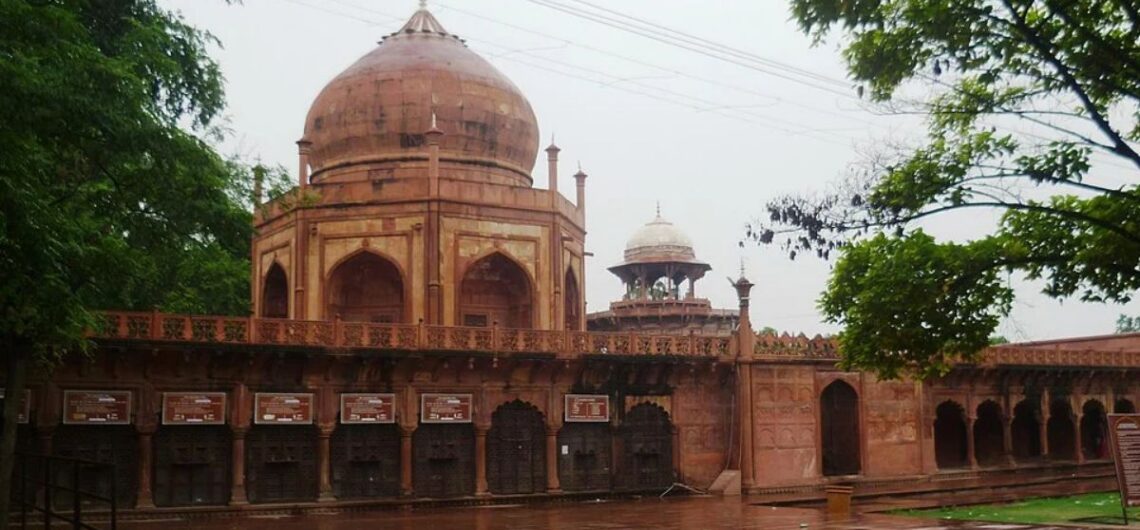
<p>Often called the "draft of the Taj Mahal," this smaller marble mausoleum predates the Taj by about 20 years and is considered the first Mughal structure built entirely of marble. It features extraordinarily detailed pietra dura (inlaid stonework) and is far less crowded than the Taj Mahal.</p>
<!-- /wp:paragraph -->
<!-- wp:paragraph {"className":""} -->
<p><strong>Open on Friday:</strong> Yes, sunrise to sunset.</p>
<!-- /wp:paragraph -->
<!-- wp:heading {"level":3,"anchor":"h-akbar-s-tomb-sikandra"} -->
<h3 id="h-akbar-s-tomb-sikandra" class="wp-block-heading">Akbar's Tomb, Sikandra</h3>
<!-- /wp:heading -->
<!-- wp:paragraph {"className":""} -->
<p>Located about 13 km northwest of Agra, this is the final resting place of Emperor Akbar. Set in a large, peaceful garden with roaming deer, it features a unique blend of Hindu, Christian, Islamic, and Buddhist architectural motifs.</p>
<!-- /wp:paragraph -->
<!-- wp:paragraph {"className":""} -->
<p><strong>Open on Friday:</strong> Yes, sunrise to sunset.</p>
<!-- /wp:paragraph -->
<!-- wp:heading {"level":3,"anchor":"h-fatehpur-sikri"} -->
<h3 id="h-fatehpur-sikri" class="wp-block-heading">Fatehpur Sikri</h3>
<!-- /wp:heading -->
<!-- wp:paragraph {"className":""} -->
<p>About 40 km west of Agra, this abandoned red sandstone city was the Mughal capital for 14 years under Emperor Akbar. It is a separate UNESCO World Heritage Site. With the Buland Darwaza (one of the tallest gateways in the world), the Panch Mahal, and the Tomb of Salim Chishti, Fatehpur Sikri is a full half-day excursion.</p>
<!-- /wp:paragraph -->
<!-- wp:paragraph {"className":""} -->
<p><strong>Open on Friday:</strong> Yes, sunrise to sunset.</p>
<!-- /wp:paragraph -->
<!-- wp:heading {"anchor":"h-can-you-see-the-taj-mahal-from-outside-on-friday"} -->
<h2 id="h-can-you-see-the-taj-mahal-from-outside-on-friday" class="wp-block-heading">Can You See the Taj Mahal From Outside on Friday?</h2>
<!-- /wp:heading -->
<!-- wp:paragraph {"className":""} -->
<p><strong>Yes.</strong> While you cannot enter the Taj Mahal complex on Friday, you can still see and photograph it from several public viewpoints:</p>
<!-- /wp:paragraph -->
<!-- wp:paragraph {"className":""} -->
<p><strong>Mehtab Bagh</strong> — The best option. This ASI-managed garden sits directly across the Yamuna River and provides a clear, symmetrical rear view of the Taj Mahal. It is open on Fridays and is a paid-entry site with a modest ticket price.</p>
<!-- /wp:paragraph -->
<!-- wp:paragraph {"className":""} -->
<p><strong>Taj View Point</strong> — Adjacent to Mehtab Bagh, this viewpoint area developed by the Agra Development Authority also offers an excellent view from the northern bank of the Yamuna.</p>
<!-- /wp:paragraph -->
<!-- wp:paragraph {"className":""} -->
<p><strong>Agra Fort</strong> — From the Musamman Burj and the Khas Mahal within Agra Fort, you can see the Taj Mahal across the river. This is the same view Shah Jahan had during his final years of imprisonment.</p>
<!-- /wp:paragraph -->
<!-- wp:paragraph {"className":""} -->
<p>All three locations are legally accessible, safe, and open on Fridays.</p>
<!-- /wp:paragraph -->
<!-- wp:heading {"anchor":"h-suggested-friday-agra-itinerary"} -->
<h2 id="h-suggested-friday-agra-itinerary" class="wp-block-heading">Suggested Friday Agra Itinerary</h2>
<!-- /wp:heading -->
<!-- wp:paragraph {"className":""} -->
<p>If you arrive in Agra on a Friday, here is a practical day plan that makes the most of your time:</p>
<!-- /wp:paragraph -->
<!-- wp:paragraph {"className":""} -->
<p><strong>Early Morning (7:00–9:30 AM)</strong> Visit <strong>Agra Fort</strong> when it opens. The morning light is excellent for photography, and the fort is less crowded early in the day.</p>
<!-- /wp:paragraph -->
<!-- wp:paragraph {"className":""} -->
<p><strong>Late Morning (10:00 AM–12:00 PM)</strong> Head to <strong>Itimad-ud-Daulah</strong> (Baby Taj). It is a short drive from Agra Fort and can be explored comfortably in about an hour.</p>
<!-- /wp:paragraph -->
<!-- wp:paragraph {"className":""} -->
<p><strong>Lunch (12:30–1:30 PM)</strong> Eat in Agra's Sadar Bazaar area or at your hotel. Try local specialities like <em>petha</em> (a sweet made from ash gourd) and Mughlai cuisine.</p>
<!-- /wp:paragraph -->
<!-- wp:paragraph {"className":""} -->
<p><strong>Afternoon (2:00–5:00 PM)</strong> Take a day trip to <strong>Fatehpur Sikri</strong> (approximately 1 hour each way by car) or visit <strong>Akbar's Tomb at Sikandra</strong> if you prefer to stay closer to the city.</p>
<!-- /wp:paragraph -->
<!-- wp:paragraph {"className":""} -->
<p><strong>Sunset (5:30–6:30 PM)</strong> End your day at <strong>Mehtab Bagh</strong> for sunset views of the Taj Mahal across the Yamuna River. The light on the white marble at this hour is spectacular.</p>
<!-- /wp:paragraph -->
<!-- wp:paragraph {"className":""} -->
<p><strong>Next Morning (Sunrise)</strong> Visit the <strong>Taj Mahal</strong> at sunrise on Saturday. Arrive at the gate 30–45 minutes before opening for the shortest queue and the most dramatic lighting. If you are visiting from Delhi, a <a href="https://www.tajmahalsplendortours.com/tours/sunrise-taj-mahal-and-agra-tour-by-car/">sunrise Taj Mahal and Agra tour by car</a> is one of the most efficient ways to experience this.</p>
<!-- /wp:paragraph -->
<!-- wp:heading {"anchor":"h-how-to-plan-a-taj-mahal-trip-around-the-friday-closure"} -->
<h2 id="h-how-to-plan-a-taj-mahal-trip-around-the-friday-closure" class="wp-block-heading">How to Plan a Taj Mahal Trip Around the Friday Closure</h2>
<!-- /wp:heading -->
<!-- wp:heading {"level":3,"anchor":"h-same-day-delhi-agra-visitors"} -->
<h3 id="h-same-day-delhi-agra-visitors" class="wp-block-heading">Same-Day Delhi–Agra Visitors</h3>
<!-- /wp:heading -->
<!-- wp:paragraph {"className":""} -->
<p>If you are doing a day trip from Delhi, simply avoid scheduling it on a Friday. The Yamuna Expressway drive takes 3–4 hours, and trains like the Gatimaan Express take under 2 hours. A well-planned <a href="https://www.tajmahalsplendortours.com/tours/taj-mahal-and-agra-day-tour-by-car/">Taj Mahal and Agra day tour by car</a> on any other day of the week lets you cover the Taj Mahal and Agra Fort comfortably in a single trip.</p>
<!-- /wp:paragraph -->
<!-- wp:heading {"level":3,"anchor":"h-overnight-agra-visitors"} -->
<h3 id="h-overnight-agra-visitors" class="wp-block-heading">Overnight Agra Visitors</h3>
<!-- /wp:heading -->
<!-- wp:paragraph {"className":""} -->
<p>If you are staying one or two nights, use Friday for Agra's other attractions and visit the Taj Mahal at sunrise on Saturday. This is actually an ideal sequence — the Saturday sunrise visit with thinner crowds is one of the best Taj Mahal experiences possible. Browse <a href="https://www.tajmahalsplendortours.com/taj-mahal-tour-packages/">Taj Mahal tour packages from Delhi</a> to find multi-day options that account for the Friday closure.</p>
<!-- /wp:paragraph -->
<!-- wp:heading {"level":3,"anchor":"h-golden-triangle-travelers-delhi-agra-jaipur"} -->
<h3 id="h-golden-triangle-travelers-delhi-agra-jaipur" class="wp-block-heading">Golden Triangle Travelers (Delhi–Agra–Jaipur)</h3>
<!-- /wp:heading -->
<!-- wp:paragraph {"className":""} -->
<p>If your itinerary is fixed and Friday falls on your Agra day, consider using Friday as your travel day between Delhi and Agra (or Agra and Jaipur) and shifting your Taj Mahal visit to Saturday or Thursday. Most <a href="https://www.tajmahalsplendortours.com/golden-triangle-tour-packages/">Golden Triangle tour packages</a> are designed with flexible scheduling to avoid the Friday closure altogether.</p>
<!-- /wp:paragraph -->
<!-- wp:heading {"level":3,"anchor":"h-arriving-thursday"} -->
<h3 id="h-arriving-thursday" class="wp-block-heading">Arriving Thursday</h3>
<!-- /wp:heading -->
<!-- wp:paragraph {"className":""} -->
<p>Visit the Taj Mahal on Thursday afternoon or at sunrise on Thursday. Alternatively, stay overnight and visit at sunrise on Saturday, using Friday for Agra's other monuments.</p>
<!-- /wp:paragraph -->
<!-- wp:heading {"level":3,"anchor":"h-arriving-friday"} -->
<h3 id="h-arriving-friday" class="wp-block-heading">Arriving Friday</h3>
<!-- /wp:heading -->
<!-- wp:paragraph {"className":""} -->
<p>Follow the Friday itinerary above. Visit the Taj Mahal first thing Saturday morning.</p>
<!-- /wp:paragraph -->
<!-- wp:heading {"level":3,"anchor":"h-visiting-saturday"} -->
<h3 id="h-visiting-saturday" class="wp-block-heading">Visiting Saturday</h3>
<!-- /wp:heading -->
<!-- wp:paragraph {"className":""} -->
<p>Saturday is an open day with no restrictions. For the best experience, arrive at the East or West gate before sunrise.</p>
<!-- /wp:paragraph -->
<!-- wp:image {"id":1842,"sizeSlug":"large","linkDestination":"none"} -->
<figure class="wp-block-image size-large"><img src="https://www.tajmahalsplendortours.com/wp-content/uploads/2026/09/agra-fort-1024x677.jpg" alt="View of Taj Mahal from Agra Fort on a Friday Agra itinerary" class="wp-image-1842"/></figure>
<!-- /wp:image -->
<!-- wp:heading {"anchor":"h-common-mistakes-travelers-make"} -->
<h2 id="h-common-mistakes-travelers-make" class="wp-block-heading">Common Mistakes Travelers Make</h2>
<!-- /wp:heading -->
<!-- wp:list {"ordered":true} -->
<ol class="wp-block-list"><!-- wp:list-item -->
<li><strong>Booking an Agra day trip on Friday without checking the closure.</strong> This is the most common and most disruptive mistake. Always check the day of the week before finalizing travel dates, especially when booking <a href="https://www.tajmahalsplendortours.com/same-day-tours/">same-day Agra tours</a>.</li>
<!-- /wp:list-item -->
<!-- wp:list-item -->
<li><strong>Assuming the Taj Mahal opens after Friday prayers.</strong> It does not. The closure lasts the entire day — from dawn to dusk.</li>
<!-- /wp:list-item -->
<!-- wp:list-item -->
<li><strong>Believing foreign tourists have a Friday exemption.</strong> No exemption exists for any nationality or visitor category.</li>
<!-- /wp:list-item -->
<!-- wp:list-item -->
<li><strong>Thinking all Agra monuments are closed on Friday.</strong> Only the Taj Mahal is closed. Agra Fort, Mehtab Bagh, Itimad-ud-Daulah, Fatehpur Sikri, and other attractions remain open.</li>
<!-- /wp:list-item -->
<!-- wp:list-item -->
<li><strong>Expecting night viewing on a Friday full-moon night.</strong> Night viewing is never held on Fridays, even during the full-moon window.</li>
<!-- /wp:list-item -->
<!-- wp:list-item -->
<li><strong>Using fixed opening times from outdated sources.</strong> The Taj Mahal's hours are based on sunrise and sunset, not on a fixed clock. They change seasonally.</li>
<!-- /wp:list-item -->
<!-- wp:list-item -->
<li><strong>Booking non-refundable transport before confirming the day.</strong> Always verify the closure day before booking trains, taxis, or flights to Agra.</li>
<!-- /wp:list-item -->
<!-- wp:list-item -->
<li><strong>Trusting outdated travel blogs over official sources.</strong> Always cross-check visiting information against the official <a href="https://www.tajmahal.gov.in/">tajmahal.gov.in</a> website or the <a href="https://asi.payumoney.com/">ASI e-ticketing portal</a>.</li>
<!-- /wp:list-item --></ol>
<!-- /wp:list -->
<!-- wp:heading {"anchor":"h-quick-taj-mahal-friday-closure-summary"} -->
<h2 id="h-quick-taj-mahal-friday-closure-summary" class="wp-block-heading">Quick Taj Mahal Friday Closure Summary</h2>
<!-- /wp:heading -->
<!-- wp:table -->
<figure class="wp-block-table"><table class="has-fixed-layout"><thead><tr><th class="has-text-align-left" data-align="left">Question</th><th class="has-text-align-left" data-align="left">Answer</th></tr></thead><tbody><tr><td>Is Taj Mahal open on Friday?</td><td>No — closed all day</td></tr><tr><td>Can tourists enter on Friday?</td><td>No — no tourist entry at any time</td></tr><tr><td>Friday sunrise entry?</td><td>No</td></tr><tr><td>Friday sunset entry?</td><td>No</td></tr><tr><td>Friday night viewing?</td><td>No — even during the full-moon window</td></tr><tr><td>Foreign tourist exemption on Friday?</td><td>No</td></tr><tr><td>Are other Agra attractions open?</td><td>Yes — Agra Fort, Mehtab Bagh, Itimad-ud-Daulah, and others</td></tr><tr><td>Best alternative Taj Mahal view?</td><td>Mehtab Bagh (across the Yamuna River)</td></tr><tr><td>Best day to visit after Friday?</td><td>Saturday at sunrise</td></tr></tbody></table></figure>
<!-- /wp:table -->
<!-- wp:separator -->
<hr class="wp-block-separator has-alpha-channel-opacity"/>
<!-- /wp:separator -->
<!-- wp:heading {"anchor":"h-frequently-asked-questions"} -->
<h2 id="h-frequently-asked-questions" class="wp-block-heading">Frequently Asked Questions</h2>
<!-- /wp:heading -->
<!-- wp:heading {"level":3,"anchor":"h-what-day-is-the-taj-mahal-closed"} -->
<h3 id="h-what-day-is-the-taj-mahal-closed" class="wp-block-heading"><strong>What day is the Taj Mahal closed?</strong></h3>
<!-- /wp:heading -->
<!-- wp:paragraph {"className":""} -->
<p> The Taj Mahal is closed every Friday. It is the only regular weekly closure. The monument is open for visitors from Saturday through Thursday, from 30 minutes before sunrise to 30 minutes before sunset.</p>
<!-- /wp:paragraph -->
<!-- wp:heading {"level":3,"anchor":"h-is-the-taj-mahal-open-on-friday"} -->
<h3 id="h-is-the-taj-mahal-open-on-friday" class="wp-block-heading"><strong>Is the Taj Mahal open on Friday?</strong></h3>
<!-- /wp:heading -->
<!-- wp:paragraph {"className":""} -->
<p> No. The Taj Mahal is closed to all tourists on Friday for the entire day. The mosque inside the complex is reserved for Friday congregational prayers (Jumu'ah), and no sightseeing entry is allowed.</p>
<!-- /wp:paragraph -->
<!-- wp:heading {"level":3,"anchor":"h-why-is-the-taj-mahal-closed-on-friday"} -->
<h3 id="h-why-is-the-taj-mahal-closed-on-friday" class="wp-block-heading"><strong>Why is the Taj Mahal closed on Friday?</strong> </h3>
<!-- /wp:heading -->
<!-- wp:paragraph {"className":""} -->
<p>The Taj Mahal complex contains an active mosque on its western side. Friday is the day of Jumu'ah (congregational prayer) in Islam. The Archaeological Survey of India closes the monument to tourists on Fridays to facilitate these prayers and maintain the sanctity of the site.</p>
<!-- /wp:paragraph -->
<!-- wp:heading {"level":3,"anchor":"h-can-foreigners-visit-the-taj-mahal-on-friday"} -->
<h3 id="h-can-foreigners-visit-the-taj-mahal-on-friday" class="wp-block-heading"><strong>Can foreigners visit the Taj Mahal on Friday?</strong></h3>
<!-- /wp:heading -->
<!-- wp:paragraph {"className":""} -->
<p> No. The Friday closure applies to all visitors regardless of nationality. There is no special access or exemption for foreign passport holders, diplomats, or any other tourist category.</p>
<!-- /wp:paragraph -->
<!-- wp:heading {"level":3,"anchor":"h-can-i-visit-the-taj-mahal-after-2-pm-on-friday"} -->
<h3 id="h-can-i-visit-the-taj-mahal-after-2-pm-on-friday" class="wp-block-heading"><strong>Can I visit the Taj Mahal after 2 PM on Friday?</strong></h3>
<!-- /wp:heading -->
<!-- wp:paragraph {"className":""} -->
<p> No. The entire Taj Mahal complex remains closed to tourists for the full day on Friday — morning, afternoon, and evening. There is no partial opening after prayers conclude.</p>
<!-- /wp:paragraph -->
<!-- wp:heading {"level":3,"anchor":"h-is-the-taj-mahal-open-on-sunday"} -->
<h3 id="h-is-the-taj-mahal-open-on-sunday" class="wp-block-heading"><strong>Is the Taj Mahal open on Sunday?</strong> </h3>
<!-- /wp:heading -->
<!-- wp:paragraph {"className":""} -->
<p>Yes. The Taj Mahal is open every Sunday from 30 minutes before sunrise to 30 minutes before sunset. Sunday is a normal visiting day with no restrictions.</p>
<!-- /wp:paragraph -->
<!-- wp:heading {"level":3,"anchor":"h-is-agra-fort-open-on-friday"} -->
<h3 id="h-is-agra-fort-open-on-friday" class="wp-block-heading"><strong>Is Agra Fort open on Friday?</strong></h3>
<!-- /wp:heading -->
<!-- wp:paragraph {"className":""} -->
<p> Yes. Agra Fort and all other major monuments and tourist attractions in Agra are open on Fridays from sunrise to sunset. The Friday closure applies only to the Taj Mahal.</p>
<!-- /wp:paragraph -->
<!-- wp:heading {"level":3,"anchor":"h-what-can-i-do-in-agra-on-friday"} -->
<h3 id="h-what-can-i-do-in-agra-on-friday" class="wp-block-heading"><strong>What can I do in Agra on Friday?</strong></h3>
<!-- /wp:heading -->
<!-- wp:paragraph {"className":""} -->
<p> You can visit Agra Fort, Mehtab Bagh, Itimad-ud-Daulah (Baby Taj), Akbar's Tomb at Sikandra, and Fatehpur Sikri — all of which are open on Fridays. Mehtab Bagh also offers an excellent view of the Taj Mahal from across the Yamuna River.</p>
<!-- /wp:paragraph -->
<!-- wp:heading {"level":3,"anchor":"h-can-i-see-the-taj-mahal-from-mehtab-bagh-on-friday"} -->
<h3 id="h-can-i-see-the-taj-mahal-from-mehtab-bagh-on-friday" class="wp-block-heading"><strong>Can I see the Taj Mahal from Mehtab Bagh on Friday?</strong></h3>
<!-- /wp:heading -->
<!-- wp:paragraph {"className":""} -->
<p> Yes. Mehtab Bagh is open on Fridays and provides a clear, unobstructed view of the Taj Mahal from the northern bank of the Yamuna River. It is the best public viewpoint for seeing the Taj Mahal when the complex itself is closed.</p>
<!-- /wp:paragraph -->
<!-- wp:heading {"level":3,"anchor":"h-is-taj-mahal-night-viewing-available-on-friday-0"} -->
<h3 id="h-is-taj-mahal-night-viewing-available-on-friday-0" class="wp-block-heading"><strong>Is Taj Mahal night viewing available on Friday?</strong></h3>
<!-- /wp:heading -->
<!-- wp:paragraph {"className":""} -->
<p> No. Night viewing is never conducted on Fridays, even when the full-moon window includes a Friday. Night viewing is also suspended entirely during the month of Ramadan.</p>
<!-- /wp:paragraph -->
The Taj Mahal is closed every Friday. No tourist entry is permitted — not in the morning, not in the afternoon, and not in the evening. This applies equally to Indian and international visitors.
If your Agra visit falls on a Friday, do not panic. You can still see the Taj Mahal from Mehtab Bagh across the Yamuna River, explore several other world-class Mughal monuments in Agra, and plan your Taj Mahal entry for the very next morning. This guide covers everything you need to know about the Taj Mahal closed day, including what to do instead and how to adjust your itinerary.
Which Day Is the Taj Mahal Closed?
The Taj Mahal is closed to all general visitors every Friday. This is the only regular weekly closure. On the remaining six days — Saturday through Thursday — the monument is open for sightseeing.
This weekly closure is enforced by the Archaeological Survey of India (ASI), which manages the Taj Mahal complex. Tickets are not sold for Fridays, and the online booking portal does not allow Friday date selections for daytime visits.
Weekly Schedule at a Glance
Day
Status
Monday
✅ Open
Tuesday
✅ Open
Wednesday
✅ Open
Thursday
✅ Open
Friday
❌ Closed
Saturday
✅ Open
Sunday
✅ Open
The Taj Mahal opens 30 minutes before sunrise and closes 30 minutes before sunset on all open days.
Why Is the Taj Mahal Closed on Fridays?
The Taj Mahal complex includes an active mosque on its western side. Friday is the day of Jumu’ah (congregational prayer) in Islam, and the mosque inside the Taj Mahal grounds has been used for Friday prayers for centuries.
To preserve the sanctity of the prayer service and ensure safety, the ASI closes the entire complex to general tourists for the full day. Access during Friday is restricted to local worshippers from Agra who present valid identification to enter the mosque area, typically between 12:00 PM and 2:00 PM.
This is not a recent policy change — it has been the standard rule for decades, and it applies year-round without exception.
Can Tourists Visit the Taj Mahal on Friday?
No. The Taj Mahal is closed to all tourists for the entire day on Friday. This restriction covers:
Morning: No sunrise entry. Gates do not open for tourists.
Afternoon: No entry before, during, or after Friday prayers.
Evening: No sunset entry. The complex remains fully closed.
There are no exceptions for foreign passport holders, diplomats, or any tourist category. Some travel blogs suggest that tourists can enter after prayers end in the afternoon. This is incorrect — the official ASI policy closes the monument to all sightseeing visitors for the full day.
The only people permitted inside the complex on Fridays are local residents of Agra attending prayers at the mosque, and they must show valid identity proof at the gate.
Traveler Tip: If you hold tickets booked online for a date that happens to be a Friday, check the ASI ticketing portal’s cancellation and rescheduling policy before you travel.
Is Taj Mahal Night Viewing Available on Friday?
No. Night viewing is not available on Fridays.
The Taj Mahal offers night viewing for five nights per lunar month — the night of the full moon plus two nights before and two nights after. However, even if one of these five nights falls on a Friday, night viewing is cancelled for that night.
Additionally, night viewing is suspended for the entire month of Ramadan (Ramzan), regardless of the day of the week.
Night Viewing Quick Facts
Detail
Information
Available nights
Full moon night + 2 nights before and after (5 nights/month)
Friday exception
Night viewing is never held on a Friday
Ramadan exception
Night viewing is suspended for the entire month
Viewing hours
8:30 PM to 12:30 AM
Capacity
400 visitors per night (8 batches of 50, 30 minutes each)
Booking requirement
Tickets must be purchased at least 24 hours in advance from the ASI office
Viewing location
From the designated platform near the main gate — not from inside the complex
Taj Mahal Opening Hours on Other Days
The Taj Mahal does not follow fixed clock timings. According to the official Taj Mahal website (tajmahal.gov.in), the monument opens 30 minutes before sunrise and closes 30 minutes before sunset.
Because sunrise and sunset times shift throughout the year, the actual opening and closing times change with the season:
Summer months (April–September): The monument may open as early as approximately 5:30 AM and close around 6:30 PM.
Winter months (October–March): Opening may shift to approximately 6:00–6:30 AM, with closing around 5:00–5:30 PM.
These are approximate ranges based on seasonal sunrise/sunset patterns. Always check the current official timings on the ASI e-ticketing portal or tajmahal.gov.in before your visit.
Ticket Counter vs. Monument Timing
The ticket counters at the East and West gates open approximately one hour before sunrise — earlier than the monument itself. They close 45 minutes before sunset, which is 15 minutes before the monument’s last entry. If you are buying tickets at the gate, arrive well before closing time.
Traveler Tip: Book tickets online in advance through the ASI portal. This saves time at the gate and ensures availability, especially during peak tourist season (October–March).
Is the Taj Mahal Closed on Public Holidays?
The Taj Mahal remains open on all national and public holidays — including Republic Day (26 January), Independence Day (15 August), and Gandhi Jayanti (2 October) — as long as the holiday does not fall on a Friday.
The Friday closure overrides all holidays. If a public holiday falls on a Friday, the Taj Mahal stays closed as usual.
Rare closures for security reasons or state events can occur but are uncommon and typically announced in advance by the ASI or district administration.
Key distinction: The Taj Mahal’s only regular closed day is Friday. There is no separate “public holiday closure” list.
What to Do in Agra If You Arrive on Friday
The official Taj Mahal website confirms: “All other monuments & tourist attractions in the city are open throughout the week from Sunrise to Sunset.” This means Friday is an excellent day to explore the rest of Agra without the Taj Mahal crowds.
Agra Fort
A UNESCO World Heritage Site located about 2.5 km from the Taj Mahal. This massive red sandstone fortress served as the main residence of Mughal emperors. Its halls, palaces, and ramparts are worth at least 2–3 hours of exploration. You can also catch a distant but striking view of the Taj Mahal from the fort’s marble pavilions overlooking the Yamuna River.
Open on Friday: Yes, sunrise to sunset.
Mehtab Bagh
Located directly across the Yamuna River from the Taj Mahal, Mehtab Bagh offers the most iconic external view of the monument. This Mughal-era garden complex is especially popular at sunset when the Taj Mahal glows in warm light.
Open on Friday: Yes, sunrise to sunset.
Itimad-ud-Daulah (Baby Taj)
Often called the “draft of the Taj Mahal,” this smaller marble mausoleum predates the Taj by about 20 years and is considered the first Mughal structure built entirely of marble. It features extraordinarily detailed pietra dura (inlaid stonework) and is far less crowded than the Taj Mahal.
Open on Friday: Yes, sunrise to sunset.
Akbar’s Tomb, Sikandra
Located about 13 km northwest of Agra, this is the final resting place of Emperor Akbar. Set in a large, peaceful garden with roaming deer, it features a unique blend of Hindu, Christian, Islamic, and Buddhist architectural motifs.
Open on Friday: Yes, sunrise to sunset.
Fatehpur Sikri
About 40 km west of Agra, this abandoned red sandstone city was the Mughal capital for 14 years under Emperor Akbar. It is a separate UNESCO World Heritage Site. With the Buland Darwaza (one of the tallest gateways in the world), the Panch Mahal, and the Tomb of Salim Chishti, Fatehpur Sikri is a full half-day excursion.
Open on Friday: Yes, sunrise to sunset.
Can You See the Taj Mahal From Outside on Friday?
Yes. While you cannot enter the Taj Mahal complex on Friday, you can still see and photograph it from several public viewpoints:
Mehtab Bagh — The best option. This ASI-managed garden sits directly across the Yamuna River and provides a clear, symmetrical rear view of the Taj Mahal. It is open on Fridays and is a paid-entry site with a modest ticket price.
Taj View Point — Adjacent to Mehtab Bagh, this viewpoint area developed by the Agra Development Authority also offers an excellent view from the northern bank of the Yamuna.
Agra Fort — From the Musamman Burj and the Khas Mahal within Agra Fort, you can see the Taj Mahal across the river. This is the same view Shah Jahan had during his final years of imprisonment.
All three locations are legally accessible, safe, and open on Fridays.
Suggested Friday Agra Itinerary
If you arrive in Agra on a Friday, here is a practical day plan that makes the most of your time:
Early Morning (7:00–9:30 AM) Visit Agra Fort when it opens. The morning light is excellent for photography, and the fort is less crowded early in the day.
Late Morning (10:00 AM–12:00 PM) Head to Itimad-ud-Daulah (Baby Taj). It is a short drive from Agra Fort and can be explored comfortably in about an hour.
Lunch (12:30–1:30 PM) Eat in Agra’s Sadar Bazaar area or at your hotel. Try local specialities like petha (a sweet made from ash gourd) and Mughlai cuisine.
Afternoon (2:00–5:00 PM) Take a day trip to Fatehpur Sikri (approximately 1 hour each way by car) or visit Akbar’s Tomb at Sikandra if you prefer to stay closer to the city.
Sunset (5:30–6:30 PM) End your day at Mehtab Bagh for sunset views of the Taj Mahal across the Yamuna River. The light on the white marble at this hour is spectacular.
Next Morning (Sunrise) Visit the Taj Mahal at sunrise on Saturday. Arrive at the gate 30–45 minutes before opening for the shortest queue and the most dramatic lighting. If you are visiting from Delhi, a sunrise Taj Mahal and Agra tour by car is one of the most efficient ways to experience this.
How to Plan a Taj Mahal Trip Around the Friday Closure
Same-Day Delhi–Agra Visitors
If you are doing a day trip from Delhi, simply avoid scheduling it on a Friday. The Yamuna Expressway drive takes 3–4 hours, and trains like the Gatimaan Express take under 2 hours. A well-planned Taj Mahal and Agra day tour by car on any other day of the week lets you cover the Taj Mahal and Agra Fort comfortably in a single trip.
Overnight Agra Visitors
If you are staying one or two nights, use Friday for Agra’s other attractions and visit the Taj Mahal at sunrise on Saturday. This is actually an ideal sequence — the Saturday sunrise visit with thinner crowds is one of the best Taj Mahal experiences possible. Browse Taj Mahal tour packages from Delhi to find multi-day options that account for the Friday closure.
Golden Triangle Travelers (Delhi–Agra–Jaipur)
If your itinerary is fixed and Friday falls on your Agra day, consider using Friday as your travel day between Delhi and Agra (or Agra and Jaipur) and shifting your Taj Mahal visit to Saturday or Thursday. Most Golden Triangle tour packages are designed with flexible scheduling to avoid the Friday closure altogether.
Arriving Thursday
Visit the Taj Mahal on Thursday afternoon or at sunrise on Thursday. Alternatively, stay overnight and visit at sunrise on Saturday, using Friday for Agra’s other monuments.
Arriving Friday
Follow the Friday itinerary above. Visit the Taj Mahal first thing Saturday morning.
Visiting Saturday
Saturday is an open day with no restrictions. For the best experience, arrive at the East or West gate before sunrise.
Common Mistakes Travelers Make
Booking an Agra day trip on Friday without checking the closure. This is the most common and most disruptive mistake. Always check the day of the week before finalizing travel dates, especially when booking same-day Agra tours.
Assuming the Taj Mahal opens after Friday prayers. It does not. The closure lasts the entire day — from dawn to dusk.
Believing foreign tourists have a Friday exemption. No exemption exists for any nationality or visitor category.
Thinking all Agra monuments are closed on Friday. Only the Taj Mahal is closed. Agra Fort, Mehtab Bagh, Itimad-ud-Daulah, Fatehpur Sikri, and other attractions remain open.
Expecting night viewing on a Friday full-moon night. Night viewing is never held on Fridays, even during the full-moon window.
Using fixed opening times from outdated sources. The Taj Mahal’s hours are based on sunrise and sunset, not on a fixed clock. They change seasonally.
Booking non-refundable transport before confirming the day. Always verify the closure day before booking trains, taxis, or flights to Agra.
Trusting outdated travel blogs over official sources. Always cross-check visiting information against the official tajmahal.gov.in website or the ASI e-ticketing portal.
Quick Taj Mahal Friday Closure Summary
Question
Answer
Is Taj Mahal open on Friday?
No — closed all day
Can tourists enter on Friday?
No — no tourist entry at any time
Friday sunrise entry?
No
Friday sunset entry?
No
Friday night viewing?
No — even during the full-moon window
Foreign tourist exemption on Friday?
No
Are other Agra attractions open?
Yes — Agra Fort, Mehtab Bagh, Itimad-ud-Daulah, and others
Best alternative Taj Mahal view?
Mehtab Bagh (across the Yamuna River)
Best day to visit after Friday?
Saturday at sunrise
Frequently Asked Questions
What day is the Taj Mahal closed?
The Taj Mahal is closed every Friday. It is the only regular weekly closure. The monument is open for visitors from Saturday through Thursday, from 30 minutes before sunrise to 30 minutes before sunset.
Is the Taj Mahal open on Friday?
No. The Taj Mahal is closed to all tourists on Friday for the entire day. The mosque inside the complex is reserved for Friday congregational prayers (Jumu’ah), and no sightseeing entry is allowed.
Why is the Taj Mahal closed on Friday?
The Taj Mahal complex contains an active mosque on its western side. Friday is the day of Jumu’ah (congregational prayer) in Islam. The Archaeological Survey of India closes the monument to tourists on Fridays to facilitate these prayers and maintain the sanctity of the site.
Can foreigners visit the Taj Mahal on Friday?
No. The Friday closure applies to all visitors regardless of nationality. There is no special access or exemption for foreign passport holders, diplomats, or any other tourist category.
Can I visit the Taj Mahal after 2 PM on Friday?
No. The entire Taj Mahal complex remains closed to tourists for the full day on Friday — morning, afternoon, and evening. There is no partial opening after prayers conclude.
Is the Taj Mahal open on Sunday?
Yes. The Taj Mahal is open every Sunday from 30 minutes before sunrise to 30 minutes before sunset. Sunday is a normal visiting day with no restrictions.
Is Agra Fort open on Friday?
Yes. Agra Fort and all other major monuments and tourist attractions in Agra are open on Fridays from sunrise to sunset. The Friday closure applies only to the Taj Mahal.
What can I do in Agra on Friday?
You can visit Agra Fort, Mehtab Bagh, Itimad-ud-Daulah (Baby Taj), Akbar’s Tomb at Sikandra, and Fatehpur Sikri — all of which are open on Fridays. Mehtab Bagh also offers an excellent view of the Taj Mahal from across the Yamuna River.
Can I see the Taj Mahal from Mehtab Bagh on Friday?
Yes. Mehtab Bagh is open on Fridays and provides a clear, unobstructed view of the Taj Mahal from the northern bank of the Yamuna River. It is the best public viewpoint for seeing the Taj Mahal when the complex itself is closed.
Is Taj Mahal night viewing available on Friday?
No. Night viewing is never conducted on Fridays, even when the full-moon window includes a Friday. Night viewing is also suspended entirely during the month of Ramadan.
<!-- wp:paragraph {"className":""} -->
<p>For most first-time visitors, early morning — roughly 30 to 90 minutes after the gates open — offers the best overall experience at the Taj Mahal. The light is soft and directional, temperatures are more comfortable in warmer months, and you have the rest of the day ahead for Agra Fort and other sightseeing. That said, early morning is not automatically the right choice for everyone. Photographers chasing warm tones, families who need a relaxed start, winter travelers dealing with fog, and visitors arriving from Delhi later in the day may all find that a different time works better. This guide compares the Taj Mahal experience hour by hour so you can pick the time that fits your priorities.</p>
<!-- /wp:paragraph -->
<!-- wp:heading {"anchor":"h-quick-answer-what-is-the-best-time-of-day-to-visit-the-taj-mahal"} -->
<h2 id="h-quick-answer-what-is-the-best-time-of-day-to-visit-the-taj-mahal" class="wp-block-heading">Quick Answer: What Is the Best Time of Day to Visit the Taj Mahal?</h2>
<!-- /wp:heading -->
<!-- wp:paragraph {"className":""} -->
<p><strong>Early morning — after the initial opening rush but while the light is still soft — is the best time of day for most visitors.</strong> You get favorable light for photos, more comfortable temperatures (especially in summer), and enough time to explore without feeling rushed. However, the "best" hour depends on what matters most to you: photography, convenience, weather comfort or avoiding an early alarm.</p>
<!-- /wp:paragraph -->
<!-- wp:table -->
<figure class="wp-block-table"><table class="has-fixed-layout"><thead><tr><th class="has-text-align-left" data-align="left">Time of Day</th><th class="has-text-align-left" data-align="left">Light</th><th class="has-text-align-left" data-align="left">Visitor Experience</th><th class="has-text-align-left" data-align="left">Weather Comfort</th><th class="has-text-align-left" data-align="left">Best For</th><th class="has-text-align-left" data-align="left">Main Drawback</th></tr></thead><tbody><tr><td><strong>Opening / Sunrise</strong></td><td>Soft, golden, low-angle</td><td>Atmospheric, quieter initially</td><td>Cool (cold in winter)</td><td>Photographers, early risers</td><td>Very early wake-up; winter fog possible</td></tr><tr><td><strong>Early Morning</strong></td><td>Warm, directional</td><td>Good balance of calm and comfort</td><td>Pleasant in most seasons</td><td>First-time visitors, couples</td><td>Still requires an early start</td></tr><tr><td><strong>Mid-Morning</strong></td><td>Bright, even</td><td>Relaxed; strong architectural detail</td><td>Warm in summer, comfortable otherwise</td><td>Relaxed travelers, families</td><td>Less dramatic light for photos</td></tr><tr><td><strong>Late Morning</strong></td><td>Overhead, strong</td><td>Busy, fully active</td><td>Getting warm in hot months</td><td>Flexible schedules</td><td>Midday heat approaching</td></tr><tr><td><strong>Midday</strong></td><td>Harsh, directly overhead</td><td>Peak daytime activity</td><td>Hot in summer, fine in winter</td><td>Winter visitors, schedule-driven travelers</td><td>Flat light, heat in warm months</td></tr><tr><td><strong>Afternoon</strong></td><td>Gradually softening</td><td>Moderate activity</td><td>Warm, beginning to ease</td><td>Day-trippers arriving from Delhi</td><td>Limited remaining time before closing</td></tr><tr><td><strong>Late Afternoon</strong></td><td>Warm, lower-angle</td><td>Can feel rushed near closing</td><td>Cooling down</td><td>Experienced visitors, warm-light photographers</td><td>Closing time limits your visit</td></tr></tbody></table></figure>
<!-- /wp:table -->
<!-- wp:heading {"anchor":"h-what-changes-at-the-taj-mahal-throughout-the-day"} -->
<h2 id="h-what-changes-at-the-taj-mahal-throughout-the-day" class="wp-block-heading">What Changes at the Taj Mahal Throughout the Day?</h2>
<!-- /wp:heading -->
<!-- wp:paragraph {"className":""} -->
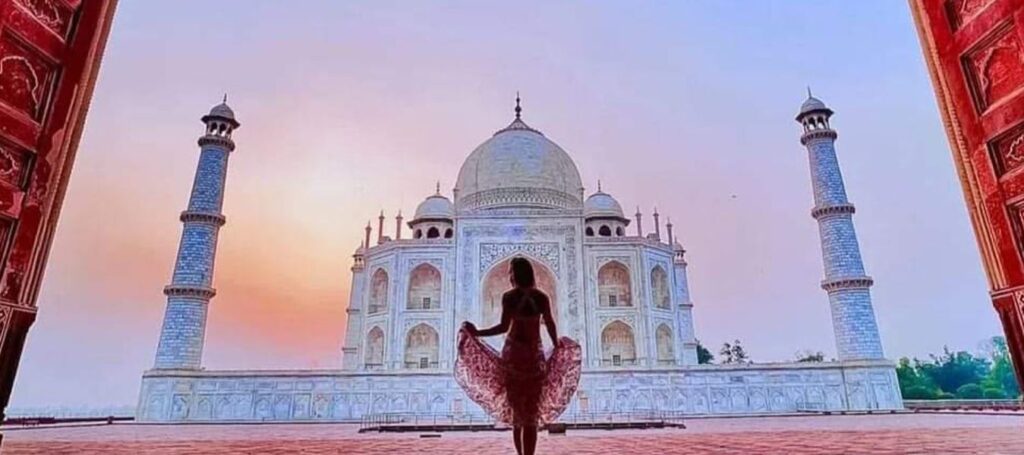
<p>The Taj Mahal's white Makrana marble responds visibly to changing light. In early morning, it can appear soft cream, pale gold or faintly pink depending on sky conditions. Under strong midday sun, the marble looks its whitest and most uniform. In late afternoon, warmer tones return as the sun drops lower.</p>
<!-- /wp:paragraph -->
<!-- wp:paragraph {"className":""} -->
<p>Beyond light, several practical factors shift throughout the day:</p>
<!-- /wp:paragraph -->
<!-- wp:list -->
<ul class="wp-block-list"><!-- wp:list-item -->
<li><strong>Temperature.</strong> Mornings are cooler. In summer (April–June), midday temperatures in Agra regularly exceed 40°C (104°F), making an early visit far more comfortable.</li>
<!-- /wp:list-item -->
<!-- wp:list-item -->
<li><strong>Visitor activity.</strong> The complex tends to be calmer right after opening. Activity builds through mid-morning and typically stays steady through the afternoon.</li>
<!-- /wp:list-item -->
<!-- wp:list-item -->
<li><strong>Photography conditions.</strong> Low-angle light in early morning and late afternoon creates depth, shadows and contrast. Midday light can flatten details and cause harsh reflections on the marble.</li>
<!-- /wp:list-item -->
<!-- wp:list-item -->
<li><strong>Time remaining for sightseeing.</strong> An early visit leaves you free to explore Agra Fort, Itimad-ud-Daulah or the local markets afterward. A late-afternoon visit limits your remaining daylight.</li>
<!-- /wp:list-item --></ul>
<!-- /wp:list -->
<!-- wp:heading {"anchor":"h-what-is-the-taj-mahal-like-at-opening-time"} -->
<h2 id="h-what-is-the-taj-mahal-like-at-opening-time" class="wp-block-heading">What Is the Taj Mahal Like at Opening Time?</h2>
<!-- /wp:heading -->
<!-- wp:paragraph {"className":""} -->
<p>The Taj Mahal opens 30 minutes before sunrise — not at a fixed clock time. In summer this can be as early as around 5:00 AM; in winter, closer to 6:30–7:00 AM. The monument is closed to general visitors on Fridays.</p>
<!-- /wp:paragraph -->
<!-- wp:paragraph {"className":""} -->
<p>Arriving at opening means experiencing the complex in its quietest state. The light is low and changing rapidly, which creates memorable conditions for photography. The marble can take on subtle color shifts as the sun rises behind you (if entering from the East Gate or West Gate).</p>
<!-- /wp:paragraph -->
<!-- wp:paragraph {"className":""} -->
<p>This time slot suits dedicated photographers and travelers who enjoy seeing major landmarks before they fill up. If a sunrise visit is your main goal, read more about <a href="https://www.tajmahalsplendortours.com/blog/sunrise-taj-mahal-tours-worth-waking-up-early/">what to expect from a sunrise Taj Mahal visit</a>.</p>
<!-- /wp:paragraph -->
<!-- wp:paragraph {"className":""} -->
<p><strong>Keep in mind:</strong> In winter (December–January), early-morning fog and haze in Agra can reduce visibility. Some mornings the Taj Mahal may not be fully visible until the fog lifts, which can take an hour or more.</p>
<!-- /wp:paragraph -->
<!-- wp:heading {"anchor":"h-is-early-morning-the-best-time-to-visit-the-taj-mahal"} -->
<h2 id="h-is-early-morning-the-best-time-to-visit-the-taj-mahal" class="wp-block-heading">Is Early Morning the Best Time to Visit the Taj Mahal?</h2>
<!-- /wp:heading -->
<!-- wp:paragraph {"className":""} -->
<p>For most travelers, yes. The period roughly 30 to 90 minutes after opening hits a practical sweet spot: the initial rush at the gates has settled, the light is still soft and directional, and temperatures haven't climbed yet.</p>
<!-- /wp:paragraph -->
<!-- wp:paragraph {"className":""} -->
<p>This is the time most first-time visitors will enjoy the most. You can take your time at the main gateway, walk through the gardens, photograph the Taj Mahal with good front-light, and explore the main mausoleum without feeling hurried.</p>
<!-- /wp:paragraph -->
<!-- wp:paragraph {"className":""} -->
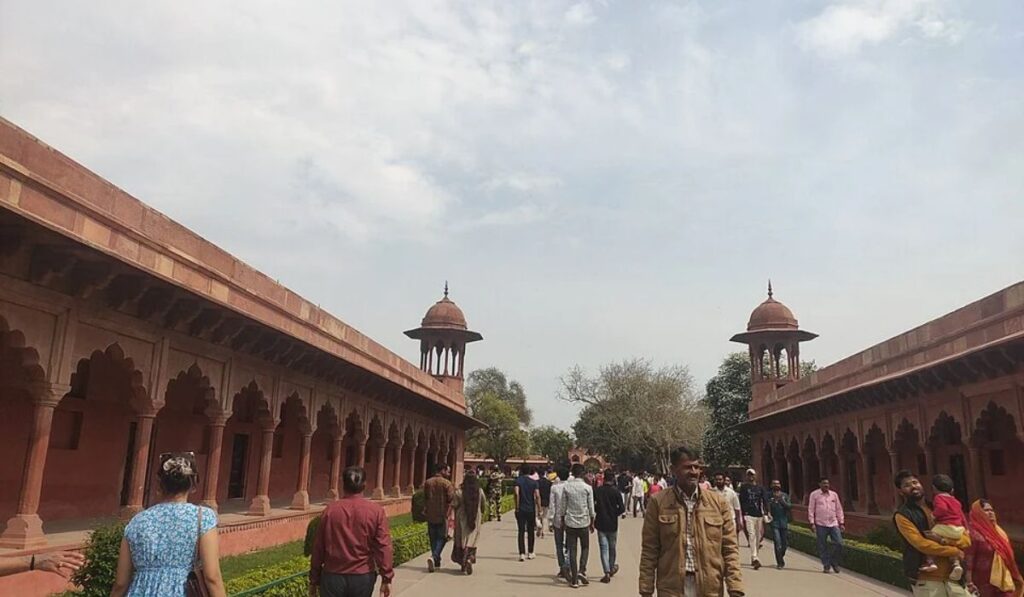
<p>Early morning also leaves the rest of your day open. After two to three hours at the Taj Mahal, you can visit Agra Fort (about 2.5 km away), have a relaxed lunch, or continue to other sites.</p>
<!-- /wp:paragraph -->
<!-- wp:heading {"anchor":"h-what-is-the-taj-mahal-like-in-mid-morning"} -->
<h2 id="h-what-is-the-taj-mahal-like-in-mid-morning" class="wp-block-heading">What Is the Taj Mahal Like in Mid-Morning?</h2>
<!-- /wp:heading -->
<!-- wp:paragraph {"className":""} -->
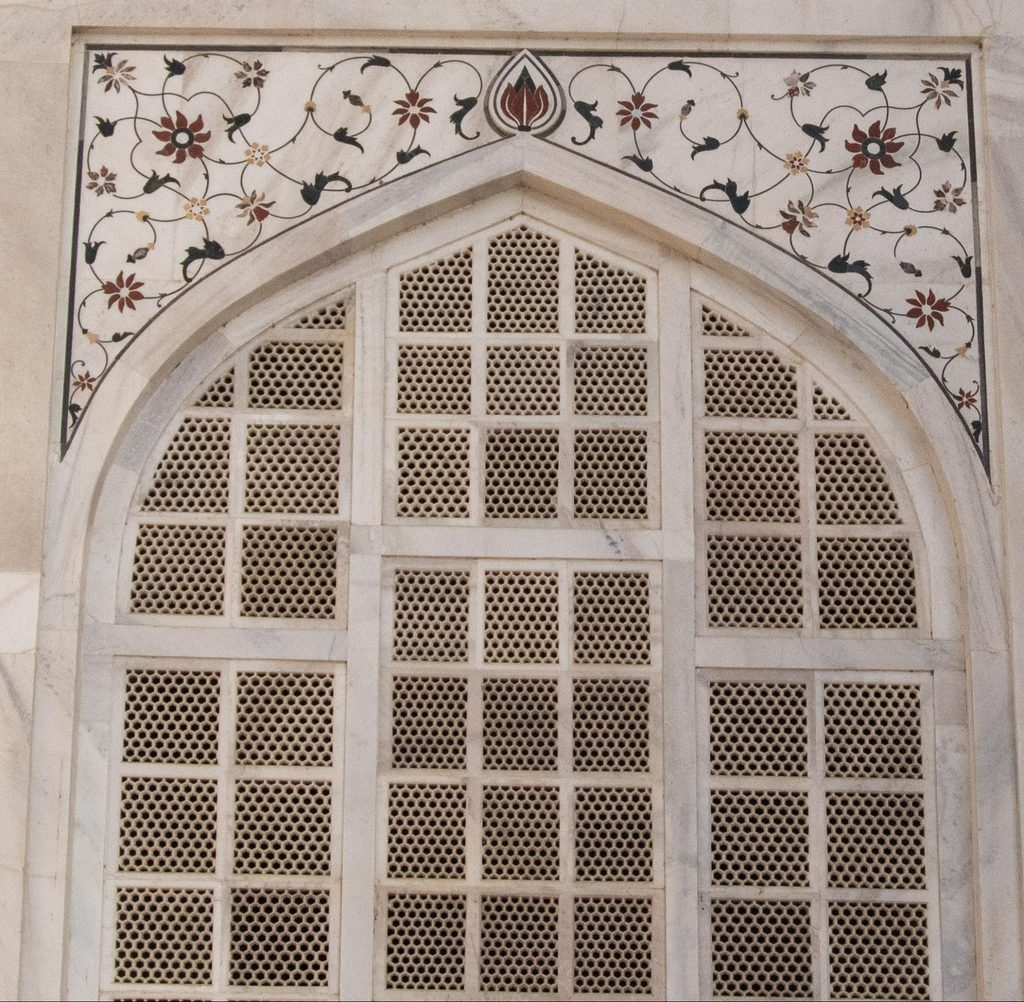
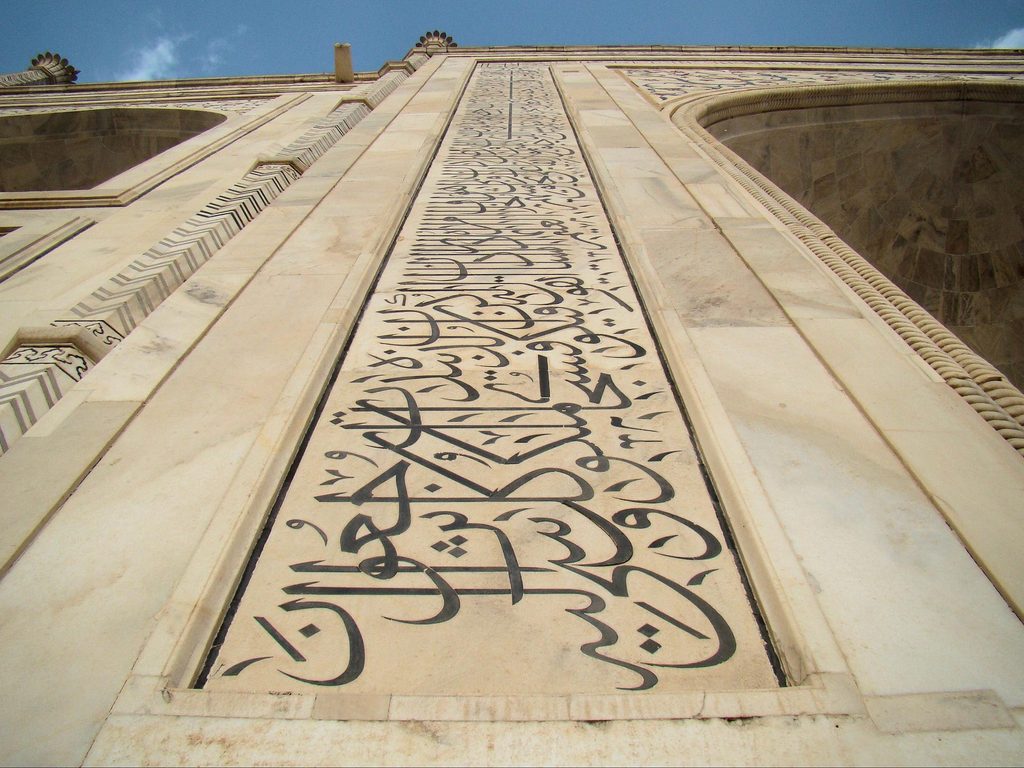
<p>By mid-morning, the sunlight is stronger and more overhead. This is not necessarily a disadvantage — the even lighting reveals crisp architectural detail in the marble inlay work, the geometric patterns on the minarets, and the calligraphy panels. If you are more interested in studying the monument's craftsmanship up close than in capturing dramatic golden-hour photographs, mid-morning gives you excellent conditions.</p>
<!-- /wp:paragraph -->
<!-- wp:paragraph {"className":""} -->
<p>The complex will be more active at this hour. For families, couples who prefer a relaxed pace, or travelers who simply don't want to set an early alarm, mid-morning is a perfectly reasonable choice — especially from October through February, when daytime temperatures in Agra remain comfortable.</p>
<!-- /wp:paragraph -->
<!-- wp:heading {"anchor":"h-should-you-visit-the-taj-mahal-around-midday"} -->
<h2 id="h-should-you-visit-the-taj-mahal-around-midday" class="wp-block-heading">Should You Visit the Taj Mahal Around Midday?</h2>
<!-- /wp:heading -->
<!-- wp:paragraph {"className":""} -->
<p>Midday is the most commonly discouraged time, but it is not always a poor choice. The overhead sun can make photography challenging — the marble reflects strongly, shadows disappear, and contrast is flat. From March through June, midday heat in Agra makes extended outdoor walking uncomfortable.</p>
<!-- /wp:paragraph -->
<!-- wp:paragraph {"className":""} -->
<p>However, during the cooler months (November–February), midday conditions at the Taj Mahal are manageable and sometimes pleasant. A midday visit also fits certain travel schedules — for instance, if your train from Delhi arrives late in the morning, heading straight to the Taj Mahal around noon may be your most practical option.</p>
<!-- /wp:paragraph -->
<!-- wp:heading {"anchor":"h-is-afternoon-a-good-time-to-visit-the-taj-mahal"} -->
<h2 id="h-is-afternoon-a-good-time-to-visit-the-taj-mahal" class="wp-block-heading">Is Afternoon a Good Time to Visit the Taj Mahal?</h2>
<!-- /wp:heading -->
<!-- wp:paragraph {"className":""} -->
<p>The afternoon period — roughly 1:00 PM to 3:00 PM — is a transition phase. Temperatures are still elevated in warmer months, but the light begins to shift from overhead to slightly angled. This gradual change can improve photography conditions compared to midday.</p>
<!-- /wp:paragraph -->
<!-- wp:paragraph {"className":""} -->
<p>Afternoon works well for day-trippers arriving in Agra from Delhi who missed the morning window. It also suits travelers who spent the morning at Agra Fort or other sites and are saving the Taj Mahal for later in the day. You will still have enough time for a thorough visit before the complex closes.</p>
<!-- /wp:paragraph -->
<!-- wp:image {"id":1393,"sizeSlug":"large","linkDestination":"none"} -->
<figure class="wp-block-image size-large"><img src="https://www.tajmahalsplendortours.com/wp-content/uploads/2015/07/New-Project-25-1024x455.jpg" alt="" class="wp-image-1393"/></figure>
<!-- /wp:image -->
<!-- wp:heading {"anchor":"h-what-is-visiting-the-taj-mahal-in-late-afternoon-like"} -->
<h2 id="h-what-is-visiting-the-taj-mahal-in-late-afternoon-like" class="wp-block-heading">What Is Visiting the Taj Mahal in Late Afternoon Like?</h2>
<!-- /wp:heading -->
<!-- wp:paragraph {"className":""} -->
<p>In late afternoon, the light drops lower and warmer, casting longer shadows across the gardens and giving the marble a subtle golden quality. For photographers who prefer warm-toned images, this can be a rewarding time.</p>
<!-- /wp:paragraph -->
<!-- wp:paragraph {"className":""} -->
<p><strong>Important:</strong> The Taj Mahal closes 30 minutes before sunset, not at sunset. You cannot remain inside to watch the sun go down. The exact closing time shifts with the season, so always check the current schedule on the <a href="https://www.tajmahalsplendortours.com/blog/taj-mahal-opening-hours-best-time-to-visit/">Taj Mahal opening hours and seasonal timing</a> page before planning a late visit.</p>
<!-- /wp:paragraph -->
<!-- wp:paragraph {"className":""} -->
<p>Because of the closing-time constraint, a late-afternoon visit requires you to manage your time carefully. Enter with enough margin to see the main mausoleum, the gardens, and the mosque without rushing.</p>
<!-- /wp:paragraph -->
<!-- wp:heading {"anchor":"h-taj-mahal-at-sunrise-vs-late-afternoon-what-s-the-difference"} -->
<h2 id="h-taj-mahal-at-sunrise-vs-late-afternoon-what-s-the-difference" class="wp-block-heading">Taj Mahal at Sunrise vs Late Afternoon: What's the Difference?</h2>
<!-- /wp:heading -->
<!-- wp:table -->
<figure class="wp-block-table"><table class="has-fixed-layout"><thead><tr><th class="has-text-align-left" data-align="left">Factor</th><th class="has-text-align-left" data-align="left">Sunrise / Early Morning</th><th class="has-text-align-left" data-align="left">Late Afternoon</th></tr></thead><tbody><tr><td><strong>Light</strong></td><td>Soft, cool-toned, rapidly changing</td><td>Warm, golden, gradually fading</td></tr><tr><td><strong>Temperature</strong></td><td>Cooler (cold in winter)</td><td>Warmer, easing toward evening</td></tr><tr><td><strong>Photography</strong></td><td>Classic front-lit Taj Mahal shots from the gardens</td><td>Warm side-lit and back-lit possibilities</td></tr><tr><td><strong>Convenience</strong></td><td>Requires very early start</td><td>Fits later travel schedules</td></tr><tr><td><strong>Visitor activity</strong></td><td>Typically calmer at first entry</td><td>Steady, can feel time-pressured near closing</td></tr><tr><td><strong>Winter conditions</strong></td><td>Fog/haze risk</td><td>Fog usually cleared by afternoon</td></tr><tr><td><strong>Time afterward</strong></td><td>Full day of Agra sightseeing ahead</td><td>Limited daylight remaining</td></tr><tr><td><strong>Best for</strong></td><td>Photographers, early risers, travelers staying overnight</td><td>Day-trippers, warm-light seekers, late arrivals</td></tr></tbody></table></figure>
<!-- /wp:table -->
<!-- wp:paragraph {"className":""} -->
<p>Neither time is universally better. Choose based on your priorities: morning for flexibility and cooler conditions, late afternoon for warm light and schedule convenience.</p>
<!-- /wp:paragraph -->
<!-- wp:heading {"anchor":"h-best-time-of-day-for-taj-mahal-photography"} -->
<h2 id="h-best-time-of-day-for-taj-mahal-photography" class="wp-block-heading">Best Time of Day for Taj Mahal Photography</h2>
<!-- /wp:heading -->
<!-- wp:list -->
<ul class="wp-block-list"><!-- wp:list-item -->
<li><strong>Early morning</strong> offers soft, directional light that brings out the marble's subtle tones. The reflection pool in the Charbagh gardens can produce mirror-like images when conditions are calm.</li>
<!-- /wp:list-item -->
<!-- wp:list-item -->
<li><strong>Midday</strong> gives the most illumination but creates flat, high-contrast images that most photographers find less appealing.</li>
<!-- /wp:list-item -->
<!-- wp:list-item -->
<li><strong>Late afternoon</strong> provides warmer light and longer shadows that add depth. The marble may appear golden depending on sky conditions.</li>
<!-- /wp:list-item --></ul>
<!-- /wp:list -->
<!-- wp:paragraph {"className":""} -->
<p>No specific time guarantees perfect conditions — weather, haze and cloud cover all play a role. For the widest range of photographic opportunities, arriving early and spending two to three hours allows you to capture changing light.</p>
<!-- /wp:paragraph -->
<!-- wp:heading {"anchor":"h-which-time-should-you-choose-traveler-by-traveler-guide"} -->
<h2 id="h-which-time-should-you-choose-traveler-by-traveler-guide" class="wp-block-heading">Which Time Should You Choose? Traveler-by-Traveler Guide</h2>
<!-- /wp:heading -->
<!-- wp:table -->
<figure class="wp-block-table"><table class="has-fixed-layout"><thead><tr><th class="has-text-align-left" data-align="left">Traveler Type</th><th class="has-text-align-left" data-align="left">Recommended Time</th><th class="has-text-align-left" data-align="left">Why</th></tr></thead><tbody><tr><td>First-time visitor</td><td>Early morning</td><td>Best balance of light, comfort and time</td></tr><tr><td>Photographer</td><td>Opening time or late afternoon</td><td>Low-angle light for dramatic images</td></tr><tr><td>Couple</td><td>Early morning</td><td>Calmer atmosphere, good photo opportunities</td></tr><tr><td>Family with children</td><td>Mid-morning</td><td>No extreme early start, comfortable pace</td></tr><tr><td>Senior traveler</td><td>Mid-morning (winter) or early morning (summer)</td><td>Avoids heat; allows a relaxed visit</td></tr><tr><td>Summer visitor</td><td>Opening time or early morning</td><td>Before the worst of the heat</td></tr><tr><td>Winter visitor</td><td>Mid-morning to early afternoon</td><td>Fog often clears by mid-morning; warmer temperatures</td></tr><tr><td>Same-day visitor from Delhi</td><td>Depends on arrival time</td><td>If arriving by mid-morning, enter promptly; if arriving after noon, go in the afternoon</td></tr><tr><td>Traveler staying overnight in Agra</td><td>Early morning</td><td>Maximize your time at the Taj Mahal and add Agra Fort afterward</td></tr><tr><td>Traveler who dislikes waking early</td><td>Mid-morning or afternoon</td><td>Still a good visit, just different light</td></tr></tbody></table></figure>
<!-- /wp:table -->
<!-- wp:separator -->
<hr class="wp-block-separator has-alpha-channel-opacity"/>
<!-- /wp:separator -->
<!-- wp:heading {"anchor":"h-best-time-of-day-by-season"} -->
<h2 id="h-best-time-of-day-by-season" class="wp-block-heading">Best Time of Day by Season</h2>
<!-- /wp:heading -->
<!-- wp:paragraph {"className":""} -->
<p>Season affects which part of the day is most comfortable — not whether the Taj Mahal is worth visiting.</p>
<!-- /wp:paragraph -->
<!-- wp:list -->
<ul class="wp-block-list"><!-- wp:list-item -->
<li><strong>Summer (April–June):</strong> The earlier, the better. Temperatures climb quickly after 9:00 AM.</li>
<!-- /wp:list-item -->
<!-- wp:list-item -->
<li><strong>Winter (November–February):</strong> Early morning fog can delay clear views. Mid-morning to early afternoon often offers the best visibility and pleasant warmth.</li>
<!-- /wp:list-item -->
<!-- wp:list-item -->
<li><strong>Monsoon (July–September):</strong> Cloud cover and rain are unpredictable. Overcast skies can produce soft, even light throughout the day.</li>
<!-- /wp:list-item -->
<!-- wp:list-item -->
<li><strong>Pleasant-weather months (October, March):</strong> Most flexible. Any time of day works well.</li>
<!-- /wp:list-item --></ul>
<!-- /wp:list -->
<!-- wp:paragraph {"className":""} -->
<p>For detailed seasonal and opening-time planning, see our <a href="https://www.tajmahalsplendortours.com/blog/taj-mahal-opening-hours-best-time-to-visit/">complete Taj Mahal timing guide</a>.</p>
<!-- /wp:paragraph -->
<!-- wp:heading {"anchor":"h-how-early-should-you-arrive"} -->
<h2 id="h-how-early-should-you-arrive" class="wp-block-heading">How Early Should You Arrive?</h2>
<!-- /wp:heading -->
<!-- wp:list -->
<ul class="wp-block-list"><!-- wp:list-item -->
<li><strong>Check the current opening time.</strong> It changes seasonally — the Taj Mahal opens 30 minutes before sunrise. Check an Agra sunrise calendar for your travel date.</li>
<!-- /wp:list-item -->
<!-- wp:list-item -->
<li><strong>Allow time for security.</strong> All visitors pass through security screening. Keep your bag light — large bags, tripods and food items are typically not allowed inside.</li>
<!-- /wp:list-item -->
<!-- wp:list-item -->
<li><strong>Have your ticket ready.</strong> Purchase tickets online in advance to save time. For ticketing details, see the <a href="https://www.tajmahalsplendortours.com/blog/taj-mahal-entry-ticket-price-booking-guide/">Taj Mahal ticket and booking guide</a>.</li>
<!-- /wp:list-item -->
<!-- wp:list-item -->
<li><strong>Factor in transportation.</strong> If your hotel is not within walking distance of the East Gate or West Gate, allow time for your driver or auto-rickshaw to reach the drop-off area and for the walk to the entry point.</li>
<!-- /wp:list-item --></ul>
<!-- /wp:list -->
<!-- wp:heading {"anchor":"h-3-sample-taj-mahal-timing-plans"} -->
<h2 id="h-3-sample-taj-mahal-timing-plans" class="wp-block-heading">3 Sample Taj Mahal Timing Plans</h2>
<!-- /wp:heading -->
<!-- wp:heading {"level":3,"anchor":"h-plan-1-early-morning-photographer"} -->
<h3 id="h-plan-1-early-morning-photographer" class="wp-block-heading">Plan 1: Early-Morning Photographer</h3>
<!-- /wp:heading -->
<!-- wp:list {"ordered":true} -->
<ol class="wp-block-list"><!-- wp:list-item -->
<li>Reach the entry gate area before the official opening time.</li>
<!-- /wp:list-item -->
<!-- wp:list-item -->
<li>Enter as soon as gates open and head directly toward the main viewpoint along the central water channel.</li>
<!-- /wp:list-item -->
<!-- wp:list-item -->
<li>Spend the first 60–90 minutes at key photo positions while the light is still low and changing.</li>
<!-- /wp:list-item -->
<!-- wp:list-item -->
<li>Explore the main mausoleum and mosque.</li>
<!-- /wp:list-item -->
<!-- wp:list-item -->
<li>Exit and continue to Agra Fort by mid-morning.</li>
<!-- /wp:list-item --></ol>
<!-- /wp:list -->
<!-- wp:heading {"level":3,"anchor":"h-plan-2-relaxed-first-time-visitor"} -->
<h3 id="h-plan-2-relaxed-first-time-visitor" class="wp-block-heading">Plan 2: Relaxed First-Time Visitor</h3>
<!-- /wp:heading -->
<!-- wp:list {"ordered":true} -->
<ol class="wp-block-list"><!-- wp:list-item -->
<li>Arrive approximately 60–90 minutes after opening.</li>
<!-- /wp:list-item -->
<!-- wp:list-item -->
<li>Enter through the main gateway and take time at each viewpoint.</li>
<!-- /wp:list-item -->
<!-- wp:list-item -->
<li>Spend 2–3 hours exploring the gardens, the mausoleum interior, and the mosque.</li>
<!-- /wp:list-item -->
<!-- wp:list-item -->
<li>Exit and break for lunch, then visit Agra Fort or Itimad-ud-Daulah in the afternoon.</li>
<!-- /wp:list-item --></ol>
<!-- /wp:list -->
<!-- wp:heading {"level":3,"anchor":"h-plan-3-late-afternoon-visitor"} -->
<h3 id="h-plan-3-late-afternoon-visitor" class="wp-block-heading">Plan 3: Late-Afternoon Visitor</h3>
<!-- /wp:heading -->
<!-- wp:list {"ordered":true} -->
<ol class="wp-block-list"><!-- wp:list-item -->
<li>Plan to enter at least 2.5–3 hours before the closing time to allow a thorough visit.</li>
<!-- /wp:list-item -->
<!-- wp:list-item -->
<li>Walk the gardens, photograph the Taj Mahal in warm afternoon light, and visit the mausoleum interior.</li>
<!-- /wp:list-item -->
<!-- wp:list-item -->
<li>Exit before closing.</li>
<!-- /wp:list-item -->
<!-- wp:list-item -->
<li>If time and interest allow, visit Mehtab Bagh separately — it is located across the Yamuna River and offers views of the Taj Mahal's rear facade. (Mehtab Bagh is a separate site, not inside the Taj Mahal complex.)</li>
<!-- /wp:list-item --></ol>
<!-- /wp:list -->
<!-- wp:heading {"anchor":"h-quick-decision-what-time-should-i-visit-the-taj-mahal"} -->
<h2 id="h-quick-decision-what-time-should-i-visit-the-taj-mahal" class="wp-block-heading">Quick Decision: What Time Should I Visit the Taj Mahal?</h2>
<!-- /wp:heading -->
<!-- wp:list -->
<ul class="wp-block-list"><!-- wp:list-item -->
<li><strong>Choose opening time</strong> if you want the quietest atmosphere and are willing to wake up very early.</li>
<!-- /wp:list-item -->
<!-- wp:list-item -->
<li><strong>Choose early morning</strong> if you want the best overall balance of light, comfort and available time.</li>
<!-- /wp:list-item -->
<!-- wp:list-item -->
<li><strong>Choose mid-morning</strong> if you prefer a relaxed start and don't mind brighter sunlight.</li>
<!-- /wp:list-item -->
<!-- wp:list-item -->
<li><strong>Choose midday</strong> if you are visiting in winter and want the warmest, clearest conditions.</li>
<!-- /wp:list-item -->
<!-- wp:list-item -->
<li><strong>Choose afternoon</strong> if you are arriving in Agra later in the day and want to see the Taj Mahal on the same day.</li>
<!-- /wp:list-item -->
<!-- wp:list-item -->
<li><strong>Choose late afternoon</strong> if you want warm-toned light for photography and can manage your time around the closing schedule.</li>
<!-- /wp:list-item --></ul>
<!-- /wp:list -->
<!-- wp:heading {"anchor":"h-frequently-asked-questions"} -->
<h2 id="h-frequently-asked-questions" class="wp-block-heading">Frequently Asked Questions</h2>
<!-- /wp:heading -->
<!-- wp:heading {"level":3,"anchor":"h-what-is-the-best-time-of-day-to-visit-the-taj-mahal"} -->
<h3 id="h-what-is-the-best-time-of-day-to-visit-the-taj-mahal" class="wp-block-heading">What is the best time of day to visit the Taj Mahal?</h3>
<!-- /wp:heading -->
<!-- wp:paragraph {"className":""} -->
<p>Early morning — about 30 to 90 minutes after opening — works best for most visitors. The light is favorable, temperatures are more comfortable, and you have the rest of the day for other Agra sightseeing. Photographers may prefer opening time or late afternoon for more dramatic light.</p>
<!-- /wp:paragraph -->
<!-- wp:heading {"level":3,"anchor":"h-is-the-taj-mahal-better-at-sunrise-or-sunset"} -->
<h3 id="h-is-the-taj-mahal-better-at-sunrise-or-sunset" class="wp-block-heading">Is the Taj Mahal better at sunrise or sunset?</h3>
<!-- /wp:heading -->
<!-- wp:paragraph {"className":""} -->
<p>Both times offer warm, low-angle light. Sunrise typically provides calmer conditions and leaves your day free. Late afternoon provides warmer golden tones but your time inside is limited by the closing schedule. In winter, morning fog may favor an afternoon visit.</p>
<!-- /wp:paragraph -->
<!-- wp:heading {"level":3,"anchor":"h-what-time-should-i-reach-the-taj-mahal-in-the-morning"} -->
<h3 id="h-what-time-should-i-reach-the-taj-mahal-in-the-morning" class="wp-block-heading">What time should I reach the Taj Mahal in the morning?</h3>
<!-- /wp:heading -->
<!-- wp:paragraph {"className":""} -->
<p>That depends on the season. The Taj Mahal opens 30 minutes before sunrise, which can range from around 5:00 AM in summer to around 6:30–7:00 AM in winter. Check the sunrise time for your travel date and plan to reach the gate area shortly before opening.</p>
<!-- /wp:paragraph -->
<!-- wp:heading {"level":3,"anchor":"h-is-early-morning-less-crowded-at-the-taj-mahal"} -->
<h3 id="h-is-early-morning-less-crowded-at-the-taj-mahal" class="wp-block-heading">Is early morning less crowded at the Taj Mahal?</h3>
<!-- /wp:heading -->
<!-- wp:paragraph {"className":""} -->
<p>Generally, visitor activity tends to be lower in the first hour after opening and builds through the morning. However, conditions vary by day and season, and the opening rush itself can be busy with sunrise visitors.</p>
<!-- /wp:paragraph -->
<!-- wp:heading {"level":3,"anchor":"h-is-midday-a-good-time-to-visit-the-taj-mahal"} -->
<h3 id="h-is-midday-a-good-time-to-visit-the-taj-mahal" class="wp-block-heading">Is midday a good time to visit the Taj Mahal?</h3>
<!-- /wp:heading -->
<!-- wp:paragraph {"className":""} -->
<p>It can work, especially in winter when temperatures are pleasant. In summer, midday heat makes extended outdoor sightseeing uncomfortable. Photography is more challenging under overhead sun, but midday suits travelers with fixed schedules.</p>
<!-- /wp:paragraph -->
<!-- wp:heading {"level":3,"anchor":"h-can-you-visit-the-taj-mahal-around-sunset"} -->
<h3 id="h-can-you-visit-the-taj-mahal-around-sunset" class="wp-block-heading">Can you visit the Taj Mahal around sunset?</h3>
<!-- /wp:heading -->
<!-- wp:paragraph {"className":""} -->
<p>You can visit in late afternoon, but the Taj Mahal closes 30 minutes before sunset. You cannot stay inside to watch the sun set. Always check the current closing time before planning a late visit.</p>
<!-- /wp:paragraph -->
<!-- wp:heading {"level":3,"anchor":"h-what-is-the-best-time-for-taj-mahal-photography"} -->
<h3 id="h-what-is-the-best-time-for-taj-mahal-photography" class="wp-block-heading">What is the best time for Taj Mahal photography?</h3>
<!-- /wp:heading -->
<!-- wp:paragraph {"className":""} -->
<p>Early morning and late afternoon both offer low-angle light with depth and warmth. Early morning is preferred by most photographers for front-lit shots of the Taj Mahal from the gardens. Late afternoon provides warmer tones and different shadow angles.</p>
<!-- /wp:paragraph -->
<!-- wp:heading {"level":3,"anchor":"h-what-is-the-best-time-for-families-to-visit"} -->
<h3 id="h-what-is-the-best-time-for-families-to-visit" class="wp-block-heading">What is the best time for families to visit?</h3>
<!-- /wp:heading -->
<!-- wp:paragraph {"className":""} -->
<p>Mid-morning is often ideal for families with children. It avoids a very early wake-up, temperatures are moderate (outside peak summer), and the pace can be relaxed. In summer, aim for early morning to beat the heat.</p>
<!-- /wp:paragraph -->
<!-- wp:heading {"level":3,"anchor":"h-is-the-taj-mahal-open-on-friday"} -->
<h3 id="h-is-the-taj-mahal-open-on-friday" class="wp-block-heading">Is the Taj Mahal open on Friday?</h3>
<!-- /wp:heading -->
<!-- wp:paragraph {"className":""} -->
<p>No. The Taj Mahal is closed to general visitors every Friday. Plan your visit for any other day of the week.</p>
<!-- /wp:paragraph -->
<!-- wp:heading {"anchor":"h-conclusion"} -->
<h2 id="h-conclusion" class="wp-block-heading">Conclusion</h2>
<!-- /wp:heading -->
<!-- wp:paragraph {"className":""} -->
<p>For most travelers, <strong>early morning</strong> — within the first couple of hours after opening — delivers the best overall Taj Mahal experience. It balances favorable light, comfortable temperatures and practical scheduling.</p>
<!-- /wp:paragraph -->
<!-- wp:paragraph {"className":""} -->
<p><strong>Photographers</strong> will get the most from opening time (for sunrise light) or late afternoon (for warm golden tones). <strong>Travelers who prefer not to wake before dawn</strong> can visit mid-morning or afternoon and still have an excellent experience — just plan around the seasonal heat if visiting in summer.</p>
<!-- /wp:paragraph -->
<!-- wp:paragraph {"className":""} -->
<p>Whatever time you choose, the Taj Mahal rewards visitors who plan around their own priorities rather than following a one-size-fits-all rule.</p>
<!-- /wp:paragraph -->
<!-- wp:paragraph {"className":""} -->
<p><strong>Need help choosing the right time for your trip?</strong> Browse <a href="https://www.tajmahalsplendortours.com/taj-mahal-tour-packages/">Taj Mahal tour packages</a> from Taj Mahal Splendor Tours. As a local Agra-based team, we can help you pick a schedule that matches your arrival time, group size and photography goals — whether that is a <a href="https://www.tajmahalsplendortours.com/tours/sunrise-taj-mahal-and-agra-tour-by-car/">Sunrise Taj Mahal and Agra Tour by Car</a> or a privately timed afternoon visit.</p>
<!-- /wp:paragraph -->
For most first-time visitors, early morning — roughly 30 to 90 minutes after the gates open — offers the best overall experience at the Taj Mahal. The light is soft and directional, temperatures are more comfortable in warmer months, and you have the rest of the day ahead for Agra Fort and other sightseeing. That said, early morning is not automatically the right choice for everyone. Photographers chasing warm tones, families who need a relaxed start, winter travelers dealing with fog, and visitors arriving from Delhi later in the day may all find that a different time works better. This guide compares the Taj Mahal experience hour by hour so you can pick the time that fits your priorities.
Quick Answer: What Is the Best Time of Day to Visit the Taj Mahal?
Early morning — after the initial opening rush but while the light is still soft — is the best time of day for most visitors. You get favorable light for photos, more comfortable temperatures (especially in summer), and enough time to explore without feeling rushed. However, the “best” hour depends on what matters most to you: photography, convenience, weather comfort or avoiding an early alarm.
Time of Day
Light
Visitor Experience
Weather Comfort
Best For
Main Drawback
Opening / Sunrise
Soft, golden, low-angle
Atmospheric, quieter initially
Cool (cold in winter)
Photographers, early risers
Very early wake-up; winter fog possible
Early Morning
Warm, directional
Good balance of calm and comfort
Pleasant in most seasons
First-time visitors, couples
Still requires an early start
Mid-Morning
Bright, even
Relaxed; strong architectural detail
Warm in summer, comfortable otherwise
Relaxed travelers, families
Less dramatic light for photos
Late Morning
Overhead, strong
Busy, fully active
Getting warm in hot months
Flexible schedules
Midday heat approaching
Midday
Harsh, directly overhead
Peak daytime activity
Hot in summer, fine in winter
Winter visitors, schedule-driven travelers
Flat light, heat in warm months
Afternoon
Gradually softening
Moderate activity
Warm, beginning to ease
Day-trippers arriving from Delhi
Limited remaining time before closing
Late Afternoon
Warm, lower-angle
Can feel rushed near closing
Cooling down
Experienced visitors, warm-light photographers
Closing time limits your visit
What Changes at the Taj Mahal Throughout the Day?
The Taj Mahal’s white Makrana marble responds visibly to changing light. In early morning, it can appear soft cream, pale gold or faintly pink depending on sky conditions. Under strong midday sun, the marble looks its whitest and most uniform. In late afternoon, warmer tones return as the sun drops lower.
Beyond light, several practical factors shift throughout the day:
Temperature. Mornings are cooler. In summer (April–June), midday temperatures in Agra regularly exceed 40°C (104°F), making an early visit far more comfortable.
Visitor activity. The complex tends to be calmer right after opening. Activity builds through mid-morning and typically stays steady through the afternoon.
Photography conditions. Low-angle light in early morning and late afternoon creates depth, shadows and contrast. Midday light can flatten details and cause harsh reflections on the marble.
Time remaining for sightseeing. An early visit leaves you free to explore Agra Fort, Itimad-ud-Daulah or the local markets afterward. A late-afternoon visit limits your remaining daylight.
What Is the Taj Mahal Like at Opening Time?
The Taj Mahal opens 30 minutes before sunrise — not at a fixed clock time. In summer this can be as early as around 5:00 AM; in winter, closer to 6:30–7:00 AM. The monument is closed to general visitors on Fridays.
Arriving at opening means experiencing the complex in its quietest state. The light is low and changing rapidly, which creates memorable conditions for photography. The marble can take on subtle color shifts as the sun rises behind you (if entering from the East Gate or West Gate).
This time slot suits dedicated photographers and travelers who enjoy seeing major landmarks before they fill up. If a sunrise visit is your main goal, read more about what to expect from a sunrise Taj Mahal visit.
Keep in mind: In winter (December–January), early-morning fog and haze in Agra can reduce visibility. Some mornings the Taj Mahal may not be fully visible until the fog lifts, which can take an hour or more.
Is Early Morning the Best Time to Visit the Taj Mahal?
For most travelers, yes. The period roughly 30 to 90 minutes after opening hits a practical sweet spot: the initial rush at the gates has settled, the light is still soft and directional, and temperatures haven’t climbed yet.
This is the time most first-time visitors will enjoy the most. You can take your time at the main gateway, walk through the gardens, photograph the Taj Mahal with good front-light, and explore the main mausoleum without feeling hurried.
Early morning also leaves the rest of your day open. After two to three hours at the Taj Mahal, you can visit Agra Fort (about 2.5 km away), have a relaxed lunch, or continue to other sites.
What Is the Taj Mahal Like in Mid-Morning?
By mid-morning, the sunlight is stronger and more overhead. This is not necessarily a disadvantage — the even lighting reveals crisp architectural detail in the marble inlay work, the geometric patterns on the minarets, and the calligraphy panels. If you are more interested in studying the monument’s craftsmanship up close than in capturing dramatic golden-hour photographs, mid-morning gives you excellent conditions.
The complex will be more active at this hour. For families, couples who prefer a relaxed pace, or travelers who simply don’t want to set an early alarm, mid-morning is a perfectly reasonable choice — especially from October through February, when daytime temperatures in Agra remain comfortable.
Should You Visit the Taj Mahal Around Midday?
Midday is the most commonly discouraged time, but it is not always a poor choice. The overhead sun can make photography challenging — the marble reflects strongly, shadows disappear, and contrast is flat. From March through June, midday heat in Agra makes extended outdoor walking uncomfortable.
However, during the cooler months (November–February), midday conditions at the Taj Mahal are manageable and sometimes pleasant. A midday visit also fits certain travel schedules — for instance, if your train from Delhi arrives late in the morning, heading straight to the Taj Mahal around noon may be your most practical option.
Is Afternoon a Good Time to Visit the Taj Mahal?
The afternoon period — roughly 1:00 PM to 3:00 PM — is a transition phase. Temperatures are still elevated in warmer months, but the light begins to shift from overhead to slightly angled. This gradual change can improve photography conditions compared to midday.
Afternoon works well for day-trippers arriving in Agra from Delhi who missed the morning window. It also suits travelers who spent the morning at Agra Fort or other sites and are saving the Taj Mahal for later in the day. You will still have enough time for a thorough visit before the complex closes.
What Is Visiting the Taj Mahal in Late Afternoon Like?
In late afternoon, the light drops lower and warmer, casting longer shadows across the gardens and giving the marble a subtle golden quality. For photographers who prefer warm-toned images, this can be a rewarding time.
Important: The Taj Mahal closes 30 minutes before sunset, not at sunset. You cannot remain inside to watch the sun go down. The exact closing time shifts with the season, so always check the current schedule on the Taj Mahal opening hours and seasonal timing page before planning a late visit.
Because of the closing-time constraint, a late-afternoon visit requires you to manage your time carefully. Enter with enough margin to see the main mausoleum, the gardens, and the mosque without rushing.
Taj Mahal at Sunrise vs Late Afternoon: What’s the Difference?
Factor
Sunrise / Early Morning
Late Afternoon
Light
Soft, cool-toned, rapidly changing
Warm, golden, gradually fading
Temperature
Cooler (cold in winter)
Warmer, easing toward evening
Photography
Classic front-lit Taj Mahal shots from the gardens
Warm side-lit and back-lit possibilities
Convenience
Requires very early start
Fits later travel schedules
Visitor activity
Typically calmer at first entry
Steady, can feel time-pressured near closing
Winter conditions
Fog/haze risk
Fog usually cleared by afternoon
Time afterward
Full day of Agra sightseeing ahead
Limited daylight remaining
Best for
Photographers, early risers, travelers staying overnight
Day-trippers, warm-light seekers, late arrivals
Neither time is universally better. Choose based on your priorities: morning for flexibility and cooler conditions, late afternoon for warm light and schedule convenience.
Best Time of Day for Taj Mahal Photography
Early morning offers soft, directional light that brings out the marble’s subtle tones. The reflection pool in the Charbagh gardens can produce mirror-like images when conditions are calm.
Midday gives the most illumination but creates flat, high-contrast images that most photographers find less appealing.
Late afternoon provides warmer light and longer shadows that add depth. The marble may appear golden depending on sky conditions.
No specific time guarantees perfect conditions — weather, haze and cloud cover all play a role. For the widest range of photographic opportunities, arriving early and spending two to three hours allows you to capture changing light.
Which Time Should You Choose? Traveler-by-Traveler Guide
Traveler Type
Recommended Time
Why
First-time visitor
Early morning
Best balance of light, comfort and time
Photographer
Opening time or late afternoon
Low-angle light for dramatic images
Couple
Early morning
Calmer atmosphere, good photo opportunities
Family with children
Mid-morning
No extreme early start, comfortable pace
Senior traveler
Mid-morning (winter) or early morning (summer)
Avoids heat; allows a relaxed visit
Summer visitor
Opening time or early morning
Before the worst of the heat
Winter visitor
Mid-morning to early afternoon
Fog often clears by mid-morning; warmer temperatures
Same-day visitor from Delhi
Depends on arrival time
If arriving by mid-morning, enter promptly; if arriving after noon, go in the afternoon
Traveler staying overnight in Agra
Early morning
Maximize your time at the Taj Mahal and add Agra Fort afterward
Traveler who dislikes waking early
Mid-morning or afternoon
Still a good visit, just different light
Best Time of Day by Season
Season affects which part of the day is most comfortable — not whether the Taj Mahal is worth visiting.
Summer (April–June): The earlier, the better. Temperatures climb quickly after 9:00 AM.
Winter (November–February): Early morning fog can delay clear views. Mid-morning to early afternoon often offers the best visibility and pleasant warmth.
Monsoon (July–September): Cloud cover and rain are unpredictable. Overcast skies can produce soft, even light throughout the day.
Pleasant-weather months (October, March): Most flexible. Any time of day works well.
Check the current opening time. It changes seasonally — the Taj Mahal opens 30 minutes before sunrise. Check an Agra sunrise calendar for your travel date.
Allow time for security. All visitors pass through security screening. Keep your bag light — large bags, tripods and food items are typically not allowed inside.
Have your ticket ready. Purchase tickets online in advance to save time. For ticketing details, see the Taj Mahal ticket and booking guide.
Factor in transportation. If your hotel is not within walking distance of the East Gate or West Gate, allow time for your driver or auto-rickshaw to reach the drop-off area and for the walk to the entry point.
3 Sample Taj Mahal Timing Plans
Plan 1: Early-Morning Photographer
Reach the entry gate area before the official opening time.
Enter as soon as gates open and head directly toward the main viewpoint along the central water channel.
Spend the first 60–90 minutes at key photo positions while the light is still low and changing.
Explore the main mausoleum and mosque.
Exit and continue to Agra Fort by mid-morning.
Plan 2: Relaxed First-Time Visitor
Arrive approximately 60–90 minutes after opening.
Enter through the main gateway and take time at each viewpoint.
Spend 2–3 hours exploring the gardens, the mausoleum interior, and the mosque.
Exit and break for lunch, then visit Agra Fort or Itimad-ud-Daulah in the afternoon.
Plan 3: Late-Afternoon Visitor
Plan to enter at least 2.5–3 hours before the closing time to allow a thorough visit.
Walk the gardens, photograph the Taj Mahal in warm afternoon light, and visit the mausoleum interior.
Exit before closing.
If time and interest allow, visit Mehtab Bagh separately — it is located across the Yamuna River and offers views of the Taj Mahal’s rear facade. (Mehtab Bagh is a separate site, not inside the Taj Mahal complex.)
Quick Decision: What Time Should I Visit the Taj Mahal?
Choose opening time if you want the quietest atmosphere and are willing to wake up very early.
Choose early morning if you want the best overall balance of light, comfort and available time.
Choose mid-morning if you prefer a relaxed start and don’t mind brighter sunlight.
Choose midday if you are visiting in winter and want the warmest, clearest conditions.
Choose afternoon if you are arriving in Agra later in the day and want to see the Taj Mahal on the same day.
Choose late afternoon if you want warm-toned light for photography and can manage your time around the closing schedule.
Frequently Asked Questions
What is the best time of day to visit the Taj Mahal?
Early morning — about 30 to 90 minutes after opening — works best for most visitors. The light is favorable, temperatures are more comfortable, and you have the rest of the day for other Agra sightseeing. Photographers may prefer opening time or late afternoon for more dramatic light.
Is the Taj Mahal better at sunrise or sunset?
Both times offer warm, low-angle light. Sunrise typically provides calmer conditions and leaves your day free. Late afternoon provides warmer golden tones but your time inside is limited by the closing schedule. In winter, morning fog may favor an afternoon visit.
What time should I reach the Taj Mahal in the morning?
That depends on the season. The Taj Mahal opens 30 minutes before sunrise, which can range from around 5:00 AM in summer to around 6:30–7:00 AM in winter. Check the sunrise time for your travel date and plan to reach the gate area shortly before opening.
Is early morning less crowded at the Taj Mahal?
Generally, visitor activity tends to be lower in the first hour after opening and builds through the morning. However, conditions vary by day and season, and the opening rush itself can be busy with sunrise visitors.
Is midday a good time to visit the Taj Mahal?
It can work, especially in winter when temperatures are pleasant. In summer, midday heat makes extended outdoor sightseeing uncomfortable. Photography is more challenging under overhead sun, but midday suits travelers with fixed schedules.
Can you visit the Taj Mahal around sunset?
You can visit in late afternoon, but the Taj Mahal closes 30 minutes before sunset. You cannot stay inside to watch the sun set. Always check the current closing time before planning a late visit.
What is the best time for Taj Mahal photography?
Early morning and late afternoon both offer low-angle light with depth and warmth. Early morning is preferred by most photographers for front-lit shots of the Taj Mahal from the gardens. Late afternoon provides warmer tones and different shadow angles.
What is the best time for families to visit?
Mid-morning is often ideal for families with children. It avoids a very early wake-up, temperatures are moderate (outside peak summer), and the pace can be relaxed. In summer, aim for early morning to beat the heat.
Is the Taj Mahal open on Friday?
No. The Taj Mahal is closed to general visitors every Friday. Plan your visit for any other day of the week.
Conclusion
For most travelers, early morning — within the first couple of hours after opening — delivers the best overall Taj Mahal experience. It balances favorable light, comfortable temperatures and practical scheduling.
Photographers will get the most from opening time (for sunrise light) or late afternoon (for warm golden tones). Travelers who prefer not to wake before dawn can visit mid-morning or afternoon and still have an excellent experience — just plan around the seasonal heat if visiting in summer.
Whatever time you choose, the Taj Mahal rewards visitors who plan around their own priorities rather than following a one-size-fits-all rule.
Need help choosing the right time for your trip? Browse Taj Mahal tour packages from Taj Mahal Splendor Tours. As a local Agra-based team, we can help you pick a schedule that matches your arrival time, group size and photography goals — whether that is a Sunrise Taj Mahal and Agra Tour by Car or a privately timed afternoon visit.
<!-- wp:paragraph -->
<p>Planning a visit to the Taj Mahal in Agra starts with understanding the ticket options. The <strong>Taj Mahal entry ticket price</strong> varies depending on whether you are an Indian visitor, a citizen of a SAARC/BIMSTEC country, or an international tourist. Visitors who want to enter the main mausoleum also need to purchase an additional ticket.</p>
<!-- /wp:paragraph -->
<!-- wp:paragraph -->
<p>This guide explains the latest Taj Mahal ticket prices, how to book tickets online, ticket options for children, entry gates, opening hours, night viewing, ID requirements, and important rules to know before you arrive.</p>
<!-- /wp:paragraph -->
<!-- wp:paragraph -->
<p>If you are visiting the Taj Mahal for the first time, understanding these details in advance can make your visit much easier and help you avoid common booking mistakes.</p>
<!-- /wp:paragraph -->
<!-- wp:quote -->
<blockquote class="wp-block-quote"><!-- wp:paragraph -->
<p><strong>Important:</strong> Taj Mahal ticket prices, booking systems, entry rules, and timings can change. Always check the latest information on the official Taj Mahal or Archaeological Survey of India booking platform before your visit.</p>
<!-- /wp:paragraph --></blockquote>
<!-- /wp:quote -->
<!-- wp:heading {"anchor":"h-taj-mahal-entry-ticket-price-2026"} -->
<h2 id="h-taj-mahal-entry-ticket-price-2026" class="wp-block-heading">Taj Mahal Entry Ticket Price 2026</h2>
<!-- /wp:heading -->
<!-- wp:paragraph -->
<p>The standard Taj Mahal ticket currently starts at <strong>₹50 for Indian visitors</strong>, <strong>₹540 for citizens of SAARC and BIMSTEC countries</strong>, and <strong>₹1,100 for other foreign visitors</strong>.</p>
<!-- /wp:paragraph -->
<!-- wp:paragraph -->
<p>Entering the main mausoleum costs an additional <strong>₹200 per person</strong>.</p>
<!-- /wp:paragraph -->
<!-- wp:table -->
<figure class="wp-block-table"><table class="has-fixed-layout"><tbody><tr><th>Visitor Category</th><th class="has-text-align-right" data-align="right">Standard Entry</th><th class="has-text-align-right" data-align="right">Main Mausoleum Add-On</th><th class="has-text-align-right" data-align="right">Total With Mausoleum</th></tr><tr><td>Indian / Domestic / OCI Visitor</td><td class="has-text-align-right" data-align="right">₹50</td><td class="has-text-align-right" data-align="right">₹200</td><td class="has-text-align-right" data-align="right">₹250</td></tr><tr><td>SAARC / BIMSTEC Visitor</td><td class="has-text-align-right" data-align="right">₹540</td><td class="has-text-align-right" data-align="right">₹200</td><td class="has-text-align-right" data-align="right">₹740</td></tr><tr><td>Foreign Tourist</td><td class="has-text-align-right" data-align="right">₹1,100</td><td class="has-text-align-right" data-align="right">₹200</td><td class="has-text-align-right" data-align="right">₹1,300</td></tr><tr><td>Children Below 15</td><td class="has-text-align-right" data-align="right">Free general entry</td><td class="has-text-align-right" data-align="right">Check current booking rules</td><td class="has-text-align-right" data-align="right">Depends on access required</td></tr></tbody></table></figure>
<!-- /wp:table -->
<!-- wp:paragraph -->
<p>The main mausoleum supplement is optional. You only need to purchase it if you want to enter the mausoleum building itself.</p>
<!-- /wp:paragraph -->
<!-- wp:heading {"level":3,"anchor":"h-taj-mahal-ticket-price-for-indian-visitors"} -->
<h3 id="h-taj-mahal-ticket-price-for-indian-visitors" class="wp-block-heading">Taj Mahal Ticket Price for Indian Visitors</h3>
<!-- /wp:heading -->
<!-- wp:paragraph -->
<p>Indian visitors currently pay <strong>₹50 for standard admission</strong>.</p>
<!-- /wp:paragraph -->
<!-- wp:paragraph -->
<p>If you also want to enter the main mausoleum, the total becomes:</p>
<!-- /wp:paragraph -->
<!-- wp:paragraph -->
<p><strong>₹50 + ₹200 = ₹250 per person</strong></p>
<!-- /wp:paragraph -->
<!-- wp:heading {"level":3,"anchor":"h-taj-mahal-ticket-price-for-foreign-tourists"} -->
<h3 id="h-taj-mahal-ticket-price-for-foreign-tourists" class="wp-block-heading">Taj Mahal Ticket Price for Foreign Tourists</h3>
<!-- /wp:heading -->
<!-- wp:paragraph -->
<p>Foreign tourists currently pay <strong>₹1,100 for standard admission</strong>.</p>
<!-- /wp:paragraph -->
<!-- wp:paragraph -->
<p>Adding main mausoleum access brings the total to:</p>
<!-- /wp:paragraph -->
<!-- wp:paragraph -->
<p><strong>₹1,100 + ₹200 = ₹1,300 per person</strong></p>
<!-- /wp:paragraph -->
<!-- wp:heading {"level":3,"anchor":"h-taj-mahal-ticket-price-for-saarc-and-bimstec-visitors"} -->
<h3 id="h-taj-mahal-ticket-price-for-saarc-and-bimstec-visitors" class="wp-block-heading">Taj Mahal Ticket Price for SAARC and BIMSTEC Visitors</h3>
<!-- /wp:heading -->
<!-- wp:paragraph -->
<p>Visitors qualifying under the SAARC or BIMSTEC category currently pay <strong>₹540</strong>.</p>
<!-- /wp:paragraph -->
<!-- wp:paragraph -->
<p>With mausoleum access:</p>
<!-- /wp:paragraph -->
<!-- wp:paragraph -->
<p><strong>₹540 + ₹200 = ₹740 per person</strong></p>
<!-- /wp:paragraph -->
<!-- wp:paragraph -->
<p>Make sure you select the correct nationality category during booking and carry appropriate identification.</p>
<!-- /wp:paragraph -->
<!-- wp:heading {"anchor":"h-what-is-included-in-the-taj-mahal-entry-ticket"} -->
<h2 id="h-what-is-included-in-the-taj-mahal-entry-ticket" class="wp-block-heading">What Is Included in the Taj Mahal Entry Ticket?</h2>
<!-- /wp:heading -->
<!-- wp:paragraph -->
<p>A regular Taj Mahal entry ticket provides access to the monument complex and its main visitor areas, including the famous gardens and exterior viewing areas around the Taj Mahal.</p>
<!-- /wp:paragraph -->
<!-- wp:paragraph -->
<p>However, the standard ticket and the main mausoleum ticket are not the same thing.</p>
<!-- /wp:paragraph -->
<!-- wp:paragraph -->
<p>The regular ticket allows you to visit the Taj Mahal complex, while visitors wishing to enter the main mausoleum need to purchase the additional mausoleum ticket.</p>
<!-- /wp:paragraph -->
<!-- wp:paragraph -->
<p>This distinction is particularly important for first-time visitors because it is easy to assume that the standard Taj Mahal ticket automatically includes everything inside the complex.</p>
<!-- /wp:paragraph -->
<!-- wp:heading {"anchor":"h-does-the-regular-taj-mahal-ticket-include-the-main-mausoleum"} -->
<h2 id="h-does-the-regular-taj-mahal-ticket-include-the-main-mausoleum" class="wp-block-heading">Does the Regular Taj Mahal Ticket Include the Main Mausoleum?</h2>
<!-- /wp:heading -->
<!-- wp:paragraph -->
<p><strong>No. The regular Taj Mahal ticket does not include entry inside the main mausoleum.</strong></p>
<!-- /wp:paragraph -->
<!-- wp:paragraph -->
<p>Visitors who want to enter the main mausoleum need to purchase an additional <strong>₹200 ticket</strong> along with their regular admission ticket.</p>
<!-- /wp:paragraph -->
<!-- wp:paragraph -->
<p>The mausoleum ticket is optional.</p>
<!-- /wp:paragraph -->
<!-- wp:paragraph -->
<p>For example:</p>
<!-- /wp:paragraph -->
<!-- wp:list -->
<ul class="wp-block-list"><!-- wp:list-item -->
<li>Indian standard entry: ₹50</li>
<!-- /wp:list-item -->
<!-- wp:list-item -->
<li>Main mausoleum: ₹200</li>
<!-- /wp:list-item -->
<!-- wp:list-item -->
<li>Total: ₹250</li>
<!-- /wp:list-item --></ul>
<!-- /wp:list -->
<!-- wp:paragraph -->
<p>For a foreign visitor:</p>
<!-- /wp:paragraph -->
<!-- wp:list -->
<ul class="wp-block-list"><!-- wp:list-item -->
<li>Standard entry: ₹1,100</li>
<!-- /wp:list-item -->
<!-- wp:list-item -->
<li>Main mausoleum: ₹200</li>
<!-- /wp:list-item -->
<!-- wp:list-item -->
<li>Total: ₹1,300</li>
<!-- /wp:list-item --></ul>
<!-- /wp:list -->
<!-- wp:paragraph -->
<p>When booking your ticket online, check whether mausoleum access has been added before completing your payment.</p>
<!-- /wp:paragraph -->
<!-- wp:heading {"anchor":"h-is-the-taj-mahal-mausoleum-ticket-worth-buying"} -->
<h2 id="h-is-the-taj-mahal-mausoleum-ticket-worth-buying" class="wp-block-heading">Is the Taj Mahal Mausoleum Ticket Worth Buying?</h2>
<!-- /wp:heading -->
<!-- wp:paragraph -->
<p>For many first-time visitors, entering the main mausoleum is an important part of experiencing the Taj Mahal.</p>
<!-- /wp:paragraph -->
<!-- wp:paragraph -->
<p>The mausoleum contains the cenotaphs associated with Mughal emperor Shah Jahan and Mumtaz Mahal and allows visitors to experience the interior craftsmanship and architectural details of the monument.</p>
<!-- /wp:paragraph -->
<!-- wp:paragraph -->
<p>You may want the mausoleum ticket if:</p>
<!-- /wp:paragraph -->
<!-- wp:list -->
<ul class="wp-block-list"><!-- wp:list-item -->
<li>This is your first visit to the Taj Mahal</li>
<!-- /wp:list-item -->
<!-- wp:list-item -->
<li>You want to experience the monument beyond its exterior</li>
<!-- /wp:list-item -->
<!-- wp:list-item -->
<li>Mughal architecture and history interest you</li>
<!-- /wp:list-item -->
<!-- wp:list-item -->
<li>You have enough time for a more complete visit</li>
<!-- /wp:list-item --></ul>
<!-- /wp:list -->
<!-- wp:paragraph -->
<p>You may choose to skip it if:</p>
<!-- /wp:paragraph -->
<!-- wp:list -->
<ul class="wp-block-list"><!-- wp:list-item -->
<li>You have very limited sightseeing time</li>
<!-- /wp:list-item -->
<!-- wp:list-item -->
<li>Your main interest is photography from the gardens</li>
<!-- /wp:list-item -->
<!-- wp:list-item -->
<li>You have already visited the mausoleum previously</li>
<!-- /wp:list-item --></ul>
<!-- /wp:list -->
<!-- wp:paragraph -->
<p>The ₹200 supplement is optional, so the right choice depends on the experience you want.</p>
<!-- /wp:paragraph -->
<!-- wp:heading {"anchor":"h-how-to-book-taj-mahal-tickets-online"} -->
<h2 id="h-how-to-book-taj-mahal-tickets-online" class="wp-block-heading">How to Book Taj Mahal Tickets Online</h2>
<!-- /wp:heading -->
<!-- wp:paragraph -->
<p>Booking Taj Mahal tickets online can save you from spending additional time purchasing tickets after reaching the monument.</p>
<!-- /wp:paragraph -->
<!-- wp:paragraph -->
<p>The exact booking interface can change, but the general process is straightforward.</p>
<!-- /wp:paragraph -->
<!-- wp:heading {"level":3,"anchor":"h-step-1-use-the-official-booking-source"} -->
<h3 id="h-step-1-use-the-official-booking-source" class="wp-block-heading">Step 1: Use the Official Booking Source</h3>
<!-- /wp:heading -->
<!-- wp:paragraph -->
<p>Start from the <a href="https://www.tajmahal.gov.in/ticketing.aspx">official Taj Mahal </a>or Archaeological Survey of India ticket information page.</p>
<!-- /wp:paragraph -->
<!-- wp:paragraph -->
<p>Avoid booking through unfamiliar websites simply because they appear in search results.</p>
<!-- /wp:paragraph -->
<!-- wp:paragraph -->
<p>Third-party tour companies may legitimately sell tours that include tickets, but if you only need an entry ticket, use the official booking channel.</p>
<!-- /wp:paragraph -->
<!-- wp:heading {"level":3,"anchor":"h-step-2-select-the-taj-mahal"} -->
<h3 id="h-step-2-select-the-taj-mahal" class="wp-block-heading">Step 2: Select the Taj Mahal</h3>
<!-- /wp:heading -->
<!-- wp:paragraph -->
<p>Choose the Taj Mahal from the list of available monuments.</p>
<!-- /wp:paragraph -->
<!-- wp:paragraph -->
<p>Double-check that you are booking the Taj Mahal in <strong>Agra, Uttar Pradesh</strong>.</p>
<!-- /wp:paragraph -->
<!-- wp:heading {"level":3,"anchor":"h-step-3-choose-your-visit-date"} -->
<h3 id="h-step-3-choose-your-visit-date" class="wp-block-heading">Step 3: Choose Your Visit Date</h3>
<!-- /wp:heading -->
<!-- wp:paragraph -->
<p>Select the date on which you plan to visit.</p>
<!-- /wp:paragraph -->
<!-- wp:paragraph -->
<p>Remember that the Taj Mahal is normally closed to general visitors on <strong>Fridays</strong>.</p>
<!-- /wp:paragraph -->
<!-- wp:heading {"level":3,"anchor":"h-step-4-select-the-correct-visitor-category"} -->
<h3 id="h-step-4-select-the-correct-visitor-category" class="wp-block-heading">Step 4: Select the Correct Visitor Category</h3>
<!-- /wp:heading -->
<!-- wp:paragraph -->
<p>Choose the correct category for each visitor.</p>
<!-- /wp:paragraph -->
<!-- wp:paragraph -->
<p>Typical options include:</p>
<!-- /wp:paragraph -->
<!-- wp:list -->
<ul class="wp-block-list"><!-- wp:list-item -->
<li>Indian / Domestic / OCI</li>
<!-- /wp:list-item -->
<!-- wp:list-item -->
<li>SAARC or BIMSTEC</li>
<!-- /wp:list-item -->
<!-- wp:list-item -->
<li>Foreign visitor</li>
<!-- /wp:list-item --></ul>
<!-- /wp:list -->
<!-- wp:paragraph -->
<p>Your ticket category should correspond with the identification you carry.</p>
<!-- /wp:paragraph -->
<!-- wp:heading {"level":3,"anchor":"h-step-5-add-main-mausoleum-entry-if-required"} -->
<h3 id="h-step-5-add-main-mausoleum-entry-if-required" class="wp-block-heading">Step 5: Add Main Mausoleum Entry if Required</h3>
<!-- /wp:heading -->
<!-- wp:paragraph -->
<p>If you want to enter the main mausoleum, select the additional mausoleum option.</p>
<!-- /wp:paragraph -->
<!-- wp:paragraph -->
<p>Do not assume it is automatically included in your standard ticket.</p>
<!-- /wp:paragraph -->
<!-- wp:heading {"level":3,"anchor":"h-step-6-enter-visitor-details"} -->
<h3 id="h-step-6-enter-visitor-details" class="wp-block-heading">Step 6: Enter Visitor Details</h3>
<!-- /wp:heading -->
<!-- wp:paragraph -->
<p>Enter all requested details accurately.</p>
<!-- /wp:paragraph -->
<!-- wp:paragraph -->
<p>Check:</p>
<!-- /wp:paragraph -->
<!-- wp:list -->
<ul class="wp-block-list"><!-- wp:list-item -->
<li>Name</li>
<!-- /wp:list-item -->
<!-- wp:list-item -->
<li>Nationality</li>
<!-- /wp:list-item -->
<!-- wp:list-item -->
<li>Visitor category</li>
<!-- /wp:list-item -->
<!-- wp:list-item -->
<li>Date</li>
<!-- /wp:list-item -->
<!-- wp:list-item -->
<li>Ticket type</li>
<!-- /wp:list-item --></ul>
<!-- /wp:list -->
<!-- wp:heading {"level":3,"anchor":"h-step-7-complete-payment"} -->
<h3 id="h-step-7-complete-payment" class="wp-block-heading">Step 7: Complete Payment</h3>
<!-- /wp:heading -->
<!-- wp:paragraph -->
<p>Proceed with the available online payment method.</p>
<!-- /wp:paragraph -->
<!-- wp:paragraph -->
<p>Review the booking details once more before paying.</p>
<!-- /wp:paragraph -->
<!-- wp:heading {"level":3,"anchor":"h-step-8-save-your-e-ticket"} -->
<h3 id="h-step-8-save-your-e-ticket" class="wp-block-heading">Step 8: Save Your E-Ticket</h3>
<!-- /wp:heading -->
<!-- wp:paragraph -->
<p>After payment, save your confirmation or e-ticket on your phone.</p>
<!-- /wp:paragraph -->
<!-- wp:paragraph -->
<p>It is a good idea to:</p>
<!-- /wp:paragraph -->
<!-- wp:list -->
<ul class="wp-block-list"><!-- wp:list-item -->
<li>Download the ticket</li>
<!-- /wp:list-item -->
<!-- wp:list-item -->
<li>Keep a screenshot as backup</li>
<!-- /wp:list-item -->
<!-- wp:list-item -->
<li>Carry valid government-issued identification</li>
<!-- /wp:list-item -->
<!-- wp:list-item -->
<li>Keep your phone charged</li>
<!-- /wp:list-item --></ul>
<!-- /wp:list -->
<!-- wp:paragraph -->
<p>Online booking does <strong>not</strong> mean you can bypass security screening. All visitors must follow the monument's entry and security procedures.</p>
<!-- /wp:paragraph -->
<!-- wp:image {"id":1829,"sizeSlug":"large","linkDestination":"none"} -->
<figure class="wp-block-image size-large"><img src="https://www.tajmahalsplendortours.com/wp-content/uploads/2026/09/taj-mahal-complex-agra-1024x597.jpg" alt="Visitors walking inside the Taj Mahal complex in Agra" class="wp-image-1829"/></figure>
<!-- /wp:image -->
<!-- wp:heading {"anchor":"h-can-you-buy-taj-mahal-tickets-at-the-gate"} -->
<h2 id="h-can-you-buy-taj-mahal-tickets-at-the-gate" class="wp-block-heading">Can You Buy Taj Mahal Tickets at the Gate?</h2>
<!-- /wp:heading -->
<!-- wp:paragraph -->
<p>Ticket windows are currently listed at the principal entry areas, so visitors may also be able to purchase tickets offline.</p>
<!-- /wp:paragraph -->
<!-- wp:paragraph -->
<p>However, buying online is usually more convenient if you already know your travel date.</p>
<!-- /wp:paragraph -->
<!-- wp:paragraph -->
<p>Offline ticket purchasing may involve additional waiting, particularly during busy periods.</p>
<!-- /wp:paragraph -->
<!-- wp:paragraph -->
<p>Online booking can be especially useful for:</p>
<!-- /wp:paragraph -->
<!-- wp:list -->
<ul class="wp-block-list"><!-- wp:list-item -->
<li>Sunrise visitors</li>
<!-- /wp:list-item -->
<!-- wp:list-item -->
<li>Weekend visits</li>
<!-- /wp:list-item -->
<!-- wp:list-item -->
<li>Peak-season trips</li>
<!-- /wp:list-item -->
<!-- wp:list-item -->
<li>Families and groups</li>
<!-- /wp:list-item -->
<!-- wp:list-item -->
<li>Travelers following a fixed itinerary</li>
<!-- /wp:list-item --></ul>
<!-- /wp:list -->
<!-- wp:paragraph -->
<p>Regardless of how your ticket is purchased, you still need to go through security before entering the monument.</p>
<!-- /wp:paragraph -->
<!-- wp:heading {"anchor":"h-taj-mahal-entry-gates-and-ticket-counters"} -->
<h2 id="h-taj-mahal-entry-gates-and-ticket-counters" class="wp-block-heading">Taj Mahal Entry Gates and Ticket Counters</h2>
<!-- /wp:heading -->
<!-- wp:paragraph -->
<p>Understanding the gates can save time when you arrive.</p>
<!-- /wp:paragraph -->
<!-- wp:heading {"level":3,"anchor":"h-eastern-gate"} -->
<h3 id="h-eastern-gate" class="wp-block-heading">Eastern Gate</h3>
<!-- /wp:heading -->
<!-- wp:paragraph -->
<p>The Eastern Gate is one of the main entrances to the Taj Mahal.</p>
<!-- /wp:paragraph -->
<!-- wp:paragraph -->
<p>Visitors staying around the eastern side of the Taj Mahal or arriving through the Shilpgram area commonly use this side.</p>
<!-- /wp:paragraph -->
<!-- wp:paragraph -->
<p>Ticketing and visitor facilities are available in the area.</p>
<!-- /wp:paragraph -->
<!-- wp:heading {"level":3,"anchor":"h-western-gate"} -->
<h3 id="h-western-gate" class="wp-block-heading">Western Gate</h3>
<!-- /wp:heading -->
<!-- wp:paragraph -->
<p>The Western Gate is another main entrance used by Taj Mahal visitors.</p>
<!-- /wp:paragraph -->
<!-- wp:paragraph -->
<p>It can be convenient depending on where you are arriving from in Agra.</p>
<!-- /wp:paragraph -->
<!-- wp:paragraph -->
<p>Ticket facilities are also available on the western side.</p>
<!-- /wp:paragraph -->
<!-- wp:heading {"level":3,"anchor":"h-southern-gate"} -->
<h3 id="h-southern-gate" class="wp-block-heading">Southern Gate</h3>
<!-- /wp:heading -->
<!-- wp:paragraph -->
<p>The Southern Gate is <strong>currently not used for tourist entry</strong>.</p>
<!-- /wp:paragraph -->
<!-- wp:paragraph -->
<p>It is presently used for exit.</p>
<!-- /wp:paragraph -->
<!-- wp:paragraph -->
<p>Visitors should therefore plan to enter through the Eastern or Western Gate rather than arriving at the Southern Gate expecting admission.</p>
<!-- /wp:paragraph -->
<!-- wp:paragraph -->
<p>Because entry arrangements can occasionally change, verify current gate information before visiting.</p>
<!-- /wp:paragraph -->
<!-- wp:heading {"anchor":"h-taj-mahal-opening-and-closing-time"} -->
<h2 id="h-taj-mahal-opening-and-closing-time" class="wp-block-heading">Taj Mahal Opening and Closing Time</h2>
<!-- /wp:heading -->
<!-- wp:paragraph -->
<p>The Taj Mahal generally opens <strong>30 minutes before sunrise</strong> and closes <strong>30 minutes before sunset</strong> on normal visiting days.</p>
<!-- /wp:paragraph -->
<!-- wp:paragraph -->
<p>Because sunrise and sunset change through the year, there is no single fixed opening time that applies every day.</p>
<!-- /wp:paragraph -->
<!-- wp:paragraph -->
<p>Ticket windows may operate on a slightly different schedule from monument visiting hours.</p>
<!-- /wp:paragraph -->
<!-- wp:paragraph -->
<p>For this reason, visitors planning a sunrise or late-afternoon visit should check the current day's timing in advance.</p>
<!-- /wp:paragraph -->
<!-- wp:heading {"level":3,"anchor":"h-is-the-taj-mahal-open-on-friday"} -->
<h3 id="h-is-the-taj-mahal-open-on-friday" class="wp-block-heading">Is the Taj Mahal Open on Friday?</h3>
<!-- /wp:heading -->
<!-- wp:paragraph -->
<p><strong>No. The Taj Mahal is closed to general tourists on Fridays.</strong></p>
<!-- /wp:paragraph -->
<!-- wp:paragraph -->
<p>If your Agra trip includes a Taj Mahal visit, avoid planning your primary sightseeing visit for Friday.</p>
<!-- /wp:paragraph -->
<!-- wp:paragraph -->
<p>Many other Agra attractions may still operate on Friday, so travelers staying in the city can plan alternative sightseeing and visit the Taj Mahal on another day.</p>
<!-- /wp:paragraph -->
<!-- wp:heading {"anchor":"h-best-time-to-visit-the-taj-mahal"} -->
<h2 id="h-best-time-to-visit-the-taj-mahal" class="wp-block-heading">Best Time to Visit the Taj Mahal</h2>
<!-- /wp:heading -->
<!-- wp:paragraph -->
<p>The best time depends on the kind of experience you want.</p>
<!-- /wp:paragraph -->
<!-- wp:heading {"anchor":"h-sunrise"} -->
<h2 id="h-sunrise" class="wp-block-heading">Sunrise</h2>
<!-- /wp:heading -->
<!-- wp:paragraph -->
<p>Sunrise is one of the most popular times to visit.</p>
<!-- /wp:paragraph -->
<!-- wp:paragraph -->
<p>Advantages can include:</p>
<!-- /wp:paragraph -->
<!-- wp:list -->
<ul class="wp-block-list"><!-- wp:list-item -->
<li>Softer morning light</li>
<!-- /wp:list-item -->
<!-- wp:list-item -->
<li>Comfortable temperatures in many seasons</li>
<!-- /wp:list-item -->
<!-- wp:list-item -->
<li>Excellent photography conditions</li>
<!-- /wp:list-item -->
<!-- wp:list-item -->
<li>More time for sightseeing later in the day</li>
<!-- /wp:list-item --></ul>
<!-- /wp:list -->
<!-- wp:paragraph -->
<p>Arrive early enough to complete security procedures.</p>
<!-- /wp:paragraph -->
<!-- wp:heading {"anchor":"h-morning"} -->
<h2 id="h-morning" class="wp-block-heading">Morning</h2>
<!-- /wp:heading -->
<!-- wp:paragraph -->
<p>A regular morning visit works well if you do not want to wake up before sunrise but still prefer to avoid the hottest part of the day.</p>
<!-- /wp:paragraph -->
<!-- wp:heading {"anchor":"h-afternoon"} -->
<h2 id="h-afternoon" class="wp-block-heading">Afternoon</h2>
<!-- /wp:heading -->
<!-- wp:paragraph -->
<p>Afternoon can be convenient for travelers arriving in Agra around midday.</p>
<!-- /wp:paragraph -->
<!-- wp:paragraph -->
<p>During hotter months, however, temperatures can be uncomfortable.</p>
<!-- /wp:paragraph -->
<!-- wp:heading {"anchor":"h-sunset"} -->
<h2 id="h-sunset" class="wp-block-heading">Sunset</h2>
<!-- /wp:heading -->
<!-- wp:paragraph -->
<p>Late afternoon and sunset offer warmer light and attractive views of the monument, though popular viewing areas may become busy.</p>
<!-- /wp:paragraph -->
<!-- wp:paragraph -->
<p>For a detailed seasonal breakdown, readers can also consult a dedicated <strong>Taj Mahal opening hours and best time to visit guide</strong>.</p>
<!-- /wp:paragraph -->
<!-- wp:heading {"anchor":"h-taj-mahal-online-ticket-vs-offline-ticket"} -->
<h2 id="h-taj-mahal-online-ticket-vs-offline-ticket" class="wp-block-heading">Taj Mahal Online Ticket vs Offline Ticket</h2>
<!-- /wp:heading -->
<!-- wp:table -->
<figure class="wp-block-table"><table class="has-fixed-layout"><tbody><tr><th>Factor</th><th>Online Ticket</th><th>Offline Ticket</th></tr><tr><td>Convenience</td><td>High</td><td>Depends on queues</td></tr><tr><td>Advance Planning</td><td>Easy</td><td>Not required</td></tr><tr><td>Ticket Purchase Queue</td><td>Can be avoided</td><td>Possible</td></tr><tr><td>Security Check</td><td>Required</td><td>Required</td></tr><tr><td>Best For</td><td>Planned visits</td><td>Flexible or last-minute visits</td></tr><tr><td>Payment</td><td>Online</td><td>Depends on available counter facilities</td></tr></tbody></table></figure>
<!-- /wp:table -->
<!-- wp:paragraph -->
<p>Online tickets mainly simplify the ticket-purchasing stage.</p>
<!-- /wp:paragraph -->
<!-- wp:paragraph -->
<p>They do not allow visitors to avoid security checks or other monument entry procedures.</p>
<!-- /wp:paragraph -->
<!-- wp:heading {"anchor":"h-what-documents-are-required-for-taj-mahal-entry"} -->
<h2 id="h-what-documents-are-required-for-taj-mahal-entry" class="wp-block-heading">What Documents Are Required for Taj Mahal Entry?</h2>
<!-- /wp:heading -->
<!-- wp:paragraph -->
<p>Visitors should carry a valid government-issued identity document.</p>
<!-- /wp:paragraph -->
<!-- wp:paragraph -->
<p>International visitors should normally keep their passport or appropriate travel identification available.</p>
<!-- /wp:paragraph -->
<!-- wp:paragraph -->
<p>Your identification should support the visitor category selected during booking.</p>
<!-- /wp:paragraph -->
<!-- wp:paragraph -->
<p>For example, if you purchase a ticket under a particular nationality category, officials may need to confirm that you qualify for that ticket type.</p>
<!-- /wp:paragraph -->
<!-- wp:paragraph -->
<p>Keep both your ticket and identification easily accessible when approaching the entry area.</p>
<!-- /wp:paragraph -->
<!-- wp:heading {"anchor":"h-taj-mahal-ticket-price-for-children"} -->
<h2 id="h-taj-mahal-ticket-price-for-children" class="wp-block-heading">Taj Mahal Ticket Price for Children</h2>
<!-- /wp:heading -->
<!-- wp:paragraph -->
<p>Children <strong>below 15 years of age currently receive free general entry</strong> to the Taj Mahal.</p>
<!-- /wp:paragraph -->
<!-- wp:paragraph -->
<p>The rule applies to both Indian and foreign children for standard entry.</p>
<!-- /wp:paragraph -->
<!-- wp:paragraph -->
<p>However, special experiences such as night viewing have separate ticket structures and age rules.</p>
<!-- /wp:paragraph -->
<!-- wp:paragraph -->
<p>Families should therefore check the applicable ticket requirement when booking anything beyond normal daytime admission.</p>
<!-- /wp:paragraph -->
<!-- wp:heading {"anchor":"h-taj-mahal-night-viewing-ticket-price-and-booking"} -->
<h2 id="h-taj-mahal-night-viewing-ticket-price-and-booking" class="wp-block-heading">Taj Mahal Night Viewing Ticket Price and Booking</h2>
<!-- /wp:heading -->
<!-- wp:paragraph -->
<p>Night viewing is different from a normal daytime Taj Mahal visit and requires a separate ticket.</p>
<!-- /wp:paragraph -->
<!-- wp:paragraph -->
<p>The experience is offered around selected full-moon dates rather than every night.</p>
<!-- /wp:paragraph -->
<!-- wp:paragraph -->
<p>Current listed night-viewing prices are:</p>
<!-- /wp:paragraph -->
<!-- wp:table -->
<figure class="wp-block-table"><table class="has-fixed-layout"><tbody><tr><th>Visitor</th><th class="has-text-align-right" data-align="right">Night Viewing Ticket</th></tr><tr><td>Indian Adult</td><td class="has-text-align-right" data-align="right">₹510</td></tr><tr><td>Foreign Adult</td><td class="has-text-align-right" data-align="right">₹750</td></tr><tr><td>Child aged 3–15</td><td class="has-text-align-right" data-align="right">₹500</td></tr></tbody></table></figure>
<!-- /wp:table -->
<!-- wp:paragraph -->
<p>Night viewing is generally available on the <strong>full moon night and two nights before and two nights after</strong>, subject to the official schedule.</p>
<!-- /wp:paragraph -->
<!-- wp:paragraph -->
<p>Night viewing is closed on:</p>
<!-- /wp:paragraph -->
<!-- wp:list -->
<ul class="wp-block-list"><!-- wp:list-item -->
<li>Fridays</li>
<!-- /wp:list-item -->
<!-- wp:list-item -->
<li>During the month of Ramzan</li>
<!-- /wp:list-item --></ul>
<!-- /wp:list -->
<!-- wp:paragraph -->
<p>The current visitor system operates in scheduled batches, and visitors are required to report in advance for security procedures.</p>
<!-- /wp:paragraph -->
<!-- wp:paragraph -->
<p>Because full-moon dates, booking windows, reporting instructions and availability can change, always check the official Taj Mahal/ASI night-viewing information before planning your trip.</p>
<!-- /wp:paragraph -->
<!-- wp:heading {"anchor":"h-how-far-in-advance-should-you-book-taj-mahal-tickets"} -->
<h2 id="h-how-far-in-advance-should-you-book-taj-mahal-tickets" class="wp-block-heading">How Far in Advance Should You Book Taj Mahal Tickets?</h2>
<!-- /wp:heading -->
<!-- wp:paragraph -->
<p>For normal daytime entry, there is no need to create unnecessary pressure around booking months in advance.</p>
<!-- /wp:paragraph -->
<!-- wp:paragraph -->
<p>However, booking earlier can make planning easier when traveling during busy periods.</p>
<!-- /wp:paragraph -->
<!-- wp:paragraph -->
<p>Consider booking ahead for:</p>
<!-- /wp:paragraph -->
<!-- wp:heading {"level":3,"anchor":"h-regular-weekdays"} -->
<h3 id="h-regular-weekdays" class="wp-block-heading">Regular Weekdays</h3>
<!-- /wp:heading -->
<!-- wp:paragraph -->
<p>A short advance booking is usually helpful if your itinerary is already fixed.</p>
<!-- /wp:paragraph -->
<!-- wp:heading {"level":3,"anchor":"h-weekends"} -->
<h3 id="h-weekends" class="wp-block-heading">Weekends</h3>
<!-- /wp:heading -->
<!-- wp:paragraph -->
<p>Weekends can attract more domestic visitors, so booking online before reaching the monument may be convenient.</p>
<!-- /wp:paragraph -->
<!-- wp:heading {"level":3,"anchor":"h-peak-tourist-season"} -->
<h3 id="h-peak-tourist-season" class="wp-block-heading">Peak Tourist Season</h3>
<!-- /wp:heading -->
<!-- wp:paragraph -->
<p>The October-to-March period is popular because of generally more comfortable weather.</p>
<!-- /wp:paragraph -->
<!-- wp:paragraph -->
<p>Advance planning is useful during this period.</p>
<!-- /wp:paragraph -->
<!-- wp:heading {"level":3,"anchor":"h-christmas-and-new-year"} -->
<h3 id="h-christmas-and-new-year" class="wp-block-heading">Christmas and New Year</h3>
<!-- /wp:heading -->
<!-- wp:paragraph -->
<p>Agra receives a significant number of domestic and international travelers around year-end holidays.</p>
<!-- /wp:paragraph -->
<!-- wp:paragraph -->
<p>Book early once your itinerary is confirmed.</p>
<!-- /wp:paragraph -->
<!-- wp:heading {"level":3,"anchor":"h-sunrise-visits"} -->
<h3 id="h-sunrise-visits" class="wp-block-heading">Sunrise Visits</h3>
<!-- /wp:heading -->
<!-- wp:paragraph -->
<p>Booking before the morning of your visit removes one task from an already early start.</p>
<!-- /wp:paragraph -->
<!-- wp:heading {"level":3,"anchor":"h-night-viewing"} -->
<h3 id="h-night-viewing" class="wp-block-heading">Night Viewing</h3>
<!-- /wp:heading -->
<!-- wp:paragraph -->
<p>Treat night viewing separately because access is limited to specific dates and scheduled batches.</p>
<!-- /wp:paragraph -->
<!-- wp:paragraph -->
<p>Check availability as soon as your travel date is confirmed.</p>
<!-- /wp:paragraph -->
<!-- wp:heading {"anchor":"h-things-to-know-before-entering-the-taj-mahal"} -->
<h2 id="h-things-to-know-before-entering-the-taj-mahal" class="wp-block-heading">Things to Know Before Entering the Taj Mahal</h2>
<!-- /wp:heading -->
<!-- wp:paragraph -->
<p>Security regulations at the Taj Mahal are stricter than at an ordinary tourist attraction.</p>
<!-- /wp:paragraph -->
<!-- wp:paragraph -->
<p>Keep these points in mind:</p>
<!-- /wp:paragraph -->
<!-- wp:list -->
<ul class="wp-block-list"><!-- wp:list-item -->
<li>All visitors must pass through security screening.</li>
<!-- /wp:list-item -->
<!-- wp:list-item -->
<li>Carry valid government-issued identification.</li>
<!-- /wp:list-item -->
<!-- wp:list-item -->
<li>Drone cameras are strictly prohibited.</li>
<!-- /wp:list-item -->
<!-- wp:list-item -->
<li>Carry only essential belongings where possible.</li>
<!-- /wp:list-item -->
<!-- wp:list-item -->
<li>Check the current prohibited-items list before leaving your hotel.</li>
<!-- /wp:list-item -->
<!-- wp:list-item -->
<li>A water bottle is currently permitted according to official visitor information.</li>
<!-- /wp:list-item -->
<!-- wp:list-item -->
<li>Free shoe racks are available near the main mausoleum.</li>
<!-- /wp:list-item -->
<!-- wp:list-item -->
<li>Cloakroom facilities are available around the main entry areas.</li>
<!-- /wp:list-item -->
<!-- wp:list-item -->
<li>Follow instructions provided by ASI and security staff.</li>
<!-- /wp:list-item -->
<!-- wp:list-item -->
<li>Photography and equipment rules may differ depending on the area of the monument.</li>
<!-- /wp:list-item --></ul>
<!-- /wp:list -->
<!-- wp:paragraph -->
<p>Avoid carrying unnecessary items, as they can slow down the security process.</p>
<!-- /wp:paragraph -->
<!-- wp:heading {"anchor":"h-common-taj-mahal-ticket-booking-mistakes"} -->
<h2 id="h-common-taj-mahal-ticket-booking-mistakes" class="wp-block-heading">Common Taj Mahal Ticket Booking Mistakes</h2>
<!-- /wp:heading -->
<!-- wp:paragraph -->
<p>A few simple mistakes can complicate an otherwise straightforward visit.</p>
<!-- /wp:paragraph -->
<!-- wp:heading {"anchor":"h-1-booking-through-an-unfamiliar-website"} -->
<h2 id="h-1-booking-through-an-unfamiliar-website" class="wp-block-heading">1. Booking Through an Unfamiliar Website</h2>
<!-- /wp:heading -->
<!-- wp:paragraph -->
<p>Search results may contain advertisements and third-party services.</p>
<!-- /wp:paragraph -->
<!-- wp:paragraph -->
<p>Use the official Taj Mahal/ASI ticketing route when purchasing standalone entry tickets.</p>
<!-- /wp:paragraph -->
<!-- wp:heading {"anchor":"h-2-selecting-the-wrong-visitor-category"} -->
<h2 id="h-2-selecting-the-wrong-visitor-category" class="wp-block-heading">2. Selecting the Wrong Visitor Category</h2>
<!-- /wp:heading -->
<!-- wp:paragraph -->
<p>Do not select a cheaper visitor category unless you genuinely qualify for it.</p>
<!-- /wp:paragraph -->
<!-- wp:paragraph -->
<p>Your ID may be checked.</p>
<!-- /wp:paragraph -->
<!-- wp:heading {"anchor":"h-3-forgetting-the-mausoleum-ticket"} -->
<h2 id="h-3-forgetting-the-mausoleum-ticket" class="wp-block-heading">3. Forgetting the Mausoleum Ticket</h2>
<!-- /wp:heading -->
<!-- wp:paragraph -->
<p>If entering the main mausoleum is important to you, add the supplementary ticket while booking.</p>
<!-- /wp:paragraph -->
<!-- wp:heading {"anchor":"h-4-planning-your-visit-on-friday"} -->
<h2 id="h-4-planning-your-visit-on-friday" class="wp-block-heading">4. Planning Your Visit on Friday</h2>
<!-- /wp:heading -->
<!-- wp:paragraph -->
<p>The Taj Mahal is closed to general visitors on Fridays.</p>
<!-- /wp:paragraph -->
<!-- wp:paragraph -->
<p>Build your Agra itinerary around this closure.</p>
<!-- /wp:paragraph -->
<!-- wp:heading {"anchor":"h-5-arriving-without-id"} -->
<h2 id="h-5-arriving-without-id" class="wp-block-heading">5. Arriving Without ID</h2>
<!-- /wp:heading -->
<!-- wp:paragraph -->
<p>Carry identification even if you have already booked your ticket online.</p>
<!-- /wp:paragraph -->
<!-- wp:heading {"anchor":"h-6-confusing-night-viewing-with-daytime-entry"} -->
<h2 id="h-6-confusing-night-viewing-with-daytime-entry" class="wp-block-heading">6. Confusing Night Viewing With Daytime Entry</h2>
<!-- /wp:heading -->
<!-- wp:paragraph -->
<p>A normal daytime ticket does not function as a night-viewing ticket.</p>
<!-- /wp:paragraph -->
<!-- wp:paragraph -->
<p>They are separate experiences.</p>
<!-- /wp:paragraph -->
<!-- wp:heading {"anchor":"h-7-arriving-too-close-to-closing-time"} -->
<h2 id="h-7-arriving-too-close-to-closing-time" class="wp-block-heading">7. Arriving Too Close to Closing Time</h2>
<!-- /wp:heading -->
<!-- wp:paragraph -->
<p>The monument follows sunrise- and sunset-related timings.</p>
<!-- /wp:paragraph -->
<!-- wp:paragraph -->
<p>Arriving very late may leave insufficient time for entry and sightseeing.</p>
<!-- /wp:paragraph -->
<!-- wp:heading {"anchor":"h-8-going-to-the-southern-gate-for-entry"} -->
<h2 id="h-8-going-to-the-southern-gate-for-entry" class="wp-block-heading">8. Going to the Southern Gate for Entry</h2>
<!-- /wp:heading -->
<!-- wp:paragraph -->
<p>The Southern Gate is currently not being used for entry.</p>
<!-- /wp:paragraph -->
<!-- wp:paragraph -->
<p>Use the Eastern or Western Gate.</p>
<!-- /wp:paragraph -->
<!-- wp:heading {"anchor":"h-9-not-checking-latest-rules"} -->
<h2 id="h-9-not-checking-latest-rules" class="wp-block-heading">9. Not Checking Latest Rules</h2>
<!-- /wp:heading -->
<!-- wp:paragraph -->
<p>Ticket portals, timings and visitor rules can change.</p>
<!-- /wp:paragraph -->
<!-- wp:paragraph -->
<p>Do a final official check before traveling.</p>
<!-- /wp:paragraph -->
<!-- wp:heading {"anchor":"h-which-taj-mahal-ticket-should-you-buy"} -->
<h2 id="h-which-taj-mahal-ticket-should-you-buy" class="wp-block-heading">Which Taj Mahal Ticket Should You Buy?</h2>
<!-- /wp:heading -->
<!-- wp:heading {"anchor":"h-indian-visitor"} -->
<h2 id="h-indian-visitor" class="wp-block-heading">Indian Visitor</h2>
<!-- /wp:heading -->
<!-- wp:paragraph -->
<p>If you only want to explore the Taj Mahal complex, the standard ₹50 ticket is sufficient.</p>
<!-- /wp:paragraph -->
<!-- wp:paragraph -->
<p>If you also want to enter the main mausoleum, add ₹200.</p>
<!-- /wp:paragraph -->
<!-- wp:paragraph -->
<p><strong>Total with mausoleum: ₹250</strong></p>
<!-- /wp:paragraph -->
<!-- wp:heading {"anchor":"h-international-tourist"} -->
<h2 id="h-international-tourist" class="wp-block-heading">International Tourist</h2>
<!-- /wp:heading -->
<!-- wp:paragraph -->
<p>Foreign visitors currently pay ₹1,100 for standard entry.</p>
<!-- /wp:paragraph -->
<!-- wp:paragraph -->
<p>Add ₹200 if you want to enter the main mausoleum.</p>
<!-- /wp:paragraph -->
<!-- wp:paragraph -->
<p><strong>Total with mausoleum: ₹1,300</strong></p>
<!-- /wp:paragraph -->
<!-- wp:heading {"anchor":"h-family-with-children"} -->
<h2 id="h-family-with-children" class="wp-block-heading">Family With Children</h2>
<!-- /wp:heading -->
<!-- wp:paragraph -->
<p>Children below 15 currently receive free general admission.</p>
<!-- /wp:paragraph -->
<!-- wp:paragraph -->
<p>Adults still need their appropriate tickets.</p>
<!-- /wp:paragraph -->
<!-- wp:paragraph -->
<p>Check separate rules if you are booking night viewing or another special experience.</p>
<!-- /wp:paragraph -->
<!-- wp:heading {"anchor":"h-first-time-visitor"} -->
<h2 id="h-first-time-visitor" class="wp-block-heading">First-Time Visitor</h2>
<!-- /wp:heading -->
<!-- wp:paragraph -->
<p>If this is your first and possibly only visit to the Taj Mahal, consider adding the mausoleum ticket so you can experience both the exterior complex and the interior mausoleum.</p>
<!-- /wp:paragraph -->
<!-- wp:heading {"anchor":"h-traveler-with-limited-time"} -->
<h2 id="h-traveler-with-limited-time" class="wp-block-heading">Traveler With Limited Time</h2>
<!-- /wp:heading -->
<!-- wp:paragraph -->
<p>Book your ticket online beforehand, carry minimal belongings and decide about mausoleum access before arriving.</p>
<!-- /wp:paragraph -->
<!-- wp:paragraph -->
<p>This reduces unnecessary decisions at the monument.</p>
<!-- /wp:paragraph -->
<!-- wp:heading {"anchor":"h-sample-taj-mahal-ticket-costs"} -->
<h2 id="h-sample-taj-mahal-ticket-costs" class="wp-block-heading">Sample Taj Mahal Ticket Costs</h2>
<!-- /wp:heading -->
<!-- wp:paragraph -->
<p>These examples make it easier to estimate the basic entry cost.</p>
<!-- /wp:paragraph -->
<!-- wp:heading {"anchor":"h-indian-couple"} -->
<h2 id="h-indian-couple" class="wp-block-heading">Indian Couple</h2>
<!-- /wp:heading -->
<!-- wp:heading {"level":3,"anchor":"h-standard-entry"} -->
<h3 id="h-standard-entry" class="wp-block-heading">Standard Entry</h3>
<!-- /wp:heading -->
<!-- wp:paragraph -->
<p>₹50 × 2 = <strong>₹100</strong></p>
<!-- /wp:paragraph -->
<!-- wp:heading {"level":3,"anchor":"h-with-main-mausoleum"} -->
<h3 id="h-with-main-mausoleum" class="wp-block-heading">With Main Mausoleum</h3>
<!-- /wp:heading -->
<!-- wp:paragraph -->
<p>₹250 × 2 = <strong>₹500</strong></p>
<!-- /wp:paragraph -->
<!-- wp:heading {"anchor":"h-two-international-visitors"} -->
<h2 id="h-two-international-visitors" class="wp-block-heading">Two International Visitors</h2>
<!-- /wp:heading -->
<!-- wp:heading {"level":3,"anchor":"h-standard-entry-0"} -->
<h3 id="h-standard-entry-0" class="wp-block-heading">Standard Entry</h3>
<!-- /wp:heading -->
<!-- wp:paragraph -->
<p>₹1,100 × 2 = <strong>₹2,200</strong></p>
<!-- /wp:paragraph -->
<!-- wp:heading {"level":3,"anchor":"h-with-main-mausoleum-0"} -->
<h3 id="h-with-main-mausoleum-0" class="wp-block-heading">With Main Mausoleum</h3>
<!-- /wp:heading -->
<!-- wp:paragraph -->
<p>₹1,300 × 2 = <strong>₹2,600</strong></p>
<!-- /wp:paragraph -->
<!-- wp:heading {"anchor":"h-indian-family-with-two-adults-and-two-children-below-15"} -->
<h2 id="h-indian-family-with-two-adults-and-two-children-below-15" class="wp-block-heading">Indian Family With Two Adults and Two Children Below 15</h2>
<!-- /wp:heading -->
<!-- wp:heading {"level":3,"anchor":"h-standard-entry-1"} -->
<h3 id="h-standard-entry-1" class="wp-block-heading">Standard Entry</h3>
<!-- /wp:heading -->
<!-- wp:paragraph -->
<p>Adults: ₹50 × 2 = ₹100</p>
<!-- /wp:paragraph -->
<!-- wp:paragraph -->
<p>Children below 15: Free general entry</p>
<!-- /wp:paragraph -->
<!-- wp:paragraph -->
<p><strong>Total standard admission: ₹100</strong></p>
<!-- /wp:paragraph -->
<!-- wp:paragraph -->
<p>If the adults add mausoleum access, additional charges apply accordingly.</p>
<!-- /wp:paragraph -->
<!-- wp:paragraph -->
<p>These examples cover <strong>Taj Mahal admission only</strong>.</p>
<!-- /wp:paragraph -->
<!-- wp:paragraph -->
<p>They do not include:</p>
<!-- /wp:paragraph -->
<!-- wp:list -->
<ul class="wp-block-list"><!-- wp:list-item -->
<li>Transport</li>
<!-- /wp:list-item -->
<!-- wp:list-item -->
<li>Parking</li>
<!-- /wp:list-item -->
<!-- wp:list-item -->
<li>Guide services</li>
<!-- /wp:list-item -->
<!-- wp:list-item -->
<li>Food</li>
<!-- /wp:list-item -->
<!-- wp:list-item -->
<li>Hotel costs</li>
<!-- /wp:list-item -->
<!-- wp:list-item -->
<li>Other Agra attractions</li>
<!-- /wp:list-item -->
<!-- wp:list-item -->
<li>Tour packages</li>
<!-- /wp:list-item --></ul>
<!-- /wp:list -->
<!-- wp:paragraph -->
<p>If you're looking for a hassle-free experience that includes entry tickets, transportation, and an expert guide, explore our <a href="https://www.tajmahalsplendortours.com/taj-mahal-tour-packages/">Taj Mahal tour packages</a> which cover everything from Delhi to Agra and back.</p>
<!-- /wp:paragraph -->
<!-- wp:image {"id":1828,"sizeSlug":"large","linkDestination":"none"} -->
<figure class="wp-block-image size-large"><img src="https://www.tajmahalsplendortours.com/wp-content/uploads/2026/09/taj-mahal-front-view-agra-1024x597.jpg" alt="Front view of the Taj Mahal in Agra with gardens and visitors" class="wp-image-1828"/></figure>
<!-- /wp:image -->
<!-- wp:heading {"anchor":"h-taj-mahal-ticket-booking-quick-summary"} -->
<h2 id="h-taj-mahal-ticket-booking-quick-summary" class="wp-block-heading">Taj Mahal Ticket Booking Quick Summary</h2>
<!-- /wp:heading -->
<!-- wp:table -->
<figure class="wp-block-table"><table class="has-fixed-layout"><tbody><tr><th>Information</th><th>Current Details</th></tr><tr><td>Indian Entry Ticket</td><td>₹50</td></tr><tr><td>Foreign Tourist Ticket</td><td>₹1,100</td></tr><tr><td>SAARC/BIMSTEC Ticket</td><td>₹540</td></tr><tr><td>Main Mausoleum Add-On</td><td>₹200</td></tr><tr><td>Children Below 15</td><td>Free general entry</td></tr><tr><td>Opening</td><td>30 minutes before sunrise</td></tr><tr><td>Closing</td><td>30 minutes before sunset</td></tr><tr><td>Friday</td><td>Closed for general viewing</td></tr><tr><td>Main Entry Gates</td><td>Eastern and Western</td></tr><tr><td>Southern Gate</td><td>Exit only at present</td></tr><tr><td>Online Booking</td><td>Available</td></tr><tr><td>Offline Ticket Counters</td><td>Currently listed</td></tr><tr><td>ID</td><td>Carry valid government-issued ID</td></tr></tbody></table></figure>
<!-- /wp:table -->
<!-- wp:paragraph -->
<p>Ticket prices and visitor regulations may change, so verify current information before your visit.</p>
<!-- /wp:paragraph -->
<!-- wp:heading {"anchor":"h-frequently-asked-questions-about-taj-mahal-tickets"} -->
<h2 id="h-frequently-asked-questions-about-taj-mahal-tickets" class="wp-block-heading">Frequently Asked Questions About Taj Mahal Tickets</h2>
<!-- /wp:heading -->
<!-- wp:heading {"anchor":"h-1-how-much-is-the-taj-mahal-entry-ticket"} -->
<h2 id="h-1-how-much-is-the-taj-mahal-entry-ticket" class="wp-block-heading">1. How much is the Taj Mahal entry ticket?</h2>
<!-- /wp:heading -->
<!-- wp:paragraph -->
<p>The current standard Taj Mahal entry ticket is ₹50 for Indian/domestic visitors, ₹540 for eligible SAARC/BIMSTEC visitors and ₹1,100 for foreign tourists. Visitors who want to enter the main mausoleum need to pay an additional ₹200 per person.</p>
<!-- /wp:paragraph -->
<!-- wp:heading {"anchor":"h-2-what-is-the-taj-mahal-ticket-price-for-indians"} -->
<h2 id="h-2-what-is-the-taj-mahal-ticket-price-for-indians" class="wp-block-heading">2. What is the Taj Mahal ticket price for Indians?</h2>
<!-- /wp:heading -->
<!-- wp:paragraph -->
<p>The standard Taj Mahal ticket price for Indian visitors is currently ₹50. If you also want to visit the main mausoleum, add ₹200, making the total ₹250 per person.</p>
<!-- /wp:paragraph -->
<!-- wp:heading {"anchor":"h-3-what-is-the-taj-mahal-ticket-price-for-foreigners"} -->
<h2 id="h-3-what-is-the-taj-mahal-ticket-price-for-foreigners" class="wp-block-heading">3. What is the Taj Mahal ticket price for foreigners?</h2>
<!-- /wp:heading -->
<!-- wp:paragraph -->
<p>The standard foreign tourist ticket currently costs ₹1,100. Main mausoleum access costs an additional ₹200, making the combined ticket cost ₹1,300.</p>
<!-- /wp:paragraph -->
<!-- wp:heading {"anchor":"h-4-is-taj-mahal-entry-free-for-children"} -->
<h2 id="h-4-is-taj-mahal-entry-free-for-children" class="wp-block-heading">4. Is Taj Mahal entry free for children?</h2>
<!-- /wp:heading -->
<!-- wp:paragraph -->
<p>Yes. General admission is currently free for children below 15 years of age, including both Indian and foreign children. Special experiences such as night viewing follow separate child-ticket rules.</p>
<!-- /wp:paragraph -->
<!-- wp:heading {"anchor":"h-5-does-the-regular-ticket-include-the-main-mausoleum"} -->
<h2 id="h-5-does-the-regular-ticket-include-the-main-mausoleum" class="wp-block-heading">5. Does the regular ticket include the main mausoleum?</h2>
<!-- /wp:heading -->
<!-- wp:paragraph -->
<p>No. Standard Taj Mahal admission does not include entry into the main mausoleum. Visitors who want to enter the mausoleum must purchase an additional ₹200 ticket.</p>
<!-- /wp:paragraph -->
<!-- wp:heading {"anchor":"h-6-is-the-200-mausoleum-ticket-compulsory"} -->
<h2 id="h-6-is-the-200-mausoleum-ticket-compulsory" class="wp-block-heading">6. Is the ₹200 mausoleum ticket compulsory?</h2>
<!-- /wp:heading -->
<!-- wp:paragraph -->
<p>No. The mausoleum ticket is optional. You can still visit the Taj Mahal complex with a standard admission ticket without paying for interior mausoleum access.</p>
<!-- /wp:paragraph -->
<!-- wp:heading {"anchor":"h-7-can-i-buy-taj-mahal-tickets-online"} -->
<h2 id="h-7-can-i-buy-taj-mahal-tickets-online" class="wp-block-heading">7. Can I buy Taj Mahal tickets online?</h2>
<!-- /wp:heading -->
<!-- wp:paragraph -->
<p>Yes. Taj Mahal tickets can be purchased online. Use the current official Taj Mahal or Archaeological Survey of India booking route rather than an unfamiliar third-party ticket website.</p>
<!-- /wp:paragraph -->
<!-- wp:heading {"anchor":"h-8-where-can-i-book-official-taj-mahal-tickets"} -->
<h2 id="h-8-where-can-i-book-official-taj-mahal-tickets" class="wp-block-heading">8. Where can I book official Taj Mahal tickets?</h2>
<!-- /wp:heading -->
<!-- wp:paragraph -->
<p>Start with the official Taj Mahal government website or current ASI ticketing information. Booking platforms can change, so following the latest official link is safer than relying on an old bookmarked booking URL.</p>
<!-- /wp:paragraph -->
<!-- wp:heading {"anchor":"h-9-can-i-buy-taj-mahal-tickets-at-the-gate"} -->
<h2 id="h-9-can-i-buy-taj-mahal-tickets-at-the-gate" class="wp-block-heading">9. Can I buy Taj Mahal tickets at the gate?</h2>
<!-- /wp:heading -->
<!-- wp:paragraph -->
<p>Ticket counters are currently listed at the main visitor entry areas. However, online booking can be more convenient, particularly during weekends, peak travel periods and early-morning visits.</p>
<!-- /wp:paragraph -->
<!-- wp:heading {"anchor":"h-10-is-the-taj-mahal-closed-on-friday"} -->
<h2 id="h-10-is-the-taj-mahal-closed-on-friday" class="wp-block-heading">10. Is the Taj Mahal closed on Friday?</h2>
<!-- /wp:heading -->
<!-- wp:paragraph -->
<p>Yes. The Taj Mahal is closed to general tourist viewing every Friday. Plan your main Taj Mahal visit between Saturday and Thursday.</p>
<!-- /wp:paragraph -->
<!-- wp:heading {"anchor":"h-11-what-time-does-the-taj-mahal-open"} -->
<h2 id="h-11-what-time-does-the-taj-mahal-open" class="wp-block-heading">11. What time does the Taj Mahal open?</h2>
<!-- /wp:heading -->
<!-- wp:paragraph -->
<p>The Taj Mahal generally opens 30 minutes before sunrise and closes 30 minutes before sunset. Exact clock times therefore vary depending on the season and date.</p>
<!-- /wp:paragraph -->
<!-- wp:heading {"anchor":"h-12-which-gate-should-i-use-to-enter-the-taj-mahal"} -->
<h2 id="h-12-which-gate-should-i-use-to-enter-the-taj-mahal" class="wp-block-heading">12. Which gate should I use to enter the Taj Mahal?</h2>
<!-- /wp:heading -->
<!-- wp:paragraph -->
<p>Visitors currently enter through the Eastern or Western Gate. The Southern Gate is presently closed for tourist entry and is being used for exit.</p>
<!-- /wp:paragraph -->
<!-- wp:heading {"anchor":"h-13-is-id-required-for-taj-mahal-entry"} -->
<h2 id="h-13-is-id-required-for-taj-mahal-entry" class="wp-block-heading">13. Is ID required for Taj Mahal entry?</h2>
<!-- /wp:heading -->
<!-- wp:paragraph -->
<p>Visitors are advised to carry government-issued identification. International tourists should keep appropriate passport or travel identification available, particularly when using nationality-based ticket categories.</p>
<!-- /wp:paragraph -->
<!-- wp:heading {"anchor":"h-14-can-taj-mahal-tickets-be-booked-in-advance"} -->
<h2 id="h-14-can-taj-mahal-tickets-be-booked-in-advance" class="wp-block-heading">14. Can Taj Mahal tickets be booked in advance?</h2>
<!-- /wp:heading -->
<!-- wp:paragraph -->
<p>Yes. Advance online booking is available and can be useful if you already know your travel date, especially for weekends, peak season or sunrise visits.</p>
<!-- /wp:paragraph -->
<!-- wp:heading {"anchor":"h-15-are-taj-mahal-night-viewing-tickets-different-from-normal-tickets"} -->
<h2 id="h-15-are-taj-mahal-night-viewing-tickets-different-from-normal-tickets" class="wp-block-heading">15. Are Taj Mahal night-viewing tickets different from normal tickets?</h2>
<!-- /wp:heading -->
<!-- wp:paragraph -->
<p>Yes. Night viewing is a separate experience with separate prices, limited dates and scheduled entry batches. A normal daytime Taj Mahal ticket does not provide night-viewing access.</p>
<!-- /wp:paragraph -->
<!-- wp:heading {"anchor":"h-final-tips-for-booking-your-taj-mahal-visit"} -->
<h2 id="h-final-tips-for-booking-your-taj-mahal-visit" class="wp-block-heading">Final Tips for Booking Your Taj Mahal Visit</h2>
<!-- /wp:heading -->
<!-- wp:paragraph -->
<p>The Taj Mahal ticketing system is relatively straightforward once you understand the different ticket categories.</p>
<!-- /wp:paragraph -->
<!-- wp:paragraph -->
<p>Before your visit:</p>
<!-- /wp:paragraph -->
<!-- wp:list -->
<ul class="wp-block-list"><!-- wp:list-item -->
<li>Use an official booking source</li>
<!-- /wp:list-item -->
<!-- wp:list-item -->
<li>Select the correct visitor category</li>
<!-- /wp:list-item -->
<!-- wp:list-item -->
<li>Decide whether you want main mausoleum access</li>
<!-- /wp:list-item -->
<!-- wp:list-item -->
<li>Carry valid ID</li>
<!-- /wp:list-item -->
<!-- wp:list-item -->
<li>Avoid planning your visit on Friday</li>
<!-- /wp:list-item -->
<!-- wp:list-item -->
<li>Check the latest opening and closing information</li>
<!-- /wp:list-item -->
<!-- wp:list-item -->
<li>Review prohibited items</li>
<!-- /wp:list-item -->
<!-- wp:list-item -->
<li>Arrive early enough for security checks</li>
<!-- /wp:list-item -->
<!-- wp:list-item -->
<li>Reconfirm current ticket prices before traveling</li>
<!-- /wp:list-item --></ul>
<!-- /wp:list -->
<!-- wp:paragraph -->
<p>Travelers who prefer a fully arranged experience can explore our <a href="https://www.tajmahalsplendortours.com/taj-mahal-tour-packages/">private Taj Mahal tour packages</a> that combine transportation from Delhi, guided sightseeing, and entry to Agra's top attractions. We also offer <a href="https://www.tajmahalsplendortours.com/same-day-tours/">same day tours</a> for visitors with limited time, and <a href="https://www.tajmahalsplendortours.com/golden-triangle-tour-packages/">Golden Triangle tour packages</a> that include Delhi, Agra, and Jaipur in one itinerary.</p>
<!-- /wp:paragraph -->
<!-- wp:paragraph -->
<p></p>
<!-- /wp:paragraph -->
Planning a visit to the Taj Mahal in Agra starts with understanding the ticket options. The Taj Mahal entry ticket price varies depending on whether you are an Indian visitor, a citizen of a SAARC/BIMSTEC country, or an international tourist. Visitors who want to enter the main mausoleum also need to purchase an additional ticket.
This guide explains the latest Taj Mahal ticket prices, how to book tickets online, ticket options for children, entry gates, opening hours, night viewing, ID requirements, and important rules to know before you arrive.
If you are visiting the Taj Mahal for the first time, understanding these details in advance can make your visit much easier and help you avoid common booking mistakes.
Important: Taj Mahal ticket prices, booking systems, entry rules, and timings can change. Always check the latest information on the official Taj Mahal or Archaeological Survey of India booking platform before your visit.
Taj Mahal Entry Ticket Price 2026
The standard Taj Mahal ticket currently starts at ₹50 for Indian visitors, ₹540 for citizens of SAARC and BIMSTEC countries, and ₹1,100 for other foreign visitors.
Entering the main mausoleum costs an additional ₹200 per person.
Visitor Category
Standard Entry
Main Mausoleum Add-On
Total With Mausoleum
Indian / Domestic / OCI Visitor
₹50
₹200
₹250
SAARC / BIMSTEC Visitor
₹540
₹200
₹740
Foreign Tourist
₹1,100
₹200
₹1,300
Children Below 15
Free general entry
Check current booking rules
Depends on access required
The main mausoleum supplement is optional. You only need to purchase it if you want to enter the mausoleum building itself.
Taj Mahal Ticket Price for Indian Visitors
Indian visitors currently pay ₹50 for standard admission.
If you also want to enter the main mausoleum, the total becomes:
₹50 + ₹200 = ₹250 per person
Taj Mahal Ticket Price for Foreign Tourists
Foreign tourists currently pay ₹1,100 for standard admission.
Adding main mausoleum access brings the total to:
₹1,100 + ₹200 = ₹1,300 per person
Taj Mahal Ticket Price for SAARC and BIMSTEC Visitors
Visitors qualifying under the SAARC or BIMSTEC category currently pay ₹540.
With mausoleum access:
₹540 + ₹200 = ₹740 per person
Make sure you select the correct nationality category during booking and carry appropriate identification.
What Is Included in the Taj Mahal Entry Ticket?
A regular Taj Mahal entry ticket provides access to the monument complex and its main visitor areas, including the famous gardens and exterior viewing areas around the Taj Mahal.
However, the standard ticket and the main mausoleum ticket are not the same thing.
The regular ticket allows you to visit the Taj Mahal complex, while visitors wishing to enter the main mausoleum need to purchase the additional mausoleum ticket.
This distinction is particularly important for first-time visitors because it is easy to assume that the standard Taj Mahal ticket automatically includes everything inside the complex.
Does the Regular Taj Mahal Ticket Include the Main Mausoleum?
No. The regular Taj Mahal ticket does not include entry inside the main mausoleum.
Visitors who want to enter the main mausoleum need to purchase an additional ₹200 ticket along with their regular admission ticket.
The mausoleum ticket is optional.
For example:
Indian standard entry: ₹50
Main mausoleum: ₹200
Total: ₹250
For a foreign visitor:
Standard entry: ₹1,100
Main mausoleum: ₹200
Total: ₹1,300
When booking your ticket online, check whether mausoleum access has been added before completing your payment.
Is the Taj Mahal Mausoleum Ticket Worth Buying?
For many first-time visitors, entering the main mausoleum is an important part of experiencing the Taj Mahal.
The mausoleum contains the cenotaphs associated with Mughal emperor Shah Jahan and Mumtaz Mahal and allows visitors to experience the interior craftsmanship and architectural details of the monument.
You may want the mausoleum ticket if:
This is your first visit to the Taj Mahal
You want to experience the monument beyond its exterior
Mughal architecture and history interest you
You have enough time for a more complete visit
You may choose to skip it if:
You have very limited sightseeing time
Your main interest is photography from the gardens
You have already visited the mausoleum previously
The ₹200 supplement is optional, so the right choice depends on the experience you want.
How to Book Taj Mahal Tickets Online
Booking Taj Mahal tickets online can save you from spending additional time purchasing tickets after reaching the monument.
The exact booking interface can change, but the general process is straightforward.
Step 1: Use the Official Booking Source
Start from the official Taj Mahal or Archaeological Survey of India ticket information page.
Avoid booking through unfamiliar websites simply because they appear in search results.
Third-party tour companies may legitimately sell tours that include tickets, but if you only need an entry ticket, use the official booking channel.
Step 2: Select the Taj Mahal
Choose the Taj Mahal from the list of available monuments.
Double-check that you are booking the Taj Mahal in Agra, Uttar Pradesh.
Step 3: Choose Your Visit Date
Select the date on which you plan to visit.
Remember that the Taj Mahal is normally closed to general visitors on Fridays.
Step 4: Select the Correct Visitor Category
Choose the correct category for each visitor.
Typical options include:
Indian / Domestic / OCI
SAARC or BIMSTEC
Foreign visitor
Your ticket category should correspond with the identification you carry.
Step 5: Add Main Mausoleum Entry if Required
If you want to enter the main mausoleum, select the additional mausoleum option.
Do not assume it is automatically included in your standard ticket.
Step 6: Enter Visitor Details
Enter all requested details accurately.
Check:
Name
Nationality
Visitor category
Date
Ticket type
Step 7: Complete Payment
Proceed with the available online payment method.
Review the booking details once more before paying.
Step 8: Save Your E-Ticket
After payment, save your confirmation or e-ticket on your phone.
It is a good idea to:
Download the ticket
Keep a screenshot as backup
Carry valid government-issued identification
Keep your phone charged
Online booking does not mean you can bypass security screening. All visitors must follow the monument’s entry and security procedures.
Can You Buy Taj Mahal Tickets at the Gate?
Ticket windows are currently listed at the principal entry areas, so visitors may also be able to purchase tickets offline.
However, buying online is usually more convenient if you already know your travel date.
Offline ticket purchasing may involve additional waiting, particularly during busy periods.
Online booking can be especially useful for:
Sunrise visitors
Weekend visits
Peak-season trips
Families and groups
Travelers following a fixed itinerary
Regardless of how your ticket is purchased, you still need to go through security before entering the monument.
Taj Mahal Entry Gates and Ticket Counters
Understanding the gates can save time when you arrive.
Eastern Gate
The Eastern Gate is one of the main entrances to the Taj Mahal.
Visitors staying around the eastern side of the Taj Mahal or arriving through the Shilpgram area commonly use this side.
Ticketing and visitor facilities are available in the area.
Western Gate
The Western Gate is another main entrance used by Taj Mahal visitors.
It can be convenient depending on where you are arriving from in Agra.
Ticket facilities are also available on the western side.
Southern Gate
The Southern Gate is currently not used for tourist entry.
It is presently used for exit.
Visitors should therefore plan to enter through the Eastern or Western Gate rather than arriving at the Southern Gate expecting admission.
Because entry arrangements can occasionally change, verify current gate information before visiting.
Taj Mahal Opening and Closing Time
The Taj Mahal generally opens 30 minutes before sunrise and closes 30 minutes before sunset on normal visiting days.
Because sunrise and sunset change through the year, there is no single fixed opening time that applies every day.
Ticket windows may operate on a slightly different schedule from monument visiting hours.
For this reason, visitors planning a sunrise or late-afternoon visit should check the current day’s timing in advance.
Is the Taj Mahal Open on Friday?
No. The Taj Mahal is closed to general tourists on Fridays.
If your Agra trip includes a Taj Mahal visit, avoid planning your primary sightseeing visit for Friday.
Many other Agra attractions may still operate on Friday, so travelers staying in the city can plan alternative sightseeing and visit the Taj Mahal on another day.
Best Time to Visit the Taj Mahal
The best time depends on the kind of experience you want.
Sunrise
Sunrise is one of the most popular times to visit.
Advantages can include:
Softer morning light
Comfortable temperatures in many seasons
Excellent photography conditions
More time for sightseeing later in the day
Arrive early enough to complete security procedures.
Morning
A regular morning visit works well if you do not want to wake up before sunrise but still prefer to avoid the hottest part of the day.
Afternoon
Afternoon can be convenient for travelers arriving in Agra around midday.
During hotter months, however, temperatures can be uncomfortable.
Sunset
Late afternoon and sunset offer warmer light and attractive views of the monument, though popular viewing areas may become busy.
For a detailed seasonal breakdown, readers can also consult a dedicated Taj Mahal opening hours and best time to visit guide.
Taj Mahal Online Ticket vs Offline Ticket
Factor
Online Ticket
Offline Ticket
Convenience
High
Depends on queues
Advance Planning
Easy
Not required
Ticket Purchase Queue
Can be avoided
Possible
Security Check
Required
Required
Best For
Planned visits
Flexible or last-minute visits
Payment
Online
Depends on available counter facilities
Online tickets mainly simplify the ticket-purchasing stage.
They do not allow visitors to avoid security checks or other monument entry procedures.
What Documents Are Required for Taj Mahal Entry?
Visitors should carry a valid government-issued identity document.
International visitors should normally keep their passport or appropriate travel identification available.
Your identification should support the visitor category selected during booking.
For example, if you purchase a ticket under a particular nationality category, officials may need to confirm that you qualify for that ticket type.
Keep both your ticket and identification easily accessible when approaching the entry area.
Taj Mahal Ticket Price for Children
Children below 15 years of age currently receive free general entry to the Taj Mahal.
The rule applies to both Indian and foreign children for standard entry.
However, special experiences such as night viewing have separate ticket structures and age rules.
Families should therefore check the applicable ticket requirement when booking anything beyond normal daytime admission.
Taj Mahal Night Viewing Ticket Price and Booking
Night viewing is different from a normal daytime Taj Mahal visit and requires a separate ticket.
The experience is offered around selected full-moon dates rather than every night.
Current listed night-viewing prices are:
Visitor
Night Viewing Ticket
Indian Adult
₹510
Foreign Adult
₹750
Child aged 3–15
₹500
Night viewing is generally available on the full moon night and two nights before and two nights after, subject to the official schedule.
Night viewing is closed on:
Fridays
During the month of Ramzan
The current visitor system operates in scheduled batches, and visitors are required to report in advance for security procedures.
Because full-moon dates, booking windows, reporting instructions and availability can change, always check the official Taj Mahal/ASI night-viewing information before planning your trip.
How Far in Advance Should You Book Taj Mahal Tickets?
For normal daytime entry, there is no need to create unnecessary pressure around booking months in advance.
However, booking earlier can make planning easier when traveling during busy periods.
Consider booking ahead for:
Regular Weekdays
A short advance booking is usually helpful if your itinerary is already fixed.
Weekends
Weekends can attract more domestic visitors, so booking online before reaching the monument may be convenient.
Peak Tourist Season
The October-to-March period is popular because of generally more comfortable weather.
Advance planning is useful during this period.
Christmas and New Year
Agra receives a significant number of domestic and international travelers around year-end holidays.
Book early once your itinerary is confirmed.
Sunrise Visits
Booking before the morning of your visit removes one task from an already early start.
Night Viewing
Treat night viewing separately because access is limited to specific dates and scheduled batches.
Check availability as soon as your travel date is confirmed.
Things to Know Before Entering the Taj Mahal
Security regulations at the Taj Mahal are stricter than at an ordinary tourist attraction.
Keep these points in mind:
All visitors must pass through security screening.
Carry valid government-issued identification.
Drone cameras are strictly prohibited.
Carry only essential belongings where possible.
Check the current prohibited-items list before leaving your hotel.
A water bottle is currently permitted according to official visitor information.
Free shoe racks are available near the main mausoleum.
Cloakroom facilities are available around the main entry areas.
Follow instructions provided by ASI and security staff.
Photography and equipment rules may differ depending on the area of the monument.
Avoid carrying unnecessary items, as they can slow down the security process.
Common Taj Mahal Ticket Booking Mistakes
A few simple mistakes can complicate an otherwise straightforward visit.
1. Booking Through an Unfamiliar Website
Search results may contain advertisements and third-party services.
Use the official Taj Mahal/ASI ticketing route when purchasing standalone entry tickets.
2. Selecting the Wrong Visitor Category
Do not select a cheaper visitor category unless you genuinely qualify for it.
Your ID may be checked.
3. Forgetting the Mausoleum Ticket
If entering the main mausoleum is important to you, add the supplementary ticket while booking.
4. Planning Your Visit on Friday
The Taj Mahal is closed to general visitors on Fridays.
Build your Agra itinerary around this closure.
5. Arriving Without ID
Carry identification even if you have already booked your ticket online.
6. Confusing Night Viewing With Daytime Entry
A normal daytime ticket does not function as a night-viewing ticket.
They are separate experiences.
7. Arriving Too Close to Closing Time
The monument follows sunrise- and sunset-related timings.
Arriving very late may leave insufficient time for entry and sightseeing.
8. Going to the Southern Gate for Entry
The Southern Gate is currently not being used for entry.
Use the Eastern or Western Gate.
9. Not Checking Latest Rules
Ticket portals, timings and visitor rules can change.
Do a final official check before traveling.
Which Taj Mahal Ticket Should You Buy?
Indian Visitor
If you only want to explore the Taj Mahal complex, the standard ₹50 ticket is sufficient.
If you also want to enter the main mausoleum, add ₹200.
Total with mausoleum: ₹250
International Tourist
Foreign visitors currently pay ₹1,100 for standard entry.
Add ₹200 if you want to enter the main mausoleum.
Total with mausoleum: ₹1,300
Family With Children
Children below 15 currently receive free general admission.
Adults still need their appropriate tickets.
Check separate rules if you are booking night viewing or another special experience.
First-Time Visitor
If this is your first and possibly only visit to the Taj Mahal, consider adding the mausoleum ticket so you can experience both the exterior complex and the interior mausoleum.
Traveler With Limited Time
Book your ticket online beforehand, carry minimal belongings and decide about mausoleum access before arriving.
This reduces unnecessary decisions at the monument.
Sample Taj Mahal Ticket Costs
These examples make it easier to estimate the basic entry cost.
Indian Couple
Standard Entry
₹50 × 2 = ₹100
With Main Mausoleum
₹250 × 2 = ₹500
Two International Visitors
Standard Entry
₹1,100 × 2 = ₹2,200
With Main Mausoleum
₹1,300 × 2 = ₹2,600
Indian Family With Two Adults and Two Children Below 15
Standard Entry
Adults: ₹50 × 2 = ₹100
Children below 15: Free general entry
Total standard admission: ₹100
If the adults add mausoleum access, additional charges apply accordingly.
These examples cover Taj Mahal admission only.
They do not include:
Transport
Parking
Guide services
Food
Hotel costs
Other Agra attractions
Tour packages
If you’re looking for a hassle-free experience that includes entry tickets, transportation, and an expert guide, explore our Taj Mahal tour packages which cover everything from Delhi to Agra and back.
Taj Mahal Ticket Booking Quick Summary
Information
Current Details
Indian Entry Ticket
₹50
Foreign Tourist Ticket
₹1,100
SAARC/BIMSTEC Ticket
₹540
Main Mausoleum Add-On
₹200
Children Below 15
Free general entry
Opening
30 minutes before sunrise
Closing
30 minutes before sunset
Friday
Closed for general viewing
Main Entry Gates
Eastern and Western
Southern Gate
Exit only at present
Online Booking
Available
Offline Ticket Counters
Currently listed
ID
Carry valid government-issued ID
Ticket prices and visitor regulations may change, so verify current information before your visit.
Frequently Asked Questions About Taj Mahal Tickets
1. How much is the Taj Mahal entry ticket?
The current standard Taj Mahal entry ticket is ₹50 for Indian/domestic visitors, ₹540 for eligible SAARC/BIMSTEC visitors and ₹1,100 for foreign tourists. Visitors who want to enter the main mausoleum need to pay an additional ₹200 per person.
2. What is the Taj Mahal ticket price for Indians?
The standard Taj Mahal ticket price for Indian visitors is currently ₹50. If you also want to visit the main mausoleum, add ₹200, making the total ₹250 per person.
3. What is the Taj Mahal ticket price for foreigners?
The standard foreign tourist ticket currently costs ₹1,100. Main mausoleum access costs an additional ₹200, making the combined ticket cost ₹1,300.
4. Is Taj Mahal entry free for children?
Yes. General admission is currently free for children below 15 years of age, including both Indian and foreign children. Special experiences such as night viewing follow separate child-ticket rules.
5. Does the regular ticket include the main mausoleum?
No. Standard Taj Mahal admission does not include entry into the main mausoleum. Visitors who want to enter the mausoleum must purchase an additional ₹200 ticket.
6. Is the ₹200 mausoleum ticket compulsory?
No. The mausoleum ticket is optional. You can still visit the Taj Mahal complex with a standard admission ticket without paying for interior mausoleum access.
7. Can I buy Taj Mahal tickets online?
Yes. Taj Mahal tickets can be purchased online. Use the current official Taj Mahal or Archaeological Survey of India booking route rather than an unfamiliar third-party ticket website.
8. Where can I book official Taj Mahal tickets?
Start with the official Taj Mahal government website or current ASI ticketing information. Booking platforms can change, so following the latest official link is safer than relying on an old bookmarked booking URL.
9. Can I buy Taj Mahal tickets at the gate?
Ticket counters are currently listed at the main visitor entry areas. However, online booking can be more convenient, particularly during weekends, peak travel periods and early-morning visits.
10. Is the Taj Mahal closed on Friday?
Yes. The Taj Mahal is closed to general tourist viewing every Friday. Plan your main Taj Mahal visit between Saturday and Thursday.
11. What time does the Taj Mahal open?
The Taj Mahal generally opens 30 minutes before sunrise and closes 30 minutes before sunset. Exact clock times therefore vary depending on the season and date.
12. Which gate should I use to enter the Taj Mahal?
Visitors currently enter through the Eastern or Western Gate. The Southern Gate is presently closed for tourist entry and is being used for exit.
13. Is ID required for Taj Mahal entry?
Visitors are advised to carry government-issued identification. International tourists should keep appropriate passport or travel identification available, particularly when using nationality-based ticket categories.
14. Can Taj Mahal tickets be booked in advance?
Yes. Advance online booking is available and can be useful if you already know your travel date, especially for weekends, peak season or sunrise visits.
15. Are Taj Mahal night-viewing tickets different from normal tickets?
Yes. Night viewing is a separate experience with separate prices, limited dates and scheduled entry batches. A normal daytime Taj Mahal ticket does not provide night-viewing access.
Final Tips for Booking Your Taj Mahal Visit
The Taj Mahal ticketing system is relatively straightforward once you understand the different ticket categories.
Before your visit:
Use an official booking source
Select the correct visitor category
Decide whether you want main mausoleum access
Carry valid ID
Avoid planning your visit on Friday
Check the latest opening and closing information
Review prohibited items
Arrive early enough for security checks
Reconfirm current ticket prices before traveling
Travelers who prefer a fully arranged experience can explore our private Taj Mahal tour packages that combine transportation from Delhi, guided sightseeing, and entry to Agra’s top attractions. We also offer same day tours for visitors with limited time, and Golden Triangle tour packages that include Delhi, Agra, and Jaipur in one itinerary.
<!-- wp:paragraph -->
<p>The Taj Mahal is open for daytime visitors from <strong>30 minutes before sunrise until 30 minutes before sunset</strong>, from Saturday to Thursday. It is <strong>closed every Friday for general tourist viewing</strong>. Because the official schedule follows sunrise and sunset rather than fixed clock times, the exact opening and closing time changes during the year.</p>
<!-- /wp:paragraph -->
<!-- wp:paragraph -->
<p>For most travellers, the best time to visit the Taj Mahal is <strong>early morning</strong>, especially during the cooler months from October to March. However, weather, winter fog, crowds and your travel schedule can all affect the ideal time. This guide explains the Taj Mahal opening hours, the best months and time of day to visit, Friday closure, sunrise vs sunset, how early to arrive and practical tips for planning your visit.</p>
<!-- /wp:paragraph -->
<!-- wp:heading {"anchor":"h-taj-mahal-opening-hours-at-a-glance"} -->
<h2 id="h-taj-mahal-opening-hours-at-a-glance" class="wp-block-heading">Taj Mahal Opening Hours at a Glance</h2>
<!-- /wp:heading -->
<!-- wp:paragraph -->
<p>The most important thing to know is that the Taj Mahal does not officially operate on one fixed opening and closing time throughout the year.</p>
<!-- /wp:paragraph -->
<!-- wp:table -->
<figure class="wp-block-table"><table class="has-fixed-layout"><tbody><tr><th>Information</th><th>Details</th></tr><tr><td>Open Days</td><td>Saturday to Thursday</td></tr><tr><td>Opening Time</td><td>30 minutes before sunrise</td></tr><tr><td>Closing Time</td><td>30 minutes before sunset</td></tr><tr><td>Friday</td><td>Closed for general tourist viewing</td></tr><tr><td>Main Entry Gates</td><td>East Gate and West Gate</td></tr><tr><td>South Gate</td><td>Currently used for exit only</td></tr><tr><td>Best Time to Visit</td><td>Early morning for most travellers</td></tr><tr><td>Recommended Visit Duration</td><td>Around 2–3 hours</td></tr></tbody></table></figure>
<!-- /wp:table -->
<!-- wp:paragraph -->
<p>You may see websites mentioning fixed hours such as 6:00 AM to 6:30 PM. These can be useful as rough estimates during certain seasons, but travellers should remember that the official Taj Mahal timings depend on sunrise and sunset.</p>
<!-- /wp:paragraph -->
<!-- wp:paragraph -->
<p>For the most accurate timing on your travel date, check the latest official information before visiting.</p>
<!-- /wp:paragraph -->
<!-- wp:image {"id":1822,"sizeSlug":"large","linkDestination":"none"} -->
<figure class="wp-block-image size-large"><img src="https://www.tajmahalsplendortours.com/wp-content/uploads/2026/09/taj-mahal-opening-hours-1024x597.jpg" alt="Taj Mahal Opening Hours & Best Time to Visit" class="wp-image-1822"/></figure>
<!-- /wp:image -->
<!-- wp:heading {"anchor":"h-what-time-does-the-taj-mahal-actually-open"} -->
<h2 id="h-what-time-does-the-taj-mahal-actually-open" class="wp-block-heading">What Time Does the Taj Mahal Actually Open?</h2>
<!-- /wp:heading -->
<!-- wp:paragraph -->
<p>The Taj Mahal opens <strong>30 minutes before sunrise</strong>, so the actual opening time varies by season.</p>
<!-- /wp:paragraph -->
<!-- wp:paragraph -->
<p>In summer, sunrise is earlier, while winter mornings begin later. This is why planning your visit around an exact fixed time can sometimes cause confusion.</p>
<!-- /wp:paragraph -->
<!-- wp:paragraph -->
<p>If you want to see the Taj Mahal near sunrise, do not plan to reach the area exactly when the monument opens. You may still need time for parking, transport to the gate, security checks and walking.</p>
<!-- /wp:paragraph -->
<!-- wp:paragraph -->
<p>Travellers planning an early visit can also read our guide on <a href="https://www.tajmahalsplendortours.com/blog/sunrise-taj-mahal-tours-worth-waking-up-early/">whether a sunrise Taj Mahal tour is worth waking up early for</a> before deciding between sunrise and a later visit.</p>
<!-- /wp:paragraph -->
<!-- wp:heading {"level":3,"anchor":"h-how-early-should-you-arrive"} -->
<h3 id="h-how-early-should-you-arrive" class="wp-block-heading">How Early Should You Arrive?</h3>
<!-- /wp:heading -->
<!-- wp:paragraph -->
<p>For a smooth early-morning visit, try to reach the Taj Mahal entry area with enough buffer before your preferred entry time.</p>
<!-- /wp:paragraph -->
<!-- wp:paragraph -->
<p>Keep your ticket ready, carry minimal belongings and allow time for security screening. If photography is one of your main priorities, arriving early gives you a better chance of reaching the main complex while the light is still soft.</p>
<!-- /wp:paragraph -->
<!-- wp:heading {"anchor":"h-is-the-taj-mahal-open-on-friday"} -->
<h2 id="h-is-the-taj-mahal-open-on-friday" class="wp-block-heading">Is the Taj Mahal Open on Friday?</h2>
<!-- /wp:heading -->
<!-- wp:paragraph -->
<p>No. The Taj Mahal is <strong>closed to general visitors every Friday</strong>.</p>
<!-- /wp:paragraph -->
<!-- wp:paragraph -->
<p>This is one of the most common planning mistakes made by travellers visiting Agra for only one day. If your itinerary falls on a Friday, move your Taj Mahal visit to Thursday or Saturday whenever possible.</p>
<!-- /wp:paragraph -->
<!-- wp:heading {"level":3,"anchor":"h-what-can-you-visit-in-agra-on-friday"} -->
<h3 id="h-what-can-you-visit-in-agra-on-friday" class="wp-block-heading">What Can You Visit in Agra on Friday?</h3>
<!-- /wp:heading -->
<!-- wp:paragraph -->
<p>A Friday does not have to become a wasted sightseeing day. You can plan other Agra attractions such as:</p>
<!-- /wp:paragraph -->
<!-- wp:list -->
<ul class="wp-block-list"><!-- wp:list-item -->
<li>Agra Fort</li>
<!-- /wp:list-item -->
<!-- wp:list-item -->
<li>Itimad-ud-Daulah, often called the Baby Taj</li>
<!-- /wp:list-item -->
<!-- wp:list-item -->
<li>Mehtab Bagh, particularly around sunset</li>
<!-- /wp:list-item --></ul>
<!-- /wp:list -->
<!-- wp:paragraph -->
<p>You can then visit the Taj Mahal the following morning or on the previous day.</p>
<!-- /wp:paragraph -->
<!-- wp:heading {"anchor":"h-best-time-to-visit-the-taj-mahal"} -->
<h2 id="h-best-time-to-visit-the-taj-mahal" class="wp-block-heading">Best Time to Visit the Taj Mahal</h2>
<!-- /wp:heading -->
<!-- wp:paragraph -->
<p>For most first-time visitors, <strong>early morning close to opening time</strong> is the best time to visit the Taj Mahal.</p>
<!-- /wp:paragraph -->
<!-- wp:paragraph -->
<p>Morning generally offers cooler temperatures, softer natural light and a more comfortable sightseeing experience than the middle of the day. It is particularly useful in warmer months, when afternoon heat can make walking tiring.</p>
<!-- /wp:paragraph -->
<!-- wp:paragraph -->
<p>However, sunrise should not automatically be treated as the best option for everyone. During parts of December and January, fog or haze can reduce visibility in the early morning. Travellers visiting during winter should check the weather forecast before planning their entire visit around sunrise.</p>
<!-- /wp:paragraph -->
<!-- wp:heading {"level":3,"anchor":"h-best-time-for-first-time-visitors"} -->
<h3 id="h-best-time-for-first-time-visitors" class="wp-block-heading">Best Time for First-Time Visitors</h3>
<!-- /wp:heading -->
<!-- wp:paragraph -->
<p>Choose early morning if you want a balanced experience with good light, comfortable temperatures and enough time to explore the complex without rushing.</p>
<!-- /wp:paragraph -->
<!-- wp:paragraph -->
<p>If this is your first visit and you also want more context about the monument itself, you can read our detailed guide to <a href="https://www.tajmahalsplendortours.com/blog/taj-mahal-history/">Taj Mahal history</a> before your trip.</p>
<!-- /wp:paragraph -->
<!-- wp:heading {"level":3,"anchor":"h-best-time-to-avoid-crowds"} -->
<h3 id="h-best-time-to-avoid-crowds" class="wp-block-heading">Best Time to Avoid Crowds</h3>
<!-- /wp:heading -->
<!-- wp:paragraph -->
<p>A non-Friday weekday near opening time is generally preferable when possible, especially if you want a quieter and more comfortable visit.</p>
<!-- /wp:paragraph -->
<!-- wp:paragraph -->
<p>Crowd levels can never be guaranteed, particularly during peak tourism periods, weekends and major holidays, but arriving early usually gives you a better chance of avoiding the busiest part of the day.</p>
<!-- /wp:paragraph -->
<!-- wp:heading {"level":3,"anchor":"h-best-time-for-photography"} -->
<h3 id="h-best-time-for-photography" class="wp-block-heading">Best Time for Photography</h3>
<!-- /wp:heading -->
<!-- wp:paragraph -->
<p>Sunrise and early morning are excellent for photography because the changing light creates softer tones on the white marble.</p>
<!-- /wp:paragraph -->
<!-- wp:paragraph -->
<p>Late afternoon can also be beautiful, especially when the light becomes warmer closer to sunset.</p>
<!-- /wp:paragraph -->
<!-- wp:image {"id":1821,"sizeSlug":"large","linkDestination":"none"} -->
<figure class="wp-block-image size-large"><img src="https://www.tajmahalsplendortours.com/wp-content/uploads/2026/09/taj-mahal-marble-bench-walkway-agra-1024x597.jpg" alt="Marble bench and walkway at Taj Mahal in Agra" class="wp-image-1821"/></figure>
<!-- /wp:image -->
<!-- wp:heading {"anchor":"h-sunrise-vs-sunset-at-the-taj-mahal"} -->
<h2 id="h-sunrise-vs-sunset-at-the-taj-mahal" class="wp-block-heading">Sunrise vs Sunset at the Taj Mahal</h2>
<!-- /wp:heading -->
<!-- wp:paragraph -->
<p>Both sunrise and late afternoon can be rewarding, but the better option depends on your schedule and travel style.</p>
<!-- /wp:paragraph -->
<!-- wp:table -->
<figure class="wp-block-table"><table class="has-fixed-layout"><tbody><tr><th>Factor</th><th>Sunrise / Early Morning</th><th>Late Afternoon</th></tr><tr><td>Temperature</td><td>Usually cooler</td><td>Can stay warm, especially in summer</td></tr><tr><td>Light</td><td>Soft morning light</td><td>Warm evening light</td></tr><tr><td>Crowds</td><td>Often easier early</td><td>Can become busier</td></tr><tr><td>Photography</td><td>Excellent</td><td>Excellent</td></tr><tr><td>Convenience</td><td>Requires an early start</td><td>Easier for many itineraries</td></tr><tr><td>Winter Fog</td><td>Can affect visibility</td><td>Less dependent on dawn conditions</td></tr><tr><td>Summer Visit</td><td>Highly recommended</td><td>More tiring before sunset</td></tr></tbody></table></figure>
<!-- /wp:table -->
<!-- wp:paragraph -->
<p>Choose <strong>sunrise</strong> if photography, cooler weather and an early start are your priorities.</p>
<!-- /wp:paragraph -->
<!-- wp:paragraph -->
<p>Choose <strong>late afternoon</strong> if you prefer a slower schedule, are travelling with family members who do not want to wake up very early, or if winter fog is affecting morning visibility.</p>
<!-- /wp:paragraph -->
<!-- wp:heading {"anchor":"h-best-months-to-visit-the-taj-mahal"} -->
<h2 id="h-best-months-to-visit-the-taj-mahal" class="wp-block-heading">Best Months to Visit the Taj Mahal</h2>
<!-- /wp:heading -->
<!-- wp:paragraph -->
<p>The broad best season to visit the Taj Mahal is <strong>October to March</strong>, when Agra generally experiences more comfortable temperatures.</p>
<!-- /wp:paragraph -->
<!-- wp:heading {"level":3,"anchor":"h-october-to-march"} -->
<h3 id="h-october-to-march" class="wp-block-heading">October to March</h3>
<!-- /wp:heading -->
<!-- wp:paragraph -->
<p>These months are popular because the weather is usually better for sightseeing than during peak summer.</p>
<!-- /wp:paragraph -->
<!-- wp:paragraph -->
<p>October, November, February and March can be particularly practical for travellers looking for a balance between temperature and visibility.</p>
<!-- /wp:paragraph -->
<!-- wp:heading {"level":3,"anchor":"h-december-and-january"} -->
<h3 id="h-december-and-january" class="wp-block-heading">December and January</h3>
<!-- /wp:heading -->
<!-- wp:paragraph -->
<p>Winter can feel pleasant during the day, but early morning fog and haze may occasionally reduce visibility.</p>
<!-- /wp:paragraph -->
<!-- wp:paragraph -->
<p>If seeing a clear sunrise view is extremely important to you, keep some flexibility in your schedule rather than depending entirely on one early-morning slot.</p>
<!-- /wp:paragraph -->
<!-- wp:heading {"level":3,"anchor":"h-april-to-june"} -->
<h3 id="h-april-to-june" class="wp-block-heading">April to June</h3>
<!-- /wp:heading -->
<!-- wp:paragraph -->
<p>Agra can become very hot during late spring and early summer. Visit as early as possible and avoid spending unnecessary time outside during the hottest part of the day.</p>
<!-- /wp:paragraph -->
<!-- wp:paragraph -->
<p>Dress for the weather, keep your sightseeing schedule realistic and check the latest prohibited-items rules before carrying food or drinks into the monument complex.</p>
<!-- /wp:paragraph -->
<!-- wp:heading {"level":3,"anchor":"h-july-to-september"} -->
<h3 id="h-july-to-september" class="wp-block-heading">July to September</h3>
<!-- /wp:heading -->
<!-- wp:paragraph -->
<p>The monsoon season brings humidity and possible rain. Conditions can be less predictable, but some travellers may prefer the atmosphere and seasonal scenery.</p>
<!-- /wp:paragraph -->
<!-- wp:paragraph -->
<p>Always check the forecast before planning photography-heavy visits.</p>
<!-- /wp:paragraph -->
<!-- wp:heading {"anchor":"h-best-day-of-the-week-to-visit"} -->
<h2 id="h-best-day-of-the-week-to-visit" class="wp-block-heading">Best Day of the Week to Visit</h2>
<!-- /wp:heading -->
<!-- wp:paragraph -->
<p>If your itinerary is flexible, <strong>non-Friday weekdays are generally preferable when possible</strong>.</p>
<!-- /wp:paragraph -->
<!-- wp:paragraph -->
<p>Friday is not available for regular tourist visits, while weekends, public holidays and peak travel periods can attract heavier crowds.</p>
<!-- /wp:paragraph -->
<!-- wp:paragraph -->
<p>A weekday visit does not guarantee an empty monument, but combining a non-Friday weekday with an early arrival can make your sightseeing experience more comfortable.</p>
<!-- /wp:paragraph -->
<!-- wp:heading {"anchor":"h-which-taj-mahal-gate-should-you-use"} -->
<h2 id="h-which-taj-mahal-gate-should-you-use" class="wp-block-heading">Which Taj Mahal Gate Should You Use?</h2>
<!-- /wp:heading -->
<!-- wp:paragraph -->
<p>Visitors currently enter through the <strong>East Gate or West Gate</strong>. The South Gate is used for exit rather than normal tourist entry.</p>
<!-- /wp:paragraph -->
<!-- wp:paragraph -->
<p>The best gate for you usually depends on where you are staying, your transport arrangements and how you are reaching the monument.</p>
<!-- /wp:paragraph -->
<!-- wp:paragraph -->
<p>Avoid assuming that one gate will always be faster. Crowd conditions can change by day and season.</p>
<!-- /wp:paragraph -->
<!-- wp:paragraph -->
<p>Motor vehicles are restricted close to the monument, so visitors may need to use designated local transport such as battery-operated vehicles or walk from the permitted access area.</p>
<!-- /wp:paragraph -->
<!-- wp:image {"id":1820,"sizeSlug":"large","linkDestination":"none"} -->
<figure class="wp-block-image size-large"><img src="https://www.tajmahalsplendortours.com/wp-content/uploads/2026/09/taj-mahal-front-view-agra-india-1024x597.jpg" alt="Front view of the Taj Mahal in Agra, India" class="wp-image-1820"/></figure>
<!-- /wp:image -->
<!-- wp:heading {"anchor":"h-how-much-time-should-you-spend-at-the-taj-mahal"} -->
<h2 id="h-how-much-time-should-you-spend-at-the-taj-mahal" class="wp-block-heading">How Much Time Should You Spend at the Taj Mahal?</h2>
<!-- /wp:heading -->
<!-- wp:paragraph -->
<p>Most first-time visitors should keep around <strong>2–3 hours</strong> for the Taj Mahal.</p>
<!-- /wp:paragraph -->
<!-- wp:paragraph -->
<p>This gives enough time for security, walking through the gardens, viewing the monument from different angles, taking photographs and exploring without rushing.</p>
<!-- /wp:paragraph -->
<!-- wp:paragraph -->
<p>If you are only interested in the main views, you may finish more quickly. Photographers, architecture enthusiasts and travellers who prefer a slower pace may want more time.</p>
<!-- /wp:paragraph -->
<!-- wp:paragraph -->
<p>Avoid scheduling your train, cab or next sightseeing stop immediately after your expected exit time. Keeping some buffer makes the day much easier.</p>
<!-- /wp:paragraph -->
<!-- wp:paragraph -->
<p>If you are still deciding how to structure your Agra visit, this guide on <a href="https://www.tajmahalsplendortours.com/blog/which-taj-mahal-tour-is-right-for-you/">which Taj Mahal tour is right for you</a> can help you compare different trip styles.</p>
<!-- /wp:paragraph -->
<!-- wp:heading {"anchor":"h-taj-mahal-night-viewing"} -->
<h2 id="h-taj-mahal-night-viewing" class="wp-block-heading">Taj Mahal Night Viewing</h2>
<!-- /wp:heading -->
<!-- wp:paragraph -->
<p>The Taj Mahal also offers special night viewing around the full moon on selected nights.</p>
<!-- /wp:paragraph -->
<!-- wp:paragraph -->
<p>Night viewing is separate from normal daytime entry and follows different ticketing, timing and visitor rules. Availability is limited, so it should not be treated as a casual evening alternative to a normal daytime visit.</p>
<!-- /wp:paragraph -->
<!-- wp:paragraph -->
<p>If you are specifically planning a full-moon Taj Mahal experience, verify the applicable dates, timings, ticket availability and current rules from the official Taj Mahal or <a href="https://asi.nic.in/pages/WorldHeritageAgra">ASI source</a> before finalising your itinerary, as these details can change.</p>
<!-- /wp:paragraph -->
<!-- wp:heading {"anchor":"h-common-timing-mistakes-to-avoid"} -->
<h2 id="h-common-timing-mistakes-to-avoid" class="wp-block-heading">Common Timing Mistakes to Avoid</h2>
<!-- /wp:heading -->
<!-- wp:paragraph -->
<p>A little planning can make a major difference to your Taj Mahal experience.</p>
<!-- /wp:paragraph -->
<!-- wp:paragraph -->
<p>Avoid these common mistakes:</p>
<!-- /wp:paragraph -->
<!-- wp:list -->
<ul class="wp-block-list"><!-- wp:list-item -->
<li>Assuming the Taj Mahal always opens at exactly 6:00 AM</li>
<!-- /wp:list-item -->
<!-- wp:list-item -->
<li>Planning your only visit for Friday</li>
<!-- /wp:list-item -->
<!-- wp:list-item -->
<li>Reaching the entrance without allowing time for security</li>
<!-- /wp:list-item -->
<!-- wp:list-item -->
<li>Visiting around midday during the hottest summer months</li>
<!-- /wp:list-item -->
<!-- wp:list-item -->
<li>Assuming every winter sunrise will have clear visibility</li>
<!-- /wp:list-item -->
<!-- wp:list-item -->
<li>Carrying unnecessary or restricted items</li>
<!-- /wp:list-item -->
<!-- wp:list-item -->
<li>Scheduling onward transport too close to your planned exit time</li>
<!-- /wp:list-item -->
<!-- wp:list-item -->
<li>Assuming night viewing is available every night</li>
<!-- /wp:list-item --></ul>
<!-- /wp:list -->
<!-- wp:paragraph -->
<p>Travellers who want to simplify the early-morning logistics can consider a <a href="https://www.tajmahalsplendortours.com/tours/sunrise-taj-mahal-and-agra-tour-by-car/">Sunrise Taj Mahal and Agra Tour by Car</a> to combine early access with a structured Agra sightseeing plan.</p>
<!-- /wp:paragraph -->
<!-- wp:heading {"anchor":"h-frequently-asked-questions"} -->
<h2 id="h-frequently-asked-questions" class="wp-block-heading">Frequently Asked Questions</h2>
<!-- /wp:heading -->
<!-- wp:heading {"level":3,"anchor":"h-what-time-does-the-taj-mahal-open"} -->
<h3 id="h-what-time-does-the-taj-mahal-open" class="wp-block-heading">What time does the Taj Mahal open?</h3>
<!-- /wp:heading -->
<!-- wp:paragraph -->
<p>The Taj Mahal officially opens <strong>30 minutes before sunrise</strong>. Because sunrise changes throughout the year, there is no single fixed opening time for every season. Check the sunrise time for your travel date and confirm the latest visitor information before arriving.</p>
<!-- /wp:paragraph -->
<!-- wp:heading {"level":3,"anchor":"h-what-time-does-the-taj-mahal-close"} -->
<h3 id="h-what-time-does-the-taj-mahal-close" class="wp-block-heading">What time does the Taj Mahal close?</h3>
<!-- /wp:heading -->
<!-- wp:paragraph -->
<p>The Taj Mahal closes <strong>30 minutes before sunset</strong>. Closing time therefore changes according to the season. Travellers planning a late-afternoon visit should arrive with enough time to complete security checks and explore before the entry period ends.</p>
<!-- /wp:paragraph -->
<!-- wp:heading {"level":3,"anchor":"h-is-the-taj-mahal-open-on-friday-0"} -->
<h3 id="h-is-the-taj-mahal-open-on-friday-0" class="wp-block-heading">Is the Taj Mahal open on Friday?</h3>
<!-- /wp:heading -->
<!-- wp:paragraph -->
<p>No. The Taj Mahal is closed to general tourist viewing every Friday. If you are in Agra on a Friday, visit attractions such as Agra Fort, Itimad-ud-Daulah or Mehtab Bagh and schedule the Taj Mahal for another day.</p>
<!-- /wp:paragraph -->
<!-- wp:heading {"level":3,"anchor":"h-which-month-is-best-to-visit-the-taj-mahal"} -->
<h3 id="h-which-month-is-best-to-visit-the-taj-mahal" class="wp-block-heading">Which month is best to visit the Taj Mahal?</h3>
<!-- /wp:heading -->
<!-- wp:paragraph -->
<p>October to March is generally considered the best season because temperatures are more comfortable. However, December and January can sometimes bring morning fog, so February, March, October and November may offer a useful balance for many travellers.</p>
<!-- /wp:paragraph -->
<!-- wp:heading {"level":3,"anchor":"h-is-sunrise-or-sunset-better-at-the-taj-mahal"} -->
<h3 id="h-is-sunrise-or-sunset-better-at-the-taj-mahal" class="wp-block-heading">Is sunrise or sunset better at the Taj Mahal?</h3>
<!-- /wp:heading -->
<!-- wp:paragraph -->
<p>Sunrise is usually better for travellers who want cooler temperatures, softer morning light and an early start. Late afternoon is a good alternative for those who prefer a more relaxed schedule or want to avoid possible winter morning fog.</p>
<!-- /wp:paragraph -->
<!-- wp:heading {"level":3,"anchor":"h-how-long-should-i-spend-at-the-taj-mahal"} -->
<h3 id="h-how-long-should-i-spend-at-the-taj-mahal" class="wp-block-heading">How long should I spend at the Taj Mahal?</h3>
<!-- /wp:heading -->
<!-- wp:paragraph -->
<p>Around <strong>2–3 hours</strong> is suitable for most first-time visitors. This allows time for security, gardens, viewpoints, photography and the main monument without making the visit feel rushed.</p>
<!-- /wp:paragraph -->
<!-- wp:heading {"anchor":"h-plan-your-taj-mahal-visit"} -->
<h2 id="h-plan-your-taj-mahal-visit" class="wp-block-heading">Plan Your Taj Mahal Visit</h2>
<!-- /wp:heading -->
<!-- wp:paragraph -->
<p>The best way to plan your visit is to remember three things: the <strong>Taj Mahal opening hours follow sunrise and sunset, Friday is closed, and early morning is usually the most comfortable time for sightseeing</strong>.</p>
<!-- /wp:paragraph -->
<!-- wp:paragraph -->
<p>Choose your timing according to the season rather than following a fixed clock time from an outdated guide. If you are visiting during winter, keep fog in mind; during summer, arrive as early as practical.</p>
<!-- /wp:paragraph -->
<!-- wp:paragraph -->
<p>With a little flexibility and enough time for entry and security, you can enjoy the Taj Mahal without making your Agra itinerary unnecessarily stressful.</p>
<!-- /wp:paragraph -->
The Taj Mahal is open for daytime visitors from 30 minutes before sunrise until 30 minutes before sunset, from Saturday to Thursday. It is closed every Friday for general tourist viewing. Because the official schedule follows sunrise and sunset rather than fixed clock times, the exact opening and closing time changes during the year.
For most travellers, the best time to visit the Taj Mahal is early morning, especially during the cooler months from October to March. However, weather, winter fog, crowds and your travel schedule can all affect the ideal time. This guide explains the Taj Mahal opening hours, the best months and time of day to visit, Friday closure, sunrise vs sunset, how early to arrive and practical tips for planning your visit.
Taj Mahal Opening Hours at a Glance
The most important thing to know is that the Taj Mahal does not officially operate on one fixed opening and closing time throughout the year.
Information
Details
Open Days
Saturday to Thursday
Opening Time
30 minutes before sunrise
Closing Time
30 minutes before sunset
Friday
Closed for general tourist viewing
Main Entry Gates
East Gate and West Gate
South Gate
Currently used for exit only
Best Time to Visit
Early morning for most travellers
Recommended Visit Duration
Around 2–3 hours
You may see websites mentioning fixed hours such as 6:00 AM to 6:30 PM. These can be useful as rough estimates during certain seasons, but travellers should remember that the official Taj Mahal timings depend on sunrise and sunset.
For the most accurate timing on your travel date, check the latest official information before visiting.
What Time Does the Taj Mahal Actually Open?
The Taj Mahal opens 30 minutes before sunrise, so the actual opening time varies by season.
In summer, sunrise is earlier, while winter mornings begin later. This is why planning your visit around an exact fixed time can sometimes cause confusion.
If you want to see the Taj Mahal near sunrise, do not plan to reach the area exactly when the monument opens. You may still need time for parking, transport to the gate, security checks and walking.
For a smooth early-morning visit, try to reach the Taj Mahal entry area with enough buffer before your preferred entry time.
Keep your ticket ready, carry minimal belongings and allow time for security screening. If photography is one of your main priorities, arriving early gives you a better chance of reaching the main complex while the light is still soft.
Is the Taj Mahal Open on Friday?
No. The Taj Mahal is closed to general visitors every Friday.
This is one of the most common planning mistakes made by travellers visiting Agra for only one day. If your itinerary falls on a Friday, move your Taj Mahal visit to Thursday or Saturday whenever possible.
What Can You Visit in Agra on Friday?
A Friday does not have to become a wasted sightseeing day. You can plan other Agra attractions such as:
Agra Fort
Itimad-ud-Daulah, often called the Baby Taj
Mehtab Bagh, particularly around sunset
You can then visit the Taj Mahal the following morning or on the previous day.
Best Time to Visit the Taj Mahal
For most first-time visitors, early morning close to opening time is the best time to visit the Taj Mahal.
Morning generally offers cooler temperatures, softer natural light and a more comfortable sightseeing experience than the middle of the day. It is particularly useful in warmer months, when afternoon heat can make walking tiring.
However, sunrise should not automatically be treated as the best option for everyone. During parts of December and January, fog or haze can reduce visibility in the early morning. Travellers visiting during winter should check the weather forecast before planning their entire visit around sunrise.
Best Time for First-Time Visitors
Choose early morning if you want a balanced experience with good light, comfortable temperatures and enough time to explore the complex without rushing.
If this is your first visit and you also want more context about the monument itself, you can read our detailed guide to Taj Mahal history before your trip.
Best Time to Avoid Crowds
A non-Friday weekday near opening time is generally preferable when possible, especially if you want a quieter and more comfortable visit.
Crowd levels can never be guaranteed, particularly during peak tourism periods, weekends and major holidays, but arriving early usually gives you a better chance of avoiding the busiest part of the day.
Best Time for Photography
Sunrise and early morning are excellent for photography because the changing light creates softer tones on the white marble.
Late afternoon can also be beautiful, especially when the light becomes warmer closer to sunset.
Sunrise vs Sunset at the Taj Mahal
Both sunrise and late afternoon can be rewarding, but the better option depends on your schedule and travel style.
Factor
Sunrise / Early Morning
Late Afternoon
Temperature
Usually cooler
Can stay warm, especially in summer
Light
Soft morning light
Warm evening light
Crowds
Often easier early
Can become busier
Photography
Excellent
Excellent
Convenience
Requires an early start
Easier for many itineraries
Winter Fog
Can affect visibility
Less dependent on dawn conditions
Summer Visit
Highly recommended
More tiring before sunset
Choose sunrise if photography, cooler weather and an early start are your priorities.
Choose late afternoon if you prefer a slower schedule, are travelling with family members who do not want to wake up very early, or if winter fog is affecting morning visibility.
Best Months to Visit the Taj Mahal
The broad best season to visit the Taj Mahal is October to March, when Agra generally experiences more comfortable temperatures.
October to March
These months are popular because the weather is usually better for sightseeing than during peak summer.
October, November, February and March can be particularly practical for travellers looking for a balance between temperature and visibility.
December and January
Winter can feel pleasant during the day, but early morning fog and haze may occasionally reduce visibility.
If seeing a clear sunrise view is extremely important to you, keep some flexibility in your schedule rather than depending entirely on one early-morning slot.
April to June
Agra can become very hot during late spring and early summer. Visit as early as possible and avoid spending unnecessary time outside during the hottest part of the day.
Dress for the weather, keep your sightseeing schedule realistic and check the latest prohibited-items rules before carrying food or drinks into the monument complex.
July to September
The monsoon season brings humidity and possible rain. Conditions can be less predictable, but some travellers may prefer the atmosphere and seasonal scenery.
Always check the forecast before planning photography-heavy visits.
Best Day of the Week to Visit
If your itinerary is flexible, non-Friday weekdays are generally preferable when possible.
Friday is not available for regular tourist visits, while weekends, public holidays and peak travel periods can attract heavier crowds.
A weekday visit does not guarantee an empty monument, but combining a non-Friday weekday with an early arrival can make your sightseeing experience more comfortable.
Which Taj Mahal Gate Should You Use?
Visitors currently enter through the East Gate or West Gate. The South Gate is used for exit rather than normal tourist entry.
The best gate for you usually depends on where you are staying, your transport arrangements and how you are reaching the monument.
Avoid assuming that one gate will always be faster. Crowd conditions can change by day and season.
Motor vehicles are restricted close to the monument, so visitors may need to use designated local transport such as battery-operated vehicles or walk from the permitted access area.
How Much Time Should You Spend at the Taj Mahal?
Most first-time visitors should keep around 2–3 hours for the Taj Mahal.
This gives enough time for security, walking through the gardens, viewing the monument from different angles, taking photographs and exploring without rushing.
If you are only interested in the main views, you may finish more quickly. Photographers, architecture enthusiasts and travellers who prefer a slower pace may want more time.
Avoid scheduling your train, cab or next sightseeing stop immediately after your expected exit time. Keeping some buffer makes the day much easier.
If you are still deciding how to structure your Agra visit, this guide on which Taj Mahal tour is right for you can help you compare different trip styles.
Taj Mahal Night Viewing
The Taj Mahal also offers special night viewing around the full moon on selected nights.
Night viewing is separate from normal daytime entry and follows different ticketing, timing and visitor rules. Availability is limited, so it should not be treated as a casual evening alternative to a normal daytime visit.
If you are specifically planning a full-moon Taj Mahal experience, verify the applicable dates, timings, ticket availability and current rules from the official Taj Mahal or ASI source before finalising your itinerary, as these details can change.
Common Timing Mistakes to Avoid
A little planning can make a major difference to your Taj Mahal experience.
Avoid these common mistakes:
Assuming the Taj Mahal always opens at exactly 6:00 AM
Planning your only visit for Friday
Reaching the entrance without allowing time for security
Visiting around midday during the hottest summer months
Assuming every winter sunrise will have clear visibility
Carrying unnecessary or restricted items
Scheduling onward transport too close to your planned exit time
Assuming night viewing is available every night
Travellers who want to simplify the early-morning logistics can consider a Sunrise Taj Mahal and Agra Tour by Car to combine early access with a structured Agra sightseeing plan.
Frequently Asked Questions
What time does the Taj Mahal open?
The Taj Mahal officially opens 30 minutes before sunrise. Because sunrise changes throughout the year, there is no single fixed opening time for every season. Check the sunrise time for your travel date and confirm the latest visitor information before arriving.
What time does the Taj Mahal close?
The Taj Mahal closes 30 minutes before sunset. Closing time therefore changes according to the season. Travellers planning a late-afternoon visit should arrive with enough time to complete security checks and explore before the entry period ends.
Is the Taj Mahal open on Friday?
No. The Taj Mahal is closed to general tourist viewing every Friday. If you are in Agra on a Friday, visit attractions such as Agra Fort, Itimad-ud-Daulah or Mehtab Bagh and schedule the Taj Mahal for another day.
Which month is best to visit the Taj Mahal?
October to March is generally considered the best season because temperatures are more comfortable. However, December and January can sometimes bring morning fog, so February, March, October and November may offer a useful balance for many travellers.
Is sunrise or sunset better at the Taj Mahal?
Sunrise is usually better for travellers who want cooler temperatures, softer morning light and an early start. Late afternoon is a good alternative for those who prefer a more relaxed schedule or want to avoid possible winter morning fog.
How long should I spend at the Taj Mahal?
Around 2–3 hours is suitable for most first-time visitors. This allows time for security, gardens, viewpoints, photography and the main monument without making the visit feel rushed.
Plan Your Taj Mahal Visit
The best way to plan your visit is to remember three things: the Taj Mahal opening hours follow sunrise and sunset, Friday is closed, and early morning is usually the most comfortable time for sightseeing.
Choose your timing according to the season rather than following a fixed clock time from an outdated guide. If you are visiting during winter, keep fog in mind; during summer, arrive as early as practical.
With a little flexibility and enough time for entry and security, you can enjoy the Taj Mahal without making your Agra itinerary unnecessarily stressful.
<!-- wp:heading {"anchor":"h-1-introduction"} -->
<h2 id="h-1-introduction" class="wp-block-heading"><strong>1. Introduction</strong></h2>
<!-- /wp:heading -->
<!-- wp:paragraph -->
<p>Standing on the southern bank of the Yamuna River in Agra, Uttar Pradesh, the Taj Mahal is recognized worldwide as the crowning achievement of Mughal art and architecture. Commissioned during the golden age of the Mughal Empire under the fifth emperor, Shah Jahan, the monumental funerary complex honors Empress Arjumand Banu Begum, known to history by her imperial title Mumtaz Mahal ("Chosen One of the Palace").</p>
<!-- /wp:paragraph -->
<!-- wp:paragraph -->
<p>Inscribed as a <a href="https://whc.unesco.org/en/list/252/">UNESCO World Heritage Centre</a> site in 1983, the monument represents an artistic fusion of Islamic, Persian, Central Asian Timurid, and indigenous Indian traditions. Beyond its romantic image in global popular culture, the Taj Mahal is an intricate imperial statement. It embodies theological allegories of Paradise, rigorous mathematical planning, unmatched craftsmanship, and a sophisticated urban riverfront landscape. Managed today by the <a href="https://asi.nic.in/pages/WorldHeritageAgra">Archaeological Survey of India</a>, the complex continues to serve as an enduring symbol of India's historical heritage and artistic legacy.</p>
<!-- /wp:paragraph -->
<!-- wp:table -->
<figure class="wp-block-table"><table class="has-fixed-layout"><thead><tr><th colspan="3"><strong>Yamuna River (Northern Perimeter)</strong> </th></tr></thead><tbody><tr><td><strong>Mosque (Masjid)</strong>West • Red Sandstone</td><td><strong>Main Mausoleum</strong>Center • White Makrana Marble</td><td><strong>Jawab (Assembly Hall)</strong>East • Red Sandstone</td></tr><tr><td colspan="3"><strong>Charbagh Garden</strong>Four Quadrants • Water Channels • Central Reflecting Pool (Al-Hawd al-Kawthar)</td></tr><tr><td colspan="3"><strong>Darwaza-i Rauza (Great Gateway)</strong>Monumental Red Sandstone Entrance Arch</td></tr><tr><td colspan="3"><strong>Jilaukhana (Outer Forecourt)</strong>Bazaars • Attendant Quarters • Subsidiary Tombs (South Entrance)</td></tr></tbody></table></figure>
<!-- /wp:table -->
<!-- wp:heading {"anchor":"h-2-the-story-behind-the-taj-mahal-grief-love-and-imperial-legacy"} -->
<h2 id="h-2-the-story-behind-the-taj-mahal-grief-love-and-imperial-legacy" class="wp-block-heading"><strong>2. The Story Behind the Taj Mahal: Grief, Love, and Imperial Legacy</strong></h2>
<!-- /wp:heading -->
<!-- wp:separator -->
<hr class="wp-block-separator has-alpha-channel-opacity"/>
<!-- /wp:separator -->
<!-- wp:paragraph -->
<p>The historical origin of the Taj Mahal is rooted in the close political and emotional partnership between Prince Khurram (later Emperor Shah Jahan, r. 1628–1658) and Arjumand Banu Begum (1593–1631). She was the daughter of Mirza Abu'l-Hasan Asaf Khan, a powerful noble at court and brother to Empress Nur Jahan. Betrothed in 1607 and married in 1612, Mumtaz Mahal was Shah Jahan's constant companion, advising him on domestic affairs, accompanying him on perilous military expeditions, and bearing the imperial seal (<em>Muhr-i Uzk</em>).</p>
<!-- /wp:paragraph -->
<!-- wp:paragraph -->
<p>In 1631, during an imperial military expedition in the Deccan to quell the rebellion of Khan Jahan Lodi, Mumtaz Mahal accompanied the Emperor to Burhanpur in present-day Madhya Pradesh. On June 17, 1631, at the age of 38, she suffered fatal postpartum hemorrhaging after giving birth to their fourteenth child, a daughter named Gauhar Ara Begum.</p>
<!-- /wp:paragraph -->
<!-- wp:paragraph -->
<p>Contemporary court chroniclers, such as Abdul Hamid Lahori in the official chronicle <em>Padshahnama</em> and Muhammad Salih Kambo in <em>Amal-i-Salih</em>, documented that the Emperor entered prolonged mourning, abstaining from public celebrations, imperial music, and opulent dress for two years. Mumtaz Mahal was interred temporarily in the Zainabad garden in Burhanpur. Six months later, her remains were transported in a gold casket to Agra, where Shah Jahan acquired a scenic plot on the Yamuna from Raja Jai Singh of Amber (Jaipur) in exchange for four mansions in Agra.</p>
<!-- /wp:paragraph -->
<!-- wp:paragraph -->
<p>While popular literature often reduces the monument to a romantic gesture, historical scholarship underscores that the Taj Mahal was conceived as a grand ideological project. It was planned as the earthly representation of the celestial gardens of Paradise (<em>Jannat</em>), a sacred mausoleum (<em>Rauza</em>), and a monumental demonstration of Mughal dynastic permanence and cosmological legitimacy.</p>
<!-- /wp:paragraph -->
<!-- wp:heading {"anchor":"h-3-when-was-the-taj-mahal-built-a-construction-timeline"} -->
<h2 id="h-3-when-was-the-taj-mahal-built-a-construction-timeline" class="wp-block-heading"><strong>3. When Was the Taj Mahal Built? A Construction Timeline</strong></h2>
<!-- /wp:heading -->
<!-- wp:separator -->
<hr class="wp-block-separator has-alpha-channel-opacity"/>
<!-- /wp:separator -->
<!-- wp:paragraph -->
<p>Construction of the Taj Mahal complex began in late 1631 or early 1632 (Mughal year 1041 AH). Rather than a single build, the project unfolded in synchronized phases over two decades, utilizing tens of thousands of masons, stone cutters, inlayers, and laborers.</p>
<!-- /wp:paragraph -->
<!-- wp:list -->
<ul class="wp-block-list"><!-- wp:list-item -->
<li><strong>1631–1632:</strong> Site acquisition, foundation work, and deep masonry well-digging to anchor the structure along the shifting riverbank.</li>
<!-- /wp:list-item -->
<!-- wp:list-item -->
<li><strong>1632–1638:</strong> Erection of the massive red sandstone terrace (<em>kursi</em>), the white marble plinth, the primary brick core, and the exterior marble encasing of the central tomb.</li>
<!-- /wp:list-item -->
<!-- wp:list-item -->
<li><strong>1638–1643:</strong> Completion of the main dome, cenotaph chamber, four detached minarets, and interior decoration. In 1643, Shah Jahan commemorated Mumtaz Mahal's twelfth <em>Urs</em> (death anniversary) inside the finished mausoleum.</li>
<!-- /wp:list-item -->
<!-- wp:list-item -->
<li><strong>1643–1648:</strong> Completion of the flanking sandstone structures—the Mosque (<em>Masjid</em>) to the west and the Assembly Hall (<em>Jawab</em> or <em>Mihman Khana</em>) to the east—along with the Great Gateway (<em>Darwaza-i Rauza</em>). Inscriptions on the main gate bear the completion date of 1057 AH (1648 CE).</li>
<!-- /wp:list-item -->
<!-- wp:list-item -->
<li><strong>1648–1653:</strong> Landscaping of the Charbagh garden, completion of the forecourt (<em>Jilaukhana</em>), bazaar complexes, subsidiary tombs (<em>Saheli Burj</em>), and caravanserai for traveling merchants.</li>
<!-- /wp:list-item --></ul>
<!-- /wp:list -->
<!-- wp:paragraph -->
<p>According to <em>Padshahnama</em> records, the core tomb cost approximately 5 million rupees at the time, with overall expenditures across the broader complex estimated between 32 and 41 million rupees.</p>
<!-- /wp:paragraph -->
<!-- wp:heading {"anchor":"h-4-who-built-the-taj-mahal-design-leadership-and-master-artisans"} -->
<h2 id="h-4-who-built-the-taj-mahal-design-leadership-and-master-artisans" class="wp-block-heading"><strong>4. Who Built the Taj Mahal? Design Leadership and Master Artisans</strong></h2>
<!-- /wp:heading -->
<!-- wp:separator -->
<hr class="wp-block-separator has-alpha-channel-opacity"/>
<!-- /wp:separator -->
<!-- wp:paragraph -->
<p>Mughal imperial construction was never the work of a single solitary figure; it was organized under an imperial council of designers, overseen directly by Shah Jahan, who was an educated connoisseur of architecture.</p>
<!-- /wp:paragraph -->
<!-- wp:table -->
<figure class="wp-block-table"><table class="has-fixed-layout"><tbody><tr><td><strong>Imperial Patronage</strong></td><td>Emperor Shah Jahan (Overall Concept & Approvals)</td></tr><tr><td><strong>Project Directors</strong></td><td>Mir Abd-ul-Karim & Makramat Khan (Logistics, Administration & Finance)</td></tr><tr><td><strong>Chief Architect</strong></td><td>Ustad Ahmad Lahori (Master Planner & Mathematician)</td></tr><tr><td><strong>Master Calligrapher</strong></td><td>Amanat Khan Shirazi (Quranic Inscriptions & Optical Scaling)</td></tr><tr><td><strong>Dome Specialist</strong></td><td>Ismail Afandi / Ismail Khan (Ottoman Double-Dome Engineering)</td></tr><tr><td><strong>Inlay & Lapidary Masters</strong></td><td>Chiranji Lal (Delhi) alongside master stone-cutters from Multan & Bukhara</td></tr></tbody></table></figure>
<!-- /wp:table -->
<!-- wp:paragraph -->
<p>Historical sources provide clear evidence regarding the principal builders:</p>
<!-- /wp:paragraph -->
<!-- wp:list {"ordered":true} -->
<ol class="wp-block-list"><!-- wp:list-item -->
<li><strong>Ustad Ahmad Lahori (Ahmad al-Mi'mar Lahori):</strong> In the contemporary text <em>Diwan-i-Muhandis</em>, written by his son Lutfullah Muhandis, Ustad Ahmad Lahori is explicitly praised as the chief architect of both the Taj Mahal and the Red Fort at Delhi. A master of geometry and Persianate architecture, Lahori is credited by leading historians, such as <a href="https://books.google.com/books/about/The_Complete_Taj_Mahal.html?id=XdRwQgAACAAJ">Ebba Koch in The Complete Taj Mahal</a>, as the leading design mind behind the project.</li>
<!-- /wp:list-item -->
<!-- wp:list-item -->
<li><strong>Imperial Administrators:</strong> Senior imperial officers Mir Abd-ul-Karim and Makramat Khan directed the project's logistical chain, procurement, finances, and labor force.</li>
<!-- /wp:list-item -->
<!-- wp:list-item -->
<li><strong>Amanat Khan (Abd ul-Haq Shirazi):</strong> The master calligrapher who designed and scaled the Quranic inscriptions throughout the complex. His signature appears on the Great Gate and within the tomb.</li>
<!-- /wp:list-item -->
<!-- wp:list-item -->
<li><strong>Ismail Afandi (Ismail Khan):</strong> A dome builder from the Ottoman Empire credited with engineering the double-dome assembly.</li>
<!-- /wp:list-item -->
<!-- wp:list-item -->
<li><strong>Chiranji Lal and Master Lapidaries:</strong> Inlay artists from Delhi, Multan, and Kanauj worked alongside Persian and Central Asian stone carvers to execute the pietra dura floral panels.</li>
<!-- /wp:list-item --></ol>
<!-- /wp:list -->
<!-- wp:paragraph -->
<p>European traveler Father Sebastien Manrique claimed decades later that a Venetian jeweler named Geronimo Veroneo designed the monument. However, modern architectural historians dismiss this assertion: the structural layout, proportions, and decorative vocabulary stem directly from Persianate-Timurid lineages with no stylistic traces of European Baroque or Renaissance architecture.</p>
<!-- /wp:paragraph -->
<!-- wp:heading {"anchor":"h-5-taj-mahal-architecture-geometric-mastery-and-spatial-balance"} -->
<h2 id="h-5-taj-mahal-architecture-geometric-mastery-and-spatial-balance" class="wp-block-heading"><strong>5. Taj Mahal Architecture: Geometric Mastery and Spatial Balance</strong></h2>
<!-- /wp:heading -->
<!-- wp:separator -->
<hr class="wp-block-separator has-alpha-channel-opacity"/>
<!-- /wp:separator -->
<!-- wp:paragraph -->
<p>The architectural genius of the Taj Mahal lies in its strict bilateral symmetry, modular proportioning, and harmonic scale. The entire complex is organized along a north-south axis of symmetry, where every building, water channel, and archway has a precise visual counterweight.</p>
<!-- /wp:paragraph -->
<!-- wp:heading {"level":3,"anchor":"h-1-the-riverfront-garden-variant"} -->
<h3 id="h-1-the-riverfront-garden-variant" class="wp-block-heading"><strong>1. The Riverfront Garden Variant</strong></h3>
<!-- /wp:heading -->
<!-- wp:paragraph -->
<p>Earlier Mughal imperial tombs, such as Humayun's Tomb in Delhi, set the mausoleum in the geometric center of a walled garden. At the Taj Mahal, Shah Jahan adopted Agra's established riverfront garden tradition. Placing the tomb on an elevated terrace overlooking the Yamuna maximized natural river breezes, provided dramatic vantage points from boats and the opposite shore, and created a monumental skyline reflected in the river below.</p>
<!-- /wp:paragraph -->
<!-- wp:heading {"level":3,"anchor":"h-2-the-nine-fold-floor-plan-hasht-bihisht"} -->
<h3 id="h-2-the-nine-fold-floor-plan-hasht-bihisht" class="wp-block-heading"><strong>2. The Nine-Fold Floor Plan (</strong><strong><em>Hasht Bihisht</em></strong><strong>)</strong></h3>
<!-- /wp:heading -->
<!-- wp:paragraph -->
<p>The interior layout of the mausoleum follows the <em>Hasht Bihisht</em> ("Eight Paradises") floor plan, inherited from Timurid architecture. A central octagonal burial chamber housing the cenotaphs is enveloped by eight surrounding interconnected rooms across two storeys. This layout facilitates circumambulation (<em>tawaf</em>) and creates acoustic resonance, allowing recitations of prayers to drift through the vaulted chambers.</p>
<!-- /wp:paragraph -->
<!-- wp:heading {"level":3,"anchor":"h-3-facade-composition-the-central-iwan"} -->
<h3 id="h-3-facade-composition-the-central-iwan" class="wp-block-heading"><strong>3. Facade Composition: The Central</strong> <strong><em>Iwan</em></strong></h3>
<!-- /wp:heading -->
<!-- wp:paragraph -->
<p>The building features a chamfered octagonal plan, creating an exterior with four wide sides and four smaller corner facets. Each of the four cardinal facades is dominated by a colossal <em>iwan</em> (a semi-domed arched portal) framed by two tiers of smaller arched niches. This design balances solid white marble surfaces with deeply recessed voids, casting shifting shadows throughout the day.</p>
<!-- /wp:paragraph -->
<!-- wp:image {"id":1798,"width":"1999px","height":"auto","aspectRatio":"1.5966453674121406","sizeSlug":"large","linkDestination":"none"} -->
<figure class="wp-block-image size-large is-resized"><img src="https://www.tajmahalsplendortours.com/wp-content/uploads/2026/09/image-1024x641.jpeg" alt="The white marble dome of the Taj Mahal framed through the pointed archway of the Great Gate." class="wp-image-1798" style="aspect-ratio:1.5966453674121406;width:1999px;height:auto"/></figure>
<!-- /wp:image -->
<!-- wp:paragraph -->
<p><em>Figure 2: The optical framing effect: the Taj Mahal viewed through the pointed arch of the Darwaza-i Rauza.</em></p>
<!-- /wp:paragraph -->
<!-- wp:heading {"anchor":"h-6-materials-used-in-the-taj-mahal"} -->
<h2 id="h-6-materials-used-in-the-taj-mahal" class="wp-block-heading"><strong>6. Materials Used in the Taj Mahal</strong></h2>
<!-- /wp:heading -->
<!-- wp:separator -->
<hr class="wp-block-separator has-alpha-channel-opacity"/>
<!-- /wp:separator -->
<!-- wp:paragraph -->
<p>The materials of the Taj Mahal were sourced across Asia via imperial trade networks and dedicated royal transport lines:</p>
<!-- /wp:paragraph -->
<!-- wp:table -->
<figure class="wp-block-table"><table class="has-fixed-layout"><thead><tr><th><strong>Material</strong></th><th><strong>Sourcing Location</strong></th><th><strong>Architectural Function</strong> </th></tr></thead><tbody><tr><td><strong>White Marble</strong></td><td>Makrana (Rajasthan)</td><td>Main mausoleum facade, minarets, central dome, cenotaphs</td></tr><tr><td><strong>Red Sandstone</strong></td><td>Tantpur and Fatehpur Sikri</td><td>Terrace plinth, Mosque, Jawab, Great Gate, enclosing walls</td></tr><tr><td><strong>Lapis Lazuli</strong></td><td>Badakhshan (Northeast Afghanistan)</td><td>Deep blue floral petals in marble inlay</td></tr><tr><td><strong>Turquoise</strong></td><td>Tibet / Central Asia</td><td>Sky-blue floral stems and details</td></tr><tr><td><strong>Jade & Nephrite</strong></td><td>Kashgar / Khotan (Western China)</td><td>Green leaf motifs and ceremonial vessels</td></tr><tr><td><strong>Carnelian & Agate</strong></td><td>Yemen and Khambhat (Gujarat)</td><td>Warm orange-red floral blooms</td></tr><tr><td><strong>Jasper & Chalcedony</strong></td><td>Punjab and Rajasthan</td><td>Earth-toned botanical stems and geometric framing</td></tr><tr><td><strong>Black Marble / Slate</strong></td><td>Chanderi / Rajasthan</td><td>Quranic calligraphy and bordering lines</td></tr></tbody></table></figure>
<!-- /wp:table -->
<!-- wp:paragraph -->
<p>Blocks of Makrana marble, renowned for its low porosity and translucent crystalline structure, were transported more than 300 kilometers to Agra using reinforced carts pulled by teams of oxen and water buffalo, as well as cargo barges navigating regional river channels.</p>
<!-- /wp:paragraph -->
<!-- wp:heading {"anchor":"h-7-pietra-dura-and-decorative-art-parchin-kari"} -->
<h2 id="h-7-pietra-dura-and-decorative-art-parchin-kari" class="wp-block-heading"><strong>7. Pietra Dura and Decorative Art (</strong><strong><em>Parchin Kari</em></strong><strong>)</strong></h2>
<!-- /wp:heading -->
<!-- wp:separator -->
<hr class="wp-block-separator has-alpha-channel-opacity"/>
<!-- /wp:separator -->
<!-- wp:paragraph -->
<p>The decorative program of the Taj Mahal is an apex achievement of Mughal lapidary craft, known historically in the subcontinent as <em>Parchin Kari</em> (often referred to by the Italian term <em>pietra dura</em>).</p>
<!-- /wp:paragraph -->
<!-- wp:paragraph -->
<p><strong>Parchin Kari (Pietra Dura) Workflow:</strong></p>
<!-- /wp:paragraph -->
<!-- wp:list {"ordered":true} -->
<ol class="wp-block-list"><!-- wp:list-item -->
<li><strong>Channel Carving:</strong> Precise beds carved into polished white Makrana marble.</li>
<!-- /wp:list-item -->
<!-- wp:list-item -->
<li><strong>Gem Shaping:</strong> Semi-precious stones (carnelian, lapis, jade) shaped using hand-bow drills and emery paste.</li>
<!-- /wp:list-item -->
<!-- wp:list-item -->
<li><strong>Setting:</strong> Stones fitted with specialized mineral cements.</li>
<!-- /wp:list-item -->
<!-- wp:list-item -->
<li><strong>Polishing:</strong> Surface buffed until stones and marble form a seamless, flush plane.</li>
<!-- /wp:list-item --></ol>
<!-- /wp:list -->
<!-- wp:list -->
<ul class="wp-block-list"><!-- wp:list-item -->
<li><strong>The Inlay Process:</strong> Craftsmen carved shallow, precise beds into polished white marble slabs. They shaped semi-precious stone wafers using hand-bow drills and abrasive emery pastes, setting them into place with specialized mineral cements. Once polished, the seam between stone and marble is imperceptible to the touch.</li>
<!-- /wp:list-item -->
<!-- wp:list-item -->
<li><strong>Botanical Naturalism:</strong> Unlike earlier geometric patterns, the Taj Mahal's ornamentation is dominated by realistic botanical imagery: lilies, narcissi, tulips, and scrolling vines that reflect European herbalist influences filtered through courtly Mughal aesthetics.</li>
<!-- /wp:list-item -->
<!-- wp:list-item -->
<li><strong>Marble Carving (</strong><strong><em>Jali</em></strong><strong>):</strong> Around the upper cenotaphs stands an octagonal marble screen (<em>jali</em>). Carved from solid marble panels, its intricate openwork lattice filters sunlight into the central chamber. The frames around the screens are bordered with fine, raised-relief marble floral carvings (<em>munabbat kari</em>).</li>
<!-- /wp:list-item --></ul>
<!-- /wp:list -->
<!-- wp:image {"id":1801,"width":"1999px","height":"auto","aspectRatio":"1.0219836400817996","sizeSlug":"large","linkDestination":"none"} -->
<figure class="wp-block-image size-large is-resized"><img src="https://www.tajmahalsplendortours.com/wp-content/uploads/2026/09/image-3-1024x1002.jpeg" alt="Carved white marble jali lattice screen enclosing the cenotaphs inside the Taj Mahal." class="wp-image-1801" style="aspect-ratio:1.0219836400817996;width:1999px;height:auto"/></figure>
<!-- /wp:image -->
<!-- wp:paragraph -->
<p><em>Figure 3: Elaborate perforated marble jali screen enclosing the imperial cenotaphs inside the tomb chamber.</em></p>
<!-- /wp:paragraph -->
<!-- wp:heading {"anchor":"h-8-the-dome-and-the-four-minarets"} -->
<h2 id="h-8-the-dome-and-the-four-minarets" class="wp-block-heading"><strong>8. The Dome and the Four Minarets</strong></h2>
<!-- /wp:heading -->
<!-- wp:heading {"level":3,"anchor":"h-the-double-dome-engineering"} -->
<h3 id="h-the-double-dome-engineering" class="wp-block-heading"><strong>The Double-Dome Engineering</strong></h3>
<!-- /wp:heading -->
<!-- wp:paragraph -->
<p>The primary dome crowning the Taj Mahal is a bulbous, onion-shaped dome (<em>amrud</em>) that rises approximately 35 meters above the tomb chamber, topped by a gilded finial. Structurally, it employs a sophisticated double-dome design:</p>
<!-- /wp:paragraph -->
<!-- wp:list {"ordered":true} -->
<ol class="wp-block-list"><!-- wp:list-item -->
<li><strong>Inner Hemispherical Dome:</strong> Forms the ceiling visible from inside the tomb chamber, maintaining human-scale proportions and balanced interior acoustics.</li>
<!-- /wp:list-item -->
<!-- wp:list-item -->
<li><strong>Outer Bulbous Dome:</strong> Provides the exterior height and silhouette seen across the city skyline.</li>
<!-- /wp:list-item -->
<!-- wp:list-item -->
<li><strong>Internal Void:</strong> An empty space of roughly 25 meters separates the two shells, supported by hidden radiating stone struts that distribute structural loads downward into massive masonry corner piers.</li>
<!-- /wp:list-item --></ol>
<!-- /wp:list -->
<!-- wp:paragraph -->
<p>Four octagonal <em>chhatris</em> (domed kiosks) flank the central dome, echoing indigenous Indian architectural traditions and softening the transition from the square base to the circular dome.</p>
<!-- /wp:paragraph -->
<!-- wp:heading {"level":3,"anchor":"h-the-four-minarets-and-their-outward-tilt"} -->
<h3 id="h-the-four-minarets-and-their-outward-tilt" class="wp-block-heading"><strong>The Four Minarets and Their Outward Tilt</strong></h3>
<!-- /wp:heading -->
<!-- wp:paragraph -->
<p>At the corners of the white marble plinth stand four three-storeyed minarets, each rising over 40 meters tall. Unlike minarets on traditional mosques that serve primarily for the call to prayer (<em>adhan</em>), these minarets function as three-dimensional framing devices, anchoring the tomb visually against the open sky.</p>
<!-- /wp:paragraph -->
<!-- wp:paragraph -->
<p><strong>The Structural Tilt:</strong> Each minaret is deliberately constructed with a slight outward inclination (deviating fractions of a degree from true vertical). This deliberate engineering choice served two purposes:</p>
<!-- /wp:paragraph -->
<!-- wp:list -->
<ul class="wp-block-list"><!-- wp:list-item -->
<li><strong>Optical Correction:</strong> It counteracts the visual distortion that makes perfectly vertical parallel columns appear to bow inward toward the dome when viewed from below.</li>
<!-- /wp:list-item -->
<!-- wp:list-item -->
<li><strong>Seismic Protection:</strong> In the event of a catastrophic earthquake, the minarets are designed to collapse outward away from the central mausoleum and its sacred cenotaphs.</li>
<!-- /wp:list-item --></ul>
<!-- /wp:list -->
<!-- wp:heading {"anchor":"h-9-quranic-calligraphy-architecture-of-the-word"} -->
<h2 id="h-9-quranic-calligraphy-architecture-of-the-word" class="wp-block-heading"><strong>9. Quranic Calligraphy: Architecture of the Word</strong></h2>
<!-- /wp:heading -->
<!-- wp:separator -->
<hr class="wp-block-separator has-alpha-channel-opacity"/>
<!-- /wp:separator -->
<!-- wp:paragraph -->
<p>The epigraphic program of the Taj Mahal was curated and penned by Amanat Khan Shirazi. Inscribed in the formal <em>Thuluth</em> script, the text uses black marble inlays set into white marble bands framing the great arched gateways and the tomb's outer portals.</p>
<!-- /wp:paragraph -->
<!-- wp:paragraph -->
<p><strong>Optical Perspective Scaling:</strong></p>
<!-- /wp:paragraph -->
<!-- wp:list -->
<ul class="wp-block-list"><!-- wp:list-item -->
<li><strong>Upper Portal (25m height):</strong> Lettering is carved proportionally larger to counter perspective foreshortening.</li>
<!-- /wp:list-item -->
<!-- wp:list-item -->
<li><strong>Base of Portal (Eye level):</strong> Lettering is carved at standard size.</li>
<!-- /wp:list-item -->
<!-- wp:list-item -->
<li><strong>Visual Result:</strong> From ground level, the entire inscription appears uniform from bottom to top.</li>
<!-- /wp:list-item --></ul>
<!-- /wp:list -->
<!-- wp:paragraph -->
<p>The selected Quranic passages focus on themes of divine judgment, the resurrection of the dead, and the eternal gardens reserved for the righteous:</p>
<!-- /wp:paragraph -->
<!-- wp:list -->
<ul class="wp-block-list"><!-- wp:list-item -->
<li><strong>The Great Gate (</strong><strong><em>Darwaza-i Rauza</em></strong><strong>):</strong> Features Surah 89 (<em>Al-Fajr</em>), concluding with the welcoming invitation:<em>"O soul at rest, return to your Lord, well-pleased and pleasing to Him. Enter among My servants, and enter My Paradise."</em></li>
<!-- /wp:list-item -->
<!-- wp:list-item -->
<li><strong>Main Mausoleum Portals:</strong> Include Surah 36 (<em>Ya-Sin</em>), Surah 67 (<em>Al-Mulk</em>), Surah 48 (<em>Al-Fath</em>), Surah 77 (<em>Al-Mursalat</em>), and Surah 98 (<em>Al-Bayyina</em>).</li>
<!-- /wp:list-item -->
<!-- wp:list-item -->
<li><strong>Inner Cenotaphs:</strong> Inscribed with the Ninety-Nine Names of God, along with Quranic verses of mercy and forgiveness.</li>
<!-- /wp:list-item --></ul>
<!-- /wp:list -->
<!-- wp:image {"id":1799,"width":"1999px","height":"auto","aspectRatio":"1.3326666666666667","sizeSlug":"large","linkDestination":"none"} -->
<figure class="wp-block-image size-large is-resized"><img src="https://www.tajmahalsplendortours.com/wp-content/uploads/2026/09/image-1-1024x768.jpeg" alt="Black marble Arabic calligraphy in Thuluth script inlaid on white marble around the Taj Mahal portal arch." class="wp-image-1799" style="aspect-ratio:1.3326666666666667;width:1999px;height:auto"/></figure>
<!-- /wp:image -->
<!-- wp:paragraph -->
<p><em>Figure 4: Thuluth script in black marble inlay created by Amanat Khan Shirazi with graduated optical scaling.</em></p>
<!-- /wp:paragraph -->
<!-- wp:heading {"anchor":"h-10-the-charbagh-garden-earthly-reflection-of-paradise"} -->
<h2 id="h-10-the-charbagh-garden-earthly-reflection-of-paradise" class="wp-block-heading"><strong>10. The Charbagh Garden: Earthly Reflection of Paradise</strong></h2>
<!-- /wp:heading -->
<!-- wp:separator -->
<hr class="wp-block-separator has-alpha-channel-opacity"/>
<!-- /wp:separator -->
<!-- wp:paragraph -->
<p>The 300-meter-square garden follows the classical Persian <em>Charbagh</em> (four-fold garden) model, symbolizing the four gardens of Paradise mentioned in the Quran.</p>
<!-- /wp:paragraph -->
<!-- wp:list -->
<ul class="wp-block-list"><!-- wp:list-item -->
<li><strong>Water Channels and the Central Pool:</strong> Two wide stone-paved canal walkways divide the garden into four primary quadrants, each subdivided into smaller flowerbeds. The canals represent the four heavenly rivers of water, milk, honey, and wine. At their central intersection lies the elevated marble reflecting pool (<em>Al-Hawd al-Kawthar</em> / Pool of Abundance), positioned to mirror the marble dome in its calm surface.</li>
<!-- /wp:list-item -->
<!-- wp:list-item -->
<li><strong>Flora and Environmental Function:</strong> In Mughal times, the garden was heavily planted with fruit-bearing trees (pomegranates, oranges, lemons) and fragrant flowering shrubs (roses, jasmine), providing dappled shade, sweet fragrances, and local micro-climate cooling for visiting pilgrims and imperial courtiers.</li>
<!-- /wp:list-item --></ul>
<!-- /wp:list -->
<!-- wp:heading {"anchor":"h-11-the-taj-mahal-complex-a-unified-master-plan"} -->
<h2 id="h-11-the-taj-mahal-complex-a-unified-master-plan" class="wp-block-heading"><strong>11. The Taj Mahal Complex: A Unified Master Plan</strong></h2>
<!-- /wp:heading -->
<!-- wp:separator -->
<hr class="wp-block-separator has-alpha-channel-opacity"/>
<!-- /wp:separator -->
<!-- wp:paragraph -->
<p>Visitors frequently focus only on the central white dome, but the site was planned as an integrated urban and religious complex:</p>
<!-- /wp:paragraph -->
<!-- wp:list {"ordered":true} -->
<ol class="wp-block-list"><!-- wp:list-item -->
<li><strong>The Great Gateway (</strong><strong><em>Darwaza-i Rauza</em></strong><strong>):</strong> Built of red sandstone with white marble accents and topped by 22 small <em>chhatris</em>, this portal creates a deliberate framing transition, isolating the visitor from the outer mundane forecourt before framing the white tomb across the garden axis.</li>
<!-- /wp:list-item -->
<!-- wp:list-item -->
<li><strong>The Mosque (</strong><strong><em>Masjid</em></strong><strong>):</strong> Situated to the west of the mausoleum facing Mecca, this three-domed red sandstone mosque features a pristine sanctuary for daily and congregational Islamic prayers.</li>
<!-- /wp:list-item -->
<!-- wp:list-item -->
<li><strong>The Assembly Hall (</strong><strong><em>Jawab</em></strong> <strong>/</strong> <strong><em>Mihman Khana</em></strong><strong>):</strong> Positioned opposite the mosque to the east, the <em>Jawab</em> ("Answer") mirrors the mosque's exterior facade identically to preserve bilateral balance, functioning historically as a guesthouse or assembly hall.</li>
<!-- /wp:list-item -->
<!-- wp:list-item -->
<li><strong>The Forecourt (</strong><strong><em>Jilaukhana</em></strong><strong>):</strong> Provided a transition area where horse-riders dismounted, housing subsidiary tombs (<em>Saheli Burj</em>) of other imperial family members, residential quarters for tomb attendants (<em>khadims</em>), and bazaar streets that funded the site's endowment (<em>waqf</em>).</li>
<!-- /wp:list-item --></ol>
<!-- /wp:list -->
<!-- wp:image {"id":1800,"width":"1999px","height":"auto","aspectRatio":"1.4391648668106551","sizeSlug":"large","linkDestination":"none"} -->
<figure class="wp-block-image size-large is-resized"><img src="https://www.tajmahalsplendortours.com/wp-content/uploads/2026/09/image-2-1024x712.jpeg" alt="The monumental red sandstone Great Gate (Darwaza-i Rauza) of the Taj Mahal complex." class="wp-image-1800" style="aspect-ratio:1.4391648668106551;width:1999px;height:auto"/></figure>
<!-- /wp:image -->
<!-- wp:paragraph -->
<p><em>Figure 5: The Great Gateway (Darwaza-i Rauza), the monumental red sandstone entrance leading into the gardens.</em></p>
<!-- /wp:paragraph -->
<!-- wp:heading {"anchor":"h-12-evolution-of-mughal-architecture-from-babur-to-shah-jahan"} -->
<h2 id="h-12-evolution-of-mughal-architecture-from-babur-to-shah-jahan" class="wp-block-heading"><strong>12. Evolution of Mughal Architecture: From Babur to Shah Jahan</strong></h2>
<!-- /wp:heading -->
<!-- wp:separator -->
<hr class="wp-block-separator has-alpha-channel-opacity"/>
<!-- /wp:separator -->
<!-- wp:paragraph -->
<p>The Taj Mahal represents the culmination of a century-long architectural lineage across the Mughal dynasty:</p>
<!-- /wp:paragraph -->
<!-- wp:table -->
<figure class="wp-block-table"><table class="has-fixed-layout"><thead><tr><th><strong>Mughal Ruler / Era</strong></th><th><strong>Key Monument</strong></th><th><strong>Architectural Innovation</strong> </th></tr></thead><tbody><tr><td><strong>Babur & Humayun</strong></td><td>Humayun's Tomb, Delhi (1570)</td><td>Double dome, colossal iwan, hasht bihisht plan, charbagh layout</td></tr><tr><td><strong>Akbar</strong></td><td>Fatehpur Sikri (1571–1585)</td><td>Synthesis of Islamic trabeate engineering and indigenous stone carving</td></tr><tr><td><strong>Jahangir & Nur Jahan</strong></td><td>Tomb of Itimad-ud-Daulah (1628)</td><td>Shift from red sandstone to white marble; introduction of parchin kari</td></tr><tr><td><strong>Shah Jahan</strong></td><td>Taj Mahal (1631–1653)</td><td>Peak symmetry, Makrana marble perfection, riverfront terrace layout</td></tr></tbody></table></figure>
<!-- /wp:table -->
<!-- wp:list {"ordered":true} -->
<ol class="wp-block-list"><!-- wp:list-item -->
<li><strong>Humayun's Tomb, Delhi (1570):</strong> Introduced the bulbous double dome, the colossal <em>iwan</em>, the <em>hasht bihisht</em> plan, and the walled <em>charbagh</em> to India.</li>
<!-- /wp:list-item -->
<!-- wp:list-item -->
<li><strong>Fatehpur Sikri, Agra (1571–1585):</strong> Developed under Akbar, combining Islamic trabeate engineering with indigenous Rajasthani and Gujarati decorative pillars, brackets, and <em>chhatris</em>.</li>
<!-- /wp:list-item -->
<!-- wp:list-item -->
<li><strong>Tomb of Itimad-ud-Daulah, Agra (1628):</strong> Commissioned by Empress Nur Jahan for her father, this jewel-like riverside monument marked the transition from red sandstone to white marble and introduced comprehensive stone inlay (<em>parchin kari</em>).</li>
<!-- /wp:list-item -->
<!-- wp:list-item -->
<li><strong>The Taj Mahal (1631–1653):</strong> Synthesized these earlier developments into a refined classical model, replacing irregular architectural experiments with disciplined geometric proportion, monumental scale, and pure Makrana white marble.</li>
<!-- /wp:list-item --></ol>
<!-- /wp:list -->
<!-- wp:heading {"anchor":"h-13-historical-changes-decline-and-british-era-interventions"} -->
<h2 id="h-13-historical-changes-decline-and-british-era-interventions" class="wp-block-heading"><strong>13. Historical Changes, Decline, and British-Era Interventions</strong></h2>
<!-- /wp:heading -->
<!-- wp:separator -->
<hr class="wp-block-separator has-alpha-channel-opacity"/>
<!-- /wp:separator -->
<!-- wp:paragraph -->
<p>Following Shah Jahan's death in 1666—having spent his final eight years confined by his son Aurangzeb to the Muasamman Burj of Agra Fort, gazing downriver toward his creation—the Mughal Empire's political center moved, and funding for the monument dwindled.</p>
<!-- /wp:paragraph -->
<!-- wp:list -->
<ul class="wp-block-list"><!-- wp:list-item -->
<li><strong>18th-Century Turmoil:</strong> During the regional conflicts of the 18th century, the complex suffered raids. In 1761, Jat forces of Bharatpur sacked the complex, carting away the solid silver inner doors, embroidered tapestries, and jewel-encrusted chandeliers.</li>
<!-- /wp:list-item -->
<!-- wp:list-item -->
<li><strong>Colonial Period:</strong> In the early 19th century under British East India Company control, the lawns were frequently used for colonial garrison leisure and dances. The subsidiary buildings were converted into administrative offices and barracks.</li>
<!-- /wp:list-item -->
<!-- wp:list-item -->
<li><strong>Lord Curzon's Restorations (1899–1905):</strong> Viceroy Lord Curzon instituted sweeping conservation policies, clearing encroaching military installations, stabilizing crumbling masonry, and ordering the replacement of the overgrown Mughal fruit orchards with formal European-style open lawns that survive today. Curzon also commissioned the large brass hanging lamp inside the cenotaph chamber, designed by artists in Cairo.</li>
<!-- /wp:list-item --></ul>
<!-- /wp:list -->
<!-- wp:heading {"anchor":"h-14-myths-vs-historical-facts"} -->
<h2 id="h-14-myths-vs-historical-facts" class="wp-block-heading"><strong>14. Myths vs. Historical Facts</strong></h2>
<!-- /wp:heading -->
<!-- wp:separator -->
<hr class="wp-block-separator has-alpha-channel-opacity"/>
<!-- /wp:separator -->
<!-- wp:table -->
<figure class="wp-block-table"><table class="has-fixed-layout"><thead><tr><th><strong>Popular Legend</strong></th><th><strong>Historical Reality</strong></th><th><strong>Verdict</strong> </th></tr></thead><tbody><tr><td><strong>Workers' hands cut off</strong></td><td>No contemporary record exists; masons moved on to build the Red Fort and Jama Masjid in Delhi.</td><td>Debunked Myth</td></tr><tr><td><strong>Black Taj Mahal across river</strong></td><td>ASI excavations at Mehtab Bagh found only red sandstone garden elements and a moonlit viewing pool.</td><td>Unfounded Legend</td></tr><tr><td><strong>European architect designed it</strong></td><td>Designed by Ustad Ahmad Lahori and imperial council firmly within Timurid-Mughal traditions.</td><td>Disproven Claim</td></tr><tr><td><strong>British planned demolition to sell marble</strong></td><td>Considered auctioning scrap stone from Agra Fort bathhouses, never targeted the Taj Mahal.</td><td>Distorted Fact</td></tr></tbody></table></figure>
<!-- /wp:table -->
<!-- wp:heading {"level":3,"anchor":"h-1-the-myth-of-the-mutilated-craftsmen"} -->
<h3 id="h-1-the-myth-of-the-mutilated-craftsmen" class="wp-block-heading"><strong>1. The Myth of the Mutilated Craftsmen</strong></h3>
<!-- /wp:heading -->
<!-- wp:paragraph -->
<p><strong>The Legend:</strong> It is commonly claimed that Shah Jahan ordered the hands of master craftsmen chopped off, or their eyes put out, so they could never duplicate the monument's beauty.</p>
<!-- /wp:paragraph -->
<!-- wp:paragraph -->
<p><strong>Historical Evidence:</strong> No contemporary Mughal chronicle (<em>Padshahnama</em>, <em>Amal-i-Salih</em>), European traveler journal (Bernier, Tavernier), or imperial decree mentions this cruelty. On the contrary, records show that leading builders, including chief architect Ustad Ahmad Lahori, were handsomely compensated and subsequently reassigned to lay out the new imperial capital of Shahjahanabad (Old Delhi), where Lahori oversaw the construction of the Red Fort (<em>Lal Qila</em>) and the Jama Masjid. The myth likely originated as a folk metaphor regarding binding employment contracts that prohibited working for rival rulers.</p>
<!-- /wp:paragraph -->
<!-- wp:heading {"level":3,"anchor":"h-2-the-black-taj-mahal"} -->
<h3 id="h-2-the-black-taj-mahal" class="wp-block-heading"><strong>2. The "Black Taj Mahal"</strong></h3>
<!-- /wp:heading -->
<!-- wp:paragraph -->
<p><strong>The Legend:</strong> French merchant Jean-Baptiste Tavernier, who visited Agra in 1665, wrote that Shah Jahan planned to construct an identical mausoleum in black marble directly across the Yamuna River in the Mehtab Bagh ("Moonlight Garden"), connected by a bridge.</p>
<!-- /wp:paragraph -->
<!-- wp:paragraph -->
<p><strong>Historical Evidence:</strong> Comprehensive archaeological excavations conducted by the <a href="https://asi.nic.in/pages/WorldHeritageAgra">Archaeological Survey of India</a> in the 1990s uncovered an octagonal pool, water channels, and garden pavilions made exclusively of red sandstone and brick. No black marble blocks, dark stone footings, or foundations for an opposite tomb were ever found. The Mehtab Bagh was planned from the outset as a riverside pleasure garden designed to view the white Taj Mahal under the moonlight.</p>
<!-- /wp:paragraph -->
<!-- wp:heading {"level":3,"anchor":"h-3-the-demolition-and-marble-sale-rumor"} -->
<h3 id="h-3-the-demolition-and-marble-sale-rumor" class="wp-block-heading"><strong>3. The Demolition and Marble Sale Rumor</strong></h3>
<!-- /wp:heading -->
<!-- wp:paragraph -->
<p><strong>The Legend:</strong> British Governor-General Lord William Bentinck planned to dynamite the Taj Mahal in the 1830s to ship its marble to London for sale.</p>
<!-- /wp:paragraph -->
<!-- wp:paragraph -->
<p><strong>Historical Evidence:</strong> Archival research by historians John Pemble and Percival Spear showed that while Bentinck did approve auctioning discarded building materials from broken bathhouse structures inside the Agra Fort to generate revenue for repairs, no proposal was ever drafted or considered to dismantle the Taj Mahal.</p>
<!-- /wp:paragraph -->
<!-- wp:heading {"anchor":"h-15-modern-conservation-and-environmental-challenges"} -->
<h2 id="h-15-modern-conservation-and-environmental-challenges" class="wp-block-heading"><strong>15. Modern Conservation and Environmental Challenges</strong></h2>
<!-- /wp:heading -->
<!-- wp:separator -->
<hr class="wp-block-separator has-alpha-channel-opacity"/>
<!-- /wp:separator -->
<!-- wp:paragraph -->
<p>In the late 20th century, rapid industrialization, automotive traffic, and open foundries in the Agra region threatened the monument's white marble, producing air pollutants (primarily sulfur dioxide and nitrogen oxides) that combined with moisture to form weak acids—a process known as "marble cancer" that discolors the surface.</p>
<!-- /wp:paragraph -->
<!-- wp:paragraph -->
<p><strong>Environmental Degradation & Conservation Cycle:</strong></p>
<!-- /wp:paragraph -->
<!-- wp:list -->
<ul class="wp-block-list"><!-- wp:list-item -->
<li><strong>Threat:</strong> Airborne pollutants (SO₂ and NOₓ) reacting with moisture to cause surface yellowing ("marble cancer").</li>
<!-- /wp:list-item -->
<!-- wp:list-item -->
<li><strong>Legal Protection:</strong> Taj Trapezium Zone (TTZ) established in 1996 across 10,400 sq km to restrict dirty fuels.</li>
<!-- /wp:list-item -->
<!-- wp:list-item -->
<li><strong>Treatment:</strong> Periodic non-invasive Fuller's Earth (<em>Multani Mitti</em>) clay packs applied by ASI to draw out impurities.</li>
<!-- /wp:list-item -->
<!-- wp:list-item -->
<li><strong>Hydrology Safeguard:</strong> Maintaining Yamuna water levels to prevent wooden well foundation caissons from drying out.</li>
<!-- /wp:list-item --></ul>
<!-- /wp:list -->
<!-- wp:list -->
<ul class="wp-block-list"><!-- wp:list-item -->
<li><strong>Taj Trapezium Zone (TTZ):</strong> In response to public interest litigation led by environmental attorney M.C. Mehta, the Supreme Court of India established the Taj Trapezium Zone in 1996. This 10,400-square-kilometer zone strictly regulates industrial emissions, mandates clean fuels (CNG/LPG) for local factories, and bans vehicular traffic powered by fossil fuels within 500 meters of the complex gates.</li>
<!-- /wp:list-item -->
<!-- wp:list-item -->
<li><strong>Mud-Pack Restoration (</strong><strong><em>Multani Mitti</em></strong><strong>):</strong> To gently remove grime and atmospheric staining without damaging the delicate marble polish, the ASI regularly applies non-abrasive clay packs made of Fuller's earth (<em>Multani Mitti</em>). The moist clay paste is smoothed over the marble, allowed to dry as it draws out trapped hydrocarbons and mineral impurities, and rinsed clean with deionized water.</li>
<!-- /wp:list-item -->
<!-- wp:list-item -->
<li><strong>Yamuna Hydrology Concerns:</strong> The seasonal drying and heavy pollution of the Yamuna River have raised concerns among structural engineers. The monument rests on a series of deep masonry wells and wooden timber caissons (<em>sal</em> wood) embedded in the riverbank. This foundation system relies on sustained groundwater saturation to keep the timber structural cores from desiccating and contracting. Ongoing conservation initiatives focus on maintaining river flow and stabilizing groundwater tables.</li>
<!-- /wp:list-item --></ul>
<!-- /wp:list -->
<!-- wp:heading {"anchor":"h-16-visiting-the-taj-mahal-today"} -->
<h2 id="h-16-visiting-the-taj-mahal-today" class="wp-block-heading"><strong>16. Visiting the Taj Mahal Today</strong></h2>
<!-- /wp:heading -->
<!-- wp:separator -->
<hr class="wp-block-separator has-alpha-channel-opacity"/>
<!-- /wp:separator -->
<!-- wp:paragraph -->
<p>Welcoming millions of international and domestic visitors annually, the Taj Mahal stands as an active heritage monument:</p>
<!-- /wp:paragraph -->
<!-- wp:list -->
<ul class="wp-block-list"><!-- wp:list-item -->
<li><strong>Operating Hours:</strong> Open daily from sunrise to sunset, except on <strong>Fridays</strong>, when the monument is closed to general visitors and accessible exclusively to local worshipers for congregational prayers at the mosque.</li>
<!-- /wp:list-item -->
<!-- wp:list-item -->
<li><strong>Night Viewing:</strong> Open for night viewing on the night of the full moon, as well as two nights before and two nights after (five nights total each month, excluding Fridays and the holy month of Ramadan).</li>
<!-- /wp:list-item -->
<!-- wp:list-item -->
<li><strong>Location & Transport:</strong> Located in the Tajganj area of Agra, accessible via high-speed expressways and rail corridors from Delhi, with electric shuttle carts transporting visitors from perimeter parking areas to the entrance gates.</li>
<!-- /wp:list-item --></ul>
<!-- /wp:list -->
<!-- wp:heading {"anchor":"h-frequently-asked-questions-faqs"} -->
<h2 id="h-frequently-asked-questions-faqs" class="wp-block-heading"><strong>Frequently Asked Questions (FAQs)</strong></h2>
<!-- /wp:heading -->
<!-- wp:heading {"level":4,"anchor":"h-who-built-the-taj-mahal"} -->
<h4 id="h-who-built-the-taj-mahal" class="wp-block-heading"><strong>Who built the Taj Mahal?</strong></h4>
<!-- /wp:heading -->
<!-- wp:paragraph -->
<p>Mughal Emperor Shah Jahan commissioned the Taj Mahal between 1631 and 1648 as a grand mausoleum for his favorite wife, Mumtaz Mahal. The design was directed by a royal board of architects led by master architect Ustad Ahmad Lahori.</p>
<!-- /wp:paragraph -->
<!-- wp:heading {"level":4,"anchor":"h-why-was-the-taj-mahal-built"} -->
<h4 id="h-why-was-the-taj-mahal-built" class="wp-block-heading"><strong>Why was the Taj Mahal built?</strong></h4>
<!-- /wp:heading -->
<!-- wp:paragraph -->
<p>It was built as the final resting place for Empress Mumtaz Mahal, who died in 1631 from postpartum complications. Beyond its memorial function, the monument was designed as an earthly representation of the celestial gardens of Paradise (<em>Jannat</em>) and an enduring statement of Mughal imperial authority.</p>
<!-- /wp:paragraph -->
<!-- wp:heading {"level":4,"anchor":"h-when-was-construction-of-the-taj-mahal-started-and-completed"} -->
<h4 id="h-when-was-construction-of-the-taj-mahal-started-and-completed" class="wp-block-heading"><strong>When was construction of the Taj Mahal started and completed?</strong></h4>
<!-- /wp:heading -->
<!-- wp:paragraph -->
<p>Construction began in late 1631 or early 1632. The main white marble mausoleum was completed around 1643 and inaugurated for the <em>Urs</em> ceremony, while decorative inscriptions on the Great Gateway were finished in 1648. Auxiliary structures, including the forecourt and bazaars, were completed around 1653.</p>
<!-- /wp:paragraph -->
<!-- wp:heading {"level":4,"anchor":"h-what-materials-were-used-to-build-the-taj-mahal"} -->
<h4 id="h-what-materials-were-used-to-build-the-taj-mahal" class="wp-block-heading"><strong>What materials were used to build the Taj Mahal?</strong></h4>
<!-- /wp:heading -->
<!-- wp:paragraph -->
<p>The exterior is constructed from translucent white Makrana marble quarried in Rajasthan, set over a brick and red sandstone structural core. The complex features extensive red sandstone from Tantpur and Fatehpur Sikri, along with over 40 types of semi-precious gemstones used for floral inlays, including lapis lazuli, carnelian, jade, turquoise, and jasper.</p>
<!-- /wp:paragraph -->
<!-- wp:heading {"level":4,"anchor":"h-did-shah-jahan-really-cut-off-the-hands-of-the-workers"} -->
<h4 id="h-did-shah-jahan-really-cut-off-the-hands-of-the-workers" class="wp-block-heading"><strong>Did Shah Jahan really cut off the hands of the workers?</strong></h4>
<!-- /wp:heading -->
<!-- wp:paragraph -->
<p>No. There is no historical evidence supporting this claim in Mughal imperial annals, European travel accounts, or modern scholarship. Chief architect Ustad Ahmad Lahori and his team went on to build other imperial landmarks, including Old Delhi's Red Fort.</p>
<!-- /wp:paragraph -->
<!-- wp:heading {"level":4,"anchor":"h-is-there-any-truth-to-the-black-taj-mahal-across-the-river"} -->
<h4 id="h-is-there-any-truth-to-the-black-taj-mahal-across-the-river" class="wp-block-heading"><strong>Is there any truth to the "Black Taj Mahal" across the river?</strong></h4>
<!-- /wp:heading -->
<!-- wp:paragraph -->
<p>No. While French traveler Jean-Baptiste Tavernier recorded this rumor in 1665, modern archaeological excavations by the Archaeological Survey of India at Mehtab Bagh revealed only a red sandstone garden pool and pavilions designed to view the Taj Mahal under the moonlight.</p>
<!-- /wp:paragraph -->
<!-- wp:heading {"level":4,"anchor":"h-why-do-the-four-minarets-tilt-slightly-outward"} -->
<h4 id="h-why-do-the-four-minarets-tilt-slightly-outward" class="wp-block-heading"><strong>Why do the four minarets tilt slightly outward?</strong></h4>
<!-- /wp:heading -->
<!-- wp:paragraph -->
<p>The minarets lean outward by a fraction of a degree to create an optical illusion of uprightness when viewed from below, and to ensure that in the event of an earthquake, they would fall outward onto the grounds rather than crushing the central mausoleum dome.</p>
<!-- /wp:paragraph -->
<!-- wp:heading {"level":4,"anchor":"h-when-was-the-taj-mahal-designated-a-unesco-world-heritage-site"} -->
<h4 id="h-when-was-the-taj-mahal-designated-a-unesco-world-heritage-site" class="wp-block-heading"><strong>When was the Taj Mahal designated a UNESCO World Heritage Site?</strong></h4>
<!-- /wp:heading -->
<!-- wp:paragraph -->
<p>The monument was inscribed on the UNESCO World Heritage list in 1983 as a masterpiece of human creative genius, representing the highest peak of Indo-Islamic architectural heritage.</p>
<!-- /wp:paragraph -->
1. Introduction
Standing on the southern bank of the Yamuna River in Agra, Uttar Pradesh, the Taj Mahal is recognized worldwide as the crowning achievement of Mughal art and architecture. Commissioned during the golden age of the Mughal Empire under the fifth emperor, Shah Jahan, the monumental funerary complex honors Empress Arjumand Banu Begum, known to history by her imperial title Mumtaz Mahal (“Chosen One of the Palace”).
Inscribed as a UNESCO World Heritage Centre site in 1983, the monument represents an artistic fusion of Islamic, Persian, Central Asian Timurid, and indigenous Indian traditions. Beyond its romantic image in global popular culture, the Taj Mahal is an intricate imperial statement. It embodies theological allegories of Paradise, rigorous mathematical planning, unmatched craftsmanship, and a sophisticated urban riverfront landscape. Managed today by the Archaeological Survey of India, the complex continues to serve as an enduring symbol of India’s historical heritage and artistic legacy.
Yamuna River (Northern Perimeter)
Mosque (Masjid)West • Red Sandstone
Main MausoleumCenter • White Makrana Marble
Jawab (Assembly Hall)East • Red Sandstone
Charbagh GardenFour Quadrants • Water Channels • Central Reflecting Pool (Al-Hawd al-Kawthar)
Darwaza-i Rauza (Great Gateway)Monumental Red Sandstone Entrance Arch
2. The Story Behind the Taj Mahal: Grief, Love, and Imperial Legacy
The historical origin of the Taj Mahal is rooted in the close political and emotional partnership between Prince Khurram (later Emperor Shah Jahan, r. 1628–1658) and Arjumand Banu Begum (1593–1631). She was the daughter of Mirza Abu’l-Hasan Asaf Khan, a powerful noble at court and brother to Empress Nur Jahan. Betrothed in 1607 and married in 1612, Mumtaz Mahal was Shah Jahan’s constant companion, advising him on domestic affairs, accompanying him on perilous military expeditions, and bearing the imperial seal (Muhr-i Uzk).
In 1631, during an imperial military expedition in the Deccan to quell the rebellion of Khan Jahan Lodi, Mumtaz Mahal accompanied the Emperor to Burhanpur in present-day Madhya Pradesh. On June 17, 1631, at the age of 38, she suffered fatal postpartum hemorrhaging after giving birth to their fourteenth child, a daughter named Gauhar Ara Begum.
Contemporary court chroniclers, such as Abdul Hamid Lahori in the official chronicle Padshahnama and Muhammad Salih Kambo in Amal-i-Salih, documented that the Emperor entered prolonged mourning, abstaining from public celebrations, imperial music, and opulent dress for two years. Mumtaz Mahal was interred temporarily in the Zainabad garden in Burhanpur. Six months later, her remains were transported in a gold casket to Agra, where Shah Jahan acquired a scenic plot on the Yamuna from Raja Jai Singh of Amber (Jaipur) in exchange for four mansions in Agra.
While popular literature often reduces the monument to a romantic gesture, historical scholarship underscores that the Taj Mahal was conceived as a grand ideological project. It was planned as the earthly representation of the celestial gardens of Paradise (Jannat), a sacred mausoleum (Rauza), and a monumental demonstration of Mughal dynastic permanence and cosmological legitimacy.
3. When Was the Taj Mahal Built? A Construction Timeline
Construction of the Taj Mahal complex began in late 1631 or early 1632 (Mughal year 1041 AH). Rather than a single build, the project unfolded in synchronized phases over two decades, utilizing tens of thousands of masons, stone cutters, inlayers, and laborers.
1631–1632: Site acquisition, foundation work, and deep masonry well-digging to anchor the structure along the shifting riverbank.
1632–1638: Erection of the massive red sandstone terrace (kursi), the white marble plinth, the primary brick core, and the exterior marble encasing of the central tomb.
1638–1643: Completion of the main dome, cenotaph chamber, four detached minarets, and interior decoration. In 1643, Shah Jahan commemorated Mumtaz Mahal’s twelfth Urs (death anniversary) inside the finished mausoleum.
1643–1648: Completion of the flanking sandstone structures—the Mosque (Masjid) to the west and the Assembly Hall (Jawab or Mihman Khana) to the east—along with the Great Gateway (Darwaza-i Rauza). Inscriptions on the main gate bear the completion date of 1057 AH (1648 CE).
1648–1653: Landscaping of the Charbagh garden, completion of the forecourt (Jilaukhana), bazaar complexes, subsidiary tombs (Saheli Burj), and caravanserai for traveling merchants.
According to Padshahnama records, the core tomb cost approximately 5 million rupees at the time, with overall expenditures across the broader complex estimated between 32 and 41 million rupees.
4. Who Built the Taj Mahal? Design Leadership and Master Artisans
Mughal imperial construction was never the work of a single solitary figure; it was organized under an imperial council of designers, overseen directly by Shah Jahan, who was an educated connoisseur of architecture.
Imperial Patronage
Emperor Shah Jahan (Overall Concept & Approvals)
Project Directors
Mir Abd-ul-Karim & Makramat Khan (Logistics, Administration & Finance)
Chief Architect
Ustad Ahmad Lahori (Master Planner & Mathematician)
Chiranji Lal (Delhi) alongside master stone-cutters from Multan & Bukhara
Historical sources provide clear evidence regarding the principal builders:
Ustad Ahmad Lahori (Ahmad al-Mi’mar Lahori): In the contemporary text Diwan-i-Muhandis, written by his son Lutfullah Muhandis, Ustad Ahmad Lahori is explicitly praised as the chief architect of both the Taj Mahal and the Red Fort at Delhi. A master of geometry and Persianate architecture, Lahori is credited by leading historians, such as Ebba Koch in The Complete Taj Mahal, as the leading design mind behind the project.
Imperial Administrators: Senior imperial officers Mir Abd-ul-Karim and Makramat Khan directed the project’s logistical chain, procurement, finances, and labor force.
Amanat Khan (Abd ul-Haq Shirazi): The master calligrapher who designed and scaled the Quranic inscriptions throughout the complex. His signature appears on the Great Gate and within the tomb.
Ismail Afandi (Ismail Khan): A dome builder from the Ottoman Empire credited with engineering the double-dome assembly.
Chiranji Lal and Master Lapidaries: Inlay artists from Delhi, Multan, and Kanauj worked alongside Persian and Central Asian stone carvers to execute the pietra dura floral panels.
European traveler Father Sebastien Manrique claimed decades later that a Venetian jeweler named Geronimo Veroneo designed the monument. However, modern architectural historians dismiss this assertion: the structural layout, proportions, and decorative vocabulary stem directly from Persianate-Timurid lineages with no stylistic traces of European Baroque or Renaissance architecture.
5. Taj Mahal Architecture: Geometric Mastery and Spatial Balance
The architectural genius of the Taj Mahal lies in its strict bilateral symmetry, modular proportioning, and harmonic scale. The entire complex is organized along a north-south axis of symmetry, where every building, water channel, and archway has a precise visual counterweight.
1. The Riverfront Garden Variant
Earlier Mughal imperial tombs, such as Humayun’s Tomb in Delhi, set the mausoleum in the geometric center of a walled garden. At the Taj Mahal, Shah Jahan adopted Agra’s established riverfront garden tradition. Placing the tomb on an elevated terrace overlooking the Yamuna maximized natural river breezes, provided dramatic vantage points from boats and the opposite shore, and created a monumental skyline reflected in the river below.
2. The Nine-Fold Floor Plan (Hasht Bihisht)
The interior layout of the mausoleum follows the Hasht Bihisht (“Eight Paradises”) floor plan, inherited from Timurid architecture. A central octagonal burial chamber housing the cenotaphs is enveloped by eight surrounding interconnected rooms across two storeys. This layout facilitates circumambulation (tawaf) and creates acoustic resonance, allowing recitations of prayers to drift through the vaulted chambers.
3. Facade Composition: The CentralIwan
The building features a chamfered octagonal plan, creating an exterior with four wide sides and four smaller corner facets. Each of the four cardinal facades is dominated by a colossal iwan (a semi-domed arched portal) framed by two tiers of smaller arched niches. This design balances solid white marble surfaces with deeply recessed voids, casting shifting shadows throughout the day.
Figure 2: The optical framing effect: the Taj Mahal viewed through the pointed arch of the Darwaza-i Rauza.
6. Materials Used in the Taj Mahal
The materials of the Taj Mahal were sourced across Asia via imperial trade networks and dedicated royal transport lines:
Material
Sourcing Location
Architectural Function
White Marble
Makrana (Rajasthan)
Main mausoleum facade, minarets, central dome, cenotaphs
Red Sandstone
Tantpur and Fatehpur Sikri
Terrace plinth, Mosque, Jawab, Great Gate, enclosing walls
Lapis Lazuli
Badakhshan (Northeast Afghanistan)
Deep blue floral petals in marble inlay
Turquoise
Tibet / Central Asia
Sky-blue floral stems and details
Jade & Nephrite
Kashgar / Khotan (Western China)
Green leaf motifs and ceremonial vessels
Carnelian & Agate
Yemen and Khambhat (Gujarat)
Warm orange-red floral blooms
Jasper & Chalcedony
Punjab and Rajasthan
Earth-toned botanical stems and geometric framing
Black Marble / Slate
Chanderi / Rajasthan
Quranic calligraphy and bordering lines
Blocks of Makrana marble, renowned for its low porosity and translucent crystalline structure, were transported more than 300 kilometers to Agra using reinforced carts pulled by teams of oxen and water buffalo, as well as cargo barges navigating regional river channels.
7. Pietra Dura and Decorative Art (Parchin Kari)
The decorative program of the Taj Mahal is an apex achievement of Mughal lapidary craft, known historically in the subcontinent as Parchin Kari (often referred to by the Italian term pietra dura).
Parchin Kari (Pietra Dura) Workflow:
Channel Carving: Precise beds carved into polished white Makrana marble.
Gem Shaping: Semi-precious stones (carnelian, lapis, jade) shaped using hand-bow drills and emery paste.
Setting: Stones fitted with specialized mineral cements.
Polishing: Surface buffed until stones and marble form a seamless, flush plane.
The Inlay Process: Craftsmen carved shallow, precise beds into polished white marble slabs. They shaped semi-precious stone wafers using hand-bow drills and abrasive emery pastes, setting them into place with specialized mineral cements. Once polished, the seam between stone and marble is imperceptible to the touch.
Botanical Naturalism: Unlike earlier geometric patterns, the Taj Mahal’s ornamentation is dominated by realistic botanical imagery: lilies, narcissi, tulips, and scrolling vines that reflect European herbalist influences filtered through courtly Mughal aesthetics.
Marble Carving (Jali): Around the upper cenotaphs stands an octagonal marble screen (jali). Carved from solid marble panels, its intricate openwork lattice filters sunlight into the central chamber. The frames around the screens are bordered with fine, raised-relief marble floral carvings (munabbat kari).
Figure 3: Elaborate perforated marble jali screen enclosing the imperial cenotaphs inside the tomb chamber.
8. The Dome and the Four Minarets
The Double-Dome Engineering
The primary dome crowning the Taj Mahal is a bulbous, onion-shaped dome (amrud) that rises approximately 35 meters above the tomb chamber, topped by a gilded finial. Structurally, it employs a sophisticated double-dome design:
Inner Hemispherical Dome: Forms the ceiling visible from inside the tomb chamber, maintaining human-scale proportions and balanced interior acoustics.
Outer Bulbous Dome: Provides the exterior height and silhouette seen across the city skyline.
Internal Void: An empty space of roughly 25 meters separates the two shells, supported by hidden radiating stone struts that distribute structural loads downward into massive masonry corner piers.
Four octagonal chhatris (domed kiosks) flank the central dome, echoing indigenous Indian architectural traditions and softening the transition from the square base to the circular dome.
The Four Minarets and Their Outward Tilt
At the corners of the white marble plinth stand four three-storeyed minarets, each rising over 40 meters tall. Unlike minarets on traditional mosques that serve primarily for the call to prayer (adhan), these minarets function as three-dimensional framing devices, anchoring the tomb visually against the open sky.
The Structural Tilt: Each minaret is deliberately constructed with a slight outward inclination (deviating fractions of a degree from true vertical). This deliberate engineering choice served two purposes:
Optical Correction: It counteracts the visual distortion that makes perfectly vertical parallel columns appear to bow inward toward the dome when viewed from below.
Seismic Protection: In the event of a catastrophic earthquake, the minarets are designed to collapse outward away from the central mausoleum and its sacred cenotaphs.
9. Quranic Calligraphy: Architecture of the Word
The epigraphic program of the Taj Mahal was curated and penned by Amanat Khan Shirazi. Inscribed in the formal Thuluth script, the text uses black marble inlays set into white marble bands framing the great arched gateways and the tomb’s outer portals.
Optical Perspective Scaling:
Upper Portal (25m height): Lettering is carved proportionally larger to counter perspective foreshortening.
Base of Portal (Eye level): Lettering is carved at standard size.
Visual Result: From ground level, the entire inscription appears uniform from bottom to top.
The selected Quranic passages focus on themes of divine judgment, the resurrection of the dead, and the eternal gardens reserved for the righteous:
The Great Gate (Darwaza-i Rauza): Features Surah 89 (Al-Fajr), concluding with the welcoming invitation:“O soul at rest, return to your Lord, well-pleased and pleasing to Him. Enter among My servants, and enter My Paradise.”
Main Mausoleum Portals: Include Surah 36 (Ya-Sin), Surah 67 (Al-Mulk), Surah 48 (Al-Fath), Surah 77 (Al-Mursalat), and Surah 98 (Al-Bayyina).
Inner Cenotaphs: Inscribed with the Ninety-Nine Names of God, along with Quranic verses of mercy and forgiveness.
Figure 4: Thuluth script in black marble inlay created by Amanat Khan Shirazi with graduated optical scaling.
10. The Charbagh Garden: Earthly Reflection of Paradise
The 300-meter-square garden follows the classical Persian Charbagh (four-fold garden) model, symbolizing the four gardens of Paradise mentioned in the Quran.
Water Channels and the Central Pool: Two wide stone-paved canal walkways divide the garden into four primary quadrants, each subdivided into smaller flowerbeds. The canals represent the four heavenly rivers of water, milk, honey, and wine. At their central intersection lies the elevated marble reflecting pool (Al-Hawd al-Kawthar / Pool of Abundance), positioned to mirror the marble dome in its calm surface.
Flora and Environmental Function: In Mughal times, the garden was heavily planted with fruit-bearing trees (pomegranates, oranges, lemons) and fragrant flowering shrubs (roses, jasmine), providing dappled shade, sweet fragrances, and local micro-climate cooling for visiting pilgrims and imperial courtiers.
11. The Taj Mahal Complex: A Unified Master Plan
Visitors frequently focus only on the central white dome, but the site was planned as an integrated urban and religious complex:
The Great Gateway (Darwaza-i Rauza): Built of red sandstone with white marble accents and topped by 22 small chhatris, this portal creates a deliberate framing transition, isolating the visitor from the outer mundane forecourt before framing the white tomb across the garden axis.
The Mosque (Masjid): Situated to the west of the mausoleum facing Mecca, this three-domed red sandstone mosque features a pristine sanctuary for daily and congregational Islamic prayers.
The Assembly Hall (Jawab/Mihman Khana): Positioned opposite the mosque to the east, the Jawab (“Answer”) mirrors the mosque’s exterior facade identically to preserve bilateral balance, functioning historically as a guesthouse or assembly hall.
The Forecourt (Jilaukhana): Provided a transition area where horse-riders dismounted, housing subsidiary tombs (Saheli Burj) of other imperial family members, residential quarters for tomb attendants (khadims), and bazaar streets that funded the site’s endowment (waqf).
Figure 5: The Great Gateway (Darwaza-i Rauza), the monumental red sandstone entrance leading into the gardens.
12. Evolution of Mughal Architecture: From Babur to Shah Jahan
The Taj Mahal represents the culmination of a century-long architectural lineage across the Mughal dynasty:
Humayun’s Tomb, Delhi (1570): Introduced the bulbous double dome, the colossal iwan, the hasht bihisht plan, and the walled charbagh to India.
Fatehpur Sikri, Agra (1571–1585): Developed under Akbar, combining Islamic trabeate engineering with indigenous Rajasthani and Gujarati decorative pillars, brackets, and chhatris.
Tomb of Itimad-ud-Daulah, Agra (1628): Commissioned by Empress Nur Jahan for her father, this jewel-like riverside monument marked the transition from red sandstone to white marble and introduced comprehensive stone inlay (parchin kari).
The Taj Mahal (1631–1653): Synthesized these earlier developments into a refined classical model, replacing irregular architectural experiments with disciplined geometric proportion, monumental scale, and pure Makrana white marble.
13. Historical Changes, Decline, and British-Era Interventions
Following Shah Jahan’s death in 1666—having spent his final eight years confined by his son Aurangzeb to the Muasamman Burj of Agra Fort, gazing downriver toward his creation—the Mughal Empire’s political center moved, and funding for the monument dwindled.
18th-Century Turmoil: During the regional conflicts of the 18th century, the complex suffered raids. In 1761, Jat forces of Bharatpur sacked the complex, carting away the solid silver inner doors, embroidered tapestries, and jewel-encrusted chandeliers.
Colonial Period: In the early 19th century under British East India Company control, the lawns were frequently used for colonial garrison leisure and dances. The subsidiary buildings were converted into administrative offices and barracks.
Lord Curzon’s Restorations (1899–1905): Viceroy Lord Curzon instituted sweeping conservation policies, clearing encroaching military installations, stabilizing crumbling masonry, and ordering the replacement of the overgrown Mughal fruit orchards with formal European-style open lawns that survive today. Curzon also commissioned the large brass hanging lamp inside the cenotaph chamber, designed by artists in Cairo.
14. Myths vs. Historical Facts
Popular Legend
Historical Reality
Verdict
Workers’ hands cut off
No contemporary record exists; masons moved on to build the Red Fort and Jama Masjid in Delhi.
Debunked Myth
Black Taj Mahal across river
ASI excavations at Mehtab Bagh found only red sandstone garden elements and a moonlit viewing pool.
Unfounded Legend
European architect designed it
Designed by Ustad Ahmad Lahori and imperial council firmly within Timurid-Mughal traditions.
Disproven Claim
British planned demolition to sell marble
Considered auctioning scrap stone from Agra Fort bathhouses, never targeted the Taj Mahal.
Distorted Fact
1. The Myth of the Mutilated Craftsmen
The Legend: It is commonly claimed that Shah Jahan ordered the hands of master craftsmen chopped off, or their eyes put out, so they could never duplicate the monument’s beauty.
Historical Evidence: No contemporary Mughal chronicle (Padshahnama, Amal-i-Salih), European traveler journal (Bernier, Tavernier), or imperial decree mentions this cruelty. On the contrary, records show that leading builders, including chief architect Ustad Ahmad Lahori, were handsomely compensated and subsequently reassigned to lay out the new imperial capital of Shahjahanabad (Old Delhi), where Lahori oversaw the construction of the Red Fort (Lal Qila) and the Jama Masjid. The myth likely originated as a folk metaphor regarding binding employment contracts that prohibited working for rival rulers.
2. The “Black Taj Mahal”
The Legend: French merchant Jean-Baptiste Tavernier, who visited Agra in 1665, wrote that Shah Jahan planned to construct an identical mausoleum in black marble directly across the Yamuna River in the Mehtab Bagh (“Moonlight Garden”), connected by a bridge.
Historical Evidence: Comprehensive archaeological excavations conducted by the Archaeological Survey of India in the 1990s uncovered an octagonal pool, water channels, and garden pavilions made exclusively of red sandstone and brick. No black marble blocks, dark stone footings, or foundations for an opposite tomb were ever found. The Mehtab Bagh was planned from the outset as a riverside pleasure garden designed to view the white Taj Mahal under the moonlight.
3. The Demolition and Marble Sale Rumor
The Legend: British Governor-General Lord William Bentinck planned to dynamite the Taj Mahal in the 1830s to ship its marble to London for sale.
Historical Evidence: Archival research by historians John Pemble and Percival Spear showed that while Bentinck did approve auctioning discarded building materials from broken bathhouse structures inside the Agra Fort to generate revenue for repairs, no proposal was ever drafted or considered to dismantle the Taj Mahal.
15. Modern Conservation and Environmental Challenges
In the late 20th century, rapid industrialization, automotive traffic, and open foundries in the Agra region threatened the monument’s white marble, producing air pollutants (primarily sulfur dioxide and nitrogen oxides) that combined with moisture to form weak acids—a process known as “marble cancer” that discolors the surface.
Environmental Degradation & Conservation Cycle:
Threat: Airborne pollutants (SO₂ and NOₓ) reacting with moisture to cause surface yellowing (“marble cancer”).
Legal Protection: Taj Trapezium Zone (TTZ) established in 1996 across 10,400 sq km to restrict dirty fuels.
Treatment: Periodic non-invasive Fuller’s Earth (Multani Mitti) clay packs applied by ASI to draw out impurities.
Hydrology Safeguard: Maintaining Yamuna water levels to prevent wooden well foundation caissons from drying out.
Taj Trapezium Zone (TTZ): In response to public interest litigation led by environmental attorney M.C. Mehta, the Supreme Court of India established the Taj Trapezium Zone in 1996. This 10,400-square-kilometer zone strictly regulates industrial emissions, mandates clean fuels (CNG/LPG) for local factories, and bans vehicular traffic powered by fossil fuels within 500 meters of the complex gates.
Mud-Pack Restoration (Multani Mitti): To gently remove grime and atmospheric staining without damaging the delicate marble polish, the ASI regularly applies non-abrasive clay packs made of Fuller’s earth (Multani Mitti). The moist clay paste is smoothed over the marble, allowed to dry as it draws out trapped hydrocarbons and mineral impurities, and rinsed clean with deionized water.
Yamuna Hydrology Concerns: The seasonal drying and heavy pollution of the Yamuna River have raised concerns among structural engineers. The monument rests on a series of deep masonry wells and wooden timber caissons (sal wood) embedded in the riverbank. This foundation system relies on sustained groundwater saturation to keep the timber structural cores from desiccating and contracting. Ongoing conservation initiatives focus on maintaining river flow and stabilizing groundwater tables.
16. Visiting the Taj Mahal Today
Welcoming millions of international and domestic visitors annually, the Taj Mahal stands as an active heritage monument:
Operating Hours: Open daily from sunrise to sunset, except on Fridays, when the monument is closed to general visitors and accessible exclusively to local worshipers for congregational prayers at the mosque.
Night Viewing: Open for night viewing on the night of the full moon, as well as two nights before and two nights after (five nights total each month, excluding Fridays and the holy month of Ramadan).
Location & Transport: Located in the Tajganj area of Agra, accessible via high-speed expressways and rail corridors from Delhi, with electric shuttle carts transporting visitors from perimeter parking areas to the entrance gates.
Frequently Asked Questions (FAQs)
Who built the Taj Mahal?
Mughal Emperor Shah Jahan commissioned the Taj Mahal between 1631 and 1648 as a grand mausoleum for his favorite wife, Mumtaz Mahal. The design was directed by a royal board of architects led by master architect Ustad Ahmad Lahori.
Why was the Taj Mahal built?
It was built as the final resting place for Empress Mumtaz Mahal, who died in 1631 from postpartum complications. Beyond its memorial function, the monument was designed as an earthly representation of the celestial gardens of Paradise (Jannat) and an enduring statement of Mughal imperial authority.
When was construction of the Taj Mahal started and completed?
Construction began in late 1631 or early 1632. The main white marble mausoleum was completed around 1643 and inaugurated for the Urs ceremony, while decorative inscriptions on the Great Gateway were finished in 1648. Auxiliary structures, including the forecourt and bazaars, were completed around 1653.
What materials were used to build the Taj Mahal?
The exterior is constructed from translucent white Makrana marble quarried in Rajasthan, set over a brick and red sandstone structural core. The complex features extensive red sandstone from Tantpur and Fatehpur Sikri, along with over 40 types of semi-precious gemstones used for floral inlays, including lapis lazuli, carnelian, jade, turquoise, and jasper.
Did Shah Jahan really cut off the hands of the workers?
No. There is no historical evidence supporting this claim in Mughal imperial annals, European travel accounts, or modern scholarship. Chief architect Ustad Ahmad Lahori and his team went on to build other imperial landmarks, including Old Delhi’s Red Fort.
Is there any truth to the “Black Taj Mahal” across the river?
No. While French traveler Jean-Baptiste Tavernier recorded this rumor in 1665, modern archaeological excavations by the Archaeological Survey of India at Mehtab Bagh revealed only a red sandstone garden pool and pavilions designed to view the Taj Mahal under the moonlight.
Why do the four minarets tilt slightly outward?
The minarets lean outward by a fraction of a degree to create an optical illusion of uprightness when viewed from below, and to ensure that in the event of an earthquake, they would fall outward onto the grounds rather than crushing the central mausoleum dome.
When was the Taj Mahal designated a UNESCO World Heritage Site?
The monument was inscribed on the UNESCO World Heritage list in 1983 as a masterpiece of human creative genius, representing the highest peak of Indo-Islamic architectural heritage.